Why Broccoli Turns Gray-Green, Sulfurous, or Sweet: Chlorophyll Chemistry, Enzyme Shutdown, and the Heat Rules for Roasting, Steaming, and Stir-Frying
RecipeSimpli
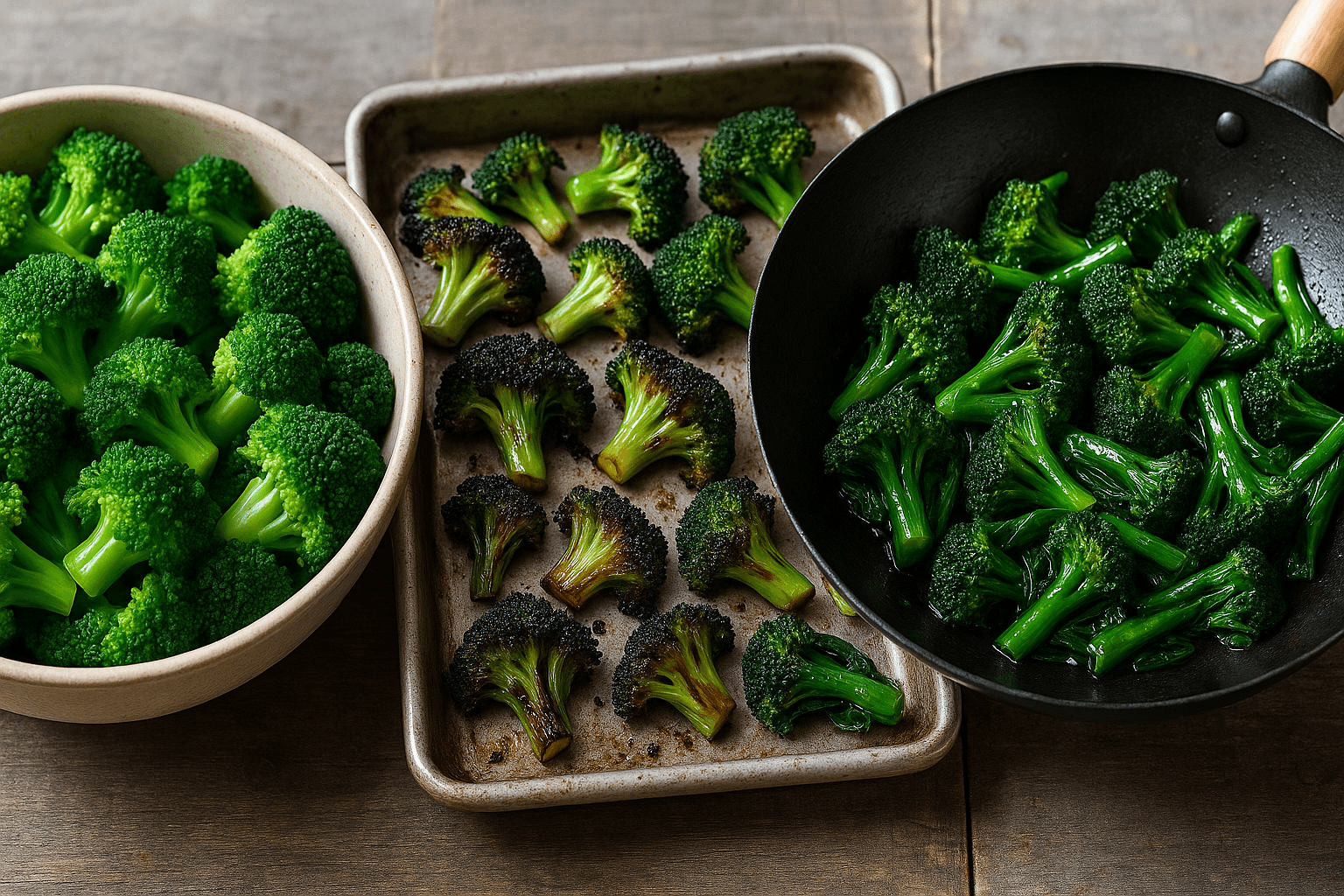
Broccoli has a tiny drama built into it. Give it gentle heat and it turns vividly green, sweet, and nutty. Leave it too long and it drifts toward army green, softens into submission, and starts broadcasting that unmistakable cabbage-family sulfur smell. Roast it hard and the edges go dark, almost meaty, while the stems become creamy and sweet. Stir-fry it correctly and you get the best of both worlds: bright color, crisp-tender texture, and little browned spots that taste far more complex than “just vegetables.”
That swing between fresh, sweet, grassy, sulfurous, browned, and mushy is not random. It is chemistry, structure, and timing. Broccoli is especially revealing because its pleasures and its failures happen fast. A minute or two can separate brilliant green florets from dull olive ones. A tablespoon of water or a teaspoon of acid at the wrong moment can change texture and flavor. And the difference between roasting that caramelizes and roasting that merely dehydrates often comes down to crowding, surface moisture, and pan temperature.
If you understand three things—chlorophyll chemistry, enzyme shutdown, and the heat rules of wet versus dry cooking—you can control broccoli with confidence. You will know why the florets brighten in the first moments of cooking, why acid dulls green vegetables, when sulfur compounds appear, why blanching helps stir-fries, and how to choose between steaming, roasting, and stir-frying depending on the result you want.
Broccoli’s reputation problem, and why it deserves better
Broccoli’s bad reputation usually comes from overcooking. Many people learned it from steam-table trays, overboiled side dishes, or microwave bags cooked until limp. In that state, broccoli is all penalty and no reward: gray-green color, soggy florets, waterlogged stems, and a smell that can fill the house.
Cooked properly, though, broccoli is one of the most responsive vegetables in the kitchen. It belongs to the brassica family—along with cabbage, kale, Brussels sprouts, cauliflower, and mustard greens—and shares their peppery, sulfur-containing chemistry. But broccoli also has unusually appealing sweetness when heat softens its cell walls and converts some harshness into gentler flavors. The stems are juicy and mild, the florets have a pleasing sponge-like structure that catches sauce, and the whole vegetable is versatile enough to handle steam, boiling, wok heat, oven heat, grilling, and even raw preparations.
Historically, broccoli developed from cultivated forms of wild cabbage in the Mediterranean, with deep roots in Italian cooking before spreading widely elsewhere. Traditional Italian preparations often respect the vegetable’s assertive character: garlic, olive oil, chile, anchovy, lemon, aged cheese. Chinese cooking, especially Cantonese-influenced techniques used with gai lan and broccoli alike, often aims for glossy, crisp-tender greens with restrained sauce and high-heat finish. Modern restaurant cooking borrows from both traditions: blanch first for color and texture, then roast or sauté for flavor.
Those traditions reflect an important truth. There is no single “best” way to cook broccoli. There is only the best method for the outcome you want.
What broccoli is made of, and why that matters in the pan
Broccoli is mostly water, but that water is packaged inside a structure of plant cells and cell walls. The texture you perceive—snappy raw stems, crisp florets, creamy interiors after roasting—comes from how intact those cell walls remain and how much internal moisture stays trapped.
The main structural components include:
- Cellulose and hemicellulose, which help form the framework of plant cell walls
- Pectin, a glue-like family of substances that helps cells adhere to one another
- Chlorophyll, the green pigment in the florets and outer tissues
- Sulfur-containing compounds, including precursors that can become pungent aromatic molecules
- Sugars and amino acids, which matter especially during roasting and browning
- Enzymes, which continue to function after harvest until heat shuts them down
That last point is crucial. Vegetables are not inert the moment they are picked. Their enzymes remain active. During cooking, some enzymes are briefly stimulated before they are disabled. Others can drive unwanted flavor changes if the heat is too slow or too prolonged. Understanding broccoli means understanding when heat helps and when it harms.
Why broccoli first gets brighter green
One of the most satisfying kitchen transformations is the way green vegetables often look more vivid after a short exposure to heat. Broccoli does this dramatically.
Raw broccoli appears slightly muted because air spaces inside its tissues scatter light, and because the chlorophyll is partly masked by the structure of the surface. When broccoli hits heat, several things happen quickly:
- Air trapped in the tissues expands and escapes.
- Cell membranes begin to soften.
- The surface becomes less opaque.
- Chlorophyll becomes more visually prominent.
The result is that “wow” moment: bright emerald green.
But this is a temporary peak, not a stable finish line. Continue heating, especially in moist conditions, and the chemistry changes again.
Why broccoli turns gray-green or olive: chlorophyll chemistry
Chlorophyll contains a magnesium ion at its center. In a fresh, relatively neutral environment, that structure remains intact and green. But acids—whether naturally present in the vegetable, concentrated during cooking, or introduced from another ingredient—can displace the magnesium. When that happens, chlorophyll is converted into pheophytin, which is much duller in color, often described as olive green or gray-green.
This is why green vegetables hate prolonged acidic cooking. Add lemon juice, vinegar, tomatoes, or wine too early, and you encourage the dulling reaction before the broccoli has even finished cooking.
A few practical rules follow directly from this:
- Do not cook broccoli for long in acidic liquids.
- If using lemon juice or vinegar, add it at the end.
- A covered pot can trap volatile acids released from the vegetable itself, speeding dulling.
- Fast cooking preserves color better than slow cooking.
There is a common old kitchen idea that adding baking soda keeps green vegetables bright. It does, temporarily, because alkaline conditions stabilize chlorophyll color. But it also damages texture, turning vegetables mushy and soapy-tasting while degrading certain vitamins. For broccoli, it is not worth it.
If your goal is vibrant green, use quick heat, adequate water or steam circulation, and short cooking time. Then stop the cooking before chlorophyll chemistry and structural collapse outrun you.
Why sulfur aromas develop
That “broccoli smell” is a family trait. Brassicas contain sulfur compounds and enzyme systems that can generate pungent aromas. In broccoli, compounds related to glucosinolates contribute peppery bitterness and cabbage-like notes. When the tissues are cut, crushed, and heated, enzymes and breakdown reactions can produce a range of sulfur-containing molecules.
Some sulfur notes are pleasant and savory in moderation. They make broccoli taste like broccoli. But prolonged cooking, especially in water or enclosed steam, can push these aromas into the realm of harsh, eggy, or swampy.
Two mechanisms matter most:
1. Tissue damage brings compounds and enzymes together
Cutting broccoli exposes internal cell contents. This is why chopped broccoli can smell stronger than a whole head even before cooking.
2. Long heat drives decomposition of sulfur compounds
As broccoli cooks past tender, sulfurous volatiles accumulate and become more noticeable. Covered cooking can trap these compounds instead of letting them dissipate. Overboiling is especially notorious because it combines tissue breakdown, leaching, prolonged heat, and trapped aroma if the pot is covered.
A useful nuance: not all sulfur aroma means failure. A hot wok or roasting pan can create brassica aromas along with browning, nuttiness, and sweetness. What you want to avoid is the stale, overcooked sulfur smell that comes from excessive wet cooking and delayed serving.
Why broccoli can taste sweeter after cooking
Broccoli is not a dessert vegetable, but cooked properly it becomes noticeably sweeter. That sweetness comes from a few sources:
- Heat softens cell walls, making natural sugars easier to perceive.
- Bitterness is moderated when certain raw, sharp flavors fade with cooking.
- Roasting evaporates water, concentrating flavor.
- Browning reactions on the edges create nutty, sweet-savory complexity.
This is why roasted broccoli can taste sweeter than steamed broccoli even if both started from the same head. Less water dilution and more surface browning shift the balance toward sweetness.
Enzyme shutdown: the hidden key to texture and flavor
When cooks talk about blanching vegetables “to set the color,” they are partly talking about enzyme control. Broccoli contains enzymes that continue to change flavor, texture, and color after cutting and during early cooking. Fast, decisive heat denatures these enzymes—meaning it unfolds and disables them.
This matters because slow warming through lower temperatures can be the worst of both worlds. The vegetable spends more time in the zone where enzymes are active, but not enough time at high temperature to shut them down cleanly.
For broccoli, rapid heating offers several advantages:
- Better color retention n- Cleaner flavor
- Less time for sulfurous compounds to develop harshly
- More predictable texture
This is one reason blanching works so well before stir-frying or shocking for salads. You briefly expose broccoli to intense heat, disable key enzymes, preserve vivid color, and then finish it later with a second cooking method.
Texture: why stems and florets cook differently
A head of broccoli is structurally uneven. The stems are dense, fibrous, and full of water. The florets are delicate, branched, and prone to overcooking. If you throw giant florets and thick stem chunks into the same pan and expect them to finish together, you usually get one of two outcomes:
- Tender florets and undercooked stems
- Proper stems and overdone florets
Restaurant cooks solve this by cutting intelligently:
- Peel the thick outer skin from large stems.
- Slice stems into coins or batons about 1/4 to 1/2 inch thick.
- Cut florets into pieces roughly 1 1/2 to 2 inches across.
- Split large florets lengthwise so stems remain attached but not oversized.
If you want perfectly even doneness, separate stems and florets and stagger their cooking by a minute or two.
The heat rules: steaming, roasting, and stir-frying are not interchangeable
Each cooking method creates a different balance of color, aroma, texture, and sweetness because each delivers heat and manages moisture differently.
Steaming
Steaming is gentle, efficient, and ideal when you want vibrant color and clean broccoli flavor.
- Best for: bright green side dishes, salads, purées, meal prep, broccoli to be dressed afterward
- Strengths: minimal nutrient loss, little waterlogging, good color retention if brief
- Risks: blandness if underseasoned, sulfur accumulation if oversteamed or tightly covered too long
Because steam cooks at around 212°F / 100°C at sea level, it cannot brown the surface. It preserves more of broccoli’s identity than it transforms.
Roasting
Roasting uses dry oven heat, often 425 to 450°F / 220 to 230°C, to evaporate moisture and encourage browning.
- Best for: deep flavor, browned edges, sweeter taste, crispy tips
- Strengths: concentration, caramelized notes, textural contrast
- Risks: limp steamed-baked broccoli if crowded, burnt florets with hard stems if cut poorly, grayness if acid is added too early
Roasting is a game of moisture management. The oven must drive off surface water fast enough that the broccoli can actually brown instead of just soften.
Stir-frying
Stir-frying combines high heat, fast movement, and a small amount of fat, often with brief steaming from added liquid.
- Best for: crisp-tender texture, glossy sauce, localized browning, weeknight speed
- Strengths: high flavor, lively texture, flexible finishing
- Risks: scorched florets with raw stems, watery sauce, uneven doneness in home pans that do not match restaurant wok burners
In a home kitchen, stir-frying broccoli is usually best when you compensate for weaker burners with either a blanch-first approach or a covered splash-steam technique.
The best method for vibrant green steamed broccoli
If your goal is broccoli that stays green, tender but not mushy, and free of stale sulfur notes, steaming is your most reliable method.
What you need
- 1 1/2 pounds broccoli (about 2 medium heads)
- 1 teaspoon kosher salt for seasoning after cooking, more to taste
- Optional finishing: 1 to 2 tablespoons olive oil or butter, lemon zest, black pepper, toasted nuts, grated Parmesan
Method
-
Prep the broccoli. Cut florets into even pieces. Peel thick stems and slice them 1/4 inch thick.
-
Set up the steamer. Add 1 inch of water to a pot. Bring to a full boil before adding the broccoli. The water should not touch the steamer basket.
-
Steam in a single loose layer if possible. Add stems first if they are thick, giving them 1 minute head start. Then add florets.
-
Cook briefly. Steam 4 to 5 minutes for crisp-tender, 6 to 7 minutes for more tender. Check early. A knife tip should slide into stems with slight resistance.
-
Uncover promptly. As soon as the broccoli is done, remove the lid and transfer the broccoli to a bowl or tray. Do not let it sit trapped in residual steam.
-
Season after cooking. Toss with salt, fat, and any acidic ingredient only after the broccoli is cooked.
Why this works
The broccoli cooks quickly enough to brighten and soften before chlorophyll degradation and sulfur buildup become dominant. Since the vegetable is not submerged, it avoids waterlogging and excessive leaching.
Common mistakes
- Starting with simmering instead of boiling water
- Overloading the basket so steam cannot circulate
- Leaving the lid on after cooking
- Adding lemon juice before steaming
- Cooking to “soft enough for everyone,” which usually means mush
The best method for deeply browned roasted broccoli
Roasting is where broccoli becomes almost snackable. The florets crisp at the tips, stems turn tender, and the flavor shifts toward nutty sweetness.
What you need
- 2 pounds broccoli
- 2 to 3 tablespoons olive oil
- 1 teaspoon Diamond Crystal kosher salt or 1/2 teaspoon Morton kosher salt, plus more to taste
- 1/4 teaspoon black pepper
- Optional: 1/4 teaspoon red pepper flakes, 1 smashed garlic clove added in the last 5 minutes, lemon juice after roasting
Oven settings
- Heat oven to 450°F / 230°C
- Preheat a heavy sheet pan if you want extra browning
Method
-
Wash and dry thoroughly. Wet broccoli roasts poorly. After washing, spin or towel-dry aggressively.
-
Cut for even cooking. Florets: 1 1/2 to 2 inches. Stems: peeled and sliced 1/3 inch thick or cut into batons.
-
Oil lightly but completely. Toss with oil, salt, and pepper until all surfaces are lightly coated. Do not drown it. Excess oil can make the broccoli greasy before it browns.
-
Spread with space. One layer, cut sides down where possible. If pieces touch too much, they steam.
-
Roast 18 to 25 minutes. Toss once at the 10 to 12 minute mark. Pull when the stems are tender and the florets show dark brown edges.
-
Finish off heat. Add lemon juice, grated cheese, toasted sesame oil, or chile crisp after roasting, not before.
Why this works
At high oven temperatures, moisture evaporates from the surface. Once the surface dries sufficiently, browning reactions can proceed. Broccoli’s natural sugars and amino acids produce toasted, nutty flavors. The stems, protected by their denser structure, soften internally while the florets develop crisp ridges.
Common mistakes
- Crowding the pan: the number one reason roasted broccoli disappoints
- Using too low a temperature: below about 400°F / 205°C, broccoli often softens before it browns well
- Not drying after washing: moisture delays browning
- Adding garlic too early: minced garlic can burn before broccoli finishes
- Adding acid before roasting: this dulls color and can encourage sogginess
A restaurant-style variation: blanch, dry, then roast
If you want especially vivid interiors with aggressive browning outside, blanch the broccoli first:
- Boil in well-salted water for 60 to 90 seconds
- Shock in ice water
- Dry thoroughly
- Roast at 450°F / 230°C for 12 to 18 minutes
This shuts down enzymes, sets up the texture, and helps the broccoli roast evenly. It is extra work, but excellent for dinner parties or advanced meal prep.
The best method for crisp-tender stir-fried broccoli
In restaurants, broccoli stir-fries benefit from roaring burners and seasoned woks that can sear while evaporating moisture fast. At home, the burner is usually weaker, so the trick is to create tenderness without overcrowding or stewing.
There are two strong home methods.
Method 1: Blanch, then stir-fry
This is the most reliable path to vivid green, crisp-tender broccoli.
What you need
- 1 pound broccoli
- 2 quarts water
- 1 tablespoon kosher salt for blanching water
- 1 to 1 1/2 tablespoons neutral oil
- 2 teaspoons soy sauce
- 1 tablespoon oyster sauce optional
- 1 to 2 tablespoons water or stock
- 1 teaspoon cornstarch slurry optional for gloss
- Garlic, ginger, chile as desired
Method
- Bring salted water to a full boil.
- Add broccoli and blanch 60 to 90 seconds.
- Drain and shock in ice water or rinse under very cold water.
- Dry well.
- Heat wok or skillet until very hot.
- Add oil, then aromatics for 10 to 15 seconds.
- Add broccoli and stir-fry 1 to 2 minutes until lightly blistered.
- Add sauce ingredients and toss 30 to 60 seconds just to glaze.
Why it works
The blanching handles the interior tenderness and enzyme shutdown. The wok handles browning and sauce adhesion. Because the broccoli is already nearly cooked, you can keep the final stir-fry short and intense.
Method 2: Stir-fry, then splash-steam
This method is better when you do not want to dirty a second pot.
Method
- Heat 1 tablespoon oil in a large skillet or wok over high heat.
- Add broccoli and stir-fry 2 minutes.
- Add 2 tablespoons water, cover immediately, and steam 1 minute.
- Uncover, let excess water evaporate.
- Add sauce and cook 30 to 60 seconds more.
Why it works
The initial fry develops some sear. The brief covered phase softens the stems. The final uncovered phase evaporates lingering moisture so the sauce clings instead of pooling.
Common stir-fry mistakes
- Adding too much sauce too early
- Using a pan that is too small
- Starting with wet broccoli
- Slicing stems too thick
- Trying to cook a giant batch at once
- Keeping the lid on too long during the steam phase
Salt, acid, and the seasoning timing that matters
Salt
Salt does not just season broccoli; it changes how enjoyable the vegetable tastes by suppressing bitterness and highlighting sweetness. But when and how you use it depends on the method.
- Blanching water: salt generously, about 1 tablespoon kosher salt per 2 quarts water. This seasons lightly and helps the broccoli taste less flat.
- Steaming: season after cooking or toss with salted butter/oil afterward.
- Roasting: salt before cooking so it adheres to the oil-coated surface.
- Stir-frying: remember that soy sauce and oyster sauce are salty; reduce direct salt accordingly.
Acid
Acid brightens flavor but dulls chlorophyll if introduced too soon. Therefore:
- Add lemon juice, vinegar, or sumac after steaming or roasting.
- For stir-fries, add a tiny splash at the very end if using it at all.
- Use lemon zest when you want citrus aroma without as much acid impact.
A practical trick: finish green vegetables with acid off heat, just before serving. You keep the lively flavor without sacrificing color during the cook.
Why blanching is such a powerful broccoli technique
Blanching can seem like fussy restaurant prep, but for broccoli it solves multiple problems at once.
It:
- rapidly denatures enzymes
- preserves bright color
- pre-tenders dense stems
- washes away some surface bitterness
- creates a head start for later roasting or stir-frying
- improves consistency across a whole batch
Basic blanching formula
- Bring 2 to 3 quarts water per pound of broccoli to a rolling boil.
- Add 1 to 1 1/2 tablespoons kosher salt.
- Cook broccoli 45 to 90 seconds depending on piece size.
- Transfer immediately to ice water for 1 to 2 minutes.
- Drain and dry thoroughly.
For a salad or crudités-style marinated dish, blanching followed by shocking gives broccoli a more tender, more digestible texture while preserving a raw-adjacent freshness.
The science of mush: how broccoli gets overcooked
Mushy broccoli is not simply “cooked too long.” It is the result of structural breakdown.
As heat continues, pectin weakens, cell adhesion loosens, and the tissues lose their integrity. Water moves more freely, the florets collapse, and the stems stop feeling crisp. In boiling water, the problem worsens because the vegetable can absorb water while simultaneously losing soluble flavor compounds to the pot.
That is why overboiled broccoli tastes both soft and oddly thin. It has literally given some of itself away.
Signs broccoli is going too far:
- florets shedding tiny buds everywhere
- stems that bend with almost no resistance
- dull olive color
- sulfurous smell noticeable across the kitchen
- watery puddles forming after draining
If you repeatedly overshoot doneness, shorten the cooking time by 1 to 2 minutes and test earlier than feels necessary. Broccoli rarely improves from “just one more minute.”
Specific best-use recommendations
If you want a practical cheat sheet, use this:
For a vibrant green side dish
Method: Steam
- Steam 4 to 5 minutes
- Season with olive oil, salt, lemon zest, black pepper
- Add lemon juice only at the end
For broccoli going into a composed salad
Method: Blanch and shock
- Boil 60 to 90 seconds
- Shock, dry, marinate
- Excellent with anchovy, mustard, capers, toasted almonds
For deeply browned weeknight broccoli
Method: Roast at high heat
- Roast at 450°F / 230°C for 18 to 25 minutes
- Do not crowd the pan
- Finish with Parmesan or chile flakes
For best home stir-fry texture
Method: Blanch, dry, then stir-fry
- Blanch 60 to 90 seconds
- Stir-fry 1 to 2 minutes
- Sauce only at the end
For the simplest skillet broccoli
Method: Sauté plus splash-steam
- Brown in oil 2 minutes
- Add 2 tablespoons water, cover 1 minute
- Uncover and finish
Flavor pairings that respect broccoli’s chemistry
Because broccoli has bitterness, sweetness, and sulfurous depth, it responds best to ingredients that either balance or amplify those traits.
Excellent pairings include:
- Garlic: pungency meets brassica sharpness
- Chile flakes or fresh chiles: contrast sweetness and richness
- Anchovy: savory depth that makes broccoli taste more “complete”
- Lemon zest and juice: brightness at the end
- Parmesan or pecorino: salty umami against vegetal sweetness
- Sesame oil and soy: ideal for stir-fried styles
- Toasted nuts: almonds, peanuts, walnuts for crunch and fat
- Brown butter: nutty flavors echo roasted edges
- Mustard: family resemblance in flavor chemistry
Less ideal approaches include drowning broccoli in heavy cream sauces before you understand the base cooking. The vegetable should be well cooked first; sauce should support, not rescue.
A note on frozen broccoli
Frozen broccoli behaves differently because it has already been blanched before freezing. That means enzymes are mostly shut down, but the structure has been stressed by ice crystal formation.
Practical implications:
- It often turns softer faster than fresh broccoli.
- It can release a lot of water.
- It is usually better for roasting straight from frozen or for quick steaming than for precise stir-fries.
For roasting frozen broccoli:
- Heat oven to 450°F / 230°C
- Roast directly from frozen on a preheated sheet pan
- Use slightly more time, about 25 to 30 minutes
- Expect less dramatic crispness than fresh unless the pieces are well spaced
How to choose broccoli at the store for better cooking results
Good cooking starts with good broccoli.
Look for:
- tight, compact florets
- deep green color, not yellowing
- firm stems, not rubbery or dried out
- no strong sulfur smell in the package
- cut stem ends that look fresh, not hollow or woody
Yellow flowers mean the broccoli is aging. It is still edible, but flavor and texture are moving in the wrong direction.
Three model recipes in brief
1. Bright steamed broccoli with lemon zest and butter
- 1 1/2 pounds broccoli
- Steam 4 to 5 minutes
- Toss with 2 tablespoons butter, 3/4 teaspoon kosher salt, zest of 1 lemon, black pepper
- Finish with 1 teaspoon lemon juice just before serving
2. Dark-edged roasted broccoli with Parmesan
- 2 pounds broccoli
- Toss with 2 1/2 tablespoons olive oil, 1 teaspoon kosher salt, pepper
- Roast at 450°F / 230°C for 20 to 24 minutes
- Finish with 1/3 cup finely grated Parmesan and red pepper flakes
3. Crisp-tender garlic soy broccoli stir-fry
- Blanch 1 pound broccoli for 75 seconds
- Dry well
- Stir-fry in 1 tablespoon neutral oil with 2 sliced garlic cloves
- Add 2 teaspoons soy sauce, 1 tablespoon oyster sauce, 1 tablespoon stock
- Toss 45 seconds and serve immediately
The big takeaways
Broccoli turns gray-green because chlorophyll loses its magnesium in acidic or prolonged cooking conditions. It turns sulfurous because brassica compounds break down more aggressively as heat and time accumulate, especially in wet, enclosed cooking. It tastes sweeter when heat softens structure, reduces bitterness, concentrates flavor, and, in roasting, creates browning.
The practical rules are simple:
- Cook broccoli quickly when you want bright green color.
- Add acid at the end, not the beginning.
- Use blanching to shut down enzymes and improve later stir-frying or roasting.
- Steam for clean, vivid broccoli.
- Roast hot and uncrowded for sweetness and char.
- Stir-fry with either a blanch-first strategy or a brief splash-steam finish for crisp-tender texture.
- Stop cooking before the vegetable has time to collapse and smell tired.
Once you understand those rules, broccoli stops being unpredictable. You can choose the exact result you want: vivid and tender, glossy and crisp, or dark-edged and deeply savory. And that is when this much-maligned vegetable starts to show why great cooks have always loved it.