Why Chestnuts Turn Mealy, Waxy, or Silky-Sweet: Starch Conversion, Shell Steam, and the Roast‑Boil‑Peel Rules for Better Soups, Stuffing, and Desserts
RecipeSimpli
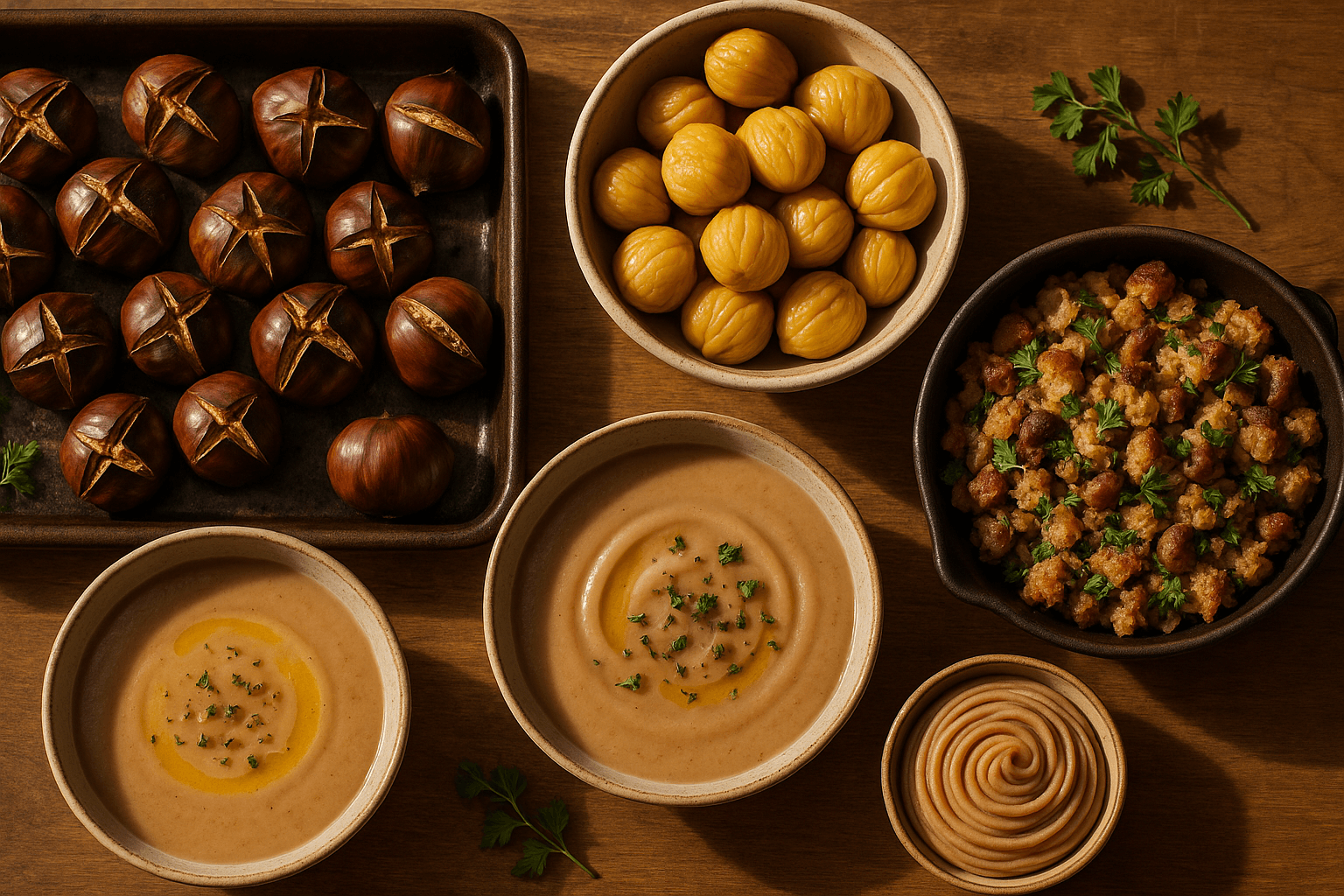
Chestnuts are the oddballs of the nut world, and that is exactly why they can be so wonderful—and so frustrating. Almonds, pecans, walnuts, and hazelnuts are rich with fat, crisp when toasted, and forgiving in storage. Chestnuts are none of those things. They are low in oil, high in moisture, and loaded with starch, more like a tiny sweet potato hidden inside a shell than a conventional nut. That one fact explains nearly everything about chestnut cookery: why some roast up fluffy and dry, why others go dense and waxy, why the best ones become silky and sweet in soup or purée, and why peeling them can feel either delightfully easy or maddeningly impossible.
If you have ever bought a bag of fresh chestnuts with visions of holiday stuffing, glossy Mont Blanc, velvety soup, or a rustic braise only to end up with leathery interiors, stubborn skins, or chalky crumbs, the problem was probably not you. Chestnuts demand a different approach because their structure and chemistry are different. They need moisture management. They need carefully controlled heat. They need to be scored so steam can escape without blowing the shell apart or welding the pellicle—the bitter inner skin—onto the flesh. And they are highly perishable, so even before you cook them, freshness matters.
Once you understand the basic science—starch conversion, gelatinization, moisture loss, and steam pressure—the behavior of chestnuts becomes much more predictable. Then the practical rules start to make sense: score deeply but not recklessly; peel while hot; roast for flavor, boil for easy peeling and smooth purées, steam for a middle path; and match the cooking method to the dish you actually want to make.
Chestnuts are not like other nuts
Most tree nuts are energy-dense because they contain a lot of fat and relatively little water. Chestnuts invert that expectation. Fresh chestnuts typically contain roughly 40 to 50% water, around 40% carbohydrate, much of it as starch, and only a small amount of fat—often 2 to 5%, depending on variety and maturity. That composition gives them their characteristic texture. Instead of turning buttery and crisp when heated, chestnuts soften, steam, and transform internally much more like a starchy tuber.
This is why raw chestnuts taste faintly sweet but somewhat hard and chalky, while cooked chestnuts can become fluffy, creamy, or dense depending on how the starches hydrate and how much water they lose. It is also why chestnuts pair naturally with ingredients that normally welcome potatoes, bread, or winter squash: stock, cream, butter, sausage, mushrooms, onions, celery, sage, thyme, brown sugar, vanilla, rum, chocolate, and citrus.
Chestnuts have a long history across Europe, the Caucasus, East Asia, and parts of North America. In mountain regions where grain was less dependable, chestnuts were not just a snack but a staple. They were dried, milled into flour, boiled, roasted, candied, and folded into both peasant dishes and luxury desserts. In Italy, Corsica, parts of France, and rural Spain, chestnut flour and preserved chestnuts were serious pantry foods. In Japan, chestnuts appear in sweets and celebratory rice dishes. In China and Korea, chestnuts show up in braises, porridges, confections, and festive preparations. Across these culinary traditions, one pattern repeats: cooks learned to treat chestnuts as a starchy ingredient first and a nut second.
Why chestnuts become mealy, waxy, or silky
The texture of cooked chestnuts depends on four main factors:
- Starch structure and conversion
- Moisture content before cooking
- Rate of moisture loss during cooking
- Temperature history, especially while peeling and holding
Let’s break those down.
Mealy: dry, crumbly, fluffy, sometimes chalky
A mealy chestnut is one that has lost a fair amount of moisture and whose starch granules have cooked enough to soften but not enough to form a fully creamy matrix. Think baked potato more than mashed potato. Roasting encourages this, especially at higher heat or for too long. Some mealiness is desirable in certain uses. In stuffing, chopped roasted chestnuts that stay distinct bring a pleasant crumbly richness. In snacks, that fluffy interior is part of the appeal.
But excessive mealiness can read as dryness or chalkiness. That happens when chestnuts are old, partially dehydrated in storage, over-roasted, or held warm too long after peeling. The starches set, moisture migrates out, and the interior loses tenderness.
Waxy: dense, slightly gummy, heavy
Waxy chestnuts are usually undercooked, cooked too gently without enough hydration, or cooled in a way that makes their starches firm before they are fully tender. A waxy chestnut can feel oddly firm even though it is technically cooked. It may slice neatly but lack that soft, sweet collapse you want in purée or dessert.
This dense texture can also happen with some vacuum-packed chestnuts, which have already been cooked and then packed in a way that preserves moisture but fixes a more compact structure. They are convenient and often very good, but they are not texturally identical to perfectly cooked fresh chestnuts.
Silky-sweet: creamy, tender, smooth
This is the ideal for soups, purées, pastry fillings, and chestnut cream. To get there, you want the starches fully gelatinized and the chestnut flesh thoroughly hydrated, then either mashed, pressed, or blended before it has a chance to dry out. Boiling or steaming, especially followed by blending with warm liquid and fat, promotes this result.
Silkiness is not just about adding cream. It comes from proper cooking. Once starch granules absorb water and swell in the right temperature range—generally beginning around 60 to 75°C / 140 to 167°F, depending on the starch system—they lose their raw chalkiness and start creating a tender network. Chestnuts that are cooked in the presence of enough moisture can move from hard and opaque to soft and sweet.
The sweetness question: why cooked chestnuts taste sweeter
Fresh chestnuts are not candy-sweet, but they do get noticeably sweeter with cooking. Part of that is perceptual: cooking softens texture, reducing the effort needed to break the flesh apart, which lets sweetness register more readily. But there is also real chemistry involved.
Chestnuts contain starches and sugars. During curing after harvest and in early cooking stages, some starch can convert to simpler sugars through natural enzymatic activity and heat-related changes. Then roasting contributes a second kind of sweetness: light browning and aromatic development. While chestnuts do not brown as aggressively as a fat-rich nut, the outer surfaces and cut edges can still develop roasted, caramel-like notes through Maillard reactions and some caramelization, especially above 150°C / 302°F.
Boiling tends to preserve chestnuts’ gentle, milky sweetness without adding roasty complexity. Roasting deepens aroma but risks drying if pushed too far. Steaming often preserves sweetness best while keeping texture moist. This is why a steamed or boiled chestnut may taste more purely sweet, while a roasted one tastes nuttier, toastier, and a little less delicate.
The shell, the pellicle, and why scoring matters so much
Chestnuts come with two barriers: the hard outer shell and the papery, clingy inner skin called the pellicle. The outer shell is protective. The pellicle is your nemesis.
As chestnuts heat, internal water turns to steam. If the shell is uncut, pressure builds. At best, the shell bursts irregularly. At worst, it can pop violently, dry the flesh unevenly, and make peeling harder instead of easier. Scoring creates a controlled weak point where steam can escape and where the shell can curl back from the flesh.
A good score also helps loosen the pellicle. When heat and steam penetrate through the cut, the inner skin separates more readily from the nut meat. If the score is too shallow, the shell may split but the pellicle stays welded on. If the score is too deep, you gouge the flesh and increase moisture loss.
The best way to score
Use a small sharp paring knife or a chestnut knife if you have one. Place the flat side of the chestnut down on a stable board or towel so it does not roll.
Cut an X on the rounded side or a single long slash across the flat side, depending on your preference. The key is depth: cut through the shell and just into the pellicle, but not far into the flesh. Usually 1 to 2 mm deep is enough.
For home cooks, I prefer the X on the rounded side for roasting because it gives the shell more room to peel back. For boiling, a single broad slit works well because the nuts are submerged and not relying as much on dry heat to pry the shell open.
Why peeling must happen while hot
This rule matters more than almost any other.
As chestnuts cool, steam condenses, the pellicle tightens, and the starches begin to set. The shell loses flexibility. The inner skin re-adheres. A chestnut that peels in 10 seconds while piping hot can become a 2-minute fight once lukewarm.
So the standard professional move is simple: cook chestnuts in manageable batches, keep the rest warm under a towel or in the warm cooking liquid, and peel only a few at a time. Protect your fingers with a clean kitchen towel or thin gloves. Burn risk is real, but so is peeling misery if you wait.
Roast, boil, or steam? Use the method that serves the dish
No single method is best for all chestnut recipes. The right method depends on whether you prioritize flavor, peelability, or moisture retention.
1) Roasting: best for deep flavor and chestnuts you want to eat out of hand
Roasting gives chestnuts their iconic aroma: cozy, toasty, sweet, and faintly smoky. It also produces the driest texture of the three methods.
Best uses
- Snacking
- Chopping into stuffing where distinct pieces are welcome
- Folding into roasted vegetable dishes
- Garnishes where slight crumbly texture is desirable
Basic roasting method
- Heat oven to 220°C / 425°F.
- Score each chestnut.
- Optional but helpful: soak scored chestnuts in warm water for 10 to 15 minutes, then drain. This adds surface moisture, encourages steam, and can reduce leathery interiors.
- Spread on a sheet pan in a single layer.
- Roast 20 to 30 minutes, depending on size, shaking once halfway through.
- Look for shells that have curled back and flesh that feels tender when pierced.
- Wrap in a clean towel and let steam 5 minutes, then peel while still very hot.
Common roasting mistake: leathery interiors
This happens when the shell dries before the flesh fully softens, often because the chestnuts were old, not soaked, under-scored, or roasted too long at slightly too low a temperature. High enough heat matters. If the oven is only at 180°C / 350°F, the chestnuts may spend too much time drying out before steam pressure helps open them.
Another trick: place a small oven-safe pan of hot water on the lower rack during roasting, or mist the chestnuts lightly before they go in. You are not trying to steam them completely; you are preventing the environment from becoming desert-dry.
2) Boiling: best for easy peeling and smooth purées
Boiling is the most practical method when your end goal is soup, chestnut cream, stuffing that needs soft integrated pieces, or dessert purée. It hydrates evenly and makes the pellicle easier to remove.
Best uses
- Purée
- Soup
- Chestnut cream or pastry filling
- Soft stuffing components
- Freezing for later use
Basic boiling method
- Score each chestnut with a wide slit or X.
- Bring a pot of water to a gentle boil.
- Add chestnuts and simmer, not violently boil, for 20 to 35 minutes, depending on size and freshness.
- Test one: it should peel easily and the flesh should mash smoothly between your fingers.
- Remove only 5 to 6 chestnuts at a time with a slotted spoon.
- Peel immediately, keeping the rest in the hot water.
Why not drain them all at once? Because once the whole batch cools, peeling gets dramatically harder. Leaving them in hot water buys you time and keeps the pellicle relaxed.
Boiled chestnut texture
Boiled chestnuts will not have roasted aroma, but they will usually be the sweetest tasting and most uniformly tender. If you intend to blend them, this is the method most likely to yield a silky result with minimal added fat.
3) Steaming: the compromise method
Steaming gives you better moisture retention than roasting and more flavor concentration than boiling. It is excellent if you want whole chestnuts that stay intact and sweet.
Best uses
- Chestnuts for rice dishes
- Delicate desserts
- Sliced or halved chestnuts for composed savory dishes
- Preparations where you want less waterlogging than boiling
Basic steaming method
- Score chestnuts.
- Set over simmering water in a steamer basket.
- Cover and steam 25 to 40 minutes, depending on size.
- Peel in batches while hot.
Steaming is especially good with very fresh chestnuts, which already contain plenty of water and benefit from gentler cooking.
Practical roast-boil-peel rules that save frustration
If you remember nothing else, remember these:
Rule 1: Buy chestnuts heavy for their size
Fresh chestnuts should feel dense and firm, not hollow or rattly. A rattling nut often indicates dehydration and shrinkage inside the shell, which predicts mealy texture and hard peeling.
Rule 2: Refrigerate them
Chestnuts are perishable because of their moisture content. Store fresh chestnuts in the refrigerator, loosely wrapped or in a breathable bag, and use within 1 to 2 weeks for best results. Room-temperature storage speeds drying and mold risk.
Rule 3: Score before any heat touches them
Never skip scoring. It controls steam pressure, reduces random bursting, and improves peeling.
Rule 4: Peel while hot, not warm
Hot chestnuts peel. Warm chestnuts fight back.
Rule 5: Match method to destination
- Roast for flavor and distinct texture
- Boil for purée and easy peeling
- Steam for sweetness plus moisture retention
Rule 6: If making purée, do not let peeled chestnuts sit uncovered
Once peeled, transfer them straight into warm milk, stock, syrup, or a covered bowl. Exposed hot chestnuts dry quickly and lose their chance at silkiness.
Rule 7: For stuffing, underdo dryness and overdo moisture insurance
Chestnuts can disappear texturally in stuffing if too soft, but they can also suck moisture from the mixture if too dry. For stuffing, aim for chestnuts that are tender but not mushy, and balance them with enough stock and butter.
Fresh chestnuts vs vacuum-packed cooked chestnuts vs water chestnuts
These ingredients get confused constantly, but they behave very differently.
Fresh chestnuts
These are raw, in-shell chestnuts. They offer the best flavor potential but require scoring, cooking, and peeling. Their texture range is widest because you control the method.
Use them when you want the fullest chestnut experience, especially in seasonal cooking.
Vacuum-packed cooked chestnuts
These are peeled and pre-cooked, usually sold in sealed packs, often in the baking aisle or imported foods section. They are a gift for busy cooks. They save time, reduce waste, and are very good in soup, purée, stuffing, and desserts.
Their texture is usually slightly denser and more uniform than freshly cooked chestnuts, and their flavor is mild compared with freshly roasted ones. Still, for many applications—especially blended ones—they are excellent.
How to use them:
- For soup or purée: simmer briefly in stock or milk before blending.
- For stuffing: break or chop and fold in near the end so they do not disintegrate.
- For dessert: warm with syrup, vanilla, or cream to freshen flavor.
Water chestnuts
Water chestnuts are not chestnuts at all. They are the corm of an aquatic sedge. They do not taste like chestnuts and do not cook like chestnuts. Their defining trait is crispness, which they often retain even after cooking.
If a recipe calls for water chestnuts, do not substitute sweet chestnuts and expect anything sensible to happen. Likewise, do not put canned water chestnuts into chestnut soup.
The science of leathery, dry, or stubborn chestnuts
A few common problems show up again and again.
Problem: leathery outer layer, dry center
Cause: too much dry heat, too little initial moisture, old chestnuts, or insufficient scoring.
Fix:
- Soak before roasting for 10 to 15 minutes.
- Roast hotter and shorter rather than cooler and longer.
- Cover or towel-steam after roasting for 5 minutes.
- Use fresher chestnuts.
Problem: shell comes off, pellicle stays glued on
Cause: chestnuts cooled too much, undercooked nuts, or a score that did not cut through the pellicle.
Fix:
- Reheat briefly or return to hot water.
- Peel in smaller batches.
- Score a little deeper next time.
- Boil instead of roast if clean peeling is your priority.
Problem: chestnuts are bland
Cause: old stock, watery cooking liquid, or under-seasoning. Chestnuts themselves are gentle.
Fix:
- Use flavorful stock, milk, cream, butter, herbs, vanilla, sugar, or salt as appropriate.
- Add a pinch of salt even in sweet applications; it amplifies sweetness.
- Roast first, then simmer, if you want stronger flavor in soup.
Problem: purée turns grainy
Cause: chestnuts not fully cooked before blending, or purée allowed to dry before processing.
Fix:
- Cook until fully mashable.
- Blend while hot with warm liquid.
- Pass through a fine sieve for luxury texture.
How to prepare chestnuts for specific dishes
For soup
Chestnut soup is at its best when the chestnuts are boiled or steamed, then blended with stock and aromatics.
Reliable formula for 4 to 6 servings
- 500 g / 1.1 lb peeled chestnuts
- 2 tablespoons butter
- 1 onion, diced
- 1 leek, cleaned and sliced or 2 celery stalks
- 750 ml to 1 liter / 3 to 4 cups chicken or vegetable stock
- 120 ml / 1/2 cup cream or milk, optional
- 1 small thyme sprig
- Salt and white or black pepper to taste
Cook onion and leek gently in butter for 8 to 10 minutes without browning. Add chestnuts and stock, simmer 20 minutes, remove thyme, then blend until smooth. For especially silky soup, pass through a sieve and finish with cream.
If your chestnuts were roasted first, expect deeper flavor and a slightly more rustic texture. If boiled first, expect sweeter, smoother soup.
For stuffing
Chestnuts in stuffing should contribute sweetness, tenderness, and a little crumbly contrast without turning the whole dish pasty.
Reliable balance for a 9 x 13-inch / 23 x 33 cm pan
- 250 to 300 g / 9 to 10.5 oz chestnuts, roasted or boiled, roughly chopped
- 450 g / 1 lb bread, dried and cubed
- 150 g / 5 oz sausage, optional but classic
- 1 large onion
- 3 celery stalks
- 2 to 3 tablespoons butter
- 2 teaspoons chopped sage
- 1 teaspoon thyme leaves
- 480 to 720 ml / 2 to 3 cups stock, depending on bread dryness
- 2 eggs, optional, for binding
Chestnuts should make up about 20 to 30% of the bulky mix by volume, not 60%. Too many chestnuts can make stuffing sweet and crumbly in an unbalanced way because chestnuts and bread are both starch-heavy. Sausage, mushrooms, alliums, stock, and herbs provide savory counterweight.
A helpful trick: if your chestnuts are very soft, fold them in at the end to preserve chunks. If they are on the dry side, moisten them with a splash of hot stock before mixing.
For purée
This is where chestnut science pays off.
Basic chestnut purée
- 500 g / 1.1 lb peeled chestnuts
- 240 to 360 ml / 1 to 1 1/2 cups milk, cream, stock, or syrup, warmed
- 30 to 60 g / 2 to 4 tablespoons butter
- Pinch of salt
For savory purée, use stock and butter. For sweet purée, use milk or light syrup, plus sugar and vanilla to taste.
Mash or blend while hot. Add liquid gradually until the texture becomes smooth and spoonable. For the silkiest result, pass through a tamis, food mill, or fine sieve. This step removes stubborn skin fragments and coarse bits.
For desserts
Chestnuts love dairy, vanilla, chocolate, coffee, citrus zest, and dark spirits.
For a classic sweet chestnut cream, simmer peeled chestnuts in milk with vanilla until very tender, then blend with sugar. For Mont Blanc-style desserts, the purée is often passed through a ricer or special tip to create soft strands over whipped cream or meringue.
One caution: sugar can firm fruit and starch systems if added too early in some recipes. With chestnuts, it is often easier to cook them fully tender first, then sweeten. That way you do not risk slowing hydration or masking undercooking.
A step-by-step method for the best all-purpose chestnuts at home
If you want one flexible approach that can go toward soup, stuffing, or dessert, this is the method I recommend most often.
Step 1: Sort and inspect
Start with 1 kg / 2.2 lb fresh chestnuts. Discard any with visible mold, weeping spots, or insect damage. If one feels suspiciously light, set it aside.
Step 2: Wash and score
Rinse and dry them. Cut a clear X on the rounded side of each shell.
Step 3: Blanch-simmer for peelability
Bring a pot of water to a boil. Add chestnuts and reduce to a simmer for 5 minutes. This initial blanch helps loosen shell and pellicle.
Step 4: Roast for flavor
Drain and transfer to a sheet pan. Roast at 220°C / 425°F for 15 to 20 minutes until shells curl and the nuts feel tender.
This hybrid method gives you some roasted aroma while the prior blanch protects against leathery texture.
Step 5: Steam-rest briefly
Wrap the hot chestnuts in a clean towel and rest 5 minutes. The trapped steam softens the pellicle further.
Step 6: Peel in batches
Peel 4 to 5 at a time, keeping the rest wrapped. Remove both shell and pellicle.
Step 7: Finish according to recipe
- For soup: simmer peeled chestnuts in stock 10 minutes, then blend.
- For stuffing: chop roughly and fold into the mix.
- For dessert: simmer in milk or syrup until utterly soft, then purée.
This roast-boil-peel workflow may seem fussy, but it dramatically increases your odds of clean peeling and balanced texture.
Flavor pairings and balancing savory vs sweet
Because chestnuts are mild and starchy, they need contrast.
In savory cooking, pair chestnuts with:
- Salt and black pepper
- Browned butter
- Chicken, turkey, pork, or sausage
- Mushrooms
- Onion, shallot, leek, celery
- Sage, thyme, rosemary, bay
- Stock reductions
- A little acid: sherry vinegar, cider, verjus, lemon
Acid matters more than people think. A small amount cuts through chestnut richness and keeps a purée or stuffing from tasting flat.
In sweet cooking, pair chestnuts with:
- Vanilla
- Rum, cognac, brandy
- Dark chocolate
- Coffee
- Orange zest
- Maple, brown sugar, honey
- Whipped cream or mascarpone
Salt still matters. A pinch in a chestnut dessert makes the flavor feel rounder and sweeter.
Common mistakes home cooks make with chestnuts
-
Treating them like other nuts
They are not a toast-and-forget ingredient. They need moisture awareness. -
Buying them too early and storing them on the counter
They dry out and lose sweetness. -
Not scoring deeply enough
The shell opens, but the pellicle does not release. -
Cooking the whole batch, then trying to peel at leisure
This is perhaps the number one peeling disaster. -
Choosing roasting for every recipe
Roasted flavor is lovely, but not always ideal for smooth applications. -
Under-seasoning
Chestnuts are subtle; they need help from salt, aromatics, and fat. -
Using too many in stuffing
They can dominate texture and tilt the dish too sweet.
Takeaways: the rules that make chestnuts better
Chestnuts behave unlike other nuts because they are low in oil, high in moisture, and rich in starch. That makes them cook more like potatoes than pecans.
If chestnuts turn mealy, they usually lost too much moisture or started too dry. If they turn waxy, they were often undercooked or not fully hydrated. If they become silky-sweet, their starches were fully gelatinized in the presence of enough moisture, then processed before drying out.
Scoring is not optional. It controls steam pressure, helps the shell open, and improves your chances of removing the pellicle.
Roast for bold flavor and a drier, fluffier texture. Boil for easy peeling and the smoothest purées. Steam for sweetness and moisture retention. And if you want the best of both worlds, blanch first, roast second, then peel while hot.
Use fresh chestnuts when flavor matters most, vacuum-packed chestnuts when convenience matters, and remember that water chestnuts are an entirely different ingredient.
Most of all, work with chestnuts while they are hot and choose your method based on the dish you want, not just tradition. Once you stop expecting them to act like other nuts and start treating them like the sweet, starchy, steam-driven little structures they are, they become much easier to love—and much easier to cook well.