Why Cloves Taste Warm, Medicinal, or Numb: Eugenol Chemistry, Fat Extraction, and the Steep-Toast Rules for Better Curries, Bakes, and Broths
RecipeSimpli
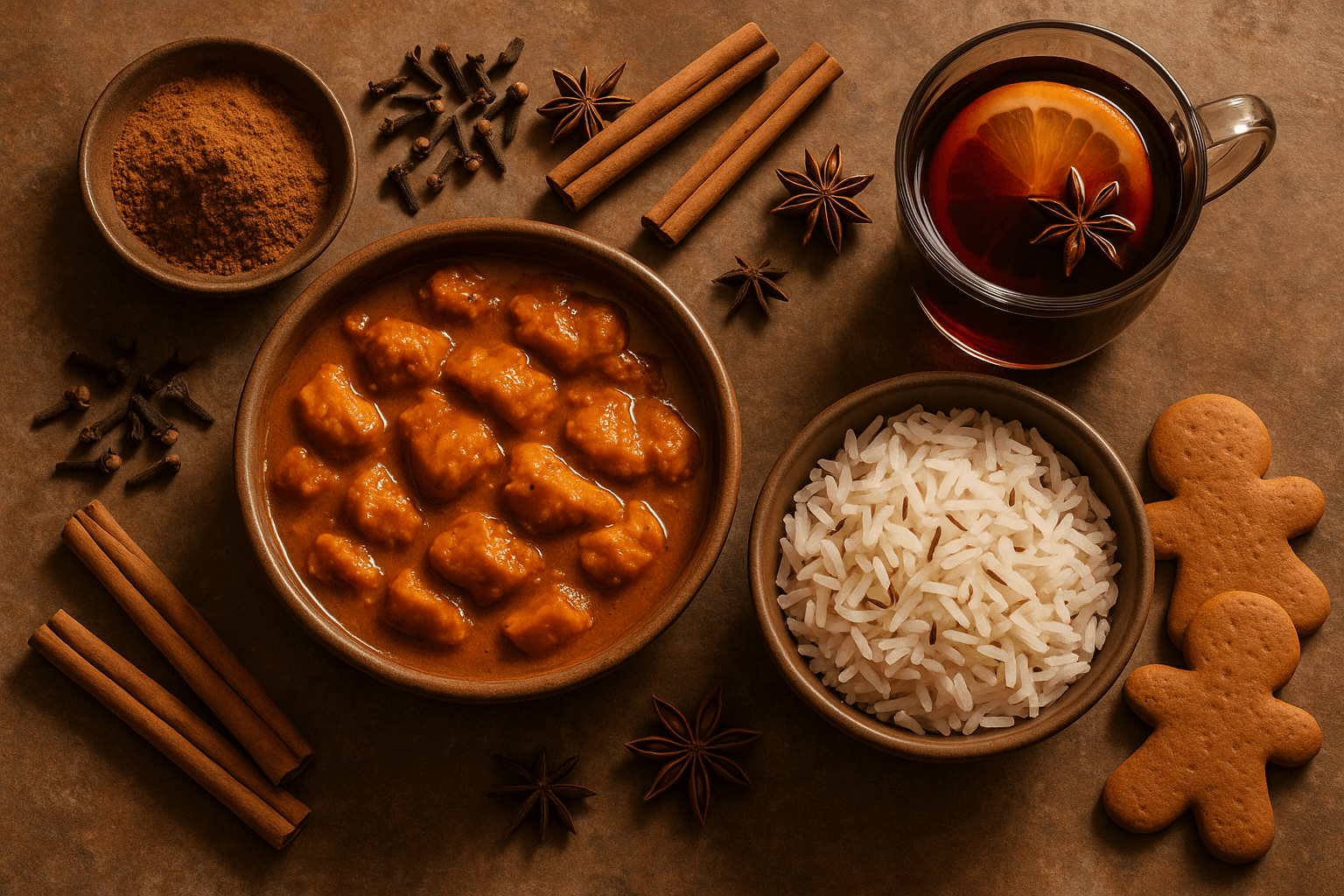
There are spices that quietly support a dish, and then there are spices that take over the room. Cloves belong firmly in the second category. One or two can make a pot of rice smell regal, a braise feel deeper, or a gingerbread dough taste hauntingly complete. Add a few too many, grind them too early, or cook them the wrong way, and that same spice can veer from warm and sweet to medicinal, bitter, woody, and even tongue-numbing. If you have ever bitten into a clove-studded biryani and felt your mouth go slightly anesthetized, or wondered why homemade pumpkin spice sometimes tastes more like a dental office than a bakery, the answer lives in clove chemistry.
Cloves are unusually potent because their flavor is dominated by a small set of highly active aromatic compounds, especially eugenol. Eugenol is powerful enough that it is used not only in cooking but also in perfumery, dentistry, and traditional medicine. That overlap explains a lot: what reads as festive warmth at low doses can quickly become medicinal when concentration rises, when extraction favors the wrong notes, or when cloves are paired without enough sweetness, fat, or dilution.
Understanding cloves is less about memorizing rules than about learning how they release flavor. Whole cloves behave differently from ground cloves. Cloves bloom differently in oil than they do in water or milk. They respond differently to short toasting, long steeping, and prolonged boiling. And perhaps most important for home cooks, cloves do not simply add “more flavor” when you add more of them. Past a certain point, they compress a dish into one sharp, woody impression and flatten the complexity of everything around them.
This is a spice worth respecting. Used well, it can make curries brighter, broths more aromatic, baked goods rounder, and mulled drinks more dimensional. Used carelessly, it dominates. Let’s look at why.
What cloves are, and why so many cuisines prize them
Cloves are the dried flower buds of Syzygium aromaticum, an evergreen tree native to the Maluku Islands of Indonesia, historically known as the Spice Islands. Like nutmeg and mace, cloves became globally important through trade routes that linked Southeast Asia to South Asia, the Middle East, East Africa, and Europe. Their fragrance, keeping qualities, and extraordinary intensity made them valuable not only for flavor but also for medicine, preservation, and ritual use.
That history shows up in the way different cuisines use cloves with remarkable precision.
In South Asian cooking, cloves appear in garam masala, biryani, pulao, korma, chai, and numerous festive rice and meat dishes. They are often used whole in hot fat at the beginning of cooking, where they perfume oil or ghee before onions, rice, or meat are added. In masala blends, they are used sparingly because they can quickly overpower cumin, coriander, black pepper, fennel, cardamom, and cinnamon.
In Middle Eastern cuisines, cloves appear in baharat-style spice blends, meat dishes, rice, stews, and sweets. They often work in concert with cinnamon, allspice, black pepper, and nutmeg, providing a warm high note rather than acting as the star.
In East African cooking, particularly in coastal cuisines shaped by Indian Ocean trade, cloves have deep cultural significance. Zanzibar became one of the world’s most important clove-growing regions. In pilau, biryanis, spiced teas, and meat stews, cloves contribute both aroma and identity. Their use is often balanced by cardamom, cinnamon, cumin, and black pepper.
In European baking and winter drinks, cloves show up in gingerbread, speculoos, fruitcakes, mulled wine, poached fruit, pickles, and ham glazes. Here, sugar and alcohol soften clove’s sharp edges, and clove is often paired with cinnamon, citrus peel, allspice, nutmeg, and ginger.
What all these traditions share is restraint. Clove is rarely used by the spoonful. It is a lever, not a bulk seasoning.
The chemistry behind warm, medicinal, and numbing flavors
The dominant aroma molecule in cloves is eugenol, which can make up roughly 70–85% of clove essential oil, depending on origin, harvest, and processing. Eugenol smells warm, spicy, sweet, woody, and faintly smoky. It is the reason cloves smell immediately recognizable and intensely “brown-spiced.”
But eugenol does more than smell nice. It also has analgesic and mild anesthetic properties, which is why clove oil has a long history in dental care for temporary tooth pain relief. That tongue-numbing or slightly cooling sensation you get from biting a whole clove or overusing ground cloves is not imaginary. It is part of eugenol’s physiological effect.
Cloves also contain other compounds that shape their flavor profile:
- Eugenyl acetate contributes sweeter, fruitier, softer aromatic notes.
- Beta-caryophyllene adds woody, peppery depth.
- Tannins and phenolic compounds can bring bitterness, dryness, and astringency if over-extracted.
- Minor compounds contribute floral, camphor-like, or smoky nuances.
So why do cloves sometimes taste sweet and round, and other times harshly medicinal?
1. Concentration changes the perception
At low concentrations, eugenol reads as warm, sweet, and festive. At high concentrations, it becomes sharp, medicinal, and mouth-coating. This is common with many aroma compounds, but cloves are especially unforgiving because the threshold is low. A little smells sophisticated; too much smells like clove oil.
2. Extraction medium matters
Eugenol is not equally soluble in all cooking media. It dissolves much better in fat and alcohol than in plain water. That means the same amount of clove can taste different depending on whether it is steeped in milk, simmered in broth, bloomed in oil, or infused into wine.
- In fat: extraction is efficient, rounded, and aromatic. Ghee, butter, cream, coconut milk, and meat fat can carry clove beautifully.
- In alcohol: extraction is also strong, which is why mulled wine, punches, and tinctures can become clove-heavy quickly.
- In water: extraction is slower and selective. Long simmering pulls aroma, but it can also pull woody, bitter, drying compounds over time.
3. Heat level changes which compounds dominate
Short toasting in a dry pan or brief blooming in oil amplifies fragrance and can make cloves smell fuller and sweeter. But high heat for too long scorches the surface, driving off delicate volatiles and emphasizing bitterness.
4. Particle size controls speed and intensity
A whole clove is a slow-release spice. A ground clove is a flavor bomb. Grinding increases surface area dramatically, so extraction happens faster and more completely. That is useful in cookies or spice rubs, but risky in broths, curries, and rice dishes where whole cloves would be easier to control.
5. Age changes the balance
Fresh cloves contain more volatile aromatics and often smell sweet, resinous, and complex. Old cloves lose top notes first. What remains can seem flatter, dustier, woodier, and more aggressively medicinal because the bright aromatic complexity has faded.
How to judge clove quality before you cook
Good cloves should look plump, dark brown, and slightly oily. The bulbous flower head should be intact when possible. When pressed with a fingernail, they may release a little sheen. Their aroma should be strong and sweet-spicy, not dusty.
A classic old kitchen test is to put a few whole cloves in water. Fresh, oil-rich cloves often sink or stand upright, while very old cloves may float horizontally. It is not a perfect lab test, but it does roughly indicate essential oil content.
Buy whole cloves when possible and grind only what you need. Ground cloves lose quality much faster because oxidation and evaporation attack the exposed particles. If you open a jar of pre-ground cloves and the aroma feels flat until it suddenly turns sharp in the mouth, that is often a sign you are missing fresh top notes while still getting harsh phenolic power.
Whole vs. ground cloves: why they behave so differently
One of the most useful distinctions in cooking with cloves is this: whole cloves are for infusion; ground cloves are for integration.
Whole cloves
Whole cloves release flavor slowly. That makes them ideal for:
- rice dishes like pilau, pulao, and biryani
- broths and stocks
- braises and stews
- chai and mulled drinks
- poaching liquids
- pickling brines
- studding onions or citrus
Because they release gradually, whole cloves let you perfume a liquid or fat without fully saturating the dish. They also let you remove the spice when the flavor is right.
A practical starting point:
- Rice for 4 people: 3–5 whole cloves
- 1 liter / 1 quart broth or stock: 2–4 whole cloves
- Mulled wine, 750 ml bottle: 4–6 whole cloves
- Braised meat serving 4–6: 4–8 whole cloves
More than this is possible, but once you exceed these ranges, cloves begin to dominate unless the dish is large, rich, sweet, or strongly spiced in other ways.
Ground cloves
Ground cloves disperse everywhere. You cannot remove them, and they extract almost instantly. That is why they are best used where uniform distribution is desirable:
- cookies and cakes
- gingerbread
- pumpkin pie spice blends
- dry rubs
- sausage mixes
- some masala blends
- dessert custards and fruit fillings
Use far less than you think.
A practical starting point:
- Cookies or cake batter serving 8–10: 1/8 to 1/4 teaspoon ground cloves
- Pumpkin pie or apple pie: 1/8 teaspoon, occasionally 1/4 teaspoon in a strongly spiced pie
- Dry rub for 1 kg / 2.2 lb meat: 1/8 to 1/4 teaspoon
- Masala blend, 1/2 cup total: 1/2 to 1 teaspoon, depending on the role of clove
Many home cooks who dislike cloves are not using bad cloves; they are simply using ground cloves at a dose where eugenol overwhelms the palate.
The steep-toast rules: the simplest way to control clove flavor
If you remember only one framework, make it this one: toast cloves briefly for fragrance, bloom them gently in fat for integration, and steep them in liquids when you want control.
Rule 1: Brief toast, never prolonged scorch
Dry-toast whole cloves for 20 to 60 seconds over medium to medium-low heat, just until fragrant. Shake the pan constantly. The goal is not visible darkening. The goal is to wake up the oils.
Signs you are doing it right:
- aroma becomes fuller and sweeter
- cloves smell warmer, less dusty
- no smoke
- no blackening
Signs you have gone too far:
- smoke appears
- aroma turns acrid or burnt
- cloves darken unevenly
Over-toasting emphasizes bitterness and can make a dish taste medicinal in a harsher way.
Rule 2: Bloom in fat when cloves are part of the foundation
For curries, pilafs, braises, and masala-based dishes, add whole cloves to hot but not smoking fat—about 300–325°F / 150–165°C if measured, or simply medium heat in most pans. Let them sizzle for 10 to 20 seconds, often with cinnamon, cardamom, cumin seed, bay, or peppercorns.
This step dissolves fat-soluble aromatics into the cooking medium. Because eugenol loves fat, blooming rounds and distributes clove flavor more effectively than dropping cloves directly into a watery sauce.
But keep it brief. If garlic or onions are your next ingredient, have them ready. Cloves can go from aromatic to scorched fast.
Rule 3: Steep in liquids when precision matters
For broths, custards, syrups, mulled drinks, and some desserts, steep whole cloves rather than boiling them aggressively. Bring the liquid just to a simmer, then hold it at 180–200°F / 82–93°C for a short infusion or remove from heat and steep covered.
Suggested steeping times:
- Tea or chai: 3–7 minutes
- Milk or cream for custard: 10–20 minutes off heat
- Mulled wine or cider: 15–30 minutes below a boil
- Light broth: 20–40 minutes
- Stock or braise: 45–90 minutes, tasting periodically
Longer is not automatically better. With cloves, prolonged exposure often shifts the flavor from aromatic to woody and flattening.
Rule 4: Ground cloves need protection
If using ground cloves, mix them with sugar, flour, or other spices before adding to a batter or sauce. This helps distribute them evenly and prevents little pockets of concentrated bitterness. In savory dishes, add ground cloves later and in tiny amounts unless they are buffered by fat, onion, tomato, coconut milk, or sweetness.
Why fat and alcohol make cloves taste rounder—and stronger
Eugenol’s chemistry explains one of the most useful kitchen truths: cloves often taste better in rich dishes not because richness hides them, but because richness extracts and carries them efficiently.
When cloves bloom in ghee for a biryani, the fat dissolves aromatic molecules and coats them across the rice. In a cream-based dessert, fat disperses clove aroma so it feels integrated. In sausage or a meat braise, rendered fat spreads clove through the dish in a smooth, even way.
Alcohol behaves similarly. In mulled wine, hot toddies, punches, and fruit preserves with spirits, clove aroma blooms quickly and forcefully. That is wonderful up to a point. It is also why mulled drinks can become clove-heavy in 15 minutes. The alcohol and heat pull flavor fast.
Practical implication: if a dish is fatty or alcoholic, use fewer cloves or shorten infusion time.
Why overuse flattens a dish instead of deepening it
People often reach for cloves hoping to add mystery, warmth, or depth. But cloves do not really build bass notes. They are more like a piercing upper-mid aromatic with a numbing, woody trail. In tiny doses, that trail makes other flavors feel richer. In large doses, it blocks them.
There are a few reasons overuse flattens food:
- Aromatic dominance: eugenol is so assertive that it masks subtler spice notes like coriander, fennel, saffron, mace, or cardamom.
- Sensory fatigue: strong clove can deaden the palate, making a dish feel less dynamic after a few bites.
- Bitterness and astringency: prolonged cooking or excess quantity can pull tannic, drying flavors that reduce perceived sweetness and complexity.
- Monotony: instead of making a spice blend taste deeper, too much clove makes everything taste like clove.
This is why good cooks often use cloves in the background. The diner notices warmth, not “clove.”
Step-by-step: how to use cloves in major cooking applications
1. Rice dishes: biryani, pulao, pilau
For 2 cups / 400 g basmati rice, serving 4 to 6:
- use 3 to 5 whole cloves
- optional partners: 4 green cardamom pods, 1 small cinnamon stick, 1 bay leaf, 1 teaspoon cumin seeds
- fat: 2 tablespoons ghee or neutral oil
Method:
- Rinse and soak rice for 20 to 30 minutes if desired.
- Heat ghee over medium heat.
- Add cloves and other whole spices. Bloom for 10 to 20 seconds, until fragrant.
- Add onions if using, then rice, and coat lightly in the aromatic fat.
- Add cooking liquid and salt.
- Cook as usual.
Why this works: the cloves perfume the fat first, so their flavor spreads through the rice without harsh extraction. Using more than 5 cloves for this amount of rice can make the dish taste pointed and medicinal, especially if diners accidentally bite into several.
Common mistake: burying 10 or 12 cloves in a modest pot of rice. That does not taste richer; it creates random intense bites and clove-dominant steam.
2. Stocks and broths
For 1 liter / 1 quart broth:
- use 2 to 4 whole cloves
- pair with onion, carrot, celery, peppercorns, bay, parsley stems, ginger, or garlic depending on cuisine
A classic technique is to stud a peeled onion half with cloves. This makes them easy to remove and moderates extraction.
Method:
- Add cloves at the start if making a short broth, or midway for a long simmer.
- Keep liquid at a gentle simmer, around 185–200°F / 85–93°C, not a rolling boil.
- Taste at 20 minutes, 40 minutes, and 60 minutes.
- Remove cloves when the broth smells fragrant but not sharp.
For delicate broths, late addition is often smarter than adding cloves from the beginning.
3. Masala blends and spice powders
Cloves are essential in many masalas, but proportion is everything.
For a small garam masala yielding about 1/2 cup:
- 2 tablespoons coriander seed
- 1 tablespoon cumin seed
- 2 teaspoons black peppercorns
- 1 teaspoon green cardamom seeds or 6 pods
- 1/2 to 1 teaspoon whole cloves
- 1 to 2 cinnamon sticks
- optional: 1/2 teaspoon fennel seed, a blade of mace, 1 small black cardamom
Toast gently, cool completely, then grind.
Notice how small the clove percentage is. That is intentional. In a masala, cloves should support the blend’s lift and warmth, not hijack it.
Common mistake: increasing cloves to make a masala taste “stronger.” Usually that just makes it narrower.
4. Curries and braises
For a curry or braise serving 4 to 6, start with 3 to 6 whole cloves or a pinch, about 1/16 to 1/8 teaspoon, ground cloves.
Method with whole cloves:
- Heat 2 to 3 tablespoons ghee or oil over medium heat.
- Add cloves with other whole spices for 10 to 20 seconds.
- Add onions and cook until golden.
- Add aromatics, powdered spices, and main ingredients.
- Simmer and taste halfway through. If clove is already assertive, do not extend cooking unnecessarily.
Method with ground cloves:
- Mix ground cloves into the spice blend rather than adding alone.
- Add after onions have cooked and with enough moisture or fat present to prevent scorching.
- Cook for 15 to 30 seconds before adding liquid.
Ground cloves scorch easily and taste medicinal when burnt. Tiny amounts are safer.
5. Mulled drinks
For 750 ml red wine or 1 liter cider:
- use 4 to 6 whole cloves
- pair with 1 cinnamon stick, orange peel, optional star anise, allspice, or fresh ginger
- sweetener: 2 to 4 tablespoons sugar, honey, or maple syrup to taste
Method:
- Combine ingredients in a saucepan.
- Heat to 160–180°F / 71–82°C—hot, steaming, but not boiling.
- Hold for 15 to 30 minutes.
- Taste after 10 minutes and remove cloves early if needed.
Boiling drives off desirable aromatics and can pull excessive woody harshness. In mulled drinks, clove intensity rises quickly because heat and alcohol are working together.
6. Desserts and baked goods
Cloves are most welcome in desserts when buffered by sugar, dairy, eggs, or fruit.
Good starting amounts:
- Pumpkin pie: 1/8 teaspoon ground cloves
- Apple crisp or spiced apples: 1/16 to 1/8 teaspoon
- Gingerbread loaf: 1/4 teaspoon for a standard 8-by-4-inch loaf
- Rice pudding or custard: 2 to 3 whole cloves steeped in the milk, then removed
In dairy desserts, steeping whole cloves in milk or cream is often better than stirring in ground cloves. You get warmth and perfume without muddy color or gritty intensity.
Method for infused custard base:
- Heat 2 cups / 480 ml milk or cream with 2 to 3 whole cloves to just below simmering.
- Cover and steep off heat for 10 to 20 minutes.
- Strain.
- Proceed with custard or pudding.
Common mistakes that make cloves taste harsh
Using too many in small dishes
Because cloves are small, they look harmless. They are not. A teaspoon of whole cloves is enormous in flavor terms. For many dishes, 3 to 6 cloves is enough.
Using stale pre-ground cloves
Old ground cloves lose nuance but retain enough punch to taste dusty and aggressive. Buy whole and grind as needed.
Boiling for too long
An hour at a lazy simmer may be fine in a large braise. Three hours in a delicate stock is usually too much. Taste and remove.
Scorching in oil
If the oil is smoking, the cloves are in danger. Burnt clove tastes bitter, medicinal, and impossible to disguise.
Pairing with too little sweetness or richness
Cloves need context. Sugar, browned onions, dairy, coconut milk, stock gelatin, or meat fat all help round them out.
Letting ground cloves dominate blends
In pumpkin spice, gingerbread spice, chai mix, and garam masala, cloves should be one voice among several. If you can identify them instantly on first taste, there may be too much.
Cultural patterns worth noticing
One of the best ways to learn clove restraint is to notice how traditional cuisines deploy them.
In many South Asian rice dishes, whole cloves are visible, countable, and used with the understanding that they will perfume the dish but may not all be eaten. Their flavor enters through fat and steam, not by disintegrating into the pot.
In Middle Eastern meat and rice dishes, cloves often appear inside a blend where they support cinnamon, allspice, and pepper. The target is warmth and aroma, not obvious clove flavor.
In East African pilau traditions, cloves carry both flavor and history, but even there they are balanced by the architecture of other spices. They help build identity, not monopoly.
In European baking, cloves are often measured in fractions of teaspoons, with sugar and butter taming their power. In mulled wine, whole cloves are favored because they can be removed before they become too forceful.
Across these cuisines, the lesson is the same: cloves are strongest when they are not trying to be noticed.
Practical rules of thumb for home cooks
If you want a compact playbook, use these rules.
For curries
- Use 3 to 6 whole cloves for a family-size pot.
- Bloom in ghee or oil for 10 to 20 seconds.
- If using ground, keep it to 1/16 to 1/8 teaspoon unless making a large batch.
For rice dishes
- Use 3 to 5 whole cloves per 2 cups rice.
- Bloom in fat first.
- Avoid ground cloves unless the recipe specifically calls for them.
For stocks and broths
- Start with 2 to 4 whole cloves per liter.
- Simmer gently, not violently.
- Taste and remove once fragrant.
For masala blends
- Keep cloves to a minor percentage of the blend.
- Toast briefly and grind fresh.
- Let coriander, cumin, or pepper carry the bulk.
For braises
- Use 4 to 8 whole cloves in a large pot serving 4 to 6, depending on richness.
- Add early if the braise is robust; later if more delicate.
- Remember that meat fat will amplify extraction.
For mulled drinks
- Use 4 to 6 whole cloves per bottle of wine or per liter of cider.
- Keep below a boil.
- Taste at 10 to 15 minutes.
For desserts
- Begin with 1/8 teaspoon ground cloves for most pies, cakes, or cookies.
- In custards, steep 2 to 3 whole cloves in dairy and strain.
- If you are unsure, err low. Clove becomes more obvious as flavors settle.
If you have already over-cloved a dish
It happens. There are a few ways to recover, though none are magical.
- Dilute: increase the unscented bulk—more stock, more rice, more cream, more stew base.
- Add fat: butter, cream, coconut milk, yogurt, or olive oil can round out sharp edges.
- Add sweetness carefully: a pinch of sugar, honey, or caramelized onion can soften medicinal notes in savory contexts.
- Increase acidity slightly: lemon juice or vinegar can brighten a dish, but too much can make clove feel sharper, so go slowly.
- Strain or remove whole cloves immediately if they are still in the pot.
- Add companion spices like cinnamon, coriander, cardamom, black pepper, or ginger to rebalance, though this works best when the excess is mild.
With ground cloves, recovery is harder. Prevention matters more.
The real secret: use cloves as an accent, not a weight
Cloves are not cinnamon. They are not cumin. They are not a spice you pile on to create depth through mass. Their power lies in volatility, penetration, and suggestion. They are a fine brush, not a bucket of paint.
When cloves taste warm and inviting, you are usually tasting eugenol at a level where it lifts sweetness, resonates with fat, and perfumes the air before it numbs the tongue. When cloves taste medicinal, one of three things has usually gone wrong: too much was used, extraction was too aggressive, or the spice itself was old, ground, or scorched. And when cloves make a dish taste flat, that is not because they failed to add flavor. It is because they added too much of one flavor and pushed everything else to the edges.
Use whole cloves when you want control. Use ground cloves when you want even distribution, but use very little. Bloom in fat for savory foundations. Steep gently in liquid for broths, custards, and drinks. Toast only briefly. Buy them whole, fresh, and dark. Taste earlier than you think you need to.
Do that, and cloves stop being the spice that hijacks recipes. They become what great cooks across South Asia, the Middle East, East Africa, and Europe have long understood them to be: a small bud carrying astonishing force, best used with a light hand and a clear plan.
Key takeaways
- Clove flavor is dominated by eugenol, which creates warmth, sweetness, medicinal notes, and mild numbing depending on concentration.
- Whole cloves are best for infusion and control; ground cloves extract fast and can overwhelm quickly.
- Clove aroma extracts especially well in fat and alcohol, so rich dishes and mulled drinks need restraint.
- Brief toasting and short blooming in fat improve fragrance; scorching causes bitterness and harshness.
- Gentle steeping is better than prolonged boiling for broths, custards, and beverages.
- Freshness matters: buy whole cloves, store airtight, and grind only when needed.
- More cloves do not create more depth. Past a small threshold, they flatten a dish by masking other flavors.
- For most home cooking, start low: 3–5 whole cloves for rice, 2–4 per liter of broth, and 1/8 teaspoon ground cloves or less in many baked goods.
Once you understand how cloves release flavor, they become easier to love. Their best role is not to announce themselves, but to make everything around them feel fuller, warmer, and more alive.