Why Corned Beef Turns Sliceable, Stringy, or Fall-Apart Soft: Brine Diffusion, Nitrite Chemistry, and the Simmer‑Steam Rules for Better St. Patrick’s Day and Deli‑Style Results
RecipeSimpli
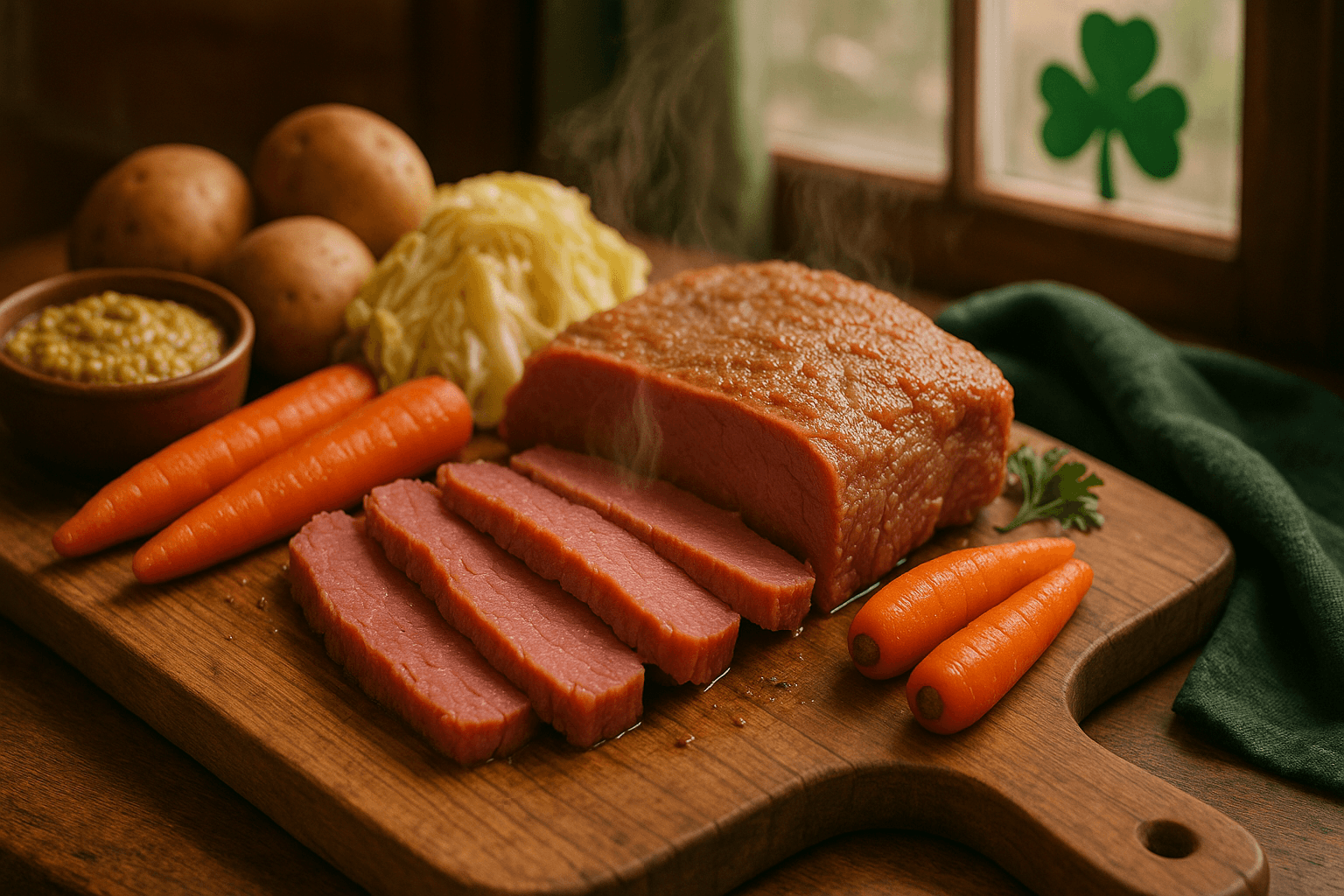
There are few pieces of meat that reveal cooking technique quite as ruthlessly as corned beef. Treat it gently and it can be rosy, juicy, neatly sliceable, and deeply savory, with that unmistakable cured aroma that signals both deli counter and St. Patrick’s Day table. Push it too hard and the same brisket turns dry at the edges, stringy in the middle, or so soft it collapses into shreds before it ever reaches the cutting board. That difference is not luck. It is chemistry, heat management, and knife work.
Corned beef sits at an unusual intersection of traditions. It is both a homey boiled dinner and a carefully cured meat. It belongs as much to food science as to family ritual. Salt moves inward slowly over time. Sugar rounds flavor and affects moisture perception. Nitrite preserves color, contributes the distinct cured taste, and influences aroma. Then the cooking stage rewrites the texture again: too much heat and muscle fibers contract aggressively, squeezing out moisture; enough time at a controlled simmer or in a moist steam environment and the collagen in brisket dissolves into gelatin, changing toughness into tenderness.
If you have ever wondered why one corned beef slices cleanly for sandwiches while another falls apart into ragged strands, why the point and flat behave like different cuts entirely, or why “just boil it” is often the fastest route to disappointing brisket, this is the guide. We are going beyond the box directions and into the mechanics of what is happening inside the meat, so you can choose your outcome on purpose: deli-style slices, classic tender dinner, or fork-soft shredded meat.
The Irish-American story behind corned beef
Despite the strong St. Patrick’s Day association, corned beef and cabbage is not exactly an old-country Irish national dish transplanted intact to America. In Ireland, pork, especially bacon, historically played a larger everyday role than beef, which was relatively expensive and often tied to export markets. The familiar Irish-American corned beef tradition grew largely in the United States, especially in cities where Irish immigrants lived near Jewish butchers and delicatessens and had access to cured brisket at a practical price.
The “corned” in corned beef refers not to corn the grain, but to the large “corns” or grains of salt historically used in curing. Over time, the dish became a marker of celebration, assimilation, and urban immigrant cooking. That is why corned beef can live comfortably in two worlds: on one table with cabbage, potatoes, and carrots for a March holiday meal, and on another piled high with mustard on rye in a deli context.
Understanding that dual identity helps explain the texture question. For a boiled dinner, many cooks like corned beef very tender, almost spoon-soft. For sandwiches, that same doneness can feel overcooked, because slices crumble instead of holding together. The best method depends on the result you want.
What corning actually does to beef
At its core, corned beef is brisket that has been cured in a seasoned salt brine or dry cure. Brisket is naturally a hardworking, collagen-rich cut from the chest of the animal. Left untreated, it can be beefy but tough. Curing changes both flavor and physical behavior before heat even enters the picture.
Salt diffusion: the slow inward march
Salt is the primary driver of curing. In a wet brine, the exterior of the beef sits in a high-salt environment. Over time, dissolved salt ions diffuse inward. This is not instant. A whole brisket flat can take 5 to 7 days to cure through, while a thick full brisket or especially thick point may take 7 to 10 days or more depending on thickness and whether it is injected.
A useful home-kitchen rule is that equilibrium takes time, and thickness matters more than weight. A broad, thin 5-pound flat can cure more evenly than a chunky 4-pound point. If a piece is 2 to 2 1/2 inches thick, a week is a reasonable curing window; if it is 3 inches or more in places, plan longer or use an injected/pumped commercial product.
As salt diffuses into muscle, it does several things:
- It seasons the meat internally rather than just on the surface.
- It alters muscle proteins, especially myosin, allowing them to bind water differently.
- It firms the meat somewhat when raw, making it denser and more ham-like in character than fresh brisket.
- It changes the way the meat loses moisture during cooking.
This is one reason cured brisket feels and tastes distinct from a plain braised brisket, even before spices and nitrite enter the picture.
Sugar’s role: not sweetness so much as balance
Sugar in a corned beef brine is often misunderstood. It is not there to make the beef taste sugary. Typical home brines use about 1/2 to 1 cup sugar for every gallon of water, paired with roughly 1 to 1 1/2 cups kosher salt, depending on the salt brand and whether you are building an equilibrium brine or a stronger traditional cure.
What sugar does instead is more subtle:
- It softens the harsh edge of salinity.
- It slightly shifts how we perceive cured flavor.
- It can modestly influence browning if the meat is later roasted or pan-finished.
- It contributes to a rounder, fuller taste.
Brown sugar is common, but white sugar works perfectly well. The difference is mostly flavor nuance.
Spices: aroma on the surface and in the broth
The classic pickling spice profile usually includes black peppercorns, mustard seed, coriander, bay leaf, clove, allspice, ginger, red pepper flakes, and sometimes cinnamon or juniper. Spices do not diffuse inward nearly as effectively as salt. They mostly perfume the exterior layers and the cooking liquid. That means the curing chemistry is doing the heavy lifting, while the spice blend shapes the aroma.
Nitrite chemistry: why corned beef is pink and tastes cured
Corned beef’s signature color and flavor come from curing salt containing sodium nitrite, often sold to home cooks as Prague Powder #1 or pink curing salt #1. This is not Himalayan pink salt; it is a specialized curing ingredient dyed pink so it will not be confused with table salt.
What nitrite does
Nitrite serves several important functions:
- It preserves the rosy pink color by reacting with myoglobin, the pigment in meat.
- It creates the recognizable “cured” flavor found in corned beef, pastrami, ham, and hot dogs.
- It helps prevent warmed-over flavors during storage.
- It contributes to safety by inhibiting the growth of certain dangerous bacteria, especially Clostridium botulinum, though it is not a substitute for proper refrigeration and sanitation.
When heated, nitrite-derived compounds bind to myoglobin and form nitrosylhemochrome, the stable pink pigment associated with cured cooked meats. That is why a properly cured corned beef stays pink even after a long cook, while an uncured brisket turns gray-brown.
Home-curing safety: precision matters
This is the point where kitchen craft becomes food safety. Curing salt must be measured carefully. Too little and you may not get the desired color, flavor, or protection. Too much is unsafe.
For Prague Powder #1, a common usage guideline is 1 level teaspoon per 5 pounds of meat, or approximately 5.67 grams per 5 pounds, though exact formulas vary with recipe design and whether you are doing an equilibrium cure by percentage. Using a digital gram scale is best.
Practical safety rules for home curing:
- Use only a tested recipe from a reputable source when working with curing salt.
- Weigh curing salt whenever possible. Do not eyeball it.
- Keep the meat refrigerated at 34 to 40°F / 1 to 4°C throughout curing.
- Use nonreactive containers such as food-grade plastic, stainless steel, or zip-top brining bags.
- Turn the meat daily if it is submerged in a bag or container to encourage even exposure.
- Never substitute curing salt for regular salt or vice versa.
- Label curing salt clearly and store it safely away from children.
If you buy a commercial corned beef brisket, this chemistry has already been handled for you. Your job then becomes desalting if needed, cooking gently, cooling appropriately, and slicing correctly.
Flat vs. point: why one slices neatly and the other wants to shred
Brisket has two major muscles that are often separated or sold together.
The flat
The flat, also called the first cut, is leaner, broader, and more uniform in thickness. It has long, visible grain and less internal fat. Because it is relatively even and lean, it is the best choice for clean sandwich slices. It can also dry out more easily if overcooked.
The point
The point, or deckle, is thicker, fattier, and more irregular. It contains more marbling and more connective tissue. It is flavorful and forgiving, but because of its fat and structure it tends to cook toward a looser, more shreddy texture. It is excellent if you like corned beef very tender or plan to make hash, but it is harder to slice into tidy deli sheets.
Why they cook differently
The flat and point are anatomically different muscles doing different work. Their collagen content, fat distribution, and geometry are not the same. Heat enters and distributes through them differently. A thick point may need more time for collagen to soften, but the flat attached to it may hit ideal slicing texture earlier. On a whole packer brisket that has been corned, this can create a mismatch where one section feels perfect and the other feels either too firm or too soft.
If your goal is uniform slices, buy the flat. If your goal is succulent, rich, spoon-tender corned beef, the point is a pleasure.
Why boiling ruins texture more often than it helps
Most disappointing corned beef is not underseasoned. It is overheated.
The word “boiled dinner” survives culturally, but a rolling boil is the enemy of sliceable cured brisket. Here is why.
Muscle fiber contraction
As meat heats, muscle proteins denature and tighten. This begins gently, then accelerates. At very high cooking temperatures, especially in a vigorously boiling liquid around 212°F / 100°C, muscle fibers contract more aggressively and squeeze out moisture. That means the meat gets firmer and drier even while collagen is trying to soften.
Collagen needs time, not violence
Brisket’s toughness comes largely from connective tissue, especially collagen. Collagen does not magically become tender because the pot is hotter. It becomes gelatin through prolonged cooking in the approximate range of 180 to 205°F / 82 to 96°C inside the cooking environment, given enough time. A gentle simmer or a covered steam-braise gives collagen what it needs without punishing the muscle fibers more than necessary.
Boiling also roughens the exterior
A rolling boil tosses the meat around, abrades the surface, emulsifies some fat into the liquid, and can contribute to ragged edges. This is one reason a deli-style corned beef is often steamed rather than boiled outright. Steam is hot and effective, but less turbulent.
The simmer-steam rule: choose the texture you want
If there is one practical rule to remember, it is this:
For sliceable corned beef, cook below a boil and stop when the meat is tender but still structurally coherent. For fall-apart corned beef, keep going past that point.
That sounds obvious, but it helps to define what “that point” looks like.
For deli-style sliceable corned beef
- Cook in barely simmering liquid or in a covered steam environment.
- Aim for internal tenderness where a skewer or thin knife meets slight resistance, like room-temperature butter rather than warm butter.
- Rest and ideally chill before slicing thin.
- Slice across the grain.
For classic very tender dinner corned beef
- Simmer gently until a fork turns easily and the meat yields more readily.
- Serve hot in thicker slices.
- Accept that very thin slices may crumble.
For shreddy, hash-friendly, fall-apart corned beef
- Cook longer, especially if using point.
- Internal structure will loosen considerably.
- Best for hash, sandwiches with rough chunks, or soups rather than neat platters.
Two reliable cooking methods
Method 1: Gentle stovetop simmer
This is the best all-purpose home method.
What you need
- 1 corned beef brisket, 3 to 5 pounds, preferably flat for slicing
- Water to cover by about 1 inch
- Optional aromatics: 1 onion halved, 2 carrots cut in chunks, 2 celery stalks, 2 bay leaves, 1 tablespoon peppercorns, spice packet if included
Step-by-step
- Rinse or soak if needed. Commercial corned beef can be salty. Rinse under cold water. If you are salt-sensitive or know the brand runs salty, soak in cold water for 1 to 2 hours, changing the water once.
- Place in a pot and cover with cold water by about 1 inch.
- Add aromatics if using.
- Bring slowly toward a simmer. Do not blast the heat.
- Once small bubbles rise lazily and the liquid sits around 180 to 190°F / 82 to 88°C, adjust heat to maintain that level. The surface should tremble, not roil.
- Cook about 45 to 60 minutes per pound, depending on thickness and desired texture. A 4-pound flat often takes 3 to 3 1/2 hours.
- Begin checking after the early side of the estimate. Insert a skewer or thin knife into the thickest part. For sliceable meat, it should go in with modest resistance. For dinner-soft, it should slide in more easily.
- Rest 20 to 30 minutes before slicing. For very thin deli slicing, cool the meat in some of its liquid, then refrigerate until thoroughly chilled, ideally 6 to 12 hours.
Method 2: Oven steam-braise
This method gives excellent control and a deli-adjacent texture.
Step-by-step
- Preheat the oven to 300°F / 150°C.
- Rinse the corned beef and place it on a rack or bed of onion slices in a roasting pan.
- Add about 1 inch / 2.5 cm of water or light stock to the pan.
- Cover tightly with foil or a lid.
- Cook until tender, usually 3 1/2 to 4 1/2 hours for a 4- to 5-pound piece.
- Check tenderness just as you would on the stovetop.
- Rest, then slice warm or chill for thin slicing.
Because the meat is surrounded by moist heat rather than battered by bubbling water, the texture can stay especially coherent.
The power of cooling: why delis chill before slicing
This is the step home cooks skip most often, and it explains why deli corned beef seems magically easier to slice thin.
When corned beef is piping hot, gelatin is fluid, fat is soft, and the muscle fibers are more fragile. That is a recipe for crumbling if you try to shave it thin. Once the meat cools, the gelatin sets slightly and the structure firms up. Chilled corned beef slices more cleanly, especially with a sharp slicing knife.
Best practice for thin slices
- Let the cooked corned beef cool in its liquid for 30 to 60 minutes.
- Transfer, cover, and refrigerate until cold, at least 6 hours and preferably overnight.
- Slice thinly across the grain.
- Reheat slices gently in a little broth, covered, or steam them briefly.
That sequence gives you the best shot at supple slices instead of broken flakes.
Slicing direction: the final make-or-break detail
You can cure perfectly and cook perfectly and still wreck the texture with one bad knife decision.
Brisket has pronounced muscle grain. If you slice with the grain, the meat eats stringy and chewy because each bite contains long intact muscle fibers. Slice across the grain and those fibers are shortened, so the meat feels tender.
This is especially important because brisket grain can change direction, particularly where flat and point meet. Study the meat before cooking if necessary and make a mental note. Some cooks even cut the whole brisket into two sections at the seam before cooking so each muscle can later be sliced correctly.
Thick vs. thin slicing
- Thin slices, 1/8 inch / 3 mm or less: best when chilled first; ideal for rye bread and deli service.
- Medium slices, 1/4 inch / 6 mm: excellent for hot dinner plates.
- Thick chunks or rough slices: useful when the meat is very tender and you are serving family-style.
If slices crumble, the meat is often either overcooked for that style, too hot to slice properly, or being cut with the grain.
Step-by-step: from packaged corned beef to the result you want
Here is a practical roadmap for the most common scenario: a store-bought cured brisket.
For St. Patrick’s Day dinner: tender but sliceable
Ingredients
- 1 corned beef flat, 4 pounds
- Water to cover
- 1 onion, halved
- 2 bay leaves
- 1 teaspoon black peppercorns
- 1 small head green cabbage, cut into 6 wedges
- 1 1/2 pounds waxy potatoes, halved if large
- 4 carrots, peeled and cut into large pieces
- Whole-grain mustard, Dijon, or a mustard-cream sauce for serving
Method
- Rinse the brisket well.
- If heavily salted, soak in cold water for 1 hour.
- Put brisket in a pot, add onion, bay, peppercorns, and water to cover by 1 inch.
- Bring just to a simmer, then keep at 180 to 190°F / 82 to 88°C.
- Cook 3 to 3 1/2 hours, checking after 2 3/4 hours.
- When a skewer enters with light resistance, lift the brisket to a tray, tent loosely, and rest.
- Add potatoes and carrots to the cooking liquid and simmer 15 minutes.
- Add cabbage wedges and cook 10 to 15 minutes more, until tender but not sulfurous and limp.
- Slice the brisket across the grain in 1/4-inch / 6 mm slices.
- Serve with vegetables, some hot broth spooned over, and mustard.
This sequence prevents the vegetables from overcooking and turning murky while the meat finishes.
For deli-style sandwich corned beef
- Cook a corned beef flat by gentle simmer or steam-braise until just tender enough that a probe slides in with slight resistance.
- Let cool in some cooking liquid 30 to 60 minutes.
- Refrigerate overnight.
- Slice very thin across the grain.
- Reheat slices by steaming or in a covered skillet with a few tablespoons of broth until just hot.
- Serve on rye with yellow mustard, deli mustard, or a mustard-horseradish blend.
If you want to move toward pastrami territory, coat the chilled cooked corned beef in cracked black pepper and coriander, then warm it in a low oven or smoker until heated through.
Cabbage, potatoes, and carrots: practical rules so the sides do not suffer
The vegetables that traditionally accompany corned beef have their own texture rules.
Cabbage
Cabbage is at its best when tender with a little structure left, not boiled into submission. Overcooked cabbage releases more sulfur compounds, which is where that aggressive cabbage smell comes from.
Rules for better cabbage:
- Cut into wedges with some core attached so pieces stay together.
- Cook in the corned beef broth for 10 to 15 minutes only.
- If you want brighter flavor, cook cabbage separately in lightly salted water or sauté it in butter, then serve alongside the beef.
- Finish with black pepper, a little butter, or cider vinegar.
Potatoes
Waxy potatoes such as Yukon Golds or red potatoes hold together better than russets in broth.
Rules for potatoes:
- Add them late so they do not overcook while the brisket cooks.
- Simmer gently, not at a rolling boil, to prevent broken edges.
- For richer results, toss cooked potatoes with butter and parsley after draining.
Carrots
Carrots love the savory-salty broth but can become mushy if left too long.
Rules for carrots:
- Cut into large pieces rather than coins.
- Add with the potatoes or a few minutes later depending on size.
- A small pinch of sugar or a butter glaze at the end can highlight their sweetness.
Mustard and acidic accompaniments: not tradition for tradition’s sake
Corned beef is salty, rich, and gelatinous. It benefits from condiments that provide sharpness and contrast.
Good pairings include:
- Whole-grain mustard
- Smooth Dijon
- Yellow deli mustard
- Mustard mixed with horseradish
- Parsley sauce with a little vinegar
- Pickles or pickled onions
The acid and pungency cut through fat and salt, brightening each bite. This is also why cabbage often tastes good with a splash of vinegar and why rye bread, sauerkraut, and pickles fit so naturally into the corned beef universe.
Common mistakes that lead to sliceable, stringy, or fall-apart outcomes
Mistake 1: Boiling hard
What happens: fibers tighten, moisture loss increases, exterior gets ragged.
Fix: keep the cooking liquid at a bare simmer, around 180 to 190°F / 82 to 88°C.
Mistake 2: Expecting point and flat to behave the same
What happens: one end may be ideal while the other is too soft.
Fix: choose the flat for slices, point for richer, softer texture, or separate the muscles.
Mistake 3: Undercooking brisket
What happens: the meat seems tough because collagen has not converted sufficiently.
Fix: give it more time at gentle heat. Tough brisket is often undercooked, not overcooked.
Mistake 4: Overcooking if you want deli slices
What happens: meat turns shreddy and won’t hold thin slices.
Fix: stop when just probe-tender, then cool and chill before slicing.
Mistake 5: Slicing with the grain
What happens: chewy, stringy mouthfeel.
Fix: always slice across the visible grain.
Mistake 6: Serving straight from the pot without resting
What happens: juices redistribute poorly, slices break apart.
Fix: rest at least 20 to 30 minutes; chill if slicing thin.
Mistake 7: Overcooking the vegetables in the meat pot
What happens: gray cabbage, mushy potatoes, muddy flavors.
Fix: add vegetables near the end or cook separately.
If you want to cure your own corned beef
Home-curing is deeply satisfying, but it rewards patience and precision.
A basic cure profile for 1 gallon / 3.8 liters of water
- 225 to 275 grams kosher salt, depending on brand and desired salinity
- 100 to 200 grams sugar
- 1 tablespoon pink curing salt #1, or the equivalent by weight according to a tested formula
- 1 tablespoon cracked black pepper
- 1 tablespoon mustard seed
- 2 teaspoons coriander seed
- 4 bay leaves
- 6 allspice berries
- 4 cloves garlic, crushed
This is only a profile, not a universal formula for every brisket size. The meat should be fully submerged and refrigerated. A 5- to 6-pound brisket flat often needs 5 to 7 days; thicker cuts may need 7 to 10 days. Turn daily. Rinse before cooking, and soak briefly if you prefer less salt.
Some advanced home curers use equilibrium curing by percentage of meat-plus-water weight. That is excellent when you know the math and have a scale, because it prevents oversalting and allows repeatability. For casual home cooks, however, the safest route is to follow a trusted tested recipe exactly.
The texture spectrum: choose intentionally
The most useful way to think about corned beef is not “done” versus “not done,” but where you want to land on a spectrum.
Sliceable and juicy
- Usually a flat
- Gently simmered or steam-braised
- Pulled when just tender
- Rested and preferably chilled
- Thinly sliced across the grain
Best for: sandwiches, platters, neat presentation
Tender and hearty
- Flat or point
- Simmered a bit longer
- Sliced medium-thick while warm
Best for: St. Patrick’s Day dinner with cabbage and potatoes
Fall-apart soft
- Often point
- Cooked until collagen breakdown is extensive
- Served in chunks, flakes, or shreds
Best for: hash, rustic meals, rough sandwiches
None of these are wrong. The mistake is wanting one result and using the method for another.
Takeaways for your next corned beef
Corned beef becomes what your cure, heat, time, and knife tell it to become. Salt diffusion seasons and restructures the brisket from the inside out. Sugar balances and rounds the cure. Nitrite preserves the rosy color and creates the flavor that makes corned beef taste like corned beef rather than simply salty braised brisket. Then the cooking stage decides texture: a violent boil tightens fibers and risks dryness, while a controlled simmer or moist steam allows collagen to melt gradually into gelatin.
Flat and point are not interchangeable. The flat is your best ally for clean slices; the point is your route to richness and tenderness that borders on shreddable. If your dream is deli-style corned beef, stop cooking at the earlier edge of tenderness, cool it, chill it, and slice thin across the grain. If your dream is a holiday platter with fork-tender meat and buttery vegetables, cook a little further and slice a little thicker. If you want hash, go all the way to soft.
And perhaps most importantly, retire the idea that more bubbling means better cooking. Corned beef rewards restraint. Keep the liquid at a lazy simmer, give the collagen time to surrender, cook the vegetables only as long as they need, and finish with mustard or something bright and acidic. Do that, and your corned beef will stop being a seasonal gamble and start becoming a controlled, repeatable success.