Why Fenugreek Tastes Maple-Sweet, Bitter, or Strangely Celery-Like: Sotolon Chemistry, Blooming Rules, and the Dose Curve Behind Better Curries, Pickles, and Flatbreads
RecipeSimpli
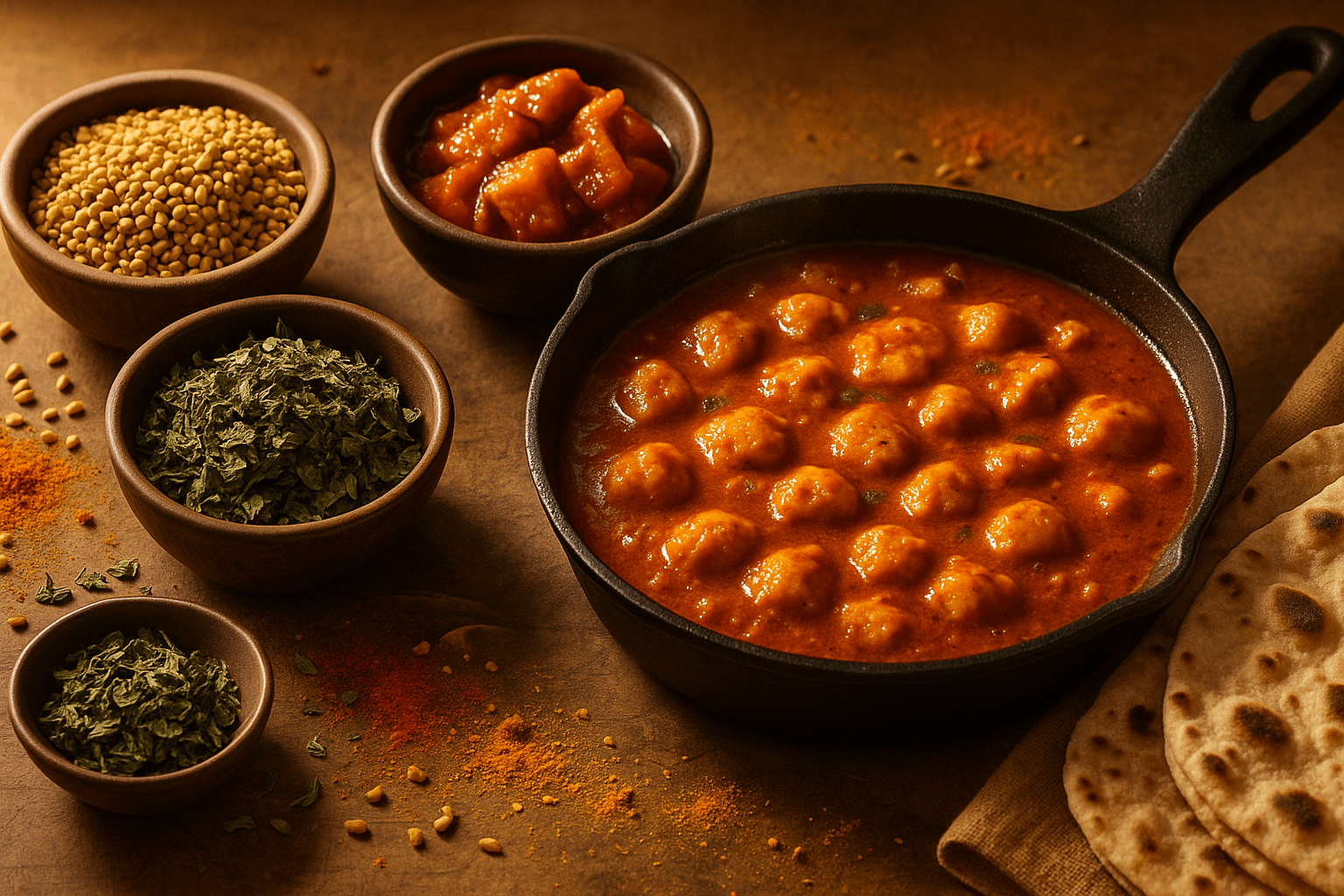
Few spices are as confusing, or as rewarding, as fenugreek. Smell the seeds in the jar and you may catch maple syrup, toasted sugar, hay, celery, curry powder, or a medicinal edge that seems almost too strong to be useful. Taste a few raw seeds and the experience can be downright punishing: hard, bitter, green, and lingering. Yet in the right hands, fenugreek is one of the quiet structural flavors of great cooking. It gives depth to Gujarati pickles, warmth to North Indian curries, complexity to Ethiopian berbere and niter kibbeh, intrigue to Yemeni hilbeh, and a haunting savoriness to flatbreads and lentils. The difference between glorious and unpleasant often comes down to one idea: dosage plus treatment.
Fenugreek is not a “sprinkle freely and hope for the best” spice. It behaves more like a powerful seasoning chemical delivery system. Use a little, and it reads sweet, nutty, warmly bitter, almost butterscotch-like. Use too much, or handle it poorly, and it turns sharp, stale, dusty, medicinal, and aggressively bitter. That dramatic shift is why fenugreek has such a split reputation among home cooks. Some people adore the maple-like perfume; others remember one overspiced curry or pickle and avoid it forever.
The good news is that fenugreek is very learnable. Once you understand what creates its aroma, what heat does to it, why leaves and seeds are practically different ingredients, and how bitterness interacts with fat, acid, starch, and dairy, it becomes much easier to use confidently. This is a spice where a few precise rules matter far more than elaborate technique.
What fenugreek is, and why so many cuisines keep reaching for it
Fenugreek comes from Trigonella foenum-graecum, a legume whose seeds and leaves are both used in cooking. The seeds are small, angular, hard, and yellow-brown. The leaves are sold fresh in some markets and widely available dried as kasuri methi or dried methi leaves. Although they come from the same plant, they taste strikingly different in the kitchen.
The seeds are dense, bitter, aromatic, and built for heat, oil, and long contact with other ingredients. They are common in Indian spice blends, especially in small amounts; in South Asian pickles; in some curry powders; in Ethiopian and Eritrean cooking; in Middle Eastern preparations; and in some breads and doughs. The leaves, especially dried leaves, are greener, softer, more fragrant, and often used as a finishing herb-spice, layered in near the end of cooking or kneaded into dough.
Fenugreek’s cultural range makes sense when you taste how many roles it can play. It can make a dish feel sweeter without adding sugar. It can make rich foods taste more savory. It can echo toasted onion, celery, lovage, caramel, and maple all at once. It can also tame perceived greasiness, especially in dishes with legumes, potatoes, yogurt, cream, or ghee. In pickle traditions, its bitterness becomes part of the architecture: not the dominant note, but the tension that keeps sour, salty, oily, and hot flavors from tasting flat.
Historically, fenugreek has also been used beyond the kitchen, including medicinally and as a forage plant, which helps explain why its flavor often reads “herbal” in a very old-fashioned way. That medicinal association is not imaginary. Some of the same molecules that make fenugreek fascinating in food also make it feel potent and unusual, especially when concentrated.
The key aroma molecule: sotolon
If fenugreek had a celebrity compound, it would be sotolon. Sotolon is an extraordinarily powerful aroma molecule associated with maple-like, caramel-like, curry-like, seasoning-like notes. It appears in fenugreek, but also in other foods and drinks, including certain wines, aged sake, molasses-like aromas, and maple-related sensory impressions. Tiny amounts can have a huge sensory impact.
That matters because fenugreek is a classic example of how aroma intensity is not the same as bulk flavor. A teaspoon of seeds may not look like much, but its aromatic effect can dominate a pot if the rest of the flavor structure is delicate. Sotolon is a big reason fenugreek can seem sweet on the nose while tasting bitter on the palate. The brain receives warm, dessert-like signals from the aroma while the tongue gets alkaloids, saponins, and phenolic bitterness.
This split explains the “maple-sweet, bitter, or celery-like” puzzle. Fenugreek does not contain one simple flavor. It contains overlapping sensory messages, and your perception depends on concentration, heat treatment, the presence of fat, and what else is in the dish. At low levels, sotolon and toasted notes may read as sweet warmth. At moderate levels, the spice can feel complex, savory, and pleasantly bittersweet. At high levels, its bitter backbone and green-herbal aspects show up much more clearly, and the overall impression can become harsh, dusty, or medicinal.
The celery-like impression comes from that intersection of bitter, green, savory, and aromatic compounds. Fenugreek is not celery, of course, but it can trigger similar associations: lovage, bouillon, celery seed, and aromatic herb bitterness. That is why fenugreek can support vegetable dishes and legumes so well, and also why too much can make a curry taste oddly like over-concentrated seasoning.
The dose curve: why a little is magical and too much is punishing
With many spices, adding 25 percent more simply makes the dish taste more of that spice. Fenugreek is less linear. It has a steep dose curve. There is often a relatively narrow band where it tastes balanced, and beyond that point its bitterness and medicinal edge accelerate quickly.
A practical home-kitchen way to think about it:
- Tiny dose: Barely noticeable as “fenugreek,” but adds mysterious sweetness and depth.
- Moderate dose: Distinctive, complex, nutty-bitter warmth. Excellent in curries, pickles, and breads.
- High dose: Assertive, drying, harsh, lingering, and potentially soapy or medicinal.
For whole or lightly crushed seeds in a dish serving 4 to 6 people, a good starting range is often 1/4 to 1/2 teaspoon. In a larger pot of dal, a braise, or a pickle where fenugreek is only one of several strong elements, 3/4 teaspoon can work. Once you get to 1 teaspoon or more of seeds in an ordinary curry, especially if the spice is not balanced by acid, fat, starch, or sweetness from onions and tomatoes, fenugreek can become the only thing you taste.
For ground fenugreek seed, reduce the amount because the flavor is released faster and feels stronger. Start with 1/8 to 1/4 teaspoon in a curry for 4 to 6 servings. Ground fenugreek also goes stale more quickly and can taste dusty if old.
For dried fenugreek leaves (kasuri methi), the dose is different because the flavor profile is greener and less aggressively bitter. A common sweet spot is 1 to 2 teaspoons crushed between the palms for a curry serving 4 to 6, added near the end. In butter chicken-style gravies or creamy tomato sauces, 1 tablespoon can be pleasant. But even leaves can turn a dish dull and herbal if overused.
For fresh fenugreek leaves, volumes vary because bunches differ, but roughly 1 packed cup chopped leaves is enough to noticeably flavor a dough or a vegetable dish serving 4. If the leaves are mature and very assertive, blanching or sautéing first can soften bitterness.
This is the core rule: fenugreek should usually sound like a harmony, not a solo.
Why raw fenugreek tastes so bitter
Raw fenugreek seeds are hard, intensely bitter, and not very pleasant to chew. That bitterness comes from a mix of compounds, including saponins and alkaloids, plus the physical density of the seed itself. Dry raw seeds release flavor slowly in the mouth, so what you often notice first is the bitter, green, medicinal edge rather than the rounded toasted sweetness you get after cooking.
Cooking changes the balance. Heat drives off or transforms some volatile notes, encourages Maillard-style browning interactions in the broader dish, and allows oil to carry aroma compounds more evenly. But there is a catch: because the seeds are small, they can go from undercooked to scorched quickly.
Undercooked fenugreek tastes raw and stubbornly bitter. Burnt fenugreek tastes acrid and lingers in exactly the wrong way. The best flavor lives in the narrow middle zone: toasted enough to smell nutty and warm, not so dark that it smells like charred medicine.
Blooming rules: how fat and heat change fenugreek
One of the most useful techniques for fenugreek seeds is blooming in fat. This means briefly cooking the seeds in oil or ghee to wake up fat-soluble aromas and mellow some roughness before the main wet ingredients go in.
Here is the practical science. Hot fat does three things:
- Extracts aromatic compounds so they disperse through the dish rather than staying trapped in hard seeds.
- Rounds harsh edges by changing the sensory balance between bitterness and toastiness.
- Transfers flavor into onions, garlic, ginger, tomatoes, or lentils that follow.
How to bloom fenugreek seeds properly
- Use 1 to 2 tablespoons oil or ghee in a pan for a curry base serving 4 to 6.
- Heat over medium to medium-low, not high. If using a surface thermometer, aim for roughly 325 to 350°F / 165 to 175°C.
- Add 1/4 to 1/2 teaspoon fenugreek seeds, often with cumin or mustard seeds depending on the dish.
- Stir for 10 to 20 seconds, sometimes up to 30 seconds if the pan is not very hot.
- Watch for a subtle deepening of color and, more importantly, a shift in aroma from raw/green to nutty/maple-like.
- Immediately follow with onions, garlic, curry leaves, chilies, or another ingredient that lowers the pan temperature.
If the seeds darken to deep reddish-brown in spots or begin smelling sharply bitter, start over. Burnt fenugreek can ruin a whole pan of food much faster than burnt cumin.
Dry roasting vs blooming in fat
Dry roasting fenugreek can work, especially if the seeds will be ground into a spice blend. Spread them in a dry skillet over low heat for 1 to 3 minutes, stirring constantly, just until fragrant. Then cool completely before grinding.
Dry roasting emphasizes toast and aroma, but because there is no fat buffer, it is easier to overshoot and create bitterness. Blooming in fat is usually more forgiving for direct cooking. If you are making a masala powder, dry roasting is useful; if you are building a curry or pickle base, blooming is often the better move.
Soaking and sprouting
Soaking fenugreek seeds for several hours, then draining, can reduce some bitterness and soften the seeds for certain applications such as pickles or chutneys. Sprouted fenugreek has its own character: still bitter, but fresher and greener, and easier to chew. This is a niche use in many home kitchens, but worth knowing about if raw bitterness is your main obstacle.
Seeds vs leaves: almost different spices
A common mistake is treating fenugreek seeds and methi leaves as interchangeable. They are not.
Fenugreek seeds
Best for:
- Tempering in oil or ghee
- Pickles
- Spice blends
- Long-simmered lentils and curries
- Some breads in small amounts
- Seed-forward condiments
Flavor profile:
- Bitter
- Nutty
- Maple-like on the nose
- Savory and celery-adjacent
- Long-lasting and structural
Behavior in cooking:
- Benefits from blooming or roasting
- Tolerates long cooking if not overused
- Can become harsh if ground and added raw in excess
Fresh or dried methi leaves
Best for:
- Finishing creamy curries
- Kneading into flatbread doughs
- Stirring into potatoes, paneer, or vegetables
- Layering into sauces where you want aroma without seed bitterness
Flavor profile:
- Green and herbaceous
- Gently bitter
- Floral-savory
- Softer and more perfumed than the seeds
Behavior in cooking:
- Fresh leaves can be sautéed like a leafy green
- Dried leaves are usually crushed and added near the end
- Too much can still taste musty, but they are generally easier to use than seeds
A good shorthand: seeds build the skeleton; leaves paint the surface.
Where fenugreek shines
In curries and dals
Fenugreek is superb in tomato-onion gravies, lentils, potato dishes, chickpeas, and cream- or yogurt-enriched sauces. It loves foods that can absorb bitterness and reflect sweetness: browned onions, tomatoes cooked down until jammy, cream, butter, ghee, coconut milk, and starchy ingredients like potatoes or lentils.
For a basic curry base serving 4 to 6:
- 2 tablespoons ghee or neutral oil
- 1/4 teaspoon fenugreek seeds
- 1 teaspoon cumin seeds
- 1 medium onion, finely chopped
- 2 teaspoons ginger-garlic paste
- 2 medium tomatoes, chopped or 1 cup crushed tomatoes
- 1/2 teaspoon turmeric
- 1 to 2 teaspoons coriander powder
- 1/2 to 1 teaspoon chile powder
- Salt to taste
- Optional: 1 teaspoon crushed kasuri methi at the end
That amount of fenugreek supports rather than dominates.
In pickles
Fenugreek belongs naturally in oil-based and acid-driven pickles because bitterness becomes an asset when balanced by salt, chile, mustard, and sour fruit or lime. In pickles, the seed may be left whole, lightly crushed, or coarsely ground. Here, because the environment is intense and the condiment is eaten in small amounts, fenugreek can be used more assertively.
A practical pickle spice ratio for 500 grams of cut mango or lime might include:
- 2 tablespoons mustard seeds, coarsely ground
- 1 to 2 teaspoons fenugreek seeds, lightly roasted and coarsely ground
- 1 to 2 tablespoons chile powder
- 1 to 1 1/2 tablespoons kosher salt or equivalent by weight
- 3 to 5 tablespoons oil
- Acid from the fruit itself or extra lemon juice depending on the style
Notice that even in pickles, fenugreek is not usually the majority spice.
In flatbreads and doughs
Dried or fresh methi leaves are usually the star here, not the seeds. For methi paratha or methi thepla, the leaves contribute fragrance, a gently bitter green note, and a sense of savoriness that pairs beautifully with wheat.
For a simple methi flatbread dough:
- 2 cups whole wheat flour
- 1 cup packed chopped fresh methi leaves, or 2 to 3 tablespoons dried methi leaves
- 1/2 teaspoon salt
- 1/2 teaspoon cumin seeds
- 1 tablespoon yogurt or oil
- About 3/4 cup water, as needed
If using seeds in dough, keep them restrained: 1/4 to 1/2 teaspoon crushed seeds per 2 cups flour is usually enough.
In spice blends
Fenugreek is one of those blend ingredients that often makes people say, “What is that?” without identifying it. In curry powder, sambar powder, panch phoron-adjacent seasoning strategies, Ethiopian blends, and certain masalas, it acts as a bridge between earthy, warm, and sweet spices.
A basic curry-style blend might use only 1 part fenugreek to 8 or 10 parts coriander. That ratio tells you a lot about fenugreek’s power.
The science of balancing bitterness
Bitterness is not a flaw in fenugreek. It is part of the spice’s identity. The trick is balancing it so it reads as complexity rather than punishment.
Acid
Acid can sharpen perception, but it can also brighten a dish enough that fenugreek bitterness feels integrated rather than heavy. Tomato, tamarind, yogurt, lemon juice, amchur, and vinegar can all help. In pickles, acid is essential because it gives the bitterness a frame.
Use acid thoughtfully:
- In a tomato-based curry, let tomatoes cook down thoroughly before judging bitterness.
- In a yogurt sauce, add yogurt after reducing the heat so it stays smooth.
- A final squeeze of lemon can lift a fenugreek-heavy dish, but too much raw acid can make bitterness feel more pointed if the dish lacks fat.
Dairy and fat
Fat is one of fenugreek’s best friends. Ghee, butter, cream, coconut milk, peanuts, sesame, and full-fat yogurt all soften bitter edges by coating the palate and carrying aroma. This is one reason kasuri methi is so effective in butter chicken-type gravies or creamy paneer dishes.
If a dish tastes too fenugreek-bitter, one rescue move is to add 1 to 2 tablespoons cream, butter, or yogurt, depending on the style.
Starch and legumes
Potatoes, lentils, chickpeas, beans, and wheat dough dilute and distribute fenugreek beautifully. Their mildness gives the spice room to breathe. A bitter spice note that feels aggressive in a thin broth may feel perfectly balanced in dal or stuffed flatbread.
Warm spices
Coriander, cumin, fennel, cinnamon, clove, black pepper, mustard seed, and paprika-style chiles can all support fenugreek. Coriander is especially useful because its citrusy-woody profile broadens the flavor and prevents fenugreek from feeling too narrow.
Sweetness
You do not usually need actual sugar, but sweetness from browned onions, carrots, long-cooked tomatoes, coconut, or dairy can make fenugreek shine. In some dishes, a small pinch of jaggery or sugar, about 1/4 teaspoon, can rescue a sharp edge without making the dish taste sweet.
Common mistakes that make fenugreek taste bad
1. Using too much seed
This is by far the biggest problem. If you are new to fenugreek, begin with 1/4 teaspoon seeds or 1/8 teaspoon ground seed in a dish for 4 to 6 and scale up slowly.
2. Burning it during tempering
Fenugreek burns faster than many people expect. Keep the heat moderate, have your next ingredients ready, and trust your nose.
3. Adding raw ground fenugreek directly to a dish
Ground fenugreek added raw can taste dusty and aggressively bitter. If using ground seed, toast it lightly first, or add it early enough to cook into the fat and moisture.
4. Confusing leaves with seeds
If a recipe calls for kasuri methi and you substitute seeds one-for-one, the dish will likely become unpleasant. They are not direct substitutes.
5. Using stale fenugreek
Old fenugreek loses its appealing maple-like top notes and leaves behind flat bitterness. Whole seeds keep far longer than ground seed.
6. Pairing it with too little fat or body
Fenugreek in a watery, low-fat, lightly seasoned dish can stick out. It usually wants either oil, dairy, starch, or a strong sour/salty framework.
Step-by-step: how to use fenugreek well in real home cooking
Here are three reliable methods.
Method 1: Fenugreek in a curry base
Best for: chickpea curry, potato-tomato curry, paneer dishes, lentils
- Heat 2 tablespoons ghee or oil in a pan over medium heat.
- Add 1/4 teaspoon fenugreek seeds and 1 teaspoon cumin seeds.
- Stir for 10 to 15 seconds until aromatic.
- Add 1 finely chopped onion immediately. Cook 8 to 10 minutes until golden.
- Add 2 teaspoons ginger-garlic paste and cook 30 to 60 seconds.
- Add 1 cup chopped tomatoes plus your powdered spices. Cook until thick and the oil begins to separate, about 8 to 12 minutes.
- Add your main ingredient and enough water or stock to simmer.
- Finish with 1 teaspoon crushed kasuri methi if desired, plus a little butter or yogurt for balance.
- Rest 5 minutes before serving so the fenugreek settles into the sauce.
Method 2: Fenugreek for pickles or spice pastes
Best for: mango pickle, lime pickle, chile pickle
- Measure 1 to 2 teaspoons fenugreek seeds.
- Dry roast over low heat for 1 to 2 minutes until fragrant, not dark.
- Cool completely.
- Coarsely grind; do not powder too finely unless the recipe specifically wants that texture.
- Mix with mustard, salt, chile, and oil.
- Toss with the fruit or vegetable and let stand according to your pickle style.
Coarse grinding is useful because it gives bursts of flavor without making the entire pickle taste muddy or overly bitter.
Method 3: Kasuri methi as a finishing layer
Best for: creamy curries, butter sauces, paneer, chicken, potatoes
- Measure 1 to 2 teaspoons dried methi leaves.
- Crush them between your palms directly over the pan.
- Add during the final 2 to 5 minutes of cooking.
- Simmer briefly, then rest off heat for a minute before serving.
Crushing releases aroma and prevents large papery leaf pieces from floating around the dish.
How to rescue a dish with too much fenugreek
It happens. Here are the best fixes, depending on the dish.
- Add bulk: More tomatoes, onions, lentils, potatoes, beans, or stock.
- Add fat: Butter, cream, coconut milk, peanut paste, tahini, or yogurt.
- Add acid carefully: Lemon juice, tamarind, or a little yogurt can rebalance, but do not dump in acid blindly.
- Add sweetness sparingly: A pinch of sugar or jaggery can round out bitterness.
- Strain if practical: If a broth or sauce has whole seeds and tastes too strong, remove some seeds if possible.
- Let it rest: Fenugreek can mellow slightly after 10 to 20 minutes, especially in a rich dish.
What usually does not work: adding more chile. Heat can distract, but it rarely fixes a fundamentally over-fenugreeked dish.
Storage science: why fenugreek can smell great one month and flat the next
Fenugreek’s aromatic power depends on volatile compounds, and volatile compounds fade with oxygen, light, heat, and time. Whole seeds protect those compounds much better than ground spice.
Best storage practices
- Keep whole seeds in an airtight jar in a cool, dark cupboard.
- Buy ground fenugreek in small amounts only, or grind whole seeds yourself.
- Store dried methi leaves tightly sealed; they lose fragrance quickly if exposed to air.
- Avoid storing spices above the stove where heat and steam accelerate staling.
Shelf-life guidelines
- Whole fenugreek seeds: best within 12 to 18 months, often usable longer if well stored
- Ground fenugreek: best within 3 to 6 months for top aroma
- Dried methi leaves: best within 6 to 12 months, though highly variable by packaging quality
A simple test: rub a little between your fingers. If the aroma is mostly dusty bitterness and very little sweet-savory fragrance, it is past its prime.
Cultural context: respect the ingredient’s role
Fenugreek rarely works alone. In many traditions, it is used with impressive restraint and purpose. In Indian cooking, it may appear in tempering, in a masala, as kasuri methi near the end, or as a key note in pickles and vegetable dishes. In Ethiopian cooking, it helps define spice architecture rather than acting as an isolated flavor bomb. In breads and doughs, methi leaves often bring a homestyle comfort that is less about boldness and more about everyday depth.
This matters because modern recipe writing sometimes encourages overstatement. A dish is not necessarily more authentic or more flavorful because it contains large amounts of every aromatic ingredient. Traditional fenugreek use is often sophisticated precisely because it is measured. The spice is there to create contour.
Practical pairing rules you can remember
If you want a few home-cook rules that actually stick, use these:
- Start tiny with seeds. For most curries serving 4 to 6, begin with 1/4 teaspoon.
- Bloom, don’t blast. Moderate heat, brief time, immediate follow-up ingredient.
- Use leaves for aroma, seeds for structure. Kasuri methi is not just “more fenugreek.” It is a different effect.
- Fenugreek loves company. Pair it with tomato, onion, dairy, potatoes, lentils, mustard, coriander, cumin, and sour elements.
- Bitterness needs a cushion. Fat, starch, or sweetness from cooked vegetables helps.
- In pickles, be bolder. In curries, be gentler. The serving size and flavor environment are different.
- Freshly toasted beats pre-ground. Especially with seeds.
- If you can clearly identify fenugreek as the loudest note, you may have used too much.
A simple model for choosing seeds or leaves
Use fenugreek seeds when you want:
- Long-cooked depth
- A bitter backbone
- Flavor carried in oil
- Pickle complexity
- A hidden maple-savory undertone in a spice blend
Use methi leaves when you want:
- Herbal fragrance
- Soft bitterness
- A finishing note in curries
- Leafy savoriness in flatbreads
- Less risk of harshness
Use both when building a layered dish: a tiny amount of seed at the beginning, a pinch of kasuri methi at the end.
That combination is one of the smartest ways to get the full fenugreek experience without tipping into bitterness.
The big takeaway
Fenugreek tastes maple-sweet, bitter, or celery-like because it is all of those things at once, and your cooking determines which side of its personality comes forward. Sotolon gives the alluring sweet-savory aroma. Bitter compounds give the seeds their stern backbone. Heat, fat, and dilution decide whether those traits feel harmonious or hostile.
Treat fenugreek as a precision spice. Toast it gently. Bloom it in fat. Use less seed than you think you need. Reach for dried or fresh methi leaves when you want fragrance without the same bitter force. Balance it with tomato, yogurt, cream, starches, legumes, mustard, coriander, and acid. Store it well, and replace it before it turns flat and dusty.
Once you learn fenugreek’s dose curve, it stops being mysterious. It becomes one of the most elegant tools in your spice cabinet: a small ingredient capable of giving curries, pickles, and flatbreads a level of depth that feels far bigger than the amount used. That is the magic of fenugreek. Not excess, but leverage.