Why Fresh Herbs Turn Black, Bruise, or Lose Their Aroma: Enzyme Damage, Fat Solubility, and the Timing Rules for Better Pesto, Salads, and Finishing Oils
RecipeSimpli
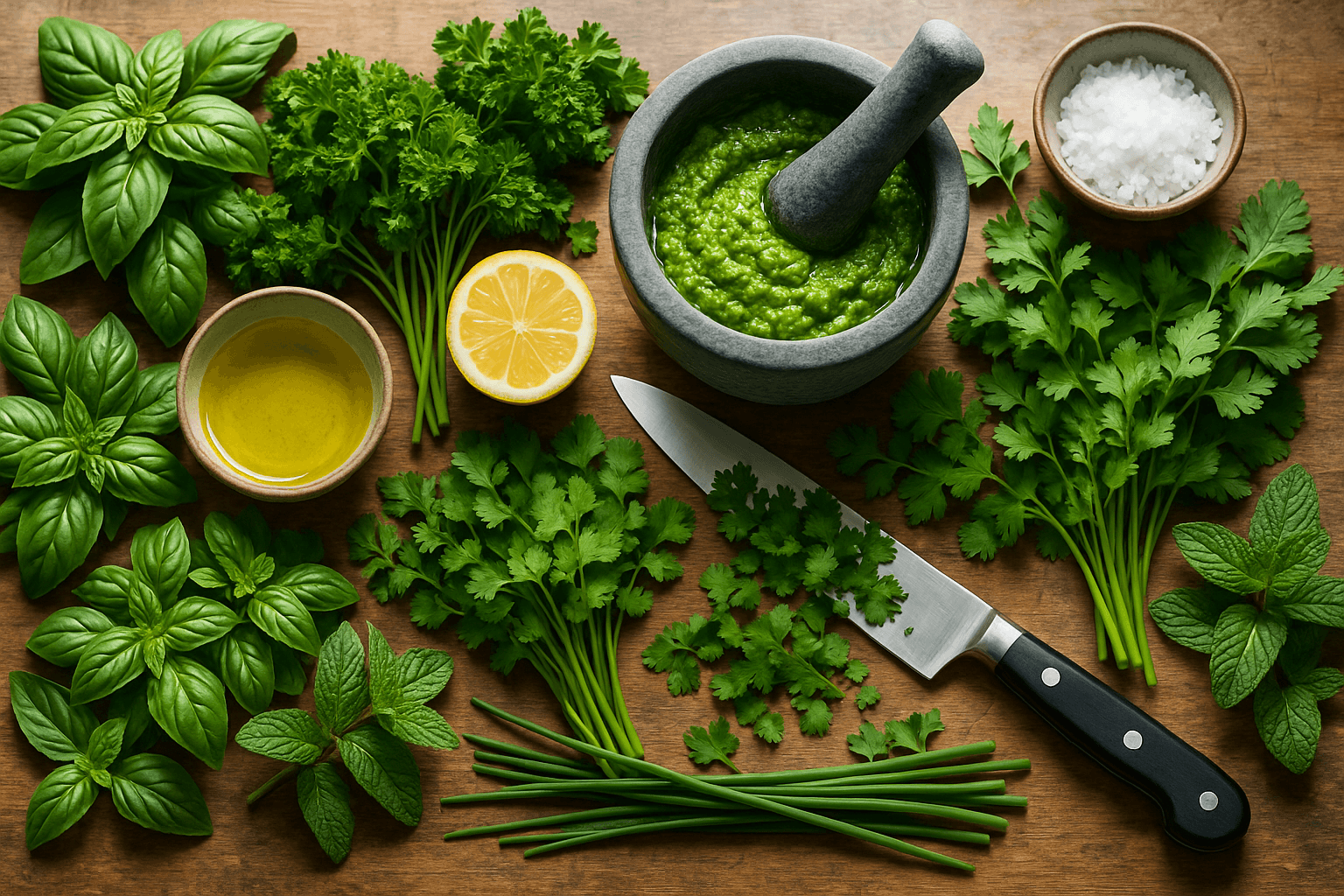
If you have ever made a bowl of pesto that looked electric green in the processor and swampy brown ten minutes later, or tossed chopped basil onto tomatoes only to watch the edges go black, you already know that fresh herbs can be glorious and maddening in equal measure. Their flavors feel alive because, in a literal sense, they are. A bunch of parsley or cilantro is still a cluster of fragile plant cells filled with water, pigments, enzymes, sugars, acids, and aromatic compounds that start changing the second you cut, crush, salt, heat, or dress them.
That is why the old advice to “add herbs at the end” is helpful but incomplete. Some herbs do want to stay raw and untouched until the last possible moment. Others become more expressive after a brief bloom in fat. Some improve when their stems are simmered. Some go dull the second acid hits them. Some need bruising, while others need the cleanest slice you can manage. If you understand what is happening inside the leaves, you can make better pesto, fresher salads, greener soups, more fragrant finishing oils, and garnishes that actually taste like something instead of looking decorative and tired.
This is the real game with herbs: controlling damage, choosing how flavor is released, and matching each herb to the right treatment.
Why herbs are so delicate in the first place
Fresh herbs are mostly water held inside thin-walled cells. Inside those cells are chlorophyll, which gives them their green color; enzymes, which are normally separated from other compounds until the cells are damaged; and volatile aroma molecules, which are the tiny airborne chemicals your nose reads as basil-like, minty, grassy, citrusy, oniony, resinous, or floral.
When you tear, chop, pound, blend, or even stack herbs tightly enough to bruise them, you rupture those cells. That can be good, because broken cells release aroma and flavor. It can also be bad, because the same damage exposes pigments and flavor compounds to oxygen and activates enzymes that lead to browning and flavor loss.
In practical cooking terms, every herb prep decision is a tradeoff:
- More damage = more immediate aroma release
- More damage = faster discoloration and flavor deterioration
- More heat = potential flavor blooming, but also more volatile loss
- More time in acid or oxygen = fading color and brightness
The trick is not to avoid damage completely. The trick is to damage herbs in the right way, at the right moment, for the dish you are making.
The four big reasons herbs turn black, brown, dull, or bland
1. Enzymatic browning
When herb cells are broken, enzymes such as polyphenol oxidase come into contact with phenolic compounds and oxygen. That reaction creates brown or black pigments. It is the same family of reaction that turns cut apples or avocados brown.
Basil is especially notorious here. Its tender leaves bruise easily, and once damaged, it can darken with surprising speed. Mint can blacken too, especially if chopped early and left sitting. Parsley and cilantro usually go less dramatically black than basil, but they still lose brightness and can develop dark wet-looking edges if overhandled.
What speeds enzymatic browning:
- Dull knives that crush rather than slice
- Food processors run too long
- Excessive pounding or over-muddling
- Salt applied too early, which draws out moisture
- Warm temperatures
- Oxygen exposure
What slows it:
- Sharp cutting tools
- Keeping herbs cold until use
- Limiting prep time before serving
- Coating cut surfaces with oil in some applications
- Blanching in selected applications like green sauces
2. Chlorophyll damage
Green herbs owe much of their vivid color to chlorophyll. Chlorophyll is not especially stable. Acid, prolonged heat, and time can all convert bright green chlorophyll into duller olive-toned compounds such as pheophytin.
This is why herbs stirred into a long-simmered tomato sauce often lose their bright color. It is also why basil chiffonade on a lemony salad can look less lively after sitting. Acid does not always make herbs taste worse, but it often makes them look worse if given enough time.
What damages chlorophyll:
- Prolonged cooking
- Holding herbs in acidic dressings or sauces
- Covered cooking that traps plant acids
- Reheating green herb sauces repeatedly
What protects it:
- Brief cooking or last-minute addition
- Rapid cooling after blanching
- Adding acid closer to serving time when possible
- Using herbs in oil-based preparations that are not highly acidic
3. Oxidation of flavor compounds and fats
Many herb aromas are delicate and reactive. Once released from the leaf, they can oxidize or simply dissipate into the air. In pesto and herb oils, oxidation can affect not only the herbs but also the fat carrying them. Olive oil plus broken basil plus oxygen plus time is a recipe for flavor flattening unless you manage temperature and exposure.
This is one reason restaurant pesto often tastes fresher than homemade pesto made an hour ahead and left in a warm kitchen. The professional kitchen may blanch the basil, chill the mixture, cover the surface with oil, reduce air exposure, or hold it colder than most home cooks do.
4. Loss of volatile aroma molecules
A huge part of herb flavor is aroma. If the molecules evaporate, your herbs taste weaker even if the leaves are still green. Heat accelerates evaporation, but so does chopping too early. That cloud of fragrance you smell when you mince dill or basil is wonderful, but it is also evidence that some of the flavor is leaving the cutting board and entering the room.
That does not mean you should never chop herbs. It means you should chop them with purpose and timing.
Why cutting method matters more than most recipes admit
Not all cutting is equal. A clean slice preserves more intact tissue around the cut edge. Crushing and tearing rupture many more cells, which releases more aroma immediately but causes faster bruising, darkening, and collapse.
Clean slicing
Best for:
- Basil for caprese or pizza garnish
- Chives for a neat finish
- Parsley for tabbouleh or gremolata
- Mint ribbons for fruit or salads
Use a very sharp chef’s knife or slicing knife. Herbs should be completely dry. Wet leaves slip, clump, and crush. For basil or mint, stack only a few leaves at a time and cut thin ribbons just before serving.
Chopping
Best for:
- Parsley and cilantro for salsa verde, chimichurri, and relishes
- Dill for yogurt sauces or potato salads
- Mixed herbs folded into grains or soft cheeses
A moderate chop releases enough flavor to distribute through a dish without turning the herbs into damp green paste.
Bruising, pounding, or grinding
Best for:
- Pesto
- Thai curry pastes
- Mint in drinks, when done lightly
- Herb rubs with salt and garlic
Bruising can create extraordinary flavor because it ruptures cells thoroughly and mixes the leaf’s compounds with salt, fat, or other ingredients. But the payoff is immediate, not permanent. Pounded herbs are usually most expressive shortly after making.
For pesto, a mortar and pestle can produce a softer, rounder texture and less heat than an aggressive food processor, though either method works if you manage temperature and overprocessing.
Tearing
Best for:
- Basil over salads or pizza
- Soft mint leaves for garnish
Tearing is often recommended because it can be gentler than hacking with a dull knife. But if your fingers pinch too hard or the leaves are warm and limp, tearing can bruise badly. The ideal is not “tear always” or “knife always.” The ideal is least damaging method for the result you want.
Salt, acid, heat, and oil: what each one does to herbs
These are the four biggest levers in herb cookery.
Salt
Salt draws moisture from damaged plant cells. That can be useful in a mortar, where salt acts as an abrasive and helps break herbs into a paste. It can also be destructive if added too early to finely cut herbs intended for garnish or salad.
Add salt early when:
- Making pesto or herb paste
- Grinding herbs with garlic or spices
- Building a marinade where extraction is desirable
Add salt late when:
- Finishing chopped herbs for salad
- Holding basil chiffonade
- Keeping chives crisp and distinct
A practical rule: if you want herbs to stay leafy and green, salt the dish, not the herbs. If you want herbs to dissolve into the dish, salt can help.
Acid
Acid brightens flavor but dulls green color over time. Lemon, vinegar, yogurt, and tomatoes all change herb behavior. In many herb sauces, acid makes the flavor pop initially while also beginning a slow visual decline.
That is why a parsley sauce dressed with lemon at 5:00 can look less vivid by dinner, and why basil in tomato salad is best added close to serving.
Use acid strategically:
- Add lemon juice to pesto right before serving if desired, not far ahead
- Dress tender herbs shortly before eating
- For green herb oils, avoid adding water-based acid directly to the oil
- If making chimichurri or salsa verde ahead, expect color softening and compensate with extra fresh herbs stirred in at the end
Heat
Heat does two opposite things. It can help dissolve flavor compounds into fat and mellow raw grassy notes. But it also destroys delicate aromatics and fades color.
Think of herbs in three heat categories:
- Tender herbs that usually want minimal heat: basil, chives, dill, mint
- Tender herbs that can tolerate brief cooking: parsley, cilantro leaves
- Herb parts that like heat more than leaves do: stems of parsley and cilantro; woody herbs like rosemary and thyme, though those are outside today’s main list
Add tender leafy herbs at the end for brightness. Simmer stems earlier for background flavor. Use brief heat exposure, like folding chopped dill into warm butter or blooming cilantro stems in oil at the start of a soup.
Oil
Oil is one of the most useful tools for herb flavor because many aroma compounds are fat-soluble. That means they dissolve well in oil and become more noticeable when herbs are combined with fat. This is why basil seems fuller in pesto than in plain water, and why dill in butter tastes rounder than dill scattered on steamed potatoes alone.
But oil is not a magic shield. If herbs are blended too long, exposed to air, or warmed excessively, you still lose aroma and color.
Oil helps by:
- Capturing fat-soluble aroma compounds
- Coating cut surfaces and reducing direct oxygen exposure somewhat
- Carrying flavor across the palate
- Softening bitterness and harsh green notes
Oil can hurt when:
- The mixture gets hot in a blender or processor
- The oil oxidizes with air and time
- You infuse at too high a temperature and cook out delicate top notes
Why some herb flavors bloom in fat while others vanish with prolonged cooking
Herbs contain many different aroma molecules, not a single “herb flavor.” Some are more soluble in fat, some more volatile, some more heat-sensitive. That is why herb behavior varies so much.
Basil
Basil’s signature clove-like, sweet, floral, and peppery notes are extremely fragile. Some bloom beautifully in olive oil, especially in pesto or basil oil. But basil also bruises and browns quickly, and prolonged cooking flattens its personality. A tomato sauce simmered for 45 minutes with basil added at the beginning tastes different from one finished with fresh basil at the end: softer, less perfumed, more generic.
Best uses:
- Raw or nearly raw
- Brief wilting into hot pasta or soup right before serving
- Pesto and finishing oils
Parsley
Parsley is sturdier than people give it credit for. Its flavor is grassy, peppery, and mineral, and it tolerates chopping better than basil. Flat-leaf parsley handles moderate heat and long mixing reasonably well. It is excellent in sauces, relishes, soups, and stews, especially when stems are used early and leaves are added late.
Best uses:
- Chimichurri, gremolata, salsa verde
- Stirred into soups near the end
- Stem flavor base in stocks or braises
Cilantro
Cilantro has very volatile citrusy, green aldehydes, especially in the leaves, and a somewhat sturdier, savory stem character. That makes it one of the best examples of splitting a herb by part: stems can be cooked; leaves should often be added late.
Best uses:
- Leaves raw for garnish, chutneys, salsas
- Stems in curry pastes, broths, stir-fries, and marinades
- Root, where available, pounded into Southeast Asian pastes
Mint
Mint contains cooling menthol-related compounds and bright herbal notes that disappear quickly with heat. It bruises easily and can blacken when chopped too early. Mint loves fat in some contexts, like yogurt, cream, butter, or chocolate, but it rarely benefits from long cooking.
Best uses:
- Torn or sliced at the last minute
- Brief infusion in syrup, tea, or cream
- Folded into salads, chutneys, yogurt sauces
Dill
Dill is feathery, fragile, and especially sensitive to heat. Long cooking can make it taste flat or vaguely sour-grassy rather than fresh and anise-like. Dill is at its best when added at the end or steeped gently in warm, not aggressively boiling, environments.
Best uses:
- Folded into warm potatoes after cooking
- Added to soups off heat or right before serving
- Mixed into yogurt, sour cream, butter, or dressings
Chives
Chives are technically allium greens, and their flavor comes from sulfur compounds released when cut. That means slicing does activate flavor, but prolonged exposure causes the cut pieces to dry out, soften, and lose punch. Heat turns chives from lively onion to a faint vegetal note.
Best uses:
- Finely sliced just before serving
- Folded into soft eggs off heat
- Scattered over potatoes, soups, labneh, or seafood
The timing rules that actually help in real cooking
The simplest useful rule is this:
Use stems early, leaves late, and the more tender the herb, the later it goes.
But let’s make that more precise.
For pesto and herb pastes
- Keep herbs cold before processing.
- Wash and dry thoroughly; any surface water dilutes flavor and can encourage faster browning.
- Process in short bursts, 5 to 10 seconds at a time.
- If the bowl feels warm, stop and chill.
- Add oil gradually rather than running the machine continuously for 1 to 2 minutes.
- For basil pesto, consider blanching leaves for 5 to 10 seconds, then shocking in ice water and drying extremely well. This sacrifices a little rawness but preserves a much brighter green.
- Cover the finished surface with a thin film of oil before storing.
For salads and cold dishes
- Add tender herbs right before serving.
- Dress the base salad first, then fold herbs in.
- If using basil or mint, keep pieces large enough to avoid turning them into wet confetti.
- Salt tomatoes, cucumbers, or other juicy vegetables before adding herbs so the herbs do not sit in drawn-out moisture too long.
For soups
- Simmer sturdy stems early for background flavor.
- Add chopped parsley or cilantro leaves in the last 30 seconds to 2 minutes.
- Add dill, mint, basil, or chives off heat or after ladling.
- For pureed green soups, blanch herbs separately and blend them in after the base cools slightly for a brighter result.
For roasting and sautéing
- Toss woody herbs in from the beginning, but tender herbs usually burn or blacken.
- Add parsley, dill, basil, mint, or chives after roasting or in the final minute only.
- If using herbs in a pan sauce, let the sauce cool for 15 to 30 seconds off the strongest heat before stirring them in.
For finishing oils and infused fats
- Use dry herbs only; water droplets can sputter and shorten shelf life.
- For tender herbs, blanching and drying before blending can improve color.
- Blend with neutral or olive oil, then strain if a clear oil is desired.
- Keep the oil cold and use quickly for best aroma.
- For warm infusion, stay gentle: around 120 to 140°F / 50 to 60°C for delicate herbs, not frying temperatures.
Step-by-step: how to keep herb-forward dishes vivid and fragrant
Here is a practical workflow that works across most home kitchens.
1. Buy and store herbs as if they are flowers, not produce clutter
Look for leaves that are perky, dry, and deeply colored, with no slimy patches or blackened edges. Once home:
- Remove any bands that crush the bunch.
- Trim stem ends if needed.
- For parsley, cilantro, dill, and mint: stand stems in a jar with 1 to 2 inches / 2.5 to 5 cm of water, loosely cover with a bag, and refrigerate. Change water every 1 to 2 days.
- For basil: keep at cool room temperature if your kitchen is not hot, stems in water like a bouquet. Basil often blackens in cold refrigerators.
- For chives: wrap in a barely damp towel, place in a bag, and refrigerate.
2. Wash early enough to dry completely
Dirty herbs are unpleasant; wet herbs are troublesome. Wash herbs in cool water, swish gently, lift them out so grit stays behind, then spin dry thoroughly. Spread on towels if needed.
This matters because water on the leaf surface causes slipping during cutting, promotes bruising, dilutes sauces, and interferes with oil adhesion. For pesto or herb oil, herbs should be as dry as humanly possible.
3. Separate stems and leaves when the herb rewards it
This is especially useful for parsley and cilantro.
- Tender leaves: reserve for finishing
- Thin upper stems: chop with the leaves if tender
- Thick lower stems: use in stocks, soups, sauces, marinades, or discard if woody
For dill, stems are flavorful but more fibrous; use them for infusions and stocks, while the fronds are better as a finish. For chives, the whole blade is usable, but trim any dried ends.
4. Decide whether you want freshness or extraction
Ask one question before you cut: Do I want these herbs to stay leafy, or do I want them to become the sauce?
If you want freshness:
- Slice or tear gently
- Cut at the last moment
- Add salt and acid late
- Avoid strong heat
If you want extraction:
- Chop or pound
- Combine with salt, garlic, nuts, or fat
- Accept some color loss over time
- Serve sooner rather than later
5. Match herb to technique
A few practical examples:
Better pesto
Use 2 packed cups basil leaves, 1/4 cup toasted pine nuts or walnuts, 1 small garlic clove, 1/2 cup extra-virgin olive oil, 1/2 cup finely grated Parmesan, 1/2 teaspoon kosher salt, plus more to taste. Pulse nuts, garlic, and salt first. Add basil and pulse briefly. Add oil in a thin stream with short pulses. Fold in cheese by hand. If making ahead, press plastic directly onto the surface or top with oil.
For brighter color, blanch basil briefly, shock, squeeze dry in towels, then proceed.
Better herb salad
For a mixed herb salad of parsley, mint, dill, and chives, keep leaves whole or in large pieces. Dress your vegetables first with oil, salt, and acid. Add herbs at the end and toss only a few times. This preserves structure and aroma.
Better green soup finish
Make the soup base first. Off heat, stir in chopped parsley and cilantro. Garnish bowls with dill or chives separately. If you boil all of them together for 10 minutes, the soup may still taste good, but it will not taste alive.
Better roasted vegetables
Roast carrots, potatoes, squash, or cauliflower without delicate herbs. When they come out, toss with olive oil or butter and add chopped dill, parsley, or chives while still hot but no longer sizzling violently. The residual heat blooms the flavor without cooking it flat.
Common mistakes that make herbs sad
Chopping too far ahead
Even 15 to 30 minutes can make a difference with basil, mint, dill, and chives. If prep must happen early, keep herbs in larger pieces and cut closer to service.
Using a dull knife
A dull edge crushes, leaks, and bruises. If herbs routinely look wet and dark on your board, sharpen your knife.
Adding acid too early
Lemony herb salads and vinaigrette-heavy sauces are delicious, but if they sit, they fade. Add acid closer to serving, or refresh with a final handful of new herbs.
Overblending herb sauces
A blender or food processor that runs continuously heats the mixture quickly. Heat accelerates color loss and aroma evaporation. Pulse, scrape, chill if needed.
Salting chopped herbs directly and letting them sit
Useful for a paste, destructive for a garnish.
Refrigerating basil like parsley
Cold injury can blacken basil. Treat it differently.
Cooking every herb the same way
Parsley can handle much more than dill. Cilantro stems are not the same as cilantro leaves. Chives are not mini scallions in every context. Better results come from thinking specifically.
Cultural context: why many cuisines use herbs in layers
Traditional cuisines often solved herb chemistry long before anyone named the molecules.
In Italian cooking, basil is commonly torn over a dish or made into pesto, both methods that respect its fragility. Parsley appears in cooked sauces but also in fresh gremolata added at the end, giving both background and top-note flavor.
In Persian, Turkish, and Levantine cooking, herbs are frequently served as part of a fresh platter or folded into salads at the last moment, preserving their perfume and texture.
In Mexican cooking, cilantro is used in salsas and as a garnish, while stems often go into cooked bases. Southeast Asian cuisines routinely split herbs by function: roots and stems in pounded pastes, tender leaves fresh on top of soups, curries, and noodle dishes.
French technique often uses herbs in both cooked and raw forms: fines herbes stirred into eggs at the end, parsley stems in stock, chives cut just before service. These are not arbitrary habits. They are accumulated kitchen intelligence about what each herb can survive and how best to express it.
Practical rules by herb
Basil
- Store at cool room temperature, not very cold
- Keep dry and unbruised
- Slice or tear just before use
- Avoid prolonged acid contact
- Best raw, briefly wilted, or in pesto
- If making basil oil or pesto ahead, blanch for color insurance
Parsley
- Refrigerate upright in water
- Dry well before chopping
- Stems are valuable
- Handles moderate chopping and brief cooking well
- Excellent for relishes, soups, sauces, and finishing
Cilantro
- Refrigerate upright in water
- Use stems and leaves differently
- Leaves are best late or raw
- Stems can be cooked, blended, or pounded
- Add fresh leaves at the table to restore aroma in cooked dishes
Mint
- Refrigerate upright in water
- Bruises easily; keep leaves whole when possible
- Slice at the last second
- Loves dairy, sugar, fruit, and gentle fat
- Avoid long cooking and rough handling
Dill
- Refrigerate upright in water
- Fronds are fragile; fold in gently
- Add off heat or at the very end
- Great in creamy, eggy, potato, and fish dishes
- Stems can infuse stock or vinegar
Chives
- Refrigerate wrapped and protected from drying
- Slice with a sharp knife into clean rounds
- Add just before serving
- Avoid prolonged heat
- Best as a finishing allium, not a long-cooked aromatic
Building herb-forward dishes that stay vivid
If you want a dish to taste deeply herbaceous and still look bright, think in layers instead of one giant dump of herbs.
For example, for a pot of vegetable soup:
- Start with parsley stems or cilantro stems sautéed in oil
- Simmer the soup as usual
- Stir chopped parsley leaves into the pot just before serving
- Finish each bowl with dill or chives
- Add a spoonful of herb oil at the table
That is four expressions of herb flavor: cooked base, late leafy freshness, delicate garnish, and fat-carried aroma.
For roast chicken:
- Tuck sturdy stems or whole herb sprigs into the cavity if desired
- Roast without tender chopped herbs on the skin
- Rest the chicken
- Spoon over a parsley-cilantro salsa verde or basil oil after carving
- Scatter chives or mint where appropriate
For tomato salad:
- Season tomatoes first and let them drain briefly
- Add olive oil
- Add basil or mint at the last second
- Finish with flaky salt only once plated if you want maximum leaf integrity
The same principle works again and again: use one portion of the herb for integrated flavor, and save another for the high notes.
A few useful kitchen tests
If you want to teach yourself herb behavior quickly, try these side-by-side comparisons.
Test 1: Basil knife vs. blender
Slice one handful of basil by hand. Blend another handful with a tablespoon of oil for 30 seconds. Smell and compare after 5 minutes and 20 minutes. The blended sample will smell huge immediately, then decline faster.
Test 2: Dill in hot soup
Add dill to one bowl while boiling on the stove, and to another bowl right after ladling. The late-added bowl will have a cleaner aroma.
Test 3: Mint with acid now vs. later
Dress one mint salad 20 minutes early and another at the table. The early one will likely be darker and less fragrant.
Test 4: Cilantro stems vs. leaves
Cook chopped stems in oil for a minute, then finish the dish with leaves. You will taste how different parts of the same plant create different layers.
The main takeaways
Fresh herbs are not just green decoration. They are delicate systems of pigments, enzymes, and aroma compounds that react dramatically to cutting, oxygen, acid, heat, salt, and fat.
If herbs turn black or brown, you are usually seeing enzymatic browning from damaged cells meeting oxygen. If they turn dull olive, chlorophyll has been damaged, often by acid or prolonged heat. If they lose aroma, volatile compounds have evaporated or oxidized. If they suddenly taste fuller in oil or butter, fat-soluble compounds are being carried more effectively across your palate.
So the smarter rule is not merely “add at the end.” It is this:
- Cut as gently as the dish allows
- Keep herbs dry and cold, except basil, which dislikes deep chill
- Use tender leaves late and stems earlier
- Use salt to extract, or avoid it early to preserve texture
- Use acid for brightness, but add it close to serving when color matters
- Use fat to bloom flavor, but avoid overheating
- Match the herb to the method instead of treating every herb the same
Once you see herbs this way, pesto gets greener, salads stay fresher, finishing oils become more fragrant, and your garnishes stop feeling like garnish. They become part of the architecture of flavor.