Why Pistachios Taste Buttery, Stay Green, or Turn Brown: Chlorophyll Loss, Lipid Oxidation, and the Toasting Rules for Baklava, Pesto, and Creams
RecipeSimpli
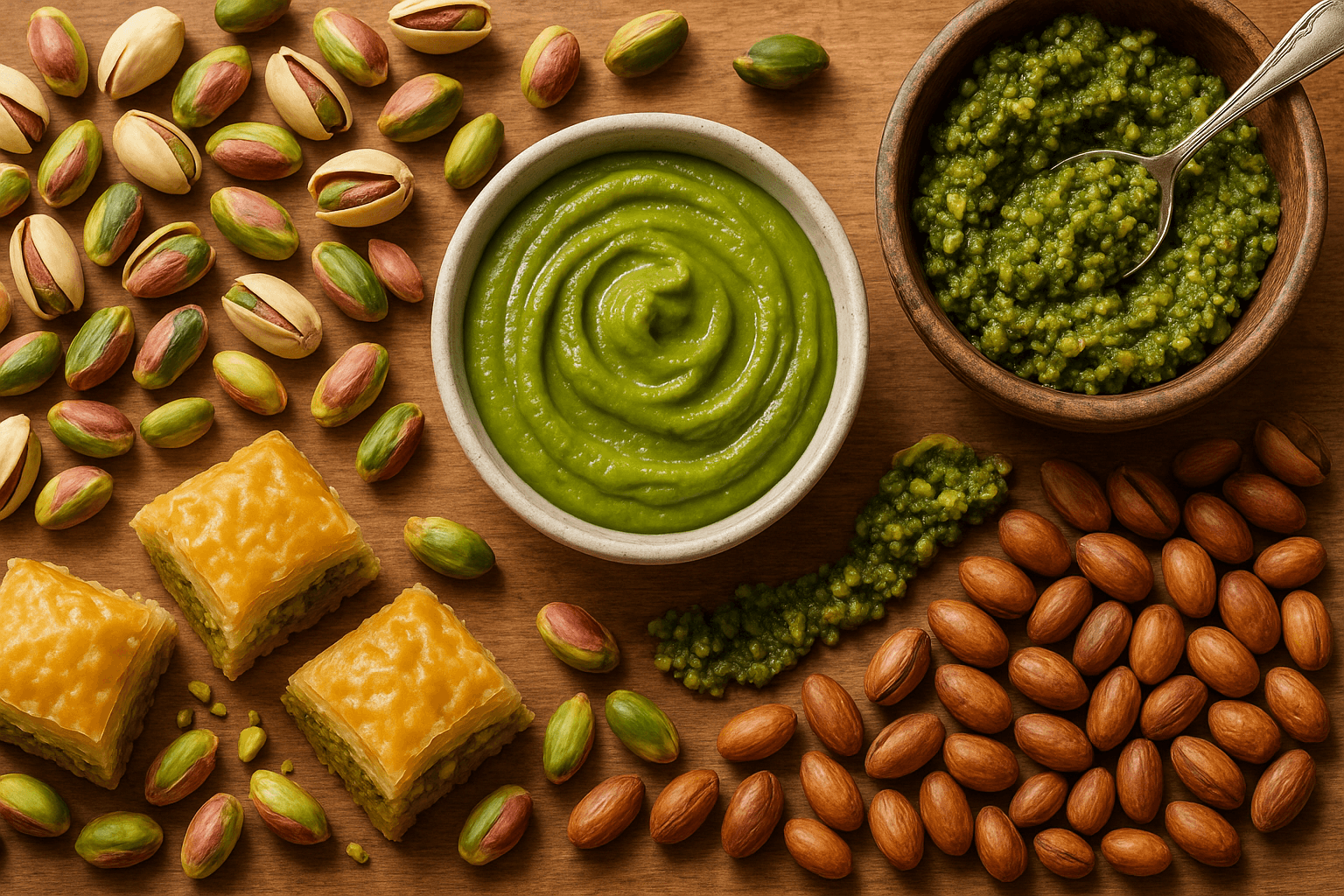
If you have ever bought two bags of pistachios and found one hauntingly fragrant—sweet, resinous, almost floral, with a buttery finish—while the other tasted flat, woody, or faintly like old paint, you have already met the three forces that define pistachios in the kitchen: variety, color chemistry, and fat chemistry. Pistachios are one of the most expressive nuts we cook with, but they are also one of the easiest to damage. Heat can unlock extraordinary aroma or mute it. Grinding can make a silky paste or an oily sludge. Time and oxygen can preserve that vivid green luxury or push the nuts toward beige, brown, and rancid.
That matters because pistachios often play two jobs at once. They contribute flavor—rich, sweet, slightly piney, sometimes buttery—and they contribute appearance, especially that jewel-like green that makes baklava gleam, pistachio cream look expensive, and gelato signal “real pistachio” instead of almond extract and food dye. The catch is that the best flavor and the brightest color do not always come from the same treatment. A deeply roasted pistachio may taste richer, but a raw blanched one may stay greener. A warm kitchen may make a spread feel luxurious one day and stale the next.
For home cooks, the goal is not to memorize food science for its own sake. It is to know which pistachios to buy, when to toast them, when to leave them raw, how to peel them without misery, how to grind them into paste without breaking the emulsion, and how to keep your pistachio desserts from turning khaki. Once you understand what chlorophyll, oxidation, moisture, and roasting are doing, the rules become practical and surprisingly intuitive.
Why pistachios taste so different from one another
Not all pistachios are interchangeable. Cultivar, growing region, harvest timing, and post-harvest handling all shape flavor before you ever open the bag.
At the broadest level, pistachios are valued for a balance of sweetness, nuttiness, resinous aroma, and fat richness. Some lots lean intensely green and fresh, with hints of pine, herbs, and cream. Others are milder and more roasted-peanut-like. In high-quality pistachios, especially those harvested mature and processed carefully, you often get a concentrated sweetness paired with aromatic compounds that can seem floral, woody, citrusy, and faintly buttery.
Origin matters because climate affects oil composition, sugar development, and pigment retention. Pistachios from regions around the Mediterranean and Middle East are often prized for vivid color and assertive aroma. Iranian pistachios, for example, are famous for richness and perfume; Sicilian pistachios, especially those associated with Bronte, are prized for intense green color and concentrated flavor; California pistachios are more widely available and often excellent, though their flavor profile can be milder depending on cultivar and processing.
Cultivar matters too. Different varieties differ in kernel size, color intensity, shell split, oil composition, and flavor complexity. For the home cook, the practical implication is simple: if color is crucial, look for kernels specifically sold for pastry or paste-making, often advertised as bright green, raw, or of a premium origin. If cost matters more and the nuts are headed into a crust, crumble, or stuffing, a good standard pistachio may be perfect.
Processing after harvest is equally important. Pistachios are relatively high in fat, and that fat starts reacting with oxygen, light, and heat once the nut is harvested and shelled. Delay between harvest and drying, excessive heat during drying, poor storage, or long exposure to air all flatten aroma. That is why one pistachio tastes alive and another tastes tired.
As a rule, pistachios that taste vividly sweet and buttery are usually fresher, better stored, and less oxidized. Pistachios that seem dull, cardboard-like, or harshly oily are usually older, more exposed to oxygen, or overheated.
The buttery flavor: what you are actually tasting
“Buttery” in pistachios does not mean they contain butter-like compounds in the same way dairy butter does. It usually refers to a sensory combination: a high fat content that coats the palate, mild sweetness, low bitterness, and aromatic compounds that read as creamy, toasted, or warm.
Pistachios are rich in unsaturated fats, particularly oleic and linoleic acids. These lipids create a smooth, rich mouthfeel. They also act as carriers for volatile aroma compounds, helping flavor linger on the tongue and in the nose. In fresh pistachios, these aromas can feel soft and luxurious. In oxidized pistachios, the same fat base can become waxy, paint-like, or bitter.
Raw pistachios often show more of the nut’s fresh, green, and resinous notes. Light roasting starts creating new aroma compounds through Maillard reactions and related thermal changes. The effect is similar to what happens in coffee, bread crust, or toasted sesame, though gentler. Heat can transform delicate green nuttiness into something deeper, sweeter, and more overtly “buttery.” Done well, roasting broadens the flavor. Done aggressively, it drives off delicate volatiles and leaves a one-note toasted profile.
This is why a pistachio pastry filling made with lightly toasted nuts can taste fuller than one made with completely raw nuts, while a pistachio cream or gelato base often benefits from mostly raw nuts to preserve brightness.
Why pistachios are green—and why that green disappears
The green in pistachios comes primarily from chlorophyll pigments. The yellow undertones come from carotenoids. Together, they create the attractive green-gold spectrum associated with premium pistachios.
Chlorophyll is fragile. It degrades with heat, acid, oxygen, light, and time. When chlorophyll breaks down, the bright green fades to olive, then brownish tones. That is one reason old pistachios look duller. It is also why hot processing can turn a brilliant pistachio paste beige.
There are really three overlapping color problems in pistachio cookery:
- Chlorophyll degradation: heat, acid, and time reduce greenness.
- Enzymatic browning: once pistachios are cut, ground, or bruised, enzymes can react with oxygen and produce brown pigments.
- Non-enzymatic browning: roasting, sugar cooking, and prolonged heating can create brown pigments through Maillard reactions and caramelization.
For a bright pistachio cream, pesto, or gelato paste, you want to minimize all three. That means using fresh nuts, keeping them cool, reducing oxygen exposure, avoiding unnecessary acid early in the process, and using only enough heat to achieve the texture you want.
The red-brown skins: remove them or keep them?
Pistachios have a thin papery skin that ranges from pinkish to reddish-brown or purple-brown. This skin contains pigments and tannins. It contributes visual speckling, slight bitterness, and a more rustic flavor. Whether to remove it depends entirely on your goal.
Keep the skins when:
- You want a rustic texture or a more assertive nut flavor.
- The pistachios will be chopped for baklava, brittle, granola, savory crusts, or salads.
- A little color mottling is welcome.
Remove the skins when:
- You want the brightest possible green.
- You are making pistachio cream, smooth paste, gelato, marzipan-style fillings, pesto, or fine pastry decoration.
- You want less tannic bitterness.
How to blanch and peel pistachios
For 250 grams shelled raw pistachios:
- Bring 1 liter water to a boil.
- Add the pistachios and blanch for 20 to 45 seconds only.
- Drain immediately and transfer to a towel-lined tray.
- Rub the nuts in a clean kitchen towel to loosen skins.
- Pinch off stubborn skins by hand.
- Dry thoroughly before grinding or storing.
Two cautions matter here. First, do not blanch too long. If you leave pistachios in boiling water for 1 to 2 minutes, the nuts absorb extra moisture, soften excessively, and become harder to dry properly. That can make later grinding pasty and can shorten shelf life. Second, after peeling, dry the nuts completely. Spread them on a tray and air-dry for several hours, or use a very low oven—about 75 to 90°C / 170 to 195°F for 15 to 25 minutes—just until the surface is dry, not toasted.
This step is one of the most important and most skipped. Residual water on the nut surface encourages clumping, dulls flavor, and can make pistachio paste seize before it smooths out.
Roasting: when it helps, when it hurts
Roasting changes pistachios in four important ways: it reduces moisture, intensifies aroma, increases crunch, and pushes color away from bright green toward olive and brown.
For many cooks, the biggest mistake is treating pistachios like almonds or hazelnuts and roasting them too hard. Pistachios are more delicate in flavor and color. They benefit from restraint.
What roasting does scientifically
At moderate temperatures, roasting drives off moisture and activates aroma development. Volatile compounds associated with toasted, nutty, sweet, and warm notes become more prominent. Texture shifts from slightly waxy or tender to crisp and brittle, which is especially helpful if you plan to chop the nuts.
At higher temperatures or longer times, chlorophyll degrades faster, surface browning accelerates, and the fat is exposed to more thermal stress. The flavor can become flatter, drier, and less distinctly pistachio-like. In other words, you may gain “roasted nut” flavor while losing “pistachio” flavor.
Practical toasting rules
For light toasting shelled pistachios:
- Oven: 150°C / 300°F for 6 to 9 minutes
- Stir or shake once halfway through
- Remove when aromatic, just slightly deeper in color, and still visibly green
For medium toasting:
- Oven: 160°C / 325°F for 8 to 12 minutes
- Good for chopped toppings, baklava layers, and crusts
Avoid roasting above 175°C / 350°F unless you specifically want a dark toasted flavor, because color loss and oxidation risk increase quickly.
A skillet works, but it is harder to control. If you pan-toast, use low to medium-low heat and stir constantly for 3 to 6 minutes.
Raw vs. roasted: what to choose for different dishes
Use raw or blanched raw pistachios for:
- Pistachio cream
- Pistachio paste for gelato
- Pesto or pistou-style sauces
- Mousses and no-bake fillings
- Marzipan-like confections
- Decorations where color matters most
Use lightly toasted pistachios for:
- Baklava filling
- Financiers and cakes
- Cookie doughs
- Savory crusts for fish, lamb, or goat cheese
- Crumbles and streusels
- Ice cream mix-ins
Use more deeply toasted pistachios sparingly for:
- Savory spice rubs
- Dukkah-like blends
- Garnishes where deep roasted flavor is desired more than color
Why pistachios turn rancid
Pistachios contain a lot of unsaturated fat. That is wonderful for texture and flavor, but it also makes them vulnerable to oxidation. Oxidation is a chain reaction in which oxygen attacks the fats, producing compounds that smell stale, cardboard-like, metallic, grassy in a bad way, or like paint and old oil.
The main enemies are:
- Oxygen
- Heat
- Light
- Time
- Broken cell structure from chopping or grinding
Whole in-shell pistachios keep longest because the shell protects the kernel. Shelled pistachios are more exposed. Chopped pistachios oxidize faster. Ground pistachios and pistachio paste oxidize fastest of all because so much surface area is exposed to air.
Salt does not prevent rancidity. Sugar does not prevent rancidity. Refrigeration helps, freezing helps more, and airtight storage helps a lot.
How to store pistachios
For the best quality:
- In shell, cool pantry: about 3 to 6 months if very fresh and well sealed
- Shelled, airtight in refrigerator: 3 to 6 months
- Shelled, airtight in freezer: 6 to 12 months
- Ground or made into paste: best within 2 to 4 weeks refrigerated, or freeze for longer storage
Use opaque or non-clear containers if possible, especially for long storage. If you buy in bulk, divide into small portions so you only open what you need.
A practical home trick: freeze shelled pistachios in flat zip bags with as much air pressed out as possible. They thaw quickly, and the cold helps preserve both flavor and color.
The beige problem: why pistachio cream loses its green
Anyone who has made homemade pistachio cream knows the disappointment. You start with gorgeous green nuts and end with a spread that looks tan. There are several reasons.
First, if skins remain on the nuts, their brown-red pigments muddy the color. Second, if the nuts were pre-roasted or old, chlorophyll has already faded. Third, prolonged grinding warms the paste, accelerating color loss and oxidation. Fourth, added dairy, white chocolate, or sugar syrup can dilute the green. Fifth, exposure to oxygen after grinding encourages browning.
If your goal is a naturally green cream—not neon, but definitely pistachio-looking—stack the odds in your favor.
Rules for greener pistachio creams and pastes
- Start with raw, bright green kernels.
- Blanch and peel them.
- Dry them thoroughly at low temperature, without toasting.
- Chill the nuts before grinding.
- Grind in short pulses or in a powerful machine that works quickly.
- Stop and scrape often to prevent excess heat.
- If making a sweet cream, add melted white chocolate or sugar only after a smooth paste forms.
- Add a tiny amount of neutral oil only if needed for flow—start with 1 to 2 teaspoons per 200 grams nuts.
- Store with plastic or parchment pressed onto the surface to limit oxygen.
- Refrigerate promptly.
You can also add a very small pinch of salt to sharpen flavor perception. Salt does not make the cream greener, but it makes the pistachio taste more vivid, which often reads as “fresher.”
Do not add lemon juice early if bright green color is your priority. Acid speeds chlorophyll degradation. In pesto, if you want some acidity, add it at the end and use only what is needed.
Grinding pistachios into paste without turning them greasy
All nut pastes pass through stages: chopped pieces, coarse meal, damp clumps, thick paste, then smoother butter. The challenge with pistachios is balancing smoothness with temperature. Grind too little and the paste is gritty. Grind too long and the released oil separates, making the paste look greasy.
Here is the counterintuitive truth: some oil release is necessary. A smooth pistachio paste is created by the nuts’ own fat lubricating the particles. The problem is not oil release itself. The problem is overheating and over-processing, which can cause separation and flavor damage.
A reliable method for pistachio paste
For about 250 grams peeled pistachios:
- Chill the peeled, dried nuts for 30 minutes.
- Place in a food processor with 25 to 40 grams sugar if making a sweet paste. Sugar helps absorb some oil and can improve grind consistency.
- Pulse to a coarse meal.
- Process continuously for 20 to 30 seconds, then rest for 20 seconds.
- Repeat, scraping the bowl as needed.
- After 2 to 5 minutes, depending on machine power, the meal should clump and then smooth out.
- If needed, add 1 teaspoon neutral oil at a time.
- Stop once the paste is smooth and spreadable.
If using a high-speed blender, work in small batches and use the tamper if available. Blenders can make a very smooth paste but can also heat the mixture aggressively.
For extra-fine pastry paste, pass the finished paste through a sturdy fine sieve or blend it briefly with warm simple syrup, depending on the final application.
Common grinding mistakes
- Using wet nuts after blanching: causes clumping and dull flavor.
- Starting with warm nuts: speeds oil separation.
- Overfilling the processor: prevents even grinding.
- Running too long without pauses: builds heat.
- Adding lots of oil too early: makes the paste slick rather than creamy.
Best practices by application
The biggest payoff comes from matching treatment to use.
Baklava and other syrup pastries
Baklava benefits from pistachios that are flavorful and dry enough to stay distinct between pastry layers. Here, a light toast is usually ideal. The nuts should be chopped finely enough to layer evenly but not pulverized into paste.
Use:
- 250 to 300 grams pistachios for a standard 23 x 33 cm / 9 x 13 inch pan if pistachio is the main filling
- Toast at 150 to 160°C / 300 to 325°F for 6 to 10 minutes
- Cool completely before chopping
Why toast? Reduced moisture keeps the filling from seeming raw, and the flavor stands up better to butter and syrup. Why not roast hard? Because intense roasting dulls the pistachio identity and pushes the color brown.
If you want a striking green top garnish, reserve a handful of raw blanched chopped pistachios to scatter after baking or after syruping.
Pesto and pistachio sauces
Pistachio pesto sits on the border between nut sauce and green herb sauce, so color control matters. Use raw or only barely toasted pistachios. If basil is involved, remember that both basil and pistachios lose green with heat and acid.
A balanced pistachio pesto formula:
- 100 grams raw peeled pistachios
- 40 to 60 grams basil or parsley
- 40 grams grated Parmesan or Pecorino
- 1 small garlic clove
- 120 to 160 ml extra-virgin olive oil
- 2 to 4 grams salt
- Optional: 1 to 2 teaspoons lemon juice, added at the end
Pulse the nuts first, then add herbs and cheese, then drizzle in oil. If the machine warms the sauce, stop and chill briefly. For the brightest green, blanch the herbs separately for 5 to 10 seconds, shock in ice water, and squeeze dry before blending.
Pistachio cream for filling croissants, cakes, and crepes
For a rich spreadable cream, start with a smooth pistachio paste, then incorporate sweeteners and fat.
A practical base:
- 200 grams peeled raw pistachios
- 30 grams powdered sugar
- 80 to 120 grams melted white chocolate, cooled but fluid
- 30 to 60 ml warm milk or cream, if needed for softness
- Pinch of salt
Blend the pistachios and sugar into a smooth paste first. Then stream in white chocolate. Add milk or cream sparingly. More dairy makes a softer cream but also lightens color and shortens shelf life. Keep refrigerated and use within 7 to 10 days.
If vivid color matters more than richness, reduce white chocolate and dairy and keep the cream mostly nut-based.
Gelato and ice cream
For pistachio gelato, the classic goal is deep nut flavor without roasted heaviness. Commercial gelato makers often use very refined pistachio paste from blanched raw nuts. Home cooks can get close by making a smooth paste and adding it to a custard or sicilian-style base.
Use raw peeled pistachios for the cleanest flavor and color. If you want a rounder taste, toast a small portion—say 10 to 20% of the nuts lightly—and blend them with the rest.
A good rule for ice cream base strength is 80 to 120 grams pistachio paste per liter of base, depending on the richness of the dairy and the intensity of the nuts.
Savory crusts and stuffings
For fish, lamb, chicken, or goat cheese crusts, toasted pistachios are often better because they stay crisper and deliver stronger contrast. Here, color matters less than aroma and texture.
Use a ratio such as:
- 100 grams lightly toasted pistachios
- 50 grams breadcrumbs or panko
- 20 grams grated hard cheese, optional
- Herbs, black pepper, citrus zest
- Enough olive oil or mustard to bind, depending on application
Toast the nuts, cool, then chop. If the crust will bake again on the protein, keep the initial toast light so the final result does not taste overdone.
Common mistakes that make pistachios taste dull or look muddy
1. Buying old shelled pistachios from warm shelves
If the pistachios are sold in clear bins or warm supermarket aisles and have no roast date or packing date, quality is a gamble. Buy from high-turnover sources.
2. Assuming darker green always means better
Some very green pistachios are excellent; others may simply have been sorted for color. Taste still matters. Look for sweetness and aroma, not just appearance.
3. Roasting for almond timings
Pistachios are smaller and more delicate than almonds. What works for almonds can flatten pistachios.
4. Blanching too long
Long blanching waterlogs the nuts and mutes flavor.
5. Grinding while warm
Warm nuts lose color and separate more easily.
6. Adding acid too early
This is especially damaging for pesto, sauces, and creams where color matters.
7. Storing chopped or ground pistachios at room temperature
They oxidize fast. Refrigerate or freeze.
8. Expecting natural pistachio cream to be neon green
Natural pistachio products range from pale celadon to rich mossy green. Bright but realistic is the target. Electric green usually means coloring.
A quick decision guide
If you are wondering what to do with the pistachios in front of you, this is the short version:
- Need the greenest color possible? Buy raw premium kernels, blanch and peel, dry gently, do not roast.
- Need the deepest pistachio aroma for pastry? Lightly toast.
- Need crunch in a savory crust or baklava? Light to medium toast.
- Making gelato or cream? Mostly raw, peeled nuts.
- Making pesto? Raw nuts, minimal acid, keep everything cool.
- Worried about rancidity? Buy small amounts, store cold, use fast once chopped or ground.
The deeper lesson: flavor and color are a trade-off you can control
Pistachios reward precision because they sit at an interesting intersection of delicacy and richness. Their signature charm comes from chlorophyll-backed greenness, aromatic compounds that feel sweet and resinous, and fats that taste creamy when fresh and stale when neglected. The same chemistry that makes them luxurious also makes them fragile.
So the home-cook rules are clear. Freshness determines whether pistachios taste alive or tired. Roasting should be gentle and purposeful, not automatic. Chlorophyll hates excessive heat, acid, and time. Oxidation accelerates once nuts are chopped or ground. Peeling improves color and refinement. Cooling and drying improve grinding. Storage is not an afterthought but part of the recipe.
If you remember only one principle, make it this: decide whether your recipe values green color, roasted depth, or maximum shelf life, because you usually get to optimize two of those more easily than all three at once. For baklava, chase aroma and texture with a light toast. For pesto and pistachio cream, protect color and freshness by keeping the nuts raw, peeled, and cool. For savory crusts, use heat to build character. For anything you want to taste luxurious, start with pistachios that smell sweet and clean the moment you open the container.
That is the difference between a pistachio dessert that tastes merely expensive and one that tastes unmistakably, vividly, beautifully like pistachio.