Why Ripe and Unripe Mangoes Behave So Differently: Pectin Breakdown, Terpene Aroma, and the Salt‑Chili‑Heat Rules for Better Salads, Pickles, Chutneys, and Lassi
RecipeSimpli
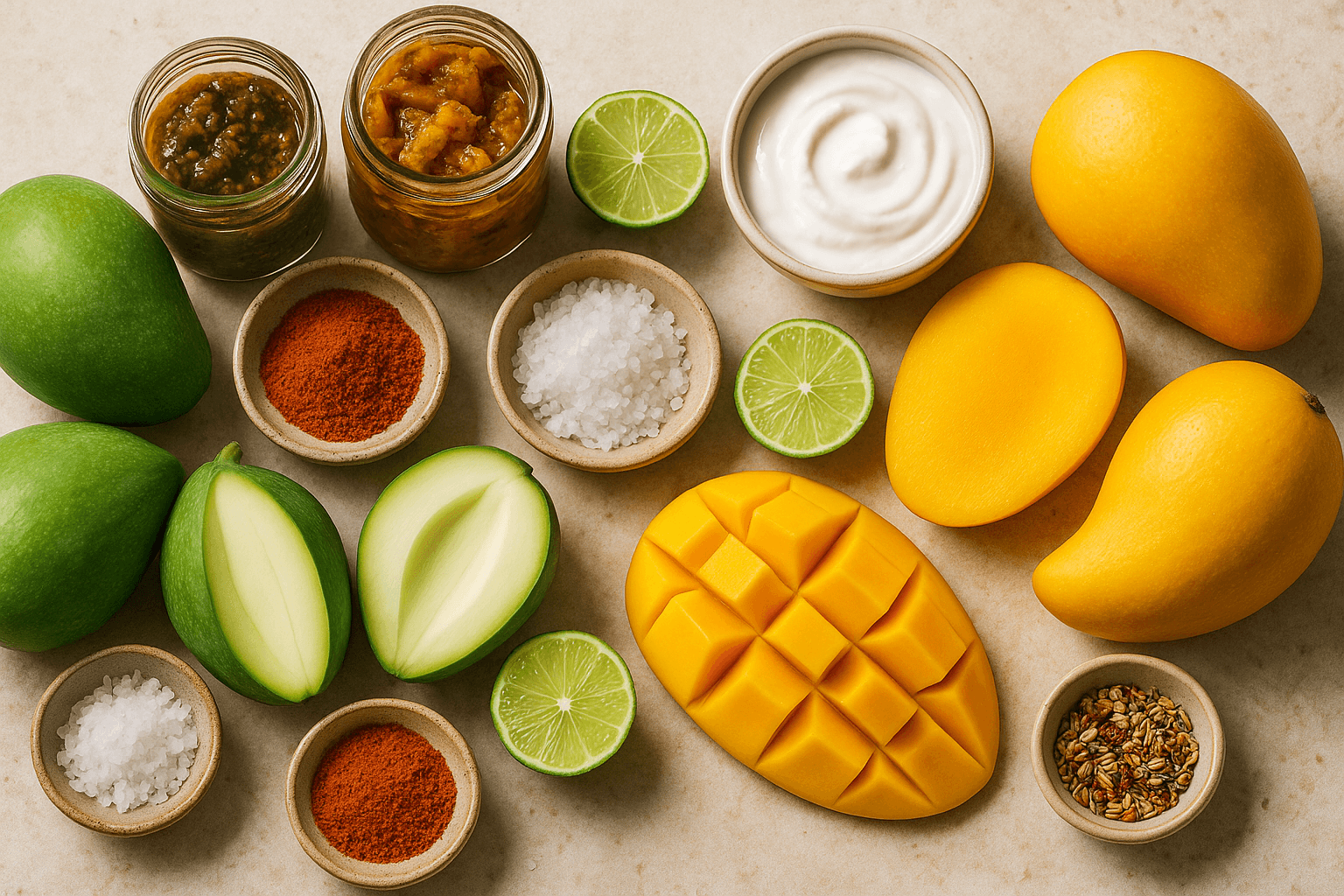
Mango can seem like two different fruits wearing the same skin. In one stage it is hard, sour, crisp, and almost vegetable-like—the kind you shave into a salad, pack into a pickle jar, or pound with chilies and salt until it wakes up everything else on the plate. In another stage it becomes lush, floral, sweet, slippery, and sometimes almost custardy—the kind that belongs in lassi, sticky rice, shrikhand, ice cream, or eaten over the sink with juice running down your wrist. If you have ever wondered why green mango keeps its bite in a salad while ripe mango collapses into softness, or why one variety perfumes a room while another tastes merely sweet, the answer is not kitchen magic. It is chemistry, cell structure, cultivar genetics, and a few practical rules that cooks across South and Southeast Asia have understood for generations, long before food science gave those rules names.
Understanding how mango changes as it ripens makes you better at nearly every mango dish. It helps you choose the right fruit for achar, som tam-style salads, chutneys, and amchur-like tart applications. It helps you avoid mushy relishes, watery salsa, flat lassi, and overcooked desserts that smell less like mango than jam. It also clears up a lot of confusion: why some ripe mangoes are fibrous, why some stay firm, why acid can preserve brightness but not stop all softening, why salt makes green mango taste sweeter, and why heating a ripe mango too aggressively can erase the very aromas you paid for.
Mango as ingredient, not just fruit
In many cuisines, mango is not one thing. It is a whole calendar of uses. In India, unripe mango is prized for pickles, chutneys, panna, dal, fish curries, and grated salads; ripe mango is cherished for aamras, lassi, shrikhand, desserts, and simply sliced at the table. In Bangladesh and Pakistan, green mango appears in sharp relishes and preserved condiments, while ripe mangoes star in drinks and sweets. Across Thailand, Vietnam, Myanmar, Cambodia, Indonesia, and the Philippines, sour green mango may be dipped in chili-salt-sugar mixtures, shredded into salads, cooked into sambals, or pickled; ripe mango slides into sticky rice, smoothies, shaved ice desserts, and coconut-based sweets. Mexican street fruit culture reaches a parallel insight with lime, salt, and chili on mango, proving that when a fruit has enough acid and aroma, savory treatment is not a contradiction.
The cultural through-line is simple: cooks choose mango stage the way they choose a vegetable variety or a cheese age. Ripeness is not merely “better” or “worse.” It determines structure, acidity, sweetness, aroma, and cooking behavior. When recipes say raw mango, they mean more than “not sweet yet.” They mean a fruit whose cell walls are more intact, whose starch has not fully converted to sugar, whose pectin network still holds pieces together, and whose tartness can stand up to salt, chili, fish sauce, jaggery, mustard oil, or hot oil tempering.
What changes during ripening: the big three
The dramatic difference between green and ripe mango comes down mainly to three processes:
- Pectin and cell-wall breakdown: this changes firmness to softness.
- Starch converting to sugars: this changes sour-starchy flavors to sweetness and juiciness.
- Aroma development: this changes a simple green smell into a complex perfume full of terpenes and other volatile compounds.
All three happen at once, though not always at the same speed. That is why a mango can taste sweet before it smells deeply aromatic, or feel soft but still seem a little flat.
Why green mango stays crisp: pectin, protopectin, and intact cell walls
A firm green mango holds its shape because its cells are glued together effectively. In unripe fruit, the middle lamella—the layer between plant cells—is rich in structural pectic substances, especially insoluble forms often simplified in cooking language as protopectin. Cellulose and hemicellulose in the cell walls are also more intact. Together they create resistance when you bite, shred, or slice.
That crispness is why green mango behaves almost like a firm apple or a tart vegetable. If you julienne it for a salad, the strands stay distinct. If you salt it briefly, it may release some water, but it does not instantly collapse. If you pickle it, the pieces can remain crunchy for days or weeks depending on recipe and salt concentration.
As mango ripens, naturally occurring enzymes begin to remodel those cell walls. Important players include pectin methylesterase, polygalacturonase, and other cell-wall-degrading enzymes. Their action makes pectin more soluble and less effective at holding cells together. The fruit softens because the structure between cells weakens; with less cement holding them tightly, the flesh gives way more easily. The same process is one reason ripe mango purees so readily.
This is also why chutneys made from already-ripe mango can leap from diced fruit to jammy mush very fast. Once heat is added to a fruit whose pectin network has already loosened, collapse happens quickly.
Practical rule
- For salads, pickles, and crunchy relishes, choose mangoes that are fully green, heavy for their size, and very firm with no aroma at the stem.
- For chunky chutneys where you want pieces to hold, choose just-mature but barely underripe mangoes—slightly less sour than hard green ones, but not soft.
- For lassi, puree, coulis, mousse, and desserts, choose ripe, fragrant fruit with some give under gentle pressure.
Starch to sugar: why ripe mango tastes round and green mango tastes sharp
Early in development, mango contains more starch and less sugar. During ripening, enzymes break those starches into simpler sugars, mainly sucrose along with glucose and fructose. As sugar rises, perceived sourness drops—not always because acid disappears completely, but because sweetness changes the balance. Texture also shifts because dissolved sugars attract water and contribute to the luscious, juicy impression of ripe fruit.
A green mango can taste startlingly tart because acids dominate. Depending on cultivar and maturity stage, mango acidity often comes from citric and malic acids, among others. In savory dishes, that tartness is an advantage. It gives lift to oily foods, sharpens salty seasonings, and survives dilution in dressings, chutneys, and drinks.
A ripe mango tastes “warmer” and fuller not just because it contains more sugar, but because sugar amplifies fruitiness and rounds out bitterness. This is why a pinch of salt on ripe mango often makes it taste even sweeter: salt suppresses bitterness and boosts flavor perception, allowing aroma and sugar to read more clearly.
Practical rule
Use sweetness and acid as structural tools:
- Green mango brings acidity first, texture second, aroma third.
- Ripe mango brings aroma first, sweetness second, texture either creamy or fibrous depending on cultivar.
If you swap one for the other in a recipe, the result is not a small variation. It is often a different dish.
Why some mangoes are perfumed and others merely sweet: terpene chemistry
If texture is the pectin story, perfume is the terpene story.
Mango aroma is created by a complex mix of volatile compounds, especially terpenes and related molecules. Different cultivars produce different proportions, which is why one mango may smell piney, another floral, another citrusy, another resinous, another peachy, and another almost coconut-like. Some important aroma contributors reported in mango include myrcene, limonene, terpinolene, linalool, ocimene, and various lactones, aldehydes, esters, and furanones depending on variety and ripeness.
A few useful kitchen translations:
- Myrcene-heavy mangoes can smell resinous, balsamic, almost turpentine-like in a good way when balanced.
- Linalool contributes floral notes.
- Limonene can read as citrusy.
- Lactones can push aroma toward creamy, peachy, coconut-like richness.
These volatile compounds increase and shift as the fruit ripens. That is why a mature but unripe mango may smell faintly green and sappy, while a ripe one sends fragrance across the room. It is also why refrigeration can make ripe mango seem muted: cold suppresses volatility, so aroma compounds do not leap out as strongly until the fruit warms slightly.
Practical rule
Serve ripe mango for dessert or drinks cool, not cold—ideally around 10 to 15°C / 50 to 59°F rather than straight from a very cold refrigerator. You will taste more aroma.
Cultivar differences: why one ripe mango is silky and another is fibrous
Not all mangoes ripen alike. Variety matters enormously.
Some cultivars are naturally low-fiber and nearly melting: Alphonso, Kesar, Ataulfo/Honey, and certain Thai dessert mangoes are famous for smooth flesh and strong perfume. Others, like Tommy Atkins, often travel well and look beautiful but can be less aromatic and more fibrous. Carabao, Nam Dok Mai, Kent, Keitt, Haden, Banganapalli, Dasheri, Chaunsa, Langra, and many regional cultivars each have distinct balances of sweetness, acidity, resin, and fiber.
Fiber in mango comes from vascular and structural tissues that remain noticeable even when the surrounding flesh softens. That is why some ripe mangoes feel buttery while others leave strings between your teeth. Fibrous ripe mangoes can still be excellent, but they are better used differently.
Practical rule by cultivar style
- Low-fiber, aromatic mangoes: best for lassi, mousse, aamras, sliced desserts, sticky rice, fool-style desserts, and uncooked purees.
- Medium-firm ripe mangoes: good for salsas, quick chutneys, grilling, and fruit salads if handled gently.
- Fibrous ripe mangoes: ideal for juicing, simmered sauces passed through a sieve, panna cotta swirls, jams, and cooked desserts.
- Very sour green mangoes: best for salads, pickles, grated condiments, fish curries, and tart drinks.
Enzymatic browning: why cut mango darkens and when it matters
Once you cut mango, cells rupture and enzymes such as polyphenol oxidase can react with oxygen, leading to browning. Mango is generally less dramatic than banana or apple, but browning still happens, especially on damaged surfaces and in less ripe fruit.
The rate depends on cultivar, ripeness, temperature, oxygen exposure, and pH. Acid slows the enzyme, which is why lime juice or tamarind in a salad dressing helps preserve color. Cold also slows browning. Sugar syrups can reduce oxygen contact somewhat, and covering cut surfaces tightly helps too.
Practical anti-browning rules
For sliced or diced mango:
- Toss with 1 tablespoon lime or lemon juice per 2 cups cut mango if the flavor fits the dish.
- Keep covered with minimal air exposure.
- Refrigerate promptly, ideally below 4°C / 40°F.
- For service, cut close to serving time for the freshest perfume.
With green mango salads, browning is usually less of a problem than water loss and softening, which matter more for texture.
The salt-chili-heat rules: why classic pairings work
Many traditional mango pairings look like pure instinct, but they map neatly onto chemistry.
Salt
Salt suppresses bitterness, heightens sweetness perception, and draws out moisture through osmosis. On green mango, salt softens the harshest edge of acidity and makes the fruit taste more mango-like rather than merely sour. But too much salt too early can pull out so much moisture that the flesh turns limp.
Rule: For crunchy salads, salt green mango lightly and briefly—or dress right before serving.
- For 2 cups julienned green mango, start with 1/4 teaspoon fine salt, toss, and serve within 5 to 10 minutes.
- If you want a slightly cured texture, rest 15 to 20 minutes, then drain and squeeze gently. This is useful for slaws and relishes where excess water would dilute dressing.
For pickles, salt is preservation as much as seasoning. Higher salt levels draw water out, lower water activity, and discourage spoilage while helping maintain crispness in the early stages.
Chili
Capsaicin loves company. Acidity, sweetness, and aromatic fruit all make chili taste brighter and more dimensional. Green mango with chili reads electric because acid sharpens the perception of spice. Ripe mango with chili reads rounder because sugar softens the burn while aroma adds complexity.
Rule: Match chili intensity to ripeness.
- Green mango can handle assertive heat: bird’s eye chili, Kashmiri chili powder, gochugaru-style flakes, fresh serrano.
- Ripe mango usually benefits from smaller amounts or gentler chili: Aleppo-style flakes, mild chili oil, a pinch of cayenne, or soft dried chili powders.
Heat
Heat changes mango in two competing ways: it can develop flavor concentration, but it can also destroy fresh aroma and speed softening.
For green mango, moderate cooking softens raw harshness while preserving some shape if pieces are large and cooking is brief. For ripe mango, prolonged boiling often cooks out top-note volatiles and leaves generic sweetness.
Rule: The riper and more fragrant the mango, the less heat it usually wants.
- Green mango: can be simmered, sautéed, tempered with hot oil, or pickled with hot brine.
- Ripe mango: add at the end, puree without cooking, or cook briefly over low heat.
Acid, sugar, dairy, and fat: what they do in the bowl
Acid
Acid brightens flavor and slows enzymatic browning, but it does not magically make mushy mango firm again. In green mango dishes, added acid from lime, vinegar, or tamarind can sharpen the fruit but may be unnecessary if the mango is already intensely sour.
Rule: Taste before adding lime to green mango. Many salads become one-note if both mango and dressing are aggressively acidic.
Sugar
Sugar balances sourness, supports jam set, and can draw water from fruit. In green mango chutney, sugar can preserve crisp-tender pieces if cooking is controlled, but too much sugar plus too much time creates syrupy collapse.
Rule: Add sugar in stages.
For a balanced green mango chutney base using 500 g / 1.1 lb diced green mango, start with 100 to 150 g sugar or jaggery, then adjust. Some mangoes need much more; others become cloying quickly.
Dairy
Dairy changes both flavor and mouthfeel. Yogurt in lassi brings fat, protein, lactic acidity, and body. Fat helps trap and carry aroma compounds, making mango seem richer. Protein and acidity also blunt harsh sweetness.
But very sour green mango can curdle some dairy applications or create an unpleasantly chalky tang. Ripe mango works best with yogurt because sugar and aroma balance the cultured note.
Rule: Use fully ripe mango for lassi and dairy desserts. If the mango is tart, sweeten first and blend with full-fat yogurt.
A reliable lassi ratio:
- 2 cups ripe mango flesh (about 330 to 350 g)
- 1 cup plain whole-milk yogurt (240 g)
- 1/2 cup cold water or milk
- 2 to 4 tablespoons sugar, depending on mango sweetness
- Pinch of salt
- Optional 1/8 teaspoon ground cardamom or a few saffron strands
Blend until smooth. Chill briefly, but do not over-ice it or the aroma goes dull.
Fat
Fat carries flavor and rounds edges. Coconut milk with ripe mango gives plushness because fat coats the palate and supports volatile retention. Mustard oil with green mango in pickles adds pungency, protects surfaces, and creates an aromatic bridge to spices.
How to slice mango according to purpose
Cutting style changes perceived texture more than people expect.
For green mango salads
Use julienne, thin batons, or coarse shreds. Thin cuts maximize crispness and dressing absorption without requiring long marination.
- Peel if skin is tough or resinous.
- Slice cheeks off around the pit.
- Julienne into matchsticks about 3 mm thick.
- Dress just before serving.
For pickles
Use larger wedges or cubes, around 2 to 3 cm. Bigger pieces resist softening better during salting and spicing.
For chutneys
Use 1.5 to 2 cm dice if you want identifiable chunks. Smaller dice disappear faster.
For lassi and puree
Cut flesh away from the pit and scoop cleanly. Stringy fruit should be blended and strained.
How to keep raw mango crunchy in salads
Crunch is mostly lost through three mechanisms: overripe fruit, too much salting too early, and acid/water exposure over time.
Crunch-preserving method
For 4 servings:
- 2 cups julienned green mango
- 1/4 teaspoon fine salt
- 1 teaspoon sugar or palm sugar
- 1 to 2 teaspoons lime juice only if needed
- 1 to 2 finely sliced chilies
- Herbs such as mint, cilantro, or Thai basil
- Chill the mango before cutting.
- Julienne and hold refrigerated.
- Toss with salt and sugar no more than 5 to 10 minutes before serving.
- Add acid last, and only enough to brighten.
- Fold in herbs at the end.
If making ahead, keep the dressing separate and combine at the last minute.
Common mistake
Marinating green mango for an hour the way you might marinate cucumber salad. It becomes wet, limp, and diluted.
How to keep pickled green mango crisp
Pickle texture depends on fruit maturity, salt, acid, time, and whether the pickle is fermented, quick-pickled, or oil-preserved.
General crispness rules
- Use firm, mature green mangoes with no soft spots.
- Cut into large pieces.
- Salt first to draw out water: about 2 to 2.5% salt by weight for a lightly salted overnight pre-cure, or more for traditional preservation styles.
- Drain well before adding spices or oil.
- Keep pieces submerged in brine or coated well with oil, depending on pickle style.
- Store cool and use clean utensils to avoid spoilage.
For a quick refrigerator pickle, a good brine is:
- 250 ml / 1 cup vinegar
- 250 ml / 1 cup water
- 25 g / 1 1/2 tablespoons kosher salt
- 20 to 40 g sugar
Bring just to a simmer, cool slightly, and pour over 500 g mango pieces with spices. Refrigerate. For best crunch, wait 24 hours but eat within 2 to 3 weeks.
For oil-based South Asian-style pickles, spices such as mustard seed, fenugreek, fennel, nigella, turmeric, chili, asafoetida, and mustard oil all contribute not just flavor but antimicrobial support and oxidative complexity.
How to prevent mush in chutneys
Mango chutney goes mushy when the fruit is too ripe, cut too small, salted too long before cooking, or simmered too aggressively.
Chunky green mango chutney method
Ingredients:
- 500 g green or barely underripe mango, peeled and diced 2 cm
- 1 tablespoon oil
- 1/2 teaspoon mustard seeds
- 1/2 teaspoon cumin seeds
- 1 small dried chili or 1/2 teaspoon chili flakes
- 100 to 150 g jaggery or sugar
- 60 ml / 1/4 cup water
- 1/2 teaspoon salt
- Optional: 1 tablespoon raisins, 1/4 teaspoon ginger, pinch turmeric
Method:
- Heat oil and bloom spices for 20 to 30 seconds.
- Add mango, salt, and water. Cover and cook on low 3 to 5 minutes.
- Add sugar or jaggery and cook uncovered another 4 to 8 minutes, stirring gently, until glossy and just tender.
- Stop when pieces still hold shape. Residual heat continues softening.
Science note
Sugar raises the boiling point slightly and creates syrup, but it also means longer reduction if you add too much liquid. More boiling equals more softening. So use less water than you think.
Common mistake
Boiling ripe mango with lots of sugar for 20 minutes and expecting neat chunks. At that point you are making jam, not chutney.
How to balance sweetness in lassi and desserts
The best mango lassi tastes like mango first, dairy second, sugar third. Too often it becomes a cold milkshake with generic fruit sweetness.
Rules for superior lassi
- Use very ripe, aromatic mango.
- Add a pinch of salt. This is not optional if you want the flavor to pop.
- Use whole-milk yogurt for body.
- Sweeten after tasting the fruit.
- Do not overload with ice.
- Chill ingredients instead of diluting the drink.
If the mango is intensely sweet and low-acid, add 1 to 2 teaspoons lime juice to the blender—not enough to make it tart, just enough to sharpen the edges.
For desserts like mousse, kulfi, cheesecake, or frozen yogurt, remember that cold suppresses sweetness perception. A puree that tastes perfectly sweet at room temperature may taste muted once chilled or frozen. Adjust sweetness slightly upward, but carefully, because too much sugar can blur aroma.
Heat management in savory and sweet mango cookery
When should mango be cooked, and how much?
Best uses for green mango with heat
- Tempered chutneys
- Fish or shrimp curries where sourness balances richness
- Sambals and stir-fries
- Cooked dals and lentils
- Sweet-sour preserves
Green mango can handle simmering because its structure starts firmer. Still, if you want discernible pieces, add them later in the cooking process.
Best uses for ripe mango with minimal heat
- Lassi
- Aamras
- Cold sauces
- Dessert toppings
- Folded into whipped cream, yogurt, or custard after cooling
If heating ripe mango, keep temperatures gentle and times short. For a sauce, warm puree over low heat to 70 to 80°C / 158 to 176°F for a few minutes rather than boiling hard. This preserves more aroma.
Pairing rules that actually work
Green mango likes
- Salt
- Chili
- Fish sauce
- Shrimp paste
- Mustard oil
- Jaggery or palm sugar
- Roasted cumin
- Coriander
- Mint and cilantro
- Toasted peanuts or coconut
- Garlic and ginger
- Tamarind in small amounts
Ripe mango likes
- Yogurt
- Milk and cream
- Coconut milk
- Cardamom
- Saffron
- Lime in tiny balancing amounts
- Black pepper or mild chili
- Sticky rice
- Vanilla
- Passion fruit, pineapple, or citrus in careful doses
Green mango usually dislikes
- Too much added acid on top of already high sourness
- Long marination if crunch matters
- Delicate dairy applications
Ripe mango usually dislikes
- Long boiling
- Excess raw garlic or harsh vinegar that buries aroma
- Too much spice complexity, which can make perfume muddy
Common nutrition myths about mango sugar and digestion
Mango has attracted a lot of nutrition folklore, some of it useful, much of it exaggerated.
Myth: Mango is “too sugary” to be healthy
Reality: Ripe mango does contain natural sugars, but it also provides fiber, vitamin C, carotenoids, and a matrix of water and plant compounds. Eating mango is not the same as drinking a large glass of sweetened mango syrup. Portion and context matter.
A practical serving is roughly 1 cup cut mango, about 165 g. For most healthy people, that can fit comfortably into a balanced diet. Concerns become more relevant when mango is turned into heavily sweetened drinks, desserts, or condensed purees consumed in large amounts.
Myth: Green mango is always “better” because it has less sugar
Reality: Better for what? Green mango is lower in sweetness and often excellent in savory dishes, but that does not make ripe mango nutritionally suspect. They are different ingredients with different culinary roles.
Myth: Mango should never be mixed with dairy
Reality: There is no general scientific basis for claiming mango and dairy are inherently harmful together. Mango lassi, shrikhand, smoothies, and yogurt desserts are well-established and usually digest just fine for people who tolerate dairy. Individual intolerance is another matter, but the combination itself is not problematic.
Myth: Mango causes “heat” in the body in a medically literal sense
Reality: Traditional food systems often classify foods by warming or cooling effects, and those frameworks have cultural significance. But in a biochemical sense, mango does not raise body heat in any mystical way. If someone feels discomfort, portion size, ripeness, accompanying ingredients, or individual sensitivity are more useful explanations.
Myth: Mango aids digestion because it contains enzymes, so more is always better
Reality: Mango does contain enzymes and fiber, but digestion outcomes depend on the whole meal and the person. Huge servings of ripe mango, especially in rich desserts, can feel heavy not because mango is bad, but because sugar load and total volume matter.
A practical ripeness guide for cooks
Choose green mango when you need:
- Sourness
- Crunch
- Defined slices or shreds
- Pickling strength
- Resistance to cooking collapse
Look for: hard fruit, full green skin or barely turning, no softness, little aroma.
Choose ripe mango when you need:
- Perfume
- Sweetness
- Pureeability
- Dessert appeal
- Creamy or juicy mouthfeel
Look for: fragrant stem end, slight give, deeper color depending on cultivar, heavy feel, no bruised mushy patches.
Use barely underripe mango when you need:
- A middle ground for chutneys and salsas
- Moderate sourness with some sweetness
- Pieces that hold shape but taste less austere
A few reliable formulas
Fast green mango chili-salt salad
- 2 cups julienned green mango
- 1/4 teaspoon salt
- 1 to 2 teaspoons sugar
- 1 red chili, thinly sliced
- 1 tablespoon chopped mint or cilantro
- Optional 1 teaspoon lime juice
Toss and serve immediately.
Quick green mango pickle
- 500 g green mango, 2 cm pieces
- 10 g salt (2%)
- 1/2 teaspoon turmeric
- 1 teaspoon chili powder
- 1 teaspoon cracked mustard seed
- 2 tablespoons mustard oil
- Optional splash vinegar
Salt overnight, drain, mix with spices and oil, refrigerate 24 to 48 hours before eating.
Balanced mango lassi
- 2 cups ripe mango
- 1 cup yogurt
- 1/2 cup milk or water
- 2 tablespoons sugar, or to taste
- Pinch salt
- 1/8 teaspoon cardamom
Blend smooth. Serve cool, not icy.
The deepest lesson: mango is a stage ingredient
The best way to cook with mango is to stop thinking of it as a single fruit and start thinking of it as a moving target. Green mango is not a failed ripe mango. Ripe mango is not a softened green mango. They are distinct ingredients created by the same plant at different physiological moments.
When mango is green, pectin is stronger, cells are more tightly bound, starches are less converted, and acidity dominates. That makes it ideal for shredding, curing, tossing with salt and chili, and preserving in ways that celebrate tension and crunch. As it ripens, enzymes loosen the pectin structure, sugars accumulate, acids recede in perception, and terpenes bloom into fragrance. That makes it ideal for blending, spooning, perfuming desserts, and pairing with dairy and gentle richness.
If you remember only a handful of rules, let them be these:
- Use green mango for crunch, tartness, and structure.
- Use ripe mango for aroma, sweetness, and creaminess.
- Salt wakes up both, but too much too early softens green mango.
- Chili loves mango at every stage, but the amount should match ripeness.
- Heat is kinder to green mango than to ripe fragrant mango.
- Acid preserves brightness, not firmness.
- Cultivar matters: fiber and perfume are genetic, not just ripeness issues.
- For lassi and desserts, a pinch of salt and proper ripeness matter more than extra sugar.
- For chutneys and pickles, cut size and cooking time are texture control.
Once you understand those rules, mango cookery becomes far less mysterious. You stop fighting the fruit and start collaborating with it. The crisp green slices in a chili-salt salad, the clean bite of a pickle, the glossy chunks in a chutney, and the velvet perfume of a good lassi all come from the same decision made at the beginning: choosing the right mango stage, then handling it in a way that respects the science already inside it.