Why Saffron Tastes Haylike, Honeyed, or Metallic: Crocin, Picrocrocin, and the Blooming Rules for Better Rice, Broths, and Desserts
RecipeSimpli
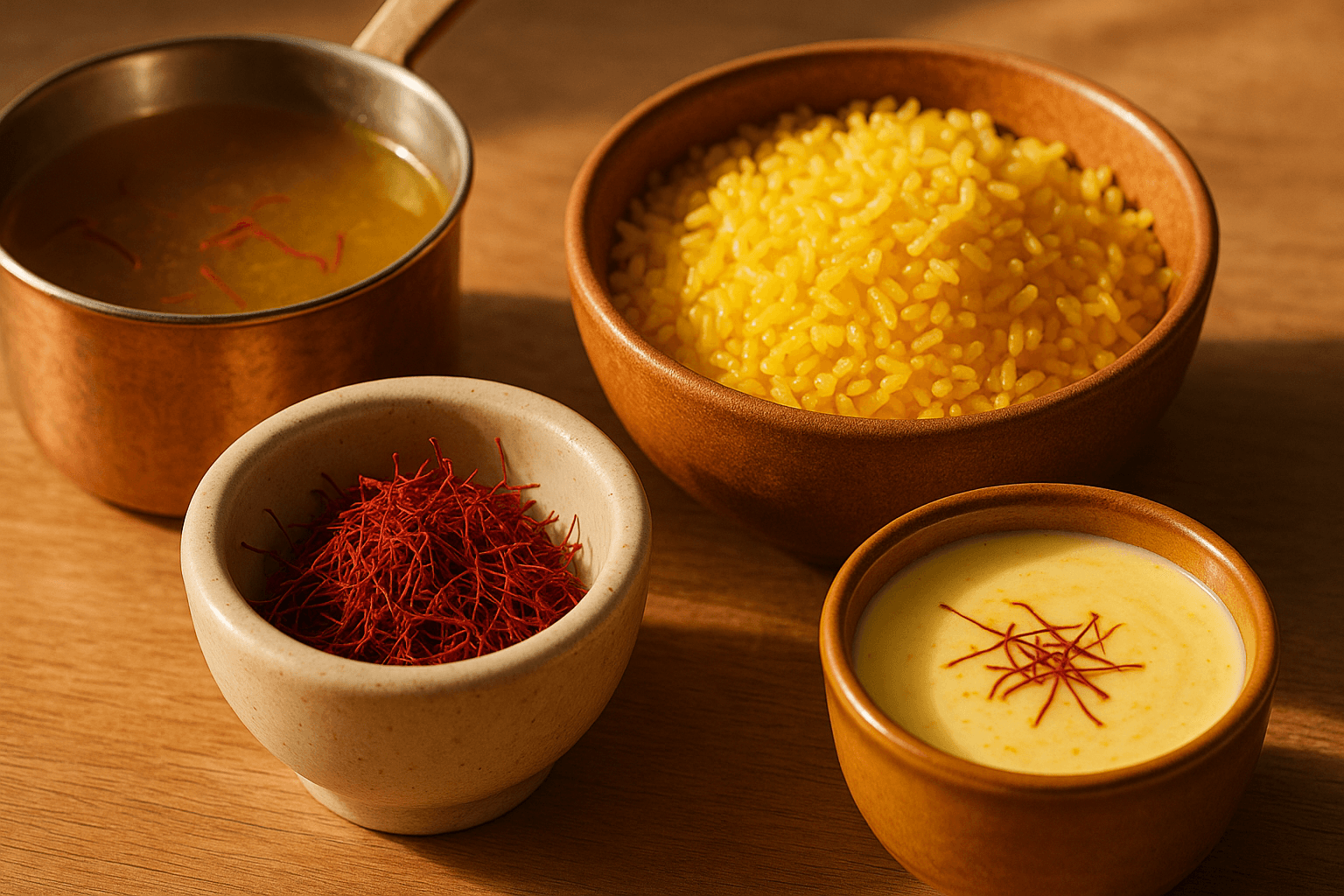
Saffron has one of the strangest flavor reputations in the kitchen. People describe it as floral, honeyed, grassy, leathery, medicinal, metallic, earthy, warm, and even sea-breezy, sometimes all in the same meal. That sounds contradictory until you understand what saffron actually is: a tiny dried stigma carrying three major sensory jobs at once. One group of compounds colors food gold, another brings bitterness and structure, and another creates the haunting aroma that makes saffron taste like much more than “yellow.” When saffron is handled well, those elements feel layered and luxurious. When it is handled badly, it can taste flat, dusty, harsh, or oddly metallic.
That gap between transcendent and disappointing is why saffron frustrates home cooks. You buy a tiny jar for a serious amount of money, add a pinch to rice or custard, and sometimes the result barely tastes of anything. Other times it comes across as medicinal or sharp. The problem usually is not that saffron is overrated. The problem is extraction, balance, age, or quality.
If you know how crocin, picrocrocin, and safranal behave, saffron gets much easier to use well. You stop thinking of it as a mysterious luxury ingredient and start treating it like a delicate but predictable spice. You learn why some recipes call for grinding, why others insist on warm liquid, why saffron in milk tastes different from saffron in broth, why a long simmer can flatten its perfume, and why more saffron does not always mean better flavor.
This is a science-first guide to making saffron taste like itself: rich rather than raw, aromatic rather than medicinal, and deep rather than merely yellow.
What saffron is, and why it became precious
Saffron is the dried stigma of Crocus sativus, the purple saffron crocus. Each flower produces only three crimson stigmas, and those must be harvested and separated by hand. That labor intensity alone explains much of its price. But saffron also became culturally important because it delivers something almost no other spice can do in the same way: it gives vivid golden color, distinct aroma, and a bittersweet structure that reads as savory or sweet depending on the dish.
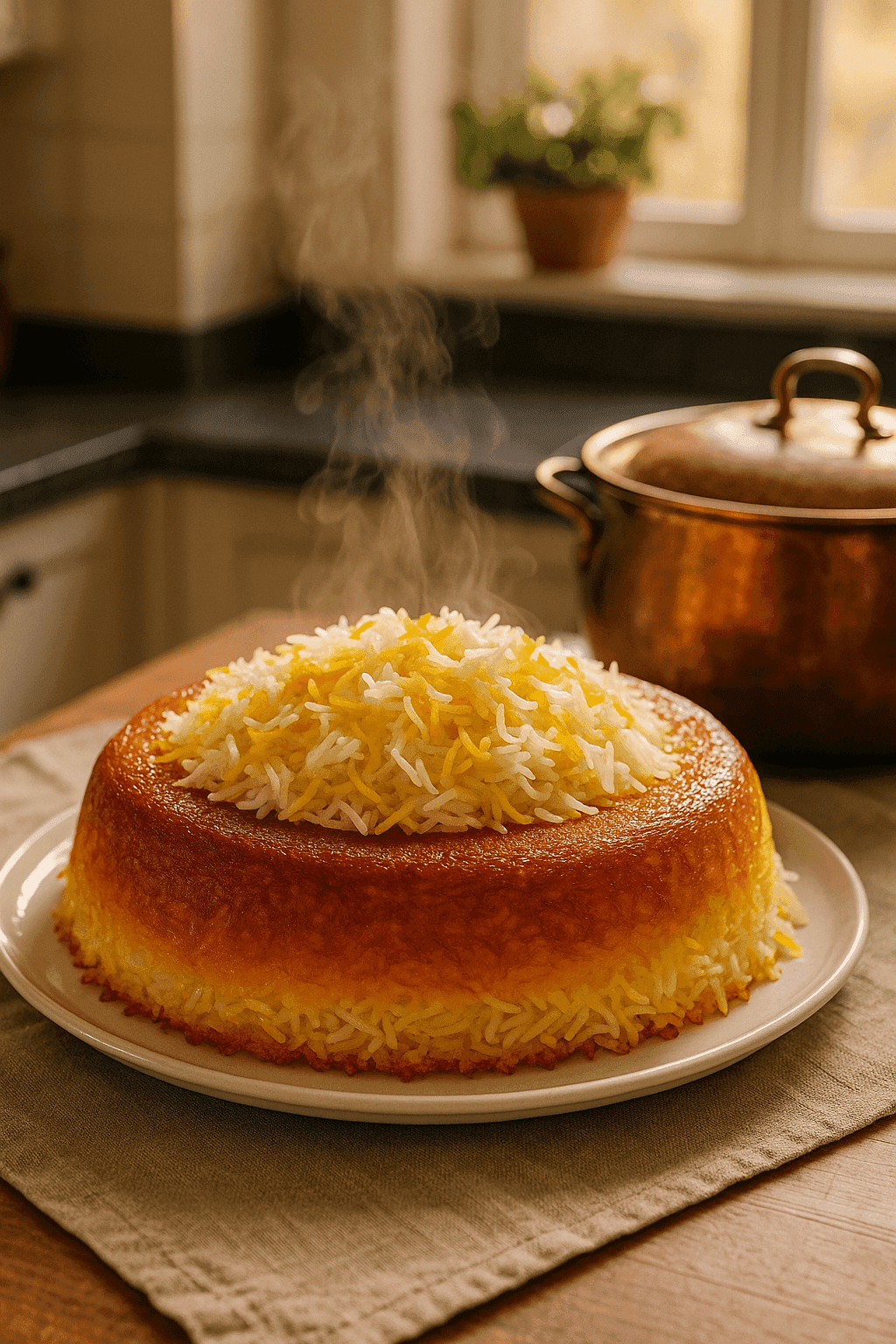
For centuries, saffron has moved through trade routes connecting Persia, the Mediterranean, North Africa, and South Asia. In Persian cooking, saffron is central to rice dishes, stews, jeweled preparations, syrups, and ice cream-like desserts. In Spanish cooking, it is inseparable from certain rice dishes, brothy seafood preparations, and festival foods. Across South Asia, saffron appears in biryanis, kheer, kulfi, festive sweets, and milk infusions, often paired with cardamom, nuts, and rose. In North African cooking, saffron perfumes tagines, couscous, and celebratory dishes where it meets preserved lemon, ginger, cinnamon, or lamb.
These traditions did not arrive at saffron technique by accident. They developed methods—grinding with sugar, steeping in warm water, infusing in milk, blooming in broth, finishing rice with saffron liquid—that maximize a spice too expensive to waste.
The three key compounds: color, bitterness, aroma
To understand saffron’s flavor shifts, start with the chemistry.
Crocin: the color engine
Crocin is the major pigment responsible for saffron’s intense golden-yellow color. It is unusual among carotenoid-related compounds because it is water-dispersible, which is one reason saffron can color rice, stock, syrup, and milk so effectively even in small amounts.
What crocin does best:
- Delivers bright yellow to deep gold color
- Moves readily into water-based cooking liquids
- Signals quality visually, though color alone is not the whole story
What crocin does not do:
- It is not the main aroma compound
- It does not by itself create the characteristic saffron perfume
This matters because many cooks judge saffron success by color. But you can extract strong color without getting equally strong aroma. A dish can look beautifully golden yet taste disappointingly one-note.
Picrocrocin: the bitter backbone
Picrocrocin is the major compound associated with saffron’s bitter taste. “Bitter” sounds negative, but in a good saffron dish, this bitterness is not aggressive. It gives structure and prevents sweet dishes from becoming cloying and savory dishes from tasting merely floral. Without some picrocrocin expression, saffron can seem thin.
What picrocrocin contributes:
- A clean, tonic bitterness
- A haylike, green, or tea-like edge when balanced
- Structural contrast in sweet applications
Too much picrocrocin expression, or poor balance with aroma, can push saffron toward:
- Harshness n- Raw medicinal character
- Astringent bitterness
Picrocrocin also matters because it is a precursor to one of saffron’s key aroma molecules.
Safranal: the aroma signature
Safranal is the compound most responsible for saffron’s recognizable aroma: floral, warm, haylike, honeyed, slightly woody, sometimes leathery. It develops as picrocrocin breaks down during drying and storage. That means saffron aroma is not fixed at harvest; it is shaped by curing and age.
What safranal can smell like:
- Hay and warm straw
- Honey and dried flowers
- Soft medicinal notes, in a good way, like an herb cabinet rather than cough syrup
- A faintly leathery or tobacco-like warmth
When safranal is low or has dissipated, saffron may smell:
- Weak
- Dusty
- Flat
- Merely bitter and yellow
When safranal dominates without enough balance, especially in old or poorly stored saffron, it can tip toward:
- Sharp medicinal notes
- Stale perfume
- Metallic impressions
Good saffron is a balance, not a single note. You want color from crocin, shape from picrocrocin, and haunting aroma from safranal.
Why saffron can taste haylike, honeyed, floral, or metallic
Those tasting notes are not random. They reflect extraction conditions, saffron quality, and concentration.
Haylike
“Haylike” is often a positive saffron descriptor. It points to safranal and related aromatic complexity, especially when paired with soft bitterness from picrocrocin. In rice or broth, this can read as dry meadow, warm straw, or sun-cured tea. It becomes negative only when it veers into dusty or stale.
Haylike saffron tends to show up when:
- Threads are fresh and properly cured
- You steep gently rather than boiling hard
- The dish has enough fat or starch to carry the aroma
- The dose is moderate
Honeyed
Saffron often feels honeyed not because it contains honey-like sugar flavors, but because safranal plus gentle bitterness creates an illusion of warm sweetness. This is especially noticeable in:
- Milk desserts
- Syrups
- Custards
- Rice puddings
- Saffron water folded into steamed rice
A honeyed impression is strongest when saffron is paired with dairy, sugar, or fragrant rice and not cooked so hard that the top aromatic notes blow off.
Floral
Floral saffron emerges when aroma is preserved and not overwhelmed by too much direct heat, excessive garlic, or long cooking. Floral does not mean perfumey in a rosewater way. Good saffron florality is dry, warm, and subtle.
You get more floral character when:
- Threads are freshly ground or crushed before steeping
- You use warm, not boiling, liquid for blooming
- The bloom is added near the middle or end of cooking rather than boiled for an hour
- The dish has enough moisture to distribute the saffron evenly
Metallic
Metallic saffron is a common complaint, and it usually has one of four causes.
1. Too much saffron
Saffron is not one of those spices where doubling the quantity simply doubles pleasure. Past a certain point, bitterness and concentrated aromatic sharpness pile up faster than complexity. That is when saffron stops tasting golden and starts tasting medicinal, tannic, or metallic.
For many home dishes serving 4 to 6 people, 10 to 20 threads can be enough for subtle presence, while 20 to 40 threads gives a more assertive saffron profile. Going far beyond that without a dish specifically designed for it can create harshness.
As a rough weight guide:
- A small pinch: about 0.03 to 0.05 grams
- A moderate pinch: about 0.08 to 0.12 grams
- A strong but still reasonable family-dish amount: about 0.15 to 0.25 grams
In a delicate milk dessert for 1 liter of milk, 0.1 gram may be plenty. In a rice dish serving 6, 0.15 gram often reads clearly. In a large celebratory biryani or tahdig-centered Persian rice, you may use more, but usually in a targeted way rather than saturating the entire pot.
2. Old or poorly stored saffron
As saffron ages, volatile compounds dissipate and the balance shifts. You may still get color from crocin while aroma has dulled or turned stale. That imbalance can register as metallic, dusty, or flatly bitter.
3. Aggressive heat
Boiling saffron hard for too long can strip off delicate aroma, leaving color and bitterness behind. What remains often tastes harsher than the same saffron steeped gently.
4. Low-quality, adulterated, or exhausted saffron
Fake saffron, dyed fibers, spent saffron re-colored after extraction, or safflower sold as saffron can produce strange tastes, weak aroma, excessive color bleed, or metallic notes.
Thread quality, age, and why one jar behaves differently from another
Not all saffron is equal, and with such a concentrated ingredient, small differences matter a lot.
What high-quality saffron looks like
Look for:
- Threads rather than powder, since powder is easier to adulterate
- Deep red stigmas with trumpet-like flared ends
- Minimal yellow style attached; yellow parts are less potent and add weight
- Dry but not brittle-to-dust texture
- A strong aroma even before blooming
Good saffron should smell vivid and alive: floral, haylike, warm, slightly sweet, slightly bitter.
Signs of fake or exhausted saffron
Watch for:
- Uniformly bright red fibers that look suspiciously perfect or dyed
- Threads that release intense color instantly like food dye with little aroma
- Powder with no clear provenance
- Fibers that look like corn silk, shredded paper, or plant material rather than trumpet-ended stigmas
- Little to no aroma even after crushing
- Strong color in water but flat taste in the finished dish
A simple kitchen check: place a few threads in warm water. Real saffron should release color gradually over several minutes, not in a dramatic instant cloud like synthetic dye. The threads should retain some structure and not turn white immediately. The aroma should bloom as the color develops.
Age and storage
Saffron is dried, so people assume it lasts forever. It does not. It can remain usable for quite a while, but its best aromatic life is limited.
For best quality:
- Buy in small quantities you can use within 6 to 12 months
- Store airtight
- Keep away from light, heat, and humidity
- Avoid storing above the stove
A cool, dark cupboard is fine. An airtight glass jar tucked inside a tin or box is even better. The refrigerator is usually unnecessary unless your kitchen is very hot and humid, and frequent condensation can be a risk.
Why grinding changes the result
If there is one technique that consistently improves saffron extraction, it is crushing or grinding the threads before blooming.
Whole threads extract more slowly because the surface area is limited. Grinding breaks the structure open, exposing crocin and allowing aromatic compounds to disperse more efficiently into the blooming liquid.
Traditional methods often use a mortar and pestle with:
- A pinch of sugar
- A pinch of salt
- Or a small amount of warm liquid added after crushing
Why add sugar or salt? It gives the pestle something to grip and helps pulverize the threads instead of simply pushing them around.
Use:
- 10 to 30 threads with 1/8 teaspoon sugar for a small batch bloom
- Or 0.1 gram saffron with 1/4 teaspoon sugar for a larger batch
Grind to a fine, rusty-red powder, then steep.
If you skip grinding, compensate by giving the threads a longer steep, usually 20 to 30 minutes rather than 10 to 15.
The blooming rules: water, fat, milk, and time
People often say “steep the threads,” but the useful question is: in what, how hot, and for how long?
Rule 1: Bloom in warm liquid, not aggressively boiling liquid
A good general blooming temperature is 140 to 160°F / 60 to 71°C. Hot enough to encourage extraction, gentle enough to protect volatile aroma.
Practical home method:
- Heat 2 to 4 tablespoons water, milk, or broth until hot but not simmering
- Add crushed saffron
- Steep 10 to 20 minutes
If your liquid boils, it is not necessarily ruined, but repeatedly hammering saffron with high heat is not ideal.
Rule 2: Use enough liquid to distribute the saffron
A tiny teaspoon of blooming liquid can work, but for even distribution in rice or custard, 2 to 4 tablespoons is easier. For large dishes, use 1/4 cup / 60 ml.
Rule 3: Water extracts color very efficiently
Crocin is water-dispersible, so water is the most universal blooming medium. If you want maximum color and reliable distribution, water is your friend.
Best for:
- Rice
- Broths and stews
- Syrups
- Doughs and batters where water can be incorporated easily
Rule 4: Milk softens saffron and emphasizes honeyed notes
Dairy rounds saffron’s bitterness and can make it seem sweeter and fuller. This is why saffron in kheer, kulfi, shrikhand-like desserts, custards, and saffron milk cakes feels different from saffron in broth.
Best for:
- Rice pudding
- Kulfi base
- Custards and panna cotta-like desserts
- Milk breads and enriched doughs
Use warm milk at about 140°F / 60°C, not boiling.
Rule 5: Fat carries aroma but does not replace a water bloom
Saffron aroma can be beautifully carried by butter, ghee, olive oil, or cream, but blooming in pure fat alone is less efficient for color extraction than blooming in water or a water-containing liquid. If you want both aroma and color, a mixed system is ideal.
Examples:
- Bloom in warm water, then stir into melted butter for brushing rice or pastry
- Bloom in warm stock, then add to an olive-oil based stew
- Bloom in milk, then enrich with cream or ghee
Rule 6: Steep long enough, but not forever
A practical sweet spot is 10 to 20 minutes for crushed saffron, 20 to 30 minutes for whole threads. Some cooks steep longer, even hours, and that can work, especially at room temperature after an initial warm start. But the major gains tend to happen early.
If you want to prep ahead, make a bloom and refrigerate it for the same day’s cooking. Do not treat it like a weeklong extract.
Step-by-step blooming methods for different dishes
Here is where technique becomes kitchen reality.
Method 1: For rice dishes
This is ideal for Persian-style rice finishing, Spanish-inspired rice dishes, pilafs, and biryanis where you want both even perfume and visual drama.
Basic saffron bloom for rice
Ingredients
- 0.1 to 0.2 gram saffron threads, about 20 to 40 threads
- 1/8 to 1/4 teaspoon sugar or a pinch of salt, optional
- 3 tablespoons hot water at 140 to 160°F / 60 to 71°C
Steps
- Grind the saffron with sugar or salt in a mortar until powdery.
- Add the hot water.
- Steep 15 minutes.
- Add this bloom either:
- To the cooking liquid before rice finishes, for more even overall color
- Or to a portion of cooked rice, then layer or spoon it over the top, for the classic streaked effect
Best timing
For fluffy rice with distinct grains, add saffron bloom late enough to preserve aroma. In steamed or parboiled rice systems, adding the bloom during the final steaming phase often gives the best fragrance.
Common mistake
Dumping dry threads directly into a full pot of rice water and expecting even extraction. You may get random yellow patches and underused threads.
Method 2: For stews, soups, and broths
Saffron loves moist savory dishes, but a long simmer can mute it.
Basic saffron bloom for brothy dishes
Ingredients
- 0.05 to 0.15 gram saffron
- 1/4 cup / 60 ml warm stock or water
Steps
- Crush the saffron.
- Bloom in warm liquid for 10 to 15 minutes.
- Stir into the stew or broth during the last 15 to 30 minutes of cooking.
Why late addition works
The dish still gets integrated saffron flavor, but you protect the volatile aroma from an hour of steam loss.
For heartier dishes
In lamb or chicken stews with onions, pulses, or root vegetables, you can add some saffron earlier for depth and hold back a little bloom for the end. That gives both background bitterness and top-note fragrance.
Method 3: For milk desserts
Saffron in dairy is one of the most forgiving and luxurious applications.
Basic saffron milk infusion
Ingredients
- 0.05 to 0.1 gram saffron
- 1/4 cup / 60 ml milk or cream
Steps
- Warm the milk to 140 to 150°F / 60 to 66°C.
- Crush the saffron and add it.
- Steep 15 to 20 minutes.
- Add to the dessert base.
Best uses
- Kheer or rice pudding
- Kulfi base
- Custards
- Saffron cake soak
- Ice cream base
Why this works
Milk proteins and fat soften the edges of bitterness, making saffron taste rounder and more honeyed.
Method 4: For baking
Baking is tricky because oven heat can flatten aroma if saffron is added carelessly.
Basic saffron approach for cakes, buns, breads, and cookies
Ingredients
- 0.05 to 0.15 gram saffron
- 2 to 3 tablespoons warm milk, water, or cream
Steps
- Crush the saffron.
- Bloom it in warm liquid for 15 to 20 minutes.
- Add the bloom to the wet ingredients.
- If the recipe includes butter, combine the bloom with melted butter after steeping for fuller aroma distribution.
Best baking applications
- Enriched buns and festive breads
- Tea cakes
- Semolina cakes soaked with syrup
- Butter cookies where saffron is paired with cardamom or citrus
Common mistake
Adding whole dry threads to batter. They often stay localized, and the flavor never disperses properly.
The science of pairing: why saffron loves certain foods
Saffron shines when the dish gives it room. That often means ingredients that are aromatic but not bullying.
Excellent partners include:
- Rice, especially fragrant long-grain varieties
- Dairy and cream
- Butter and ghee
- Mild stock
- Shellfish and white fish
- Chicken and lamb
- Almond, pistachio, and cashew
- Citrus zest in small amounts
- Cardamom, cinnamon, rose, and vanilla when used sparingly
Why these pairings work:
- Starch holds color and diffuses flavor evenly.
- Fat carries aroma compounds and rounds bitterness.
- Sugar amplifies the perception of saffron’s honeyed side.
- Salt sharpens the entire flavor profile, including floral notes.
What can drown saffron out:
- Too much smoked paprika
- Excessive chili heat
- Lots of raw garlic
- Heavy roasted spice blends added at high levels
- Large amounts of dark cocoa or coffee
That does not mean saffron cannot appear in complex dishes. It can. But if you want to taste saffron itself, it should not be fighting ten louder flavors.
Cultural context: four major saffron traditions and what they teach
Persian cooking
Persian technique is among the clearest examples of saffron as a carefully managed extract rather than a casual spice. Saffron is often ground and bloomed, then used selectively: brushed onto tahdig-adjacent rice, spooned over jeweled rice, folded into stews, or mixed into yogurt, syrups, and frozen desserts. The lesson from Persian cooking is precision. Saffron is not just for color; it is an aromatic finishing architecture.
A practical Persian-inspired principle: do not waste saffron by burying it indiscriminately. Put it where it will be noticed.
Spanish cooking
In Spanish rice and seafood traditions, saffron often enters broths and sofrito-based preparations where it seasons the entire dish rather than just one layer. The lesson here is integration. Saffron is not only a garnish note; it can shape the whole cooking liquid.
A practical Spanish-inspired principle: bloom into stock or warm liquid and let the rice absorb that flavor evenly.
South Asian cooking
In South Asian cuisine, saffron is at home in biryani, pulao, kheer, rabri-like milk reductions, sweets, and celebratory beverages. It is often paired with cardamom, nuts, kewra, or rose, but the best dishes still preserve saffron’s own personality. The lesson is layering. Saffron may be one fragrance among several, but it should still read distinctly.
A practical South Asian-inspired principle: use saffron where steam, milk, or finishing layers can lift its perfume rather than cook it flat.
North African cooking
In North African dishes, saffron often works with ginger, cinnamon, turmeric, preserved lemon, olives, and slow-cooked meats. The lesson is balance in savory warmth. Saffron can survive complexity if the dish respects its aromatic scale.
A practical North African-inspired principle: let saffron support and illuminate, not dominate or disappear.
Common mistakes that make saffron taste disappointing
Using too much
This is the big one. Saffron should taste expansive, not loud. Overdosing shifts the profile toward bitterness, medicinal sharpness, and metallic sensation.
Using too little in a huge dish
The opposite problem also happens. One tiny pinch in a pot serving 10 may color the food faintly but vanish in flavor.
Not crushing the threads
You leave extraction on the table.
Tossing saffron into boiling liquid for a long time
You lose aromatic delicacy.
Expecting powder to be reliable
Powder can be fine if from a trusted source, but it is easier to fake and often loses character faster.
Pairing it with overpowering ingredients
Saffron disappears beside excessive smoke, heat, or aggressively bitter greens.
Buying old saffron and blaming the recipe
A stale jar cannot perform like a fresh one.
Practical dosage guide for home cooks
These are sensible starting points, not rigid laws.
For 4 to 6 servings of plain rice or pilaf
- Subtle: 0.05 gram
- Noticeable: 0.1 gram
- Rich and celebratory: 0.15 to 0.2 gram
For 1 liter milk in pudding or custard
- Gentle floral note: 0.05 gram
- Distinct saffron dessert: 0.08 to 0.12 gram
For a stew or broth serving 4 to 6
- Moderate: 0.05 to 0.1 gram
- Strong: 0.12 to 0.15 gram
If you are new to saffron, start lower than you think and increase next time. It is easier to build confidence than rescue a metallic batch.
A simple master formula for saffron bloom
If you want one versatile method to remember, use this.
Master saffron bloom
- 0.1 gram saffron
- 1/8 teaspoon sugar
- 3 tablespoons water, milk, or stock at 150°F / 66°C
- Steep 15 minutes after grinding
This amount works well for:
- A rice dish serving 4 to 6
- A moderate custard batch
- A medium pot of broth or stew
Adjust upward only when the dish is large or specifically saffron-forward.
Variations worth trying
Saffron + ice cube method
Some cooks crush saffron, add a small ice cube, and let it melt slowly. The theory is that the slow release improves extraction and aroma preservation. It can work, especially if you have time, though a warm bloom is more predictable for most home cooks.
Saffron + melted butter
After making a water bloom, stir it into 1 to 2 tablespoons melted butter and use it to finish rice, brush bread, or enrich a sauce.
Saffron + citrus
A little lemon or orange zest can brighten saffron in cakes and seafood dishes, but use restraint. Too much citrus can overshadow saffron’s quieter perfume.
Saffron + rose or cardamom
Classic in many desserts, but keep both in supporting roles. If rosewater or cardamom takes over, saffron becomes just a colorant.
How to know when you got it right
Well-used saffron should do more than make food yellow. It should create a sense of warmth and lift. In rice, the aroma should rise with steam before you even take a bite. In broth, the saffron should feel integrated yet identifiable. In milk desserts, it should read as floral and honeyed with a faint clean bitterness that keeps the richness in check.
You got it right when:
- The color is golden, not neon
- The aroma is fragrant but not perfumey
- The flavor feels deep, not just bitter or dusty
- The saffron tastes present without making the dish seem medicinal
The big takeaway: saffron is an extraction problem, not a mystery
If saffron has ever disappointed you, the fix is usually practical. Buy threads from a trusted source. Use them while they are still vibrant. Crush them. Bloom them in warm liquid. Match the blooming medium to the dish. Add them late enough to protect aroma. And resist the temptation to use a heavy hand.
Crocin gives you the gold. Picrocrocin gives you the bittersweet backbone. Safranal gives you the perfume that makes saffron feel almost glowing. Better saffron cooking is really the art of getting those three into balance.
Once you understand that, saffron stops being a luxury ingredient you are afraid to waste and becomes what it has long been in Persian, Spanish, South Asian, and North African kitchens: a tool for building radiance, nuance, and appetite with astonishing economy.
A few threads, treated with respect, can do more than a whole spoonful added carelessly. That is the real secret of saffron.