Why Sesame Seeds Pop, Paste, or Go Bitter: Hull Chemistry, Roast Curves, and the Grinding Rules Behind Brittle, Buns, and Better Tahini
RecipeSimpli
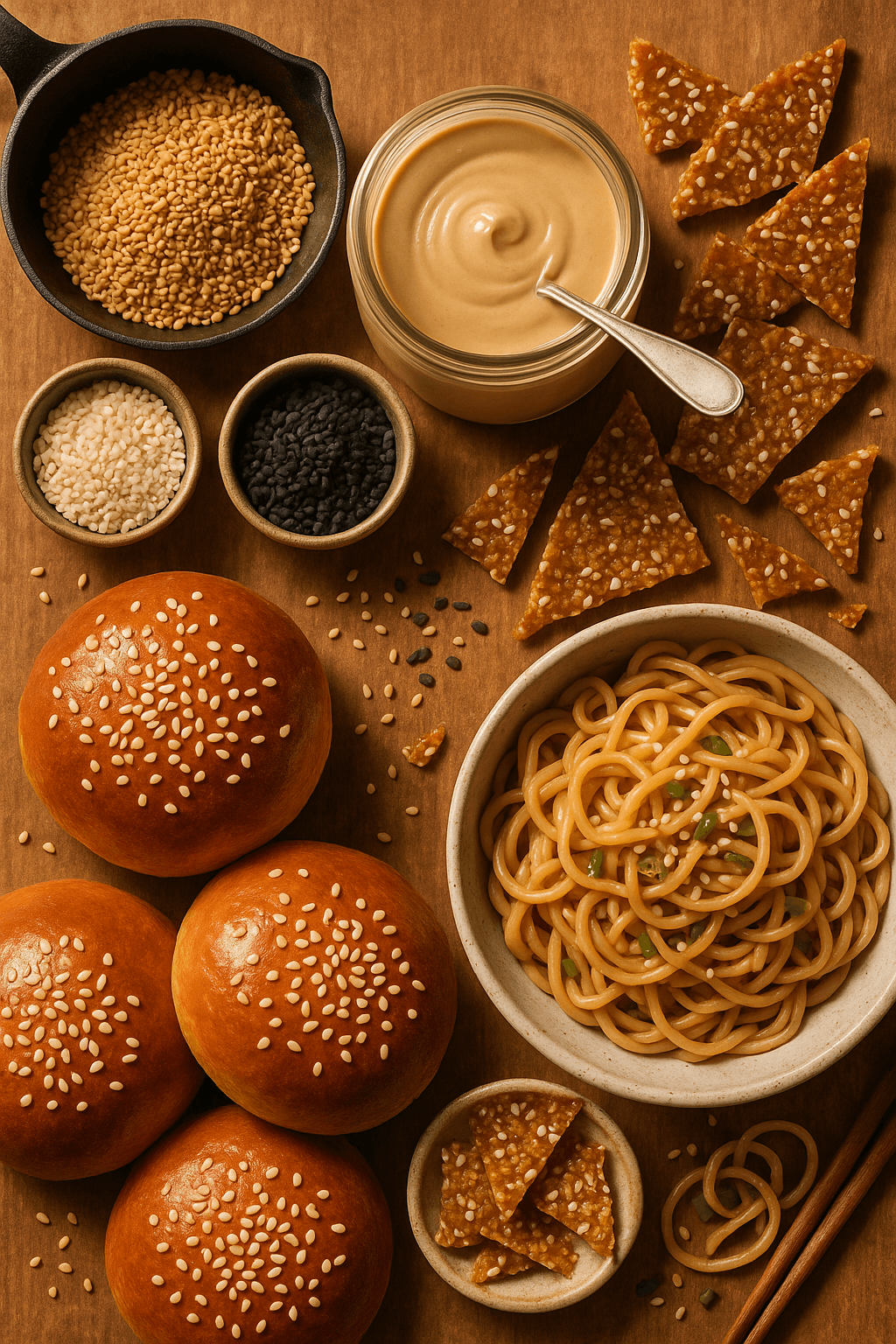
Sesame is one of those ingredients that too often gets treated as decoration. A sprinkle on a burger bun. A crust on a roll. A spoonful of tahini hidden inside hummus. A sweet snap in brittle. But sesame deserves to be understood the way we talk about coffee, cocoa, or olive oil: as an ingredient with varieties, processing choices, roast levels, texture states, and very real chemistry that changes how it behaves in the pan, the grinder, and the mouth.
A teaspoon of sesame can be gentle and milky, intensely nutty, almost grassy, deeply roasted, pleasantly bitter, or unpleasantly scorched. The same seed can remain dry and sandy in a spice grinder, or suddenly relax into a glossy paste. It can perfume hot oil in seconds, or turn acrid if left just a minute too long. It can make a brittle taste rounded and rich, or sabotage it with stale oil and chewy seeds.
If you cook with sesame regularly, the most useful shift is to stop thinking of it as a single pantry item. Instead, think in three linked decisions: what kind of sesame you are using, how far you roast it, and how finely you grind it. Those three choices determine whether your tahini is silky or chalky, your sesame buns smell bakery-sweet or burnt, and your topping tastes fresh or tired.
This guide walks through sesame as an ingredient in its own right: the chemistry of the hull, why hulled and unhulled seeds behave differently, how roast curves build flavor or bitterness, what actually happens when sesame turns into paste, and the practical rules for blooming, candying, grinding, and storing it successfully at home.
Sesame in context: small seed, huge culinary range
Sesame is among the oldest oilseeds in the world, with deep roots across South Asia, East Asia, the Middle East, Africa, and beyond. That broad cultural footprint helps explain why one ingredient can appear in such different forms: pale sesame scattered over breads, black sesame folded into sweets, tahini emulsified into sauces, toasted sesame oil used as a finishing aroma, sesame candy pulled into brittle, and ground sesame worked into noodles, fillings, dressings, and halva.
Different cuisines ask different things of the seed. In Levantine and broader Middle Eastern cooking, sesame is often pushed toward paste—tahini—which depends on controlled roasting and very fine grinding. In East Asian applications, sesame may be used as a topping, a fragrant finishing element, a sauce component, or a sweet paste, each demanding a different roast and grind. In bakery work, sesame often sits exposed on the surface of dough, where it must survive oven heat without becoming bitter. In confectionery, sesame is suspended in sugar, where moisture management and seed temperature matter as much as flavor.
This is why a generic instruction like “toast sesame seeds until fragrant” is often not enough. Fragrant for tahini is not identical to fragrant for noodle sauce; toasted enough for brittle can be too dark for garnishing fish or vegetables. Once you see sesame as a flexible oilseed rather than a one-note garnish, the handling starts to make sense.
Hulled vs. unhulled: the hull changes flavor, nutrition, and texture
The first big decision is whether the sesame seed still has its hull. That outer coat is thin, but it changes almost everything.
What the hull does
The hull contributes:
- more fiber
- more minerals, especially calcium concentrated in outer layers
- a firmer, rougher texture
- more phenolic compounds and tannin-like bitter notes
- more resistance to turning into a perfectly smooth paste
Hulled sesame has had that outer covering removed, often after soaking or mechanical processing. The result is generally:
- milder flavor
- lower bitterness
- paler color
- smoother mouthfeel
- easier grinding into fluid tahini
Unhulled sesame tends to be:
- more assertive
- more mineral and earthy
- slightly more bitter
- more texturally stubborn
- darker-looking in paste form
Bitterness: not all bitterness is bad
Unhulled sesame is often described as bitter, but that can mean two different things. One is a pleasant adult bitterness—something like toasted grain, chicory, or walnut skin—that adds complexity. The other is harsh bitterness from over-roasting, oxidation, or poor-quality seeds. The hull naturally brings more of the first kind, so an unhulled tahini or sesame paste may taste stronger and more structured even when it is fresh and well made.
That strength can be wonderful in sauces with garlic, lemon, soy, chile, or molasses, where the sesame needs backbone. But for desserts, delicate dressings, or the soft creamy profile associated with many classic tahinis, hulled sesame is usually the better tool.
Calcium and nutrition: yes, but with context
You will often hear that unhulled sesame is much higher in calcium than hulled sesame. Broadly, that is true because the hull retains mineral content. But in practical cooking terms, the question is not just “which contains more calcium?” It is also “how much are you realistically eating, and in what form?” A garnish of 1 teaspoon to 1 tablespoon does not function nutritionally the same way as a few tablespoons of tahini in a dressing or sauce.
The hull can also reduce perceived smoothness and increase bitterness, so the nutritionally richer option is not automatically the most versatile one. Home cooks often do best by matching the seed to the use: unhulled when you want whole-grain intensity, hulled when you want elegance and smoothness.
Texture: the hull is a mechanical problem too
When you grind sesame, you are trying to break cell walls and release oil. The hull creates extra fibrous material that does not dissolve or melt away. Even in a high-powered grinder, that means unhulled sesame often stays slightly grittier than hulled sesame. In tahini, that translates into a thicker, more rustic paste. In sweets, it can read as pleasantly toothsome or distractingly sandy depending on the application.
If your goal is ultra-silky tahini, sesame custard, or a fine drizzle sauce, use hulled seeds. If your goal is character, structure, and toast depth, unhulled can be worth it.
Flavor chemistry: why sesame can taste milky, grassy, nutty, or burnt
Raw sesame seeds are not blank. Even before heat enters the picture, they contain oils, proteins, sugars, and aromatic precursors. Roasting reorganizes all of that.
Raw flavor
Untoasted sesame often tastes:
- mildly sweet
- grassy or beany
- creamy but subdued
- sometimes faintly bitter, especially unhulled
This is why raw tahini can taste pale and almost chalk-milky, while toasted tahini tastes rounder and more aromatic.
What roasting does
As sesame heats, several things happen:
- Moisture decreases. Even dry seeds contain some water. Driving it off improves crispness and changes how readily oils flow.
- Volatile aromas develop. Heat unlocks nutty, warm, bready, caramel-like compounds.
- Proteins and sugars react. Maillard reactions and related browning chemistry create deeper toasted flavors.
- Oils become more aromatic—but also more vulnerable. Sesame is rich in unsaturated fats, which can oxidize or degrade if heat goes too far.
The trick is that sesame is tiny. That means it transitions from pale and underdeveloped to ideal to burnt much faster than nuts like almonds or hazelnuts.
Roast curve matters more than just final color
A lot of cooks watch only for darkness. But with sesame, the path to that color matters. A moderate roast gives time for internal moisture to leave and flavors to develop more evenly. Aggressive heat can darken the exterior before the interior reaches a balanced aromatic point.
That is why sesame roasted over very high heat can taste simultaneously dark and flat—browned on the outside, underdeveloped within, then suddenly scorched.
For home cooking, think in roast styles rather than a single rule:
- Light roast: best for finishing, delicate dressings, pale buns, and situations where you want sweetness and fragrance more than intensity
- Medium roast: best general-purpose zone for tahini, sesame noodles, gomasio-style toppings, and multipurpose sesame paste
- Dark roast: best used deliberately for robust sauces, black sesame sweets, and some confections—but dangerous because bitterness rises fast
Typical roasting targets at home
For whole sesame seeds in the oven, spread in a thin layer on a sheet pan and roast at:
- 300°F / 150°C for 8 to 12 minutes for a light roast
- 325°F / 165°C for 7 to 10 minutes for a medium roast
- 350°F / 175°C for 5 to 8 minutes for a darker roast, with very close attention
Shake or stir once or twice for even heating.
For stovetop toasting, use a dry skillet over low to medium-low heat and toast for 3 to 6 minutes, stirring constantly or shaking frequently.
These are starting ranges, not guarantees. Seed size, moisture level, pan thickness, and whether the seeds are black, white, hulled, or unhulled all affect timing.
Sensory cues that matter more than a timer
Good sesame roasting is a sensory exercise. Look and smell for:
- a shift from raw and grassy to warm and nutty
- a dry, loose flow in the pan rather than damp heaviness
- light golden color for white sesame, not patchy brown flecks everywhere
- popping beginning softly, not violent crackling
If you smell sharp smoke, acrid bitterness, or something reminiscent of burnt toast, the seeds have gone too far.
Why sesame pops
When sesame seeds heat, residual internal moisture turns to steam. Because the seed coat limits escape, pressure can build until the seed gives a small pop or crack. This is more noticeable in some batches than others depending on moisture content and roast temperature.
A little popping is useful feedback: the seeds are hot, water is escaping, and roasting is progressing. But intense popping often means the heat is too high for even development. Lowering the heat gives you a steadier roast and reduces the risk of surface scorching.
In candy applications, pre-warmed or lightly pre-toasted seeds are especially helpful because very cold seeds dropped into hot syrup can lower the syrup temperature dramatically and create uneven setting.
The line between nutty and bitter
Bitterness in sesame comes from several sources, and this is where many recipes fail to distinguish them.
1. Natural hull bitterness
Mostly relevant in unhulled seeds. This can be pleasant.
2. Roast bitterness
Heat-generated bitterness increases as roasting passes the sweet spot. This can add useful depth in tiny amounts but quickly overwhelms.
3. Oxidative rancidity
Sesame contains oils that can oxidize during long storage, especially once ground. This is not the same as roasted bitterness. It tastes stale, paint-like, dusty, or oddly sharp in the back of the throat.
4. Scorching during grinding or blooming
Ground sesame can overheat from friction. Whole seeds can scorch in hot oil in less than a minute. Both produce a bitter burnt aroma distinct from deep roasting.
If your tahini is bitter, ask in order:
- Was it unhulled?
- Was it roasted too dark?
- Were the seeds old?
- Did the grinder overheat the paste?
From sand to fluid: the grinding physics of sesame
Perhaps the most magical transformation in the kitchen is when a pile of seeds suddenly becomes a pourable paste. That shift is not mysterious; it is mechanical.
Sesame seeds are rich in oil—roughly around half their weight, depending on variety and processing. But that oil is trapped inside cells. Grinding breaks those structures, releases oil, and reduces particle size. At first, the particles are still relatively coarse, so the mixture looks dry and crumbly. Keep going, and enough oil coats enough small particles that the mass begins to flow.
The three grinding stages
- Crushed seed stage
- looks like damp sand or meal
- good for toppings, coatings, and some confectionery
- Clumping stage
- starts sticking to itself in lumps
- oil is releasing, but not enough for a smooth paste
- Fluid paste stage
- looks glossy and heavier
- flows or ribbons, depending on temperature and grind size
Why sesame sometimes stays sandy
Common reasons:
- seeds were under-roasted, so oil stayed less mobile
- grinder is too weak or the batch too small
- unhulled seeds are resisting fine grinding
- not enough time was given
- the grinder bowl shape leaves material out of the blades
- mixture overheated, then seized texturally from uneven processing
Practical grinding rules
For home tahini, a food processor, high-speed blender, or stone grinder works better than a weak spice grinder for larger quantities. Useful starting quantity:
- 2 to 3 cups sesame seeds (280 to 420 g) in a standard food processor
Smaller quantities often do not circulate well.
A practical home method:
- Toast hulled sesame to medium roast.
- Cool until warm, not hot—about 10 to 15 minutes.
- Grind in a food processor for 2 to 5 minutes, scraping as needed.
- Rest for 1 minute if the machine gets hot.
- Continue grinding 2 to 5 minutes more until fluid.
- If needed, add 1 to 3 tablespoons neutral oil per 2 cups seeds to help loosen the paste, though excellent sesame should not always need it.
If using a blender, you may need a tamper and slightly larger quantity to keep the blades engaged.
Temperature matters during grinding
Warm sesame grinds more easily because the oil flows better. But too much heat is a problem. If the paste gets very hot—above roughly 140°F / 60°C—you risk driving off delicate aromas and promoting bitter notes. The goal is warm, not cooking-hot.
Particle size defines mouthfeel
This matters as much as oil release. Two tahinis with the same fat content can feel totally different if one contains larger particles. Coarse sesame paste tastes rustic and can seem more bitter because large particles linger on the palate. Fine paste tastes sweeter and creamier because the tongue reads smoothness as richness.
That is why commercial stone-ground tahini often seems mellower than homemade versions even with similar ingredients: the grind is finer and more uniform.
Blooming sesame: when and how to wake up aroma in fat
“Blooming” sesame means briefly heating the seeds, paste, or ground sesame in oil or another fat to dissolve and spread aromatic compounds. This is a powerful move in noodle sauces, dressings, stir-fries, and finishing oils—but it is also where sesame gets ruined quickly.
The rule
Use gentle heat and short time.
Sesame aromatics are fat-soluble, so blooming works. But because the seeds are small and oil-rich, the margin between fragrant and burnt is narrow.
For whole seeds
Add sesame to warm oil over low heat, around 225 to 275°F / 107 to 135°C if you were to measure it, and cook 30 to 90 seconds until aromatic. If the oil is shimmering aggressively, it is likely too hot.
For sesame paste or tahini
Stir tahini into warm oil or a warm sauce base off the heat or over very low heat. High heat can split the paste, dull the aroma, and intensify bitterness.
Common mistake
Adding sesame seeds to garlic that is already on the edge of browning in a hot pan. By the time the seeds toast, the garlic burns. Bloom one at a time, or work at lower heat.
Candying sesame: the brittle rules
Good sesame brittle is shattering, deeply aromatic, and never sticky with stale oil. The main challenge is timing: sugar is moving through temperature stages while the seeds are also roasting.
The best strategy
Use pre-toasted or at least pre-warmed seeds.
Why? Because raw, room-temperature sesame cools the syrup and delays even coating. Pre-toasted seeds contribute developed flavor and reduce the risk that the sugar reaches a dark caramel before the sesame tastes fully nutty.
A reliable brittle ratio
For a classic sesame brittle:
- 1 cup sugar (200 g)
- 1/4 cup water (60 g)
- 2 tablespoons glucose, corn syrup, or honey (optional, about 40 g) for smoother texture and reduced crystallization
- 1 cup sesame seeds (140 g), lightly toasted
- 1 tablespoon butter or 1 teaspoon neutral oil
- 1/4 teaspoon baking soda optional for a slightly lighter texture
- 1/4 teaspoon fine salt
Cook the sugar syrup to 300 to 310°F / 149 to 154°C for a hard crack brittle, then stir in the warm sesame quickly, followed by salt and optional soda, and spread immediately.
Why bitterness happens in brittle
Often the problem is not just dark caramel. It is dark caramel plus dark-toasted sesame. Those intensities stack. If you plan to caramelize sugar deeply, keep the sesame only lightly toasted. If you want more sesame depth, pull the caramel slightly lighter.
Texture tip
Roll or spread brittle thin—about 1/8 inch / 3 mm—for maximum snap. Thick brittle can taste harder rather than crisper.
Sesame on buns, breads, and crusts
Sesame on the outside of dough is exposed to direct oven heat, so your pre-bake handling matters.
Why bun sesame sometimes tastes bitter
Because the baker starts with fully toasted seeds, then bakes them again at 375 to 450°F / 190 to 230°C. By the time the bun is done, the sesame is over-roasted.
Better rule for breads and buns
Use raw or only very lightly toasted sesame on dough surfaces. The oven will finish the roast.
How to make it stick
Brush the dough with:
- egg wash for shine and adhesion
- water for a leaner finish
- cornstarch slurry or thin flour paste in some styles of baking
Then press on the seeds rather than just sprinkling. Pressing gives better coverage and reduces seed loss.
For extra aroma without bitterness
Mix white and black sesame, or combine raw sesame with a tiny amount of toasted sesame added after baking as a finishing sprinkle.
Sesame in noodles, sauces, and dressings
Sesame in a sauce is often assumed to be mostly about flavor, but texture is just as important.
Whole seeds vs. ground sesame vs. tahini
- Whole toasted seeds give aroma and crunch, but limited body
- Freshly ground sesame gives stronger aroma and some body, but can be gritty
- Tahini or fine sesame paste gives the best emulsifying power and smoothest texture
If you want a sauce that clings to noodles, use tahini or very finely ground sesame, then thin with warm water gradually. Tahini often tightens or seizes when water first hits it; this is normal. Keep whisking and adding water in small increments until it loosens into a smooth sauce.
A practical noodle sauce template:
- 3 tablespoons tahini or sesame paste
- 2 to 4 tablespoons warm water
- 1 tablespoon soy sauce
- 1 to 2 teaspoons rice vinegar or black vinegar
- 1 teaspoon sugar or honey
- 1 clove garlic, finely grated
- 1 teaspoon toasted sesame oil
- chile to taste
Whisk the tahini with 1 tablespoon warm water first, then add the rest gradually until silky.
Why ground sesame sometimes tastes stronger than tahini
Fresh grinding ruptures aromatic cells right before serving. Even if the texture is less smooth, the aroma can be more explosive. This is why some Japanese-style sesame dressings and noodle sauces use freshly ground seeds rather than only tahini.
Black sesame deserves its own note
Black sesame is not merely white sesame with darker color. It often tastes more aromatic, more assertive, and sometimes slightly more bitter. It is prized in sweets, fillings, and pastes where its dramatic color and deeper perfume matter.
A few practical notes:
- roast black sesame more gently than you think; color cues are harder to read
- rely on aroma and sound more than visual darkening
- black sesame paste often benefits from a little sugar or honey to round bitterness
- because you cannot judge browning well, use lower heat: 300°F / 150°C oven or a very gentle skillet
Storage: where good sesame goes bad
Sesame’s strength—its high oil content—is also its vulnerability. Oxygen, heat, light, and time degrade flavor.
Whole seeds
Store in an airtight container in a cool, dark place for 2 to 3 months for best flavor, or refrigerate/freezer-store for longer freshness. In warm kitchens, refrigeration is wise.
Toasted seeds
These stale faster because roasting exposes and mobilizes aromatic compounds. Best used within 2 to 4 weeks if stored airtight and cool, though they are safest at peak quality in the first couple of weeks.
Tahini or sesame paste
Once ground, sesame has much greater surface area and more oxygen exposure. Refrigerate after opening unless the product specifically performs better at room temperature and you use it very quickly. Stir separated oil back in. For best flavor, aim to use within 1 to 3 months after opening, though many commercial products last longer.
How to detect rancidity
Fresh sesame smells nutty, warm, faintly sweet, or creamy. Rancid sesame smells:
- paint-like
- waxy-crayon-like
- stale and dusty
- sharp in an unpleasant way
If a tahini tastes bitter and throat-catching rather than rounded and toasty, suspect oxidation.
Common mistakes that make sesame disappointing
1. Roasting too hot
Sesame burns fast. Moderate heat gives better flavor.
2. Using pre-toasted seeds for bread toppings
The oven finishes what the pan started—often too far.
3. Expecting a tiny batch to become smooth in a big processor
Low volume does not circulate well.
4. Grinding until the machine overheats
Friction can flatten aroma and increase bitterness.
5. Confusing unhulled intensity with poor quality
Some bitterness is structural, not spoilage.
6. Keeping sesame too long near the stove
Heat and oxygen steadily ruin it.
7. Under-salting sesame sweets and sauces
A little salt sharpens nuttiness and suppresses harsh bitterness.
Practical use guide: match the sesame to the job
Here is the short version cooks can apply immediately.
For tahini
Use hulled white sesame, medium roast, grind warm in a sufficiently large batch until fully fluid.
For rustic savory paste
Use unhulled sesame or a blend of hulled and unhulled for more mineral depth and body.
For brittle and candy
Use lightly toasted or pre-warmed sesame, and balance sesame roast level against caramel darkness.
For buns and bread crusts
Use raw or barely toasted seeds, because the oven will complete the roast.
For noodle toppings and finishing sprinkles
Use freshly toasted whole seeds or coarsely ground sesame for maximum aroma.
For black sesame desserts
Roast gently, grind thoroughly, and often pair with sugar, honey, or dairy/coconut richness to soften bitterness.
Step-by-step: two foundational home methods
Method 1: Better homemade tahini
Ingredients
- 2 cups hulled white sesame seeds (280 g)
- 1/2 teaspoon fine salt optional
- 1 to 3 tablespoons neutral oil only if needed
Procedure
- Preheat oven to 325°F / 165°C.
- Spread sesame on a sheet pan in a thin even layer.
- Roast for 7 to 10 minutes, stirring once halfway, until lightly golden and fragrant. Do not let the seeds become medium brown.
- Cool for 10 to 15 minutes until warm but not hot.
- Transfer to a food processor and process for 2 minutes.
- Scrape down. Process 2 minutes more.
- Continue in 1-minute bursts until the paste turns fluid and glossy, resting the machine if it gets hot.
- Add salt, and only add oil if the paste remains excessively thick after full grinding.
- Store airtight in the refrigerator.
What success looks like
The tahini should pour slowly from a spoon, smell deeply nutty, and taste rounded rather than harsh.
Method 2: Perfect toasted sesame topping
Ingredients
- 1/2 cup sesame seeds (70 g)
- pinch of salt optional
Procedure
- Heat a dry skillet over low to medium-low heat.
- Add sesame and stir or shake constantly for 3 to 5 minutes.
- Pull the pan off the heat when the seeds are fragrant and lightly golden, not deeply brown.
- Immediately transfer to a cool plate so carryover heat does not over-toast them.
- Add a pinch of salt if using.
Best uses
Rice bowls, noodles, roasted vegetables, salads, grilled fish, chicken, and soups.
Variations worth trying
Blend hulled and unhulled
A 75:25 ratio of hulled to unhulled sesame gives some mineral depth without too much grit.
Add a small percentage of black sesame
For a topping or tahini with more perfume and visual depth, try 10 to 20% black sesame mixed with white.
Use sugar strategically
A pinch of sugar in ground sesame condiments can round bitterness, especially with black or unhulled seeds.
Make sesame salt
Grind 1 tablespoon toasted sesame with 1 teaspoon flaky or coarse salt for a fast finishing condiment.
Control roast by intended dish
- fish, vegetables, yogurt sauces: light roast
- noodles, dressings, tahini: medium roast
- robust sweets, black sesame fillings: medium-dark but carefully managed roast
The big takeaways
Sesame is not just sesame. The hull changes bitterness, calcium, and texture. The roast curve determines whether the flavor lands milky, grassy, nutty, or scorched. Grinding is a mechanical problem of oil release and particle size, not just persistence. And the best results come from matching the seed, roast, and grind to the dish in front of you.
If you remember only a handful of rules, make them these:
- choose hulled for smoothness and gentleness, unhulled for intensity and texture
- roast moderately, because sesame gets bitter fast
- grind warm seeds in a large enough batch for fluid tahini
- use raw or barely toasted seeds on breads, since the oven adds more color
- pre-toast or pre-warm seeds for brittle and candy
- store sesame cool, dark, and airtight, and treat ground sesame as perishable
Once you start handling sesame with the same respect you give spices, nuts, and oils, it stops being an afterthought. It becomes what it has always been in great cooking: an ingredient with structure, aroma, and transformative power. A spoonful can sweeten, thicken, perfume, crunch, emulsify, or enrich. And with the right roast and grind, it can do all of those things without ever going bitter.