Why Tahini Turns Thick, Bitter, or Perfectly Pourable: Sesame Particle Size, Emulsion Stress, and the Acid‑Water Rules Behind Silky Sauces and Hummus
RecipeSimpli
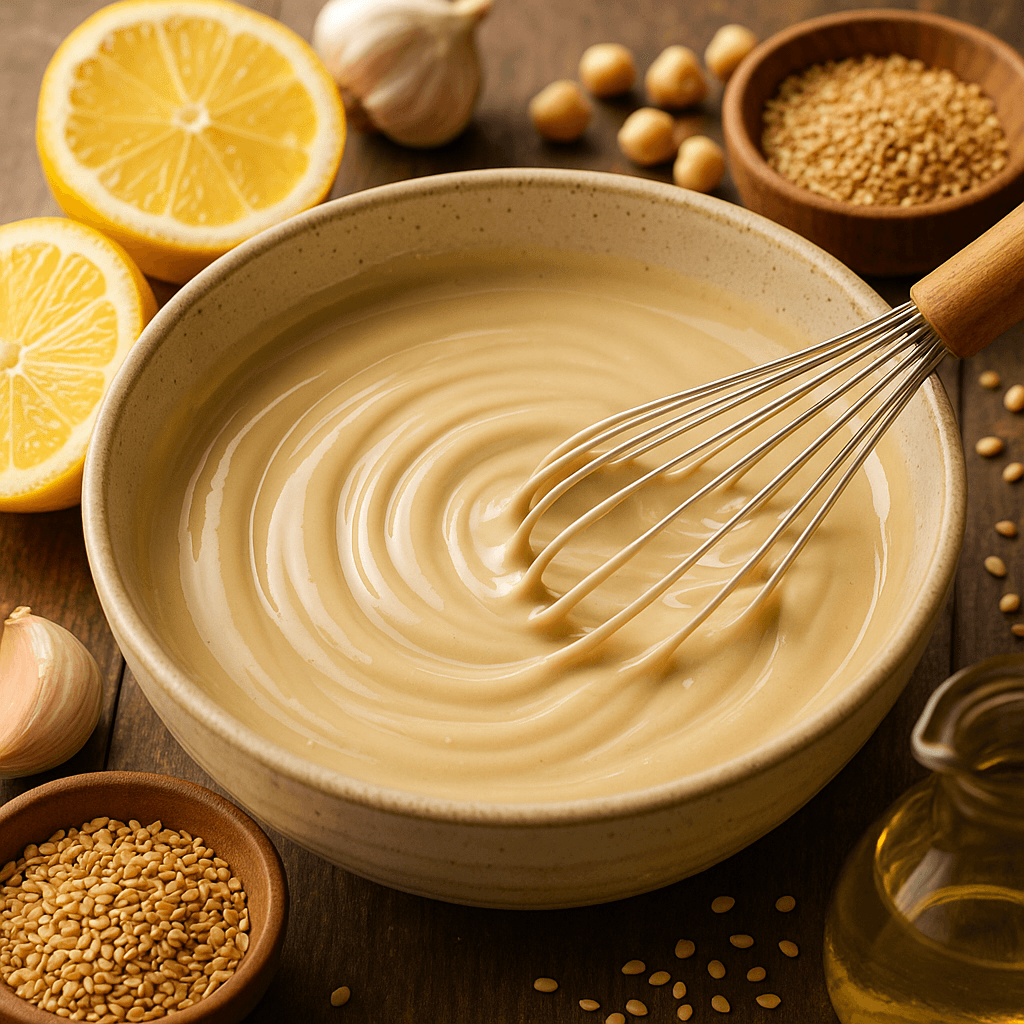
The first time you watch tahini “break,” it feels like a kitchen prank. You stir a spoonful of smooth, glossy sesame paste with lemon juice or a splash of water, expecting it to loosen into a luxurious sauce. Instead it stiffens, dulls, and clumps into something closer to wet cement than dressing. Add a little more liquid and, somehow, it transforms again—suddenly pale, silky, and spoonable. The same jar can give you a lush hummus one day and a chalky, bitter dip the next.
That strange behavior is exactly why tahini is worth understanding. It is not just sesame butter. It is a dense suspension of tiny ground sesame particles in sesame oil, and it responds dramatically to water, acid, salt, heat, and shear. Its texture is shaped by sesame variety, roast level, grinding fineness, storage temperature, and how you add other ingredients. What looks temperamental is actually highly predictable once you know the rules.
For home cooks, that matters because tahini sits at the center of a whole family of dishes: hummus, baba ghanoush, tarator, salad dressings, halva, cookies, noodles, sauces for roasted vegetables, and dips that can go from weeknight snack to dinner-party centerpiece. The difference between gritty and velvety often comes down to technique measured in seconds: whisking the paste first, hydrating it in stages, and balancing acid so it brightens without emphasizing bitterness.
This guide is about what tahini is doing on a microscopic level, but it is written for your spoon, whisk, and food processor. We will look at why tahini thickens when lemon and water hit it, how sesame particle size and roast level affect flavor and flow, and the practical mixing order that leads to smooth, glossy results every time.
Tahini in context: old ingredient, modern confusion
Tahini has deep roots across the Eastern Mediterranean, the Levant, North Africa, parts of the Caucasus, and beyond. The word often refers to a paste made from hulled sesame seeds ground until they release their oil and form a thick, pourable mass. In some traditions the seeds are lightly roasted; in others they are minimally heated or even ground from more gently processed seeds for a paler, milder paste.
In the Middle East, tahini is not a niche health-food ingredient or a one-note hummus add-in. It is a primary building block. It becomes sauce with lemon, garlic, and water for falafel, shawarma, and fish. It enriches hummus and mutabbal. It sweetens into halva. It appears in cookies, cakes, and breakfast spreads. In many kitchens, understanding tahini is as basic as understanding cream, yogurt, or peanut butter.
Modern supermarket tahini, however, can vary wildly. Some jars are made from carefully hulled, lightly toasted sesame seeds ground to a very fine particle size. Others are darker, more aggressively roasted, or more coarsely milled. Some are separated on the shelf, with a clear layer of oil on top and a dense paste below. Some pour like warm honey; others require chiseling and determination.
This inconsistency is why recipes can feel unreliable. A hummus formula developed with one silky, mild tahini may turn thick, bitter, or dry when made with another brand. When cooks blame themselves, they are often fighting ingredient differences as much as technique.
What tahini actually is
At first glance tahini seems like a simple fat, but it is structurally more complicated. Sesame seeds contain a substantial amount of oil, but they also contain proteins, fiber, minerals, and microscopic seed solids. Grinding ruptures the seed cells and releases oil, but not everything dissolves into that oil. Instead, tahini becomes a suspension: fine sesame solids dispersed through sesame oil.
That means tahini has three texture-defining features:
- Oil content: More free oil generally means easier flow.
- Particle size: Finer particles feel smoother and can create a more stable, creamy texture.
- Particle concentration and hydration behavior: Once water enters the system, those particles begin interacting very differently.
Think of tahini as halfway between nut butter and a concentrated sauce base. Dry-looking sesame solids are already present, but they are hidden by oil. Add water and acid and you reveal how thirsty those solids really are.
Why tahini gets thick when you add lemon juice or water
This is the central mystery, and it becomes less mysterious once you separate two ideas: oil-based flow and water-based hydration.
In the jar, tahini flows because its sesame solids are lubricated by oil. Oil lets particles slide past one another. But when you add water—or lemon juice, which is mostly water plus acid—you begin hydrating the proteins, carbohydrates, and fine particles in the sesame paste. Those particles grab onto water and swell. At the same time, the continuous oily environment is disrupted.
For a moment, the system becomes crowded and resistant. The sesame solids are no longer gliding freely in oil, but they also have not yet been diluted enough to disperse smoothly in water. This middle stage is where tahini “seizes.” It becomes thicker, paler, and stiffer.
That paler color is a clue. Light reflects differently once water droplets and hydrated particles scatter it through the mixture. A glossy brown paste turns matte beige not because something has gone wrong, but because the physical structure has changed.
If you keep adding water gradually while whisking, you eventually cross a threshold. The sesame particles become sufficiently dispersed and hydrated, and the mixture loosens into a smooth sauce. In other words, tahini often thickens before it thins.
The short practical rule
- A little water can make tahini thicker.
- More water, added gradually, makes it smoother and looser.
- Dumping in too much liquid without enough mixing can leave lumps or uneven texture.
Emulsion stress: why order matters so much
Tahini sauces are not classic mayonnaise-style emulsions, but they do involve related forces: oil, water, fine particles, and agitation competing to organize into a stable mixture. When cooks talk about tahini “breaking” or “splitting,” they may mean one of several things:
- It seized into a stiff paste.
- Oil separated from the solids.
- The sauce became grainy instead of creamy.
- The hummus turned greasy or dull rather than fluffy.
These are all forms of emulsion stress or structural stress—situations where the balance between oil, water, and suspended particles is poorly managed.
Tahini is full of natural surface-active compounds, including proteins and phospholipid-like materials from sesame seeds, that can help bridge oil and water. But they can only do so much if the mixture is pushed too hard in the wrong direction too quickly.
The acid-water rule
For silky tahini sauce, the safest principle is this:
Mix tahini with acid and/or water gradually, whisking thoroughly, and adjust thickness only after the initial seizure phase passes.
A practical ratio for a basic sauce is:
- 120 g tahini, well stirred in the jar, about 1/2 cup
- 30 g lemon juice, about 2 tablespoons
- 60 to 90 g cold water, 4 to 6 tablespoons, added gradually
- 1 small garlic clove, finely grated or crushed
- 3/4 teaspoon kosher salt, or to taste
When you whisk the lemon juice into the tahini first, the mixture may tighten dramatically. That is normal. Then add water 1 tablespoon at a time, whisking hard after each addition. Usually by the third or fourth tablespoon, the paste relaxes into a smooth, glossy cream. Continue until it reaches the texture you want.
If you start with all the liquid at once, you can still succeed, but the path is less controlled. Gradual addition lets you steer the texture instead of overshooting it.
Why some tahini tastes bitter
Bitterness in tahini comes from several overlapping sources, not just one.
1. Roast level
Lightly roasted or gently processed sesame seeds usually produce a milder, sweeter, more delicate tahini. Darker roast levels amplify nuttiness, but they can also bring stronger bitter and smoky notes, especially if the seeds verge on over-roasted.
A tahini that tastes beautifully assertive on its own may dominate hummus or become harsh in a lemon-heavy dressing. Roast level is a flavor choice, not a universal quality marker.
2. Seed hulls and processing
Tahini made from hulled sesame seeds tends to be smoother and less bitter than tahini made with significant hull content. Hulls contain fiber and compounds that can taste more earthy or tannic. They can also contribute to a coarser mouthfeel.
Whole-seed tahini has fans for its nutritional profile and robust flavor, but it can taste more bitter and feel less silky in classic sauces.
3. Oxidation and age
Sesame oil is relatively stable compared with some other oils, but tahini can still oxidize over time, especially after opening or if stored warm. Oxidized tahini tastes stale, painty, or sharply bitter rather than pleasantly nutty.
If your tahini smells flat, dusty, or rancid, no amount of lemon will fix it.
4. Garlic and acid can amplify perceived bitterness
Raw garlic, especially if harsh or old, can intensify bitter edges. Lemon juice brightens flavor, but too much can sharpen bitterness instead of balancing it. This is why some tahini sauces taste aggressively bitter even when the tahini itself is decent.
5. Mineral notes and concentration
Tahini is rich in seed solids and minerals, especially calcium in some products. In a thick, under-diluted sauce, these flavors can read as chalky or bitter. Proper hydration often makes the same tahini taste sweeter and rounder.
Particle size: the hidden driver of smoothness
If there is one quality difference that separates restaurant-silky tahini sauces from average homemade ones, it is often particle size.
Finely milled tahini contains smaller sesame particles that disperse more evenly and feel creamy on the tongue. Coarse tahini contains larger particles, which can feel gritty or chalky even when the flavor is good.
This matters in three ways:
Mouthfeel
Your tongue is remarkably sensitive to tiny solid particles. A sauce can be chemically balanced and still feel rough if the tahini grind is coarse.
Water absorption and thickening
Smaller particles present more total surface area. That can mean quicker, more even hydration, but also a stronger thickening response at first. If the grind is fine and the paste concentrated, the initial seizure can be dramatic—yet the final sauce may become exceptionally smooth.
Oil separation
Very coarse or poorly homogenized tahini may separate more obviously in the jar and can be harder to remix smoothly. Fine grinding helps suspend solids more evenly in oil, though natural separation is still normal.
How to judge particle size at home
- Stir the jar thoroughly, then let a ribbon of tahini fall from a spoon.
- Rub a little between your fingers.
- Taste a small amount plain.
Good tahini for sauce should feel smooth, fluid, and creamy rather than sandy or pasty. Some body is fine; obvious grit is not.
Why temperature changes texture
Tahini behaves differently depending on storage temperature.
Cold tahini is thicker because the oil phase becomes more viscous. This makes it harder to stir and can exaggerate clumping when liquid is added. Room-temperature tahini, around 20 to 24°C / 68 to 75°F, usually mixes more easily.
Warm water can help loosen tahini quickly, but very hot water may alter flavor perception, making bitterness seem more pronounced and garlic harsher. For most uses, cool or room-temperature water gives the best control.
If your jar has been refrigerated and is stiff, let it sit out for 20 to 30 minutes before mixing, or stir vigorously to redistribute the oil before using.
The science of tahini in hummus
Hummus adds another layer of complexity because now you have chickpeas, chickpea starch, chickpea skins, cooking water, tahini, lemon juice, garlic, salt, and often ice water or ice.
Each component influences texture:
- Tahini contributes fat, suspended particles, and emulsifying ability.
- Chickpeas contribute starch, protein, and fiber.
- Aquafaba or cooking liquid adds water plus dissolved starches and proteins, which can improve creaminess.
- Lemon juice adds acid and brightness, but too much can tighten or sharpen the mixture.
- Ice water can lighten texture by helping emulsify and aerate during blending.
Why restaurant hummus is so smooth
The best hummus usually relies on a combination of factors:
- Very soft chickpeas, often cooked until almost overdone.
- High-quality, fine tahini.
- Thorough blending of tahini and lemon before or with chickpeas.
- Enough water or aquafaba to create a whipped, not dense, texture.
- Adequate salt.
Many cooks make hummus too dry. They stop adding liquid while the mixture still looks thick in the processor, forgetting that cold storage will tighten it further. A good hummus should look slightly looser than the final texture you want.
A reliable hummus formula
For about 3 cups hummus:
- 400 g cooked chickpeas, about 2 1/2 cups, very soft
- 150 g tahini, about 1/2 cup plus 2 tablespoons
- 45 g lemon juice, 3 tablespoons
- 1 small garlic clove
- 6 g kosher salt, about 1 teaspoon
- 60 to 120 g ice water or cold aquafaba, 1/4 to 1/2 cup
- 2 tablespoons extra-virgin olive oil, optional, for flavor rather than structure
- 1/2 teaspoon ground cumin, optional
Method
- Whip the tahini base first. In a food processor, combine tahini, lemon juice, garlic, and salt. Process 30 to 60 seconds until thick, pale, and smooth.
- Loosen the base. Add 60 g / 1/4 cup ice water and process again. It should become creamy and aerated.
- Add chickpeas. Add the chickpeas while processing. Blend 1 to 2 minutes.
- Adjust liquid aggressively. Add more ice water or aquafaba, 1 tablespoon at a time, until the hummus turns light and silky. Total processing time may be 3 to 5 minutes, scraping down as needed.
- Rest and reassess. Let it sit 10 minutes, then taste. Add more salt or lemon if needed.
This order works because you create a hydrated tahini emulsion before asking it to carry chickpea solids.
Step-by-step: mastering a basic tahini sauce
Here is the most useful method to internalize.
Ingredients
- 120 g tahini, 1/2 cup
- 30 to 45 g lemon juice, 2 to 3 tablespoons
- 60 to 120 g water, 4 to 8 tablespoons
- 1 small garlic clove, microplaned or crushed to a paste
- 3/4 teaspoon kosher salt
Method
1. Stir the jar thoroughly
If oil has separated on top, do not scoop from the surface and hope for the best. Stir the entire jar from bottom to top until fully homogeneous. This may take 1 to 2 minutes with a sturdy spoon or butter knife.
Common mistake: Using unstirred tahini gives you one spoonful that is oily and thin, another that is dense and dry. Texture becomes impossible to control.
2. Combine tahini, lemon, garlic, and salt
In a bowl, whisk together the tahini, lemon juice, garlic, and salt. Expect it to thicken fast.
What you’ll see: The paste may go from glossy brown to pale beige and become very stiff.
That is correct.
3. Add water gradually
Add 1 tablespoon water and whisk hard. Repeat, tablespoon by tablespoon. Around 3 to 5 tablespoons, the mixture usually smooths out. Continue adding water until the consistency suits your use.
- For a dip: 4 to 5 tablespoons
- For drizzling over vegetables or falafel: 5 to 7 tablespoons
- For a salad dressing: 6 to 8 tablespoons
4. Taste after texture is right
Only once the sauce is properly diluted should you judge the seasoning. Thick tahini can taste flatter, more bitter, and more garlicky than the final sauce.
Adjust with:
- More salt for roundness
- More lemon for brightness
- More water for silkiness
- A tiny pinch of cumin or cayenne if desired
5. Let it sit 5 minutes
This short rest allows full hydration. If it thickens slightly, whisk in 1 more tablespoon water.
The acid question: lemon first, water first, or both together?
There is no single sacred rule, but for home consistency these patterns work best:
For tahini sauce
Mix tahini + lemon + salt first, then add water gradually.
Why? Lemon gives brightness and starts the seizure in a controlled way; water then loosens to the exact thickness you need.
For hummus
Blend tahini + lemon + garlic + salt first, then add ice water, then add chickpeas.
Why? You create a creamy base before chickpea solids enter.
If using very acidic ingredients
If your lemons are unusually sharp, or you are adding yogurt, sumac-soaked liquid, or lots of vinegar, reduce the initial acid and loosen with water first. High acidity can make bitterness stand out.
How to fix common tahini problems
Problem: The sauce is thick like paste
Cause: Not enough water, or hydration is incomplete.
Fix: Whisk in more water 1 tablespoon at a time. Keep going longer than you think. Rest 2 minutes and whisk again.
Problem: It tastes bitter
Cause: Dark roast tahini, too much lemon, harsh garlic, old tahini, or under-dilution.
Fix:
- Add more water first.
- Add a pinch more salt.
- Reduce garlic next time, or briefly soak grated garlic in lemon for 5 minutes to tame harshness.
- Stir in 1 to 2 teaspoons yogurt if appropriate for the dish.
- Use a lighter tahini brand next time.
Problem: It tastes chalky
Cause: Coarse grind, under-hydration, too much tahini for the amount of liquid, or whole-seed tahini.
Fix: Add more water and whisk thoroughly. Strain if necessary for a smoother sauce, though that is a workaround, not a cure.
Problem: Oil is separating
Cause: Jar was not mixed well, sauce sat too long, or the tahini is very oily.
Fix: Whisk vigorously with 1 teaspoon cold water at a time until re-emulsified. For stored sauce, stir before serving.
Problem: Hummus is dense and heavy
Cause: Chickpeas not soft enough, not enough liquid, or insufficient blending.
Fix: Add ice water 1 tablespoon at a time and process longer. Next time, cook chickpeas until very tender.
Problem: Hummus is grainy
Cause: Coarse tahini, underprocessed chickpeas, or intact chickpea skins.
Fix: Process longer while warm; add more liquid. For extra refinement, peel chickpeas or pass the hummus through a fine sieve.
Brand and ingredient selection: what to look for
When buying tahini, look for these clues:
- Ingredients: Ideally sesame seeds only.
- Texture: Pourable after stirring, not dry and cement-like.
- Aroma: Fresh, nutty, warm, not stale.
- Color: Pale beige to light tan generally signals lighter roasting; darker brown often means stronger roast.
- Origin and style: Levantine-style tahinis are often milder and finer; whole-seed or natural-food-store styles may be bolder and more rustic.
None of these is inherently superior for every use. A robust whole-seed tahini may be great in cookies or savory sauces with chile and soy. A pale, silky tahini is often better for classic hummus and lemony table sauces.
Practical variations and where technique shifts
For roasted vegetable drizzle
Use a looser sauce:
- 120 g tahini
- 30 g lemon juice
- 90 to 120 g water
- 1 small garlic clove
- 3/4 teaspoon kosher salt
Optional: 1 teaspoon maple syrup or date syrup to soften bitterness around charred vegetables.
For falafel sauce
Keep it medium-thick and punchy:
- 120 g tahini
- 45 g lemon juice
- 75 to 90 g water
- 1 to 2 garlic cloves
- 3/4 teaspoon kosher salt
- 2 tablespoons chopped parsley
For noodle sauce or dressing
Blend tahini with another liquid system:
- 60 g tahini, 1/4 cup
- 30 g soy sauce, 2 tablespoons
- 15 g rice vinegar, 1 tablespoon
- 15 g maple syrup or honey, 1 tablespoon
- 30 to 60 g warm water, 2 to 4 tablespoons
- Chile crisp or grated ginger, optional
Because soy sauce already brings water and salt, the thickening behavior is milder, but gradual dilution still helps.
For sweet tahini applications
Acid is minimal or absent, so seizure is less dramatic. Stir tahini with honey, date syrup, or sugar syrup, plus a pinch of salt. Add a little water or milk only if you want a drizzle texture.
A few advanced notes for cooks who love the why
Sesame proteins are doing real work
Tahini is not just fat plus grit. Sesame proteins can absorb water and help stabilize dispersed droplets. This is part of why the sauce can become creamy rather than simply oily and separated.
Viscosity is not linear
Tahini texture changes are not smooth and gradual. Small additions of water can push the mixture into a much thicker phase before larger additions thin it again. That is why intuition often fails new cooks.
Shear matters
Whisking, blending, and processing apply shear force, which helps break up clumps and distribute water through the sesame solids. Under-mixed tahini sauces are often mistaken for “bad tahini.” Sometimes they just need 30 more seconds of vigorous whisking.
Salt affects flavor more than flow
Salt does not rescue structure the way water does, but it can dramatically reduce the perception of bitterness and make tahini taste nuttier and fuller.
Storage and make-ahead guidance
Unopened tahini
Store in a cool, dark place according to the label.
Opened tahini
If you use it often, a cool pantry is usually fine for 1 to 3 months, depending on the brand and your kitchen temperature. For longer storage, refrigerate, but expect it to thicken. Always stir before use.
Prepared tahini sauce
Refrigerate in a sealed container for up to 4 to 5 days. It will thicken as it sits. Revive with 1 to 2 teaspoons water at a time, whisking until smooth.
Hummus
Best within 3 to 4 days refrigerated. Its texture tightens in the fridge, so reserve a little water or aquafaba for loosening before serving.
The biggest mistakes home cooks make
- Not stirring the jar fully before measuring.
- Panicking during the seizure phase and stopping too early.
- Adding liquid all at once and not whisking enough.
- Using old or rancid tahini.
- Judging bitterness before proper dilution and seasoning.
- Making hummus with undercooked chickpeas.
- Using too little water because the sauce looks “thin enough” before resting.
If you fix only the first two, your tahini results will improve dramatically.
The takeaway method to memorize
If you remember nothing else, remember this sequence:
- Stir the tahini jar until homogeneous.
- Whisk tahini with lemon, garlic, and salt.
- Expect it to get thick.
- Add water gradually while whisking hard.
- Season only after the texture becomes smooth.
- For hummus, build the tahini base first, then add chickpeas and enough ice water to make it airy.
Tahini is not moody. It is responsive. Its dramatic thickening is the visible sign of sesame particles hydrating and reorganizing under stress from water, acid, and mixing. Particle size determines whether that journey ends in silk or grit. Roast level shapes whether nuttiness shades into bitterness. And mixing order decides whether you end up with a graceful sauce or a chalky compromise.
Once you understand those rules, tahini becomes one of the most forgiving, versatile ingredients in your kitchen. You stop fearing the seize and start using it as a waypoint. You recognize that pale, stiff stage as the bridge to creaminess. You choose tahini not just by brand loyalty but by grind, roast, and purpose. And your hummus, dressings, dips, and drizzles begin to taste less like recipes you followed and more like dishes you actually know how to cook.
That is the satisfying part of food science in practice: the mystery disappears, but the magic stays.