Why Wine in Cooking Turns Sauces Harsh, Balanced, or Velvety: Alcohol Solubility, Acidity, and Reduction Rules for Better Pan Sauces, Braises, and Risotto
RecipeSimpli
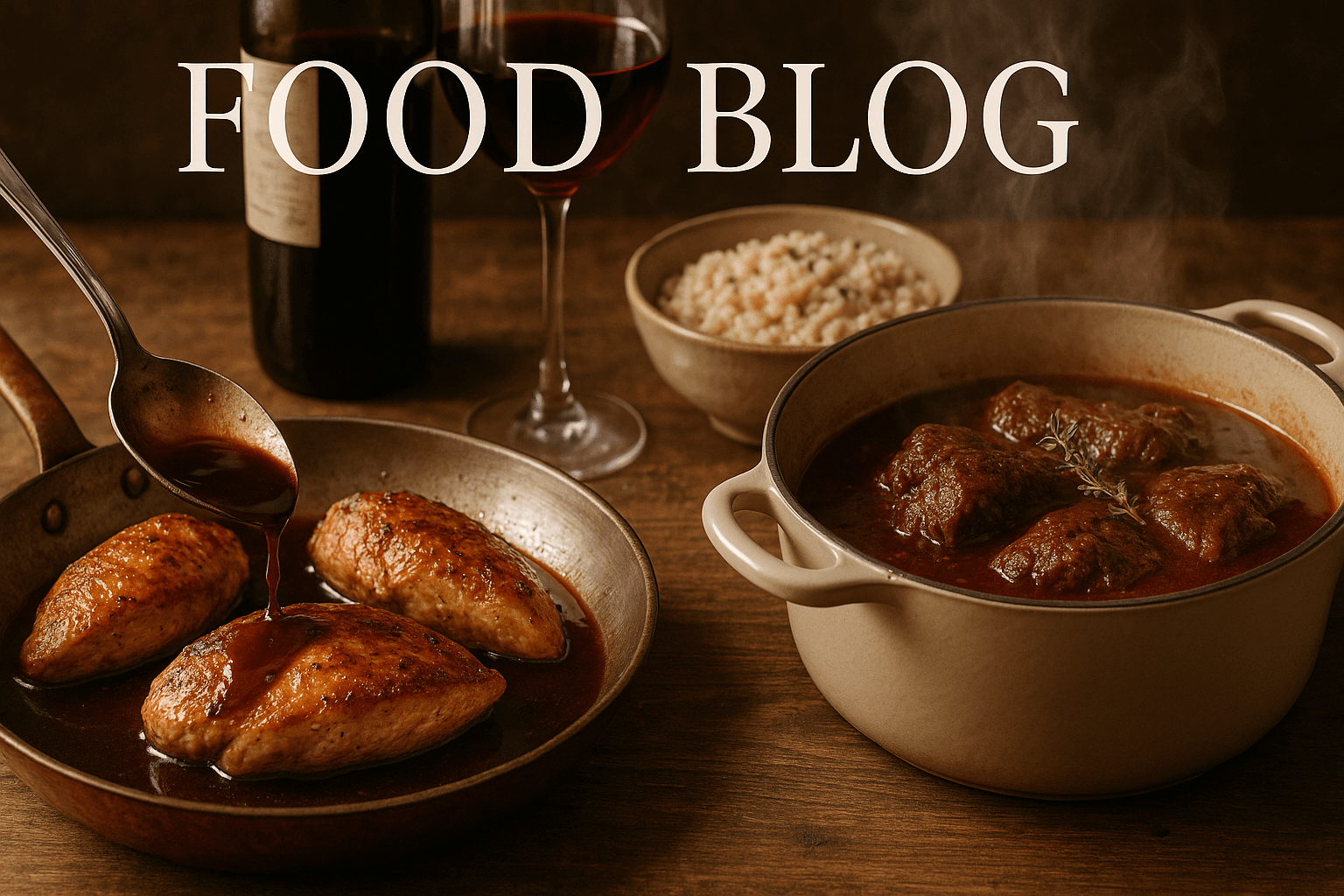
A splash of wine can make dinner taste like you know a restaurant trick. It hits the hot pan, hisses dramatically, loosens browned bits, and suddenly what looked like weeknight chicken begins to smell like a bistro. But wine is one of those ingredients that can turn on you. Used well, it makes a sauce feel layered, bright, and almost silky. Used carelessly, it leaves things sharp, bitter, oddly sweet, or just muddy.
The reason is simple but surprisingly underappreciated: wine is not just “liquid with flavor.” It is a package of water, alcohol, acid, sugar, tannins, aroma compounds, and dissolved solids, all of which behave differently under heat. Some of its molecules dissolve fat-soluble flavors that water alone cannot reach. Some become more concentrated as wine reduces. Some blow off quickly. Some stay behind and become louder. That means the same half cup of wine can help create a pan sauce with gloss and balance, or a braise that tastes aggressively sour, depending on when it goes in, how far it reduces, what kind of wine you chose, and what else is in the pot.
If you understand just a few rules about alcohol solubility, acidity, and reduction, you can stop cooking wine by superstition and start using it deliberately. This is especially useful in the places home cooks most often reach for wine: deglazing a pan, building a braise, adding depth to risotto, and finishing a sauce.
Why cooks started using wine in the first place
Wine has been part of cooking for thousands of years in wine-producing cultures not because it is fancy, but because it is useful. In Mediterranean cooking especially, wine became a practical acid, aroma source, and cooking liquid. It added brightness before lemons were always at hand, complexity before long lists of pantry ingredients were common, and preserving power in stews and braises.
Classic French pan sauces often begin by sautéing shallots, deglazing with wine, and reducing before adding stock and butter. Italian risotto frequently uses white wine after toasting the rice to lend acidity and fragrance. Coq au vin, boeuf bourguignon, and countless regional braises use wine as both flavoring and medium. In each case, wine does a few jobs at once: it dissolves flavorful browned compounds stuck to the pan, contributes volatile aromas, adds acidity to keep richness from feeling flat, and creates structure when reduced with stock or gelatin.
That cultural history matters because these dishes were not designed around arbitrary splashes. They evolved around balance. A pan sauce with wine nearly always includes fat and often stock. A braise nearly always includes collagen-rich meat, aromatics, and enough cooking time for rough edges to settle. Risotto uses wine early and in moderation, then rounds it out with starch, stock, and cheese or butter. Those built-in balancing elements are why classical methods work so consistently.
The core science: what wine actually contributes
To use wine well, it helps to separate its major components.
1. Water
Most table wine is mostly water. Water helps dissolve browned bits and distributes flavor through a dish. On its own, that is useful, but not unique.
2. Alcohol
Most table wine sits around 11% to 15% alcohol by volume. Alcohol matters because many aroma compounds are more soluble in alcohol than in water. In practical kitchen terms, alcohol can help pull certain flavors from herbs, spices, onion-family aromatics, and browned meat compounds, then carry them into the sauce. It also contributes its own volatile, warming aroma.
This is one reason a sauce deglazed with wine often smells more expressive than one deglazed with plain water. Alcohol is not magic, but it is a good solvent for a range of flavor molecules that are less available in a purely water-based environment.
3. Acidity
Wine’s acids, chiefly tartaric, malic, and lactic depending on the wine, give it brightness. Acidity is useful in rich dishes because it counterbalances fat and makes flavors feel more defined. But acidity does not cook off. Water and alcohol evaporate far more readily than acid, so reduction effectively concentrates sourness. That is a major reason a sauce can go from lively to hard-edged if reduced too aggressively.
4. Sugar
Dry wines are low in sugar, but not sugar-free in an absolute sense. Off-dry and sweet wines can contain enough residual sugar to matter a lot in the pan. Sugar tends to become more noticeable as liquid reduces, and it can push a sauce toward jammy, sticky, or cloying if the dish was not designed for it.
5. Tannins and phenolics
Red wines especially contain tannins and other phenolic compounds from skins, seeds, and oak. Tannins bring structure and astringency: that drying sensation that makes your gums and cheeks feel slightly grippy. In a braise, moderate tannin can add depth and seriousness. In a quickly reduced pan sauce, especially if the wine is young, heavily oaked, or very assertive, those same compounds can become bitter or harsh.
6. Aroma compounds
Wine contains hundreds of volatile aroma molecules. Some suggest fruit, flowers, herbs, spice, butter, toast, earth, or fermentation notes. Heat changes how you perceive these. The most delicate top notes disappear quickly. Deeper notes remain. This is why reducing wine does not simply make it taste like “more wine.” It changes the profile. The result may be richer, but it can also become flatter, less fresh, and more angular if overdone.
Why some wine sauces turn harsh
When cooks say a wine sauce tastes harsh, they usually mean one or more of these things:
- Too acidic or sour
- Too alcoholic or “raw”
- Bitter from over-reduced tannins or browned solids
- Astringent and drying
- Overly sweet without enough salt or savory depth
- Aromatically muddy or cooked-out
Here is what typically causes each one.
Raw alcohol flavor
Alcohol evaporates faster than water, but it does not vanish instantly. If you add wine at the end of cooking or do not simmer it long enough after deglazing, the sauce can smell boozy and taste disconnected, as though wine was poured on top rather than cooked in.
For a quick pan sauce, give wine at least 1 to 3 minutes of active simmering after deglazing, often until reduced by about half. For larger volumes in braises, you may want 10 to 20 minutes of simmering before covering the pot and moving to the oven, especially if the recipe uses 1 to 3 cups of wine.
Sourness intensified by reduction
Acid remains while volume drops. Reduce 1 cup of acidic wine to 1/4 cup and you have concentrated not just flavor but tartness. Without fat, stock, gelatin, starch, or a touch of sweetness to round it, that concentration reads as sharp.
Tannin bitterness and astringency
Tannins become more obvious as wine reduces, especially in a sauce with little gelatin or butter. In a braise, gelatin from connective tissue can bind some tannins and soften the mouthfeel. In a lean pan sauce, there is less buffering power. A very tannic red can therefore seem much more aggressive in a quick reduction than in a long-cooked stew.
Burnt fond mistaken for wine bitterness
Sometimes the problem is not the wine at all. If the browned bits on the bottom of the pan have crossed from deep brown into black, deglazing dissolves those burnt compounds into the sauce. The result tastes bitter and acrid, and people blame the wine. Good fond is chestnut to dark brown, not charred black.
Oak and vanilla notes becoming awkward
Heavily oaked wines can contribute woody, bitter, coconut-like, or vanilla-heavy notes that become distracting under reduction, particularly in delicate sauces. That does not make oaked wine bad for cooking, but it makes it less forgiving.
The reduction rules that matter most
If there is one idea that improves cooking with wine immediately, it is this: reduction is concentration without judgment. It intensifies the good and the bad at the same time.
Rule 1: Match the wine to the reduction time
- Short reductions like pan sauces are best with dry, moderate-acid, low-to-moderate tannin wines.
- Long braises can handle somewhat sturdier wines because the dish also contains meat juices, gelatin, aromatics, and time.
- Risotto usually wants a dry, crisp white used in modest quantity so it lifts rather than dominates.
Rule 2: Reduce wine before adding lots of stock when you want integration
For many pan sauces, add wine to the hot pan first, reduce by about half, then add stock. This gives the raw alcohol time to cook off and lets the wine’s acidity settle into the sauce structure instead of floating on top of a finished stock reduction.
A classic ratio for 2 servings: after cooking meat, pour off excess fat until about 1 tablespoon remains. Add 1 small minced shallot and cook 30 to 60 seconds. Add 1/2 cup dry wine, simmer until reduced to 2 to 3 tablespoons, then add 1/2 cup stock and reduce again until lightly syrupy. Off heat, swirl in 1 to 2 tablespoons cold butter.
Rule 3: Do not reduce highly acidic or tannic wine to a glaze unless the dish is built for it
A deep wine reduction can be wonderful, but only when balanced by stock, demi-glace, gelatin, butter, marrow, cream, or the natural richness of the dish. Reducing wine alone too far often gives a metallic, sour, or bitter edge.
Rule 4: Add wine early in risotto, earlier than many home cooks think
After toasting the rice in fat, add 1/2 to 3/4 cup dry white wine for every 1 1/2 cups Arborio, Carnaroli, or Vialone Nano rice. Stir until nearly absorbed before adding stock. This lets the alcohol mostly cook off and allows the acid to season the rice itself. If added later, the wine tastes more separate and raw.
Rule 5: In braises, wine is a component, not the entire liquid by default
A common home-cooking mistake is using a whole bottle of wine as the main braising liquid for 2 to 3 pounds of meat. That can work, but it often produces a one-note, sharp braising medium unless there is enough stock, aromatics, and collagen to support it.
For 3 to 4 pounds beef chuck, short ribs, lamb shanks, or chicken thighs, a more balanced starting point is often:
- 1 to 2 cups wine
- 2 to 4 cups stock
- Aromatics such as onion, carrot, celery, garlic
- Tomato paste if desired
- Herbs
This preserves wine character without letting it dominate.
Choosing the right wine for cooking
The old advice says: cook only with wine you would drink. That is directionally useful but incomplete. A wine you enjoy sipping may still be a poor fit for the pan if it is extremely tannic, heavily oaked, very sweet, or unusually acidic. What you really want is wine that tastes clean, balanced, and not aggressively anything.
Best general choices for white wine cooking
Good options:
- Sauvignon Blanc that is not aggressively grassy
- Pinot Grigio or Pinot Gris, dry style
- Unoaked or lightly oaked Chardonnay
- Dry Vermouth
- Muscadet
- Soave
Use caution with:
- Very sweet Riesling unless the dish wants sweetness
- Extremely oaky Chardonnay
- Highly aromatic wines if you do not want floral or perfumed notes to dominate
Best general choices for red wine cooking
Good options:
- Pinot Noir
- Merlot
- Cotes du Rhone style blends
- Cabernet Franc
- Sangiovese in moderation
- Young Grenache-based reds
Use caution with:
- Big, heavily tannic Cabernet Sauvignon in quick sauces
- Very oaky reds
- Jammy, high-alcohol reds if you want a savory result
What about “cooking wine”?
Most commercial cooking wine is salted and often low quality. It is shelf-stable because it is unpleasant to drink, not because it is ideal for flavor. Avoid it when possible.
Dry vermouth: the underused workhorse
Dry vermouth is one of the most useful bottles in the home kitchen. Because it is aromatized and fortified, it has enough complexity to make a sauce interesting, enough alcohol to act as a solvent, and once opened it keeps better in the refrigerator than standard table wine. It is especially good in cream sauces, chicken pan sauces, seafood sauces, and mushroom dishes.
Pan sauces: where wine can shine or fail fastest
A pan sauce is the purest test of wine technique because there are few places to hide. The sauce is thin enough that every imbalance shows.
A reliable pan sauce method
For 2 to 4 servings:
- Sear chicken cutlets, pork chops, fish, or steak in a skillet until cooked or nearly cooked. Remove to rest.
- Lower heat to medium. If the pan is very greasy, pour off all but 1 tablespoon fat.
- Add 1 finely minced shallot and cook 30 to 60 seconds.
- Deglaze with 1/2 cup dry wine.
- Scrape fond with a wooden spoon and simmer until wine is reduced by about half, 1 to 3 minutes depending on pan size.
- Add 1/2 to 3/4 cup stock and simmer until the sauce lightly coats a spoon, 2 to 5 minutes.
- Off heat, whisk or swirl in 1 to 2 tablespoons cold butter. Taste for salt.
- Optional: add 1 teaspoon lemon juice if it needs lift, or a small spoon of cream if it needs softening.
Why this works scientifically
The wine dissolves some aromatic and browned compounds while loosening fond. Reducing it first removes much of the harsh alcoholic edge. The stock adds savory amino acids and often gelatin, which gives body. Butter emulsifies into the reduction, distributing fat droplets that soften acidity and create sheen. That is the velvety effect home cooks often want but cannot get from wine alone.
Common pan sauce mistakes
- Adding too much wine for the amount of sauce you need
- Using a huge tannic red with delicate meat like chicken breast or pork tenderloin
- Not reducing the wine enough before adding stock
- Reducing the finished sauce too far after buttering, causing it to break or taste salty and sharp
- Deglazing a scorched pan
Braises: why wine behaves better with time, collagen, and company
Wine often tastes better in braises than in quick sauces because braises are designed to absorb and soften extremes.
What changes in a braise
Long cooking does not magically erase all acidity or tannin, but several things improve balance:
- Collagen from meat converts to gelatin, adding body and smoothing mouthfeel.
- Rendered fat rounds flavor.
- Aromatics and Maillard compounds from searing create savory depth.
- Water loss from the meat enriches the liquid.
- Time allows flavors to mingle so no single note sticks out as sharply.
A balanced braise template
For 3 to 4 pounds beef chuck or short ribs:
- Salt meat in advance if possible: 1 to 1 1/2 teaspoons kosher salt per pound, at least 8 hours ahead or right before cooking
- Sear in oil until deeply browned
- Remove meat; sauté 1 large onion, 2 carrots, 2 celery stalks
- Add 2 tablespoons tomato paste, cook until rust-colored
- Deglaze with 1 1/2 cups dry red wine, simmer 5 to 8 minutes
- Add 2 1/2 to 3 cups stock
- Return meat with herbs
- Braise covered at 300°F/150°C to 325°F/165°C until tender, usually 2 1/2 to 3 1/2 hours depending on cut
Why simmer wine before the oven step
That initial simmer burns off some volatile alcohol and slightly concentrates the wine before it is trapped in a covered pot. If you pour wine in and immediately cover, more boozy top notes can remain in the final braising liquid.
Finishing the braising liquid
When the meat is done, remove it and strain the braising liquid if desired. Skim fat. Then reduce the liquid gently until balanced, not merely thick. If it tastes sour before it tastes rich, you probably need one of three things more than additional reduction:
- More stock or gelatin-rich liquid
- A little butter
- A small amount of sweetness, often from cooked vegetables already in the braise or, if needed, 1/4 to 1/2 teaspoon sugar
That tiny amount of sugar should not make the sauce sweet; it just rounds the acid edge.
Risotto: why wine should brighten, not dominate
In risotto, wine has a very specific job. It provides an acidic counterpoint to starch, butter, and cheese, while contributing a subtle aromatic note. It is not supposed to taste like a bowl of reduced wine with rice in it.
The ideal moment for wine
After sweating onion or shallot in butter or oil and toasting the rice for 1 to 2 minutes, add the wine. For a batch serving 4 to 6 people using 1 1/2 cups rice, use 1/2 to 3/4 cup dry white wine. Stir until the pan is nearly dry. Then begin adding hot stock a ladle at a time.
The science of why early addition matters
Toasted rice grains are coated in fat and their outer starches are beginning to loosen. Wine added at this stage helps season the grain and starts the flavor foundation before the starch network fully develops. If you add wine later, after multiple additions of stock, the acidic wine sits more distinctly on the surface and reads as separate rather than integrated.
Avoid these risotto problems
- Too much wine, leading to aggressive acidity
- Sweet wine, which makes the risotto taste oddly fruity
- Adding cold wine in large quantity, stalling cooking and making integration slower
- Failing to cook the wine down before stock
A properly made risotto should taste creamy, savory, and lively, not boozy or sour.
Finishing sauces: when to use wine, vinegar, lemon, or spirits instead
Not every sauce problem should be solved with more wine.
Use wine when you want
- A rounded acidic note with aroma
- Better extraction from aromatics and fond
- Fermented fruit complexity
- Structure in a pan sauce or braise
Use lemon juice when you want
- Clean, bright, direct acidity at the end
- Minimal additional aroma complexity
- No tannin or cooked wine notes
Use vinegar when you want
- Sharper, more focused acidity
- A small amount of punch without adding much liquid
- Specific flavor notes like sherry, white wine, or balsamic character
Use spirits when you want
- Strong aromatic extraction and distinct character, such as brandy, cognac, Marsala, sherry, or Madeira
- Sweeter, nuttier, or more oxidative notes than table wine
This matters because cooks often keep reducing a wine sauce trying to make it “brighter,” when brightness is actually lost with heavy reduction. If the sauce is rich but dull, the fix is often a few drops of lemon or vinegar at the end, not more wine.
The science of velvety texture
People often describe a successful wine sauce as velvety, silky, or glossy. Wine itself does not create that texture directly. Texture usually comes from one or more of the following:
- Gelatin from stock or braising meat
- Emulsified butter whisked in off heat
- Cream or other dairy fat
- Starch from risotto rice or a light slurry in some preparations
- Pectin and dissolved vegetable solids from long-cooked aromatics
Wine’s job is often to make these textures taste lighter and more defined, not to provide body on its own. This is why a reduction of wine alone can taste intense but feel thin and angular. Add gelatin-rich stock and butter, and the same flavor profile suddenly seems luxurious.
A useful restaurant-style move at home is mounting a sauce with cold butter. Off heat, whisk in 1 tablespoon cold unsalted butter per 1/2 to 3/4 cup finished sauce. The butter emulsifies into tiny droplets, increasing viscosity and gloss while softening sharp acidity. Do not boil hard after this step or the emulsion can break.
Practical rules by dish type
For pan sauces
- Use 1/4 to 1/2 cup wine for a small skillet sauce serving 2; 1/2 to 3/4 cup for 4 servings
- Prefer dry white, dry vermouth, Pinot Noir, or Merlot over aggressively tannic reds
- Reduce wine by about half before adding stock
- Finish with butter or a splash of cream if needed
For braises
- Use wine as 25% to 50% of the braising liquid, not always 100%
- Simmer the wine 5 to 10 minutes before long covered cooking
- Pair red wine with beef, lamb, duck; white wine with chicken, pork, rabbit, many seafood stews
- Reduce at the end only until balanced
For risotto
- Use 1/2 to 3/4 cup dry white wine per 1 1/2 cups rice
- Add after toasting the rice
- Cook until nearly absorbed before adding stock
- Keep it subtle
For finishing sauces and soups
- If the dish is already cooked, add only a small amount of wine unless you can simmer it for a few minutes
- Consider vermouth, Madeira, Marsala, or sherry when you want concentrated character from a small volume
- Use lemon or vinegar for last-minute brightness instead of raw wine
How to rescue a sauce that went wrong
If it tastes too alcoholic
- Simmer longer, uncovered, at a lively but controlled bubble
- Add a bit of stock and reduce again
- Do not try to cover it with salt alone
If it tastes too sour or sharp
- Add a knob of butter
- Add a few tablespoons stock, cream, or gelatin-rich broth
- If needed, add a tiny pinch of sugar, 1/8 teaspoon at a time
- Check salt; underseasoning can exaggerate acidity
If it tastes bitter or astringent
- Ask whether the pan was scorched
- Add fat or gelatin-rich stock to buffer tannins
- Avoid further reduction
- In severe cases, start over rather than trying to bury burnt bitterness
If it tastes muddy
- It may be over-reduced or made with a wine too oaky or too jammy for the dish
- Add fresh acid at the end: a few drops lemon juice or sherry vinegar
- Add chopped herbs for aromatic lift
If it tastes sweet and flat
- Add salt first
- Then add acidity in tiny increments
- Dilute with stock if reduction made the sugars too pronounced
Common myths about cooking with wine
“All the alcohol cooks off.”
Not immediately, and not always completely. Time, surface area, temperature, and cooking method all matter. In practical flavor terms, enough alcohol can remain to taste raw if the wine is added late or not simmered adequately.
“Red wine is stronger, so it gives more flavor.”
Sometimes, but not necessarily better flavor. Red wine brings tannin and phenolics along with fruit and acidity. In some dishes that adds complexity; in others it overwhelms.
“The more you reduce, the better.”
Only if the sauce remains balanced. Reduction is a tool, not a guarantee.
“Any wine works if the dish cooks long enough.”
Long cooking is forgiving, not magical. Harsh tannins, excessive oak, and too much acidity can still survive the oven.
A few high-value pairings for home cooks
If you want practical defaults that almost always work:
- Chicken pan sauce: dry vermouth or Sauvignon Blanc
- Mushroom cream sauce: dry vermouth or unoaked Chardonnay
- Pork chops: white wine for brightness, light red only if the sauce is robust
- Beef braise: Pinot Noir, Merlot, or Rhone-style red
- Tomato-leaning braise: moderate red, not super tannic, because tomato already adds acid
- Seafood risotto: dry white, very restrained amount
- Mushroom risotto: dry white or a small amount of Marsala, depending on style
The big takeaway: balance beats drama
Wine feels dramatic in the pan, but the best use of wine in cooking is often subtle. The point is not to make your food taste aggressively like wine. The point is to use wine as a tool that extracts aroma, dissolves fond, contributes complexity, and adds acidity in a way that supports the dish.
If you remember only a handful of rules, make them these:
- Wine brings alcohol, acid, tannin, aroma, and sometimes sugar, not just moisture.
- Alcohol can help extract flavor, but raw alcohol tastes disconnected unless simmered.
- Acidity and tannin concentrate when wine reduces, so reduction must be balanced by stock, fat, gelatin, starch, or a touch of sweetness.
- Choose balanced, dry wines over extreme wines.
- For pan sauces, reduce wine first, then add stock, then finish with butter.
- For braises, wine should usually share the stage with stock.
- For risotto, add wine early and sparingly.
- If a finished dish needs brightness, lemon or vinegar is often smarter than extra wine.
Cook with wine this way and your sauces stop tasting raw, sour, or muddled. They start tasting composed. The pan sauce gets gloss instead of harshness. The braise gets depth instead of bite. The risotto tastes lifted instead of sharp. And that little splash of wine becomes what it was always supposed to be: not a shortcut to sophistication, but a precise ingredient that rewards good technique.