Why Bananas Turn Bready, Gummy, or Caramelly: Ripeness Chemistry, Pectin Breakdown, and the Heat Rules for Better Baking and Pan-Frying
RecipeSimpli
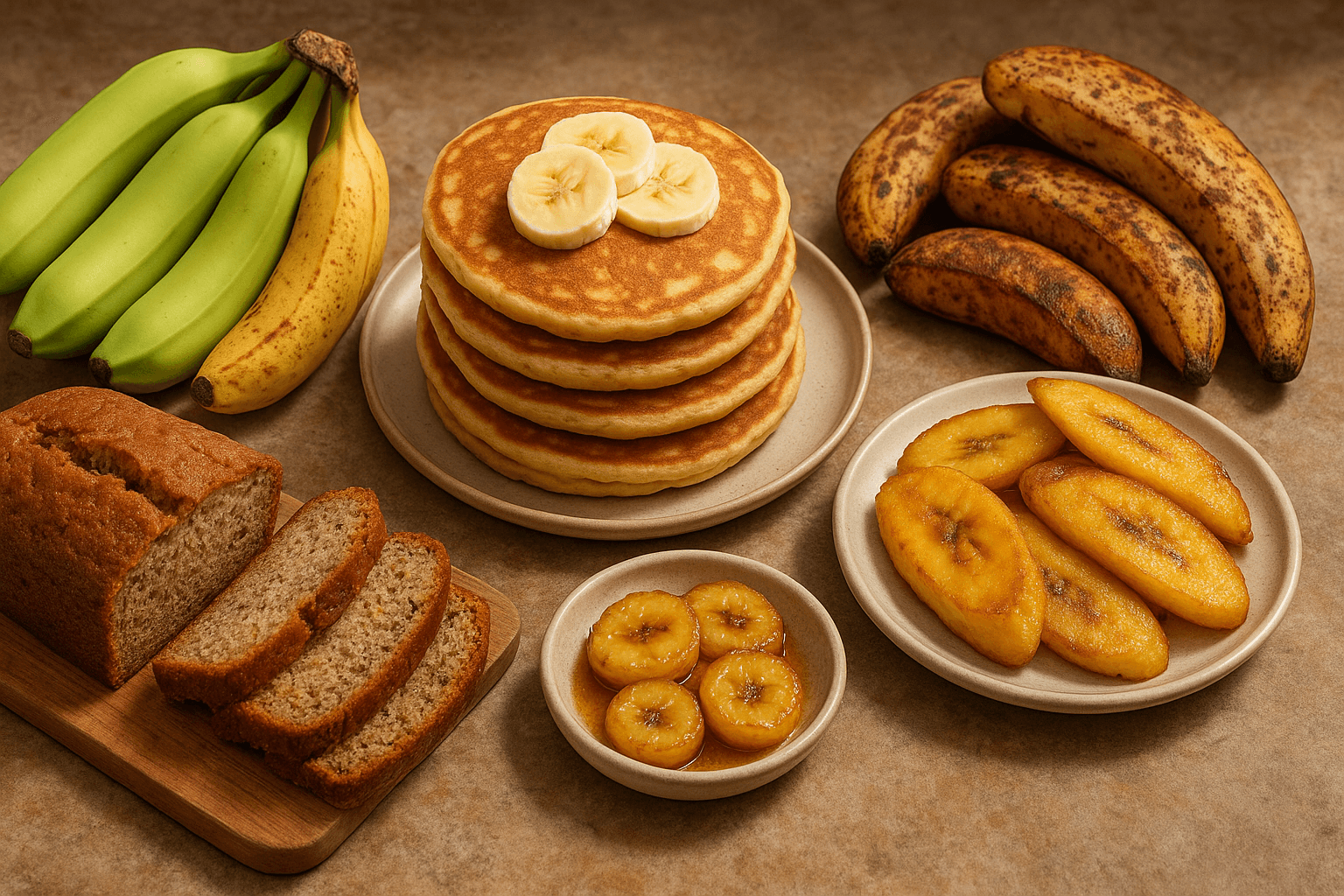
Bananas look simple on the counter, but they are one of the most dramatic ingredients in the kitchen. A firm yellow banana and a collapsing, black-speckled banana are not just different stages of the same fruit in a cosmetic sense. They behave differently in a batter, in a skillet, and on a grill because their internal chemistry has changed: starch has turned into sugar, pectin has weakened, cell walls have softened, aromas have developed, and water moves differently through the fruit. That is why one banana gives you a lofty, tender pancake while another turns it damp and heavy; why one caramelizes beautifully in butter while another slumps into a jammy smear; and why a plantain can fry crisp while a dessert banana tends to melt.
If you have ever heard the rule “use very ripe bananas,” you have heard a useful shortcut, but it is still a shortcut. For some recipes, yes, deeply ripe bananas are ideal. For others, they are the reason your banana bread feels underbaked in the center or your fritters absorb oil and go limp. To cook bananas well, it helps to know what is happening as they ripen and how heat interacts with that ripeness.
This is the practical, science-first guide: what ripeness really changes, why overripe is not always better, how pectin and moisture shape texture, what heat does in baking and pan-frying, and how to choose the right banana for bread, pancakes, fritters, caramelized slices, and savory cooking.
The banana’s journey from starchy to sweet
A banana picked green is, in culinary terms, more like a compact starch package than a dessert fruit. Much of its carbohydrate content is starch, stored in dense granules. As the banana ripens, enzymes begin breaking those starches down into smaller sugars, including sucrose, glucose, and fructose. This is why a green banana tastes chalky and only mildly sweet, while a ripe banana tastes soft, fragrant, and candy-like.
That starch-to-sugar shift matters because starch and sugar behave differently under heat and in batters.
- Starch contributes body and a floury, structured texture.
- Sugar contributes sweetness, faster browning, stickiness, water retention, and softness.
In a less-ripe banana, the starches help the fruit hold shape. In a more-ripe banana, those starches have diminished, and the fruit is softer, wetter-feeling, and more prone to collapsing into puree.
A useful way to think about ripeness is not just as “sweetness increasing,” but as a change in the banana’s role in a recipe:
- Green to barely yellow: more structural, less sweet, more resistant to mashing
- Yellow with little green: balanced, sliceable, mild sweetness
- Yellow with brown speckles: sweet, aromatic, easy to mash, excellent for many batters
- Very spotted to mostly brown/black peel: very soft, highly aromatic, low structural integrity, high sugar impact, often watery in effect
The peel color is a clue, not a perfect measurement, but it is useful. The important thing is that each stage will cook differently.
Why bananas get softer: pectin, cell walls, and moisture
Sweetness is only half the story. Texture changes because the fruit’s internal scaffolding is changing too.
Banana flesh is made of plant cells held together by cell walls and by pectin-rich material between cells. Pectin is a natural structural carbohydrate found in many fruits. In underripe fruit, pectin helps tissue stay firmer and more cohesive. As bananas ripen, enzymes gradually break down pectin and other structural components. The result is softer flesh, weaker cell-to-cell adhesion, and that almost custardy texture in very ripe bananas.
In practical cooking terms:
- More intact pectin = firmer slices, better shape retention
- More pectin breakdown = softer flesh, easier mashing, greater collapse under heat
At the same time, ripening changes how moisture behaves. A ripe banana is not always dramatically higher in total water than an underripe one, but it often acts wetter because its structure no longer holds that moisture as firmly. When mashed, overripe bananas readily release liquid and form a loose puree. That puree can weigh down batters or create a gummy interior if the recipe is not adjusted.
This is one reason two banana breads made from the same recipe can come out completely differently. One cook uses 340 grams of just-ripe mashed banana; another uses 340 grams of nearly black, almost liquefied banana. They measured the same weight, but not the same functional ingredient.
The myth of “more brown spots is always better”
Brown spots do signal sweetness and developed banana aroma. But more spots are not always better for every use.
The popular advice to use the blackest bananas possible mostly comes from the world of banana bread, where sweetness and mashability are helpful. Even there, the rule gets oversimplified. Extremely overripe bananas can create problems:
- Too much free moisture: The batter can become loose and slow to set.
- Too much sugar: The loaf browns fast before the center finishes cooking.
- Weaker structure: The fruit contributes less body and more puree, increasing the chance of a dense, custardy, or gummy crumb.
- Fermented or boozy notes: Very old bananas can taste sharp, winy, or overly musky rather than pleasantly sweet.
For many recipes, the sweet spot is not “nearly rotten.” It is usually fully yellow with generous brown speckles, but not leaking, moldy, or fermented-smelling.
In other words, don’t confuse peak baking ripeness with maximum possible decay.
How banana chemistry affects quick breads
Banana bread is really a cake-like quick bread, and bananas affect it in several ways at once.
1. Bananas add sugar
As ripeness increases, sugar content rises. Sugar improves sweetness and aroma, but it also competes with flour for water and slows starch gelatinization and protein setting. That means the loaf can remain softer for longer during baking. If your batter contains a lot of very ripe banana plus a generous amount of added sugar, the center may stay under-set while the outside darkens.
2. Bananas add moisture
Mashed bananas contribute water and dissolved solids. If that water proportion is too high relative to flour, eggs, and baking time, you can get a damp, heavy crumb. This is often described as “gummy,” though there are several different gumminess problems.
3. Bananas dilute gluten and structure
Unlike flour, banana puree does not build a protein network. The more banana you add, the more you push the loaf toward pudding territory. A little banana gives moisture and tenderness; too much can collapse the structure.
4. Bananas bring pectin and fiber—but less effective structure as they overripe
Less-ripe bananas still contribute some body from intact starch and firmer plant tissue. Overripe bananas contribute flavor, but less texture-building support.
5. Bananas increase browning potential
The sugars in ripe bananas encourage browning reactions. While bananas are not protein-rich, they still contribute to flavor development during baking through sugar caramelization and interactions with other batter ingredients. That means your loaf may brown deeply even if the center still needs more time.
What “gummy” usually means in banana bread
A gummy banana bread usually comes from one or more of these issues:
- too much banana for the amount of flour
- bananas that are extremely ripe and loose/watery
- too much added sugar
- underbaking
- slicing while still hot
- aggressive mixing after flour is added, which develops gluten in an uneven way and creates a rubbery heaviness
For a standard 8 1/2 x 4 1/2-inch or 9 x 5-inch loaf, a practical range is 225 to 300 grams mashed banana for a balanced crumb. You can push to 340 grams in some formulas, but once you go beyond that without adjusting flour or baking time, the risk of a dense center rises quickly.
If your bananas are extremely overripe and nearly pourable, a simple fix is to reduce the puree in a saucepan over low heat for 5 to 8 minutes, stirring, until slightly thickened and concentrated. Cool before using. This drives off excess water and intensifies flavor at the same time.
Why bananas can make pancakes bready, dense, or custardy
Pancakes sit at an interesting middle point between batter and griddle-cooked cake. Bananas can improve them, but they can also sabotage fluffiness.
In banana pancakes, mashed banana acts as:
- a sweetener
- a moisture source
- a tenderizer
- a flavoring
- a bulk ingredient that displaces flour and milk
A small amount, such as 100 to 150 grams mashed banana per 240 grams flour, usually gives good flavor without overwhelming the batter. Once you start using much more, the batter becomes heavier and wetter, and the pancakes may cook up soft and bready in the center rather than fluffy.
Overripe bananas are especially likely to do this because they puree into a dense paste that traps moisture and sugar. The exterior browns quickly on the griddle while the interior steams and stays soft. That can be pleasant if you want a pudding-like center, but many people interpret it as undercooked.
For lighter banana pancakes:
- use ripe but not collapsing bananas
- keep banana to a moderate amount
- cook at medium to medium-low heat, about 175 to 190°C / 350 to 375°F surface temperature
- let the batter rest 5 to 10 minutes so flour hydrates
- avoid flattening the pancakes with the spatula
If your pancakes are gummy, lower the banana amount before increasing heat. Higher heat usually just burns the outside faster.
What heat does to banana flavor
Bananas respond dramatically to heat because they contain sugar, water, aroma compounds, and a fragile structure.
In baking
In the oven, banana flavor disperses through the batter. Volatile aroma compounds mellow and integrate, and sugars contribute sweetness and browning. The banana becomes less like fresh fruit and more like a warm, rounded background flavor.
At oven temperatures around 175 to 180°C / 350 to 355°F, the fruit’s moisture turns to steam, starches in the batter gelatinize, eggs set, and the loaf forms structure. If there is too much banana moisture or sugar, structure formation lags behind browning.
In sautéing and pan-frying
In a skillet, bananas can go from pale and fruity to caramel-scented in minutes. Surface heat drives off moisture, concentrates sugars, and browns the exterior. But because bananas are soft, the pan temperature matters enormously.
- At too low a heat, bananas leak moisture, steam, and soften before browning.
- At moderate heat, they form a golden crust and a creamy center.
- At too high a heat, the sugars scorch before the slices caramelize evenly.
A good target for pan-frying dessert bananas is a medium skillet over roughly 175 to 190°C / 350 to 375°F pan surface temperature with a mix of butter and a small amount of neutral oil. Butter alone tastes great but can burn before the bananas color properly.
Cook slices about 1.5 to 2 cm / 1/2 to 3/4 inch thick for 1 1/2 to 2 1/2 minutes per side. Very ripe bananas need thicker pieces and gentler handling; just-ripe bananas give cleaner edges and better browning.
On the grill
Grilling adds two effects: intense surface heat and smoky aromatic contrast. Bananas grilled in the peel mostly steam and soften. Peeled bananas or halved plantains can char and caramelize directly if they are firm enough.
Dessert bananas should be ripe but still structurally sound for direct grilling. Plantains can be used at a wider range of ripeness because they are firmer and starchier.
For a grill around 200 to 230°C / 400 to 450°F, banana halves or thick plantain planks usually need 2 to 4 minutes per side, depending on ripeness and thickness.
Dessert bananas vs. plantains: cultivar matters
Not all bananas behave the same way. In everyday cooking, the most important distinction is between dessert bananas and plantains.
Dessert bananas
These include common supermarket bananas such as Cavendish and many small sweet varieties. They are bred and selected to be eaten out of hand. They become sweet at relatively modest ripeness, soften quickly, and turn creamy or mushy under heat.
Best uses:
- banana bread
- muffins
- pancakes
- smoothies
- sautéed dessert slices
- cakes and puddings
Plantains
Plantains are generally starchier, firmer, less sweet when green, and more versatile across ripeness stages for savory cooking. They are often treated more like a vegetable than a fruit.
Ripeness stages matter a lot:
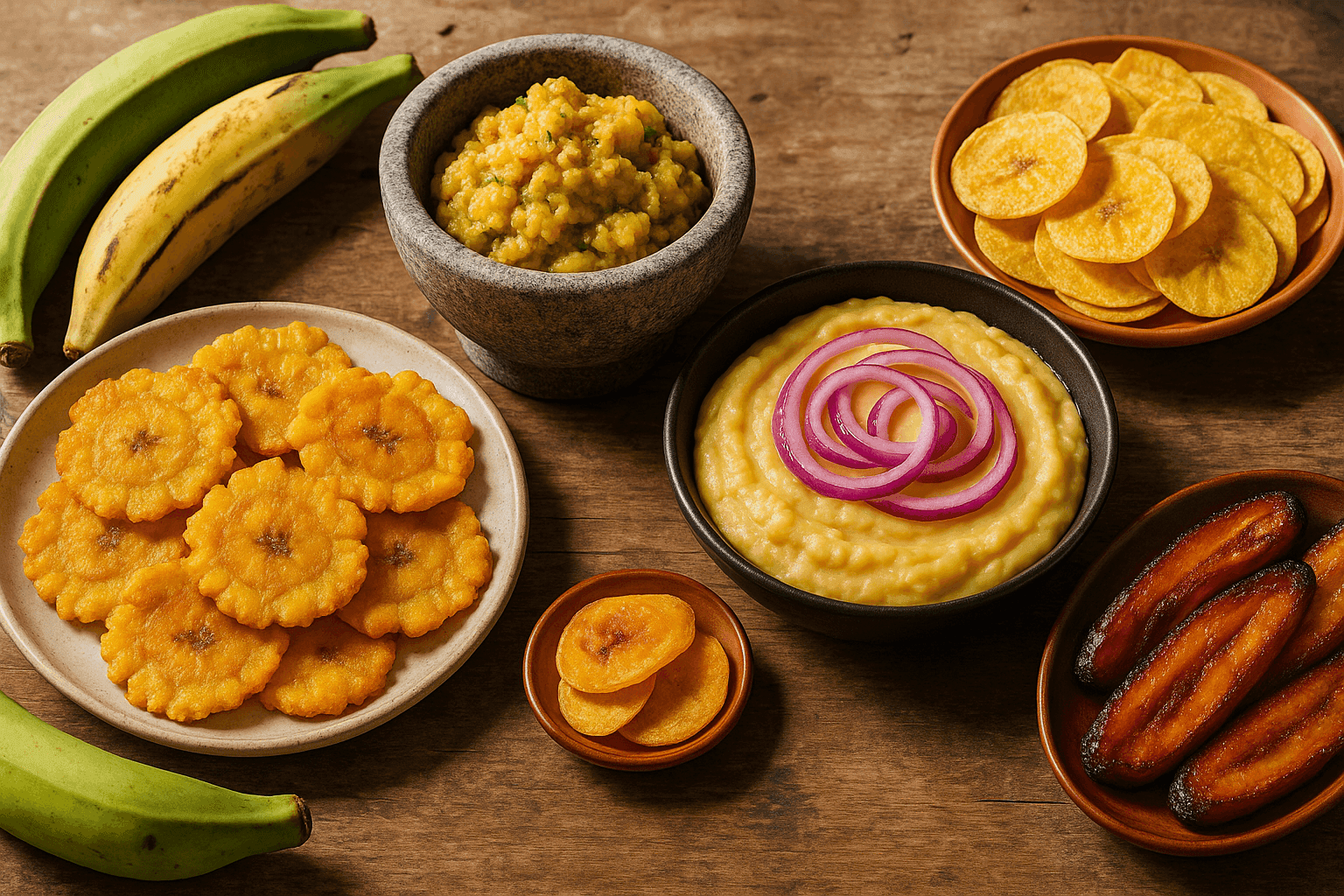
- Green plantains: very starchy, firm, ideal for tostones, chips, and savory frying
- Yellow plantains: some sweetness, still firm, good for grilling and sautéing
- Black plantains: much sweeter, softer, ideal for maduros and sweet frying
Because plantains retain more structure across cooking, they can crisp on the outside while staying creamy inside. A dessert banana usually cannot do this in the same way; it tends to soften through before a crisp crust develops.
So if your goal is savory banana cooking, crunchy frying, or neatly seared slices, plantains are often the better choice.
The science of browning: caramelization, scorching, and sugar concentration
People often say bananas “caramelize,” and they do, but in home cooking that word often covers several overlapping processes.
When bananas cook in a pan or oven:
- water evaporates from the surface
- sugars become more concentrated
- the fruit softens and collapses
- the surface browns
- aromatic compounds shift toward butterscotch-like, toffee-like, and roasted notes
Because ripe bananas already contain a lot of sugar, they brown relatively quickly. This is helpful, but it is also why pan-fried bananas can go from golden to burnt in less than a minute if the pan is too hot.
If you add table sugar, honey, maple syrup, or brown sugar to the pan, you amplify this effect. The glaze may look glossy and dark before the banana itself has properly heated through.
A good rule: brown the banana first, glaze second. Let slices color in fat, then add sugar or syrup near the end for 30 to 60 seconds.
Step-by-step: choosing bananas for different recipes
Here are practical rules you can use immediately.
1. Banana bread and muffins
Best ripeness
Use bananas that are:
- fully yellow with many brown speckles, or
- mostly brown-skinned but still pleasantly sweet-smelling and not leaking
Avoid bananas that are:
- moldy
- alcoholic or fermented-smelling
- so liquefied that they pour like juice unless you plan to reduce them first
Best quantity
For one standard loaf:
- 225 to 300 grams peeled mashed banana for a balanced texture
- up to 340 grams only if the recipe is designed for high banana content
Technique
- Mash bananas until mostly smooth, leaving a few small lumps.
- If the puree seems very loose, cook it down over low heat for 5 to 8 minutes, then cool.
- Bake at 175°C / 350°F until the center reaches about 96 to 99°C / 205 to 210°F.
- Tent loosely with foil if the top browns too quickly.
- Cool in the pan 15 minutes, then unmold and cool completely before slicing.
Common mistake
Using four huge, blackened bananas because “more banana means more flavor.” Often it means more moisture and a squat, gummy loaf.
2. Banana pancakes and waffles
Best ripeness
Use bananas that are:
- bright yellow with some speckles, or
- lightly to moderately spotted
These give sweetness and aroma without turning the batter into paste.
Best quantity
- 100 to 150 grams mashed banana per 240 grams / 2 cups flour
Technique
- Mash banana with the wet ingredients.
- Keep the batter pourable, not spoon-standing thick.
- Rest batter 5 to 10 minutes.
- Cook on a preheated griddle at 175 to 190°C / 350 to 375°F.
- Flip when bubbles hold and edges look lightly set, about 2 to 3 minutes on the first side.
Common mistake
Using very overripe bananas and too much puree, then compensating by cranking up the heat. The result is dark outside, damp inside.
3. Fritters
Best ripeness
For dessert banana fritters, use bananas that are:
- ripe and sweet, but still hold shape when cut
For plantain fritters, ripeness depends on style:
- yellow to black for sweet fritters
- green to yellow for more savory fritters
Technique
- Slice or mash depending on style.
- Keep batter fairly light; if using mashed banana, avoid making the fruit the bulk of the mixture.
- Fry at 175 to 180°C / 345 to 355°F.
- Do not overcrowd the oil.
- Drain well on a rack, not only on paper towels.
Common mistake
Oil that is too cool. Bananas release moisture rapidly, and low-temperature oil makes fritters greasy and limp.
4. Pan-fried bananas for dessert
Best ripeness
Use bananas that are:
- yellow with a few spots to moderately spotted
These give the best combination of sweetness and shape.
Technique
- Cut on the bias into 1.5 to 2 cm / 1/2 to 3/4 inch slices.
- Heat 1 tablespoon butter + 1 teaspoon neutral oil in a skillet over medium heat.
- Add slices in a single layer.
- Cook 1 1/2 to 2 1/2 minutes per side until golden.
- Add 1 to 2 teaspoons brown sugar, a pinch of salt, and optionally a splash of rum or orange juice for the last 30 seconds.
Common mistake
Starting with mushy bananas. They soften before they brown and can turn into sauce.
5. Grilled bananas
Best ripeness
Use bananas that are:
- ripe but still firm for direct grilling
- more ripe if grilling in the peel
Technique
- For peeled bananas, brush lightly with oil or melted butter.
- Grill over medium heat, 200 to 230°C / 400 to 450°F.
- Cook 2 to 4 minutes per side.
- If using sugar or glaze, apply near the end.
Common mistake
Trying to directly grill overripe dessert bananas without support. Use the peel, foil, or a grill pan if they are very soft.
6. Savory cooking
Best choice
Use plantains, especially:
- green for chips, tostones, and savory fries
- yellow for grilled or sautéed savory sides
Dessert bananas are usually too sweet and fragile for most savory frying, though they can work in some curries or coconut-based dishes when added gently.
Technique for green plantains
- Peel by scoring the skin lengthwise.
- Slice into 2.5 cm / 1-inch rounds.
- Fry at 175°C / 350°F for 3 to 4 minutes until just tender.
- Smash to about 1 cm / 3/8 inch thick.
- Fry again for 2 to 3 minutes until crisp.
- Salt immediately.
A closer look at common texture failures
Dense banana bread
Usually caused by too much puree, too little flour structure, or insufficient bake time. Weigh your bananas. If your recipe says “3 bananas,” that can mean anywhere from 225 to 400 grams peeled, which is a massive difference.
Gummy center
Often a mix of excess moisture, excess sugar, and slicing too early. Banana bread continues setting as it cools. Give it at least 1 hour, preferably longer.
Rubbery pancakes
Usually from too much mixing plus too much banana. Banana puree can make a batter feel smooth and inviting to overmix. Stop as soon as the flour is hydrated.
Bananas that won’t brown in the pan
The pan is too cool, the slices are too crowded, or the bananas are releasing too much moisture. Dry the cut surfaces lightly with a paper towel and use firmer bananas.
Bananas that burn before softening
The pan is too hot, especially if sugar was added early. Lower the heat and delay the sweetener.
Can you speed-ripen bananas for baking?
Yes, but with caveats.
Leaving bananas in a paper bag with an apple can accelerate ripening because apples release ethylene, a ripening hormone. This encourages some of the natural ripening changes.
Roasting unripe bananas in the oven, often at 150 to 160°C / 300 to 325°F for 15 to 30 minutes, softens them and darkens the peel, but it does not perfectly replicate natural ripening. Heat softens tissue and brings out sweetness perception, yet it does not recreate the full enzyme-driven aroma development of a naturally ripened banana. The result can be useful in baking, but the flavor may be flatter.
If you need great banana bread, naturally ripened speckled bananas are still better than force-softened green ones.
How to store bananas for better results
- Store at room temperature until they reach your target ripeness.
- Once ripe, refrigerate to slow further change. The peel may darken, but the flesh remains usable.
- For baking, peel and freeze bananas in measured portions such as 120 grams or 240 grams. Thaw in a bowl and include all juices only if the recipe can tolerate the extra liquid. Otherwise, drain some off or reduce it on the stove.
Frozen-thawed bananas are often looser than fresh ripe bananas because ice crystals damage cell structure. That makes them excellent for smooth batters, but potentially too watery for recipes that depend on firmer mashed fruit.
Cultural context: bananas as fruit, staple, and cooking ingredient
Bananas and plantains occupy very different culinary roles around the world. In many North American and European kitchens, bananas are associated mostly with smoothies, lunchboxes, and sweet baking. But across the Caribbean, Latin America, West and Central Africa, South and Southeast Asia, and beyond, banana relatives and plantains are central cooking ingredients with a wide range of textures and ripeness uses.
That broader perspective helps correct a common misconception: bananas are not simply “best when very ripe.” In many cuisines, the whole point is choosing the right stage. Green plantains are prized for starch and crispness. Yellow ones are used for balanced sweetness. Black-ripe plantains are chosen for deep sweetness and caramelized edges. Ripeness is not a ladder with one superior top rung; it is a map with different destinations.
The same thinking makes you a better baker. Instead of asking “Are these bananas ripe enough?” ask: “Are these bananas right for this job?”
Practical ripeness rules at a glance
Use this as your quick decision guide.
Choose lightly spotted yellow bananas when you want:
- cleaner slices
- better pan browning
- firmer grilled bananas
- lighter pancakes
- banana fritters that hold shape
Choose heavily speckled bananas when you want:
- classic banana bread flavor
- easy mashing
- strong banana aroma in muffins and cakes
- sweeter batter without as much added sugar
Choose extremely soft, very dark bananas only when you:
- are making a high-moisture loaf intentionally
- plan to reduce the puree first
- want banana puree for sauces, smoothies, or custardy batters
Choose plantains when you want:
- savory frying
- crisp edges
- slice integrity
- starchier texture
- sweet-savory range across ripeness levels
Takeaways
The difference between a bready banana, a gummy banana, and a caramelly banana is not luck. It is chemistry plus heat.
As bananas ripen, starch converts to sugar, pectin breaks down, structure weakens, moisture becomes freer, and aromas intensify. Those changes make ripe bananas delicious, but they also change how they behave in your recipe. More brown spots can mean more sweetness and more aroma, but not automatically better texture.
For baking, especially banana bread, aim for bananas that are deeply ripe but not degraded beyond usefulness. For pancakes and fritters, back off slightly and use fruit that still has some body. For pan-frying and grilling, firmness is your friend. For savory cooking and crisp frying, reach for plantains.
The best banana is not the ripest banana. It is the banana whose starch, sugar, pectin, and moisture match the heat and texture you want.
That is the real rule—and once you start cooking with it, your banana bread will rise cleaner, your pancakes will fluff better, and your skillet bananas will turn golden and caramelly instead of collapsing into sweet mush.