Why Eggplant Turns Silky, Spongey, or Bitter: Cell Structure, Oil Uptake, and the Salt‑Heat Rules for Better Roasting, Frying, and Braising
RecipeSimpli
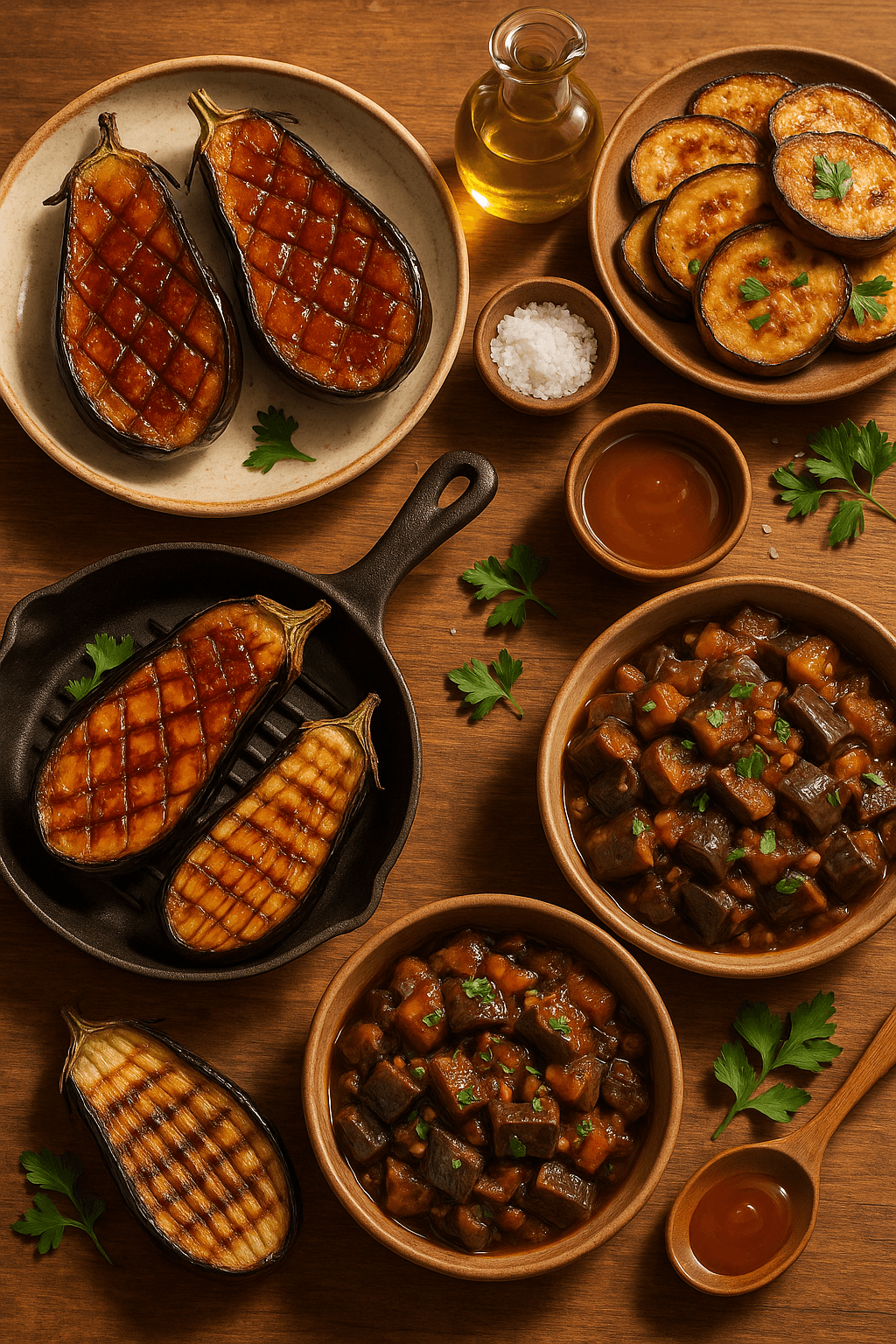
Eggplant is one of those ingredients that can feel like a magic trick or a kitchen betrayal. On one day it becomes spoon-soft and custardy, the interior almost melting into olive oil, garlic, and tomato. On another, it collapses into a greasy sponge, or stays strangely cottony, or brings a faintly harsh bitterness that makes the whole dish feel off. Few vegetables swing so dramatically between luxurious and disappointing, and that variability is exactly why eggplant is worth understanding.
What makes eggplant so temperamental is also what makes it wonderful: it is built differently from denser vegetables. Its flesh is full of air spaces, its cell walls soften quickly with heat, its seeds and age affect flavor more than many home cooks realize, and its interaction with oil is almost a case study in kitchen physics. Once you understand those traits, eggplant stops being mysterious. You can decide when to salt, when to skip it, how much oil to use, and what kind of heat gives you creamy interiors instead of soggy collapse.
This is the practical science of better eggplant cookery, whether your end goal is smoky baba ghanoush, crisp-edged parmigiana, lacquered miso-glazed nasu dengaku, Chinese-style braised eggplant, Turkish imam bayıldı, or a simple tray of roasted cubes for pasta or grain bowls.
Eggplant’s long journey across kitchens
Eggplant has been cooked across Asia, the Middle East, and the Mediterranean for centuries, and nearly every culinary tradition arrived at the same broad truth: eggplant rewards assertive handling. It is charred directly over flame in Levantine and Balkan cooking for dips and salads. It is fried in olive oil in southern Italy and Greece. It is simmered with aromatics and sauces in Chinese, Indian, and Turkish dishes. In Japan, slender eggplants are grilled, fried, steamed, or glazed.
Those methods are culturally distinct, but they all respond to the same physical reality. Eggplant needs enough heat, enough fat or moisture, and enough time to transform its interior from dry, airy flesh into something creamy. Historically, cooks did not explain this transformation with cell-wall chemistry or moisture gradients, but they absolutely learned the rules by experience.
That is also why traditional practices around salting developed. Older varieties and more mature fruit could be more bitter and seedy than many modern supermarket eggplants. Salting could improve flavor and texture, especially for frying. Today, because varieties have shifted and home equipment differs from restaurant setups, the old advice is no longer universal. But it is not nonsense either. It just needs context.
Why eggplant behaves unlike zucchini, potatoes, or mushrooms
Eggplant looks substantial, but inside it is remarkably porous. Cut one open and you can see its pale, spongy flesh. That sponginess comes from a network of plant cells separated by air spaces. Compared with a potato, which has a denser, starch-rich interior, eggplant contains less structural support and more voids. Compared with zucchini, it often has a drier feel at first but a much more absorbent texture during cooking.
Three traits matter most:
-
Porous flesh with lots of air spaces
Those air spaces are why raw eggplant can seem to drink oil almost instantly when it hits a pan. -
Cell walls that soften readily with heat
As eggplant cooks, pectins and other structural components in the cell walls weaken. The flesh goes from firm and slightly squeaky to silky and yielding. -
Seeds and phenolic compounds that can contribute bitterness
Bitterness is often strongest in older, larger, or overmature eggplants with more developed seeds.
The result is a vegetable that starts out airy and absorbent, then turns creamy once enough heat penetrates and enough moisture movement occurs. If you undercook it, the structure remains dry and spongey. If you crowd it, steam it, or overload it with oil at the wrong moment, it can become greasy and collapsed before the interior becomes velvety.
The real reason eggplant soaks up oil
If there is one complaint people have about eggplant, it is this: “It used all the oil in the pan.” That feeling is not imagined.
Raw eggplant acts like a porous matrix. When slices or cubes hit hot oil, moisture at the surface begins to heat and evaporate, but the interior air spaces and weakened surface tissues can also pull oil inward. Think of it less like a solid object frying and more like a little edible sponge whose structure is changing in real time.
A few key things determine how much oil it absorbs:
1. The eggplant’s initial structure
Fresh, firm eggplant with tight flesh tends to absorb less oil than older, puffier, seedier eggplant. The more open and spongy the flesh, the easier it is for oil to move in.
2. Surface area
Thin slices absorb more oil per pound than thick planks or halves because more cut surface is exposed.
- Thin rounds for frying: highest oil exposure
- 3/4-inch to 1-inch cubes for roasting: moderate oil exposure
- Halved eggplants roasted cut-side up: easiest to control
3. Pan temperature
If the oil is too cool, eggplant sits there absorbing fat before the surface can brown and before steam can create any resistance to oil uptake.
For pan-frying, aim for:
- Olive oil or neutral oil temperature: about 350 to 375°F / 175 to 190°C
- If you do not have a thermometer, the oil should shimmer, and a test slice should sizzle immediately but not smoke.
4. Salting or pre-treatment
Salting can alter surface moisture and texture, which can reduce some oil uptake, especially in pan-fried slices. So can pre-roasting, microwaving briefly, or coating the surface with starch or crumbs.
5. How far the eggplant cooks before additional oil is added
This surprises a lot of cooks: eggplant may absorb oil aggressively at first, then release some surface oil and stop drinking as its cells collapse and moisture movement changes. If you keep adding oil every time the pan looks dry in the first few minutes, you can overshoot badly.
A better strategy is to start with a measured amount, cook over proper heat, and wait for the slices to soften and brown before deciding whether more oil is truly needed.
For 1 pound / 450 g eggplant slices, start pan-frying with 3 to 4 tablespoons oil, not half a cup. Add 1 tablespoon at a time only if the pan becomes truly dry and browning stalls.
Why eggplant turns silky instead of merely soft
The best cooked eggplant is not just tender. It is silky, creamy, almost spoonable. That texture comes from enough heat reaching the interior to fully soften cell walls and allow the flesh to collapse into itself without drying out.
There is a sweet spot:
- Too little heat or too little time: the flesh stays cottony or spongey.
- Too much dry heat without enough internal softening: it becomes leathery outside and uneven within.
- Enough heat plus enough time: the interior becomes luscious.
This is why roasted eggplant often needs longer than people expect. A cubed tray may look browned after 20 minutes, but still need another 10 to 20 minutes for true creaminess.
Good roasting targets
For most roasting applications:
- Oven temperature: 425°F / 220°C
- Cubed eggplant: 25 to 40 minutes, turning once
- Halved medium eggplants: 35 to 50 minutes
- Whole eggplants: 45 to 60 minutes, depending on size
You are not looking only for color. You are looking for flesh that yields all the way through when pressed with a spoon or skewer.
Where bitterness comes from
Eggplant bitterness is often overstated in modern recipes, but it is real under certain conditions.
The biggest contributors are:
Variety
Long, slender Asian and Japanese eggplants are often sweeter, thinner-skinned, and less bitter than large globe eggplants. They also usually contain fewer developed seeds.
Maturity
An oversized eggplant is more likely to have larger seeds and stronger bitter notes. As the fruit matures, seeds harden and certain phenolic compounds become more noticeable.
Storage age
Eggplants that sit too long can lose freshness, dry internally, and develop off flavors.
Skin and seeds
The skin can carry some bitterness, especially if thick. Seeds in older eggplants can taste more assertive and contribute a slightly harsh finish.
Browning chemistry
Once cut, eggplant flesh can brown from oxidation. That browning itself is not exactly the same as bitterness, but prolonged oxidation can deepen stale, unpleasant flavors.
How to choose less bitter eggplant
At the store or market, look for:
- Glossy skin
- Firm flesh without wrinkling
- Feels heavy for its size
- No large soft spots
- Medium size rather than giant
- Green, fresh-looking cap
A globe eggplant around 1 to 1 1/4 pounds / 450 to 570 g often has better texture and fewer mature seeds than a very large specimen.
Does salting eggplant actually help?
Yes, sometimes. No, not always. And the reason matters.
Salting does three things:
-
Draws some moisture to the surface
Through osmosis, salt causes water to migrate outward. In practice, this is most noticeable if the eggplant sits 20 to 60 minutes. -
Seasons the flesh
Even after blotting, some salt remains, improving flavor throughout. -
Can slightly improve frying texture and reduce oil uptake
By changing surface moisture and softening the flesh in a controlled way, salting can help slices fry more efficiently.
What salting does not magically do
- It does not rescue a badly overmature, very bitter eggplant into sweetness.
- It does not make every roasted eggplant better.
- It is not always necessary for modern, younger eggplants.
When salting is worth it
Salt eggplant if you are:
- Pan-frying slices or rounds
- Working with large globe eggplants
- Suspicious the eggplant may be mature or bitter
- Making layered dishes like parmigiana or moussaka where excess moisture can be a problem
When you can skip it
Skip salting if you are:
- Using slender Japanese or Chinese eggplant
- Charring whole eggplants for baba ghanoush
- Braising in a flavorful liquid or sauce
- Roasting cubes at high heat for a casual weeknight dish
How to salt eggplant properly
For 1 pound / 450 g eggplant, use about 1 to 1 1/2 teaspoons kosher salt.
- Slice or cube the eggplant.
- Lay it on a rack or towels.
- Sprinkle evenly with salt.
- Let sit 30 to 45 minutes.
- Blot well with towels.
- If heavily salted, lightly rinse and dry thoroughly.
The key word is dry thoroughly. Wet eggplant will steam instead of brown.
The salt-heat rules that matter most
If you only remember a few principles, make them these:
Rule 1: Salt for frying, not automatically for everything
Salting is most useful when managing oil uptake and surface moisture. For smoky whole-roasted eggplant or a long braise, it is often unnecessary.
Rule 2: High enough heat to brown, gentle enough time to soften
Eggplant needs both browning and interior collapse. That usually means high oven heat for roasting and medium-high pan heat for frying, with enough cooking time to finish the interior.
Rule 3: Do not judge doneness by color alone
Golden outside can still mean spongey inside. Test with a fork or skewer.
Rule 4: Oil is a tool, not a flood
Measured oil plus proper heat works better than endless additions. Too much oil early leads to greasiness.
Rule 5: Match the cut to the method
- Halves: best for roasting and mashing
- Planks: best for grilling, parmigiana, roll-ups
- Rounds: good for frying, but oilier if too thin
- Cubes: best for roasting and braising
The science of collapse, browning, and creaminess
As eggplant heats, a few transformations happen at once.
Cell wall softening
Plant cell walls contain pectic substances, cellulose, and hemicellulose. With heat, especially in the presence of moisture, these structures weaken. Eggplant softens more dramatically than many vegetables because its flesh starts with less dense support.
Moisture migration
Water inside the cells and air spaces shifts as the flesh heats. Steam forms, pressure changes, and the tissue collapses. If enough moisture remains and cooking is even, this creates creaminess. If moisture escapes too aggressively before the interior softens, texture can feel dry and woolly.
Browning on the surface
The cut surfaces can brown through Maillard reactions and caramelization-like changes, though eggplant is not sugar-rich like onions. Browning creates savory depth, especially when slices are well dried and exposed to hot oil or hot oven air.
Oil integration
Oil does not just sit on the outside. Some enters the porous flesh, carrying flavor and changing mouthfeel. Used properly, this is why eggplant tastes luxurious. Used excessively, it tastes heavy and greasy.
How to roast eggplant so it becomes creamy, not collapsed or dry
Roasting is the easiest path to great eggplant, but details matter.
For roasted cubes
This is ideal for pasta, grain bowls, salads, curries, and sheet-pan dinners.
Ingredients for 4 servings:
- 1 1/2 pounds / 680 g eggplant, cut in 3/4-inch cubes
- 2 to 3 tablespoons olive oil
- 1 teaspoon kosher salt
- 1/4 teaspoon black pepper
Method:
- Heat the oven to 425°F / 220°C.
- Toss eggplant with oil, salt, and pepper.
- Spread on a parchment-lined or lightly oiled sheet pan in a single layer.
- Roast 15 minutes.
- Turn the cubes.
- Roast another 10 to 20 minutes until well browned and creamy within.
Common mistake: crowding the tray. If pieces touch too much, they steam and soften unevenly. Use two trays if needed.
For roasted halves
This is the best route for baba ghanoush, stuffed eggplant, or simply serving with yogurt, herbs, and lemon.
Ingredients:
- 2 medium globe eggplants, halved lengthwise
- 2 tablespoons olive oil
- 1 teaspoon kosher salt
Method:
- Heat oven to 425°F / 220°C.
- Score the cut sides in a crosshatch pattern, about 1/2 inch deep, without piercing the skin.
- Brush with oil and season with salt.
- Roast cut-side up for 35 to 50 minutes.
- The flesh should be deeply tender and slightly collapsed.
Scoring increases surface area and helps oil and heat penetrate, but do not cut too deeply or the halves can slump apart.
For smoky whole eggplants
For baba ghanoush and related dips, direct flame or very high heat matters because smoke and char define the dish.
Methods:
- Gas burner: char directly over medium flame, turning with tongs, 12 to 18 minutes
- Broiler: place close to element, turning, 20 to 30 minutes
- Hot grill: 15 to 25 minutes over medium-high heat
You want fully blackened skin and completely collapsed flesh. If the center is not soft, the puree will taste raw and watery.
How to pan-fry eggplant without creating an oil slick
Pan-fried eggplant can be glorious: bronzed edges, custardy interior, enough structure to layer into parmigiana or serve with a sauce. It can also go wrong fast.
Best cut for pan-frying
Use slices 1/2 inch / 1.25 cm thick. Thinner than that and they absorb more oil and overcook quickly. Thicker than that and the center may stay underdone before the outside browns.
Basic pan-fry formula
For 1 pound / 450 g eggplant slices:
- 1 to 1 1/2 teaspoons kosher salt for pre-salting, optional but recommended
- 3 to 4 tablespoons olive oil or neutral oil to start
- 10 to 14 minutes total cooking time
Method:
- Salt slices and rest 30 minutes.
- Blot dry very well.
- Heat a wide skillet over medium-high heat.
- Add 2 tablespoons oil and heat until shimmering.
- Add slices in one layer.
- Cook 4 to 6 minutes on first side until deep golden.
- Flip, add more oil only if needed, and cook 4 to 6 minutes more.
- If slices are browned but not creamy inside, reduce heat to medium, cover briefly for 1 to 2 minutes.
The brief covered finish traps steam just long enough to complete the interior without turning the whole batch soggy.
For extra-crisp slices
Dust salted, dried slices lightly with flour, rice flour, or fine semolina before frying. This creates a faster crust and reduces direct oil contact.
Use about 1/4 cup flour per pound of eggplant, shaking off excess.
How to grill eggplant so it does not dry out
Grilled eggplant is often delicious at the edges and disappointing in the middle because the grill’s dry heat can dehydrate the surface before the interior softens.
Best cut for grilling
Cut lengthwise planks 1/2 to 3/4 inch thick. This gives enough thickness to become creamy without falling apart.
Grill method
For 2 medium eggplants:
- Slice into planks
- Brush with 3 tablespoons oil total
- Season with 1 teaspoon kosher salt
Grill over medium-high heat, about 400 to 450°F / 205 to 230°C:
- 4 to 5 minutes first side
- 3 to 5 minutes second side
- Move to a cooler zone if the exterior darkens before the interior softens
A marinade with acid can be lovely after grilling, but avoid soaking raw eggplant in acidic marinades for long periods before cooking. Acid can firm plant tissues and slow softening.
How braising changes the equation
Braising is where eggplant’s absorbency becomes an asset. Instead of fighting oil uptake, you use the eggplant’s porous structure to pull in broth, soy sauce, coconut milk, tomato sauce, aromatics, or spiced oil.
This is why dishes like Chinese braised eggplant, Indian baingan preparations, caponata, and imam bayıldı feel so satisfying. The vegetable does not merely sit in the sauce; it becomes the sauce’s carrier.
The challenge in braising
If you put raw eggplant directly into a watery braise, it can become pale, loose, and diluted before developing flavor. Most great braised eggplant dishes first build some browned or fried flavor.
Better braise strategy
- Brown, roast, or fry eggplant first
- Then braise gently in sauce
- Cook only until the sauce is absorbed and the flesh is silky
For 1 1/2 pounds / 680 g eggplant cubes in a braise:
- Pre-roast at 425°F / 220°C for 20 minutes, or pan-brown first
- Add to sauce and simmer 10 to 20 minutes
This two-stage method gives deeper flavor and better texture than starting from raw.
Variety matters more than many recipes admit
Not all eggplants cook the same way.
Globe eggplant
Large, meaty, common in supermarkets. Good for roasting halves, cubes, parmigiana, moussaka, and braises. Can be more seedy if oversized.
Italian eggplant
Similar to globe but often slightly smaller and more delicate. Great all-purpose choice.
Japanese eggplant
Long, slender, thin-skinned, usually sweeter and less bitter. Excellent for grilling, broiling, stir-frying, and miso glazing. Often does not need salting.
Chinese eggplant
Long and tender, often lighter purple. Softens quickly and is ideal for stir-frying and braising.
Graffiti or sicilian types
Often milder, with attractive striped skin. Useful in roasting and grilling.
If a recipe feels disappointing, it is often because the variety and method were mismatched. Thick globe slices may be perfect for parmigiana, while Japanese eggplants are far better for fast broiling with a sweet-savory glaze.
Dish-specific guidance from around the world
Baba ghanoush
The goal is smoky, fully collapsed flesh. Salting beforehand is unnecessary. What matters is complete charring and draining excess liquid after peeling.
Tip: after charring, rest the eggplant in a colander 15 to 30 minutes before mixing with tahini, lemon, garlic, and olive oil.
Eggplant parmigiana
The goal is browned slices that hold structure in layers without making the dish watery or greasy.
Best approach: salt slices 30 minutes, blot dry, pan-fry or oven-fry until browned, then layer sparingly with sauce and cheese.
Miso-glazed nasu dengaku
The goal is silky interior under a sweet-savory lacquer.
Best approach: use Japanese eggplants, split lengthwise, score lightly, brush with oil, roast or broil until mostly tender, then glaze and broil again.
Chinese-style braised eggplant
The goal is plush, sauce-soaked pieces with savory depth.
Best approach: pre-fry or pre-roast the eggplant, then toss in a reduced sauce of soy, Shaoxing wine, garlic, ginger, sugar, and stock.
Imam bayıldı
The goal is olive-oil-rich tenderness without greasy heaviness.
Best approach: fry or roast partially, then finish with onions, garlic, and tomato in a gentle oven braise.
Common mistakes and how to fix them
Mistake: Using giant eggplants
Problem: more seeds, more bitterness, woollier texture.
Fix: buy medium, firm eggplants.
Mistake: Underseasoning
Eggplant is mild and absorbent. It needs salt and often acid, herbs, chile, miso, tomato, yogurt, soy, or garlic.
Mistake: Too little heat
Problem: prolonged oil absorption, pallid color, spongey texture.
Fix: preheat properly and cook at the correct temperature.
Mistake: Too much oil too early
Problem: greasiness.
Fix: measure oil, let the first side brown before adding more.
Mistake: Pulling it too soon
Problem: the center stays dry or cottony.
Fix: cook until fully yielding, not merely browned.
Mistake: Crowding the pan or tray
Problem: steaming, sogginess, weak browning.
Fix: work in batches or use multiple trays.
Mistake: Skipping drying after salting
Problem: water on the surface blocks browning and causes sputtering.
Fix: blot thoroughly.
A practical decision guide
If you are standing in the kitchen wondering what to do, use this quick framework.
For creamy roasted eggplant
- Use globe or Italian eggplant
- Cut into cubes or halves
- Roast at 425°F / 220°C
- Oil lightly but evenly
- Cook until fully collapsed and soft
For pan-fried slices
- Use medium globe eggplant
- Slice 1/2 inch thick
- Salt 30 minutes
- Dry thoroughly
- Fry at 350 to 375°F / 175 to 190°C surface oil temp
For smoky dips
- Roast or char whole eggplants until blackened and collapsed
- Drain before seasoning
- Do not worry about salting first
For Japanese-style glazing
- Use Japanese eggplants
- Split lengthwise
- Score lightly
- Roast or broil, then glaze
- Finish under broiler
For braises and curries
- Cube or chunk the eggplant
- Brown or roast first if possible
- Simmer gently in sauce until silky
A note on peeling, seeding, and skin
Should you peel eggplant? Usually not. The skin helps hold pieces together, and on younger eggplants it adds pleasant structure. But if the skin is very thick, if the eggplant is older, or if you want an especially smooth puree, peeling some or all of it is reasonable.
Should you remove seeds? Usually only if the eggplant is obviously overmature and full of large brown seeds. In most cases, seeds are fine. If they are hard and numerous, scrape them out with a spoon after halving.
The takeaway science in plain English
Eggplant turns silky when enough heat breaks down its delicate cell structure and lets its airy flesh collapse into a creamy mass. It turns spongey when that transformation is incomplete. It turns greasy when its porous flesh meets too much oil before the surface and interior have a chance to cook properly. It tastes bitter mainly when the fruit is older, larger, seedier, or less fresh.
That means better eggplant is mostly about matching treatment to structure:
- choose younger, firmer fruit
- salt when frying or when bitterness seems likely
- dry it well before browning
- use enough heat to brown confidently
- cook long enough for the center to become fully tender
- use oil deliberately, not fearfully and not excessively
Once you start seeing eggplant as a porous, collapsible, flavor-loving vegetable rather than a generic purple produce item, the results become much more predictable. You stop asking whether eggplant is good or bad and start asking which version of good you want today: smoky, creamy, crisp-edged, glazed, braised, or melting into sauce.
And that is when eggplant becomes one of the most rewarding ingredients in the kitchen. It is not difficult so much as highly responsive. Give it the right salt, the right heat, and the right amount of time, and it pays you back with a texture no other vegetable can quite match.