Why Garlic Turns Sweet, Harsh, or Blue: Alliinase Reactions, Heat Control, and the Real Rules for Flavor
RecipeSimpli
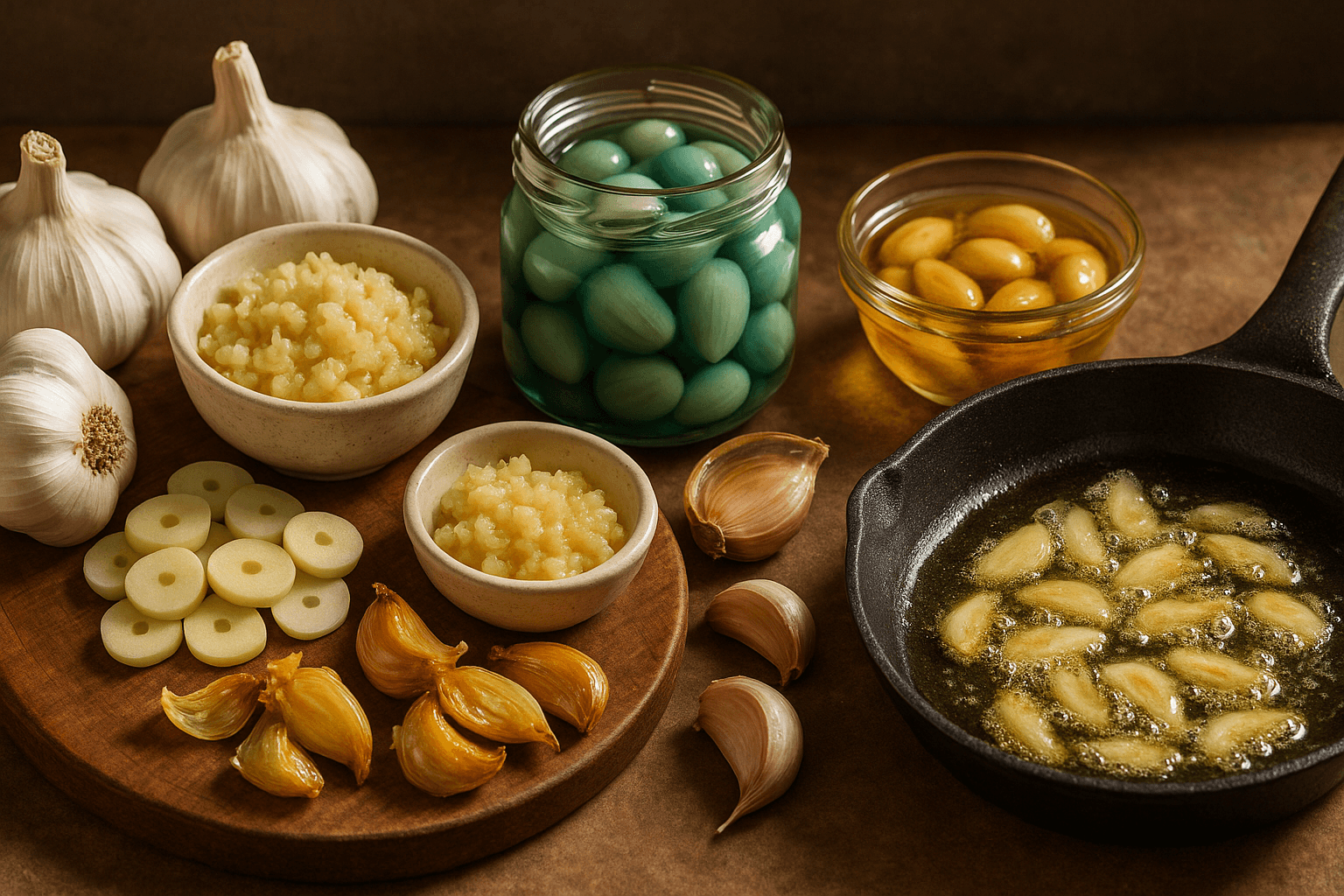
Garlic is one of the few ingredients that can taste almost innocent one minute and startlingly aggressive the next. It can be grassy and hot when raw, nutty and mellow when gently sautéed, jammy and sweet when roasted, silky when confited, and deeply savory when fermented. Then, just when you think you understand it, a jar of pickles or a sauce turns an alarming shade of blue-green and sends you searching for answers.
Most garlic advice stops at a single rule: don’t burn it. That rule is true, but it is nowhere near enough. Garlic flavor is not controlled by heat alone. It begins with damage. It changes with time. It shifts with pH, moisture, and metal ions. It depends on whether you slice, crush, grate, pound, or puree. And many of the flavors people describe as “strong,” “harsh,” “sweet,” or “round” are the direct result of chemical pathways that start the second a clove’s cells are broken.
If you understand those pathways, you can stop treating garlic like a temperamental mystery and start using it with intention. You can decide when you want piercing raw pungency for a Lebanese toum, when you want mellow sweetness for a tray of roasted heads, when you want fragrant background depth in an Italian soffritto, and when you want the earthy, almost balsamic savor of black garlic. You can also stop panicking when your pickled garlic turns blue.
Garlic’s flavor begins when you cut it
Inside an intact garlic clove, the important compounds are separated from one another. Think of the clove as a tiny chemical kit organized into compartments. One set of sulfur-containing molecules, especially a compound called alliin (more precisely, S-allyl-L-cysteine sulfoxide), is stored away from an enzyme called alliinase. As long as the clove stays whole, relatively little happens.
The moment you cut, crush, grate, pound, or puree the garlic, those compartments rupture. Alliinase comes into contact with alliin and rapidly converts it into a series of reactive sulfur compounds. The star of the show is allicin, which is responsible for much of fresh garlic’s sharp aroma and pungent bite.
Allicin is unstable. It doesn’t simply sit there forever. It breaks down into other sulfur compounds, including diallyl disulfide, diallyl trisulfide, ajoene, and various sulfides and thiosulfinates. Those compounds contribute to the evolving aroma of garlic over minutes, hours, and during cooking.
This is why garlic can taste different depending on how you prep it and when you use it:
- Sliced garlic damages fewer cells, so the alliinase reaction is less extensive and the flavor is usually less aggressive.
- Minced garlic creates more broken cells and more rapid production of pungent sulfur compounds.
- Crushed or grated garlic causes the most disruption, producing stronger, faster pungency.
- Garlic paste made in a mortar or on a microplane can be dramatically hotter and more lingering than sliced garlic from the same clove.
In practical terms, one clove is not one clove. A thinly sliced clove added gently to oil behaves very differently from a clove grated into a vinaigrette.
Why resting chopped garlic changes the flavor
One of the most useful, least discussed garlic techniques is simply letting chopped garlic sit for a short time before cooking or mixing it into a dish.
When garlic is cut, the alliinase reaction needs a little time to proceed. If you immediately throw freshly minced garlic into a very hot pan, you may partially shut down the enzyme before it has converted much alliin into allicin and related compounds. If you let the minced garlic rest first, you allow more of those flavorful molecules to form before heat changes the picture again.
A good working range is:
- 5 minutes of rest: mild increase in pungency and complexity
- 10 minutes: noticeable boost in garlic aroma
- 15 minutes: often the sweet spot for strong garlic character before cooking
- 30+ minutes: more developed sulfur aroma, sometimes harsher or more lingering in raw applications
This matters especially when garlic is going into soups, braises, or sauces where the cloves won’t be intensely browned. If you want more garlic presence, mince it and let it sit 10 to 15 minutes before cooking.
For raw dishes, that rest can make garlic more assertive, which is good or bad depending on your goal. In aioli, toum, salsa, or salad dressing, resting creates more pungency. If you want a gentler raw garlic flavor, slice or mince it less finely, or rinse/salt it after chopping.
Why raw garlic can taste harsh
“Harsh” is not just a personality trait of garlic; it’s a sensory outcome created by concentration and exposure. Freshly crushed garlic contains a burst of reactive sulfur compounds that hit the nose, tongue, and back of the throat hard. That sharpness is strongest when:
- the garlic is very fresh and high in sulfur precursors
- the clove is finely grated or pureed
- the garlic is used raw
- it is mixed into a dish without enough fat, dilution, or time
- there is little else to buffer it, such as starch, dairy, egg yolk, or oil
If you have ever bitten into a dressing or marinade that tasted “raw” in a bad way, the problem was often not that it contained raw garlic, but that the garlic was too finely processed, too recently cut, or insufficiently balanced.
How to tame harsh raw garlic
If a recipe needs raw garlic flavor without that chest-grabbing burn, use one of these techniques:
- Slice instead of grate. Less cell damage means less allicin production.
- Macerate with acid and salt. Minced garlic mixed with lemon juice or vinegar and a pinch of salt for 10 to 20 minutes often rounds the edges. Acid doesn’t erase pungency, but it changes perception and can slow some reactions.
- Rinse briefly. After mincing, a quick rinse under cold water removes some surface compounds. This softens the flavor but also washes away aroma.
- Use a garlic paste emulsified into fat. In aioli, mayonnaise, yogurt sauce, or toum, oil and emulsification spread garlic compounds more evenly and soften the impact.
- Blanch the garlic. Cover peeled cloves with cold water, bring to a simmer, drain, and repeat once or twice. Then mash. This is common in some classical and restaurant applications when a gentler garlic puree is desired.
- Use germ-removed garlic for smooth sauces. Older garlic often has a green sprout in the center. It is not poisonous, but it can taste bitter or coarse, especially in purees and custardy sauces.
The role of acid: friend, modifier, and color trigger
Acid has a complicated relationship with garlic. It can soften the perception of raw harshness, but it also influences the chemistry that leads to blue or green garlic.
In flavor terms, acid helps in several ways:
- It brightens other flavors, so garlic feels less dominant.
- It can denature or alter some enzyme activity over time.
- It changes how sulfur compounds are perceived by the palate.
- In marinades or dressings, it disperses garlic flavor through the mixture.
That’s why grated garlic in lemon juice for a Greek ladolemono or in vinegar for a vinaigrette often tastes less brutal after 10 to 15 minutes than it did immediately after mixing.
But acid also creates the conditions for pigment formation in some garlic preparations, especially pickles. More on that soon.
Heat changes everything, but not all heat works the same way
Once garlic meets heat, the story branches. Heat can stop the alliinase reaction, volatilize harsh sulfur compounds, trigger browning reactions, soften cell structure, and eventually create sweetness.
The details depend on temperature.
Low heat: fragrant and gentle
Garlic cooked gently in oil at around 250 to 275°F (120 to 135°C) becomes aromatic and soft without developing much color. This is the zone for:
- garlic confit
- gentle oil infusions
- starting soups or sauces with sliced garlic
- poaching garlic cloves before pureeing
At these temperatures, the sharpest raw compounds mellow, and the garlic becomes savory, buttery, and sweet without bitterness.
Moderate heat: sweet spot for sautéing
In a skillet, garlic usually does best when the pan environment is effectively in the 275 to 325°F (135 to 163°C) range, though surface temperatures vary wildly depending on moisture and oil. This is where sliced or minced garlic can turn lightly golden and nutty if watched carefully.
For most home cooking, the practical rule is simple: if the garlic is sizzling hard and coloring in under 30 seconds, the pan is too hot.
A reliable method:
- Heat 1 to 2 tablespoons oil over medium or medium-low heat.
- Add garlic only when the oil is warm and shimmering, not smoking.
- Stir constantly for 20 to 60 seconds for minced garlic, or 1 to 2 minutes for sliced garlic.
- Add a water-containing ingredient—onions, tomatoes, wine, stock, greens—as soon as the garlic becomes fragrant and just barely blond.
That added moisture drops the temperature and protects the garlic from racing into bitterness.
High heat: bitter, acrid, and easy to ruin
Garlic burns quickly because it is small, low in water once cut finely, and rich in reactive compounds. Once it crosses from golden to dark brown, many of the desirable sulfur notes disappear and are replaced by bitter, burnt flavors.
This can happen around and above 350°F (177°C) at the garlic’s surface, especially with minced garlic in shallow oil. In practice, a too-hot pan, delayed stirring, or carrying heat from the pan itself is enough to cause trouble.
That familiar advice—don’t burn garlic—exists because the gap between delicious and acrid is often less than 20 seconds.
Why roasted garlic turns sweet
Roasted garlic feels almost magical because it seems to become a different ingredient. That sweetness comes from a combination of processes:
- Pungent sulfur compounds degrade. Heat breaks down the molecules responsible for raw sharpness.
- Sugars concentrate. Water slowly evaporates during roasting.
- Caramelization and Maillard reactions contribute savory sweetness. Garlic contains sugars and amino compounds that brown gently over time.
- Texture transforms. The cloves become soft enough to mash into a paste, which changes how flavor is released in the mouth.
How to roast garlic well
For whole heads:
- Heat oven to 375°F (190°C).
- Slice 1/4 to 1/2 inch off the top of each head to expose the cloves.
- Drizzle with 1 to 2 teaspoons olive oil per head.
- Wrap loosely in foil or place cut-side up in a covered baking dish.
- Roast 40 to 60 minutes, until the cloves are golden, very soft, and easily squeezed from the skins.
At 350°F (175°C) the process is slower and gentler, often taking 50 to 70 minutes. At 400°F (204°C) it may finish in 35 to 45 minutes but can brown unevenly.
The result should taste sweet, nutty, and spreadable, not dry or bitter. If the exposed tops are getting dark while the centers are still firm, add a splash of water to the dish and cover more tightly.
Garlic confit: mellow, luxurious, and misunderstood
Garlic confit—peeled cloves slowly cooked in oil—creates some of the most elegant garlic flavor possible in a home kitchen. The cloves become creamy and sweet, and the oil becomes perfumed.
Confit method
- Place 2 cups peeled garlic cloves in a small saucepan or baking dish.
- Cover with 2 to 2 1/2 cups olive oil or a mix of olive oil and neutral oil.
- Add optional aromatics: 2 thyme sprigs, 1 bay leaf, 1 teaspoon peppercorns, or a strip of lemon peel.
- Keep the oil between 190 and 220°F (88 to 104°C), ideally not above 225°F (107°C).
- Cook 45 to 90 minutes, until the cloves are fully tender but not browned.
The important part is temperature control. Confited garlic should not fry. If you see vigorous bubbling, the oil is too hot.
Food safety note
Garlic in oil can be a botulism risk if stored improperly because garlic is low-acid and anaerobic conditions favor Clostridium botulinum. For home use:
- Refrigerate promptly.
- Store in a clean container.
- Use within 3 to 4 days unless you are following a tested preservation method.
- Do not leave garlic confit at room temperature.
That warning is not meant to scare you away; it is simply a real rule that matters more than many garlic myths.
Why blue or green garlic happens
Here is the reassuring version first: blue or green garlic is usually safe to eat. It is not mold. It is not copper poisoning from your pan. It usually means garlic chemistry happened in a very visible way.
The blue-green color appears when sulfur compounds produced from damaged garlic react further to form pigments. This is more likely when several conditions line up:
- Acidic environment, such as vinegar brine or lemon-based sauces
- Cell damage, from chopping, crushing, or packing peeled cloves
- Time, allowing reactions to proceed
- Cool storage, as in refrigerated pickles
- Certain garlic varieties or ages, especially immature garlic or garlic stored cold before use
- Trace minerals, which may influence color intensity but are usually not the primary cause
A key part of the mechanism involves sulfur compounds reacting with amino acid derivatives to create pyrrole-like structures that combine into blue-green pigments. In simpler terms: the same family of sulfur chemistry that gives garlic its aroma can, under acidic conditions, build colored molecules.
When it happens most often
You are most likely to see blue or green garlic in:
- pickled garlic cloves
- garlic in vinegar-heavy hot sauce or chili crisp components
- lemon-garlic sauces stored overnight
- fermented garlic or honey garlic
- garlic near copper traces or mineral-rich water, though this is often overstated
Chinese Laba garlic, for example, is intentionally turned green by pickling garlic in vinegar during winter. The color is not a flaw; it is part of the tradition, along with the bright, sharp flavor.
How to reduce blue garlic if you don’t want it
You cannot always prevent it completely, but you can reduce the odds:
- Use fresh, fully mature garlic rather than very young garlic.
- Avoid refrigerating whole bulbs for long periods before pickling.
- Blanch cloves briefly before pickling.
- Use distilled water if your tap water is very mineral-heavy.
- Keep cloves whole rather than sliced if appearance matters.
- Accept that acid plus time may still produce color.
If the garlic smells normal and the preservation method was safe, blue-green color alone is not a sign of spoilage.
Fermented garlic: less bite, more depth
Fermentation changes garlic in ways heat does not. Lactic fermentation, such as garlic fermented in a 2% to 3% salt brine (that is 20 to 30 grams salt per liter of water), reduces harshness and develops tangy, savory complexity. The garlic softens, the sulfur profile evolves, and the final flavor becomes rounder and less piercing.
A simple brined garlic ferment:
- Peel 200 to 300 grams garlic cloves.
- Dissolve 20 to 30 grams non-iodized salt in 1 liter water.
- Submerge cloves fully under brine in a clean jar.
- Ferment at 65 to 72°F (18 to 22°C) for 2 to 4 weeks.
- Burp if needed, or use an airlock.
The garlic may turn blue-green during fermentation. Again, that is often normal.
The flavor after fermentation is excellent in dressings, sauces, compound butter, hummus, salsa verde, or chopped into relishes. It is garlic with a softer voice but more bass.
Black garlic: not a ferment in the usual sense
Black garlic is often described as fermented, but technically it is usually produced by holding whole garlic at warm temperatures and high humidity for an extended time, encouraging Maillard reactions rather than classic microbial fermentation.
Typical conditions are roughly:
- 140 to 170°F (60 to 77°C)
- 70 to 90% humidity
- Several weeks, often 3 to 8 weeks
During this slow transformation, the cloves darken to black, soften to a chewy paste, and develop flavors of tamarind, balsamic, molasses, soy, and dried fruit. The pungent garlic edge nearly disappears.
Black garlic is what happens when garlic’s sulfur identity yields the stage to sweetness, umami, and deep browning chemistry.
How different cuisines use garlic transformations on purpose
Around the world, cooks do not use garlic in one generic way. They exploit specific stages of garlic chemistry for specific effects.
Mediterranean and Italian cooking
In many Italian dishes, garlic is sliced or lightly crushed and warmed in olive oil just until fragrant. The goal is rarely maximum pungency. It is perfume, not attack. In aglio e olio, sliced garlic is often taken to pale gold, never dark brown, so the pasta tastes aromatic and nutty rather than burnt.
Spanish cooking
Spain gives us everything from raw garlic in alioli to sweet garlic in slow braises to paprika-rich dishes where garlic is gently fried before liquid is added. The difference between thinly sliced garlic chips and slowly poached garlic in a stew is the difference between top-note crunch and background body.
French technique
French cooking often tempers garlic through blanching, long cooking, or incorporation into fat-rich systems like aioli, mayonnaise, butter, or cream sauces. In dishes like chicken with 40 cloves of garlic, the cloves become soft, sweet, and spreadable rather than sharp.
Chinese cuisines
Chinese cooking uses garlic at every point on the spectrum: raw in dipping sauces, chopped into stir-fry aromatics, deep-fried to crisp garlic, pickled into green Laba garlic, or combined with chiles for layered pungency. In wok cooking, garlic is often added briefly and strategically because the heat is intense enough to scorch it fast.
Korean cooking
Korean cuisine often uses a lot of garlic, frequently minced or crushed, but balanced with sesame oil, gochugaru, soy, sugar, or fermentation. Raw garlic pungency is not always avoided; it is often embraced and integrated into a broader flavor architecture.
Middle Eastern cooking
Garlic can be strikingly assertive in sauces like toum, where raw garlic is emulsified into oil with lemon juice and salt. Here, harshness is managed not by removing it, but by transforming it into a creamy, stable emulsion where the bite becomes thrilling rather than crude.
South Asian cooking
In Indian cooking, garlic may be pounded into ginger-garlic paste, blooming its sulfur compounds fully before they are tamed in hot fat with onions and spices. In tarka or tempering, sliced garlic may be fried to golden or deeper brown for nuttiness and aroma, but it is watched closely because bitterness arrives quickly.
Step-by-step: choosing the right garlic treatment for the result you want
Here is a practical guide you can use in the kitchen.
For a sharp raw garlic dressing
Use when you want brightness and bite, such as for robust greens, grilled meat, or cucumber salad.
- Finely mince or grate 1 medium clove.
- Mix with 1 tablespoon lemon juice or vinegar and 1/8 teaspoon kosher salt.
- Let stand 10 minutes.
- Whisk in 3 tablespoons olive oil.
- Taste. If too harsh, add 1 teaspoon water or 1/2 teaspoon honey.
This gives pronounced garlic flavor with a slightly rounded edge.
For balanced sautéed garlic in pasta, greens, or beans
- Slice 3 to 4 cloves thinly.
- Add to 3 tablespoons olive oil in a cold or barely warm pan.
- Set over medium-low heat.
- Stir for 1 to 2 minutes until fragrant and pale gold.
- Add your main ingredient immediately.
Starting in cooler oil gives you a wider margin for success.
For deep garlic presence in soup or stew
- Mince 4 to 6 cloves.
- Let rest 10 to 15 minutes.
- Sweat onions or other aromatics first.
- Add garlic for only 30 to 60 seconds.
- Add stock, tomatoes, beans, or other liquid.
Resting boosts the garlic contribution even though the final dish is not harsh.
For sweet roasted garlic spread
- Roast 2 whole heads at 375°F (190°C) for 45 to 55 minutes.
- Cool slightly.
- Squeeze cloves into a bowl.
- Mash with 1 tablespoon olive oil, a pinch of salt, and 1 teaspoon lemon juice if desired.
- Spread on toast, whisk into mashed potatoes, or fold into pan sauce.
For garlic confit
- Submerge peeled cloves in oil.
- Hold at 190 to 220°F (88 to 104°C) for about 1 hour.
- Cool and refrigerate.
- Use cloves mashed into dressings, soups, mayo, beans, or roast chicken drippings.
For avoiding bitterness in stir-fries
- Preheat the wok.
- Add oil.
- Add sturdier aromatics or the main ingredient first.
- Add minced garlic only in the last 10 to 20 seconds before sauce or liquid.
At wok temperatures, garlic is not a long-cooking aromatic.
Common mistakes that make garlic taste wrong
1. Adding minced garlic to a smoking-hot pan
The pieces are too small, the pan is too hot, and the clock is too fast. Result: burnt bitterness.
2. Cooking garlic before the onions are softened
If onions need 8 to 10 minutes and garlic needs 30 seconds, they should not usually go in together unless the garlic is in large slices and the heat is low.
3. Using garlic paste where slices were needed
A paste releases far more pungency and browns faster. Match the cut to the goal.
4. Expecting acid to “cook” garlic into sweetness
Acid can mellow perception, but it does not roast garlic. Raw garlic in lemon juice remains fundamentally raw garlic, just altered and dispersed.
5. Confusing blue garlic with spoilage
Color change is often cosmetic chemistry, not danger. Smell, storage, and food safety method matter more.
6. Storing garlic confit carelessly
This is a genuine safety issue. Always refrigerate and use promptly.
7. Assuming more garlic always means more flavor
Sometimes more garlic just means more harshness. Technique often matters more than quantity.
A few useful garlic rules that are actually true
After all the chemistry, it helps to keep a handful of real-world rules in mind:
- The more you damage garlic, the stronger it gets.
- Resting chopped garlic for 10 to 15 minutes increases flavor development.
- Low, gentle heat makes garlic mellow and sweet.
- High heat burns garlic before most home cooks realize it.
- Acid rounds garlic in flavor but can encourage blue-green pigment formation.
- Blue or green garlic is usually normal in acidic or fermented preparations.
- Roasted and confited garlic are sweet because pungent sulfur compounds fade while sugars concentrate and browning reactions build complexity.
- Different cuts, temperatures, and timings are not small details; they are the recipe.
The real rules for flavor
If there is one thing worth remembering, it is that garlic is not a single flavor. It is a sequence of possible flavors, and your knife, your timing, your acid, and your heat decide which one shows up.
Crush a clove and leave it raw, and you get attack, heat, and vivid freshness. Slice it and warm it slowly in oil, and it turns fragrant and nutty. Roast it whole, and it becomes spreadable sweetness. Confit it, and it goes silky and elegant. Ferment it, and you get savory tang with less sting. Hold it warm for weeks, and black garlic emerges like a dark, sticky concentrate of sweetness and umami.
Even the strange blue-green transformation fits the pattern. Garlic is alive with sulfur chemistry. Sometimes those reactions are aromatic. Sometimes they are delicious. Sometimes they are colorful. Often they are all three.
That is the real reason garlic rewards careful cooking more than casual folklore. The old rule says don’t burn it. The better rule is this: decide what version of garlic you want, then create the conditions for that version to exist.
Because with garlic, flavor is not just in the ingredient. Flavor is in the transformation.