Why Green Tea Turns Sweet, Seaweedy, or Bitter: Catechin Chemistry, Water Temperature, and the Steeping Rules for Better Sencha, Matcha, and Cold Brew
RecipeSimpli
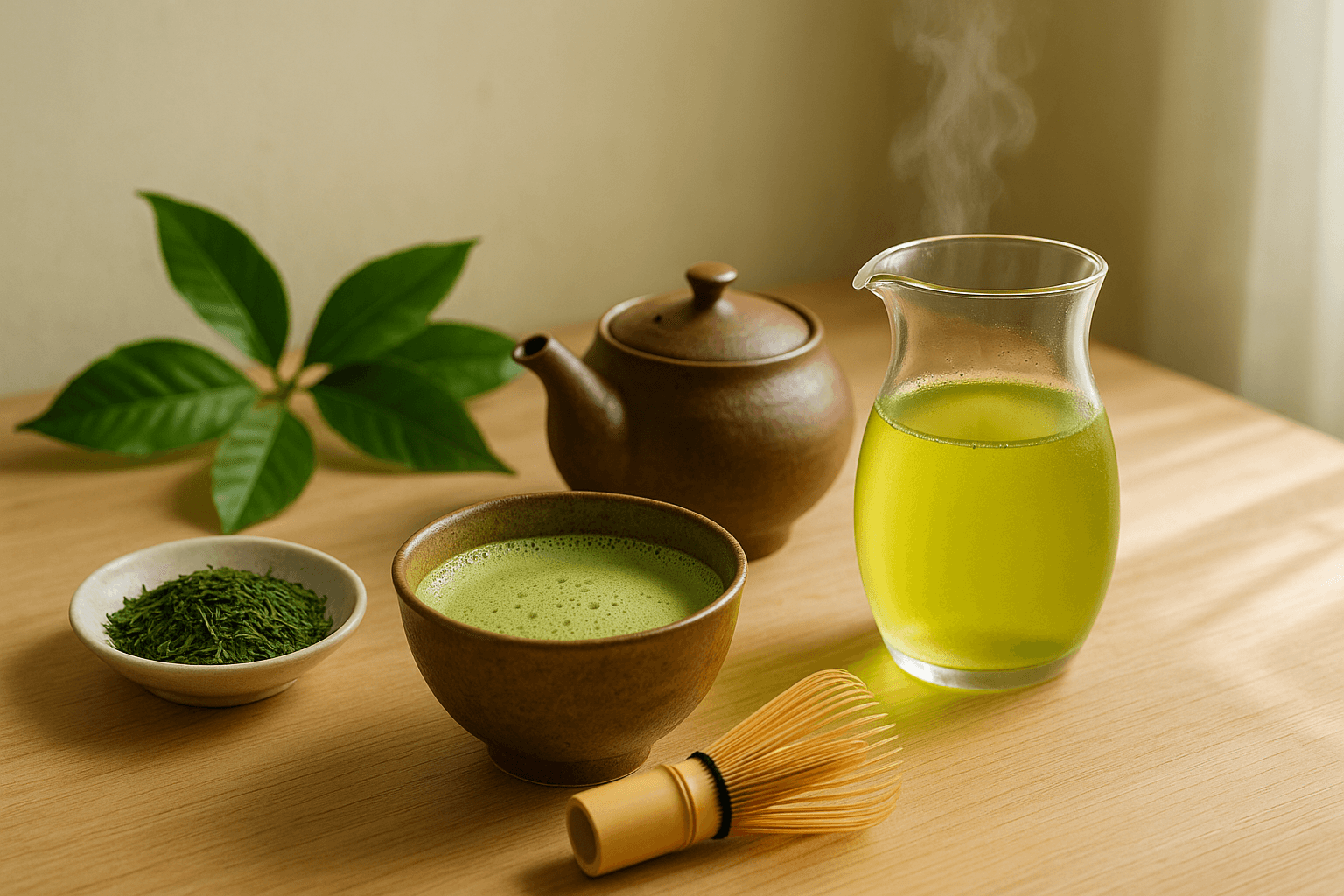
Green tea can taste like spring peas, nori, chestnuts, orchids, sweet corn, toasted rice, or grapefruit pith. It can feel silky and brothy or sharp and drying. The same cup can open sweet, then turn marine and savory, and finish with a clean bitterness that either refreshes the palate or bulldozes it. That wide flavor range is exactly why green tea fascinates people—and why it confuses them.
If you have ever brewed one green tea that tasted soft and sweet, then made another with boiling water and ended up with something harsh enough to make your mouth feel furry, you have already met the central truth of green tea: flavor is extraction chemistry in action. Green tea is less oxidized than black tea, so it preserves more of the leaf’s grassy, vegetal, marine, and amino-acid-driven character. But those pleasant compounds share the leaf with catechins and caffeine, which can quickly tip a balanced cup toward bitterness and astringency if your brewing choices are off.
This is especially important because “green tea” is not one thing. Japanese sencha, deep-steamed fukamushi, shaded gyokuro, pan-fired Chinese dragon well, jasmine green tea, hojicha-like roasted green styles, powdered matcha, and cold-brewed leaf tea all behave differently in water. The processing methods, cultivar, shade-growing, particle size, and water chemistry all change what ends up in your cup.
The good news is that better green tea is not mysterious. Once you understand how catechins, amino acids, water temperature, steeping time, and tea style interact, you can predict flavor much more accurately—and brew with intention instead of superstition.
Why green tea tastes so different from one style to another
All true tea comes from Camellia sinensis, but green tea is defined less by the plant species than by what happens after picking. In green tea production, the leaves are heated soon after harvest to deactivate oxidative enzymes. This keeps the leaf relatively “green” in both chemistry and flavor compared with black or oolong tea.
That heat step happens differently in different traditions:
- Japanese green teas are usually steamed for about 20 to 120 seconds, depending on style. Steaming preserves a vivid green color and often emphasizes grassy, marine, spinach-like, sweet-corn, and umami notes.
- Chinese green teas are usually pan-fired or otherwise dry-heated. This tends to soften the marine profile and produce nuttier, beanier, chestnut-like, floral, or toasted notes.
- Roasted green teas develop warmer aromas and often taste more forgiving because roasting shifts the balance of volatile compounds and can mellow some sharper green notes.
- Shade-grown teas like gyokuro and tencha (the raw material for matcha) build up more amino acids, especially L-theanine, before harvest because reduced sunlight slows the conversion of amino acids into catechins.
Those production choices set the stage for the cup. Brewing then decides which parts of that stage are lit up.
The major flavor compounds: sweetness, umami, bitterness, and astringency
When people talk about green tea flavor, they often blur together several sensations that are actually chemically distinct.
Amino acids: sweetness and umami
The molecules most responsible for green tea’s savory sweetness are amino acids, especially L-theanine, along with glutamic acid and others. These compounds contribute:
- Sweetness n- Brothy or savory depth
- A smooth, rounded mouthfeel
- The “seaweedy” or dashi-like quality prized in many Japanese teas
Shade-growing increases these compounds, which is why gyokuro and high-quality matcha can taste intensely sweet and umami-rich even with little or no sugar. A shaded sencha can taste almost soupy in the best sense—like fresh peas, baby spinach, kombu broth, and sweet cream.
Catechins: bitterness and astringency
Green tea is rich in catechins, a class of polyphenols that includes EGCG (epigallocatechin gallate), often the most discussed. Catechins contribute:
- Bitterness
- Astringency, the drying puckery sensation
- Structure and freshness
- Some of the brisk, cleansing quality in the finish
Bitterness and astringency are related but not identical. Bitterness is a taste on the tongue. Astringency is a tactile sensation caused when polyphenols bind with salivary proteins, reducing lubrication and making the mouth feel dry or rough.
A little catechin extraction is not a flaw. In a good green tea, mild bitterness can frame sweetness the way a squeeze of lemon sharpens a soup. But excess catechin extraction—especially alongside too much caffeine—makes green tea taste aggressively harsh.
Caffeine: bitterness and stimulation
Caffeine is naturally present in green tea and contributes some bitterness, but it is not the sole villain. People often blame caffeine for every bitter cup, when in reality over-extracted catechins are usually doing just as much or more damage.
Volatile aroma compounds: grass, flowers, nuts, seaweed, roast
Aromatics shape what you perceive before and during tasting. Depending on processing, green tea can show:
- Fresh-cut grass
- Edamame
- Sweet corn
- Nori or kombu
- Orchid and lilac
- Toasted nuts or chestnut
- Rice-like warmth
- Marine iodine notes
These volatile compounds are very sensitive to heat, oxidation, storage, and the tea’s age.
Chlorophyll and suspended particles: color and body
Green tea’s color comes from chlorophyll and related pigments, but what you see depends on tea style.
- Steamed Japanese teas often brew yellow-green to vivid green.
- Deep-steamed fukamushi can look cloudy because the leaf breaks more and releases fine particles.
- Matcha is opaque because you are drinking the powdered leaf itself.
- Chinese pan-fired greens often brew a clearer pale gold to yellow-green.
Color is not a perfect marker of quality, but it can reveal how a tea was processed and whether it was brewed gently or aggressively.
Why boiling water ruins some green teas
The short answer is that hot water changes extraction speed and extraction balance.
As water temperature rises, compounds dissolve and move out of the leaf more quickly. But they do not all increase at the same sensory impact. At lower temperatures, you often favor sweetness, umami, and gentle aromatics. At higher temperatures, you accelerate the extraction of catechins and caffeine enough that bitterness can dominate before the tea’s sweeter side has room to shine.
For many delicate green teas, especially Japanese sencha and shade-grown teas, boiling water at 100°C / 212°F is simply too aggressive. It can:
- Pull out too many bitter catechins too quickly
- Flatten delicate sweet aromatics
- Emphasize spinachy or marine notes to a harsh degree
- Make the finish rough and drying
This is why so many Japanese green teas do better around 50 to 80°C / 122 to 176°F, depending on style.
That said, “never use boiling water for green tea” is too simplistic. Some tougher, lower-grade, roasted, or tightly shaped teas can tolerate hotter water. Some Chinese green teas can taste excellent at 80 to 90°C / 176 to 194°F, especially if the leaves are whole and the steep is short. But for fine sencha, gyokuro, and many matchas, cooler water is usually the safer path.
Why matcha behaves differently from leaf tea
Matcha is not brewed in the same way as leaf tea because it is not an infusion in the usual sense. With sencha or longjing, water extracts soluble compounds from the leaf, and then the leaf is removed. With matcha, the leaf is stone-milled into a fine powder and suspended in water, so you consume the entire leaf.
That changes everything:
- Particle size is tiny, so flavor is released quickly.
- There is no “leave the leaves in too long” problem in the same way, but there is a texture issue if it clumps or if too much powder is used.
- Matcha can taste more intense because you ingest all the solids.
- Shade-grown tencha used for matcha is high in amino acids, so good matcha can be deeply sweet and umami-rich.
- Poor matcha or water that is too hot can make bitterness very obvious because there is nowhere for those particles to hide.
Typical matcha water temperature is around 70 to 80°C / 158 to 176°F. Using boiling water can scorch the perception of delicacy and push the tea toward an unpleasant bitter edge.
For a standard usucha-style bowl, a common starting ratio is:
- 2 grams matcha
- 60 to 75 mL water at 75°C / 167°F
For a lighter everyday bowl, you might use 1.5 grams to 70 mL. For richer koicha-style preparation, the ratio becomes much thicker, but that is usually reserved for high-grade matcha.
Because matcha is suspended rather than steeped, whisking technique matters as much as temperature. Sifting the powder first prevents clumps. A quick, light wrist motion in an “M” or “W” pattern helps build fine foam for usucha.
Shade-growing, roast level, and why one tea tastes like nori while another tastes like chestnuts
Green tea flavor starts long before the kettle boils.
Shade-growing and amino acid retention
When tea plants are shaded for days or weeks before harvest, they receive less sunlight. The plant responds by retaining more amino acids, particularly theanine, and converting less of that pool into catechins. The result is often:
- More sweetness
- More umami
- Less assertive bitterness, if brewed properly
- Deeper green color
- More marine, seaweed, or dashi-like notes
That is why gyokuro, kabusecha, and quality matcha often taste sweeter and more savory than standard sun-grown teas.
Roast or dry-heat level
Chinese pan-fired greens and roasted Japanese styles move away from the pure steamed-grass profile. Heat creates and emphasizes different aroma compounds, often resulting in:
- Chestnut
- Toasted grain
- Warm hay
- Nutty sweetness
- Less obvious marine character
These teas can be more forgiving because their desired flavor profile already includes warm, toasty notes. They may tolerate slightly hotter water without becoming unpleasant.
Steaming depth in Japanese tea
In Japan, steaming level matters a lot:
- Asamushi (light steamed): clearer liquor, more delicate aromatics, often less cloudy
- Chumushi (medium steamed): balanced character
- Fukamushi (deep steamed): more broken leaf, thicker body, cloudier cup, quick extraction, often sweeter but easier to overdo if you use too much time
Fukamushi sencha can become very flavorful in as little as 30 to 45 seconds.
Water chemistry: the hidden ingredient most people ignore
Tea is mostly water, so water chemistry can make or break the cup.
Hard water vs soft water
Water with high mineral content, especially calcium and magnesium, can mute some delicate aromas and interact with tea compounds in ways that flatten sweetness or make the cup feel chalky. Very hard water can make green tea taste dull and less vibrant.
Softer water generally highlights sweetness, aroma, and umami better, especially in Japanese greens.
A practical target is moderately soft water—not distilled, not aggressively mineral-heavy. Distilled water often tastes flat because it lacks enough dissolved minerals to carry flavor pleasingly. On the other hand, very hard tap water can make even excellent sencha taste lifeless.
If your tap water leaves mineral scale in kettles, try filtered water or bottled water with a relatively low mineral content.
pH and color
Tea color can shift with water chemistry. More alkaline water can make some green teas appear duller or browner over time, while fresher, softer, slightly lower-mineral water often preserves brighter green-yellow tones.
Oxygen and freshness
Freshly drawn water usually tastes better than water repeatedly boiled in a kettle. Reboiled water is not toxic, but it can taste flatter because dissolved gases change and concentration of minerals increases slightly with evaporation.
The science of cold brew green tea
Cold brewing changes extraction because temperature slows everything down, but not equally.
When you steep green tea in cold water, you extract:
- Amino acids and sweet compounds relatively gently
- Fewer bitter catechins per unit time compared with hot brewing
- Less aggressive astringency
- A softer, rounder cup
This is why cold-brew green tea often tastes naturally sweeter, smoother, and less bitter, even without sugar. It is not that catechins vanish; it is that their extraction profile is moderated enough to change the balance dramatically.
Cold brew is especially good for:
- Sencha
- Jasmine green tea
- Dragon well and similar Chinese greens
- Genmaicha
- Some fukamushi teas
A reliable starting method:
- 8 grams green tea leaves
- 1 liter cold water
- Refrigerate 4 to 8 hours
For a stronger concentrate:
- 10 to 12 grams per liter
- Steep 6 to 10 hours
Then strain. Drink within 24 to 48 hours for the best freshness.
Japanese mizudashi-style cold brew is often made a bit stronger, sometimes around 10 grams per liter, especially with sencha. You can also use ice brewing for a luxurious, tiny-volume extraction, where melting ice drips slowly through the leaf and produces an intensely sweet, umami-rich liquor.
Why bitterness is sometimes a flaw and sometimes a feature
Many drinkers assume the ideal green tea is completely free of bitterness. That is not always true.
A touch of bitterness can provide contrast and structure. Think of it as the same balancing principle that makes espresso, dark chocolate, tonic water, or hop bitterness in beer satisfying when it is in proportion. The problem is not bitterness itself. The problem is when bitterness overwhelms sweetness, aroma, and texture.
A well-brewed sencha often has:
- A sweet opening
- Green vegetal mid-palate
- A gentle drying finish
- Lingering sweetness after swallowing, sometimes called a returning sweetness
That final part matters. Some of the best teas have a pleasant aftertaste that blooms once the initial bitterness recedes.
Practical brewing rules for Japanese green teas
These are not rigid laws, but they are strong starting points.
Sencha
Start here for a standard sencha:
- Tea: 5 grams
- Water: 150 mL
- Temperature: 70°C / 158°F
- Time: 60 seconds
Adjust based on the result:
- Too bitter? Lower to 65°C / 149°F or shorten to 45 seconds.
- Too weak? Increase to 75°C / 167°F or steep 75 seconds.
- Very deep-steamed fukamushi? Try 30 to 45 seconds instead.
For a second infusion:
- 75 to 80°C / 167 to 176°F
- 10 to 20 seconds
The leaves are already hydrated, so the second brew extracts quickly.
Fukamushi sencha
Because the leaves are more broken, extraction happens fast.
- Tea: 5 grams
- Water: 150 mL
- Temperature: 65 to 70°C / 149 to 158°F
- Time: 30 to 45 seconds
Expect a thicker, cloudier cup.
Gyokuro
Gyokuro is prized for sweetness and umami, so cooler water is key.
- Tea: 6 grams
- Water: 90 mL
- Temperature: 50 to 60°C / 122 to 140°F
- Time: 90 to 150 seconds
This produces a small, concentrated infusion with profound savory depth. If you brew gyokuro like ordinary tea with boiling water, you can bulldoze the very qualities you paid for.
Genmaicha
Because of the toasted rice, genmaicha is more forgiving.
- Tea: 5 grams
- Water: 180 mL
- Temperature: 80 to 90°C / 176 to 194°F
- Time: 45 to 60 seconds
It is a great option for people who find plain sencha too grassy.
Hojicha
Technically a roasted tea and often low in bitterness perception.
- Tea: 5 grams
- Water: 180 mL
- Temperature: 90 to 95°C / 194 to 203°F
- Time: 30 to 60 seconds
Its roasty aroma tolerates hotter water well.
Practical brewing rules for Chinese green teas
Chinese greens vary enormously, but many are happier with somewhat hotter water than delicate Japanese steamed teas.
Longjing (Dragon Well)
- Tea: 4 grams
- Water: 200 mL
- Temperature: 75 to 85°C / 167 to 185°F
- Time: 60 to 90 seconds
Look for chestnut, bean, orchid, and gentle sweetness rather than marine umami.
Biluochun
- Tea: 3 to 4 grams
- Water: 180 mL
- Temperature: 75 to 80°C / 167 to 176°F
- Time: 45 to 60 seconds
This tea is delicate and aromatic, so cooler water protects its fragrance.
Maojian or similar wiry green teas
- Tea: 4 grams
- Water: 200 mL
- Temperature: 80 to 85°C / 176 to 185°F
- Time: 60 seconds
Jasmine green tea
- Tea: 4 grams
- Water: 200 mL
- Temperature: 75 to 85°C / 167 to 185°F
- Time: 60 seconds
Too much heat can make floral teas taste perfumey and bitter at once.
Step-by-step: how to brew better green tea at home without bitterness
If you want the simplest high-success method, use this process.
For sencha or similar Japanese green tea
-
Heat fresh water to 70°C / 158°F.
- If you do not have a temperature kettle, boil water and let it cool about 5 to 7 minutes in an open kettle, or decant it between cups to drop the temperature.
-
Measure the tea.
- Use 5 grams tea for 150 mL water.
- A small kitchen scale is much more reliable than guessing by spoon because leaf shapes vary wildly.
-
Warm the pot and cups.
- Swirl a little hot water in your teapot and cups, then discard. This stabilizes brewing temperature.
-
Add the leaves to the pot.
-
Pour the water over the leaves and start timing immediately.
- Steep 45 to 60 seconds.
-
Pour out every last drop into the cups.
- Do not leave liquid sitting with the leaves, or the next infusion will over-extract.
- Alternate pours between cups if serving more than one person so strength stays even.
-
Taste before changing anything.
- If bitter: next time use cooler water or shorter time.
- If thin: use slightly hotter water, more leaf, or a slightly longer steep.
-
Re-steep.
- Use 75 to 80°C / 167 to 176°F water for 10 to 20 seconds.
For Chinese green tea
- Heat water to 80°C / 176°F as a default starting point.
- Use 4 grams tea per 200 mL water.
- Steep 60 seconds.
- Taste and adjust:
- More sweetness/aroma: lower temp by 5°C / 9°F.
- More body: raise temp by 5°C / 9°F.
- Less bitterness: shorten steep.
For matcha
- Sift 2 grams matcha into a bowl.
- Add 60 to 75 mL water at 75°C / 167°F.
- Whisk briskly for 15 to 20 seconds until lightly foamy.
- Drink promptly.
If your matcha tastes harsh, the issue is usually one of four things:
- Water too hot
- Too much powder for the grade
- Low-quality culinary matcha used as sipping matcha
- Matcha stored poorly and oxidized
For cold brew green tea
- Add 8 to 10 grams leaves to 1 liter cold water.
- Refrigerate 4 to 8 hours.
- Strain.
- Taste.
- Need more body? Extend to 8 to 10 hours.
- Too strong? Dilute slightly or reduce leaf next time.
Common mistakes that make green tea bitter, muddy, or disappointing
1. Using boiling water by default
This is the most common problem with Japanese greens and delicate Chinese greens.
2. Steeping too long
People often respond to weak tea by extending time instead of adjusting leaf ratio or temperature. Long steeps usually extract more bitterness than sweetness.
3. Using too little tea
Oddly, too little tea can create bad results because people compensate with excessive steeping time. Often the fix is more leaf and less time.
4. Ignoring tea style
Gyokuro, sencha, dragon well, and matcha are not interchangeable. Treating them all with the same “one teaspoon, boiling water, three minutes” rule erases their strengths.
5. Poor storage
Green tea is fragile. Heat, light, oxygen, and moisture dull aroma and flatten sweetness. Store it:
- Airtight
- Cool
- Away from light
- Away from strong odors
Drink high-grade green tea relatively fresh, ideally within a few months of opening.
6. Bad water
If your tea tastes dull no matter what you do, suspect the water.
7. Letting leaves sit in leftover liquor
Always decant fully. Residual liquid continues to extract and can make the next infusion harsh.
A quick flavor map: what to change when the cup is off
If the tea is too bitter
- Lower water temperature by 5 to 10°C / 9 to 18°F
- Shorten steep by 10 to 20 seconds
- Use softer water
- For matcha, use lower temperature and possibly less powder
If the tea is too grassy or aggressively seaweedy
- Lower steep time slightly
- Try a slightly lower leaf ratio
- Choose a pan-fired Chinese green or a roasted green tea next time
- For Japanese tea, try genmaicha or hojicha if you want less marine character
If the tea is flat and dull
- Increase leaf dose slightly
- Use fresher tea
- Use fresher, softer water
- Raise temperature by 5°C / 9°F
- Make sure the tea was stored properly
If the tea is astringent but not especially bitter
- Lower temperature
- Reduce steep time
- Avoid squeezing leaves or pressing tea bags
- Check whether your water is very hard
If the tea lacks sweetness
- Brew cooler
- Shorten time slightly
- Try shade-grown teas
- Try cold brew
Cultural context: why brewing rules differ between Japan and China
The brewing differences between Japanese and Chinese green teas are not random quirks. They reflect how the teas are processed, what flavors are prized, and what drinking culture developed around them.
In Japan, the aesthetics of freshness, seasonality, and umami-rich delicacy strongly shape tea appreciation. Steamed teas preserve vivid green character, and brewing often aims to highlight sweetness and savory depth without roughness. Small pots, cooler water, and multiple brief infusions make sense in that context.
In China, green tea traditions are more diverse and regionally varied. Pan-firing creates a broader family of nutty, floral, and bean-like profiles. Glass brewing, grandpa-style brewing, gaiwan brewing, and direct cup steeping all exist. Some Chinese green teas are brewed more casually, with leaves left in the glass and water topped up repeatedly. That works because many whole-leaf Chinese greens release flavor more gently than broken deep-steamed teas.
Matcha, meanwhile, belongs to yet another tradition in which powdered tea is prepared and consumed whole. Its texture, ritual, and sensory intensity make it fundamentally different from leaf tea even when the flavor family overlaps.
Practical takeaways for better tea tomorrow morning
If you remember nothing else, remember these rules.
-
Bitterness is mostly an extraction problem, not a green-tea destiny. Green tea is not supposed to taste like lawn clippings soaked in aspirin.
-
For Japanese green teas, start cool. Sencha usually shines around 65 to 75°C / 149 to 167°F. Gyokuro goes lower.
-
For many Chinese green teas, start a little hotter. 75 to 85°C / 167 to 185°F is a practical default.
-
Matcha is suspended leaf, not a typical infusion. Use about 75°C / 167°F water, sift it, whisk it, and choose a grade appropriate for sipping.
-
Cold brew shifts the balance toward sweetness and softness. Use 8 to 10 grams per liter and steep 4 to 8 hours in the fridge.
-
Shade-grown teas are naturally more umami-forward. If you love sweet, brothy, seaweedy green tea, seek out gyokuro, kabusecha, and quality matcha.
-
Pan-fired and roasted greens are often more forgiving. If marine flavors are not your thing, try longjing, genmaicha, or hojicha.
-
Use good water and fresh tea. Even perfect technique cannot rescue stale leaves or painfully hard water.
The beauty of green tea is that tiny changes produce dramatic sensory shifts. Two cups made from the same leaves can seem like different beverages entirely depending on whether you used 70°C water or 90°C, 45 seconds or two minutes, soft water or mineral-heavy tap. Once you understand the chemistry, that variability stops being frustrating and starts becoming the pleasure.
You are not just making tea. You are tuning a balance between amino acids, catechins, caffeine, aroma compounds, and texture. Brew cooler to spotlight sweetness and umami. Brew hotter to pull out more structure and intensity. Cold brew when you want silkiness and calm. And when a green tea tastes sweet, seaweedy, or bitter, it is not being moody. It is telling you exactly what your brewing choices extracted.