Why Paneer Squeaks, Browns, or Melts Into the Sauce: Acid-Coagulated Milk Proteins, Calcium Retention, and the Heat Rules for Better Saag, Tikka, and Curries
RecipeSimpli
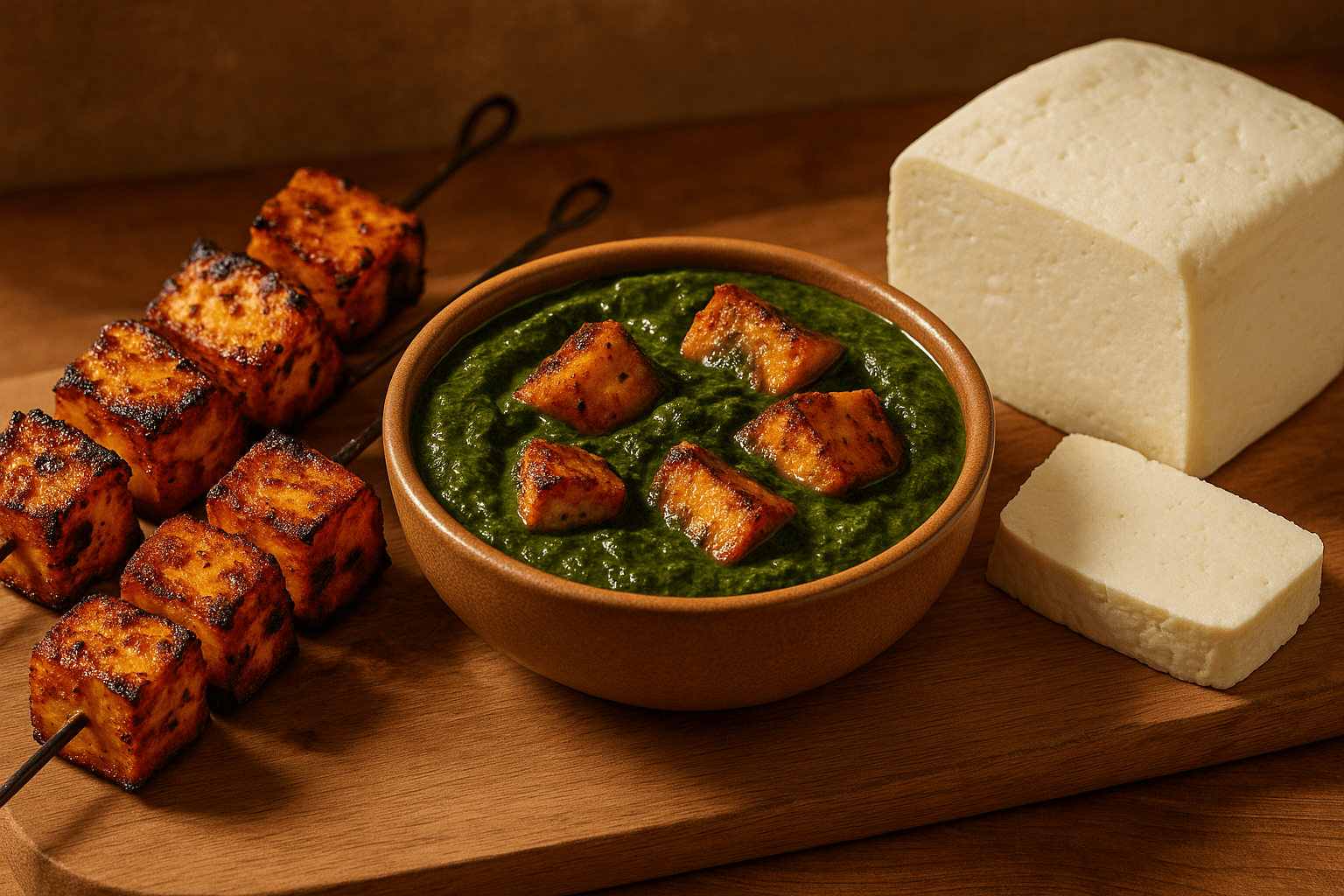
Paneer is one of those ingredients that seems simple until it behaves in three completely different ways in your kitchen. Sometimes it stays neatly cubed in a bubbling curry while mozzarella or cheddar would have dissolved into strings and grease. Sometimes it takes on gorgeous golden edges in a hot pan. And sometimes, especially when homemade, it turns squeaky, rubbery, crumbly, or oddly tough the moment you bite into it. If you have ever wondered why one batch of paneer sits softly in saag while another feels like pencil eraser, the answer lies in milk proteins, calcium, acid, moisture, and heat.
Paneer is not just “Indian cottage cheese.” It is a fresh, acid-set cheese with a very specific structure. That structure explains why it does not melt like rennet-set cheeses, why it can brown only within limits, why marinades cling the way they do, and why overcooking can transform a delicate cube into something that squeaks against your teeth. Once you understand the rules, paneer gets much easier to control. You can make homemade blocks that slice cleanly without crumbling, pan-fry cubes that stay tender, and fold paneer into saag or curry without watching it tighten up or disappear into the sauce.
This is a guide for the cook who wants both the “why” and the “what to do.” We will start with what paneer is, how it developed, and why it occupies such a useful place in South Asian cooking. Then we will get into the science of acid coagulation, calcium retention, browning, marinades, pressing, and pan heat. Finally, we will turn that science into practical rules for three common goals: soft cubes for saag paneer, crisp-edged paneer tikka, and homemade paneer that is sliceable, tender, and not squeaky.
Paneer in context: why this cheese behaves differently
Paneer belongs to a family of fresh, non-melting cheeses made by curdling hot milk with acid rather than coagulating it with rennet. Across South Asia, it became especially useful because it could be made without animal rennet and eaten fresh. Its mild flavor made it an ideal protein for richly spiced dishes. It takes on the taste of its surroundings while still contributing a creamy dairy note.
The most important practical point is that paneer is designed to hold shape. In dishes like saag paneer, matar paneer, paneer butter masala, kadai paneer, and grilled paneer tikka, you want defined cubes or slabs, not a cheese sauce. That shape-holding ability is not an accident. It comes from the way the milk proteins clump together under acid and heat.
To understand paneer, it helps to compare it to cheeses that melt. Classic melting cheeses such as mozzarella, cheddar, Gruyère, or Monterey Jack are usually made with rennet, which cuts casein proteins in a different way. During cheesemaking and aging, these cheeses develop a protein network that softens and flows when heated. Paneer, by contrast, is acid-set and usually consumed fresh. Its protein network contracts and firms with heat more readily than it flows. That is the central reason it cubes well in curry and why overheating can make it springy.
The core science: milk proteins, acid, and coagulation without rennet
Milk contains water, fat, lactose, minerals, and proteins. The proteins most important here are caseins. In milk, casein proteins exist in microscopic clusters called casein micelles. These micelles carry electrical charges and are stabilized in part by a hairy outer layer of kappa-casein, along with minerals including calcium phosphate.
When you make paneer, you heat milk and add acid, often lemon juice, vinegar, or citric acid. As the pH drops, the casein micelles lose charge-based stability. Around pH 4.6, casein reaches its isoelectric point, meaning the proteins no longer strongly repel one another. They aggregate into curds. Heat helps by speeding collisions between proteins and encouraging whey separation.
That sounds technical, but the kitchen takeaway is simple: paneer forms because acid and heat cause milk proteins to cluster into a network that traps some moisture and fat while expelling whey.
This is different from rennet coagulation. Rennet works mainly by clipping kappa-casein, allowing the micelles to join into a gel while the pH remains much higher. The resulting curd is structurally different. It tends to be more elastic and more likely to melt smoothly under heat, depending on moisture, salt, and aging. Acid-set curd, by contrast, is generally more brittle and less meltable.
That brittleness is why homemade paneer can crumble if handled roughly or if the curd is over-acidified. It is also why paneer can squeak or go rubbery if the protein network gets too tight.
Why paneer does not melt like mozzarella
People often say paneer “doesn’t melt,” but the better phrasing is that paneer does not melt into a flowing, stretchy sauce under normal cooking conditions. It can soften. It can release some moisture. It can break apart if poorly made. But it does not usually become molten.
There are several reasons:
- Acid-set protein structure: The proteins in paneer are aggregated near casein’s isoelectric point. That network is already tightly clustered and not especially good at flowing when heated.
- Fresh cheese with little proteolysis: Aged cheeses melt better partly because their proteins have been broken down over time. Paneer is fresh, so its protein matrix remains relatively intact.
- Low moisture mobility: Moisture is present, but the curd structure tends to tighten with heat instead of loosening into a creamy emulsion.
- Calcium and protein bonding: Retained calcium can support firmness. The exact amount depends on the process, but enough mineral interaction remains to favor a set structure over a melty one.
This is why paneer works in curries. You can simmer it briefly and it stays distinct. But there is a flip side: if you boil it hard for too long, the same heat resistance that preserves its shape can make it tough.
Calcium’s role in firmness
Calcium is one of the quiet forces behind texture. In milk, casein micelles naturally associate with calcium phosphate. During acidification, some calcium dissolves out into the whey. How much remains in the curd depends on pH, temperature, speed of acidification, and handling.
In practical cooking terms, paneer with more retained calcium tends to feel firmer and more resilient. Too much firmness, especially combined with low moisture and high compression, contributes to that characteristic squeak. Paneer with lower calcium retention or a gentler set can feel more tender, though if pushed too far it may become fragile.
You do not need a lab to use this information. Just know that calcium retention is tied to process. A very hot, strongly acidified, aggressively stirred batch can produce a drier, firmer curd. A gentler approach can preserve a softer eating texture.
Why homemade paneer becomes rubbery, squeaky, or crumbly
Most paneer texture problems come from one or more of five causes: too much acid, too much heat, too much pressing, not enough fat, or rough handling.
1. Too much acid
If you add more acid than necessary, you drive the pH lower than needed for clean coagulation. The proteins contract more tightly, the curd becomes drier, and the finished paneer can taste sharp and feel rubbery or squeaky. Excess acid can also make the curds grainy and prone to breaking.
A good target is to add just enough acid to separate curds and clear yellowish whey. If the whey still looks milky, you may need a little more acid. If the curds are tiny, harsh, and the flavor smells aggressively sour, you likely went too far.
2. Too much heat
Paneer making starts with hot milk, but sustained boiling after the acid goes in is often counterproductive. Once the curd forms, prolonged high heat causes the proteins to contract further and squeeze out moisture. The result is tougher curd.
When making paneer, heat milk to about 85 to 90°C / 185 to 194°F, then lower the heat or remove the pot before adding acid. After coagulation, keep things gentle.
3. Too much pressing
Pressing shapes paneer into a sliceable block, but it also removes moisture. A lightly pressed paneer is soft and delicate. A heavily pressed paneer is firm and can become dense.
For a home batch made from 2 liters / about 2 quarts milk, pressing under 2 to 4 pounds / 1 to 2 kg for 20 to 30 minutes yields a tender block suitable for curries. Pressing for 45 to 60 minutes under heavier weight creates a firmer block better for skewering or grilling, but if the curd was already dry, this can tip it into squeakiness.
4. Not enough fat
Whole milk makes a more tender paneer than low-fat milk. Fat interrupts the protein matrix and contributes creaminess. With reduced-fat milk, the protein network dominates and the result can be chalky or rubbery.
For best texture, use whole milk at 3.25% fat or higher. Non-homogenized milk often gives especially good results, though homogenized whole milk still works well.
5. Rough handling
After coagulation, curds are fragile. Vigorous stirring shatters them into small particles. Those particles can compact poorly, yielding crumbly paneer. Stir gently, just enough to distribute the acid and encourage separation.
The acid question: lemon juice, vinegar, yogurt, or citric acid?
Different acids produce slightly different textures and flavors.
Lemon juice
Lemon juice is convenient and common. It adds a pleasant fresh acidity, but because its strength varies, results can be inconsistent. It can also leave a faint citrus note, which is usually fine in paneer.
Use roughly 2 to 4 tablespoons lemon juice per 2 liters whole milk, diluted with an equal amount of water, adding gradually.
White vinegar
White vinegar is consistent and effective. It often gives a cleaner break than lemon juice, but if overused it can smell harsh.
Use about 2 to 3 tablespoons white vinegar per 2 liters milk, diluted with equal water, adding gradually.
Citric acid
Citric acid is highly consistent and popular in professional settings because it is easy to control. It gives reliable coagulation with little extra flavor.
Use about 1 to 1 1/2 teaspoons citric acid dissolved in 1/4 cup water per 2 liters milk, adding as needed rather than all at once.
Yogurt or cultured acid
Some cooks use yogurt or buttermilk for a softer, more rounded flavor. These acids work, but they also introduce milk solids and can make coagulation less immediate. They are better for experimentation than for learning your baseline.
The big rule is not which acid is “best,” but that you add it slowly and stop when the whey runs mostly clear.
Browning limits: why paneer can golden, but only so much
Paneer can absolutely brown, but it does not brown like bread, onions, or a sugary marinade. Browning comes mainly from the Maillard reaction, where proteins and reducing sugars react under heat to produce golden color and roasted flavors. Paneer contains protein, but fresh paneer has relatively low available sugar at the surface, especially after whey drains away.
That means plain paneer will brown, but modestly. You get the best results when:
- The surface is dry.
- The pan is hot enough.
- There is a thin film of fat.
- The paneer is not crowded.
- You give it time without moving it constantly.
Expect pale gold to medium golden edges more than deep steak-like searing. If you marinate paneer in yogurt and spices, browning changes. Yogurt solids, milk sugars, and surface seasonings can color more quickly than the paneer itself. This is one reason paneer tikka often develops attractive charred spots even though the cheese itself is not inherently a high-browning food.
Best pan temperatures for browning
For skillet browning, preheat a heavy pan over medium-high heat for 2 to 3 minutes. If using oil, choose about 1 to 2 teaspoons neutral oil or ghee per 8 ounces / 225 g paneer. The pan surface is usually in a good zone around 190 to 220°C / 375 to 425°F. Below that, paneer steams and sticks. Far above that, marinades burn before the center warms.
Sear cubes for 60 to 90 seconds per side until lightly golden. Total time is often 4 to 6 minutes.
Why paneer sometimes “melts into” the sauce anyway
If paneer does not melt, why does it sometimes seem to disappear into curry? Usually one of three things is happening.
1. It is crumbling, not melting
A weakly pressed or overly acidic homemade paneer can fracture into small granules when stirred. In a thick tomato-onion gravy, those granules can look like melted cheese even though they are actually broken curd.
2. It is overcooked and shedding
Extended simmering in a watery or acidic sauce can cause the outside to tighten and the edges to roughen. With enough stirring, pieces can break off.
3. The sauce chemistry is destabilizing the curd
Very acidic sauces, especially if paneer is simmered in them for a long time, can roughen the surface and weaken the structure. This is not true melting, but it can make the cubes less tidy.
The fix is simple: add paneer late, simmer gently, and avoid prolonged boiling in acidic gravy.
The science of marinades: why yogurt works and when it backfires
Paneer tikka is a perfect example of dairy meeting heat science. A typical marinade includes yogurt, salt, ginger, garlic, chile, spices, and sometimes mustard oil, lemon juice, gram flour, or kasuri methi.
Yogurt works because it provides:
- Adhesion: Thick yogurt clings to paneer.
- Mild acidity: Enough to brighten flavor, but ideally not enough to dissolve the surface.
- Milk solids: These promote color during high-heat cooking.
- Moisture buffering: A coating helps prevent the surface from drying too fast.
But marinade can backfire if it is too wet or too acidic. Paneer does not need tenderizing the way meat does. In fact, prolonged exposure to acid can make the outer layer chalky or weepy.
Best marinade rules for paneer tikka
- Use thick strained yogurt, not runny yogurt.
- Add 1 teaspoon salt per 250 g / 9 oz paneer in the marinade.
- Keep lemon juice modest, around 1 to 2 teaspoons per 250 g paneer.
- Marinate 30 minutes to 2 hours in the refrigerator. Longer is usually unnecessary.
- Pat off excess marinade before cooking if it is heavily coated.
A little gram flour, about 1 to 2 teaspoons per 250 g paneer, helps the coating adhere and toast attractively.
How to make homemade paneer that slices cleanly and stays tender
Here is a home-kitchen method designed for balanced texture rather than maximum yield.
Ingredients
- 2 liters whole milk
- 2 to 3 tablespoons white vinegar or 2 to 4 tablespoons lemon juice, diluted with equal water
- Optional: 1/4 teaspoon fine salt added to curds after draining for gentle seasoning
Equipment
- Heavy pot
- Thermometer, helpful but not mandatory
- Colander
- Cheesecloth or thin clean kitchen towel
- Flat plate or tray
- Weight of 2 to 4 pounds / 1 to 2 kg
Method
-
Heat the milk Bring the milk slowly to 85 to 90°C / 185 to 194°F over medium heat, stirring occasionally to prevent scorching. Do not let it boil hard for several minutes.
-
Add the acid gradually Turn the heat to low or remove the pot from heat. Add half the diluted acid while stirring gently in one direction. Wait 20 to 30 seconds. If the milk has not fully separated, add more acid a teaspoon at a time.
-
Watch for the right break The curds should gather and the whey should look pale yellow-green rather than milky white. Stop adding acid as soon as you reach that point.
-
Rest briefly Let the curds sit undisturbed for 5 minutes. This helps them knit and makes draining easier.
-
Drain gently Pour into the lined colander. If you want a very clean dairy flavor, rinse briefly with warm water to wash away excess acid. This is optional; too much rinsing can cool the curd too fast and make shaping harder.
-
Gather and shape Bring the cloth corners together and gently squeeze just enough to remove dripping whey. Do not wring aggressively.
-
Press Place the wrapped curd on a plate, flatten into a rough square, and top with a second plate and weight.
- For soft curry paneer: press 20 to 25 minutes
- For firmer tikka paneer: press 35 to 45 minutes
-
Cool and chill Unwrap and cool completely. Chill at least 1 hour before cutting for the cleanest cubes.
Expected yield
From 2 liters whole milk, expect roughly 275 to 350 g paneer, depending on milk composition and how firmly you press.
Step-by-step rules for soft paneer in saag paneer
Saag paneer should have tender cubes that feel creamy against the spinach, not stiff blocks bobbing in purée.
Best approach
-
Use lightly pressed paneer Softer paneer is ideal here.
-
Cut medium cubes About 1.5 to 2 cm / 3/4 inch cubes work well. Tiny cubes overcook quickly.
-
Optional pre-soak for store-bought paneer If the paneer is refrigerated and firm, soak cubes in hot, not boiling, salted water for 10 to 15 minutes. Use about 1 teaspoon salt per 2 cups water. This rehydrates the surface and improves tenderness.
-
Skip aggressive frying For saag, you usually do not need a hard sear. If you like slight color, pan-fry lightly for only 30 to 45 seconds per side.
-
Add late Stir paneer into finished saag during the last 2 to 4 minutes of cooking.
-
Do not boil after adding Keep the saag at a gentle simmer, around 85 to 95°C / 185 to 203°F, not a rolling boil.
Common mistake
Adding paneer early and simmering for 15 to 20 minutes is the fastest route to rubbery cubes. Paneer does not benefit from long braising the way tough meat does.
Step-by-step rules for crisp edges in paneer tikka
Paneer tikka asks for a different texture: intact cubes, bronzed corners, lightly smoky spots, and a soft center.
Best approach
-
Use firmer paneer Press for 35 to 45 minutes if homemade.
-
Cut larger cubes Aim for 2.5 to 3 cm / 1 to 1 1/4 inch cubes. Bigger pieces stay creamy inside.
-
Marinate smartly For 250 g paneer, combine:
- 1/2 cup thick yogurt
- 1 teaspoon salt
- 1 teaspoon ginger-garlic paste
- 1 teaspoon Kashmiri chile powder
- 1/2 teaspoon ground cumin
- 1/2 teaspoon garam masala
- 1 to 2 teaspoons lemon juice
- 1 teaspoon mustard oil or neutral oil
- 1 to 2 teaspoons gram flour
Marinate 30 to 90 minutes.
-
Dry the exterior slightly before cooking Let excess marinade drip off. Too much wet coating inhibits browning.
-
Use high heat In an oven, cook under the broiler or at 240°C / 465°F on a preheated tray for 8 to 12 minutes, turning once if needed. In a skillet or grill pan, cook over medium-high to high heat for 2 to 3 minutes per side.
-
Finish with smoke or fat if desired A brush of melted butter or ghee in the final minute improves flavor and color.
Common mistake
Trying to cook paneer tikka low and slow. That dries the paneer before it colors.
Step-by-step rules for paneer in tomato or onion-based curries
For dishes like paneer butter masala, matar paneer, shahi paneer, or kadai paneer, the goal is usually defined cubes that absorb some sauce without hardening.
- Make the sauce first Reduce and season the curry base fully before adding paneer.
- Lower the heat Bring the sauce to a gentle simmer.
- Add paneer near the end Simmer for 3 to 5 minutes only.
- Rest off heat Turn off the heat and let the dish stand 5 minutes. Paneer equalizes in temperature without overcooking.
If your curry is quite acidic from tomato, cream, butter, or a little cashew paste can buffer the sharpness and soften the overall texture impression.
Salt, moisture, and the squeak factor
That squeak people notice in paneer is partly mechanical. A relatively tight protein network resists compression under your teeth, then rebounds. Moisture, fat, and heat all affect how noticeable this is.
- More moisture = less squeak, softer bite
- More fat = richer, less rubbery feel
- More pressing = more squeak
- Longer cooking = more squeak
- Higher calcium retention and tighter protein structure = firmer, springier bite
Salt matters too, though less dramatically than in aged cheeses. Light salting can improve flavor and subtly influence moisture perception. Unsalted paneer often seems firmer because there is no seasoning to distract from texture. But if you salt curds heavily before pressing, you may alter drainage and produce a denser block. For most home paneer, light seasoning or salting in the final dish works best.
Store-bought versus homemade paneer
Store-bought paneer is often firmer because it is pressed for transport and shelf life. That is not a flaw; it is a design choice. It works beautifully for tikka, grilling, and dishes where you want neat cubes. But it may need softening.
How to improve store-bought paneer
- Cut into cubes.
- Soak in hot water for 10 minutes, or hot lightly salted water for more flavor.
- Drain gently before using.
This simple step often makes the difference between chalky paneer and tender paneer in curry.
Homemade paneer usually tastes fresher and can be much softer, but it is more variable. If your homemade paneer keeps crumbling, press a little longer next time. If it keeps squeaking, use a bit less acid, stop heating sooner after coagulation, and press less firmly.
Common mistakes and how to fix them
Problem: Paneer is rubbery
Likely causes: too much acid, overcooking after coagulation, heavy pressing, prolonged simmering in the dish.
Fix: use whole milk, add acid gradually, press less, and add paneer at the end of cooking.
Problem: Paneer is crumbly
Likely causes: weak curd formation, rough stirring, too little pressing, very low-fat milk.
Fix: heat milk adequately before acidifying, stop stirring once curds form, use whole milk, and press a bit longer.
Problem: Paneer squeaks
Likely causes: dense protein network from excess pressing and heat, low moisture, firm commercial paneer.
Fix: reduce pressing time, avoid prolonged frying, soak store-bought paneer in hot water, and simmer gently.
Problem: Paneer sticks and will not brown
Likely causes: wet surface, pan not hot enough, overcrowding.
Fix: pat dry, preheat pan properly, use a little oil, and leave cubes undisturbed until they release.
Problem: Paneer falls apart in curry
Likely causes: under-pressed homemade paneer or too much stirring.
Fix: chill before cutting, use larger cubes, stir minimally, and add late.
A practical texture map for home cooks
If you want paneer to behave predictably, think of it as a balance among five knobs you can turn:
- Milk fat: higher fat = softer, richer paneer
- Acid amount: more acid = firmer, drier curd if overdone
- Heat after coagulation: more heat = tighter proteins
- Pressing time/weight: more pressing = denser paneer
- Cooking time in dish: longer cooking = tougher paneer
For saag paneer, turn the knobs toward softness: whole milk, moderate acid, gentle handling, short pressing, little to no pre-frying, late addition.
For paneer tikka, move toward firmness but not toughness: whole milk, controlled acid, moderate pressing, thick marinade, intense heat, brief cooking.
For curry cubes, stay in the middle: enough pressing to hold shape, enough moisture to stay tender, brief simmering in sauce.
The most useful heat rules to remember
If you remember nothing else, remember these:
- When making paneer: heat milk to 185 to 194°F / 85 to 90°C, then add acid off heat or over very low heat.
- When browning paneer: use a hot surface, roughly 375 to 425°F / 190 to 220°C, and a dry exterior.
- When finishing paneer in sauce: keep it to a gentle simmer for 2 to 5 minutes, not a boil.
- When reviving firm paneer: soak in hot water for 10 to 15 minutes.
These four heat rules solve most paneer problems.
Takeaways
Paneer stays firm where other cheeses melt because it is an acid-coagulated fresh cheese with a tight casein network that does not flow easily under heat. Calcium retention contributes to firmness, while milk fat and moisture soften the bite. Homemade paneer turns rubbery or squeaky when acid, heat, or pressing go too far; it turns crumbly when curds are weak, rough-handled, or under-pressed. Browning is possible but limited because plain paneer has relatively little surface sugar, so high heat, dryness, and a little fat matter. Yogurt marinades help paneer tikka color and cling, but too much acidity or excess moisture gets in the way.
For the home cook, the practical rules are wonderfully clear. Use whole milk. Add acid gradually and stop as soon as the whey clears. Press according to the texture you want, not as a reflex. Brown paneer hot and fast. Simmer it in sauce briefly and gently. And if store-bought paneer seems stubborn, give it a hot-water soak before it ever touches your curry.
Do that, and paneer becomes much less mysterious. Your saag will have soft, plush cubes instead of rubbery ones. Your tikka will char at the edges without drying inside. Your homemade blocks will slice cleanly, hold in curry, and lose that squeaky bounce that makes people think paneer is difficult. It is not difficult. It is just honest about the rules of milk protein chemistry, and once you learn those rules, it becomes one of the most cooperative ingredients in the kitchen.