Why Potatoes Turn Fluffy, Gluey, or Glassy: Starch Granules, Pectin, and the Salt‑Acid Rules for Better Fries, Mash, and Roasts
RecipeSimpli
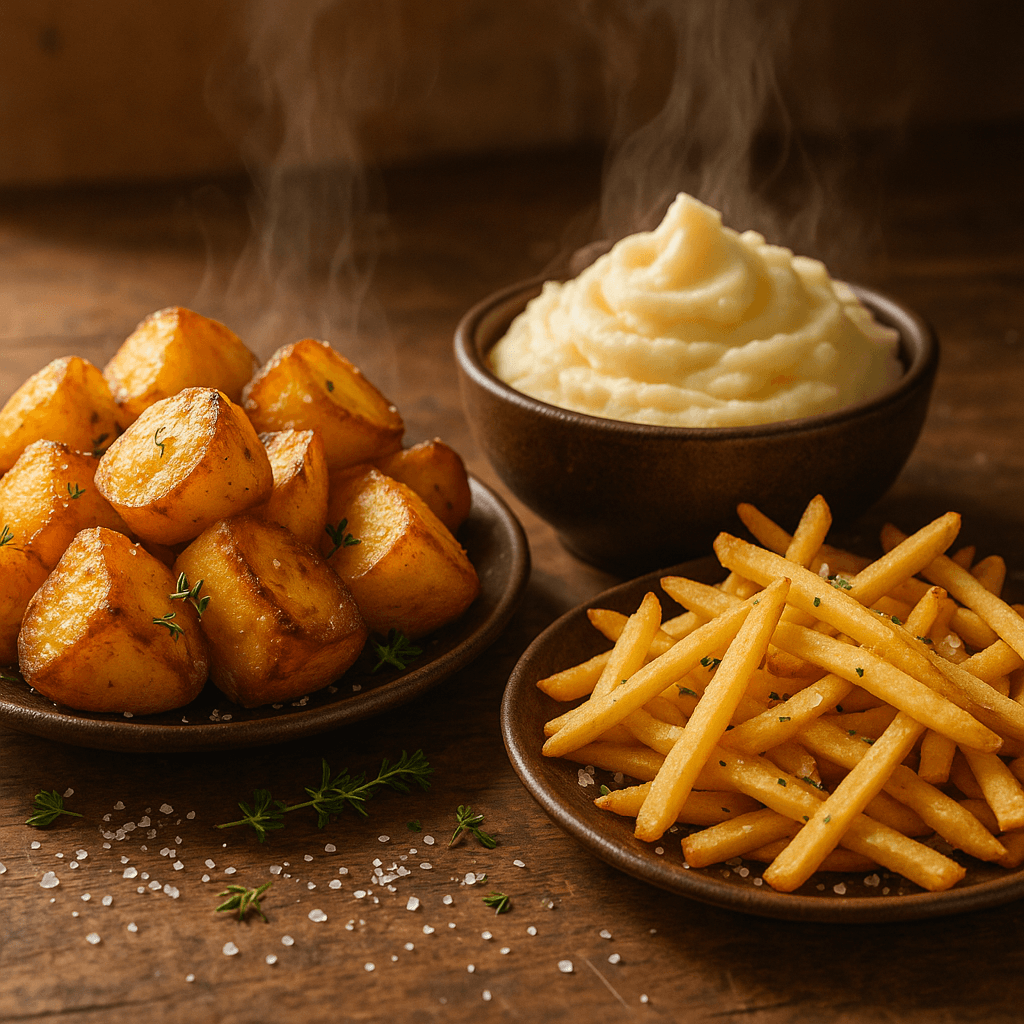
There are few ingredients more humble than a potato, and few more revealing. Treat one gently and it can become cloud-soft mash. Treat another the wrong way and it turns into paste. Roast a tray at the right pH and heat and you get jagged, glass-crisp edges. Miss the setup and you get blond, leathery chunks with hard centers. Fries can shatter, slump, or go oddly translucent depending on decisions you make long before they ever hit the oil.
That drama comes down to structure. A potato is not a blank starch bomb. It is a tidy package of water, starch granules, cell walls, and pectin that all respond differently to salt, acid, heat, agitation, and time. Variety matters. So does whether you rinse or soak, whether you parboil in plain water or acidulated water, whether you rough the surface or keep it pristine, and whether you whip or simply press.
Once you understand what is happening inside the tuber, recipes start making sense. Russets are not “better” than Yukon Golds in every situation; they are better at becoming fluffy because of how their cells separate and how their starch behaves. Waxy potatoes are not stubborn; they are built to hold together. Acid does not “season” potatoes in the usual sense as much as it reinforces their structure by slowing the breakdown of pectin. Alkalinity does the opposite, helping outer layers collapse into the craggy halo that makes roast potatoes so crunchy. Salt is not just flavor either. In water, it can subtly affect texture and seasoning, while on the surface it helps pull and manage moisture.
If you have ever wondered why one batch of mash is light and another gluey, why some fries crisp beautifully while others brown before drying, or why restaurant roast potatoes seem to have a crust like brittle glass, the answer is not luck. It is food science meeting technique.
The potato’s architecture: cells, starch, and pectin
Start with the potato as a piece of plant tissue. Its flesh is made of many tiny cells. Inside those cells sit starch granules, mostly two starch types: amylose and amylopectin. Around the cells are cell walls, and between them is pectin, a structural polysaccharide that helps glue neighboring cells together.
As potatoes cook, three big things happen:
- Pectin softens, loosening the bonds between cells.
- Starch granules absorb water and gelatinize, swelling and becoming tender.
- Water migrates in and out of the potato, then evaporates from the surface if the cooking environment is hot and dry enough.
The balance between those three processes determines whether a cooked potato is fluffy, creamy, waxy, crisp, gluey, or glassy.
Starch gelatinization
Potato starch granules begin to gelatinize roughly in the 58–66°C / 136–151°F range, though exact temperatures vary by variety and conditions. As they heat in the presence of water, granules absorb moisture, swell, and thicken the interior. If enough granules gelatinize while the cells remain mostly intact, you get a tender but coherent potato. If cells separate readily, the interior becomes fluffy. If released starch is aggressively worked, it becomes sticky and paste-like.
Pectin breakdown
Pectin acts like the mortar between potato cells. As potatoes heat, pectin slowly weakens, especially in less acidic conditions. When pectin breaks down enough, cells separate more easily. That is one reason high-starch potatoes can seem dry and fluffy when cooked: the cells split apart into tiny particles rather than staying tightly bound.
Water migration
Crispness is a water problem before it is a browning problem. For fries and roast potatoes, the interior has to cook through while the exterior loses enough moisture to become rigid and brittle. If the surface stays wet, it steams and softens. If it dries too slowly, oil or oven heat browns it before enough water escapes. That is how you get dark fries with limp centers or roasted potatoes with color but no crunch.
Why russets, Yukon Golds, and waxy potatoes behave differently
Potatoes are often grouped as starchy, all-purpose, and waxy. This is not just marketing shorthand. It reflects differences in dry matter, moisture, starch content, and cell adhesion.
Russets: fluffy specialists
Russets and similar high-starch baking potatoes are high in dry matter and relatively low in moisture. Their cells tend to separate more readily after cooking, so their interiors break into fluffy particles instead of dense slices. That makes them ideal for:
- Baked potatoes
- Fluffy mash
- Classic fries
- Craggy roast potatoes
Their weakness is also their strength: because they fall apart more easily, they are poor candidates when you need neat slices or potato salad that stays intact.
Yukon Golds: creamy middle ground
Yukon Golds sit in the all-purpose zone. They have moderate starch and a naturally buttery flavor. Their interiors become creamy rather than dry-fluffy, and they can work for:
- Creamier mashed potatoes
- Roasting
- Gratins
- Home fries
They are a favorite because they are forgiving. Mash them and they become lush. Roast them and they crisp decently while keeping a custardy center. They will not usually make the most dramatically fluffy mash or the most brittle fries, but they are excellent all-around potatoes.
Waxy potatoes: shape holders
Red potatoes, fingerlings, and many salad potatoes are waxy. They are lower in starch, higher in moisture, and have stronger cell-to-cell adhesion. Their structure stays intact during cooking, which makes them ideal for:
- Potato salad
- Soups and stews
- Boiling and steaming
- Fondant or turned potatoes
For mash, they can become dense or gluey because the cells do not separate as readily, and working them releases starch without giving that light, fluffy breakup you want.
Fluffy, gluey, and glassy: what those textures really mean
The words cooks use are sensory shortcuts for very specific physical states.
Fluffy
A fluffy potato has cells that separate cleanly after cooking. The starch inside is gelatinized, but not smeared into a continuous paste. The result is a dry-looking, soft interior that breaks into tiny fragments. This is why a baked russet can almost “snow” when fluffed with a fork.
To encourage fluffiness:
- Choose a high-starch potato.
- Cook until fully tender but not waterlogged.
- Let excess moisture escape after draining.
- Mash or rice while hot with minimal agitation.
Gluey
Gluey potatoes happen when too much starch is released from damaged cells and then mechanically worked. Think of overmixed mashed potatoes beaten in a food processor: starch granules rupture and smear, creating a sticky, elastic mass. This is similar in spirit to overworking dough, except here you are building starch paste rather than gluten.
Common causes:
- Using a blender, food processor, or immersion blender for mash
- Overbeating potatoes after they are cooked
- Starting with waxy potatoes and then working them hard
- Adding cold liquid that encourages more mixing to reincorporate
Glassy or translucent
A glassy potato usually refers to a dense, slightly translucent texture often noticed in under-ideal fries or roasted potatoes. It can happen when the potato’s internal water and starch have not cooked into a fluffy network, or when sugar and moisture behavior produce a dense, almost candied-looking layer. In fries, a glassy interior may also show up when the potato variety has low dry matter, or when the fry is cooked in a way that dehydrates and firms the surface before the center structure expands properly.
If fries seem translucent and rigid rather than fluffy inside, suspect:
- The wrong variety, often too waxy or too low in dry matter
- Oil temperature too low for too long, causing excessive oiling and slow dehydration
- Sugar-heavy stored potatoes browning before ideal internal drying
- Skipping the low-temperature first cook that gently gelatinizes the core
The salt-acid rules: when potatoes should hold shape and when they should fall apart
One of the most useful things to understand is that acidity and alkalinity change how quickly potato structure breaks down.
Acid helps potatoes keep their shape
Adding acid to cooking water slows pectin breakdown. A small amount of vinegar or lemon juice makes potato pieces more resistant to disintegration. This is helpful when you want clean edges and slices that stay intact.
Use acid when making:
- Potato salad
- Gratins with pre-cooked slices
- Waxy-style boiled potatoes
- Fries that need structural integrity during blanching
A practical ratio: add 1 tablespoon white vinegar per quart / liter of water for a mild acidulated bath. Some fry methods use up to 2 tablespoons per liter for the blanching stage to help the batons survive handling.
Acidulated water is especially useful if your potatoes tend to split before they are fully cooked.
Alkalinity roughs surfaces and speeds breakdown
A pinch of baking soda in parboiling water does the opposite. It raises pH, weakens pectin more quickly, and helps the outer potato layer break down into a starchy slurry. When you shake the drained potatoes, that slurry turns into the rough coating that roasts into extraordinary crust.
This is the secret behind aggressively crisp roast potatoes.
Use alkalinity when making:
- Roast potatoes with craggy edges
- Some smashed potatoes
A practical amount: 1/2 teaspoon baking soda for 2 quarts / 2 liters of water is enough to noticeably affect the exterior without making the potatoes taste soapy. You do not need much.
Salt’s role
Salt in potato cookery works on multiple levels:
- It seasons the interior during boiling or parboiling.
- It can influence water movement modestly through concentration differences.
- On the surface after frying or roasting, it enhances flavor and can help manage surface moisture if applied at the right moment.
For boiling water, aim for roughly 1 to 1 1/2 tablespoons kosher salt per 2 quarts / 2 liters water. The water should taste seasoned, though not as salty as pasta water. For mash, salting the cooking water is far more effective than trying to fix blandness at the end.
Rinsing and soaking: when to remove surface starch and when to keep it
The phrase “remove starch” is often too broad. You almost never remove much of the potato’s total internal starch with a quick rinse. What you remove is mostly surface starch released by peeling and cutting.
That distinction matters.
Rinse or soak when you want cleaner, less gummy surfaces
Rinsing cut potatoes under cold water or soaking them for 15 minutes to several hours removes loose starch from the surface. This helps in situations where excess surface starch would glue pieces together or brown unevenly.
Good uses:
- French fries, to reduce stickiness and improve surface drying
- Hash browns, paired with thorough drying for better crispness
- Scalloped potatoes, to avoid a muddy surface if sliced ahead
For fries, a 30-minute soak in cold water, followed by very thorough drying, can improve the final texture. For even better results, refrigerate the soak for 2 to 8 hours.
But soaking is not magic. If you soak and then fail to dry, you have only traded starch for extra surface water, which hurts browning and crispness.
Keep the surface starch when you want cling or roughness
Sometimes surface starch is an advantage.
Good uses:
- Roast potatoes, especially after parboiling, where released starch helps form a crust
- Latkes or rösti, where starch helps bind shreds together
- Mashed potatoes, where you are not chasing a dry exterior anyway
For roast potatoes, do not obsessively rinse after parboiling. The sticky film is your future crust.
Parboiling: the bridge between raw potato and crisp exterior
Parboiling is one of the most useful potato techniques because it lets you separate two goals:
- Cook the interior until starch gelatinizes and the flesh softens.
- Finish with high heat to dehydrate and crisp the exterior.
Without parboiling, large roast potatoes often brown outside before the inside becomes fluffy. Thick fries can have the same problem.
What parboiling does
- Starts starch gelatinization
- Softens the interior
- Lets the exterior develop a layer that can later roughen, dry, and crisp
- Reduces total time in oven or oil, improving contrast between crust and center
Parboiling times
These vary by size and variety, but here are useful ranges after starting in cold water:
- Roast potato chunks, 2-inch / 5-cm pieces: simmer 10 to 14 minutes
- Fries, 1/4- to 1/2-inch / 6- to 12-mm batons: simmer 4 to 7 minutes or until just tender at the edges
- Potatoes for mash, 1 1/2-inch / 4-cm chunks: simmer 15 to 20 minutes until fully tender
Starting from cold water helps the pieces heat more evenly, reducing blown-out exteriors and undercooked centers.
The science of mashed potatoes: creamy versus pastey
Great mashed potatoes depend on three things: variety, moisture control, and gentle handling.
Best potatoes for mash
- Russets for the fluffiest, lightest mash
- Yukon Golds for a denser, creamier mash
- A blend of russets and Yukon Golds for a balance many cooks love
The moisture problem
After boiling, potatoes carry surface water and internal steam. If you mash immediately while they are dripping wet, you dilute flavor and increase the chance of gummy texture. Drain thoroughly, then return the potatoes to the hot pot over low heat for 30 to 60 seconds, shaking gently, just until excess moisture evaporates.
This step is small but powerful.
The agitation problem
When hot cooked potatoes are broken down, starch can either remain mostly contained in separated cells or be smeared into paste. The more aggressive the mechanical action, the more paste you create.
Best tools:
- Potato ricer
- Food mill
- Hand masher for a rustic texture
Worst tools:
- Food processor
- Blender
- Stand mixer on high speed
Fat and dairy timing
For especially silky mashed potatoes, add warm butter first, then warm milk or cream. Coating the potato particles with fat before adding more liquid can limit some starch stickiness and improves richness.
A reliable ratio for 2 pounds / 900 g potatoes:
- 4 to 8 tablespoons / 55 to 115 g unsalted butter
- 1/2 to 3/4 cup / 120 to 180 ml warm milk, cream, or half-and-half
- 1 1/2 to 2 teaspoons kosher salt, adjusted to taste
Mash just until combined.
Common mashed potato mistakes
- Overmixing: the number one cause of gluey mash
- Using waxy potatoes: they resist fluffing and become dense
- Adding cold cream or butter: cools the potatoes and encourages overworking
- Undersalting the cooking water: leads to bland interiors
- Skipping the drying step: causes watery mash
The science of fries: why crisp fries need both gelatinization and dehydration
A great fry has a moist, fluffy interior and a crisp shell. To get both, you need staged cooking.
Why double-frying works
The first fry, typically at 300–325°F / 150–165°C, cooks the interior and begins crust formation without deeply browning the outside. The second fry, usually at 375°F / 190°C, rapidly drives off surface moisture and creates the final crisp shell.
This two-stage method works because it separates internal cooking from exterior dehydration.
A practical fry method
For 2 pounds / 900 g russet potatoes:
- Cut into 1/4- to 1/2-inch batons.
- Rinse until water runs less cloudy, then soak 30 minutes to 2 hours in cold water.
- Drain and dry extremely well.
- Optional but useful: simmer 5 minutes in water with 1 tablespoon vinegar per quart / liter and 1 tablespoon salt per quart / liter, then drain and air-dry.
- First fry at 325°F / 165°C for 3 to 5 minutes, until pale and tender.
- Cool at least 15 minutes, or refrigerate uncovered for 30 to 60 minutes for even better crust.
- Second fry at 375°F / 190°C for 2 to 4 minutes, until deep golden and crisp.
- Salt immediately after frying.
Why fries fail
- Oil too cool: fries absorb more oil and dehydrate too slowly
- Crowding the pot: drops oil temperature sharply
- Insufficient drying after soaking: water delays crisping and can cause splattering
- Using waxy potatoes: less fluffy interior
- Skipping the rest between fries: less structural contrast
Stored potatoes can also accumulate sugars, especially if kept too cold. Those sugars make fries brown too quickly. Avoid refrigerating raw potatoes; store them around 45–55°F / 7–13°C in a dark, ventilated place if possible.
Roast potatoes: why the best ones are rough, alkaline, and very hot
The ideal roast potato combines a deeply fluffy center with a hard, brittle shell. You get there by engineering the surface.
The roast potato formula
- Use a starchy potato like russet or a floury roasting potato.
- Cut into large pieces, about 2 inches / 5 cm.
- Parboil in heavily salted water with 1/2 teaspoon baking soda per 2 quarts / 2 liters.
- Simmer 10 to 14 minutes, until edges are soft and the surface is beginning to fuzz.
- Drain well and let steam off for 1 to 2 minutes.
- Shake the pot to roughen the exterior.
- Toss with 3 to 5 tablespoons fat per 2 pounds / 900 g potatoes—duck fat, beef fat, olive oil, or neutral oil all work.
- Roast at 425–450°F / 220–230°C on a preheated tray for 45 to 60 minutes, turning once or twice.
Why baking soda helps
The elevated pH accelerates pectin breakdown at the surface and promotes a starchy paste that dries into a web of crisp protrusions. More texture means more surface area, and more surface area means more crunch.
Why preheating the tray matters
Putting potatoes onto a hot roasting tray or into hot fat starts immediate sizzling and moisture evaporation on contact. That early burst of heat helps prevent sticking and jump-starts crust formation.
Why some roast potatoes stay leathery
- The oven is not hot enough.
- The potatoes were not parboiled long enough.
- The surface was too smooth.
- Too little fat was used to conduct heat.
- The pan was crowded, trapping steam.
If your potatoes color but do not crisp, the problem is often steam management. Use a large pan so pieces have space. Better a single layer with gaps than a crowded tray.
How acid helps some potatoes stay neat in salads and gratins
If roast potatoes benefit from collapse, potato salad potatoes need the opposite. Here acid is your friend.
For a potato salad where slices should stay clean and distinct:
- Choose waxy potatoes.
- Simmer gently in salted water with 1 tablespoon vinegar per quart / liter.
- Cook just until a knife slips in with slight resistance.
- Drain and dress while warm.
The acid helps the potato hold itself together, and warm potatoes absorb dressing more readily.
For gratins, especially if pre-cooking slices, acid can help prevent the layers from disintegrating before baking. You do not need enough acid to taste sour—just enough to support structure.
Oven heat, oil heat, and the path to crispness
Whether in oil or the oven, crisp potatoes depend on the same sequence:
- Heat penetrates inward.
- Starch gelatinizes and flesh softens.
- Moisture moves outward.
- Surface water evaporates.
- The dry surface browns and hardens.
If step 4 lags behind step 5, you get premature browning with poor crispness.
In the oven
Dry air and hot fat work together. High oven temperatures—typically 425–450°F / 220–230°C—promote evaporation and browning. Convection helps even more by moving humid air away from the potato surface.
In oil
Oil transfers heat quickly and efficiently, but only if the temperature remains stable. Use a thermometer. For most fries:
- First fry: 300–325°F / 150–165°C
- Second fry: 375°F / 190°C
If the oil dips below target after adding potatoes, wait longer before judging color. A crowded pot can easily drop by 25–50°F / 14–28°C, changing everything.
Step-by-step guides for three outcomes
1) Fluffy mashed potatoes
Ingredients
- 2 pounds / 900 g russet potatoes, or half russet half Yukon Gold
- 1 1/2 tablespoons kosher salt for the cooking water
- 6 tablespoons / 85 g unsalted butter, warmed
- 3/4 cup / 180 ml warm whole milk or cream
- Additional kosher salt to taste
Method
- Peel and cut potatoes into 1 1/2-inch / 4-cm chunks.
- Place in a pot and cover with cold water by about 1 inch / 2.5 cm.
- Add salt and bring to a gentle boil.
- Simmer 15 to 20 minutes, until fully tender.
- Drain thoroughly.
- Return potatoes to the hot pot over low heat for 30 to 60 seconds to steam off excess moisture.
- Pass through a ricer or mash by hand.
- Fold in warm butter.
- Fold in warm milk or cream until just combined.
- Season and serve.
Do not beat until smooth. Smoothness from overworking is a trap.
2) Crisp fries with fluffy centers
Ingredients
- 2 pounds / 900 g russet potatoes
- Cold water for soaking
- 2 tablespoons kosher salt, divided
- 2 tablespoons white vinegar
- Frying oil as needed
Method
- Cut potatoes into 3/8-inch / 1-cm batons.
- Rinse under cold water, then soak 30 minutes to 2 hours.
- Drain and dry thoroughly.
- Bring a pot of water to a simmer with 2 quarts / 2 liters water, 1 tablespoon salt, and 1 tablespoon vinegar.
- Simmer fries 4 to 6 minutes until just tender at the edges.
- Drain carefully and let dry on a rack for 10 to 20 minutes.
- Fry at 325°F / 165°C for 3 to 5 minutes.
- Cool 15 minutes.
- Fry again at 375°F / 190°C for 2 to 4 minutes until crisp and golden.
- Salt immediately.
3) Extra-craggy roast potatoes
Ingredients
- 2 pounds / 900 g russet or other starchy potatoes
- 2 quarts / 2 liters water
- 1 1/2 tablespoons kosher salt
- 1/2 teaspoon baking soda
- 4 tablespoons duck fat, beef fat, or oil
Method
- Heat oven to 450°F / 230°C with a roasting tray inside.
- Peel potatoes and cut into 2-inch / 5-cm chunks.
- Bring water, salt, and baking soda to a boil.
- Add potatoes and simmer 10 to 14 minutes.
- Drain and let steam off briefly.
- Shake in the pot until a rough paste coats the edges.
- Toss with hot fat.
- Spread on the preheated tray in a single layer.
- Roast 20 minutes, turn, then roast 20 to 30 minutes more until deeply golden and crisp.
Troubleshooting: matching the mistake to the texture
Problem: mash is gluey
Likely causes:
- Overmixed
- Wrong potato variety
- Used machine blending
- Too much added liquid, requiring more mixing
Fix next time:
- Use russets or Yukon Golds
- Rice instead of blend
- Warm dairy before adding
- Stop mixing earlier
Problem: fries brown too fast but stay limp
Likely causes:
- Potato sugar content too high
- Oil too cool or overcrowded batch
- Fries not dried enough
Fix next time:
- Use fresh russets stored properly
- Fry smaller batches
- Dry thoroughly after soaking or blanching
- Use double-fry method
Problem: roast potatoes are crisp outside but dense inside
Likely causes:
- Pieces too large for the parboil time
- Under-parboiled
- Oven too hot too soon without enough interior pre-cooking
Fix next time:
- Parboil longer
- Cut more evenly
- Test for edge softness before roasting
Problem: boiled potatoes split and crumble
Likely causes:
- Variety too starchy for the use
- Boiled too hard
- No acid when structure was needed
Fix next time:
- Use waxy potatoes
- Simmer gently
- Add a little vinegar to the water
Cultural context: why different cuisines choose different potato behaviors
Potato science also explains culinary traditions.
British-style roast potatoes prize collapse and cragginess, so floury potatoes and rough handling are virtues. French fries, especially Belgian and French traditions, rely on staged frying to create the contrast between a dry shell and steamy center. German potato salads often favor waxy potatoes that stay sliceable in warm vinaigrettes. Classic American holiday mash leans into russets or Yukon Golds depending on whether the cook values fluff or creaminess more.
Even gratins reveal preference. Some cooks want sharply defined slices suspended in cream, which points toward waxier potatoes. Others prefer a more unified, tender bake where the starch lightly thickens the cream, which pushes toward all-purpose potatoes.
What looks like regional style is often regional mastery of potato structure.
Takeaways for better potatoes every time
If you remember only a handful of rules, make them these:
- Choose the variety for the result. Russets for fluff and fries, Yukon Golds for creamy versatility, waxy potatoes for shape.
- Surface starch is not the enemy in every recipe. Rinse it off for fries and hash browns; keep or create it for roast potatoes and binding.
- Acid helps potatoes stay intact. Use it for salads, neat slices, and blanching where you want structure.
- Alkalinity helps potatoes fall apart at the surface. A little baking soda gives roast potatoes their best crust.
- Parboiling is a texture tool. It cooks the center before high heat sets the crust.
- Overmixing creates gluey mash. Gentle handling matters as much as ingredients.
- Crispness comes from water leaving the surface. Drying, spacing, and proper heat matter more than wishful thinking.
Potatoes are wonderfully forgiving, but they are not random. Fluffy, gluey, glassy, creamy, crisp, or crumbly are not moods the potato wakes up in; they are outcomes you can steer. Learn how starch granules swell, how pectin holds or lets go, and how salt, acid, alkalinity, and heat change the path. Once you do, every potato recipe becomes less of a gamble and more of a choice.
And that is the real pleasure here: not just better mash or better fries, but the moment when kitchen folklore turns into understanding. A potato stops being “just a potato” and becomes one of the clearest, most delicious lessons in how cooking works.