Why Pumpkin Turns Watery, Dense, or Deeply Caramelized: Cell-Wall Collapse, Starch Dilution, and the Roast‑Steam Rules for Better Purée, Pie, and Soup
RecipeSimpli
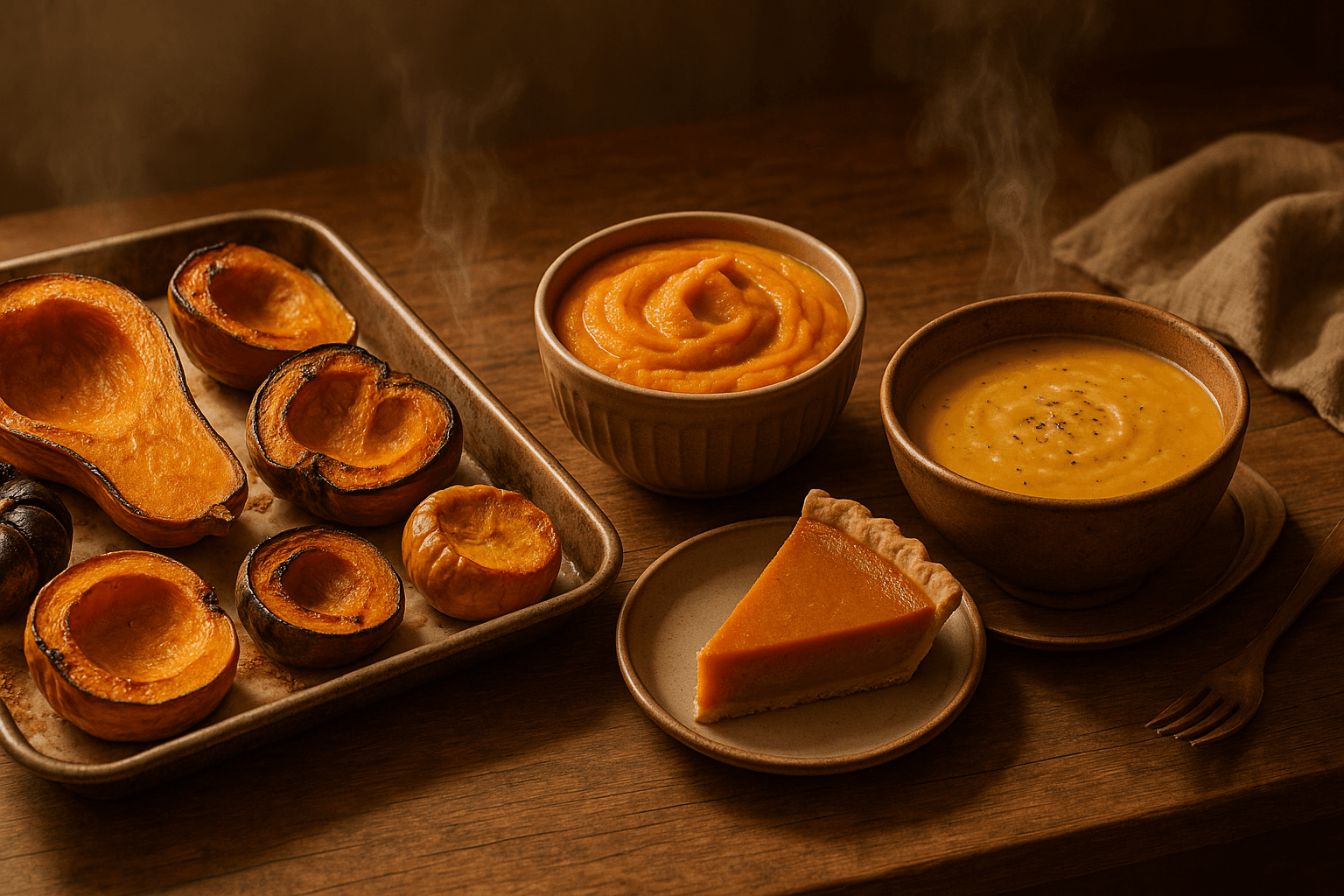
Pumpkin has a reputation for being cozy, dependable, and vaguely simple. Cut it open, cook it soft, purée it smooth, and surely it will become pie, soup, or mash without much drama. Then real life intrudes. One batch weeps water into the blender and makes soup taste thin. Another turns into a stodgy, almost pasty mash. A third roasts into concentrated, candy-sweet flesh with bronzed edges and enough flavor to carry an entire pie without much help from spice.
Those wildly different outcomes are not random. They come from a few physical rules: how much water is trapped in the flesh, how much starch and soluble solids are present to dilute or concentrate flavor, how the cell walls and pectin behave under heat, and whether you cook by steaming from the inside, steaming from the outside, or roasting until water leaves and sugars intensify. If you understand those rules, pumpkin and winter squash stop being unpredictable. You can choose a squash with a purpose, match the cooking method to the dish, and correct texture before it ruins your soup pot or pie filling.
This is especially important because “pumpkin” in the kitchen is often really a family of winter squash with very different personalities. The canned purée you buy for pie is usually not the same thing as the big carving pumpkin on the porch. Sugar pumpkins, pie pumpkins, kabocha, butternut, buttercup, Hubbard, red kuri, and even some varieties sold simply as “pumpkin” each bring their own balance of moisture, fiber, starch, sweetness, and aromatic compounds. Treat them all the same and you will get inconsistent results. Treat them according to their structure and they become one of the most useful ingredients of the cold-weather kitchen.
Pumpkin is really a texture problem before it is a flavor problem
When cooks say a pumpkin dish failed, they often describe flavor first: bland soup, weak pie, flat mash. But texture usually caused the flavor disappointment. Water is the great diluter. A watery purée spreads flavor farther apart, lowers perceived sweetness, and makes spices seem disconnected instead of integrated. Dense purée can cause the opposite problem: too much body, a heavy spoon feel, and a gummy impression that masks the squash’s natural fragrance.
The texture issue begins at the microscopic level. Pumpkin flesh is made of plant cells surrounded by walls built from cellulose, hemicellulose, and pectin-rich middle lamella, with water stored inside and between cells. As heat works through the flesh, several things happen:
- Starch granules absorb water and swell if enough starch is present.
- Pectin softens and the glue between cells weakens.
- Cell walls lose rigidity.
- Water moves, either escaping into the pan, remaining trapped in collapsed tissues, or evaporating.
- Sugars and aromatic compounds become more concentrated if moisture leaves.
That means the final result depends on both composition and method. A dense, drier squash roasted hard can become velvety and intensely sweet. A high-moisture squash steamed gently may turn silky if drained properly, or disappointingly thin if it is blended without reduction. A carving pumpkin, with its high water content and comparatively weak flavor, often produces exactly the sort of bland, stringy soup people blame on their recipe when the real culprit was variety choice.
A little context: why canned pumpkin so often outperforms fresh
Many home cooks have had the experience of making pie from fresh pumpkin and wondering why it tasted less “pumpkiny” than the canned version. It feels backwards. Fresh should be better, right? Not always.
Commercial pumpkin purée is engineered for consistency. Manufacturers typically use varieties bred or selected for dense flesh, reliable color, moderate sweetness, and relatively low free water compared with carving pumpkins. The squash is cooked, puréed, and packed under controlled conditions, so what lands in the can is smooth, concentrated, and predictable. It contains enough solids to set well in custard fillings and enough flavor concentration to stand up to sugar, dairy, and spice.
Fresh pumpkins sold for decoration are often chosen for size, shape, shell color, and carving ease, not eating quality. Their flesh tends to be wetter, stringier, paler, and less sweet. Even many “pie pumpkins” vary widely. One may roast into thick, chestnut-sweet flesh; another may exude a puddle of liquid and need aggressive draining.
This is why canned and fresh purées behave differently in recipes:
- Canned purée is usually thicker. It has lower effective water content and more uniform solids.
- Fresh purée is more variable. Depending on squash type and method, it may range from spoon-standing thick to pourable.
- Fresh purée often contains more fibrous material. This can create a stringy or fluffy result unless passed through a food processor, blender, or sieve.
- Fresh purée may taste milder at first. Extra water reduces the perception of sweetness and aroma.
None of that means fresh is inferior. It means fresh needs handling. Good fresh squash can produce better pie, soup, and purée than canned, but only if you actively manage moisture and choose the right variety.
Variety matters more than most recipes admit
If you want predictable results, stop thinking of pumpkin as one ingredient. Think in categories.
Carving pumpkins
These are usually poor choices for pie and only fair for soup unless you are willing to reduce and fortify. They tend to be:
- High in water
- Lower in sugar
- More stringy
- Less dense
- Mild in flavor
They can still be used, but they need roasting, draining, and sometimes blending with a denser squash such as kabocha or butternut.
Pie pumpkins or sugar pumpkins
These are smaller and generally better eating pumpkins, though quality still varies. They tend to have:
- Better flavor concentration
- Finer texture than carving pumpkins
- Moderate moisture
- Better color
These are good generalists for pie, purée, and soup.
Kabocha and buttercup-type squash
These are stars when you want density. They tend to be:
- Dry-fleshed
- Starchy
- Sweet
- Dense and smooth when cooked properly
They make excellent purée and deeply flavored soup, but if overworked in a food processor they can become heavy.
Butternut
The weeknight workhorse. It is:
- Widely available
- Sweet and fairly concentrated
- Smoother and less stringy than many pumpkins
- Excellent for soup and purée
Butternut makes great soup because it combines enough solids for body with enough moisture to blend smoothly.
Hubbard, red kuri, delicata, acorn, and others
Each has its own ratio of sweetness, starch, and water. Red kuri is nutty and aromatic, delicata is sweet but smaller and less useful for large-batch purée, acorn can be fibrous, and Hubbard can be rich and dry-fleshed. When in doubt, roast a small amount and taste before committing a whole holiday pie to it.
The roast-vs-steam rule that changes everything
If you remember one practical principle, make it this:
Roast when you want concentration, sweetness, and thicker purée. Steam when you want clean squash flavor, high moisture retention, and a softer, lighter result.
That sounds simple, but the mechanism matters.
What roasting does
Roasting exposes cut surfaces to dry heat, usually between 400 and 425°F / 205 and 220°C. Water evaporates from the surface and gradually from the flesh beneath it. As moisture leaves, sugars, amino acids, and aromatic compounds become more concentrated. The hottest edges can brown lightly, creating caramelized notes and a slight bitterness that makes the squash taste more complex.
Roasting also weakens the tissue so the flesh scoops cleanly from the shell. If roasted cut-side down, the squash partially self-steams from the trapped moisture while still losing enough water to concentrate. If roasted cut-side up, more evaporation occurs and browning increases, though the exposed surface may dry or toughen if you go too long.
Use roasting for:
- Pie purée
- Thick mash
- Concentrated soup base
- Fillings where excess water is a problem
- Squash you suspect is bland or watery
What steaming does
Steaming cooks the squash in a moist environment around 212°F / 100°C. The flesh softens efficiently, but because there is little evaporation, the original water remains largely in the tissue. That means the flavor stays cleaner and fresher, but not more concentrated. Steaming is gentler and often excellent when you want a purée that blends easily into doughs, batters, baby food, or soups you plan to reduce separately.
The downside is obvious: if the squash starts watery, steaming will not solve that. It can intensify the problem by fully softening the structure without removing moisture, making the purée loose and the soup diluted.
Use steaming for:
- Naturally dense, dry squash
- Recipes where you will strain or reduce later
- Quick weeknight soup when using a reliable variety like kabocha or butternut
- Applications where browning would be distracting
The hybrid truth
Many of the best home methods are hybrids. Roasting cut-side down on a sheet pan lined with parchment allows interior steaming and exterior moisture loss. After puréeing, you can further reduce the mash on the stovetop or drain it in cheesecloth if needed. Likewise, steamed squash can be spread in a skillet or sheet pan afterward to drive off extra moisture. Good cooks adjust after the first cook, not just before it.
The science of watery squash: cell-wall collapse and starch dilution
Why does cooked pumpkin sometimes seem to release more and more water the more you work it?
Because heating softens the pectin-rich material that cements plant cells together. Once the tissue is tender, stirring, blending, or pressing can rupture weakened cells and release internal water. In a low-starch squash, there may not be enough swollen starch granules or soluble solids to hold that water in a stable matrix. So the liquid separates. You see this as:
- A puddle around purée
- A pie filling that sloshes before baking
- Soup that tastes thin even when visually orange
- Purée that goes from fluffy to wet after blending
This is starch dilution in practical terms. If the ratio of water to starch and soluble solids is too high, the purée cannot support itself. It acts loose instead of spoonable. That is why watery fresh purée often benefits from reduction before being used in pie. Simmering off moisture raises the proportion of solids, improving texture and flavor at once.
A useful kitchen test: scoop 1/2 cup of your fresh purée into a fine sieve over a bowl for 15 minutes. If more than 1 to 2 tablespoons of liquid drip out, your purée is wetter than standard canned pumpkin and should be reduced or drained for pie.
The science of dense squash: when “creamy” turns heavy
Dense purée sounds like a good thing until it crosses into heavy, sticky, or almost gluey. This happens most often with dry, starchy squash varieties such as kabocha or some buttercup types, especially when they are overprocessed.
As starch granules absorb water during cooking, they swell and contribute body. If you aggressively process the cooked flesh while hot, you can rupture more cells, redistribute starch, and create a pastier texture. It is similar in spirit, though not identical, to overworking potatoes.
Signs you crossed the line:
- Purée looks dull instead of glossy
- Spoon trails hold stiff ridges
- Mouthfeel is pasty or chest-coating
- Soup feels thick but not silky
To avoid this:
- Mash or pulse only until smooth
- Add warm liquid gradually when making soup
- Blend with some fat, such as 1 to 2 tablespoons butter or olive oil per 2 cups purée, to improve flow and reduce starchy perception
- Pass through a sieve for elegance rather than blending forever
Density is useful in pie and ravioli filling, but for soup you often want body plus fluidity, not baby-food thickness.
The science of caramelization and why roasted squash tastes sweeter
A deeply roasted squash tastes sweeter for two reasons, one obvious and one subtle.
The obvious reason is water loss. When moisture evaporates, the natural sugars become more concentrated. Even if the total sugar does not dramatically increase, your tongue perceives more sweetness because there is less water diluting it.
The subtler reason is browning chemistry. Squash contains sugars and amino compounds that can participate in Maillard reactions at sufficiently dry, hot surfaces, while sugars can also undergo caramelization at higher temperatures in low-moisture spots. In home roasting, what you taste is usually a combination of modest surface browning and concentration rather than pure caramelization alone. The result is nuttier, toastier, more complex flavor.
This matters in pie. A roasted purée often needs less sugar than a steamed one because the squash flavor arrives more fully formed. In soup, roasted squash gives savory depth even before stock, cream, or spice enter the pot.
Step-by-step: making better purée for pie
If your goal is pie, think “controlled concentration.”
Best method
- Choose the squash. Use sugar pumpkin, kabocha, buttercup, Hubbard, or butternut. Avoid carving pumpkins if possible.
- Heat the oven to 400°F / 205°C.
- Split and seed. Cut the squash in half. Scrape out seeds and strings.
- Salt lightly, optionally. A tiny pinch of salt on the cut surface can help draw some moisture and season the flesh. Do not overdo it.
- Roast cut-side down on a parchment-lined sheet pan for 45 to 75 minutes, depending on size, until completely tender. A knife should slide in with almost no resistance.
- Cool slightly and scoop. Transfer flesh to a bowl.
- Purée until smooth. Use a food processor, high-speed blender, or food mill.
- Check moisture. If the purée looks loose, spread it in a wide skillet or saucepan and cook over medium-low heat for 10 to 20 minutes, stirring often, until visibly thicker. Alternatively, drain in a cheesecloth-lined sieve for 30 to 60 minutes.
- Chill before baking. Cold purée behaves more predictably in pie filling.
Ideal texture target
For pie, your purée should mound softly on a spoon, not run. If you drag a spatula through it, the line should remain visible for a moment before slowly filling.
Common pie mistake
Using fresh purée cup-for-cup in a canned-pumpkin recipe without adjusting moisture. If your fresh purée is looser, the filling may bake longer, crack, or seem under-set around the edges.
Smart adjustment
If your purée seems slightly wet but you do not want to reduce it, decrease the dairy in the filling by 2 to 4 tablespoons per 15-ounce / 425-gram can-equivalent of purée.
A practical equivalence: 15 ounces canned pumpkin is about 1 3/4 cups purée, but the more important match is thickness, not volume.
Step-by-step: making silky soup instead of stringy soup
Stringy pumpkin soup usually starts with one of two issues: fibrous variety choice or insufficient puréeing/straining. Thin pumpkin soup usually comes from excess water.
Best method for concentrated soup
- Choose butternut, kabocha, red kuri, or a good pie pumpkin.
- Roast at 425°F / 220°C cut-side down until fully tender, 35 to 60 minutes for smaller squash, 50 to 80 minutes for larger ones.
- Meanwhile, sweat aromatics in a soup pot: 1 medium onion, diced, in 2 tablespoons butter or olive oil over medium-low heat for 8 to 10 minutes. Add 2 cloves garlic for the last minute.
- Scoop roasted flesh into the pot. Add 3 to 4 cups stock per 4 cups squash flesh. Start lower; you can always thin later.
- Simmer 10 minutes. This helps the flavors integrate.
- Blend until smooth. Use an immersion blender or countertop blender.
- Pass through a fine sieve if the squash is fibrous.
- Adjust body. Too thick? Add hot stock in 1/4-cup increments. Too thin? Simmer uncovered 10 to 20 minutes.
- Finish with fat and acid. Add 2 to 4 tablespoons cream, crème fraîche, coconut milk, brown butter, or olive oil plus a small squeeze of lemon or 1 teaspoon cider vinegar to sharpen flavor.
Why acid helps
Pumpkin soup can taste sweet and flat because its aromatic profile is gentle. A touch of acid tightens perception and makes the squash taste more like itself.
Common soup mistakes
- Adding too much stock at the beginning
- Using a watery carving pumpkin
- Not cooking the aromatics long enough
- Under-salting
- Skipping the sieve when the squash is fibrous
Quick rescue for thin soup
Simmer uncovered until reduced, or blend in 1/2 to 1 cup of roasted potato, white beans, or a denser squash purée. Better yet, next time start with less stock.
Step-by-step: choosing steam on purpose
Steaming is not the villain. It is just often used without a plan.
Best use case
Use steaming when you have a dry, sweet squash and want a fresher flavor or faster prep.
- Peel and cube a butternut or kabocha into 1 1/2-inch / 4-cm chunks.
- Steam over simmering water until very tender, about 15 to 25 minutes depending on size.
- Let excess moisture evaporate in the colander for 5 minutes.
- Mash or purée.
- For pie, spread the mash in a skillet and cook off moisture if needed.
- For soup, use less stock than you think, then adjust.
Steam rule
If you steam, you must evaluate and often remove moisture afterward. If you roast, you must evaluate whether the concentration is already enough.
That simple habit prevents most failures.
How pectin and fiber affect smoothness
Pectin is part of the structural glue in plant tissues. As squash cooks, pectin softens, helping the flesh collapse into a mashable texture. But not all varieties collapse the same way. Some become dry and floury, some silky, and some stringy.
Stringiness comes from the architecture of the flesh and the persistence of fibrous strands around the seed cavity and through the flesh in certain varieties. Heat softens but does not erase those fibers. Blending shortens them; sieving removes them.
If absolute smoothness matters, as in refined soup or custard pie, use one of these approaches:
- Purée in a high-speed blender for 30 to 60 seconds
- Push through a fine-mesh sieve with a ladle
- Run through a food mill, then a sieve
For rustic soups, some fiber is pleasant. For pie, it can read as graininess.
Moisture management tricks professional cooks use at home
These are the quiet moves that make squash cookery seem effortless.
Roast cut-side down for balance
This encourages even cooking and some self-steaming while still allowing moisture loss. It is often the safest choice for home ovens.
Rest the roasted squash before puréeing
Let it sit 10 to 15 minutes after roasting. Steam redistributes, the surface cools slightly, and you lose less water explosively into the processor bowl.
Purée in a wide vessel, reduce in a wide pan
Surface area matters. If you need to cook off water, a broad skillet works faster than a deep saucepan.
Season after concentration
Salt a watery purée too early, then reduce it hard, and it may become over-seasoned. Moderate seasoning first, final seasoning after texture adjustment.
Weigh when consistency matters
For baking, weight is more reliable than volume. If substituting for one 15-ounce / 425-gram can of pumpkin, start with 425 grams of thick fresh purée, then assess texture.
Chill overnight for pie
Fresh purée often thickens slightly after chilling as moisture redistributes. An overnight rest also lets roasted notes mellow and integrate.
Practical rules by dish
For purée as a side dish
- Use butternut, kabocha, or buttercup.
- Roast at 400°F / 205°C until very soft.
- Mash with 1 to 2 tablespoons butter per pound / 450 grams cooked flesh.
- Avoid overprocessing.
- Add acid or pepper to offset sweetness.
For pie
- Prioritize low-moisture, flavorful squash.
- Roast rather than steam whenever possible.
- Reduce or drain loose purée.
- Match canned texture, not just canned volume.
- Use less sugar if the squash is deeply roasted and sweet.
For soup
- Roast for depth, steam for freshness.
- Start with less stock.
- Blend thoroughly and sieve if fibrous.
- Finish with fat and acid.
- If using watery pumpkin, roast longer and reduce more.
Troubleshooting: what went wrong and how to fix it
“My purée is watery.”
Cause: high-moisture squash, steaming, or insufficient reduction.
Fix: cook in a wide pan over medium-low heat 10 to 20 minutes, or drain through cheesecloth. For future batches, roast instead of steam.
“My soup is stringy.”
Cause: fibrous variety or incomplete blending.
Fix: blend longer, then pass through a fine sieve. Next time use butternut, kabocha, or red kuri.
“My pie filling is bland.”
Cause: diluted purée, weak variety, or under-salted filling.
Fix: concentrate purée first; add a pinch more salt. Roast the squash longer next time for more flavor.
“My purée is thick but heavy.”
Cause: very starchy squash or overprocessing.
Fix: fold in warm cream, butter, or stock gradually. For future batches, mash by hand or pulse minimally.
“The roasted squash is brown around the edges but watery in the middle.”
Cause: oven too hot for the squash size, or pieces unevenly cut.
Fix: continue roasting cut-side down or tent loosely with foil, then reduce the final purée if needed.
A note on sweetness, spice, and the myth of “pumpkin flavor” in pie
What many people think of as pumpkin flavor is actually a combination of squash sweetness, roasted notes, dairy richness, sugar, and spice. Cinnamon, ginger, clove, nutmeg, and allspice do not just decorate the squash; they help define the dessert in memory.
That means a bland fresh pie often does not need more spice first. It needs more squash concentration. If the base tastes watery, more cinnamon just creates spiced water. Roast and reduce the purée, then season. You will usually need less intervention than you think.
Cultural context: pumpkin and winter squash far beyond pie season
In North America, pumpkin is heavily associated with holiday pie, but across the world winter squash is a staple ingredient treated as both savory and sweet. Japanese kabocha is simmered, tempura-fried, and turned into salads and soups. In Latin American cuisines, squash appears in stews, sweets, tamales, and creamy soups. Across Europe, pumpkins and squash are roasted, puréed into pasta fillings, baked into breads, or paired with brown butter, sage, cream, and aged cheese.
That broad culinary history matters because it reminds us there is no single ideal pumpkin texture. For ravioli filling, density is good. For soup, silkiness matters. For pie, concentration and smoothness matter more than brute thickness alone. The “best” method depends on the final dish.
My practical roast-steam rules, simplified
If you want the shortest possible version, here it is:
- Choose the right squash. Eat the pie pumpkin, not the jack-o’-lantern.
- Roast for concentration. Best for pie, mash, and deep-flavored soup.
- Steam for freshness. Best for already-dense squash when you can manage moisture later.
- Check thickness before using. Fresh purée is not automatically equivalent to canned.
- Blend enough, not forever. Smooth is good; overworked can become pasty.
- Reduce water before adding more flavor. Texture fixes blandness faster than extra spice.
- Finish with salt, fat, and acid. That is how squash tastes complete.
Takeaways
Pumpkin turns watery when heat collapses its cell structure and there is too much water for the available starch and solids to hold in suspension. It turns dense when you start with a dry, starchy squash or overwork the cooked flesh. It turns deeply caramelized and sweet when roasting drives off moisture and develops browning on the surface.
Those outcomes are not accidents. They are the result of variety plus method. Carving pumpkins are usually wet and mild. Pie pumpkins and many winter squash are denser and sweeter. Roasting concentrates; steaming preserves moisture. Fresh purée needs to be judged by texture, not sentiment. Canned pumpkin succeeds because it is consistent and concentrated, not because fresh is incapable of greatness.
For better pie, roast and reduce. For better soup, choose a flavorful squash, add stock cautiously, and blend thoroughly. For better purée, decide whether you want light and fresh or thick and rich, then cook accordingly. Once you understand cell-wall collapse, starch dilution, and the roast-steam rules, squash stops being a seasonal gamble and becomes a reliable ingredient you can steer exactly where you want it to go.