Why Tamarind Tastes Bright, Round, or Muddy: Tartaric Acid, Pectin, and the Extraction Rules for Better Chutneys, Curries, and Drinks
RecipeSimpli
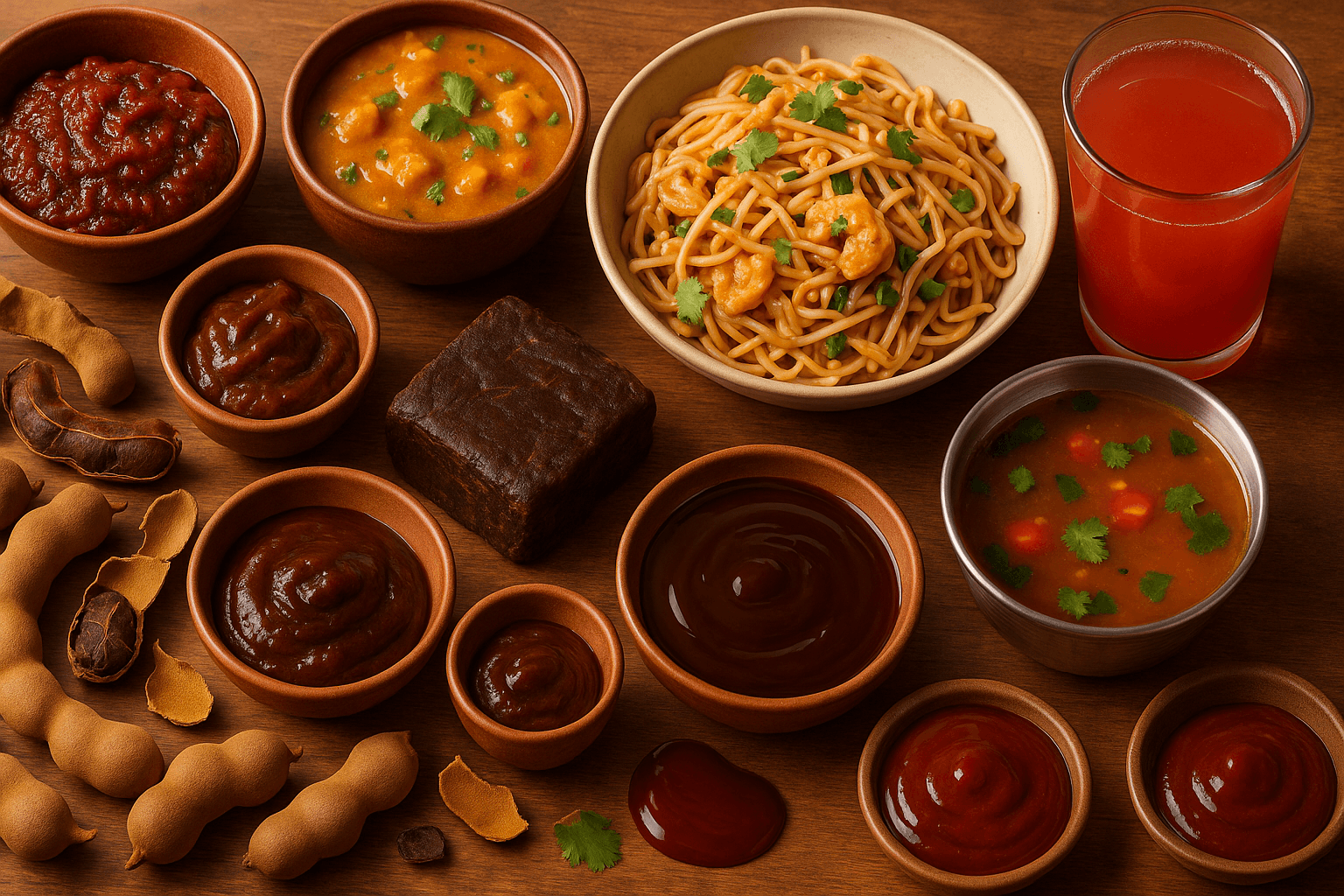
If you have ever tasted two tamarind dishes made from the same fruit and wondered why one felt vivid and mouthwatering while the other landed flat, murky, or oddly heavy, the answer is not just “sweet versus sour.” Tamarind is one of the most complex acidic ingredients in the kitchen. It can taste high-toned and refreshing in a drink, deep and savory in a curry, sticky-sweet in a chutney, or dark and almost smoky in a glaze. Yet it can also turn muddy if handled carelessly, especially when too much fiber, old concentrate, over-reduced sugars, or prolonged simmering blur its natural sharpness.
For home cooks, tamarind often arrives with very little guidance. A recipe says “add 2 tablespoons tamarind” as if pulp, concentrate, paste, and fresh pods are interchangeable. They are not. A tablespoon of one can be faint and fruity; a tablespoon of another can be dense, salty, sweetened, and aggressively acidic. Add timing to the equation, plus interactions with sugar, chiles, salt, pectin, starch, legumes, and fat, and tamarind quickly stops being a simple pantry shortcut and becomes a full ingredient system.
Once you understand that system, tamarind becomes easier to control. You can decide whether you want brightness or depth, gloss or body, clean acidity or jammy richness. You can make a rasam that tastes lively rather than brown and tired, a pad thai-style sauce with distinct tang instead of generic sweetness, a barbecue glaze that clings without scorching, and an agua fresca that feels refreshing rather than puckering and dull.
Tamarind’s place in the world kitchen
Tamarind has traveled far, and its culinary role changes dramatically from one region to another. In South Asian cooking, especially in Indian, Sri Lankan, and Bangladeshi traditions, tamarind is central to chutneys, rasam, sambar-like dishes, some fish curries, chaats, and numerous regional gravies. It brings acidity, fruitiness, color, and a faint molasses-like bass note that tomato or lemon cannot replicate.
Across Southeast Asia, tamarind is equally foundational. In Thailand it helps define pad thai-style sauces, tamarind soups, dipping sauces, and braises. In the Philippines it appears in sour soups like sinigang, where the source of sourness can vary by region and season, but tamarind remains one of the canonical expressions. In Malaysia and Indonesia, tamarind often balances chile heat, belacan or shrimp paste funk, palm sugar sweetness, and rich coconut-based dishes.
In Latin American and Caribbean cooking, tamarind often moves toward drinks, candies, marinades, sauces, and glazes. Mexican aguas frescas de tamarindo use it for tart refreshment and a rounded, almost cola-like complexity. In the Caribbean, tamarind can appear in sauces, stews, and cooling beverages, often interacting with brown sugar, hot peppers, and allspice-adjacent flavors.
What unites these traditions is that tamarind is rarely used just to make something sour. It usually works as a balancing ingredient, one that rounds savory foods, supports sweetness, amplifies salt, and gives a dish length on the palate. That is why mishandling it does more than distort sourness. It can flatten the entire flavor structure.
What tamarind actually tastes like
People often describe tamarind as “sweet-sour,” but that is too blunt to be useful. Good tamarind has several layers:
- Tartaric sharpness: a focused, lingering acidity
- Fruit depth: something between dried apricot, date, raisin, and green plum depending on ripeness and processing
- Brown flavor: subtle caramel, molasses, or dark sugar notes
- Astringency: more noticeable in some products, especially poorly strained extractions
- Body: from natural soluble solids, pectin, and suspended pulp
That body is important. Citrus juice tends to read as bright partly because it is mostly liquid acid, aromatic compounds, and dissolved sugars with little viscosity. Tamarind brings acidity plus texture. That can be wonderful in sauce and troublesome in drinks if over-extracted.
Why tartaric acid feels different from citrus acidity
The main acid in tamarind is tartaric acid, while lemons and limes are dominated by citric acid. Those molecules do not taste identical, even at similar pH. Home cooks often sense this immediately but lack the vocabulary to explain it.
Citric acid usually reads as direct, sparkling, and quick. It arrives sharply at the front of the palate and tends to suggest freshness. Tartaric acid is often perceived as firmer, broader, and more lingering. It can seem both bright and deep at once. In wine, tartaric acid helps create structure and persistence. In tamarind, it gives sourness that does not simply flash and disappear. It hangs on, especially when combined with sugar and natural fruit solids.
This is one reason tamarind can taste “round” even when it is strongly acidic. The acid is not floating alone; it is embedded in a matrix of fruit pulp, sugars, minerals, and colloids. That matrix softens the edges and lengthens the finish.
A practical way to think about it is this:
- Lime juice brightens from above.
- Tamarind brightens from within.
If you replace one with the other one-for-one, the dish usually loses its intended architecture.
The forms of tamarind and why they behave differently
This is where many recipes become misleading. “Tamarind” on an ingredient list may refer to at least four very different products.
1. Fresh pods
Whole tamarind pods have a brittle shell surrounding sticky brown pulp and large seeds threaded with fibrous veins. Depending on variety and maturity, the pulp can be sweeter, more floral, or more assertively sour.
Best for: drinks, from-scratch sauces, cooks who want maximum control.
Pros: freshest flavor, clearer fruit notes, less processed taste.
Cons: labor-intensive, variable by batch, requires soaking and straining.
2. Block pulp
Often sold compressed in bricks or blocks, this is the form many experienced cooks prefer. It usually contains pulp, fiber, and seeds, sometimes with little else. You break off a piece, soak it in hot water, mash, and strain.
Best for: chutneys, curries, rasam, pad thai-style sauce, marinades.
Pros: excellent flavor, good control over extraction strength, long shelf life.
Cons: requires prep, strength varies, can become muddy if overworked during extraction.
3. Tamarind paste
This term is frustratingly inconsistent. In some markets “paste” means plain tamarind pulp that has already been extracted and pureed. In others it means a seasoned product containing sugar, salt, preservatives, or chile.
Best for: convenience when you know the brand well.
Pros: fast, easy to dissolve.
Cons: often inconsistent, can be sweetened or salted, flavor may be dull from processing.
4. Tamarind concentrate
Concentrate is reduced tamarind extract, sometimes very thick and intense. It is often darker, denser, and more potent than homemade tamarind water. Some brands are pure; others contain additives.
Best for: quick sauces, glazes, weeknight cooking, finishing adjustments in small doses.
Pros: powerful, shelf-stable, easy to measure.
Cons: easy to overdo, can taste cooked or muddy, reduced sugars can dominate.
A practical strength guide
Because brand variation is huge, these are only starting points, but they are useful:
- Block pulp: 60 grams block pulp plus 180 milliliters hot water yields roughly 120 to 160 milliliters medium-strength extract after straining.
- Concentrate: 1 tablespoon concentrate often equals 2 to 4 tablespoons medium homemade extract.
- Plain paste: often falls somewhere between extract and concentrate, but test before trusting.
The best rule: if the tamarind tastes thick, dark, and almost prune-like before you add it, use caution. If it tastes fresh, tangy, and lightly fruity, you have more room to work.
The extraction rules: how to get bright flavor instead of mud
Tamarind is one of those ingredients where extraction method changes flavor as much as quantity does. The same block can yield a clean, high-toned tamarind water or a muddy, fibrous slurry depending on temperature, time, and force.
Rule 1: Soak, don’t boil hard
To extract from fresh pods or block pulp, place 60 grams tamarind block in a bowl and pour over 180 to 240 milliliters hot water at about 80 to 90°C / 175 to 195°F. Let soak 15 to 20 minutes.
Hot water softens the pulp and dissolves acids and sugars efficiently without forcing excessive bitterness or broken fiber into the liquid. A hard boil, especially prolonged, can cook the fruit notes flat and extract more suspended solids than you want.
Rule 2: Massage gently
Once softened, use fingers or a spoon to squeeze and separate the pulp from seeds and coarse fiber. Gentle pressure is enough. Overworking breaks more insoluble fiber into the liquid, which increases cloudiness and can create a muddy finish.
Rule 3: Strain with intention
For curries and braises, a medium strainer is often fine. For drinks, rasam, or bright finishing sauces, use a fine-mesh strainer. Press enough to recover liquid, but do not grind every last particle through.
The final few spoonfuls often contain disproportionately more dullness than flavor. Chasing maximum yield is one of the fastest ways to make tamarind taste murky.
Rule 4: Extract in rounds if needed
If you want more yield, do a second extraction on the same pulp with another 120 milliliters warm water, then combine or reserve separately. The first extraction is brighter and cleaner; the second is weaker and duller. Use them differently.
For example:
- First extraction: drinks, pad thai-style sauce, rasam
- Second extraction: lentil stew, braise, barbecue sauce
Rule 5: Match extraction strength to the dish
A beverage wants a cleaner tamarind profile than a sticky glaze. If you start with ultra-thick tamarind in a drink, it can taste heavy. If you use very weak tamarind in a glaze, you may reduce it so long that sweetness and cooked notes overwhelm brightness.
Seeds, fiber, and pectin: the hidden texture story
Tamarind seeds are large and hard, and the pulp is naturally threaded with fiber. The fruit also contains pectic substances, which contribute body. These structural components are not just a nuisance; they shape texture and extraction behavior.
Seeds
The seeds themselves do not dissolve into flavor, but they trap pulp around them. When you soak tamarind, you are releasing that pulp. Aggressive mashing around the seeds can force seed-adjacent fiber and fine particulates into the extract.
Those particles do two things:
- They make the liquid more opaque and muddy.
- They create a heavier mouthfeel that can read as dull in drinks or delicate broths.
Fiber
Coarse fiber is useful if you want rustic body in a chutney, but it is usually unwelcome in smooth sauces and beverages. Fiber also absorbs flavor. If you leave too much fibrous matter in a simmering sauce, you may feel that the tamarind is present but not articulate.
Pectin
Pectin is a natural gelling polysaccharide found in plant cell walls. Tamarind does not behave exactly like a high-pectin jam fruit such as quince, but it contains enough pectic material to contribute body and help explain why tamarind sauces can feel glossy, rounded, and cohesive.
In chutneys and reduced sauces, this can be an advantage. The pectin-rich pulp helps suspend spices and gives the sauce cling. In drinks, however, over-extracted pectin and fine pulp can make the beverage seem thick, pasty, or chalky rather than refreshing.
That is why a tamarind agua fresca often tastes best when made from a relatively clean first extraction, diluted properly, and strained finely.
When long simmering helps and when it hurts
One of tamarind’s most misunderstood behaviors is what heat does over time.
Long simmering can improve flavor when:
- The dish contains raw alliums, spices, or chiles that need integration
- The tamarind is part of a complex braise or chutney
- Sugar needs time to dissolve and merge with acidity
- You want deeper, darker, more rounded flavor
In these cases, 20 to 40 minutes of gentle simmering can transform sharp tamarind into a balanced sauce with savory depth.
Long simmering can dull flavor when:
- The dish relies on fresh acidity for lift
- The tamarind product is already concentrated and cooked
- You reduce aggressively over high heat
- The recipe has lots of sugar, which can quickly push the flavor toward jammy heaviness
In these situations, tamarind loses distinction. Its tartaric edge remains, but the top notes fade. The result is a kind of brown sourness: not exactly unpleasant, but muddy and one-note.
The practical timing rule
- For brightness: add tamarind in the last 5 to 10 minutes.
- For depth: add it 15 to 30 minutes before finishing.
- For glazes/chutneys: cook until integrated but stop reducing once the sauce coats a spoon.
If a sauce tastes dark but not lively, a final splash of fresh tamarind extract or lime can restore dimension.
Sugar, salt, chile, and fat: why tamarind changes shape around them
Tamarind is not static. Its sourness is reshaped by the other major taste elements.
Sugar
Sugar does more than “cut sourness.” It changes how sourness is perceived, making tamarind seem rounder, fruitier, and deeper. Palm sugar, jaggery, brown sugar, and white sugar each push tamarind in a different direction.
- White sugar: cleaner, brighter, more drink-friendly
- Brown sugar: darker, richer, more glaze-friendly
- Palm sugar: caramel and floral notes, classic in Southeast Asian balance
- Jaggery: earthy, deep, ideal in many South Asian chutneys and gravies
Too much sugar, especially with long cooking, is a major cause of muddy tamarind flavor. The fruit loses contour and becomes generic sweet-sour brown sauce.
Salt
Salt sharpens tamarind’s definition. A slightly under-salted tamarind sauce often tastes flatter and more acidic at the same time. Proper salting makes the fruit taste more itself.
As a starting point, for 240 milliliters / 1 cup tamarind-based sauce, try 1/4 to 1/2 teaspoon kosher salt, then adjust based on concentration and other salty ingredients.
Chile
Capsaicin and sourness amplify one another. Tamarind plus chile creates energy. But too much chile can make tamarind’s acidity feel harsher unless sugar and salt are present to mediate.
This is why many successful tamarind sauces follow a balancing triangle:
- sour from tamarind
- heat from chile
- sweetness from sugar
with salt acting as the frame.
Fat
Fat changes sourness dramatically. In coconut curries, peanut sauces, butter-enriched glazes, or oil-based marinades, tamarind becomes less sharp and more integrated. Fat carries aromatic compounds and softens acidity’s attack.
That is useful, but it also means you often need slightly more tamarind in rich dishes than you would in a thin broth or drink.
Why tamarind can keep beans and lentils firm if added too early
Acid slows the softening of legumes by strengthening pectin in plant cell walls and interfering with the breakdown processes that let water fully tenderize the bean. Tamarind, being strongly acidic, is particularly effective at this.
If you add tamarind to simmering beans, chickpeas, pigeon peas, or whole lentils before they are mostly tender, you may lock them into a longer cooking time or keep their skins annoyingly tight.
The rule for legumes
Cook beans and lentils in unsalted or moderately salted water until at least 80 to 90% tender, then add tamarind.
Examples:
- For a lentil-based soup: add tamarind in the final 10 to 15 minutes.
- For chickpea curry: wait until chickpeas are fully soft before adding tamarind and simmer 10 minutes to integrate.
- For dal with a tamarind finish: cook the dal completely first, then add tamarind extract and simmer briefly.
This is one of the reasons rasam often remains bright: the lentils, if used, are usually already cooked or present in small quantity before the souring stage.
How to use tamarind well in specific dishes
Now for the practical kitchen rules that matter most.
Chutneys
Tamarind chutneys thrive on body, sweetness, and spice, so a slightly fuller extraction is welcome here.
Good approach
Use 120 milliliters / 1/2 cup medium-strength tamarind extract with 100 to 150 grams jaggery or brown sugar, plus roasted cumin, black salt or kosher salt, ginger, and chile to taste. Simmer 15 to 25 minutes until glossy.
Watch for
- Over-reducing until sticky and dull
- Using very dark concentrate plus lots of sugar, which can taste like candy syrup rather than chutney
- Insufficient salt, which makes the chutney seem both too sweet and too sour
Best rule
Stop cooking when the chutney lightly coats a spoon and still tastes a touch brighter than you think it should. It will seem sweeter and flatter once cool.
Pad thai-style sauces
This is where clean tamarind matters. You want distinct tang, not muddy depth.
Good approach
Use 2 tablespoons medium tamarind concentrate or 60 milliliters bright homemade extract, 2 to 3 tablespoons palm sugar, and fish sauce to taste. Warm just enough to dissolve, about 2 to 3 minutes, rather than simmering for a long time.
Watch for
- Heavy commercial concentrate with stale cooked flavor
- Too much reduction
- Excess sugar hiding the tamarind
Best rule
Taste the sauce before it hits the wok. It should seem slightly too tangy and slightly too salty on its own. Once it coats noodles and mixes with aromatics, eggs, and protein, it will round out.
Rasam
Rasam wants aromatic lift and a sour edge that stays alive.
Good approach
Use 2 to 3 tablespoons tamarind pulp soaked in 120 milliliters hot water, strain well, and add after the spice-water or dal-water base has simmered. Cook gently 5 to 8 minutes after adding tamarind, not much longer. Finish with tempering.
Watch for
- Boiling hard after tamarind goes in
- Overly thick extract
- Too much pulp clouding the broth
Best rule
Rasam should smell vivid the moment it reaches the bowl. If the aroma feels muted, the tamarind likely cooked too long.
Barbecue glazes
Tamarind is excellent in glazes because tartaric acid and natural sugars create depth and cling.
Good approach
Combine 3 tablespoons tamarind concentrate, 2 tablespoons brown sugar, 1 tablespoon soy sauce or Worcestershire-style seasoning, 1 teaspoon chile paste, and 120 milliliters / 1/2 cup stock or water. Simmer 8 to 12 minutes until syrupy.
Brush on during the final stage of cooking, especially over moderate rather than blazing heat.
Watch for
- Scorching from sugar concentration
- Applying too early, causing burning and bitterness
- Using thick concentrate undiluted
Best rule
Reduce separately, glaze late, and reserve a fresh spoonful off the heat if you want a brighter finishing lacquer.
Aguas frescas and drinks
Drinks expose tamarind’s flaws quickly. Muddy extraction, poor straining, and too much pulp all stand out.
Good approach
Use 120 grams tamarind block with 500 milliliters hot water for a first extraction. Strain finely, then dilute with 750 milliliters to 1 liter cold water and sweeten with 75 to 120 grams sugar, adjusting to taste. Chill thoroughly.
Watch for
- Leaving too much sediment in the drink
- Excessively thick concentrate
- Under-sweetening, which makes the sourness feel hard rather than refreshing
Best rule
For drinks, clarity beats intensity. If a batch tastes pasty, dilute and strain again rather than adding more sugar alone.
Marinades
Tamarind can tenderize perception more than structure. It makes meats taste lively and savory, but because of its acidity it can also affect surface texture if used too heavily.
Good approach
For 500 grams / 1 pound chicken, pork, or firm vegetables, mix 2 tablespoons tamarind extract, 1 tablespoon oil, 1 to 2 teaspoons sugar, 1 teaspoon salt, garlic, and spices. Marinate 30 minutes to 2 hours for meat, 20 to 30 minutes for shrimp or delicate fish.
Watch for
- Long marination on seafood, which can turn the exterior mushy or chalky
- Too much concentrate causing a sticky burn-prone coating
- Insufficient fat, making the acidity feel harsh
Best rule
Use tamarind for flavor and balance, not as an all-day acid bath.
Common mistakes that make tamarind taste muddy
These show up again and again in home kitchens.
1. Using old concentrate
Oxidized or repeatedly opened concentrate loses liveliness and can taste like dark fruit paste instead of tamarind. Refrigerate after opening and replace when the aroma goes flat.
2. Treating all products as equal
A recipe written for homemade extract can be ruined by using the same volume of concentrate.
3. Over-extracting the pulp
The last bit of yield is often where dullness lives.
4. Simmering too long after adding tamarind
Especially in delicate soups and quick sauces.
5. Pairing with too much sugar and not enough salt
This creates a brown, sticky, one-note flavor.
6. Adding too early to beans or lentils
You get firmer legumes and a longer, duller cook.
7. Ignoring straining for drinks and broths
Texture affects flavor perception. Sediment reads as heaviness.
A practical framework for choosing brightness, roundness, or depth
If you want bright tamarind:
- Choose fresh pods or block pulp
- Make a first extraction only
- Strain finely
- Add late
- Use white sugar or minimal sweetener
- Keep cooking brief
Best for: rasam, drinks, finishing sauces, pad thai-style sauce
If you want round tamarind:
- Use block pulp or good plain paste
- Use a medium extraction
- Balance with salt and some sugar
- Simmer moderately
- Include aromatics and maybe a little fat
Best for: curries, dipping sauces, balanced marinades
If you want deep tamarind:
- Use concentrate or a fuller extraction
- Pair with brown sugar, jaggery, soy, alliums, dried chiles
- Reduce gently for texture
- Stop before it turns sticky-brown and flat
Best for: chutneys, glazes, barbecue sauces, braises
Step-by-step: a master tamarind extraction for home cooks
This method gives you a versatile base for multiple dishes.
Ingredients
- 120 grams tamarind block pulp
- 360 milliliters hot water, divided
Method
- Break and soak. Tear the tamarind into chunks and place in a heatproof bowl. Add 240 milliliters hot water at 80 to 90°C / 175 to 195°F. Soak 20 minutes.
- Massage gently. Use clean fingers or a spoon to loosen the pulp from seeds and fibers for 1 to 2 minutes.
- Strain first extraction. Pour through a fine-mesh strainer into a bowl. Press lightly to recover liquid. This is your brightest extraction.
- Second extraction. Return solids to the bowl, add the remaining 120 milliliters warm water, soak 5 minutes, and press again through the strainer.
- Store separately if possible. Keep the first extraction for bright applications and the second for long-cooked ones.
Storage
Refrigerate up to 5 days. Freeze in tablespoon portions for up to 3 months.
How to fix a tamarind dish that has gone wrong
Too muddy
Add a small amount of fresh tamarind extract or lime juice at the end. Increase salt slightly. If the sauce is overly thick, loosen with water or stock.
Too sharp
Add 1/2 teaspoon sugar at a time, or a small knob of butter, coconut milk, peanut butter, or oil depending on the dish.
Too sweet
Add more tamarind, not just vinegar. Tamarind restores fruit-acid structure. Then correct with salt.
Too thick or pasty
Strain if possible, dilute slightly, and re-balance. In drinks, chilling also helps restore perceived freshness.
Legumes still firm
Keep cooking before adding more acid. Do not intensify the problem by adding extra tamarind too soon.
The big takeaway: tamarind is an acid, a fruit, and a texture ingredient
That is the central lesson. Tamarind is not just sourness in brown form. It is an acidulant, a sweet-sour fruit, and a source of body all at once. Tartaric acid gives it a lingering, structured tartness unlike lime or lemon. Pectin and pulp give it texture and cling. Seeds and fiber influence extraction quality. Processing level determines whether it tastes vivid or already half-cooked before it even hits the pan.
When cooks say tamarind tastes bright, round, or muddy, they are describing real, controllable variables:
- the acid profile
- the amount of suspended pulp and pectin
- the freshness of the product
- the extraction method
- the cooking time
- the balance of sugar, salt, chile, and fat
If you remember only a few rules, make them these:
- Know your form of tamarind. Block pulp, paste, concentrate, and pods are not interchangeable.
- Extract gently. Hot soak, light pressing, careful straining.
- Match clarity to the dish. Drinks and broths want cleaner extraction than chutneys and glazes.
- Add late for brightness, earlier for depth.
- Do not acidify beans or lentils before they soften.
- Balance tamarind with salt as carefully as with sugar.
- Stop reducing before the flavor turns generically brown.
Do that, and tamarind becomes one of the most versatile flavor tools in your kitchen: capable of making a curry feel more alive, a noodle sauce more dimensional, a glaze more seductive, and a drink more thirst-quenching. Not just sweet-sour. Structured, fragrant, and deeply expressive.