Why Wok Hei Happens—or Doesn’t: Aerosolized Fats, Pyrolysis, and the Real Heat Rules Behind Restaurant-Style Stir-Fry
RecipeSimpli
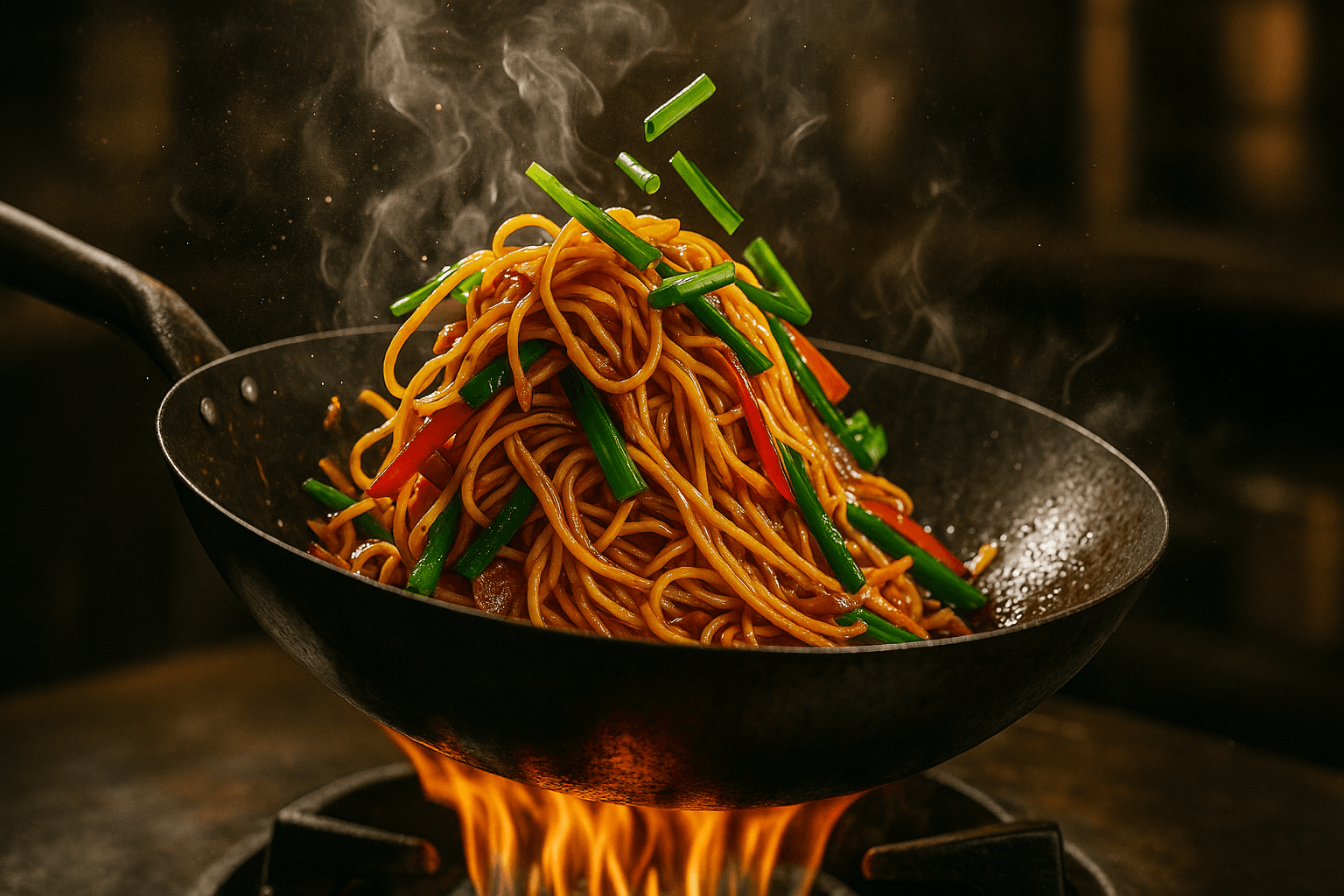
There’s a moment in a great stir-fry when the kitchen smells less like “food cooking” and more like something alive, volatile, and thrilling: toasted oil, singed aromatics, caramelized sauce, hot metal, and a faint edge of smoke that somehow reads as delicious rather than burned. That aroma has a name—wok hei, often translated as the “breath of the wok”—and for home cooks it can feel like culinary myth. Recipes gesture toward it with vague instructions like “cook over very high heat” or “don’t overcrowd the pan,” but anyone who has tried to recreate restaurant-style chow fun, fried rice, or blistered greens on a home stove knows that those tips only get you so far.
Wok hei is real, but it isn’t magic. It’s a specific sensory effect created when extreme heat, pan geometry, moving food, evaporating moisture, and tiny droplets of oil all interact in a narrow window between delicious browning and acrid burning. If your stir-fry tastes flat, steamy, greasy, or oddly dull even when the ingredients are right, the issue usually isn’t one single mistake. It’s that the conditions needed for wok hei never fully came together.
The good news is that understanding the science makes the path clearer. Once you know what restaurant burners actually do, why moisture is the enemy of searing, how aerosolized fats carry aroma, and where Maillard browning ends and pyrolysis begins, you can stop chasing folklore and start making practical adjustments. You may not turn a 12,000-BTU home burner into a 100,000-BTU wok station, but you can absolutely make stir-fries that taste more vivid, more savory, and much closer to the real thing.
Wok hei is a flavor, an aroma, and a process
Wok hei is often described as smoky flavor, but that definition is too simple. If your food merely tastes smoky, it can be one-dimensional, as if liquid smoke or char were added without the rest of the structure. True wok hei is a layered effect. It includes:
- Aroma from hot oil droplets and vapors
- Light charring on edges without deep bitterness
- Rapid browning of proteins, starches, and sugars
- A dry, lightly glazed finish rather than a wet sauce blanket
- A sense of freshness and lift despite intense heat
Cantonese cooking especially treats wok hei as a hallmark of skill. In restaurant settings, chefs build it through ferocious burners, seasoned carbon steel woks, constant movement, and carefully timed ingredient additions. Dishes like beef chow fun, dry-fried green beans, wok-seared gai lan, and Yangzhou-style fried rice all rely on slightly different expressions of this effect, but they share the same underlying physics: keep ingredients moving through zones of very high heat while managing moisture so browning and aromatic oil breakdown happen in the right measure.
That last part matters. Wok hei is not simply “burn the food a little.” In fact, scorched sauce, black garlic, or bitter oil is usually the sign that the cook hit heat without control.
A little context: why restaurant stir-fry tastes different
Traditional wok cooking developed around live fire, rounded metal pans, and specialized stations designed for speed. In many restaurant kitchens, especially Cantonese kitchens, wok burners produce an enormous focused flame that wraps around the lower curve of a round-bottom wok. Depending on the setup, a commercial wok range may put out 60,000 to 150,000 BTU per hour or more. A typical home gas burner often lands around 8,000 to 18,000 BTU, with power-burner exceptions sometimes reaching the low 20,000s. Induction can deliver heat quickly and efficiently, but it interacts differently with wok shape and often heats a smaller flat contact area.
That difference is not just about bragging rights. More burner power means:
- Faster recovery when cold food hits the pan
- More intense evaporation of surface moisture
- More hot air and flame contact around the sides of the wok
- More opportunity for oil aerosols to ignite or partially decompose into aromatic compounds
- Shorter cooking times, which protect texture while still building flavor
Restaurant woks also help because of their geometry. A round-bottom wok creates distinct thermal zones:
- Bottom center: the hottest point for searing
- Lower sides: very hot, ideal for tossing food through heat
- Upper sides: cooler holding zone where food can pause briefly without overcooking
A wide sauté pan can make excellent stir-fry, but it lacks some of that vertical gradient. The wok’s shape is not just romantic tradition; it’s a heat-management tool.
The core science: aerosolized fats, Maillard browning, and pyrolysis
To understand wok hei, it helps to separate three overlapping phenomena that often get lumped together.
1. Maillard browning
The Maillard reaction happens when amino acids and reducing sugars react at elevated temperatures, generally becoming significant around 285 to 330°F (140 to 165°C) depending on moisture and food composition. This is what gives browned meat, toasted noodles, and seared rice many of their savory, nutty, roasted notes.
Maillard browning is not the same as caramelization, and it is definitely not the same as smoke. It creates complexity, but on its own it doesn’t fully explain wok hei. You can get Maillard browning in a skillet and still miss that elusive breathy, smoky aroma.
2. Pyrolysis
Pyrolysis is thermal decomposition caused by very high heat. In cooking, it begins when fats, sugars, and food solids start breaking into smaller volatile compounds, often at temperatures above typical browning zones. This is where things get tricky. A little controlled pyrolysis can create appealing roasted, smoky, and charred notes. Too much creates bitterness, ashiness, or a burnt taste that lingers unpleasantly.
In wok cooking, pyrolysis often occurs in tiny localized moments: a slick of oil hits an intensely hot patch of steel, a starch edge on a noodle blisters, a trace of sauce splashes and flashes, or a droplet of fat passes through flame-hot air. These micro-events contribute to wok hei when they are brief and dispersed.
3. Aerosolized fats and oil smoke chemistry
This is the part many home stir-fry guides skip, yet it’s central. When oil is agitated in a ripping-hot wok—especially during tossing—it can break into tiny droplets suspended in hot air, essentially forming an aerosol. Those droplets carry aroma compounds from the oil itself and from dissolved or attached flavor molecules from garlic, ginger, scallion, meat juices, starches, and seasonings.
As these droplets pass through very high heat, some undergo additional chemical changes. Some may partially oxidize or decompose. Some contact flame or superheated air. The resulting aromatic compounds contribute to that characteristic “breath” that diners smell the instant the dish lands on the table.
This is why wok hei is so aromatic and fleeting. It’s not just flavor on the tongue; it’s volatile compounds hitting your nose while the food is still hot.
In practical terms, this means wok hei depends not only on browning the food, but on creating and controlling an atmosphere of hot oil vapor, rapid evaporation, and intense localized heat.
Why home ranges struggle
Home cooks often think, “I used high heat, so why didn’t it work?” The answer is that high heat on the knob is not the same as high heat in the wok system.
Several constraints work against you at home.
Limited burner output
When you add 1 pound (450 g) of cold chicken, or 4 cups (about 600 g) of vegetables, or 3 cups (450 g) of cooked rice to a home pan, the metal temperature can plunge. If the burner lacks power, it cannot recover quickly enough. Instead of searing and evaporating moisture, the food starts steaming in its own juices.
Flat cookware and weak side heating
A flat-bottom wok on a home range can work well, but the flame often only strongly heats the center. The sidewalls stay relatively cool compared to a commercial setup. That reduces the tossing-through-heat effect that helps create wok hei.
Ventilation and safety limits
Restaurants can run stronger burners because they have heavy-duty ventilation. Home kitchens are designed around lower smoke loads. If you push too hard indoors without proper ventilation, you may fill the room with smoke before the food develops clean, appetizing aroma.
Batch size mismatch
Many recipes written for home cooks still imply restaurant quantities. A pound of noodles in one batch may be realistic in a restaurant wok station and a bad idea on a home stove.
Moisture accumulation from sauces and vegetables
Home cooks frequently add sauce too early or too generously. Even 3 to 4 tablespoons (45 to 60 mL) of sauce can drop pan temperature and create a glaze that turns into a simmering liquid if the heat reserve isn’t there.
The five real variables that determine whether wok hei happens
1. Burner power and heat recovery
What matters most is not your peak preheat temperature alone, but how fast the pan recovers after food goes in.
A wok can be preheated to 500°F (260°C) at the center, but if it drops below effective browning temperature and stays there for a minute, the food will steam. In restaurant cooking, the heat source recovers almost instantly. At home, recovery is slower, so your strategy must change.
Practical rule: cook in smaller batches than you think you need.
- For sliced meat: 6 to 8 ounces (170 to 225 g) per batch
- For vegetables: 2 to 3 cups (about 200 to 300 g) per batch
- For cooked noodles: 8 to 10 ounces (225 to 280 g) per batch
- For cooked rice: 2 to 3 cups cold rice (400 to 600 g) per batch depending on pan size and burner strength
2. Pan geometry
A 14-inch carbon steel wok is the classic choice because it heats quickly, responds fast, and encourages tossing. If you have gas, a flat-bottom carbon steel wok is usually the most practical. On electric or induction, a large skillet or sauté pan may sometimes outperform a wok because it offers steadier contact over the heating element.
This may sound heretical, but it’s true: if your burner cannot effectively heat the sides of a wok, a heavy 12-inch skillet can give better browning for certain home stir-fries. You may lose some classic wok motion, but gain direct conductive searing.
3. Surface moisture
Water is the great suppressor of wok hei. As long as excess moisture is evaporating, the pan is busy boiling it off, holding food temperature near 212°F (100°C) at the wet surface instead of allowing the rapid browning and pyrolytic events that happen at much higher temperatures.
This is why stir-fry success begins before cooking:
- Wash vegetables early and dry them thoroughly
- Drain marinated meat well
- Pat tofu dry
- Use day-old rice or freshly cooked rice that has been chilled and aired out
- Blanch selectively, then dry ingredients before wok-frying if needed
A wet wok load is a steaming event, not a searing event.
4. Oil choice and quantity
For wok cooking, you need an oil with a reasonably high smoke point and neutral flavor. Good options include:
- Peanut oil
- Rice bran oil
- Avocado oil
- Refined sunflower oil
- Refined canola oil
Typical quantity for home stir-frying is 1 to 2 tablespoons (15 to 30 mL) per batch, depending on ingredients and pan size. Too little oil can lead to sticking and uneven scorching. Too much can make the dish greasy and reduce direct pan contact.
The smoke point is not the whole story, but it matters. Once oil begins smoking heavily, it is generating breakdown products like acrolein and other irritants. A small amount of oil smoke can be part of the aromatic signature of high-heat cooking, but thick sustained smoke is a warning sign, not a flavor goal.
5. Sauce timing and restraint
Sauce is often the final obstacle. In restaurant food, the wok-seared flavor is usually built before the sauce finishes the dish. Home cooks often pour in a large mixture too early, cooling the pan and coating everything in liquid.
Practical rule: keep sauce quantities modest and add them late.
For a home batch serving 2 people, a typical finishing sauce might be:
- 1 tablespoon (15 mL) light soy sauce
- 1 to 2 teaspoons (5 to 10 mL) dark soy sauce for color, optional
- 1 teaspoon (5 mL) Shaoxing wine
- 1/2 teaspoon sugar
- 1 to 2 teaspoons water or stock only if needed
- 1/4 teaspoon sesame oil, off heat or at the end
That is enough to season and lightly glaze without drowning the food.
Preheating curves: the overlooked home-cook advantage
One of the most useful concepts for home stir-fry is the preheating curve—not just whether the pan is hot, but how you bring it there.
If you blast an empty carbon steel wok over max heat for too long, you may create a center that is dangerously hot while the rest is uneven, leading to oil breakdown and scorched aromatics the second they enter.
Instead, aim for a controlled preheat:
- Heat the dry wok over medium-high for 1 minute
- Raise to high for another 1 to 2 minutes
- Add oil only when the wok is fully hot and just beginning to shimmer
- Swirl to coat, then add the first ingredient within 5 to 10 seconds
On many home stoves, the target surface temperature at the center is roughly 425 to 500°F (220 to 260°C) before food goes in. You do not need the pan glowing infernally. You need it hot enough to sear, but not so hot that garlic turns black in three seconds.
If you have an infrared thermometer, it can help, though reflective metal can confuse readings. If not, watch for these cues:
- The wok feels intensely hot when you hold your hand several inches above it
- A droplet of water skitters and vanishes rapidly
- Oil shimmers quickly and flows thinly
- A test piece of scallion sizzles immediately but does not instantly carbonize
Ingredient sequencing: how restaurants protect texture and build aroma
Restaurant stir-fry is often modular. Ingredients are partially cooked separately and reunited at the end. This is not cheating. It is heat management.
A reliable home sequence looks like this:
For meat-and-vegetable stir-fry
- Preheat wok
- Sear protein in a small batch with 1 tablespoon oil for 60 to 90 seconds, stirring or tossing until just browned but not fully done; remove
- Reheat wok for 20 to 30 seconds
- Add another 1 to 2 teaspoons oil if needed
- Cook aromatics briefly: garlic, ginger, scallion whites for 5 to 15 seconds
- Add sturdy vegetables first: broccoli stems, carrots, mushrooms, green beans
- Add tender vegetables next: bok choy leaves, bean sprouts, scallion greens
- Return protein
- Add sauce around the perimeter, not dumped in one cold pool
- Toss 15 to 30 seconds to glaze and reduce
- Finish with sesame oil, white pepper, or vinegar if desired
For fried rice
- Use cold, dry rice, ideally 1 day old, around 2 to 3 cups for a home batch
- Preheat wok well
- Cook egg first and remove, or scramble at the start and set aside
- Render any fatty meat or add 1 tablespoon oil
- Fry aromatics briefly
- Add rice and press it into the hot zone before tossing
- Let parts of the rice sit undisturbed 15 to 20 seconds at a time to lightly toast
- Add restrained seasoning: soy, salt, white pepper
- Return egg and add scallions at the end
The key with fried rice is dryness and contact. If the rice clumps with moisture, it will steam instead of fry.
For noodles
Noodles are especially tricky because they carry water. After boiling or soaking:
- Drain thoroughly
- Toss with 1 to 2 teaspoons oil to reduce sticking
- Spread out to steam off excess moisture for 5 to 10 minutes if possible
Then stir-fry in smaller batches, allowing direct contact with the hot wok before tossing too aggressively. Noodles need time on the metal to blister and pick up browned spots.
Maillard vs. steaming: how to recognize what’s happening in the pan
One of the most valuable skills is learning to diagnose the pan by sound and appearance.
Signs you are getting browning and wok-like aroma
- Sharp, lively sizzling rather than dull bubbling
- Steam appears, but dissipates quickly
- Food looks glossy from oil, not wet from released liquid
- Bits of sauce caramelize in thin films, not puddles
- Vegetables blister at edges while staying vivid
- Rice or noodles develop toasted spots
Signs the stir-fry is steaming
- The sound softens into a watery hiss
- Liquid accumulates at the bottom
- Food turns uniformly pale before browning
- Mushrooms and zucchini flood the pan
- Rice clumps and smears
- Sauce sits visibly between ingredients instead of coating them thinly
If this happens, the rescue is usually not “keep going and hope.” It’s to remove some food, let the pan recover, and continue in smaller batches.
The thin line between wok hei and scorched flavor
The romantic image of flames licking the wok can mislead home cooks into thinking more smoke equals more authenticity. It doesn’t.
Good wok hei tastes:
- Toasted
- Lightly smoky
- Savory
- Slightly sweet from browning
- Fresh despite intensity
Bad high-heat flavor tastes:
- Bitter
- Ashy
- Harsh in the throat
- Oily in a stale way
- Burned specifically at the garlic or sauce level
The distinction often comes down to duration and distribution. Tiny amounts of pyrolysis spread across many droplets and surfaces can be delicious. A pool of soy sauce burning in one spot is not.
Garlic is a common culprit. Minced garlic can go from fragrant to bitter in 10 seconds in an overheated wok. If your stove runs hot at the center, add garlic after sturdier ingredients have begun cooking, or use sliced garlic rather than very fine mince.
Sugar-rich sauces are another trap. Hoisin, oyster sauce, sweet soy, and sugar-heavy mixtures can scorch before the rest of the dish is ready. Thin them lightly or add them only at the end.
Practical workarounds that actually help at home
If you can’t replicate a restaurant burner, don’t imitate restaurant volume. Adapt the technique.
1. Shrink the batch
This is the single best workaround. Cooking for four? Make two or three fast batches and combine at the end if needed.
2. Pre-cook components
Sear protein first, remove it, then stir-fry vegetables, then recombine. This gives each ingredient direct heat exposure.
3. Dry ingredients aggressively
Spin greens dry. Lay noodles out briefly. Chill rice uncovered. Drain marinated meat in a sieve for a minute before cooking.
4. Use the right pan for your stove
If your wok underperforms on electric, use a heavy skillet for rice or noodles and reserve the wok for lighter vegetable stir-fries.
5. Heat the oil, not the sauce
Get browning first. Sauce later.
6. Add sauce around the sides
Pouring sauce along the inner side of a hot wok helps it heat and reduce quickly before it reaches the food. On a home stove this effect is less dramatic than in a restaurant, but it still encourages faster volatilization and less pooling.
7. Consider a blowtorch—carefully
Some serious home cooks use a culinary torch to add a fleeting high-heat aromatic edge while tossing noodles or rice. This is not traditional, and it requires caution, but it can mimic a bit of the surface pyrolysis and aroma associated with stronger burners. If attempted, use very brief passes, keep the food moving, and avoid torching oily pools or nonstick pans.
8. Cook near your ventilation
Run the hood on high before preheating. Open a window if needed. Wok cooking is one place where ventilation directly affects what you can achieve safely.
Dish-specific strategies
Better wok-seared vegetables
For bok choy, gai lan, cabbage, or green beans:
- Heat wok until very hot
- Use 1 tablespoon oil
- Add vegetables in a batch no larger than 8 to 10 ounces (225 to 280 g)
- Season lightly with salt first to help surface dehydration and flavor
- Add a splash—1 to 2 teaspoons—of soy or Shaoxing wine only at the very end
The goal is blistered edges, not limp vegetables. Green beans especially benefit from a two-stage approach: pre-cook lightly by blanching or microwaving, dry thoroughly, then stir-fry hot and fast to blister.
Better fried rice
Use long-grain rice or jasmine rice that has cooled completely. Fresh hot rice is too moist unless deliberately spread on a tray and chilled first. For 3 cups cooked rice, use about:
- 1 to 1 1/2 tablespoons oil
- 2 eggs
- 2 to 3 tablespoons diced aromatics and vegetables total, not a huge pile
- 1 tablespoon soy sauce max at the end, often less
Too many add-ins dilute pan contact and make fried rice taste like reheated rice with stuff in it.
Better noodle stir-fries
For chow mein or lo mein style dishes, under-sauce slightly. Home noodle stir-fries often fail because the noodles are both wet and heavily sauced. For 8 ounces (225 g) cooked noodles, start with only:
- 1 tablespoon soy sauce
- 2 teaspoons oyster sauce
- 1 teaspoon Shaoxing wine
- 1 to 2 teaspoons water, if needed
Add more only after tossing and tasting.
Common mistakes that kill wok hei
- Starting with wet ingredients
- Using too much food at once
- Adding garlic too early in an overheated pan
- Pouring in too much sauce
- Expecting smoke alone to equal flavor
- Not preheating enough—or preheating so much the oil degrades instantly
- Using sugary bottled sauces as the base of high-heat cooking
- Constantly stirring without letting food contact the hot surface
- Using freshly cooked, moist rice for fried rice
- Trying to finish everything in one pan pass rather than working in stages
A realistic home method for restaurant-style results
Here’s a template that works remarkably well for many stir-fries serving 2 to 3 people.
Equipment
- 14-inch flat-bottom carbon steel wok or 12-inch heavy skillet
- Metal spatula or wok chuan
- Small bowls for staged ingredients
- Strong ventilation
Ingredients
- 8 ounces (225 g) protein, sliced thin
- 8 ounces (225 g) mixed vegetables, dried thoroughly
- 2 teaspoons cornstarch for protein marinade, optional
- 1 tablespoon light soy sauce for marinade
- 2 to 3 tablespoons neutral oil, divided
- 1 tablespoon minced ginger/scallion/garlic mixture, used carefully
- 2 tablespoons finishing sauce total, not much more
Method
- Marinate protein for 10 to 15 minutes with soy and cornstarch, then drain off excess liquid.
- Preheat wok over medium-high 1 minute, then high 1 to 2 minutes.
- Add 1 tablespoon oil. Swirl.
- Add protein in a single layer. Sear 30 seconds before moving, then stir-fry another 30 to 60 seconds until nearly cooked. Remove.
- Let wok recover 20 seconds.
- Add 1 to 2 teaspoons oil.
- Add sturdy vegetables. Stir-fry 60 to 90 seconds.
- Add aromatics for just 5 to 10 seconds if not added earlier.
- Add tender vegetables. Stir-fry 20 to 30 seconds.
- Return protein.
- Add finishing sauce around the edge.
- Toss hard for 15 to 20 seconds until lightly glazed.
- Serve immediately.
This method doesn’t pretend your home stove is a restaurant jet engine. It works with the limitation instead of fighting it.
The deeper truth: wok hei is about heat rules, not heroics
The reason wok hei seems elusive is that it sits at the intersection of several demanding conditions:
- Enough heat to drive off water fast
- Enough metal contact to brown food
- Enough oil motion to generate aroma-bearing droplets
- Enough control to avoid full-on scorching
- Enough speed to preserve texture
Restaurants brute-force many of these conditions with burner power. Home cooks need to engineer them through technique.
That means your best path is not maximum chaos, maximum sauce, or maximum smoke. It is precision: dry ingredients, smaller batches, proper preheat, staged cooking, and seasoning with restraint.
Once you understand that wok hei is partly the aroma of aerosolized fats meeting extreme heat, partly the flavor of Maillard browning, and partly the edge of controlled pyrolysis, the whole subject becomes less mystical and more actionable. You stop asking, “Why doesn’t my stir-fry taste like the restaurant’s?” and start asking better questions:
- Was the food dry enough?
- Was the batch too large?
- Did the pan recover after each addition?
- Did I add sauce too early?
- Did the noodles or rice spend actual time against hot metal?
- Did I build aroma in layers rather than drown it?
Those are the real heat rules.
Takeaways
If you remember only a few things, make them these:
- Wok hei is not just smoke. It’s the combination of intense browning, hot-oil aroma, tiny controlled pyrolytic notes, and fast evaporation.
- Aerosolized fats matter. Tossing hot oil and food through very high heat helps create the fleeting aroma associated with great wok cooking.
- Maillard browning and pyrolysis are different. You want plenty of the first and just enough of the second.
- Home stoves struggle because of heat recovery, not just top-end heat. Smaller batches solve more problems than hotter settings alone.
- Water is the enemy. Dry ingredients thoroughly, especially vegetables, noodles, and rice.
- Sauce restraint is essential. Build wok flavor first, glaze second.
- Use sequence as a tool. Separate cooking steps are often the secret behind “effortless” restaurant results.
- Scorched is not the goal. If it tastes bitter, harsh, or stale, you overshot.
The elusive breath of the wok is not reserved only for restaurant kitchens. You may not reproduce the exact combustion drama of a commercial Cantonese wok station, but you can absolutely cook with the same logic. And once you do, your stir-fries stop tasting merely hot and start tasting alive: noodles with toasted edges, fried rice with real savor, greens with blister and gloss, and that unmistakable aromatic lift that makes you lean over the bowl before the first bite.