Anti-Inflammatory Diet Recipes That Taste Like Comfort Food: Build a 5‑Ingredient Flavor Base (and Swap Nightshades, Dairy, and Gluten Without Losing “Umami”)
RecipeSimpli
Anti-Inflammatory Diet Recipes That Taste Like Comfort Food
Comfort food has a reputation: rich, creamy, salty, deeply savory—and sometimes hard on people who are managing inflammation, food sensitivities, or autoimmune symptoms. But “comfort” isn’t a single ingredient (like cheese) or a single cuisine (like pasta). Comfort is a flavor architecture: warm aromatics, rounded fats, bright acidity to keep it lively, herbs that feel fresh, and that last mysterious layer that makes you take another bite—umami.
If you’ve ever tried to cook anti-inflammatory meals and ended up with food that’s “healthy” but flat, the problem usually isn’t your willpower. It’s that many anti-inflammatory approaches remove common flavor shortcuts (nightshades like tomatoes and peppers, dairy, gluten, ultra-processed sauces) without replacing the systems those ingredients provided.
This article gives you a practical solution: a 5‑ingredient flavor base you can mix and match across cuisines to build meals that still feel cozy and satisfying. You’ll learn how to keep umami without relying on tomatoes, cheese, soy sauce, or wheat—and how to meal-prep these bases so weeknight dinners come together fast.
Quick note: “Anti-inflammatory” is used here in the everyday culinary sense—recipes that emphasize whole foods (especially plants), omega-3–rich fats, fiber, herbs/spices, and minimal ultra-processed ingredients. Individual triggers vary. If you’re managing a medical condition, use these ideas alongside guidance from a registered dietitian or clinician.
Why comfort food tastes like comfort (a bit of culinary science)
Most comfort dishes—stews, casseroles, creamy pastas, soups, curries—hit the same sensory targets:
- Aromatics create a savory foundation through volatile compounds released by chopping and heating (think onions, garlic, ginger).
- Fat carries flavor molecules and adds mouthfeel (why butter tastes “round”).
- Acid keeps rich foods from tasting heavy by increasing salivation and sharpening flavors.
- Herbs contribute freshness and complexity (often added at the end for brightness).
- Umami makes food taste “meaty” and satisfying via glutamates and nucleotides (common in aged cheese, tomatoes, soy sauce, long-simmered broths, mushrooms).
When you remove nightshades (tomatoes, peppers), dairy, or gluten, you often lose multiple of these at once. For example:
- Tomato sauce = acid + umami + sweetness
- Cheese = fat + salt + umami
- Wheat pasta/bread = comforting starch + toasty flavors + thickening power
So the goal isn’t to find a single “replacement.” It’s to rebuild the same five pillars in a different way.
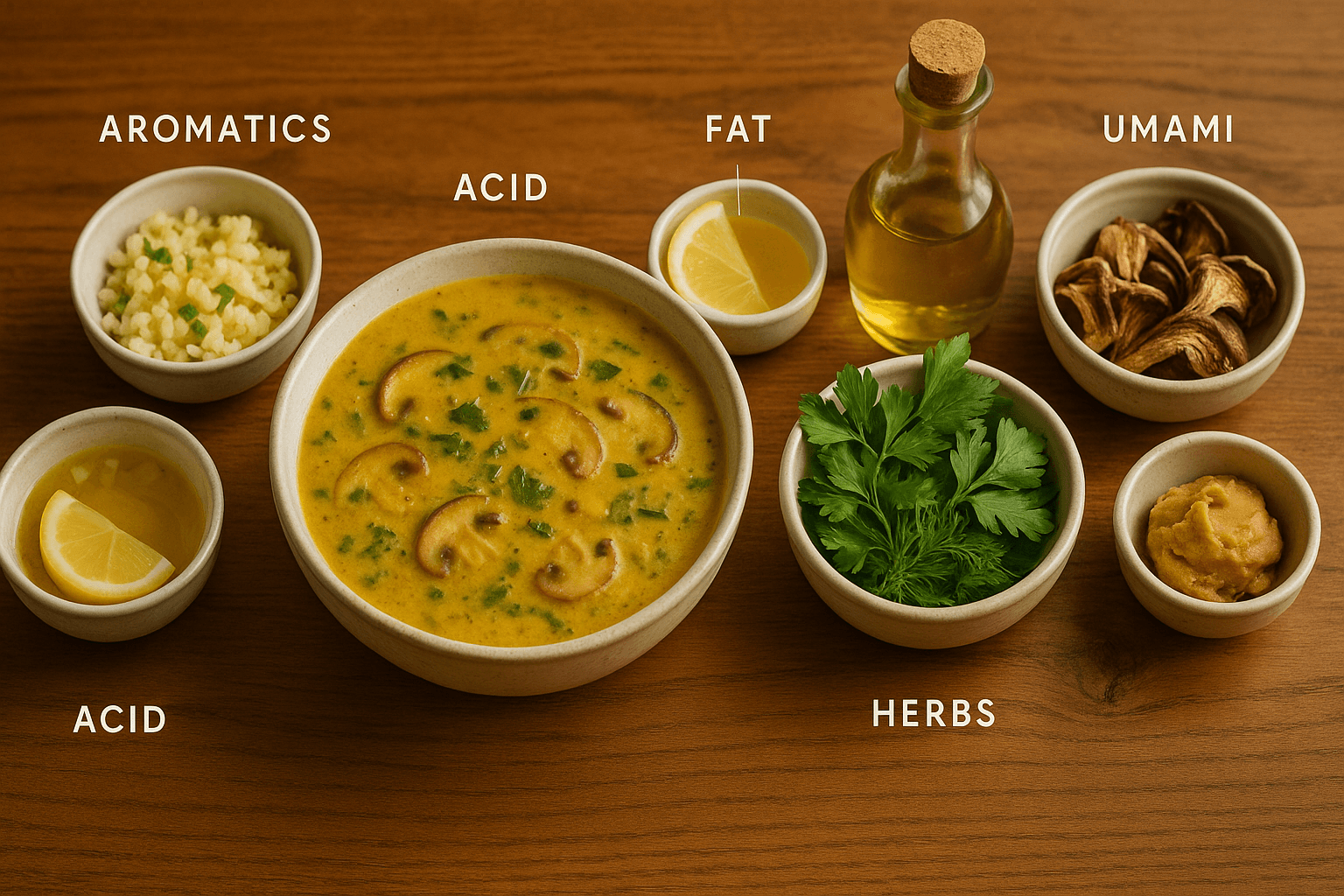
The 5‑Ingredient Flavor Base: Aromatics • Acid • Fat • Herbs • Umami
Think of this as a modular kit. You can use it to make soups, sheet-pan dinners, braises, stir-fries (soy-free if needed), salads that eat like meals, and sauces that cling to noodles or grains.
1) Aromatics: the “start here” layer
Aromatics are the first thing hitting the pan in many cuisines because heat transforms their sulfur compounds and sugars, developing sweetness and depth.
Best anti-inflammatory-friendly aromatics:
- Onion, shallot, scallion
- Garlic
- Ginger
- Celery + carrot (classic mirepoix base)
- Fennel (adds sweet anise warmth)
- Leeks
Technique tip: sweat vs. brown
- Sweating (medium-low heat, a bit of fat, covered or stirred often) builds sweetness without bitterness—great for soups and gentle dishes.
- Browning (higher heat, less stirring) creates deeper roasted notes via Maillard reactions—great for stews and “comfort” vibes.
Fast shortcut: Keep a “aromatic mince” in the freezer: a food-processor blend of onion + garlic + ginger frozen flat in a zip bag. Break off chunks as needed.
2) Acid: the brightness that makes rich food craveable
Acid is the secret behind why tomato sauce tastes alive and why a squeeze of lemon “wakes up” soup.
Nightshade-free acids to keep on hand:
- Lemon or lime juice
- Apple cider vinegar
- Rice vinegar (gentle)
- Red wine vinegar (stronger)
- Pomegranate molasses (sweet-tart)
- Sumac (a tangy spice)
- Fermented vegetables (sauerkraut brine, pickled onions)
When to add acid:
- Add a little early to balance bitterness (like in greens).
- Add most at the end so it stays bright and aromatic.
Rule of thumb: If something tastes “heavy” or “muddy,” it likely needs acid more than it needs salt.
3) Fat: mouthfeel, comfort, and flavor delivery
Fat isn’t just calories—it’s the carrier that helps aromatic compounds reach your nose and gives sauces a silky texture.
Anti-inflammatory-leaning fats (commonly recommended):
- Extra-virgin olive oil
- Avocado oil
- Walnuts, hemp seeds, ground flax (especially for finishing)
- Tahini (sesame paste)
- Coconut milk (some people love it; others limit saturated fat—use according to your goals)
Technique tip: emulsify for “creamy” without dairy
Creaminess often comes from emulsions—tiny fat droplets suspended in water. You can build that with:
- Tahini + lemon + warm water (instant creamy sauce)
- Olive oil + blended white beans or cauliflower
- Cashew cream (if nuts work for you)
- Pureed roasted carrots or squash + olive oil
4) Herbs: freshness and complexity (the “it tastes homemade” factor)
Herbs are what prevent anti-inflammatory food from tasting like a bowl of beige virtue.
Great everyday herbs:
- Parsley (clean, versatile)
- Dill (amazing with lemon, fish, potatoes)
- Cilantro (bright, citrusy)
- Basil (sweet, aromatic)
- Mint (especially with lemony grains and lamb)
- Chives/scallions for a gentle onion note
Technique tip: treat herbs like two categories
- Sturdy herbs (rosemary, thyme, oregano) can cook longer.
- Tender herbs (parsley, cilantro, dill, basil) are best added at the end or used as garnish.
Meal-prep move: Make an herby green sauce (chimichurri-style) and spoon it onto everything all week.
5) Umami: the comfort-food “bass note” without common triggers
Umami is the savory, lingering satisfaction often provided by tomatoes, parmesan, soy sauce, or long-cooked meat stock. You can absolutely get it without nightshades, dairy, or gluten—you just need different sources.
Nightshade-, dairy-, and gluten-friendly umami options (choose what fits your needs):
- Mushrooms (fresh or dried): especially shiitake, porcini
- Miso (check for gluten-free): white miso for gentle sweetness, red miso for deeper flavor
- Tamari (gluten-free soy sauce) or coconut aminos (soy-free alternative; sweeter)
- Fish sauce (powerful; start with drops; many find it transformative)
- Anchovies (melt into sauces; don’t taste “fishy” when used correctly)
- Seaweed (kombu for broth, nori flakes as garnish)
- Nutritional yeast (cheesy vibe without dairy)
- Olives/capers (salty, briny depth)
- Bone broth or well-made veggie broth (kombu + mushrooms)
Culinary science note: Umami comes largely from glutamate, and it’s amplified when paired with nucleotides (like inosinate in meat/fish or guanylate in mushrooms). That’s why mushroom + seafood or mushroom + miso can taste surprisingly “meaty.”
The “5-Ingredient Base” in practice: a simple formula
For most weeknight meals (serves 4), aim for:
- Aromatics: 1–2 cups chopped onion/leek + 2–4 cloves garlic (and/or 1–2 Tbsp ginger)
- Fat: 2–3 Tbsp olive oil or avocado oil (plus optional finishing drizzle)
- Umami: one of the following
- 1–2 Tbsp miso
- 1–2 cups mushrooms (or 1–2 Tbsp ground dried mushrooms)
- 1–2 tsp fish sauce
- 2–4 Tbsp nutritional yeast
- Acid: 1–2 Tbsp lemon/vinegar added at the end
- Herbs: 1/2–1 cup chopped tender herbs, or 1–2 Tbsp dried sturdy herbs
Then choose your format: soup, sheet-pan, skillet, grain bowl, stew, or sauce.
Smart swaps for common triggers (without losing umami)
Swap #1: Nightshades (tomatoes, peppers, eggplant, white potatoes)
Nightshades bring sweetness, acidity, and deep savory notes—especially tomatoes. Replacing them is easiest when you think in roles.
To replace tomato’s acidity + sweetness:
- Roasted carrots + beets + a splash of balsamic or red wine vinegar
- Pumpkin or butternut squash + lemon
- Unsweetened cranberry or pomegranate concentrate (tiny amounts)
To replace tomato’s umami:
- Mushroom powder (grind dried porcini/shiitake)
- Miso
- Olives/capers (briny depth)
- Anchovy paste (if you eat fish)
To replace peppery warmth (without chili):
- Ginger (fresh heat)
- Black pepper (if tolerated)
- Mustard (prepared or powder)
- Horseradish
- Wasabi (sparingly)
White potato comfort swap:
- Sweet potatoes (not a nightshade)
- Cauliflower mash (blend with olive oil + roasted garlic)
- Parsnip-cauliflower mash (more “potato-like”)
Recipe idea: “No-mato” comfort sauce (nightshade-free)
Blend roasted carrots + roasted beets + sautéed onion + garlic + mushrooms + balsamic + salt. Finish with olive oil and lemon. Use like marinara.
Swap #2: Dairy (milk, cream, cheese)
Dairy often provides: fat, tang, emulsification, and umami (aged cheeses).
Creaminess replacements:
- Cashew cream (soaked cashews blended with water + salt)
- Cannellini beans blended with broth + olive oil
- Tahini + warm water + lemon
- Coconut milk (works best in curries/soups)
Cheesy/umami replacements:
- Nutritional yeast + miso (together they mimic “aged” savory notes)
- Olive brine or capers (small amounts)
- Mushroom powder
Tang replacements:
- Lemon juice
- Vinegar
- Unsweetened coconut yogurt (if tolerated)
Swap #3: Gluten (wheat pasta, bread crumbs, flour)
Gluten often provides structure (bread), chew (pasta), and thickening (roux).
Pasta/noodle swaps:
- Brown rice pasta (best all-purpose)
- Lentil/chickpea pasta (higher protein; can be softer)
- Buckwheat soba (check label; some includes wheat)
- Spiralized zucchini or sweet potato (less “comfort,” but great with bold sauces)
Thickening swaps (soups, gravies):
- Pureed beans or cauliflower
- Cornstarch or arrowroot slurry (add at end; simmer briefly)
- Ground chia or flax (small amounts)
- Potato starch (if potatoes are okay)
Breadcrumb crunch swaps:
- Crushed gluten-free oats
- Ground nuts/seeds (almond, pumpkin seed)
- Toasted quinoa
Build-your-own anti-inflammatory comfort food: 6 templates
Each template uses the same flavor base so you can improvise confidently.
Template 1: Cozy soup that tastes like it simmered all day (but didn’t)
Base method:
- Sweat aromatics in olive oil 8–10 min.
- Add mushrooms (or miso later), cook until browned.
- Add broth + vegetables/beans.
- Simmer 15–25 min.
- Finish with acid + herbs.
Flavor combos:
- Lemon–dill–mushroom with white beans and spinach
- Ginger–miso–greens with bok choy and rice noodles (gluten-free)
- Garlic–thyme–mushroom with lentils and kale
Comfort upgrade: Blend a portion of the soup to thicken naturally.
Template 2: Sheet-pan dinner with sauce energy
Base method:
- Toss protein + veggies with fat + aromatics (grated garlic/ginger) + salt.
- Roast hot (425°F / 220°C) until browned.
- Finish with acid + herbs + an umami drizzle.
Umami drizzle ideas:
- Tahini + lemon + miso + water
- Olive oil + lemon + chopped capers + parsley
- Coconut aminos + sesame oil + lime (if sesame works)
Template 3: Skillet “creamy” pasta (dairy-free, gluten-free optional)
Base method:
- Sauté aromatics in olive oil.
- Add mushrooms or miso for umami.
- Add cooked pasta + a splash of pasta water.
- Stir in a creamy element (bean puree, cashew cream, tahini).
- Finish with lemon and herbs + nutritional yeast.
Comfort trick: Pasta water (starchy) helps emulsify sauce like a restaurant dish.
Template 4: Grain bowl that eats like comfort food
Base method:
- Start with warm grains (quinoa, brown rice, millet) + roasted veg + protein.
- Add a bold sauce (fat + acid + umami).
- Finish with herbs and crunch.
Sauce formula: 2 Tbsp tahini/olive oil + 1 Tbsp lemon + 1 tsp miso + water to thin.
Template 5: Braise/stew without tomatoes
Base method:
- Brown aromatics + mushrooms.
- Add meat/legumes + broth + “no-mato” base (roasted carrot/beet puree).
- Simmer until tender.
- Finish with vinegar + herbs.
Cultural note: Many traditional stews rely on the same architecture (aromatics + fat + acid + herbs). The specific ingredients vary, but the pattern holds.
Template 6: Comfort casserole vibe—without gluten or dairy
Base method:
- Use cooked grains or potatoes (or sweet potatoes) as the base.
- Use a creamy binder: blended white beans + olive oil + garlic + lemon.
- Add sautéed mushrooms for umami.
- Bake until set and browned on top.
Crunch topping: crushed GF oats + olive oil + chopped walnuts + thyme.
The core “5-ingredient flavor base” recipes (meal-prep friendly)
These are the building blocks you can prep once and remix all week.
1) All-Purpose Aromatic Starter (freezer-friendly)
Ingredients
- 2 onions (or 3 leeks)
- 1 head garlic
- 1 large knob ginger (optional)
- 2 celery stalks (optional)
Method
Pulse in a food processor until finely chopped. Freeze flat in a zip bag. Break off pieces to start soups, sauces, stir-fries, and braises.
Why it works: Smaller pieces release more aromatics quickly, speeding up flavor development.
2) Herby Green Finisher (chimichurri-inspired)
Ingredients
- 1 cup parsley + cilantro (or parsley + dill)
- 1 clove garlic
- 1/3 cup olive oil
- 2 Tbsp lemon juice or red wine vinegar
- Salt
Method
Chop finely or blend briefly. Keep 4–5 days refrigerated.
Use it on: roasted veggies, soups, grilled fish, grain bowls.
3) Umami Boost: Mushroom Powder + Miso Paste
Option A: Mushroom powder
- Grind dried shiitake/porcini in a spice grinder.
- Store airtight.
Add 1–2 tsp to soups, stews, sauces.
Option B: Miso “finishing paste”
- Mix 2 Tbsp miso + 2 Tbsp warm water + 1 Tbsp olive oil.
- Stir in at the end of cooking (don’t boil hard).
Why it works: High heat can dull miso’s aroma; adding it late preserves complexity.
4) Acid Kit: quick-pickled onions (nightshade-free)
Ingredients
- 1 red onion (or shallots)
- 1/2 cup vinegar (apple cider or rice)
- 1/2 cup water
- 1 tsp salt
Method
Slice thin; pour hot brine over; chill. Ready in 30 minutes.
Adds bright pop to bowls, salads, and roasted meats.
Five comfort-food recipes built from the system
These are written to highlight the flavor base and the swaps. Adjust salt to taste.
Recipe 1: Creamy Mushroom & White Bean “Alfredo” (Dairy-Free, Gluten-Free Optional)
Serves: 4
Ingredients
- 12 oz pasta (GF if needed)
- 2 Tbsp olive oil
- 1 onion, finely chopped
- 3 cloves garlic, minced
- 10–12 oz mushrooms, sliced
- 1 can cannellini beans, rinsed
- 1/2–1 cup broth
- 2 Tbsp nutritional yeast
- 1–2 Tbsp lemon juice
- Parsley or basil, chopped
- Optional umami: 1 tsp miso or 1/2 tsp fish sauce
Method
- Cook pasta; reserve 1 cup pasta water.
- Sauté onion in olive oil until translucent, then add garlic.
- Add mushrooms; cook until browned.
- Blend beans + broth + nutritional yeast (and miso if using) until smooth.
- Add sauce to skillet; toss with pasta, loosening with pasta water.
- Finish with lemon juice and herbs.
Why it tastes like comfort food: beans + olive oil emulate creaminess; mushrooms + nutritional yeast supply the “aged” savory note.
Recipe 2: Nightshade-Free “No-Mato” Braised Chicken (or Chickpeas)
Serves: 4
Ingredients
- 2 Tbsp olive oil
- 1 onion, chopped
- 3 cloves garlic
- 1 cup mushrooms, chopped
- 2 cups roasted carrots + 1 small roasted beet (or 1/2 cup cooked beet), blended with broth
- 1.5 lb chicken thighs (or 2 cans chickpeas)
- 2 cups broth
- 1 Tbsp balsamic vinegar
- Thyme or oregano
- Finish: lemon + parsley
Method
- Brown onion/garlic in oil; add mushrooms and cook until deep golden.
- Add chicken; sear briefly.
- Add carrot-beet puree + broth + herbs. Simmer covered 25–35 min (chickpeas: 15 min).
- Finish with balsamic + lemon + parsley.
Serve with: mashed cauliflower, brown rice, or polenta-style millet.
Recipe 3: Ginger-Miso Salmon with Sesame-Free Crunch Slaw (Gluten-Free)
Serves: 4
Ingredients
- Salmon fillets
- 1 Tbsp olive or avocado oil
- 1 Tbsp miso + 1 Tbsp lemon + 1 tsp honey (optional) + water to thin
- Slaw: shredded cabbage, grated carrot, chopped cilantro
- Dressing: lime + olive oil + salt + grated ginger
- Crunch: toasted pumpkin seeds
Method
- Brush salmon with miso-lemon glaze. Bake 10–12 min at 425°F.
- Toss slaw with dressing; top with pumpkin seeds.
- Serve salmon over slaw with extra herbs.
Comfort factor: miso provides deep savoriness; the fatty fish scratches the “rich” craving without dairy.
Recipe 4: One-Pot Lemon-Dill Lentil Soup with Mushroom Umami
Serves: 4–6
Ingredients
- 2 Tbsp olive oil
- 1 onion + 2 carrots + 2 celery stalks, chopped
- 3 cloves garlic
- 1 cup brown/green lentils
- 6–8 oz mushrooms, chopped
- 6 cups broth or water
- 2 Tbsp lemon juice
- Big handful dill + parsley
- Optional: 1 tsp mushroom powder
Method
- Sweat mirepoix in oil 10 min; add garlic.
- Add mushrooms; cook until they give up water and brown.
- Add lentils + broth; simmer 25–30 min.
- Finish with lemon and herbs.
Why it’s satisfying: lentils provide body; mushrooms deepen the broth; lemon-dill makes it feel bright instead of “diet.”
Recipe 5: Sheet-Pan Sausage & Veggies with Herby Acid Drizzle (Gluten-Free, Nightshade-Free Option)
Serves: 4
Ingredients
- Gluten-free chicken/turkey sausage (check ingredients)
- Veg: broccoli, onions, zucchini (or carrots + fennel if avoiding zucchini)
- 2–3 Tbsp olive oil
- Garlic + dried oregano
- Finish sauce: chopped parsley + lemon + capers + olive oil
Method
- Toss veg + sausage with oil, garlic, oregano, salt.
- Roast at 425°F until browned.
- Spoon over parsley-lemon-caper sauce.
Comfort trick: Roasting concentrates sweetness and creates browned edges that mimic long cooking.
Meal-prep plan: a 60-minute setup for 4 fast dinners
If you want quick anti-inflammatory dinners that don’t feel repetitive, prep components, not full meals.
What to prep (choose 4–6)
- Aromatic starter (freeze or refrigerate)
- Roasted vegetables tray (carrots + onions + mushrooms is a great base)
- Cooked grains (quinoa/brown rice)
- One protein (lentils, shredded chicken, baked tofu if soy works, or a tray of salmon)
- One green sauce (herby finisher)
- Quick-pickled onions (acid ready to go)
How it becomes dinners
- Dinner 1: Soup (aromatics + roasted veg + lentils + broth + lemon + herbs)
- Dinner 2: Sheet-pan remix (reheat roasted veg + add sausage; finish with green sauce)
- Dinner 3: Grain bowls (grains + protein + veg + tahini-miso sauce + pickled onions)
- Dinner 4: Creamy pasta (mushrooms + bean sauce + lemon + herbs)
Practical troubleshooting: how to fix “healthy but bland”
Use this quick diagnostic:
- Tastes flat? Add salt and an umami element (miso, mushroom powder, fish sauce).
- Tastes heavy? Add acid (lemon/vinegar) and a handful of fresh herbs.
- Tastes bitter (greens, crucifers)? Add fat and a touch of sweetness (roasted carrots, sautéed onions, or a tiny drizzle of honey).
- Tastes watery? Simmer uncovered to reduce, or blend a portion; add beans or pureed veg for body.
- Missing “comfort”? Increase browned flavors: roast harder, sear mushrooms well, or toast spices in oil before adding liquids.
Cultural context: this isn’t a new way of cooking—just a clearer framework
Many traditional cuisines already cook in ways that align with an anti-inflammatory pattern: lots of vegetables and legumes, herbs, fermented ingredients, olive oil or other whole-food fats, and layered seasoning.
- Mediterranean cooking leans on olive oil + lemon + herbs.
- Japanese home cooking often builds depth with dashi/seaweed + miso.
- Many Middle Eastern dishes use herbs + lemon + garlic as a finishing signature.
The framework here simply makes those instincts portable so you can cook across styles while respecting dietary triggers.
Expert-backed principles (brief references)
- The concept of umami as a basic taste is widely recognized in food science; glutamate-rich foods (mushrooms, aged ferments) drive savoriness and satisfaction.
- Anti-inflammatory dietary patterns frequently emphasized in nutrition research (such as Mediterranean-style eating) tend to be high in fiber-rich plants, olive oil, fish/omega-3s, and herbs/spices, and lower in ultra-processed foods.
If you want to go deeper, look for resources from:
- Registered dietitians specializing in inflammation/autoimmune nutrition
- Research summaries on Mediterranean dietary patterns and chronic inflammation markers
- Culinary science texts on flavor building and taste perception (umami, emulsions, Maillard browning)
A simple way to start tonight
If you do nothing else, do this:
- Sauté onion + garlic in olive oil.
- Brown mushrooms (or stir in miso at the end).
- Add your main ingredient (beans, lentils, chicken, fish, vegetables).
- Finish with lemon and a big handful of fresh herbs.
That’s the five-part base in one sentence. It’s the difference between food that merely avoids triggers and food you actually want to eat—warm, savory, bright, and deeply comforting.