Chickpea Flour Recipes That Don’t Turn Gummy: Hydration Ratios, Rest Times, and Heat Tips for Crisp Socca, Pancakes, and “Eggy” Scrambles
RecipeSimpli
Chickpea Flour Recipes That Don’t Turn Gummy: Hydration Ratios, Rest Times, and Heat Tips for Crisp Socca, Pancakes, and “Eggy” Scrambles
Chickpea flour (also called gram flour or besan) is one of the most useful pantry ingredients for gluten-free cooking—and also one of the easiest to get wrong. When it’s right, it makes crisp-edged socca, tender savory pancakes, and satisfyingly “eggy” scrambles with a golden color and a toasty, nutty aroma.
When it’s wrong, it turns gummy, pasty, or weirdly raw-tasting, especially in thicker batters or undercooked centers.
The good news: chickpea flour isn’t fickle. It’s just different from wheat flour. Once you understand three levers—hydration ratios, rest times, and heat management—you can make chickpea-flour recipes reliably crisp and tender rather than gluey.
This guide is built for home cooks: simple ratios you can memorize, the “why” behind them (a bit of culinary science), and practical recipes with variations.
Why chickpea flour gets gummy (and how to prevent it)
1) It hydrates slowly—and unevenly if rushed
Chickpea flour is high in protein and starch, and it contains lots of fine particles that can clump if liquid is added too quickly. If you cook before it hydrates fully, you get:
- Raw, beany flavor (uncooked flour taste)
- Gummy patches (dry clumps surrounded by gelled starch)
- A dense, custardy center when you wanted tender
Fix: whisk well, then let batter rest so particles fully absorb water.
2) It sets like a starch gel before it browns
Unlike wheat batters that can set via gluten structure, chickpea flour thickens as its starches gelatinize (roughly in the 65–80°C / 150–175°F range) and proteins coagulate as heat rises. If you set the batter gently (low heat, thick layer), it can become a soft gel before the outside dries and browns.
Fix: use the right thickness and apply high enough heat (or finishing heat) to drive off moisture and crisp the surface.
3) Too much water for the cooking method
Hydration is not “one ratio to rule them all.” A socca batter wants to be pourable because it bakes into a thin sheet. A scramble wants a ratio that sets into moist curds, not a pancake. If you use a high-hydration socca ratio for pancakes, you can end up steaming rather than browning.
Fix: match ratio to method; adjust for thickness, pan size, and heat source.
4) Under-salting and under-toasting exaggerate beaniness
Chickpea flour can taste “beany” when undercooked or bland. Salt and aromatics don’t just season—they also help it taste intentionally savory.
Fix: salt the batter, add aromatics, and cook until you see real browning.
Chickpea flour basics: types, flavor, and storage
Besan vs. chickpea flour
- Besan (gram flour) is often made from split brown chickpeas (chana dal). It can taste slightly more robust and “nutty.”
- Chickpea flour in many Western grocery stores is often from white chickpeas (garbanzo). Flavor can be a bit milder.
Both work interchangeably in the recipes below.
Freshness matters
Because chickpea flour contains natural oils, it can go stale.
- Store in an airtight container.
- Keep cool and dark.
- For long storage, refrigerate or freeze.
Stale flour tends to taste flat or bitter and can make you think the recipe is wrong.
The three levers: ratios, rest, heat
Lever #1: Hydration ratios you can memorize
Below are starting points you can scale up or down.
Key idea: chickpea flour thickens as it rests. Always judge final consistency after resting.
A) Socca / farinata (thin, crisp flatbread)
- 1 part chickpea flour : 1.25–1.5 parts water (by volume)
- Or by weight: 100 g flour : 125–150 g water
- Plus: 1–2 Tbsp olive oil per cup flour, and salt
This makes a batter that’s like thin cream.
B) Savory pancakes / crepes (pan-cooked, tender)
- 1 part chickpea flour : 1 part water (by volume)
- Or by weight: 100 g flour : 100–115 g water
This makes a batter like standard pancake batter—pourable but not watery.
C) “Eggy” scramble / omelet-style set
- 1 part chickpea flour : 1.5–2 parts water (by volume)
- Or by weight: 50 g flour : 90–120 g water
This is deliberately looser because it sets into soft curds; it’s not trying to hold a crisp crust.
Practical note: different brands absorb differently. Start at the low end of water; add more after resting if needed.
Lever #2: Rest times (and what resting actually does)
Resting isn’t just about bubbles; it’s about hydration.
- Minimum rest: 10–15 minutes (helps reduce gumminess)
- Better rest: 30–60 minutes (smoother texture, less raw flavor)
- Best for socca: 1–3 hours (more even browning, better structure)
Culturally, traditional preparations like socca (Nice, France) and farinata (Liguria, Italy) often rest batters—sometimes for hours—before cooking in very hot ovens. Indian besan batters for fritters or cheela may rest briefly or be cooked immediately, but those recipes often include spices, acids, or thinner spreads that cook fast.
If you’re short on time: whisk with warm water and rest 10 minutes. Warm water speeds hydration.
Lever #3: Heat tips for crisp edges and tender centers
Rule of thumb: chickpea batter needs enough heat to evaporate water and brown the surface.
- Use cast iron or a heavy pan whenever possible.
- Preheat thoroughly. A lukewarm pan encourages sticking and steaming.
- For socca: use high oven heat and/or broiler to finish.
- For pancakes: use medium to medium-high; adjust after the first test pancake.
- Avoid constant flipping; let the first side brown well.
A key anti-gummy trick: cook thin layers for crisp results. Thick layers set into gels before they can dry.
Troubleshooting: why it’s still gummy (and the fast fixes)
Problem: Batter is gluey after cooking
Likely causes: too thick, not rested, pan too cool.
Fix:
- Add a splash of water after resting to loosen.
- Cook thinner (spread batter out).
- Increase heat; preheat longer.
Problem: Raw, beany flavor
Likely causes: undercooked center, too low heat, batter not rested.
Fix:
- Rest 30–60 minutes.
- Cook until you see browned spots.
- Add aromatics: garlic, cumin, black pepper, herbs.
Problem: Sticks to pan
Likely causes: insufficient preheat, not enough oil, nonstick past its prime.
Fix:
- Preheat pan 3–5 minutes.
- Add oil and let it shimmer.
- Use cast iron or a good nonstick.
Problem: Dry and crumbly
Likely causes: too little water, too high heat, overcooked.
Fix:
- Increase hydration slightly.
- Reduce cook time; lower heat a notch.
- Add oil to batter for tenderness.
Recipe 1: Crisp Socca (or Farinata) That Actually Browns
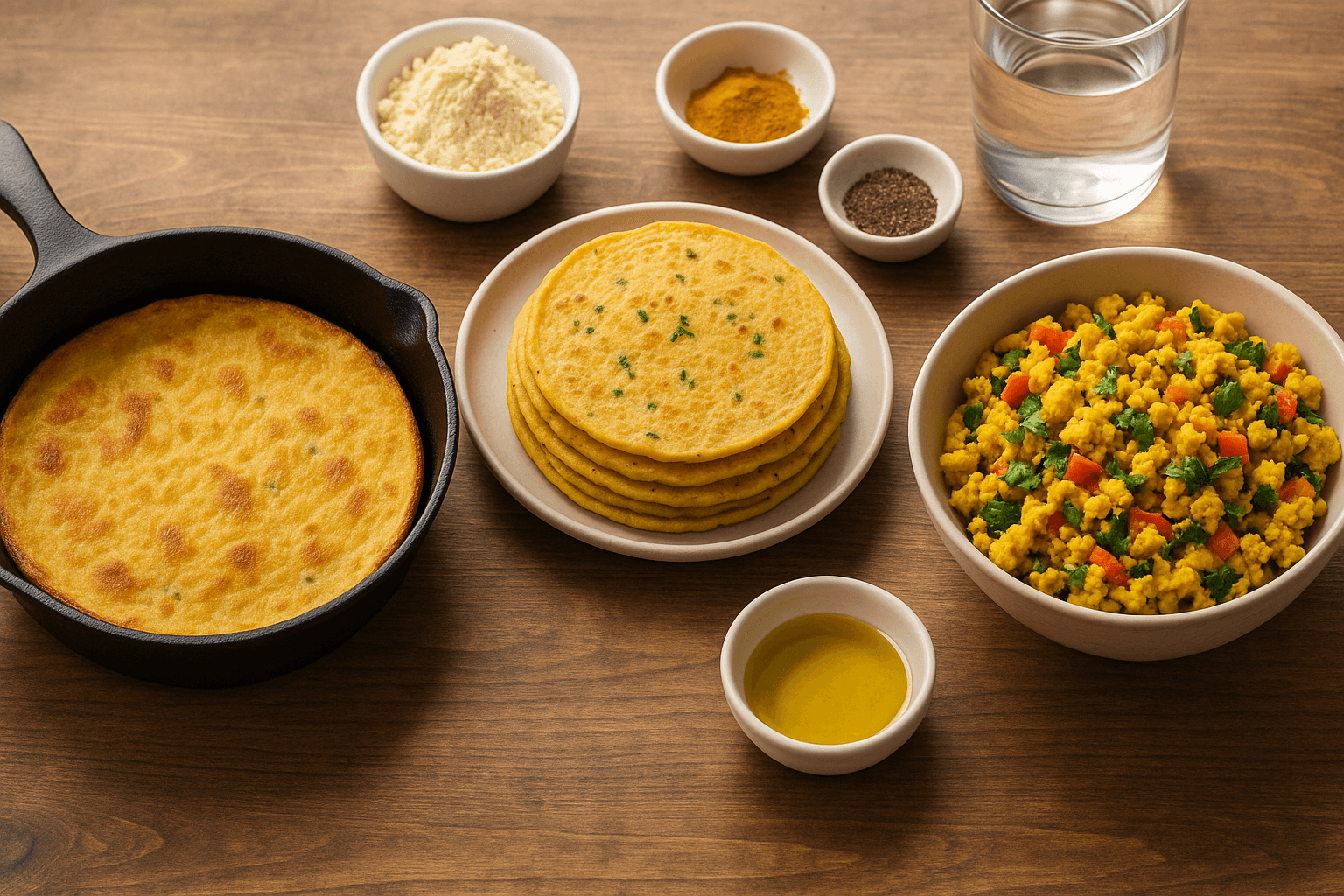
Socca (from Nice) and farinata (from Liguria) are close cousins: chickpea batter baked in a very hot pan until crisp at the edges with a tender, custardy center. The hallmark is browning—those dark toasted spots that signal flavor and structure.
Socca batter ratio (fail-proof)
Makes one 10–12 inch round.
- 1 cup (120 g) chickpea flour
- 1 1/4 cups (300 g) water (start here; up to 1 1/2 cups if flour is very absorbent)
- 1 tsp kosher salt
- 2 Tbsp olive oil, plus more for the pan
- Optional: black pepper, rosemary, sliced onion
Method
- Whisk batter: In a bowl, whisk flour and salt. Slowly whisk in water until smooth. Whisk in olive oil.
- Rest: 1 hour (minimum 20 minutes; up to 3 hours for best texture). Skim any foam if you want a smoother surface.
- Preheat hard: Place a cast-iron skillet in the oven and heat to 475–500°F (245–260°C) for at least 10 minutes.
- Oil the hot pan: Carefully remove skillet, add 1–2 Tbsp oil, swirl.
- Pour and bake: Pour batter (it should sizzle). Bake 10–14 minutes until set and browned at edges.
- Broil for blistering: 1–3 minutes under the broiler to get charred spots.
- Serve hot: Finish with more olive oil, cracked pepper, flaky salt. Slice like pizza.
Why this works
- High oven heat drives rapid evaporation = crispness.
- Resting prevents chalky bits and reduces raw flavor.
- Oil aids browning and creates a fried, crisp edge.
Mix-ins that stay crisp-friendly
Add to batter right before baking:
- Finely chopped rosemary or thyme
- Sliced scallions
- Toasted cumin seeds
- Thinly sliced onions (they caramelize)
Avoid wet mix-ins (fresh tomatoes, watery mushrooms) unless you pre-cook them; extra moisture can soften the crust.
Recipe 2: Savory Chickpea Pancakes (Cheela-Style) Without the Gum
Across India, besan cheela is a quick savory pancake—thin, spiced, and often filled with onion, cilantro, chiles, or grated vegetables. The best versions are lacy at the edges and flexible, not rubbery.
Pancake batter ratio (reliable)
Makes 6–8 thin pancakes.
- 1 cup (120 g) chickpea flour
- 1 cup (240 g) water (plus extra as needed)
- 3/4 tsp salt
- 1 Tbsp oil (optional but improves tenderness)
- 1/2 tsp cumin
- 1/4 tsp turmeric (optional)
- Optional: minced garlic, grated ginger, black pepper
Optional add-ins (choose 1–2)
- 1/2 cup finely chopped onion
- 1/2 cup chopped spinach (squeezed dry)
- 1/3 cup grated carrot or zucchini (squeeze dry)
- Chopped cilantro and green chile
Method
- Whisk and rest: Whisk flour, salt, spices. Add water gradually; whisk smooth. Rest 20–30 minutes.
- Adjust consistency: After resting, batter should be pourable like crepe batter. Add water 1 Tbsp at a time if it thickened too much.
- Heat pan: Medium-high. Add a thin film of oil.
- Pour and spread thin: Ladle batter and immediately spread in a spiral with the back of the ladle. Thin = crisp.
- Cook first side well: 2–3 minutes until edges lift and underside browns.
- Flip: Cook 1–2 minutes more. Repeat.
Heat tips that prevent gumminess
- If the pancake is pale and soft, your pan is too cool.
- If it browns too fast but stays wet on top, your batter is too thick—add water.
- Don’t stack immediately if you want crisp edges; stack traps steam. Use a rack or keep in a warm oven uncovered.
Serving ideas
- Yogurt and chutney (or dairy-free yogurt)
- Stuff with spiced potatoes for a wrap
- Top with fried egg (if not vegan) or avocado and salsa
Recipe 3: Chickpea Flour “Eggy” Scramble That Sets Into Curds (Not Paste)
Chickpea flour can mimic some qualities of scrambled eggs—soft curds, savory richness, and a satisfying protein bite—especially when seasoned with turmeric (color) and kala namak (black salt), which has sulfurous compounds that smell “eggy.”
The biggest mistake is cooking it like pancake batter and expecting fluff. Instead, treat it like a quick-setting custard: stir as it sets and control moisture.
Scramble base ratio
Serves 2.
- 1/2 cup (60 g) chickpea flour
- 3/4 to 1 cup (180–240 g) water (start with 3/4 cup for firmer; 1 cup for softer)
- 1–2 tsp nutritional yeast (optional, for savory depth)
- 1/2 tsp kala namak (black salt) or 3/4 tsp kosher salt
- 1/4 tsp turmeric
- Black pepper
- 1–2 Tbsp oil for the pan
Method
- Whisk smooth, then rest 10–15 minutes. This matters more than people think for scramble texture.
- Pre-cook watery veggies. If using mushrooms, tomatoes, or spinach, sauté them first and set aside. Excess water causes gumminess.
- Heat skillet: Medium heat with oil.
- Pour and wait briefly: Pour batter; let it sit 20–40 seconds until the bottom starts setting.
- Scrape and stir: Use a silicone spatula to scrape from edges inward, forming curds.
- Cook until just set: 3–6 minutes depending on hydration. It should look glossy but not wet.
- Finish: Fold in pre-cooked veggies, taste for salt, add herbs.
Texture controls
- For larger curds: stir less frequently; let it set more between scrapes.
- For smaller curds: stir continuously.
- If it’s thickening too fast: lower heat, add a splash of water.
- If it seems loose and pasty: keep cooking uncovered so steam can escape.
Flavor boosts
- Sauté garlic and scallions in the oil first.
- Add smoked paprika, cumin, or curry powder.
- Finish with lemon juice or hot sauce.
Mix-in strategy: how to add flavor without making batter soggy
Chickpea flour loves savory additions, but moisture management matters.
Use the “dry/wet balance” rule
If you add wet ingredients, compensate by:
- pre-cooking them,
- squeezing out liquid,
- or slightly reducing water in the batter.
Great mix-ins (low-risk)
- Chopped herbs
- Ground spices
- Grated hard cheese (if using) or nutritional yeast
- Toasted seeds (sesame, cumin, nigella)
Higher-risk mix-ins (use strategy)
- Zucchini, spinach: squeeze dry
- Mushrooms: sauté first
- Tomatoes: use sparingly or cook down
Advanced technique: controlling gumminess with acids and fat
Once you’ve mastered ratios/rest/heat, two additional tools can help.
A little acid can brighten and tenderize
A small amount of lemon juice or yogurt (or plant yogurt) can reduce “beany” perception and improve flavor.
- Start with 1–2 tsp lemon juice per cup flour.
- Don’t overdo it; too much acid can thin and weaken structure.
Fat improves crisping and mouthfeel
Oil in the batter (and in the pan) helps:
- conduct heat,
- reduce sticking,
- and produce a more fried, crisp surface.
For socca, olive oil isn’t optional if you want classic texture.
Gluten-free, higher-protein variations (without heaviness)
Chickpea flour is already relatively high in protein compared with many flours, but you can push it further.
Add a small amount of another protein flour
For pancakes or socca, try replacing 10–20% of chickpea flour with:
- lentil flour (earthy, strong)
- soy flour (high protein, but can taste “beany” if too much)
Keep the rest/heat rules the same.
Add binders carefully (optional)
If you want a more cohesive pancake (less fragile), you can add:
- 1 tsp psyllium husk per cup flour (adds structure)
Be careful: too much psyllium can feel gummy, which is the exact problem you’re trying to avoid.
A quick “choose your texture” chart
| Dish | Batter thickness | Rest time | Heat level | Goal texture |
|---|---|---|---|---|
| Socca/Farinata | Thin, pourable | 1–3 hours | Very hot oven + broil | Crisp edge, tender center |
| Cheela-style pancakes | Medium-thin, spreadable | 20–30 min | Medium-high pan | Lacy edge, flexible middle |
| Scramble | Loose, custard-like | 10–15 min | Medium | Soft curds, not browned crust |
Common myths (and what to do instead)
Myth: “If it’s gummy, add more flour.”
Sometimes the batter is actually fine—you just cooked it too thick or too cool.
Do instead: spread thinner and increase heat; cook longer uncovered; rest the batter.
Myth: “Resting is optional.”
You can sometimes get away with it in very thin pancakes, but most home-cook gumminess comes from insufficient hydration time.
Do instead: build resting into your prep. Make batter first, then chop vegetables or preheat your oven.
Myth: “Chickpea flour should taste neutral.”
It’s naturally nutty and legume-forward. You’re aiming for toasty, savory, well-seasoned, not bland.
Do instead: salt properly, cook to browning, and use aromatics.
Cultural context: why traditional methods emphasize rest and heat
Socca and farinata are historically baked in extremely hot ovens (often wood-fired) in large, seasoned pans. That intense heat is not just tradition—it’s functional: it rapidly sets the batter, evaporates water, and browns the surface.
Similarly, besan cheela is typically made thin and cooked on a hot tawa (griddle), which encourages quick cooking and surface drying. These methods evolved to highlight chickpea flour’s strengths: crisping, toasting, and savory depth.
Modern home kitchens can absolutely replicate the effect—especially with cast iron, high preheat, and a broiler finish.
Final takeaways: the no-gum checklist
Before you blame the flour, run through this:
- Did you use the right ratio for the dish? (Socca ≠ pancakes ≠ scramble)
- Did you rest the batter? (At least 10–15 minutes; longer for socca)
- Was your pan/oven truly hot? (Preheat longer than you think)
- Did you cook it thin enough? (Thin layers crisp; thick layers gel)
- Did you cook it to real browning (when appropriate)? (Color = flavor + dryness)
- Did you manage moisture from mix-ins? (Pre-cook or squeeze)
Master those, and chickpea flour stops being unpredictable. It becomes a versatile tool for fast weeknight meals, impressive gluten-free entertaining, and protein-forward breakfasts that feel like comfort food—not compromise.