Cottage Cheese Keto Recipes That Don’t Split: Heat-Safe Sauces, Creamy “Alfredo” Ratios, and Meal-Prep Bakes That Reheat Smooth
RecipeSimpli
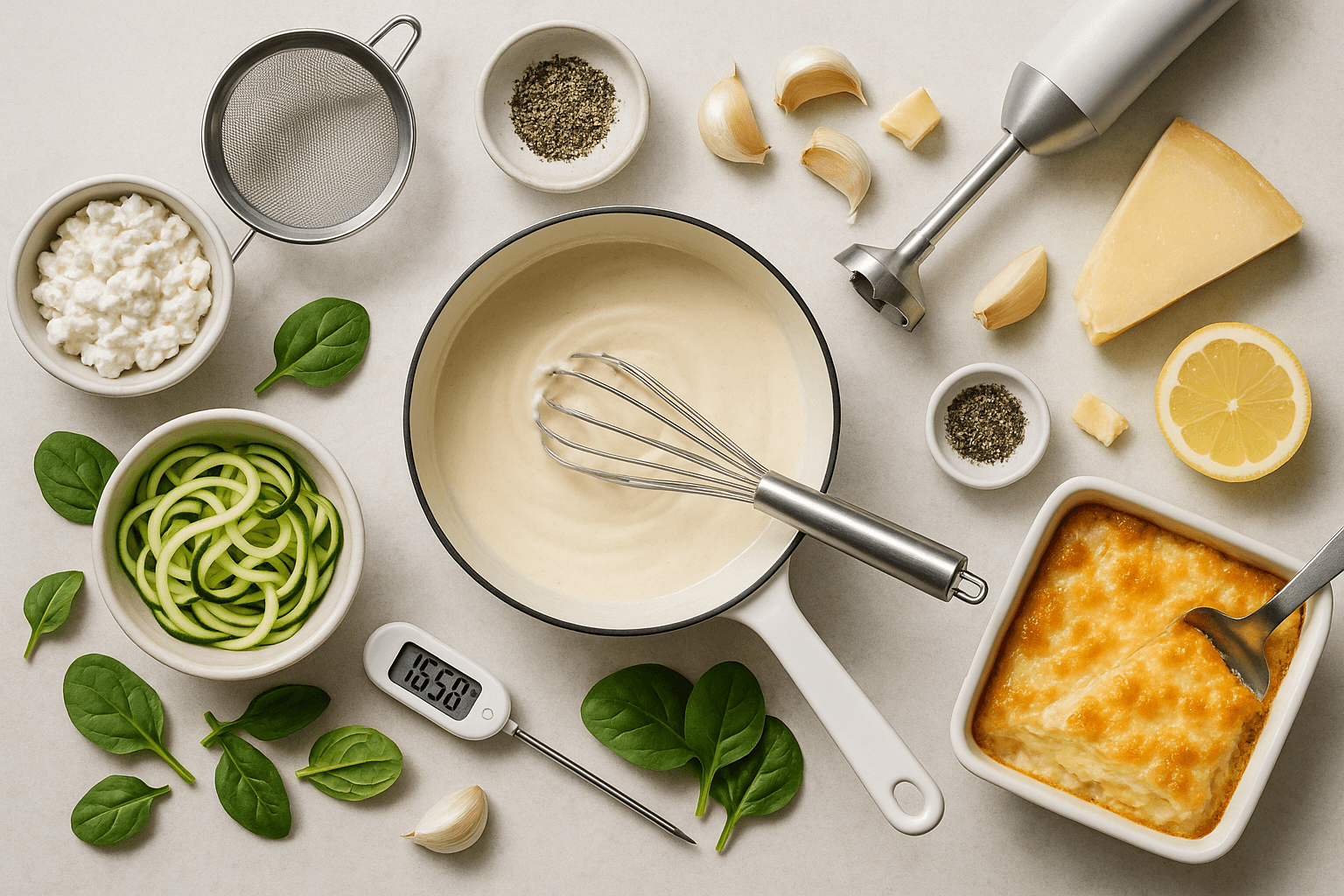
Cottage cheese is having a moment in keto kitchens for good reason: it’s high in protein, relatively low in carbs (depending on brand), and readily transforms into creamy sauces and bakes when you treat it like an ingredient with rules.
The frustration most home cooks run into is also predictable: watery puddles, grainy sauces, or that dreaded split/curdled look after heating. Unlike heavy cream or cream cheese, cottage cheese is a fresh, high-moisture, acid-leaning dairy full of delicate curds suspended in whey. Heat it aggressively and it behaves exactly like you’d expect a moist, partially acidic protein gel to behave: it tightens, squeezes out water, and turns grainy.
The good news: you can absolutely make cottage cheese “Alfredo,” queso-style dips, and meal-prep casseroles that reheat smooth—if you follow a few blending/straining rules, respect temperature limits, and use stabilizing ratios.
Below is a practical, science-backed guide plus reliable formulas and recipes.
Why cottage cheese splits (and how to stop it)
What’s inside cottage cheese
Cottage cheese is primarily:
- Casein proteins (the same family as many cheeses)
- Whey/water (a lot of it)
- Fat (varies widely; 0–4% is common)
- Salt
- Sometimes stabilizers (guar gum, carob bean gum, carrageenan) depending on brand
The curds are already coagulated proteins. When you heat them too quickly or too high, they contract and expel whey. That gives you:
- Grainy texture (tightened curds)
- Wateriness (whey released)
- Separated sauce (fat and water no longer emulsified)
The three biggest causes of curdling/wateriness
- High heat or boiling
- Boiling is the fastest way to make proteins seize and squeeze out water.
- Unblended curds
- Whole curds are “weak points” in a sauce; they heat unevenly and tighten.
- Too much free water
- Many cottage cheeses contain significant whey. If you don’t manage it, the sauce thins and weeps—especially after refrigeration.
The fix: treat it like a gentle emulsion
To keep cottage cheese smooth when heated, you’re trying to:
- Reduce particle size (blend)
- Reduce free water (strain or cook down gently)
- Add emulsifiers/stabilizers (cheese, egg, a little starch if you allow it)
- Keep temperatures moderate
This approach mirrors classical sauce-making logic: stable sauces are typically emulsions (fat + water held together) plus thickeners.
Choosing the right cottage cheese for keto sauces and bakes
1) Fat level matters
- 4% (full-fat) is the most forgiving for sauces. More fat = creamier mouthfeel and better emulsion stability.
- 2% can work if you add fat (butter, olive oil, parmesan) and strain well.
- 0% is the most prone to graininess and wateriness unless stabilized aggressively.
2) Curds: small vs large
- Small-curd usually blends smoother.
- Large-curd is fine if you’re blending thoroughly, but it may need longer blending.
3) Ingredients list: stabilizers can help
Brands that include gums (guar, locust bean) can be more heat-stable. If you prefer minimal ingredients, you can still get great results—just lean more on straining and gentle heat.
4) Watch the carbs
Most cottage cheese is fairly keto-friendly, but carbs vary by brand due to milk sugars and added ingredients. Always check the label.
The blending + straining rules (your anti-splitting toolkit)
Rule 1: Blend until completely smooth
For sauces and dips, don’t stop at “mostly smooth.” You want it silky, like yogurt or heavy cream.
Best tools
- High-speed blender: smoothest result
- Immersion blender: convenient; works well if you blend longer
- Food processor: acceptable, may be slightly less silky
Pro tip: Blend with a little added fat (olive oil, melted butter) to help form an emulsion.
Rule 2: Strain when you need thick, clingy sauces or reheat stability
Straining reduces whey and prevents “puddling” after refrigeration.
Quick method:
- Set a fine mesh strainer over a bowl.
- Add cottage cheese.
- Let drain 10–30 minutes (longer = thicker).
Cheesecloth method: For extra-thick results, line a strainer with cheesecloth and drain 30–60 minutes.
When to strain:
- Alfredo-style pasta sauces
- Queso dips you want thick
- Meal-prep bakes that need to reheat without weeping
Rule 3: Add cottage cheese after the pan comes off high heat
If your skillet is ripping hot, kill the heat first. Residual heat is enough to warm and thicken without curdling.
Rule 4: Respect temperature limits
Cottage cheese sauces behave best kept below a simmer.
- Ideal target: ~140–170°F (60–77°C)
- Danger zone: simmering/boiling (180°F+/82°C+)
You don’t need a thermometer every time, but if you’re troubleshooting splitting, it’s one of the fastest ways to fix your process.
Rule 5: Use a stabilizer when reheating matters
Reheating is when many sauces break. A stabilizer helps the emulsion survive cooling and re-warming.
Keto-friendly stabilizers include:
- Egg yolk (tempering required)
- Parmesan or pecorino (emulsifying proteins + salt)
- Cream cheese (very stable, low-carb)
- A pinch of xanthan gum (optional; powerful—use sparingly)
If you’re strict keto and avoid additives, lean on egg + parmesan + gentle heat.
The core formulas: reliable ratios that don’t split
Think in ratios so you can build sauces from whatever you have.
1) Heat-safe cottage cheese “Alfredo” (base ratio)
This is the workhorse.
By volume:
- 1 cup (240 ml) blended cottage cheese
- 2–4 tbsp (28–56 g) butter or 2–3 tbsp olive oil
- 1/2–3/4 cup (50–75 g) finely grated parmesan
- 2–6 tbsp (30–90 ml) hot water or broth (to adjust thickness)
By function:
- Cottage cheese = protein body
- Butter/oil = fat + silk
- Parmesan = thickener + emulsifier + flavor
- Hot water/broth = controls cling vs pour
Temperature rule: Warm gently; never boil.
2) Queso-style dip (thicker, scoopable)
By volume:
- 1 cup blended cottage cheese
- 1–1 1/2 cups (110–170 g) shredded melting cheese (cheddar, Monterey Jack)
- 1–3 tsp taco seasoning + 1–2 tbsp salsa (optional)
- 1–3 tbsp cream or water as needed
Why it works: melting cheeses bring emulsifying salts/proteins and help prevent weeping.
3) Meal-prep bake binder (reheat-stable “custard”)
For casseroles that reheat creamy, treat cottage cheese like a custard base.
By volume:
- 1 cup cottage cheese (blended or partially blended)
- 2 eggs
- 1–1 1/2 cups shredded cheese
This combination sets gently in the oven and resists separation after chilling.
Technique: how to heat cottage cheese sauces without splitting
The gentle-pan method (best for weeknights)
- Blend cottage cheese until silky.
- Heat butter/olive oil with aromatics (garlic) on low.
- Add blended cottage cheese and stir.
- Add parmesan gradually.
- Keep heat low; if steam is aggressive, pull the pan off heat.
- Thin with hot water/broth as needed.
The bain-marie method (ultra safe)
If you’re anxious about curdling, warm the sauce in a bowl over barely simmering water (like melting chocolate). This keeps temperatures controlled.
If it starts to look grainy
- Pull off heat immediately.
- Add 1–2 tbsp hot water and blend again.
- Add a bit more fat (butter/cream) and re-emulsify.
Recipe 1: Creamy Cottage Cheese Keto “Alfredo” (silky, clingy, reheats well)
Ingredients (4 servings)
- 1 1/2 cups full-fat cottage cheese (strain 15–20 min for extra thickness)
- 3 tbsp butter
- 2 cloves garlic, finely grated or minced
- 3/4 cup finely grated parmesan (plus more to finish)
- 1/4 tsp black pepper
- Pinch nutmeg (optional, classic Alfredo note)
- 2–6 tbsp hot water or chicken broth, to loosen
- Salt to taste (often parmesan is enough)
Method
- Strain (optional but recommended): Drain cottage cheese in a fine mesh strainer 15–20 minutes.
- Blend: Blend cottage cheese until completely smooth.
- Warm aromatics: Melt butter on low heat. Add garlic; cook 30–60 seconds (don’t brown).
- Build sauce off-boil: Reduce heat to the lowest setting. Add blended cottage cheese and stir until warm.
- Add parmesan gradually: Sprinkle in parmesan in 2–3 additions, stirring constantly.
- Adjust texture: Add hot water/broth a tablespoon at a time until it coats a spoon.
- Finish: Pepper, nutmeg, adjust salt.
Serving ideas (keto)
- Over zucchini noodles or shirataki noodles (dry them well)
- Tossed with sautéed chicken and spinach
- As a sauce for roasted cauliflower
Reheating tip
Reheat in a small saucepan on low, loosening with a splash of water/broth. Avoid microwaving on high; use 50% power and stir often.
Recipe 2: Heat-Safe Cottage Cheese Garlic Herb Sauce (for salmon, chicken, veggies)
This is a lighter, tangy cream sauce that stays smooth when treated gently.
Ingredients
- 1 cup full-fat cottage cheese, blended smooth
- 2 tbsp olive oil or butter
- 1 tbsp lemon juice
- 1 tsp Dijon mustard (helps emulsify; optional but effective)
- 1–2 tbsp chopped dill/parsley/chives
- Salt and pepper
- 2–4 tbsp hot water to thin
Method
- Warm oil/butter on low.
- Add blended cottage cheese and stir until warmed.
- Off heat, whisk in lemon juice and Dijon.
- Stir in herbs; thin to desired consistency.
Why Dijon helps
Mustard contains natural emulsifiers that help fat and water stay mixed—an old culinary trick used in vinaigrettes and pan sauces.
Recipe 3: Keto Cottage Cheese Queso Dip That Stays Creamy
Ingredients
- 1 cup cottage cheese (strain 10 min if watery), blended smooth
- 1 1/4 cups shredded Monterey Jack or cheddar
- 2 tbsp cream (or water) as needed
- 1–2 tsp chili powder or taco seasoning
- 2 tbsp salsa (optional)
- Salt to taste
Method
- In a saucepan over low heat, combine blended cottage cheese and 2 tbsp cream/water.
- Add shredded cheese in small handfuls, stirring until melted before adding more.
- Stir in seasoning and salsa.
Troubleshooting
- Too thick: add water 1 tbsp at a time.
- Greasy: heat was too high; pull off heat and whisk vigorously (or blend briefly).
Recipe 4: Meal-Prep Chicken Bacon Ranch Bake (no weeping, reheats smooth)
This uses the bake binder ratio (cottage cheese + eggs + shredded cheese). The eggs set the sauce into a stable custard-like matrix.
Ingredients (6 servings)
- 3 cups cooked chicken, chopped
- 6 slices bacon, cooked and crumbled
- 2 cups broccoli florets, lightly steamed and well-drained
- 1 1/2 cups full-fat cottage cheese (blend half for creaminess, leave half for texture)
- 3 eggs
- 1 1/2 cups shredded cheddar or mozzarella
- 2–3 tbsp ranch seasoning (or DIY: dill, garlic powder, onion powder)
- Black pepper
Method
- Heat oven to 375°F (190°C).
- Whisk eggs with cottage cheese (and blend if you want fully smooth).
- Stir in shredded cheese and seasoning.
- Fold in chicken, bacon, and broccoli.
- Bake 25–35 minutes until set and lightly golden.
- Rest 10 minutes before slicing.
Meal-prep storage + reheat
- Chill completely before covering (reduces condensation).
- Reheat at 300–325°F (150–165°C) covered, or microwave at 50% power.
Recipe 5: Spinach-Mushroom “Lasagna” Bake with Cottage Cheese Layer (keto-friendly)
A cultural nod: cottage cheese has long been a practical ricotta substitute in many American home kitchens. For keto, it’s a high-protein swap that can be made ricotta-smooth with blending and straining.
Ingredients
- 1 1/2 lbs zucchini, sliced into thin planks (or roasted eggplant slices)
- 2 cups mushrooms, sliced
- 4 cups spinach
- 2 cups marinara (choose low-sugar)
- 2 cups cottage cheese (strain 20–30 min), blended smooth
- 1 egg
- 1 1/2 cups shredded mozzarella
- 1/2 cup parmesan
- Salt, pepper, oregano
Method
- Prevent wateriness: Salt zucchini lightly, rest 15 min, blot dry. Optionally roast 10 minutes to drive off moisture.
- Sauté mushrooms until they release moisture and the pan is mostly dry; wilt spinach and squeeze dry.
- Mix blended cottage cheese with egg, half the parmesan, salt/pepper.
- Layer: marinara → zucchini → cottage layer → veg → mozzarella; repeat.
- Bake 35–45 minutes at 375°F (190°C). Rest 15–20 minutes before slicing.
Why resting matters
As a bake cools slightly, proteins relax and liquids reabsorb. Cutting immediately makes even a well-built casserole look watery.
The wateriness prevention checklist (especially for casseroles)
Watery results often come from vegetables, not just cottage cheese.
- Drain/roast watery veg (zucchini, mushrooms, spinach)
- Strain cottage cheese when making a distinct layer
- Use eggs for bakes you plan to reheat
- Cool completely before refrigerating to reduce condensation
- Reheat gently (high heat forces water out)
Microwave and reheat strategies (where most sauces fail)
Best practice for sauces
- Reheat at low power (40–60%)
- Stir every 20–30 seconds
- Add a splash of water/broth first
Best practice for bakes
- Cover to trap steam and heat evenly
- Use moderate oven temps (300–325°F / 150–165°C)
- Rest 5 minutes after reheating so the sauce re-settles
If you routinely meal-prep, consider portioning bakes into smaller containers. Smaller portions reheat faster and more evenly—less time in the danger zone where proteins tighten.
Advanced stabilization options (choose your comfort level)
Egg yolk tempering (classic, very effective)
For an ultra-silky Alfredo:
- Whisk 1–2 egg yolks in a bowl.
- Slowly whisk in a ladle of warm (not boiling) sauce.
- Return the mixture to the pan off heat, stirring.
This borrows from techniques used in custards and sauces like hollandaise: gradual warming prevents scrambling.
Xanthan gum (tiny amounts)
If you’re comfortable with modernist pantry staples, xanthan gum can prevent separation.
- Start with 1/16 tsp per cup of sauce (seriously small)
- Blend well
Too much gives a slick or gummy texture.
Sodium citrate (for “cheese sauce” style)
More niche, but sodium citrate helps emulsify cheeses into smooth sauces (common in modernist mac-and-cheese). If you already use it, it can make cottage-cheese queso exceptionally stable.
Common mistakes and fast fixes
Mistake: “I boiled it to thicken.”
Fix: Cottage cheese thickens best by blending + parmesan + gentle reduction, not boiling.
Mistake: “It’s smooth hot, but watery after chilling.”
Fix: Strain first; add parmesan or an egg-based binder; reheat gently.
Mistake: “It tastes bland.”
Fix: Cottage cheese is mild. Salt, acid, and umami matter:
- Parmesan/pecorino
- Garlic/onion powder
- Dijon
- Lemon zest
- Black pepper
Mistake: “It’s grainy no matter what.”
Fix: Blend longer; switch to full-fat; blend with warm butter; strain; avoid high heat.
A quick note on food science (and why these tricks work)
Culinary science writers and food labs (from classic sauce principles taught in culinary schools to modern test-kitchen methodology) repeatedly return to a few fundamentals: control heat, control water, and use emulsifiers. Dairy proteins tighten with heat; water migrates; fat separates unless something holds it in suspension.
Your practical takeaways:
- Blend to remove curd grain.
- Strain to reduce free whey.
- Keep heat below simmer to prevent protein squeeze.
- Use parmesan/egg/cream cheese as stabilizers depending on your goal.
Once you treat cottage cheese as a component of an emulsion rather than a finished cheese, it becomes one of the most versatile keto ingredients in your fridge.
Quick starter menu (put it into practice this week)
- Day 1: Alfredo ratio + chicken + zucchini noodles
- Day 2: Queso dip + taco salad bowls
- Day 3: Chicken Bacon Ranch Bake (meal-prep)
- Day 4: Reheat bake + side of roasted cauliflower
- Day 5: Garlic herb sauce over salmon + asparagus
Summary: the “never split” rules in one place
- Blend thoroughly (silky, not just mostly smooth).
- Strain for thick sauces and meal-prep reliability.
- Heat gently (aim ~140–170°F / 60–77°C).
- Avoid boiling and avoid prolonged high heat.
- Use stabilizing ratios: parmesan + fat for sauces, eggs + shredded cheese for bakes.
- Reheat low and slow, adding a splash of water/broth.
Master these, and cottage cheese becomes a keto powerhouse: creamy, protein-rich, and—most importantly—smooth every time.