Dirty Soda Recipes, Decoded: Syrups, Creamers, and Ice Ratios for a Perfect Drive‑Thru Style Sip at Home
RecipeSimpli
Dirty Soda Recipes, Decoded: Syrups, Creamers, and Ice Ratios for a Perfect Drive‑Thru Style Sip at Home
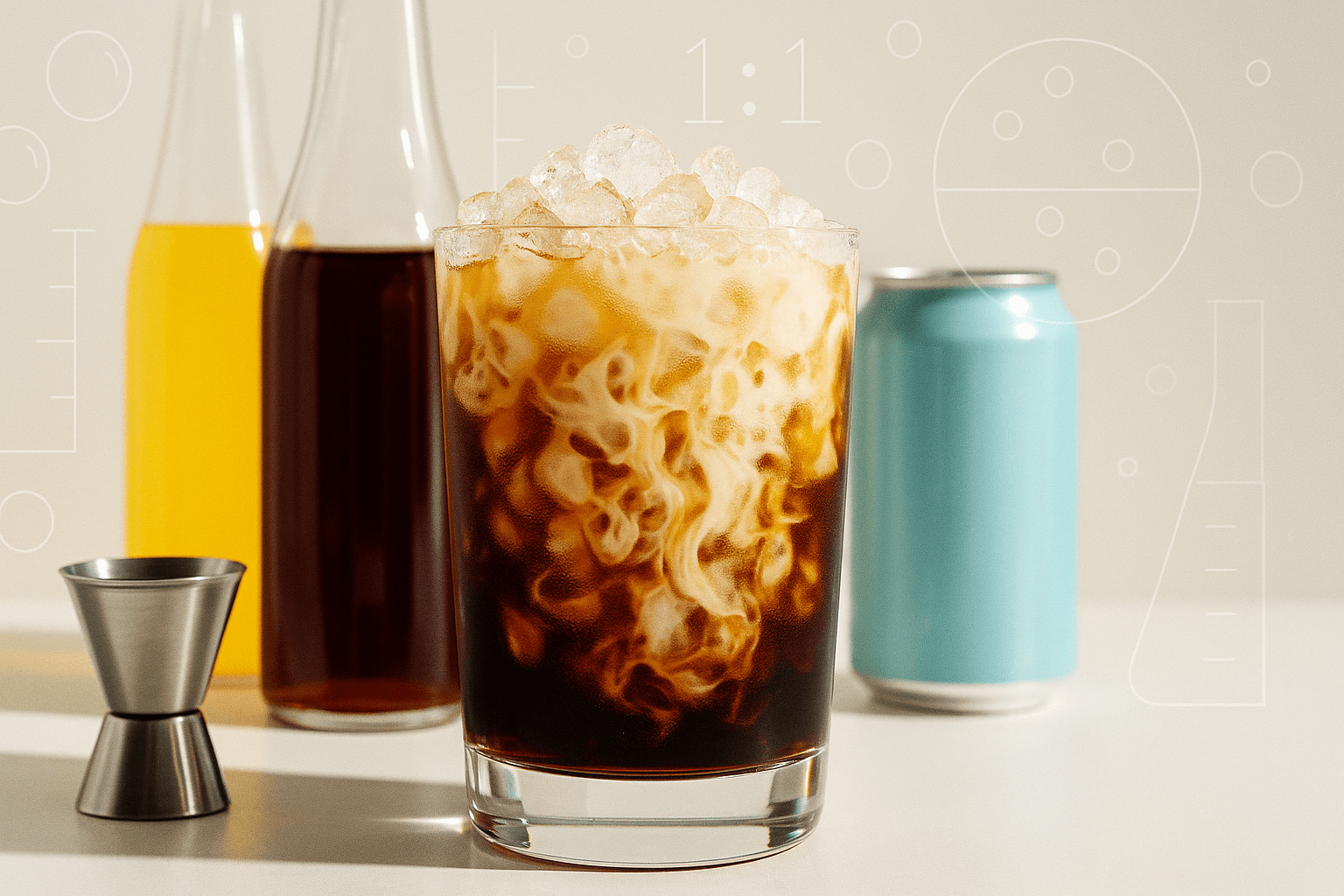
Dirty soda is one of those ideas that sounds like a gimmick until you taste a well-made one: fizzy soda, flavored syrup, a creamy element, and ice—assembled with just enough intention that the result feels like a custom drive‑thru drink you can’t quite replicate by “just pouring stuff in a cup.”
This article breaks down the why behind the wow: how to choose carbonation, how to calculate syrup and sweetness, how cream behaves in acid and bubbles, and how ice controls dilution and texture. Then you’ll get build‑your‑own templates (caffeinated and caffeine‑free), plus a set of reliable recipes.
If you’ve ever wondered why your homemade attempt tasted flat, watery, curdled, or overly sweet, the fix is usually a small tweak in ratio or technique.
What is dirty soda, really?
At its core, dirty soda is a custom soda drink built from:
- A carbonated base (cola, lemon‑lime, root beer, Dr Pepper‑style, etc.)
- A flavored syrup (fruit, vanilla, coconut, caramel, spice)
- A creamy component (half‑and‑half, coconut cream, coffee creamer, sweet cream)
- Ice, often in generous amounts
The “dirty” part refers to adding creamy and flavored elements that “dirty” the clarity of the soda—creating a cloudy, marbled drink.
Cultural context (why it’s everywhere)
Dirty soda has strong roots in Utah and the Mountain West, where “soda shops” grew as a creative, community-friendly alternative to coffee bars for many customers. Instead of espresso drinks, you’d order a soda with mix-ins, add‑ons, and signature combinations—often served with signature pellet (“nugget”) ice.
Whether you’re approaching dirty soda as dessert, an afternoon pick‑me‑up, or a fun zero‑alcohol party drink, it’s essentially a mixology-adjacent beverage craft: balancing sweetness, acid, carbonation, and texture.
The dirty soda formula (the part you can memorize)
Think in ratios first, not recipes.
A practical baseline ratio
For a 16 oz / 475 ml cup:
- Ice: fill cup 2/3 to 3/4 full
- Syrup: 1 to 1.5 oz (2 to 3 Tbsp / 30–45 ml)
- Creamer: 0.5 to 1 oz (1 to 2 Tbsp / 15–30 ml)
- Soda: top up to 16 oz (usually 8–10 oz soda depending on ice)
For a 24 oz / 710 ml cup:
- Syrup: 1.5 to 2.5 oz (3 to 5 Tbsp / 45–75 ml)
- Creamer: 1 to 1.5 oz (2 to 3 Tbsp / 30–45 ml)
These ranges look small, but remember: most soda is already sweetened. The syrup is not replacing soda’s sugar; it’s adding intensity and flavor.
The “drive‑thru” sweetness target
A useful mental model is Brix (a measure of sugar concentration used in beverage formulation). You don’t need instruments to use the concept:
- Soda is already sweet and concentrated.
- Adding syrup increases sweetness quickly.
- Adding cream can reduce perceived sweetness slightly by adding fat and smoothing acidity.
So a drink that tastes “right” often uses less syrup than you expect—especially if your creamer is sweetened.
Step 1: Choose your carbonation (it’s more than just flavor)
The base soda does three jobs:
- Provides carbonation (bite, aroma lift, texture)
- Sets acidity (how bright or sharp the drink feels)
- Defines the flavor frame (cola spice, citrus, vanilla, root beer botanicals)
Best soda bases for dirty soda
- Cola: forgiving; pairs with vanilla, coconut, cherry, caramel, citrus
- Dr Pepper–style: already complex; pairs with coconut, vanilla, berry, lime
- Lemon‑lime: bright; pairs with fruit syrups, coconut, vanilla, herbal notes
- Root beer: dessert-like; pairs with vanilla, caramel, cream (float vibes)
- Ginger ale: crisp; pairs with citrus, berry, vanilla; good caffeine‑free option
- Sparkling water / club soda: best if you want to control sweetness fully
Carbonation management (how to keep it fizzy)
Carbonation dissipates faster when:
- Liquid is warm
- You stir aggressively
- You pour from height or into syrup without buffering
Best practice:
- Use cold soda (refrigerated, not room temp)
- Pour soda down the side of the cup
- Add syrup and creamer first, then ice, then soda (or syrup + ice + soda, then float cream)
There isn’t one “right” order, but the goal is always: minimize foam loss and avoid violent agitation.
Step 2: Syrups, decoded (flavor math and sweetness control)
What counts as “syrup”?
Dirty soda shops use:
- Commercial coffee syrups (vanilla, coconut, hazelnut, caramel)
- Fruit syrups and purées
- Flavored simple syrups
- Sometimes drink concentrates
At home, the easiest path is coffee syrups plus one fruit option.
Syrup math: start with a controlled dose
For a first attempt in a 16 oz drink:
- 1 oz / 30 ml syrup is the safe starting point.
- Increase to 1.5 oz / 45 ml if the base is sparkling water or if you like it extra sweet.
- If using sweetened creamer, consider 0.75 oz / 22 ml syrup.
Layering flavors without chaos (the “two-note rule”)
Most successful dirty sodas follow:
- One main flavor (coconut or vanilla or cherry)
- One accent (lime or orange or caramel)
More than two syrups often tastes muddled unless one is tiny (like 1 tsp).
Homemade syrup basics (if you want to go from good to great)
A simple syrup is a powerful upgrade because you can tune intensity.
Standard simple syrup:
- 1:1 sugar to water by weight (e.g., 200 g sugar + 200 g water)
Rich syrup (more punch, less dilution):
- 2:1 sugar to water by weight (e.g., 200 g sugar + 100 g water)
Rich syrup is especially useful in dirty soda because it adds flavor and sweetness with less water, helping maintain carbonation and reducing “thin” taste.
Quick method: Warm water, dissolve sugar, cool completely. Add extracts (vanilla), citrus zest, or toasted coconut.
Step 3: Creamers and emulsions (how to get creamy without curdling)
Cream in soda sounds like it should be a disaster: soda is acidic; dairy proteins can curdle in acid. Yet it often works—because the acidity of most sodas isn’t as aggressive as straight citrus juice, and because the fat in cream smooths perception.
Still, curdling can happen. Here’s how to prevent it.
Your creamy options (and what they do)
- Half‑and‑half: classic “dirty” texture; neutral flavor; moderate richness
- Heavy cream: very rich; use less (it can feel oily if overdone)
- Coffee creamer (liquid): often sweetened + stabilized (more forgiving)
- Sweet cream (DIY): half‑and‑half + a little syrup + pinch salt
- Coconut cream: dairy-free; big flavor; can separate without shaking
- Oat creamer: dairy-free; usually emulsified; good stability
The “emulsion” idea in plain language
An emulsion is a stable mixture of fat and water. Creamers often contain emulsifiers (or naturally emulsify) that help them blend smoothly into soda.
Why it matters: A stable creamer gives you that signature cloudy swirl without unpleasant clumps.
Anti-curdle techniques
- Use colder ingredients. Cold slows protein reactions and preserves carbonation.
- Avoid highly acidic add-ins with dairy (straight lemon juice, lots of lime juice) unless your creamer is non-dairy or stabilized.
- Float the cream last for the swirl effect. Pour it gently over the back of a spoon or down the side.
- Choose stabilized creamers (many coffee creamers, oat creamers) if you frequently have issues.
If you want a more “float” style, use heavy cream or vanilla ice cream; if you want a uniform drink, use half‑and‑half or a creamer that integrates easily.
Step 4: Ice ratios and dilution control (the difference between “watery” and “drive‑thru”)
Ice is not just for cold—it’s an ingredient.
Why dirty soda wants lots of ice
- Keeps carbonation crisp (cold liquid holds CO₂ better)
- Keeps sweetness from feeling cloying
- Creates the chewable, refreshing texture people associate with soda shops
Ice types and what they do
- Nugget/pellet ice: fast chilling, pleasant crunch, higher surface area (melts faster but feels “right”)
- Crushed ice: similar effect; can over-dilute if you linger
- Cubed ice: slower melt; slightly less “shop” texture; still works well
A reliable ice fill guideline
- For a shop-style drink: fill cup 2/3 to 3/4 with ice.
- If using crushed/nugget ice and you sip slowly: aim closer to 2/3 to reduce eventual dilution.
- If using large cubes: 3/4 is fine.
Dilution is a timing problem
Dirty soda is best immediately. If you build one and let it sit 20 minutes, dilution and carbonation loss will flatten flavor.
If you’re serving a crowd:
- Pre-chill soda, syrup, and cups
- Prepare cups with syrup + ice
- Add soda and cream right before serving
A build-your-own dirty soda template (works for almost any flavor)
Use this as your universal blueprint.
Template A: Classic dirty soda (16 oz)
- Add 1 oz syrup to cup.
- Add ice to 2/3–3/4 full.
- Pour cold soda to about 1 inch from top.
- Add 0.5–1 oz creamer (float or stir gently once).
- Optional: citrus wedge squeeze over top (small amount).
Tuning knobs:
- Too sweet: reduce syrup to 0.75 oz or use unsweetened creamer
- Too flat: colder soda, less stirring, more ice
- Too watery: use rich syrup or reduce ice melt time (serve immediately)
Template B: “Controlled sweetness” (sparkling water base)
If you want to manage sugar precisely, use sparkling water and supply sweetness via syrup.
For 16 oz:
- 1.5–2 oz rich syrup
- 0.5–1 oz creamer
- Top with sparkling water
This tastes cleaner and less candy-like, and it’s great for adults who want a crafted soda vibe.
Caffeinated vs caffeine‑free: how to build both
Caffeinated dirty sodas
Caffeine usually comes from:
- cola
- some “pepper” sodas
- energy soda bases (use carefully)
Tip: Cream and vanilla flavors tend to make caffeinated sodas feel more “dessert,” while citrus keeps them feeling lighter.
Caffeine‑free dirty sodas
Great bases:
- caffeine‑free cola
- lemon‑lime caffeine‑free versions
- root beer (typically caffeine‑free, but check label)
- ginger ale
- sparkling water
If you’re serving kids or sensitive guests, caffeine‑free dirty sodas can still feel special because the customization is the point.
Technique: the best mixing order (and why)
There are three common assembly methods. Each has a different result.
Method 1: Syrup → ice → soda → cream (best for layers)
- Keeps the cream visible
- Minimizes agitation
- Gives a “shop” look
Method 2: Syrup → soda → ice → cream (best for carbonation)
- Pouring soda onto syrup can foam, but if done gently it’s fine
- Ice added later cools quickly
Method 3: Syrup → cream → ice → soda (best for smooth integration)
- Cream is diluted before it meets carbonation
- Often reduces curdle risk
If you’ve had curdling issues, try Method 3.
Six reliable dirty soda recipes (16 oz each)
Each recipe assumes a 16 oz cup and a lot of ice. Adjust syrup within the ranges if your soda is especially sweet or you prefer subtle flavors.
1) The Classic Coconut Lime (shop-style)
Flavor profile: tropical, bright, creamy
- Ice: fill 2/3–3/4
- 1 oz coconut syrup
- 10–12 oz lemon‑lime soda
- 0.75 oz half‑and‑half (about 1.5 Tbsp)
- Optional: lime wedge (tiny squeeze)
Tip: If using fresh lime juice, keep it minimal with dairy; or use lime zest rubbed on the rim for aroma.
2) Vanilla Cola Cream
Flavor profile: like a float without the ice cream
- Ice: fill 3/4
- 0.75–1 oz vanilla syrup
- 10–12 oz cola
- 0.5–1 oz half‑and‑half
- Optional: pinch of fine salt in the syrup (seriously—tiny)
Why the salt works: A very small amount dampens harsh sweetness and makes vanilla and cola spices pop.
3) Cherry‑Vanilla “Pepper” Cream
Flavor profile: complex, candy‑fruit, creamy spice
- Ice: fill 2/3
- 0.5 oz cherry syrup
- 0.5 oz vanilla syrup
- 10–12 oz Dr Pepper–style soda
- 0.75 oz creamer (half‑and‑half or vanilla creamer)
Adjustment: If your cherry syrup is intense, start with 0.25 oz and scale up.
4) Root Beer Salted Caramel Cloud
Flavor profile: dessert-forward, buttery
- Ice: fill 2/3
- 0.75 oz caramel syrup
- 10–12 oz root beer
- 0.75 oz heavy cream (use less than half‑and‑half)
- Optional: tiny pinch salt
Note: Heavy cream floats beautifully; stir once for a marbled look.
5) Orange‑Cream Sparkler (caffeine‑free)
Flavor profile: creamsicle-ish, bright and friendly
- Ice: fill 3/4
- 1 oz orange syrup (or 0.75 oz syrup + orange zest)
- 10–12 oz caffeine‑free lemon‑lime soda or ginger ale
- 0.75 oz half‑and‑half
Tip: Orange + dairy can be tricky if you add real juice. Favor syrup/zest over juice for stability.
6) Berry Coconut Fizz (sparkling water base)
Flavor profile: cleaner, less candy, more “crafted”
- Ice: fill 2/3
- 1 oz coconut syrup
- 0.5 oz raspberry or strawberry syrup
- 0.5–0.75 oz oat creamer
- Top with sparkling water
Why oat creamer: It tends to stay smooth even with fruit flavors.
Make your own “sweet cream” add‑in (for consistent results)
Many soda shops use a consistent creamy add‑in that’s lightly sweet and vanilla‑forward.
Easy sweet cream (makes ~1 cup):
- 3/4 cup half‑and‑half
- 2 Tbsp sweetened condensed milk or 1–2 Tbsp vanilla syrup
- Pinch fine salt
- Optional: 1/4 tsp vanilla extract
Whisk until smooth; refrigerate. Use 0.75–1 oz per 16 oz drink.
This gives repeatability and reduces the temptation to over-pour creamer.
Troubleshooting: common dirty soda problems
“Mine tastes flat.”
- Soda wasn’t cold enough
- Too much stirring/shaking
- Too much headspace and time before drinking
Fix: Chill soda, build over lots of ice, pour gently, stir only once.
“It’s watery.”
- Ice melted too much before you started drinking
- Syrup too thin (1:1 syrup can dilute more)
Fix: Use rich syrup (2:1), serve immediately, or use larger cubes if you sip slowly.
“It’s too sweet.”
- Soda + syrup + sweetened creamer stacked sweetness
Fix: Reduce syrup to 0.5–0.75 oz, switch to unsweetened half‑and‑half, or use sparkling water base.
“The cream looks weird / curdled.”
- High acidity add‑ins (real citrus juice)
- Warm ingredients
Fix: Use stabilized creamer (oat or coffee creamer), keep everything cold, add cream last, and keep citrus to zest or a small wedge squeeze.
“The flavor tastes artificial.”
- Overuse of a single extract-like syrup
Fix: Use the two-note rule; add a tiny acid accent (lime zest), or use a homemade syrup with real zest/spices.
Scaling for parties (dirty soda bar at home)
A dirty soda bar is low effort and high reward.
What to set out
- 2–3 sodas (cola, lemon‑lime, root beer)
- 4–6 syrups (vanilla, coconut, cherry, caramel, one fruit)
- 2 creamers (half‑and‑half + oat creamer)
- Citrus wedges (lime, orange)
- A jigger or tablespoon measure
- Big ice bucket
Batch strategy
Don’t pre-mix full drinks (they’ll go flat). Instead:
- Pre-chill everything
- Pre-label “recommended builds” on a card
- Let guests build in-cup
Recommended “menu card” ratio:
- 16 oz: 1 oz syrup + 0.75 oz creamer + fill with soda
A little culinary science (why it tastes like more than the sum of parts)
Dirty soda works for the same reasons many dessert pairings work:
- Carbonation carries aroma to your nose and creates a “bite” that offsets sweetness.
- Fat (from cream) rounds sharp edges, softens acidity, and adds body.
- Sweetness + salt (tiny amounts) can increase perceived complexity.
- Cold temperature suppresses harsh sweetness and keeps bubbles stable.
Food science writers often describe flavor as a combination of taste, aroma, and trigeminal sensations (like fizz). Dirty soda hits all three.
Quick reference: ratio cheat sheet
16 oz dirty soda
- Ice: 2/3–3/4 cup volume
- Syrup: 0.75–1.5 oz (start at 1 oz)
- Creamer: 0.5–1 oz (start at 0.75 oz)
- Soda: top to full
24 oz dirty soda
- Syrup: 1.5–2.5 oz
- Creamer: 1–1.5 oz
If using sparkling water
- Syrup: 1.5–2 oz (prefer rich syrup)
- Creamer: 0.5–1 oz
Final thoughts: make it repeatable, then make it yours
The fastest way to get “drive‑thru style” results at home is to treat dirty soda like a formula:
- Cold base + lots of ice for texture and fizz
- Measured syrup for consistent sweetness
- Intentional creamer choice for smoothness and stability
- Gentle mixing to preserve carbonation
Once you lock in your preferred ratio, the fun becomes endless: swap bases, rotate seasonal syrups, experiment with coconut vs vanilla vs caramel, and decide whether you want a marbled float look or a fully integrated creamy soda.
If you want one place to start: do lemon‑lime + coconut syrup + half‑and‑half, measure it once, and adjust in small increments. That’s the dirty soda gateway that makes the whole category click.