Ground Venison Recipes Without the “Gamey” Taste: The 15‑Minute Salt‑Soak, Fat‑Blend Ratios, and Seasoning Map for Tacos, Chili, and Burgers
RecipeSimpli
The goal: venison that tastes clean, not “gamey”
Ground venison can be a home cook’s dream protein: lean, affordable (if you hunt or buy in bulk), and intensely savory when treated well. Yet many people’s first experience is a pot of chili or a batch of burgers that tastes metallic, livery, or “wild.” That’s what most of us shorthand as gamey.
Here’s the good news: most “gamey taste” problems are fixable with a few predictable moves:
- A quick salt soak (15 minutes) to pull out some bloodiness and surface proteins that can read as iron-forward.
- Adding the right kind and amount of fat, because venison is very lean and dryness amplifies strong flavors.
- Correct browning rules that build sweetness and complexity instead of steamed, grey meat.
- A seasoning map that pairs venison with the right acids, aromatics, chiles, herbs, and umami boosters—tailored for tacos, chili, burgers, meatballs, and more.
This guide is designed for real kitchens: no specialty gear required, no all-day marinating mandatory, and no pretending venison should taste exactly like beef. The aim is balanced, craveable venison that people will ask you to make again.
Why venison can taste “strong” (and what you can control)
Before techniques, it helps to know what’s actually going on.
1) It’s lean—and leanness makes flavor feel sharper
Venison is typically far leaner than supermarket ground beef. Fat doesn’t just add richness; it carries aroma compounds, rounds out bitterness, and makes seasoning taste integrated rather than harsh. When meat is very lean, any metallic, mineral, or grassy notes are more noticeable, and the texture can feel dry or crumbly.
What you control: fat blending, moisture retention, and cooking temperature.
2) Bloodiness and oxidation can read as metallic
A lot of the “liver/iron” note comes from myoglobin (the oxygen-binding protein in muscle) and from oxidized fats in any trim that wasn’t handled well. It’s not inherently bad—many people love that depth—but if it dominates, your dish can taste like pennies.
What you control: field-to-freezer handling (if you hunt), trimming, soaking/brining, and avoiding prolonged exposure to air.
3) Diet, age, and handling matter—sometimes more than the recipe
A corn-fed whitetail harvested young and cooled quickly will taste different from an older animal that ran hard before harvest, or one that lived on browse and acorns. Stress and heat can change pH and accelerate off flavors.
What you control at home: you can’t change the deer’s diet, but you can trim, soak, blend, and season to match what you’ve got.
4) “Gamey” is often “not enough browning” (or the wrong kind)
If you crowd a pan and the meat steams, you miss the Maillard reaction (the browning chemistry that creates hundreds of savory, roasty compounds). Steamed venison can taste flat and minerally because it lacks the sweet, nutty browned notes that balance it.
What you control: pan size, heat, timing, and when you stir.
The 15-minute salt soak (the quick fix that actually works)
A long milk soak is a classic folk remedy, but it’s slow and not always practical. A short salt soak is faster and more repeatable.
What it does (the cooking science in plain English)
A light brine:
- Dissolves and loosens surface proteins and residual blood that can taste metallic.
- Seasoning starts inside the meat, not just on the outside.
- Helps the ground venison hold onto moisture during cooking (salt affects how muscle proteins bind water).
This doesn’t erase venison’s identity. It simply reduces the harsh edge.
How to do it (15 minutes)
You need: a bowl, cold water, salt, a strainer, and paper towels.
- Mix a quick brine: 4 cups (1 liter) cold water + 1 tablespoon kosher salt (about a 1.5% brine, forgiving and effective).
- Add ground venison: break it into a few large chunks so water can contact more surface area.
- Soak 15 minutes in the fridge (or the coldest spot you have).
- Drain well in a strainer.
- Dry thoroughly: press gently with paper towels. Excess water will block browning.
Optional upgrades (choose one)
- Add 1 tablespoon vinegar or lemon juice to the brine for brighter flavor (especially good for tacos). Keep it short—acid too long can change texture.
- Add a bay leaf + a few peppercorns for a subtle background note.
- If your venison is very strong: do two 10-minute soaks, changing the water between.
When not to soak
- If your venison is already mild and you love its flavor, skip it.
- If you’re making something where deep “wild” notes are the point (certain ragùs), you may want to lean into it.
Fat-blend ratios: the single biggest lever for better ground venison
Venison’s leanness is both its health halo and its cooking challenge. For most “ground meat” applications, you want enough fat to:
- keep the texture juicy
- buffer mineral notes
- help browning
- carry spices
The practical ratios (by weight)
Use these as starting points:
- Tacos: 80/20 (venison/fatty pork or beef)
- Why: tacos love sizzle and spice bloom; 20% fat helps the meat stay juicy even with high heat.
- Chili: 85/15
- Why: chili has liquid and long simmering; too much fat can make it greasy.
- Burgers: 75/25 (or even 70/30 if you like very juicy burgers)
- Why: burgers are exposed to direct heat; they need fat to avoid dryness.
- Meatballs/meatloaf: 80/20 plus a binder (egg + crumbs)
- Why: structure matters; fat and binder work together.
What kind of fat to add (and why it matters)
Not all fat tastes the same.
- Pork fat (fatback, belly trim, or ground pork): slightly sweet, neutral, excellent for tacos and meatballs.
- Beef fat (suet or trimmings) or 80/20 ground beef: classic burger flavor; great for “beefy” outcomes.
- Bacon: strong smoke/salt; use when you want bacon flavor (good in chili, risky in burgers if it overwhelms).
- Butter or ghee: useful in the pan for browning, but doesn’t integrate into the grind the same way solid animal fat does.
Easy methods if you don’t grind your own
- Mix 1 lb ground venison with 4 oz ground pork (that’s roughly 80/20).
- For burgers: 1 lb venison + 5–6 oz ground pork or 80/20 beef.
A key reminder: salt timing changes texture
Salt helps moisture retention, but if you mix salt aggressively into ground meat and let it sit, it can become springy (sausage-like) because salt extracts myosin proteins.
- For taco meat and chili: salting early is fine.
- For burgers: salt the exterior just before cooking (or at most 15–30 minutes before), unless you want a bouncy sausage-burger texture.
Browning rules for ground venison (so it tastes rich, not grey)
Browning is where “wild” becomes “wow.”
Rule 1: Dry meat browns, wet meat steams
After soaking (or thawing), pat dry. If you skip the soak, still blot the surface if it looks wet.
Rule 2: Preheat the pan properly
Use a heavy skillet (cast iron or stainless). Heat it until a drop of water dances, then add a high-smoke-point fat (tallow, neutral oil, or a little bacon fat).
Rule 3: Don’t crowd
If you add too much meat at once, the pan temperature drops and the meat releases water.
- Brown in two batches when in doubt.
Rule 4: Press, then leave it alone
Spread the meat in a thin layer, press lightly, and wait. Stirring constantly prevents crust.
Rule 5: Brown first, then add aromatics (most of the time)
Onion and garlic release water. If you add them too early, you slow browning.
- Exception: If you’re making chili and want softened onions, you can sweat onions first, remove them, then brown meat, then return onions.
Rule 6: Deglaze for flavor, not just moisture
After browning, you’ll have fond (brown bits). Deglaze with:
- beer (chili)
- stock
- a splash of vinegar
- tomato paste + water
That fond is concentrated flavor—don’t waste it.
The seasoning map: how to build “not gamey” flavor on purpose
Instead of one magical spice, think in layers. Strong flavors feel balanced when they have: salt + fat + acid + aromatics + warmth + umami.
Below is a seasoning matrix you can mix-and-match.
1) Aromatics (the base)
Pick 1–3:
- onion (sweetness)
- garlic (depth)
- scallion (fresh bite)
- celery + carrot (classic chili/ragù base)
- grated ginger (excellent with venison in tacos)
2) Warm spices (mask metallic notes, add roundness)
Pick 1–4:
- cumin
- smoked paprika
- chili powder
- coriander
- cinnamon (a pinch in chili)
- allspice (tiny amounts in meatballs)
3) Herbs (freshness and lift)
Pick 1–3:
- oregano (Mexican oregano for tacos; Mediterranean for tomato sauces)
- thyme (great in burgers and meatballs)
- rosemary (use lightly—can echo piney notes)
- bay leaf (chili)
- parsley (meatballs)
4) Acid (the secret weapon)
Acid brightens and distracts from “wild” heaviness.
Choose one finishing acid (or two in small amounts):
- lime (tacos)
- apple cider vinegar (chili)
- red wine vinegar (meatballs)
- pickle brine (burgers)
- tomatoes (chili; both acid and umami)
5) Umami boosters (make it taste “meatier”)
Pick 1–2:
- tomato paste (brown it in the pan)
- soy sauce or tamari (1–2 tsp per pound)
- Worcestershire (classic for burgers and chili)
- anchovy paste (tiny amount; disappears into sauces)
- mushrooms (finely chopped, sautéed)
6) Heat and bitterness management
If venison tastes bitter or “sharp,” it often needs:
- a touch more salt
- more fat
- a bit of acid
- and sometimes sweetness (caramelized onion, a teaspoon of brown sugar in chili, or a sweet salsa in tacos)
Venison tacos that don’t taste gamey (template + example)
Tacos are one of the best formats for venison because they naturally include fat (cheese, crema), acid (lime), and strong aromatics.
The template (per 1 lb / 450 g ground venison)
- Blend to 80/20 with ground pork (or add 3–4 tbsp lard/tallow if you must, but ground pork integrates better)
- 1 tbsp neutral oil (for browning)
- 1 tsp kosher salt (adjust if your taco seasoning has salt)
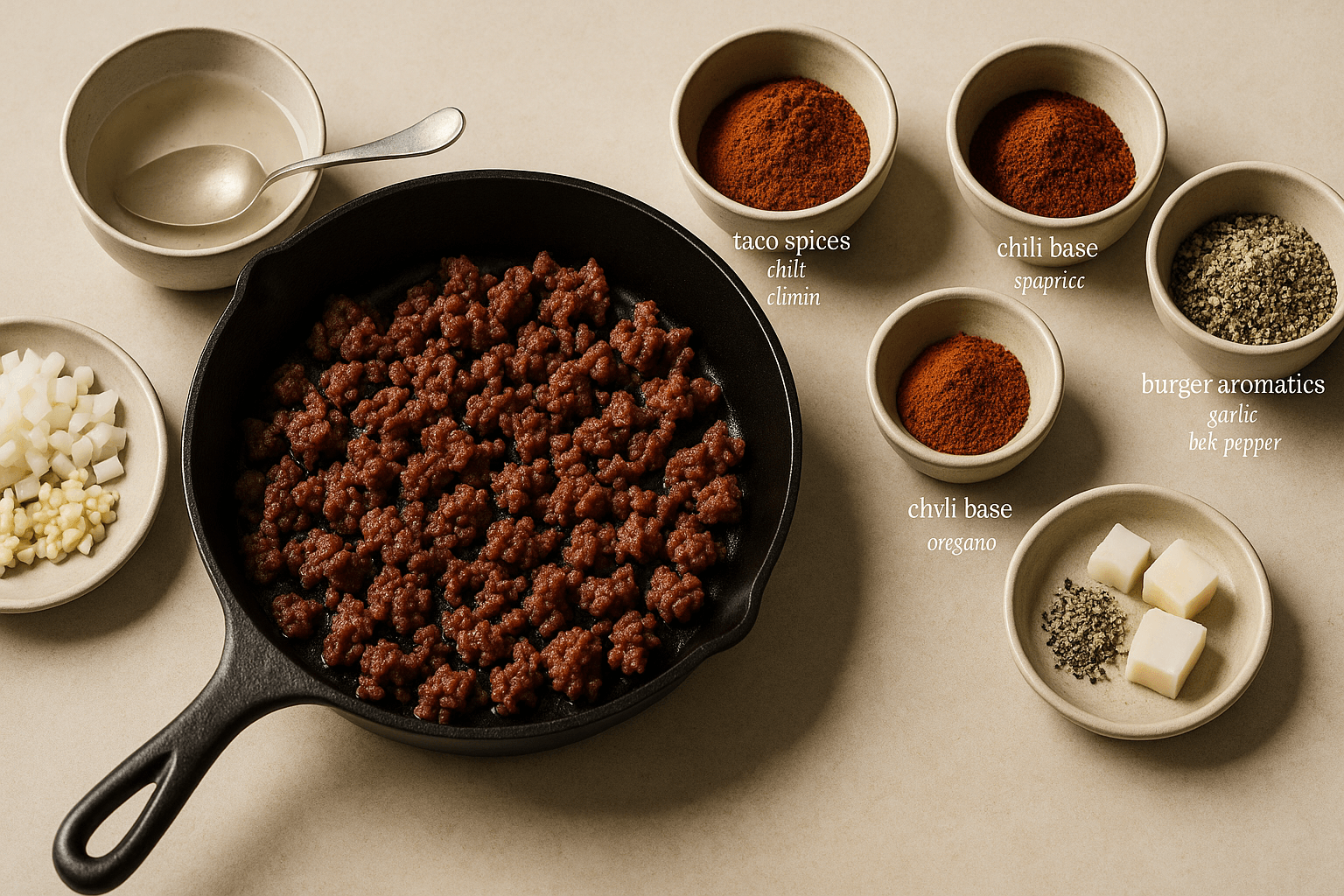
- 2–3 tbsp taco seasoning blend
- 2 tbsp tomato paste or 1/2 cup salsa
- 1/3 cup water or stock (to loosen)
- Finish: lime juice, chopped onion/cilantro
A reliable spice blend (no packet needed)
- 2 tsp chili powder
- 1 tsp cumin
- 1 tsp smoked paprika
- 1/2 tsp coriander
- 1/2 tsp dried oregano
- 1/4 tsp black pepper
- 1/4 tsp chipotle powder (optional)
Cooking method (browning-first)
- Brown the meat hard in a hot skillet; don’t stir for the first minute.
- Push meat aside; add tomato paste to the clear spot and cook 30–60 seconds.
- Add spices; bloom 15 seconds in the fat.
- Add water/stock; simmer 2–3 minutes until glossy.
- Finish with lime.
Topping strategy (anti-gamey by design)
- Acid: lime, pickled onion
- Creamy: crema, sour cream, avocado
- Fresh: cilantro, shredded lettuce
- Crunch: radish, toasted pepitas
If someone says they “don’t like venison,” serve it as venison tacos al pastor-style (pineapple salsa + chili + lime). Sweet-acid-fruit is extremely effective at making venison taste friendly.
Venison chili that tastes rich, not wild (structure + fixes)
Chili is forgiving, but it can also magnify problems if you simmer lean meat too long without enough fat and aromatics.
Ideal blend and approach
- Aim for 85/15 overall fat.
- Brown the meat well before it goes into the pot.
- Use tomato paste + chiles + a little vinegar for balance.
A practical venison chili blueprint (8–10 servings)
Ingredients
- 2 lb ground venison (soaked and dried if needed)
- 6–10 oz ground pork or 80/20 beef (to reach ~85/15)
- 2 tbsp oil or tallow
- 1 large onion, diced
- 4 cloves garlic, minced
- 2 tbsp tomato paste
- 2–3 tbsp chili powder
- 2 tsp cumin
- 1 tsp smoked paprika
- 1 tsp oregano
- 1/2 tsp cinnamon (optional, but excellent)
- 1 beer or 1 cup stock (for deglazing)
- 1 large can crushed tomatoes
- 2 cans beans (optional)
- Salt to taste
- 1–2 tbsp apple cider vinegar (finish)
Method (why each step matters)
- Brown in batches: build fond and prevent steaming.
- Tomato paste fry: cooking tomato paste in fat creates deeper, sweeter notes.
- Bloom spices: fat-soluble aromatics wake up.
- Deglaze with beer/stock: dissolve fond.
- Simmer gently, not a violent boil: keeps texture tender.
- Finish with vinegar: brightens and “cleans up” the finish.
Quick troubleshooting
- Tastes metallic: add a squeeze of lime or 1 tbsp vinegar; add a pinch more salt; add a spoon of tomato paste; consider a bit more fat.
- Tastes flat: more salt + a dash of Worcestershire or soy.
- Tastes too wild: add sweetness (1 tsp brown sugar) and acid; serve with sour cream and shredded cheese.
Venison burgers that stay juicy (and don’t shout “deer”)
Burgers expose every flaw: dryness, weak seasoning, and overcooking. But a properly blended venison burger can be outstanding—deeply savory, clean, and juicy.
The burger ratio that works
- 75/25 venison to fat is the sweet spot for most grills and skillets.
- If using ground pork, choose something with visible fat (not extra-lean).
- If using ground beef, 80/20 mixed 50/50 with venison often lands in a great zone.
Patty handling rules (important)
- Mix gently: overmixing makes patties dense.
- Don’t salt the mix unless you want a springy texture. Salt the outside right before cooking.
- Dimple the center to reduce doming.
Seasoning profile (classic “burger shop”)
Per pound of blended meat:
- 1 tsp kosher salt (on exterior)
- 1/2 tsp black pepper
- 1 tsp Worcestershire (optional, mixed in gently)
- 1/2 tsp garlic powder (optional)
Cooking targets
Venison is safe when handled properly, but it’s lean and can dry out quickly.
- Cook to medium if you can (and if your meat source is trustworthy).
- Use a thermometer when learning: pull around 135–140°F (57–60°C) and rest; carryover heat will rise.
Build the burger to balance venison
- Acid + crunch: pickles, pickled onions
- Creamy: mayo or aioli
- Sharp: mustard
- Optional sweet: ketchup or a jammy onion relish
A great “conversion burger” is venison with sharp cheddar, pickles, mustard, and caramelized onions—sweet, tangy, fatty, and bold.
Meatballs and meatloaf: where venison shines
Meatballs are naturally friendly to venison because they include binders and often simmer in sauce.
A simple anti-gamey meatball formula
Per 1 lb (450 g) venison:
- Add enough pork to reach 80/20
- 1 egg
- 1/3 cup breadcrumbs (or panko)
- 1/3 cup milk (or ricotta for extra tenderness)
- 1/2 grated onion or 2 tbsp minced onion (moisture + sweetness)
- Garlic, parsley
- Parmesan (umami)
Brown them well, then finish in tomato sauce. The sauce’s acidity and sweetness are natural balancing tools.
Cultural context: why venison traditions often use acid, smoke, and spice
Across many cuisines, strongly flavored meats are paired with balancing elements:
- Mexican and Tex-Mex: chiles + lime + onion + cilantro create brightness and aromatic lift.
- Central/Eastern European: berries, pickles, sour cream, and vinegar-based braises cut richness and tame intensity.
- Southern U.S.: smoke, pepper, and fatty pork are classic partners for lean game.
These aren’t random traditions—they’re practical flavor engineering developed over time.
Best practices from “field to freezer” (and what to do if you didn’t hunt it)
If you hunt, the biggest improvements often happen before cooking:
- Cool the carcass quickly (heat accelerates off flavors).
- Keep trim clean: hair, glandular material, bruised meat, and excessive silverskin can contribute bitterness.
- Grind with fresh fat: oxidized fat tastes stale.
If you buy ground venison:
- Choose suppliers who state processing standards and keep a cold chain.
- Use it soon after thawing; avoid repeated thaw/refreeze cycles.
Freezer and thawing rules (to prevent off flavors)
Oxidation is a major cause of “strong” flavors in frozen meat.
- Wrap tightly (vacuum seal if possible).
- Label and use within 6–9 months for best flavor.
- Thaw slowly in the fridge. Rapid thawing encourages drip loss, which can taste metallic and also harms browning.
If you end up with lots of purge (liquid) in the package, drain and blot thoroughly.
Common mistakes (and quick corrections)
Mistake: Cooking it like extra-lean turkey
Extra-lean meats need fat and moisture strategies. If you treat venison like standard beef, it can taste dry and intense.
Fix: fat blend + gentle simmering + finish with acid.
Mistake: Under-seasoning
Venison can handle bold seasoning.
Fix: season in layers (salt + spice bloom + umami + acid).
Mistake: Crowding the pan
This is the #1 reason taco meat and chili start off disappointing.
Fix: brown in batches and don’t stir too soon.
Mistake: Adding garlic too early and burning it
Burnt garlic turns bitter—bitterness reads as “gamey” to many people.
Fix: add garlic after browning or keep heat moderate when garlic goes in.
Three fast “seasoning routes” you can memorize
If you want a simple decision tool, pick a route:
Route A: Taco route (bright + chile)
- cumin + chili powder + oregano
- garlic + onion
- lime + salsa
- optional: pinch of cocoa or cinnamon for depth
Route B: Chili route (tomato + smoke)
- chili powder + smoked paprika + cumin
- tomato paste fried in fat
- beer/stock deglaze
- vinegar at the end
Route C: Burger route (savory + tang)
- Worcestershire (tiny) + black pepper
- mustard + pickles on the bun
- cheddar + caramelized onions
These routes work because they hit the same balancing levers: fat, acid, aromatic intensity, and umami.
Putting it all together: a 15-minute workflow for weeknights
If you want a repeatable weeknight plan:
- Start the 15-minute salt soak (or skip if your venison is mild).
- While it soaks, dice onions, measure spices, prep toppings.
- Drain and dry aggressively.
- Heat skillet, add fat, brown hard.
- Bloom spices, add sauce base (tomato/salsa), simmer briefly.
- Finish with acid (lime/vinegar/pickle brine).
That’s the core pattern whether you’re making tacos, chili, sloppy joes, or rice bowls.
References and useful science touchpoints (for further reading)
- Maillard reaction: the browning chemistry responsible for roasted, savory flavors (a foundation concept in food science; widely covered in culinary texts such as Harold McGee’s On Food and Cooking).
- Salt and protein behavior: salting affects water-holding and texture; culinary science discussions appear in resources like Serious Eats and America’s Test Kitchen (often framed around brining and ground-meat mixing).
- Oxidation and rancidity: fat oxidation and freezer storage are standard topics in meat science and food safety guidance.
Final takeaway: “less gamey” is a system, not a secret ingredient
If your ground venison tastes too strong, don’t fight it with one overpowering spice. Use the system:
- 15-minute salt soak to clean up harsh, metallic edges.
- Blend in fat (80/20 tacos, 85/15 chili, 75/25 burgers).
- Brown correctly: hot pan, dry meat, don’t crowd.
- Season in layers with a map: aromatics + warm spices + umami + a finishing acid.
Do those four things and venison stops being a “project.” It becomes one of the most versatile, satisfying proteins in your kitchen.