Homemade Hummus Recipes Without Tahini That Still Taste Authentic: The Emulsion Fix, Flavor Boosters, and 5 Creamy Variations
RecipeSimpli
Why tahini-free hummus so often disappoints (and how to fix it)
Tahini does two jobs in classic hummus:
- Flavor: roasted sesame adds nutty depth and a gentle bitterness that keeps hummus from tasting like “lemony chickpea mash.”
- Texture: tahini is an emulsifier-rich fat paste. It helps bind water (lemon juice, aquafaba) with fat (olive oil) into a stable, creamy mixture instead of a loose puree.
When you remove tahini, you don’t just remove a flavor—you remove a whole texture system. That’s why many tahini-free versions turn out:
- Pasty or chalky (too many chickpeas, not enough liquid)
- Grainy (chickpea skins + under-processing)
- Flat (missing the nutty/bitter counterpoint)
- Broken or oily (oil added without an emulsion base)
The good news: you can make hummus without tahini that still tastes “real” by deliberately replacing those two functions—emulsion and complexity—with ingredients and technique.
This guide gives you a method you can memorize, plus five variations that stay creamy and balanced.
Cultural context: what “authentic” texture and flavor actually mean
Across the Levant—Palestine, Lebanon, Syria, Jordan—and throughout the wider Middle East, hummus is less a single recipe and more a category. Ratios shift by region and shop. Some styles are intensely lemony; others are more cumin-forward; some are looser and almost pourable when warm.
But most “hummus shop” hummus shares a few traits:
- Very smooth (often achieved with high-powered blending and/or pushing through a sieve)
- Well-seasoned with salt and lemon, with garlic present but not harsh
- Creamy and light, not dense
- Finished with good olive oil and sometimes warm chickpeas, whole chickpeas, paprika, cumin, or parsley
Tahini is common—but not every household uses the same amount, and sometimes it’s reduced for cost, allergies, or preference. If you aim for that smooth, balanced profile, tahini is helpful but not the only route.
The tahini-free strategy: replace the structure, then rebuild the flavor
To make tahini-free hummus taste authentic, think in layers:
- Chickpea base: soft enough to blend silky
- Water phase: lemon + aquafaba/ice water to loosen and lighten
- Emulsion: gradual olive oil addition into a well-aerated base
- Flavor architecture: garlic management, salt timing, acidity balance, and “sesame-like” depth from substitutes
This is very similar to classic culinary emulsions (mayonnaise, aioli) in principle: you need enough emulsifying structure and shear (blending) to hold oil and water together. Tahini makes that easy; without it, you’ll rely on aquafaba proteins/starches and the chickpea matrix itself.
Food-science note: Aquafaba (the liquid from cooked chickpeas) contains soluble proteins and starches that can stabilize foams and emulsions—hence its popularity as an egg-white substitute. You don’t need it to “whip,” but it helps keep hummus creamy rather than greasy.
The core method (master recipe): silky tahini-free hummus
This is your baseline. From here, you can branch into variations.
Ingredients (makes ~2 to 2 1/2 cups)
- 2 cups cooked chickpeas, very tender (or 1 can, 15 oz/425 g, drained—reserve liquid)
- 1/3 cup aquafaba (reserved chickpea liquid) or cold water, plus more as needed
- 3 to 5 Tbsp fresh lemon juice (start with 3, adjust)
- 1 small garlic clove, or 1/2 large (see garlic options below)
- 1 to 1 1/4 tsp fine salt, to taste
- 1/2 tsp ground cumin (optional but very helpful for “hummus shop” aroma)
- 4 to 6 Tbsp extra-virgin olive oil, plus more for serving
- Optional “tahini stand-in” depth (choose one):
- 1 to 2 Tbsp toasted sesame oil (use sparingly)
- 2 Tbsp toasted sesame seeds, blended in
- 2 Tbsp unsweetened sunflower seed butter (closest texture substitute)
- 1 Tbsp white miso (umami + mild fermentation note)
Equipment
- Food processor (best) or high-speed blender
- Optional: fine-mesh strainer for skins (if you want extra-smooth)
Step-by-step technique (with the “why”)
1) Start with chickpeas that are overcooked
Smooth hummus begins before blending.
- If cooking from dry: simmer until chickpeas are very tender, almost starting to fall apart.
- If using canned: warm them in a small pot with water and simmer 10 minutes. This softens them and helps the puree turn velvety.
Pro tip: Add a pinch (1/4 tsp) baking soda to the simmering water. It raises pH, helping break down chickpea skins and softening texture. Rinse well afterward to avoid soapy flavor.
2) Optional but impactful: remove some skins
If you want that ultra-smooth, restaurant-like finish, slip off skins from warm chickpeas (or rub them in a towel). Even removing 30–50% noticeably improves texture.
3) Build the water phase first: aquafaba + lemon + garlic + salt
In the processor bowl, combine:
- aquafaba (or cold water)
- lemon juice
- garlic
- salt
- cumin (optional)
Process 30–60 seconds.
Why this matters: You’re dissolving salt early (better seasoning) and dispersing garlic so you don’t get sharp chunks. You’re also creating a thin base so the chickpeas blend smoother.
4) Add chickpeas and process longer than you think
Add chickpeas. Process 2–4 minutes, scraping down as needed.
- If the mixture looks like dense paste: add 1–2 Tbsp aquafaba/water and keep blending.
Texture goal: thick but glossy; it should mound softly, not sit like clay.
5) The emulsion fix: drizzle olive oil slowly into a moving puree
With the processor running, drizzle in olive oil in a thin stream.
Why: If you dump oil in at once, you risk a greasy mouthfeel. Slow addition under shear creates smaller oil droplets and a creamier, more cohesive texture.
6) Final texture tuning: ice water trick (optional)
If you want hummus that feels whipped and light, blend in 1–3 Tbsp ice water at the end.
This is a classic hummus-shop technique: cold water plus high shear can make the puree seem paler and fluffier.
7) Adjust acidity and salt in small increments
Taste and fix using this logic:
- Tastes flat: add salt first (pinch at a time)
- Tastes heavy: add lemon (1 tsp at a time)
- Tastes sharp/too lemony: add olive oil or a spoon of chickpeas to round
- Garlic too aggressive: blend longer + add a bit more lemon/olive oil; or mellow next time (see garlic methods below)
The right chickpea-to-liquid ratio (so it’s creamy, not pasty)
A common tahini-free mistake is using classic tahini-based ratios. Without tahini’s fat and fluidity, the puree can seize up.
Use this as a starting point:
- For every 2 cups cooked chickpeas:
- 1/3 cup aquafaba/water (plus more to adjust)
- 4–6 Tbsp olive oil
- 3–5 Tbsp lemon juice
If your chickpeas are very dry (some canned brands are), you may need up to 1/2 cup liquid total.
Visual cue: When you scrape a spoon through the hummus, it should leave a trail that slowly relaxes, not a trench that holds rigidly.
Garlic without harshness: 4 options
Raw garlic is traditional—but it can dominate tahini-free hummus because tahini normally buffers its bite.
Choose your approach:
- Microplane raw garlic (strongest): Use 1 small clove, blend well.
- Garlic-lemon “quick pickle” (balanced): Stir minced garlic into lemon juice and let sit 10 minutes before blending. Acid softens harsh sulfur notes.
- Blanched garlic (milder): Drop peeled clove in boiling water for 30 seconds, then blend.
- Roasted garlic (sweet, mellow): Blend in 2–4 roasted cloves; reduce lemon slightly and add salt to taste.
How to replace tahini’s nutty depth (without making hummus weird)
Tahini brings roasted, nutty, slightly bitter complexity. To mimic that:
- Toasted sesame seeds (best “authentic-adjacent”): Blend 2 Tbsp seeds directly into hummus. They provide aroma and a faint tannic bite.
- Toasted sesame oil (powerful): Use 1 tsp to 1 Tbsp max. Too much tastes like stir-fry rather than hummus.
- Sunflower seed butter (best texture match): Mild and creamy; use 2 Tbsp. Great for sesame allergies.
- White miso (umami depth): 1–2 tsp adds fermented savoriness; keep it subtle.
- Ground cumin + good olive oil: Not a tahini replacement per se, but together they restore the “hummus shop” impression.
If you want the hummus to read as classic, avoid strong nut butters (peanut, almond) unless the variation is intentionally flavored.
Five creamy tahini-free hummus variations (with clear flavor paths)
Each variation starts from the master method above. Think of them as “swap-ins” rather than separate recipes.
1) Classic-style sesame hint (no tahini, still familiar)
Best for: People who miss tahini flavor but can’t/won’t use tahini.
Add:
- 2 Tbsp toasted sesame seeds (blend in)
- 1/2 tsp cumin
Optional finish:
- Olive oil pool, pinch of paprika, chopped parsley
Why it works: sesame seeds supply real sesame aromatics and a touch of bitterness without turning the hummus into a paste.
2) Ultra-creamy “whipped” olive oil hummus (emulsion-forward)
Best for: Silky dip texture; great for spreading.
Adjustments:
- Increase olive oil to 6–8 Tbsp
- Use aquafaba (not plain water) if possible
- Add 2–4 Tbsp ice water at the end
Technique emphasis:
- Process the liquid phase extra long (60–90 seconds).
- Drizzle oil very slowly.
Finish:
- Sprinkle flaky salt + za’atar or cumin
Why it works: you’re leaning into emulsification for creaminess instead of relying on tahini body.
3) Roasted garlic + lemon balanced hummus (mellow and rich)
Best for: Garlic lovers who dislike raw bite.
Add/Swap:
- Replace raw garlic with 4–6 roasted cloves
- Start lemon at 3 Tbsp, then adjust upward
- Add 1 tsp white miso (optional) for savoriness
Serving idea:
- Top with sautéed pine nuts or chickpeas and a drizzle of olive oil
Why it works: roasted garlic brings sweetness and depth, compensating for tahini’s roundness.
4) Smoky paprika & charred pepper hummus (meze-platter favorite)
Best for: Bold flavor without needing sesame notes.
Add:
- 1/2 cup roasted red pepper (jarred drained, or homemade)
- 1 1/2 tsp smoked paprika
- Optional: pinch of chili flakes or Aleppo pepper
Technique note:
- Because peppers add water, reduce aquafaba by ~2 Tbsp at first, then adjust.
Finish:
- Olive oil + smoked paprika dusting
Why it works: smoky sweetness adds complexity and the perception of richness.
5) Herb-green hummus (bright, fresh, and still creamy)
Best for: Spring/summer spreads, sandwiches, bowls.
Add:
- 1 packed cup parsley and/or cilantro (tender stems OK)
- 2–3 Tbsp olive oil additional (herbs can make hummus feel drier)
- Zest of 1/2 lemon (optional)
Technique note:
- Blend herbs with the liquid phase first for a smooth, vibrant green.
Finish:
- More lemon juice to taste + olive oil
Why it works: herbs provide aromatic lift that distracts from missing tahini while keeping the profile Mediterranean.
Troubleshooting: fix texture and flavor fast
Problem: hummus is pasty, stiff, or “dry”
Fix:
- Add 1 Tbsp aquafaba/water at a time while blending.
- Add 1 Tbsp olive oil if it still feels dense.
- Blend longer—time matters.
Cause:
- Too many chickpeas, not enough liquid; chickpeas undercooked; not enough processing.
Problem: hummus is grainy
Fix:
- Blend 2–3 minutes longer.
- Use warmer chickpeas next time.
- Remove skins or pass through a sieve for ultra-smooth.
Cause:
- Skins + insufficient shear + firm chickpeas.
Problem: hummus tastes flat even with salt
Fix:
- Add lemon juice (1 tsp at a time).
- Add cumin (pinch at a time).
- Add a tiny amount of miso or toasted sesame seeds.
Cause:
- Needs acidity and aromatic complexity, not just salt.
Problem: hummus tastes too lemony or sharp
Fix:
- Add olive oil and blend.
- Add a few more chickpeas.
- Let it rest 20–30 minutes; acidity can mellow as flavors integrate.
Problem: garlic is too strong
Fix:
- Blend longer + add more lemon/olive oil.
- For next time: quick-pickle in lemon or blanch.
Serving and finishing: how hummus shops make it taste luxurious
Texture and flavor aren’t just inside the blender—presentation affects perception.
- Serve at cool room temperature if possible; fridge-cold hummus tastes dull.
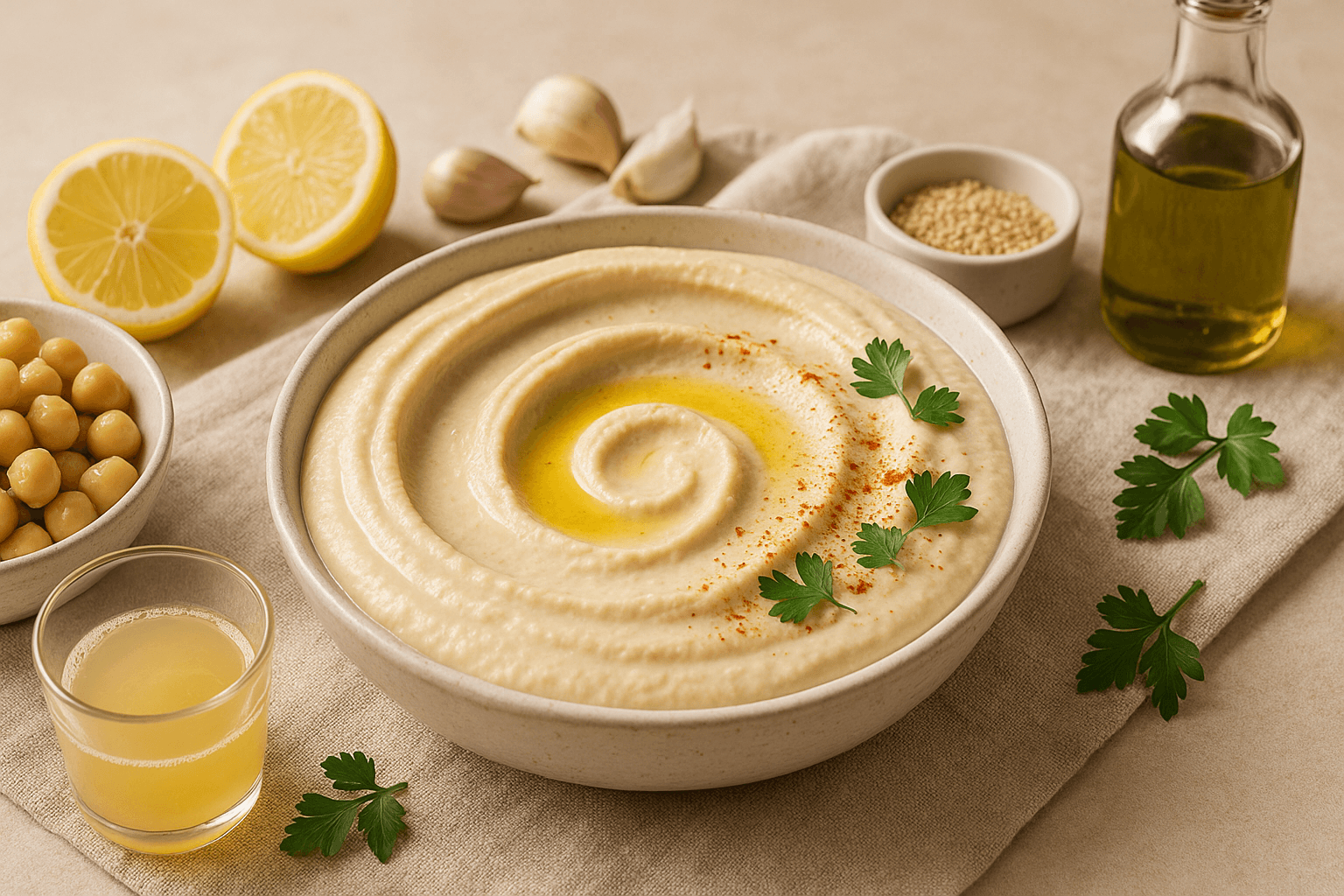
- Use the back of a spoon to swirl a shallow bowl.
- Pool olive oil in the grooves.
- Add one “signature” topping:
- paprika or Aleppo pepper
- cumin
- chopped parsley
- whole chickpeas warmed in olive oil
- sautéed mushrooms
- spiced ground lamb (for a full meal)
That finishing olive oil matters: it adds aroma right at the moment of eating, which is part of why hummus tastes richer than its ingredient list suggests.
Storage and make-ahead notes
- Store in an airtight container up to 4–5 days.
- To prevent drying, smooth the top and add a thin olive oil layer.
- Hummus thickens in the fridge. Revive by stirring in 1–2 Tbsp water/aquafaba and a small drizzle of olive oil.
Freezing is possible, but texture can become slightly mealy. If you do freeze, thaw overnight in the fridge and re-blend or whisk vigorously with a splash of water.
Ingredient quality matters more without tahini
Tahini can mask mediocre chickpeas or bland oil. Without it, each ingredient becomes more obvious.
- Chickpeas: If canned, try a couple brands. Some are firmer or have more “tinny” flavor.
- Olive oil: Use a fruity extra-virgin for finishing; for blending, a milder one can prevent bitterness.
- Lemon: Fresh juice only—bottled can taste muted or metallic.
- Salt: Don’t be shy. Hummus needs enough salt to taste full.
A practical “choose-your-own” formula (memorize this)
When you want to make tahini-free hummus without measuring obsessively:
- Chickpeas: 1 can (15 oz), drained (save liquid)
- Liquid base: 1/4–1/3 cup aquafaba + 3 Tbsp lemon + 1 tsp salt
- Garlic: 1 small clove (or roasted/blanched)
- Blend chickpeas smooth and loosen with more aquafaba
- Emulsify: drizzle in 4–6 Tbsp olive oil
- Taste: more salt, then lemon, then cumin/sesame depth
If you hit the right emulsion and seasoning balance, tahini won’t be missed.
References and further reading (for technique and food science)
- Harold McGee, On Food and Cooking — foundational explanations of emulsions, purees, and texture in sauces.
- Serious Eats (J. Kenji López-Alt and team), hummus technique articles — widely cited testing on chickpea cooking, baking soda, and blending methods.
- Bean cooking science from sources like America’s Test Kitchen — practical guidance on tenderness, skin softening, and puree smoothness.
Summary: the authentic feel comes from emulsion + balance
Tahini is traditional for good reasons—but you can still get hummus that tastes authentic by:
- Overcooking chickpeas for silkiness
- Using aquafaba/ice water to lighten and loosen
- Drizzling olive oil to build a stable emulsion
- Managing garlic and lemon so neither dominates
- Adding sesame-adjacent depth (toasted seeds, a touch of sesame oil, sunflower butter, or miso)
Once you master the base, the five variations let you steer flavor without sacrificing that creamy, scoopable texture that makes hummus irresistible.