Macro Friendly Recipes Made Easy: The “Protein Anchor” Method, Portion Math, and Sauces That Don’t Blow Your Numbers
RecipeSimpli
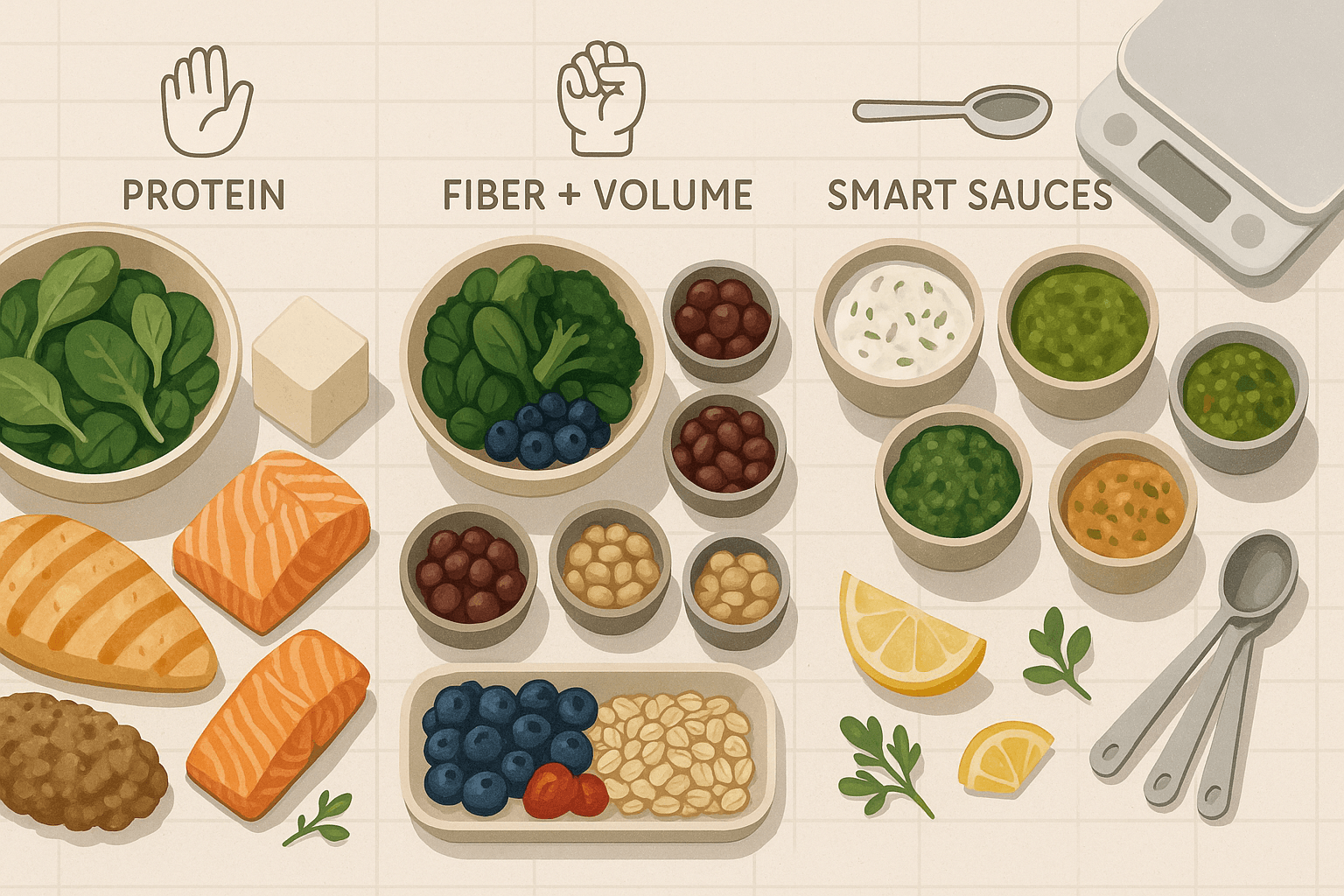
You don’t need a spreadsheet, a special meal plan, or a cabinet full of “diet foods” to cook macro-friendly meals.
What you do need is a repeatable system.
This article gives you one: the Protein Anchor method. You’ll learn how to:
- Start every meal with a protein “anchor” that keeps you full and makes macro targets easier.
- Do portion math by hand—fast—whether you use a scale or not.
- Use high-impact sauces that deliver big flavor without quietly doubling your fats or sugars.
- Build meals that are actually enjoyable: culturally flexible, customizable, and realistic for home cooking.
If you like the idea of hitting your macros without eating plain chicken and broccoli forever, this is for you.
1) The Macro-Friendly Mindset: Meals, Not Micromanagement
“Macro-friendly” gets misunderstood as strict tracking and joyless food. In practice, macro-friendly cooking is closer to good culinary structure:
- A clear main element (protein)
- Supporting elements (fiber-rich plants and smart carbs)
- A coherent flavor strategy (sauce, spice, acid, salt)
Chefs and experienced home cooks already think in frameworks: What’s the centerpiece? What’s the contrast? What’s the sauce? Macro-friendly cooking uses that same logic—just with a bit more intention around protein, fiber, and energy density.
From a nutrition and satiety perspective, this approach is supported by well-established findings:
- Protein tends to increase fullness and helps maintain lean mass during fat loss (a widely discussed concept in sports nutrition research and consensus statements).
- Fiber and water-rich foods (vegetables, beans, fruit, soups) increase meal volume with fewer calories—sometimes called low energy density eating, a concept popularized in research and public health guidance.
- Sauce choices often decide whether a meal stays macro-friendly; fats and sugars are calorie-dense, and they hide in dressings, glazes, and creamy toppings.
So instead of starting with “How can I make this low-calorie?” start with:
“What’s my protein anchor, and how do I build around it?”
2) The Protein Anchor Method (A Simple Build System)
What is a “protein anchor”?
A protein anchor is the central ingredient that supplies the bulk of a meal’s protein—usually 25–45 grams per serving, depending on your needs.
It’s an anchor because it stabilizes everything else:
- Your macros become more predictable.
- You can add vegetables, carbs, and sauces without the meal “floating away” nutritionally.
- It reduces decision fatigue: pick a protein first, then build.
What makes a good anchor?
A good protein anchor is:
- High protein per calorie (lean meat, seafood, egg whites, Greek yogurt, tofu, tempeh, seitan, legumes + a complementary protein)
- Easy to portion
- Easy to season
- Compatible with batch cooking
Anchor examples (mix and match)
Animal-based anchors
- Chicken breast or thighs (skinless)
- Turkey (breast, tenderloin, lean ground)
- Lean beef (sirloin, round, 90–96% ground)
- Pork tenderloin
- Fish: cod, tilapia, tuna, salmon (salmon is higher-fat but still very macro-friendly)
- Shrimp and scallops
Vegetarian/vegan anchors
- Extra-firm tofu, tempeh
- Seitan (very high protein; watch sodium)
- Edamame
- Lentils + a higher-protein add-on (Greek yogurt sauce if vegetarian, or tofu/tempeh if vegan)
- Textured vegetable protein (TVP) in chili, taco filling, pasta sauce
Dairy-based anchors
- Nonfat or low-fat Greek yogurt (savory bowls, dips, marinades)
- Cottage cheese (blended into sauces, bowls, even some baking)
Practical guideline: Aim for a protein anchor that gives you at least 25g protein per meal if you’re trying to keep protein high without overthinking.
3) Portion Math: The “Good Enough” Way to Hit Numbers
You can track meticulously if you enjoy it. But many home cooks just want something that works most of the time.
The trick is to learn portion math in a way that’s quick and forgiving.
Step 1: Decide your meal’s rough macro role
Not every meal needs identical macros. Many people do better with roles:
- High-protein, higher-carb meal (training days, lunch)
- High-protein, lower-carb meal (lighter dinner)
- Balanced meal (most days)
Once you know the role, you build around the anchor.
Step 2: Use the “protein first” math
If you do use a scale sometimes, you’ll learn what portions look like. If you don’t, you can still get close.
Quick macro math (rule-of-thumb)
- Cooked lean meat/fish: ~25–30g protein per 4 oz (113g) cooked portion (varies by cut).
- Extra-firm tofu: commonly ~10–15g protein per 1/2 cup to 3/4 cup (varies by brand).
- Greek yogurt: often ~15–20g protein per 170g (about 3/4 cup).
Rather than memorize exact values, memorize your staples. Check the label once, then you’ll know.
Step 3: The hand-portion method (no tools)
Borrowed from sports nutrition coaching, hand portions are imperfect but practical:
- Protein: 1–2 palms per meal (palm = thickness and size of your palm).
- Carbs: 1 cupped hand (rice, pasta, oats) more on training days; less on rest days.
- Fats: 1–2 thumbs (oil, nut butter, cheese).
- Vegetables: 1–2 fists (or more).
This method works because it scales to the individual and creates consistent meals.
Step 4: Use “macro budgets” for sauces and fats
Here’s where most macro-friendly meals accidentally fail: oils, dressings, cheese, creamy sauces.
A tablespoon of oil is about 120 calories. Two “glugs” can become 2–3 tablespoons without you noticing.
A simple fix:
- Pick your fat budget for the meal (e.g., 1–2 thumbs).
- Spend it intentionally: either in cooking oil or in a rich sauce or in toppings.
If your sauce is creamy and rich, cook with less oil. If you’re roasting vegetables with oil, choose a lighter sauce.
4) The Macro-Friendly Plate Blueprint (Anchor + Volume + Smart Carbs)
A repeatable meal blueprint:
- Protein anchor (center)
- Fiber + volume (vegetables, beans, salads, soups)
- Carb choice (optional, portioned)
- Sauce (the flavor engine)
Fiber + volume: why it matters
Fiber doesn’t just “help digestion.” It also changes how a meal behaves:
- Slows gastric emptying for many foods
- Increases chewing and meal time
- Improves satiety for a given calorie load
Culinary win: fiber-rich foods also carry flavors beautifully—especially when roasted, charred, pickled, or sautéed with spices.
High-fiber, high-volume allies
- Leafy greens, cruciferous vegetables, peppers, mushrooms
- Cabbage (slaws, stir-fries, braises)
- Beans and lentils
- Berries, apples, pears
- Whole grains (oats, barley, brown rice)
Smart carbs: choose the form that fits the meal
Carbs aren’t “good” or “bad”—they’re tools.
- Need comfort and staying power? Choose potatoes, beans, oats, rice.
- Need fast cooking? Choose couscous, quick oats, rice noodles.
- Want more fiber? Choose beans, lentils, barley, whole grains.
Portioning carbs is where portion math pays off:
- Start with 1 cupped hand cooked grains or 1 medium potato.
- Add more if activity and hunger demand it.
5) Sauces That Don’t Blow Your Numbers (Flavor Without the Calorie Bomb)
Sauces are where culinary craft meets macro control.
A great sauce does three jobs:
- Delivers salt (enhances flavor perception)
- Adds acid (brightness; balances richness)
- Carries aroma (herbs, spices, garlic, toasted notes)
Fat can help carry flavor too—but you don’t need a lot if you use acid, aromatics, and emulsification smartly.
The 6 macro-friendly sauce archetypes
1) Yogurt-based sauces (high protein, creamy)
Why it works: Greek yogurt gives creaminess and tang, with much more protein than mayo or sour cream.
Base template
- Greek yogurt
- Lemon juice or vinegar
- Garlic + salt
- Herbs/spices (dill, cilantro, za’atar, curry powder)
Use on: chicken, shawarma bowls, roasted veg, potatoes, tacos.
Swap ideas
- Replace mayo in chicken salad with Greek yogurt + mustard.
- Blend cottage cheese + lemon + herbs for a thicker “cream sauce.”
2) Salsa + pico + chopped salads (low calorie, big impact)
Why it works: high water content, lots of acid, big aroma.
- Pico de gallo
- Salsa verde
- Tomato salsa
- Cucumber-tomato salad with vinegar
Use on: eggs, tacos, bowls, grilled meats, beans.
3) Soy-vinegar-ginger sauces (salty/acidic, minimal fat)
Why it works: umami + acid can replace a lot of oil.
Template
- Soy sauce or tamari
- Rice vinegar or lime
- Ginger + garlic
- Optional sweetness (a little honey, or zero-cal sweetener if you use it)
- Optional sesame oil (measure it—½ to 1 tsp goes far)
Use on: stir-fries, tofu, shrimp, cabbage slaw.
4) Miso-based sauces (umami, creamy without much fat)
Why it works: miso adds depth; a small amount transforms a whole dish.
Template
- White miso
- Warm water (to dissolve)
- Rice vinegar or citrus
- Optional tahini (measure)
- Optional yogurt for creaminess
Use on: salmon, roasted eggplant, noodles, grain bowls.
5) Chimichurri / herb sauces (punchy; control oil)
Classic chimichurri uses a fair amount of oil. You can keep the vibe with less.
Macro-friendly approach
- Use more vinegar/lemon and a bit of water
- Measure oil (start with 1–2 tsp per serving)
- Bulk it up with herbs, garlic, chili flakes
Use on: steak, chicken, potatoes, roasted carrots.
6) Blended vegetable sauces (volume + fiber)
Why it works: pureed roasted peppers, tomatoes, carrots, or squash create body and sweetness without cream.
- Roasted red pepper sauce
- Tomato-veg marinara
- Carrot-ginger puree
Use on: pasta (including protein pasta), meatballs, bowls.
6) Sauce Science: How to Make “Light” Sauce Taste Rich
A macro-friendly sauce succeeds when it feels satisfying. Here are culinary techniques that create richness without relying on lots of fat.
Use emulsification strategically
An emulsion (like vinaigrette) spreads fat evenly, so a small amount tastes like more.
- Whisk mustard into vinegar, then slowly drizzle measured oil.
- Use yogurt as an emulsifier.
Maximize aroma (it’s most of flavor)
Much of what we call taste is aroma. Boost it with:
- Toasted spices (bloom in a small amount of oil or dry-toast)
- Fresh herbs added at the end
- Citrus zest
- Garlic and ginger (grated)
Balance with acid
Acid makes food taste brighter and “finished.” If a sauce tastes flat, add:
- Lemon/lime juice
- Vinegar (rice, red wine, sherry)
- Pickle brine
Use umami to replace richness
Umami-rich ingredients create depth:
- Miso
- Soy sauce
- Tomato paste
- Mushrooms
- Parmesan (small amount)
- Fish sauce (a few drops)
A teaspoon of fish sauce in a chili or stir-fry rarely tastes “fishy,” but it makes everything taste more complete.
7) Practical Portioning: Three Ways to Build the Same Meal
Let’s build a macro-friendly bowl three different ways: scale-based, hand-based, and “by packages.”
Example meal: Chicken burrito-style bowl
A) Using a scale (most precise)
- Cooked chicken breast: 150g
- Cooked rice: 120g
- Black beans: 100g
- Fajita vegetables: “as much as you want” (still count oil)
- Salsa + lime
- Greek yogurt “crema”
B) Using hands (most practical)
- Chicken: 1–2 palms
- Rice: 1 cupped hand
- Beans: 1/2 cupped hand (or more if you want higher fiber)
- Veg: 2 fists
- Sauce: 2–3 tablespoons salsa + 2 tablespoons yogurt sauce
C) Using package portions (fastest for busy cooks)
- 1 pre-portioned chicken breast (or 1 can tuna)
- 1 microwavable rice cup (use half if needed)
- 1/2 can beans
- Bagged salad or frozen fajita veg
- Salsa from the jar + yogurt
All three can be macro-friendly. The method you choose depends on your time, personality, and goals.
8) “Protein Anchor” Prep: The Weekly System That Makes This Effortless
Macro-friendly cooking gets easier when you prep components, not complete meals.
A simple weekly prep checklist
Pick 2 protein anchors, 2 vegetables, 1 carb, and 2 sauces.
Protein anchors (pick 2)
- Sheet-pan chicken
- Turkey taco meat (lean ground + spices)
- Baked tofu
- Salmon portions (cook once or buy smoked)
- Lentil stew
Vegetables (pick 2)
- Roasted broccoli/cauliflower
- Sautéed cabbage
- Big mixed salad
- Roasted peppers + onions
- Frozen veg blend (stir-fry)
Carb (pick 1)
- Rice, potatoes, quinoa, barley
- Tortillas or pita
- Pasta (regular or higher-protein)
Sauces (pick 2)
- Yogurt herb sauce
- Salsa verde
- Miso-ginger sauce
- Light chimichurri
Now you can mix and match all week without boredom.
Storage and texture tips
- Keep sauces separate until serving (prevents sogginess).
- Roast vegetables at high heat so they stay appealing when reheated.
- Slightly undercook grains if you plan to microwave them later.
9) Recipes & Templates You Can Customize (With Macro Logic)
These are not rigid recipes; they’re modular. Each starts with a protein anchor and uses sauces to keep it exciting.
Template 1: Yogurt-Marinated Chicken + Cucumber Salad
Why it’s macro-friendly: yogurt adds protein and tenderness; cucumber salad adds volume with minimal calories.
How to do it
- Marinate chicken in Greek yogurt + garlic + lemon + salt + paprika (at least 30 minutes; overnight is great).
- Roast or grill.
- Serve with cucumber + tomato + red onion + vinegar + salt.
Portion math
- Chicken: 1–2 palms
- Salad: 2 fists
- Optional carb: 1 cupped hand rice or 1 pita
Culinary science note: Yogurt’s acidity and calcium can help tenderize and improve browning. Similar techniques show up across cuisines (e.g., South Asian yogurt marinades).
Template 2: Turkey Taco Protein + Fiber-Boosted Slaw
Why it’s macro-friendly: lean ground turkey is a clean anchor; slaw adds crunch and fiber; salsa handles flavor.
How to do it
- Brown lean turkey with onion, cumin, chili powder, garlic, and salt.
- Slaw: shredded cabbage + lime + salt + a spoon of yogurt + jalapeño.
- Serve in bowls or tortillas.
Sauce options
- Salsa + lime
- Yogurt “crema” (yogurt + lime + salt)
Template 3: Crispy Tofu Bowl + Miso-Ginger Sauce
Why it’s macro-friendly: tofu is a solid anchor; sauce uses umami and acid; vegetables bring volume.
Crispy tofu technique
- Press tofu (or use extra-firm and pat dry).
- Cube, toss with soy sauce + a little cornstarch.
- Bake or air-fry until crisp.
Miso-ginger sauce
- White miso + rice vinegar + grated ginger + warm water
- Optional: 1 tsp sesame oil per serving (measure)
Serve with: steamed edamame, cucumbers, shredded carrots, and rice (portion as desired).
Template 4: Salmon + Blended Roasted Pepper Sauce
Why it’s macro-friendly: salmon has more fat than white fish but is satisfying; pepper sauce adds body without cream.
Roasted pepper sauce Blend:
- Roasted red peppers (jarred is fine)
- Garlic
- Lemon juice
- Salt
- Smoked paprika
- Optional: Greek yogurt for extra protein and creaminess
Serve with roasted broccoli and potatoes (or cauliflower rice if you want lower carbs).
Template 5: Lentil “Bolognese” With Extra-Lean Meat (or TVP)
Why it’s macro-friendly: lentils add fiber; lean meat or TVP boosts protein; tomato base is naturally low in fat.
How to do it
- Sauté onion, carrot, celery.
- Add lean ground meat (or hydrated TVP) + tomato paste.
- Add crushed tomatoes + cooked lentils.
Serve over pasta, zucchini noodles, or a mix of both.
10) Common Macro Pitfalls (and the Fixes)
Pitfall: “Healthy” fats quietly take over
Fix: measure oil for a week to recalibrate your eyes. Use spray oil or brush oil on pans.
Pitfall: Protein disappears at breakfast
Fix: make breakfast a protein-anchor meal too.
- Greek yogurt + berries + high-fiber cereal
- Egg-white veggie scramble + salsa
- Cottage cheese bowl (savory with tomatoes and everything seasoning)
Pitfall: The meal is technically macro-friendly but not satisfying
Fix: add one of these satisfaction levers:
- Crunch (cabbage, pickles, toasted seeds)
- Heat (chili oil—measured—or hot sauce)
- Acid (lemon, vinegar)
- Umami (miso, soy, tomato paste)
Pitfall: Sauces are boring, so you overeat snacks later
Fix: keep 2–3 sauces in rotation. Familiar meals with different sauces feel new.
11) Cultural Context: Protein Anchors Exist in Every Cuisine
The Protein Anchor method isn’t a “diet trend.” It’s a lens you can apply to foods you already love.
- Mediterranean: grilled fish or chicken anchor + salad + yogurt sauces (tzatziki-style)
- Korean-inspired: lean beef/tofu anchor + kimchi and veg + gochujang sauce (watch sugar; dilute with vinegar/yogurt)
- Mexican: beans + lean meats + salsa/pico (salsas are naturally macro-friendly)
- Middle Eastern: chicken/legumes anchor + chopped salads + tahini (measure) + yogurt
- Japanese: fish/tofu anchor + pickled veg + soy-vinegar sauces
Cuisines developed these structures for taste and balance long before macro tracking existed.
12) A Mini “Macro-Friendly Sauce Library” (Make Once, Use All Week)
A) Lemon-Herb Yogurt Sauce
- Greek yogurt
- Lemon juice + zest
- Garlic
- Salt
- Dill/parsley
Great with: chicken, potatoes, roasted carrots.
B) Spicy Soy-Lime Sauce
- Soy sauce
- Lime juice
- Grated ginger
- Garlic
- Chili flakes
- Optional: 1 tsp sesame oil
Great with: tofu, shrimp, slaw.
C) Salsa Verde Yogurt (High Protein “Green Crema”)
- Salsa verde
- Greek yogurt
- Lime
- Salt
Great with: tacos, bowls, eggs.
D) Light Chimichurri
- Parsley + cilantro
- Garlic
- Red wine vinegar
- Chili flakes
- Measured olive oil (start small)
- Salt
Great with: steak, chicken, roasted veg.
13) Putting It All Together: A 5-Minute Build Checklist
When you’re staring into the fridge, run this checklist:
- What’s my protein anchor? (chicken, tofu, yogurt, fish, beans + add-on)
- Where’s my volume? (salad, roasted veg, soup, slaw)
- Do I want carbs here? If yes, portion them (rice/potato/pasta/beans).
- What’s my sauce? Pick one high-impact option.
- Where is my fat coming from? Oil, sauce, cheese—choose intentionally.
If you can answer those five questions, you can build endless macro-friendly meals without feeling boxed in.
14) A Sample Week Using the System (No Boredom Required)
Prep day (60–90 minutes)
- Protein anchors: sheet-pan chicken + baked tofu
- Veg: roasted broccoli + shredded cabbage slaw
- Carb: rice
- Sauces: lemon-herb yogurt + soy-lime ginger
Meals
- Mon: Chicken + broccoli + rice + lemon yogurt
- Tue: Tofu + slaw + rice + soy-lime sauce
- Wed: Chicken salad bowl (chicken + greens + cucumber + salsa verde yogurt)
- Thu: Stir-fry tofu + frozen veg + soy-lime sauce
- Fri: Chicken tacos + slaw + pico
Same building blocks, different outcomes.
15) The Point: Macro-Friendly Can Be Chef-Friendly
Macro-friendly cooking doesn’t have to be restrictive. When you treat protein as the anchor, portion with simple math, and rely on sauces that are built on acid, aromatics, and umami (not just oil and sugar), you get meals that are:
- Easier to repeat
- Easier to adjust
- More filling
- More flavorful
And most importantly: you can keep cooking like a food person—not like you’re stuck eating “diet meals.”
Sources and further reading (optional deep dives)
- Research and public health discussions on energy density and satiety (often referenced in nutrition science literature).
- Sports nutrition consensus guidance on higher protein intake for body composition and performance contexts.
- Culinary science references on emulsions, aroma perception, and flavor balance (classic food science texts and culinary education materials cover these fundamentals).
If you want, tell me your preferred protein anchors (e.g., chicken, tofu, fish, beans) and whether you cook mostly weeknights or batch-prep, and I can generate a tailored 7-day macro-friendly plan using this exact method.