Savory Cottage Cheese Recipes That Aren’t Watery: Drain vs. Blend, Heat Rules, and 3 High‑Protein Bases for Dips, Sauces, and Bakes
RecipeSimpli
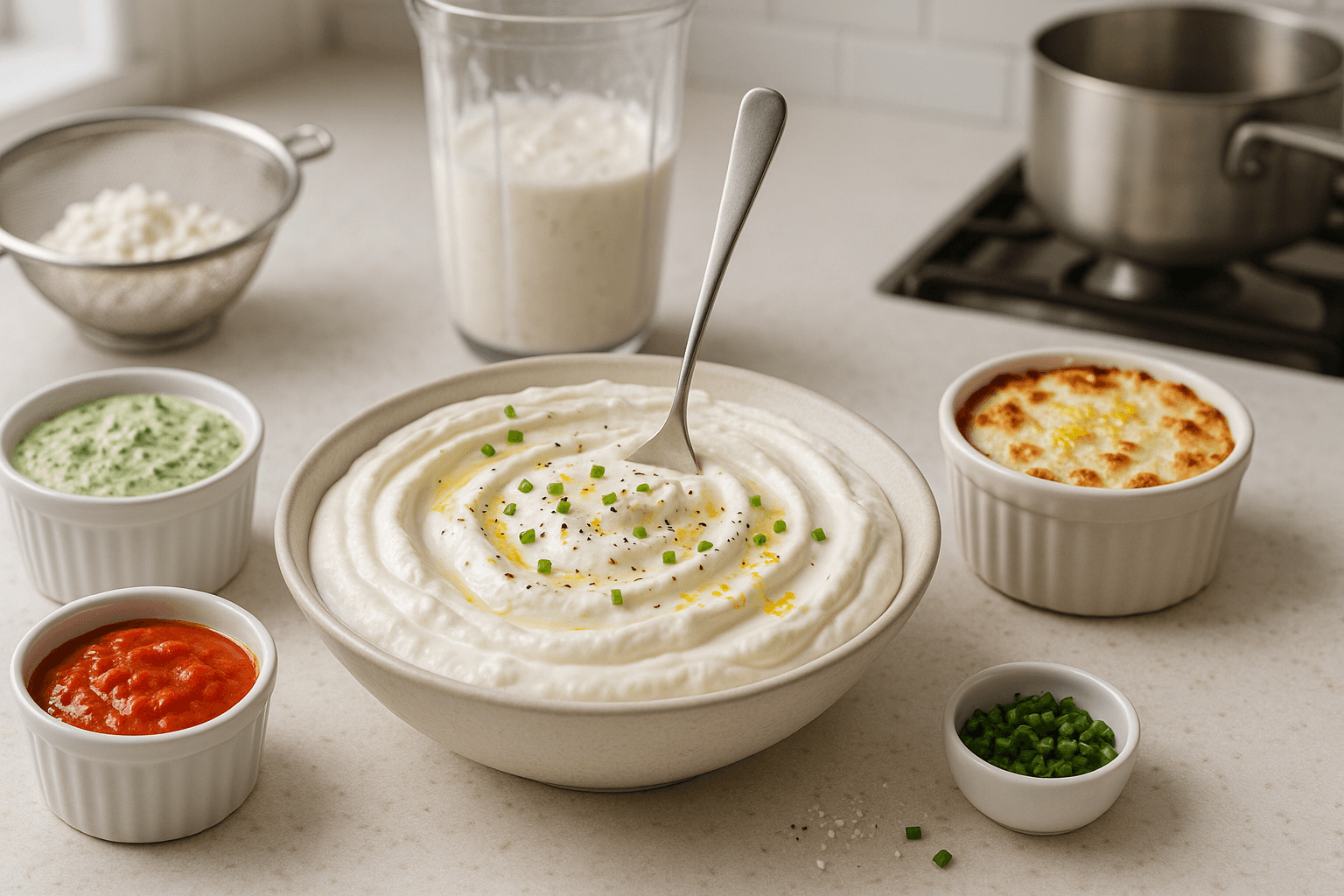
Cottage cheese is having a moment—and for good reason. It’s affordable, high in protein, mild enough to take on bold flavors, and versatile across cuisines. But anyone who has tried to turn cottage cheese into a savory dip, a silky pasta sauce, or a bake-friendly filling has likely hit the same problem:
It can go watery, grainy, or split—especially once you add salt, heat it, or combine it with acidic ingredients.
This guide is built for home cooks who want cottage cheese that behaves like a pro ingredient: thick, spoonable, stable, and genuinely flavorful. You’ll learn when to drain vs. blend, how to handle heat without curdling, how to season for real savory depth, and then how to use three dependable high‑protein bases that work across dips, sauces, and bakes.
1) Why cottage cheese turns watery (and how to stop it)
To keep cottage cheese thick, it helps to understand what it is.
Cottage cheese is a fresh cheese: curds (milk proteins coagulated into soft lumps) suspended in a liquid called whey (plus sometimes added cream). The watery problems usually come from one of four places:
- Too much whey in the tub (varies by brand, fat %, and style)
- Salt pulling water out of the curds over time
- Acid + heat tightening proteins and squeezing out whey (syneresis)
- Mechanical mixing breaking curds unevenly, leaving a grainy paste that leaks liquid
Food science note: dairy proteins (especially casein) hold water in a delicate structure. When you add acid, salt, or high heat, that structure can tighten and expel moisture. This is the same reason yogurt can weep liquid and ricotta can look wet after baking.
The fix is not one magic trick—it’s choosing the right strategy for the recipe:
- Drain when you need structure and stability.
- Blend when you need smoothness and emulsification.
- Control heat when you need warmth or baking without separation.
2) Drain vs. blend: which one should you do?
Drain when you want thickness and bake stability
Use draining when cottage cheese needs to behave like:
- ricotta in lasagna or stuffed shells
- a thick spreadable filling
- a dip that must hold peaks (like a “protein French onion dip”)
- a topping that won’t puddle after salting
How to drain cottage cheese (the reliable way):
- Set a fine‑mesh strainer over a bowl.
- Add the cottage cheese.
- Let it drain 15–30 minutes for dips, 30–60 minutes for fillings.
- For extra-thick results, gently press with a spoon or fold into cheesecloth.
Practical tip:
- If you’re baking or stuffing, aim for “ricotta-like.” If a spoon drags and leaves a clean trail, you’re close.
Tradeoff: Draining concentrates flavor and protein, but you lose some volume and saltiness (whey carries salt). You may need to re-season.
Blend when you want silkiness and sauce-like behavior
Use blending when cottage cheese needs to behave like:
- crema, sour cream, or mayonnaise in a dip
- a smooth pasta sauce base
- a drizzle sauce or salad dressing
- a “cream cheese” style spread
How to blend cottage cheese smoothly:
- Use a blender, small food processor, or immersion blender.
- Blend 30–90 seconds until glossy.
- If needed, add 1–2 teaspoons water, milk, or olive oil to help it move—but add liquid cautiously.
Practical tip:
- Blending works best when the cottage cheese isn’t overly watery to begin with. If you see a lot of free whey, drain first, then blend.
Tradeoff: Blending can make cottage cheese feel thinner at first because the curds break down and release moisture. Give it 5 minutes in the fridge; it often thickens slightly as proteins rehydrate.
The “drain then blend” rule of thumb
If you’re making:
- a dip you want thick and smooth → drain 20 minutes, then blend
- a pasta sauce you want silky and stable → blend; drain only if it seems watery
- a bake filling you want sliceable → drain well; blend optional
3) Heat rules: how to warm cottage cheese without splitting
Cottage cheese can be heated, but it’s less forgiving than heavy cream. The key is to prevent proteins from tightening too fast.
Rule #1: Avoid boiling
Boiling is the fastest route to graininess and separation.
- Keep sauces at a gentle steam.
- If you see bubbling, reduce heat immediately.
Rule #2: Add cottage cheese off heat or at the end
For sauces, the safest method is:
- Cook aromatics, vegetables, or pasta.
- Turn heat to low or off.
- Stir in blended cottage cheese.
- Warm gently with residual heat.
Rule #3: Use starch as a stabilizer
Starch helps prevent separation by binding water and buffering protein tightening.
- Pasta water (starchy) is your best friend.
- A teaspoon of cornstarch or flour whisked into the sauce base can help.
- In bakes, egg + starch + drained curds makes a stable filling.
Rule #4: Watch acidity timing
Acid (lemon juice, vinegar, tomatoes) can intensify curdling when heated.
- Add acidic ingredients after the cottage cheese is incorporated and warmed gently.
- Or use roasted tomatoes/peppers (less harsh) and blend them in.
Rule #5: Fat helps mouthfeel and stability
Low-fat cottage cheese is more prone to seeming watery or chalky.
- If your recipe tastes thin, add olive oil, a spoon of tahini, or a little parmesan.
- Even 1–2 teaspoons of fat can dramatically improve texture.
4) Seasoning cottage cheese for real savory flavor (not “diet food”)
Cottage cheese is mild. That’s a feature—if you build layered seasoning.
Build flavor in three layers
-
Salt + umami
- kosher salt, soy sauce, miso, parmesan, nutritional yeast, anchovy paste
-
Aromatics
- garlic (fresh or roasted), scallions, shallots, onion powder, toasted spices
-
Acid + brightness (added thoughtfully)
- lemon zest, a squeeze of lemon, vinegar, pickle brine, sumac
A note on salt and wateriness
Salt can make cottage cheese “weep” because it draws moisture from the curds.
Solution:
- If making a dip ahead, drain first, then season.
- If it loosens after salting, blend again or fold in a binder (grated parmesan, powdered mushrooms, chia—not traditional, but effective).
Texture boosters that also add flavor
- Parmesan or pecorino: thickens and adds umami
- Tahini: makes it richer and more stable (great with lemon/garlic)
- Mustard: emulsifies and adds bite
- Roasted garlic: big flavor without harshness
5) Choosing the best cottage cheese for savory cooking
Not all tubs behave the same. Differences include curd size, added stabilizers, and cream level.
Quick selection guide
- For blending into sauces: small-curd or any style, preferably 2–4% fat
- For draining into fillings: large-curd can feel more “ricotta-like” once drained
- For ultra-smooth dips: look for higher fat or “creamed” styles
If you can only find low-fat, you can still make excellent results—just lean more on:
- draining
- adding olive oil/tahini
- using starchy liquids (pasta water)
6) Three high‑protein bases you can memorize (dips, sauces, bakes)
These bases are designed to solve the watery problem first, then give you a platform for flavor.
Base #1: The Thick Dip Base (Drain + Blend)
A stable, scoopable base for savory dips and spreads.
Formula (makes ~2 cups):
- 2 cups cottage cheese
- Drain 20–30 minutes
- Blend until smooth
- Add 1–2 tablespoons olive oil (optional but excellent)
- Season with 1/2 teaspoon kosher salt (start low), pepper
Why it works: Draining reduces free whey; blending creates a unified cream; oil improves body and mouthfeel.
Use it for:
- chips and crudités dips
- sandwich spreads
- dollops on roasted vegetables
Base #2: The Silky Sauce Base (Blend + Starch + Gentle Heat)
A creamy pasta sauce or drizzle that warms without splitting.
Formula (serves 2–3):
- 1 1/2 cups cottage cheese, blended smooth
- 1/4–1/2 cup hot starchy pasta water (add gradually)
- 1/2 cup finely grated parmesan (optional but stabilizing)
- Garlic or aromatics cooked separately
Method:
- Blend cottage cheese.
- Toss with hot pasta off heat.
- Add pasta water a splash at a time until glossy.
Why it works: Starch binds water; residual heat warms without boiling; parmesan helps emulsify.
Base #3: The Bake‑Friendly Filling Base (Drain + Egg + Starch)
A filling that slices cleanly and doesn’t puddle.
Formula (fills a 9x13 lasagna or 18–24 shells):
- 3 cups cottage cheese, drained 45–60 minutes
- 1–2 eggs (1 for tender, 2 for firmer)
- 1/4 cup grated parmesan
- 1–2 tablespoons starch (flour, cornstarch, or semolina)
- Salt, pepper, herbs
Why it works: Draining removes whey; egg sets proteins; starch traps moisture; parmesan adds structure.
7) Fast savory dips (thick, not watery)
Below are three practical dip builds using Base #1. Each is designed to taste like a “real” dip—not a compromise.
A) Ranch-style herb dip (cool, thick, bright)
Mix into Thick Dip Base:
- 1–2 teaspoons lemon juice (add slowly)
- 1 teaspoon Dijon mustard
- 1/2 teaspoon garlic powder + 1/2 teaspoon onion powder
- 2 tablespoons chopped dill + 2 tablespoons chives (or parsley)
- Black pepper, optional pinch of smoked paprika
Anti-watery tip: Add lemon juice last. If it loosens, chill 20 minutes.
B) French onion dip (deep savory, chip-ready)
Add to Thick Dip Base:
- 1 large onion, slowly caramelized in butter/olive oil (cool completely)
- 1 teaspoon Worcestershire sauce (or soy)
- 1/2 teaspoon thyme
- Optional: 1–2 tablespoons sour cream for tang
Anti-watery tip: Make sure onions are not oily-wet. Cook off moisture until jammy.
C) Harissa-roasted pepper dip (smoky, spicy, smooth)
Blend together:
- Thick Dip Base
- 1/2 cup roasted red peppers, well-drained
- 1–2 teaspoons harissa paste
- 1 tablespoon olive oil
- 1/2 teaspoon cumin
Anti-watery tip: Pat peppers dry. Jarred peppers carry a lot of liquid.
8) Pasta sauces and warm savory applications (no curdling)
A) 10-minute cottage cheese Alfredo-ish sauce
This isn’t classic Alfredo, but it scratches the creamy, peppery itch with a fraction of the heaviness.
Ingredients (2–3 servings):
- 8–10 oz pasta
- 1 1/2 cups cottage cheese, blended
- 1/2–3/4 cup hot pasta water
- 1/2 cup parmesan
- 1 clove garlic, grated (or 1/2 teaspoon garlic powder)
- Black pepper, salt
Method:
- Cook pasta; reserve pasta water.
- Blend cottage cheese until smooth.
- In a warm bowl (or pot off heat), combine blended cottage cheese, parmesan, garlic, pepper.
- Add hot pasta and toss.
- Add pasta water gradually until glossy.
Heat rule reminder: Keep it off boiling heat. Residual warmth is enough.
B) Tomato-cottage cheese vodka-style sauce (without the vodka)
Tomato + dairy can split if treated roughly. The trick is to blend and add gently.
Ingredients:
- 1 tablespoon olive oil
- 2 cloves garlic, sliced
- 1/2 teaspoon chili flakes
- 1 cup crushed tomatoes (or blended roasted tomatoes)
- 1 cup blended cottage cheese
- Salt, basil
Method:
- Gently sauté garlic and chili in olive oil.
- Add tomatoes; simmer 5–10 minutes.
- Reduce heat to low.
- Stir in blended cottage cheese gradually.
- Warm gently; add basil.
Anti-splitting tip: If your tomatoes are very acidic, add a pinch of sugar, or use roasted tomatoes for a sweeter profile.
C) Cottage cheese queso-style sauce (for nachos or burrito bowls)
A high-protein “queso vibe” that’s actually satisfying.
Blend:
- 1 1/2 cups cottage cheese
- 1/2–3/4 cup shredded cheddar or pepper jack
- 1–2 teaspoons taco seasoning
- Pickled jalapeño brine (1–2 teaspoons)
- Splash of hot water as needed
Warm gently:
- Heat on low, stirring constantly, just until melty and pourable.
Anti-grainy tip: Pre-shredded cheese can be coated with anti-caking starches that sometimes affect texture. Block cheese grated at home melts smoother.
9) Bakes and fillings that stay creamy (not puddled)
A) Lasagna or baked ziti filling (cottage cheese that acts like ricotta)
Using Base #3, you get a filling that sets cleanly.
Add-ins you can choose:
- chopped spinach (squeezed very dry)
- sautéed mushrooms (cook off water)
- basil, parsley, oregano
- lemon zest for brightness
Moisture-control checklist:
- Drain cottage cheese well.
- Cool cooked vegetables and squeeze them dry.
- Don’t over-sauce the bake; watery marinara = watery final slice.
B) Savory stuffed shells (three flavor paths)
Start with Bake‑Friendly Filling Base, then choose:
- Mediterranean: chopped olives + sun-dried tomatoes (patted dry) + oregano
- Herby lemon: parsley + dill + lemon zest + black pepper
- Spicy: calabrian chili paste + parmesan + sautéed greens
Bake covered until hot, then uncover briefly to reduce surface moisture.
C) High-protein breakfast bake (cottage cheese + eggs)
Cottage cheese works beautifully in egg bakes—but watery vegetables can sabotage it.
Template:
- 6 eggs
- 1 1/2 cups cottage cheese (drained 20–30 minutes if watery)
- 1 cup cooked veg (spinach squeezed dry, mushrooms cooked down, peppers roasted)
- 1 cup shredded cheese (optional)
- Salt, pepper
Bake at 350°F / 175°C until just set. Rest 10 minutes before slicing.
10) Troubleshooting: how to fix watery or separated cottage cheese recipes
Problem: Dip looks thin after salting
Fix: Chill 20–30 minutes. If still thin, blend again or fold in parmesan or a spoon of tahini.
Problem: Sauce turned grainy
Fix: Remove from heat, blend with a splash of hot pasta water until smooth. Graininess is often curds tightening—blending can re-emulsify.
Problem: Bake has liquid pooling
Fix next time:
- Drain longer.
- Use 1 extra egg or add 1 tablespoon starch.
- Cook vegetables to remove moisture.
- Let the bake rest before cutting (carryover setting reduces weeping).
Problem: Flavor is flat
Fix: Add one from each category:
- salt/umami (parmesan, miso)
- aromatic (garlic, onion powder)
- brightness (lemon zest or vinegar)
11) Cultural context: where cottage cheese fits (and why it’s adaptable)
Cottage cheese sits in a family of fresh cheeses used worldwide—ricotta in Italy, tvorog in Eastern Europe, farmer cheese in Central Europe, paneer (a pressed curd) in South Asia. What differs is moisture level and acidity, which changes how they melt, set, and absorb seasoning.
American-style cottage cheese is relatively moist and mild, which makes it a great canvas for:
- Mediterranean flavors (lemon, herbs, garlic, olive oil)
- Middle Eastern profiles (za’atar, sumac, tahini)
- Mexican/Tex-Mex (chiles, cumin, cheddar)
- Scandinavian simplicity (dill, rye, smoked fish)
Once you control water and heat, it becomes less like a lumpy diet food and more like a versatile fresh-cheese base.
12) A practical workflow for weeknight cooking
If you want cottage cheese to become a go-to savory ingredient, set up a simple routine:
- Drain a tub once a week (or as needed) for 30 minutes.
- Store drained cottage cheese in a container.
- Blend a portion into a “neutral cream” and keep it ready for sauces.
- Season only what you’ll use in the next 1–2 days for best texture.
Meal ideas built on the bases:
- Thick dip base + herbs → dip for roasted potatoes
- Silky sauce base + spinach → creamy green pasta
- Bake filling base + marinara → stuffed shells on Sunday
13) Key takeaways (the rules you’ll actually remember)
- Drain for structure. Blend for silk. Drain-then-blend for thick + smooth.
- Don’t boil cottage cheese sauces. Use gentle heat or residual warmth.
- Starch stabilizes. Pasta water is the easiest tool.
- Acid is powerful. Add it gradually, and often at the end.
- Season in layers with umami + aromatics + brightness.
With those rules, cottage cheese stops being unpredictable and starts acting like a flexible, high‑protein dairy base you can use confidently—whether you’re making a chip dip, a creamy pasta, or a bake that slices cleanly.