Vegetarian Slow Cooker Recipes That Don’t Turn to Mush: Timing Zones, Veg Cut Sizes, and a Finish-at-the-End Flavor Protocol (Plus 6 Buildable Meals)
RecipeSimpli
Slow cookers are wonderful at doing one thing extremely well: holding a gentle, moist heat for a long time. That’s why they make unbeatable broths, beans, stews, and sauces.
It’s also why many vegetarian slow cooker meals disappoint. Vegetables soften faster than meat. Beans can burst. Grains can go chalky or gummy. Add it all at 8 a.m., and by dinner you may have a tasty—but homogeneous—bowl of “beige stew.”
The good news: you can get distinct vegetables, intact beans, and grains with real texture from a slow cooker. The trick isn’t exotic ingredients. It’s a simple system:
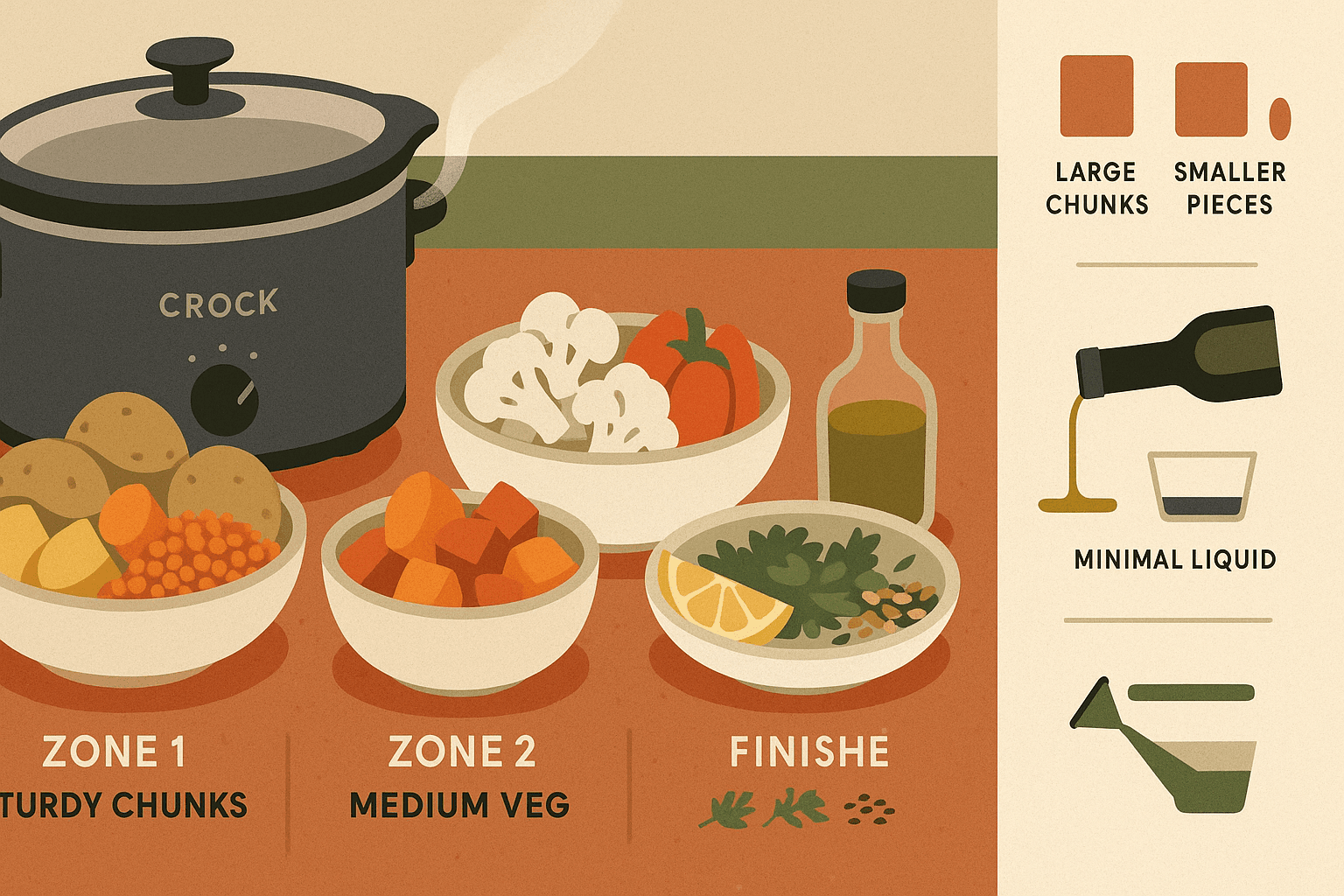
- Timing zones (what goes in early vs. late)
- Cut-size rules (how big to chop each vegetable)
- Minimal-liquid ratios (slow cookers don’t evaporate much)
- A finish-at-the-end flavor protocol (brightness, fat, and aroma added at the end)
Below is a practical framework you can apply to almost any vegetarian slow cooker recipe, plus six buildable meals you can remix all year.
Why vegetarian slow cooker recipes turn to mush (and how to prevent it)
The slow cooker environment is a “wet braise,” not a roast
A slow cooker is essentially a covered, low-temperature braising chamber. Moisture from ingredients condenses on the lid and drips back down. Compared to a Dutch oven simmering on the stove, you get:
- Very little evaporation (so flavors can dilute)
- Persistent moist heat (which breaks down plant cell walls)
- Less surface browning (fewer Maillard reactions)
Vegetables soften as pectin in their cell walls breaks down. Over time, especially in mildly acidic environments, pectin changes; in alkaline conditions it can collapse quickly. Either way, time + moisture is the big softening driver.
Solution: Use time strategically (timing zones), size strategically (cut-size rules), and flavor strategically (finishers).
Bean blowouts and grain mush have predictable causes
- Beans: Long cooking, high agitation, and certain salts/acids at the wrong time can cause split skins or slow softening. (Acidic ingredients like tomatoes can keep beans firm if added too early; this is a well-known principle in bean cookery.)
- Grains: Most grains want absorption cooking with a defined water ratio. In slow cookers, excess liquid and long time can push them from tender to gummy.
Solution: Cook beans/grains separately when needed—or add them during the correct timing zone with correct liquid.
The Timing Zone System (the single most useful tool)
Think of your slow cooker cook time as three zones:
Zone 1: The Long Simmer (base building)
When: Start of cooking; typically 4–8 hours on LOW (or 2–4 on HIGH depending on your machine).
What belongs here: Ingredients that benefit from prolonged heat and won’t suffer texturally.
- Dried beans (with caveats below)
- Lentils (brown/green; red lentils usually do not belong here)
- Tough roots and starches: potatoes, sweet potatoes, beets, rutabaga, turnips, winter squash
- Whole grains that can take it: steel-cut oats (breakfast), sometimes farro (watch liquid)
- Aromatic bases if you can sauté first: onion, carrot, celery (or you can add raw)
Goal: Create a flavorful broth/sauce and tender “backbone” vegetables.
Zone 2: The Medium Tender Zone (structure keepers)
When: Last 60–120 minutes on LOW (or 30–60 minutes on HIGH).
What belongs here: Ingredients that need to soften but should still hold shape.
- Carrots (if sliced thick), parsnips, cauliflower florets, broccoli stems, green beans
- Canned beans (warmed through without bursting)
- Grains like quinoa or rice (only if liquid ratio is controlled—more on that below)
Goal: Vegetables become tender but distinct; beans remain intact.
Zone 3: The Quick Finish (freshness + bite)
When: Last 5–20 minutes, often with lid on; or stirred in after turning off heat.
What belongs here: Ingredients that lose character when simmered.
- Delicate greens: spinach, arugula, baby kale
- Quick-cooking veg: peas, corn, zucchini (in big pieces), asparagus tips
- Fresh herbs, citrus, vinegars, dairy alternatives, toasted nuts, oils
Goal: Brightness, aroma, contrast—what most slow cooker meals lack.
Cut-size rules: how to chop vegetables so they finish together
Even with timing zones, cut size matters because heat moves from outside to center. Smaller pieces cook faster. In a slow cooker, you want pieces that can endure long cooking or you add them later.
Use these guidelines as a starting point.
Hard roots and starches (potatoes, sweet potatoes, beets)
- Zone 1 size: 1 to 1½-inch chunks
- If you want firmer pieces: 1½ to 2-inch chunks, and avoid over-stirring
Carrots and parsnips
- Zone 1: large chunks (1-inch) or whole baby carrots
- Zone 2: thick slices cut on a diagonal (½ to ¾-inch thick)
Onions
- Zone 1: diced is fine; they melt into the sauce
- For more texture: cut into wedges and add in Zone 2
Mushrooms
Mushrooms are tricky: they release water early and can go rubbery if overcooked.
- Best practice: sauté separately for browning, add in Zone 2
- If adding raw: use large pieces (halved cremini, thick-sliced portobello)
Zucchini and summer squash
- Zone 3 only for distinct pieces: 1-inch chunks or thick half-moons
Cauliflower and broccoli
- Cauliflower: add florets in Zone 2 for tender-but-not-mushy
- Broccoli: stems in Zone 2; florets in Zone 3
Leafy greens
- Zone 3: stir in at the end until just wilted
General principle: If you’re putting a vegetable in Zone 1, increase cut size. If you want a vegetable smaller, move it later.
Minimal-liquid ratios (the secret to concentration)
Because slow cookers trap steam, recipes adapted from stovetop often end up soupy. For vegetarian cooking, that can wash out flavor.
A practical baseline
For most veggie-and-bean stews:
- Start with just enough liquid to come ⅓ to ½ of the way up your solid ingredients.
- Remember: vegetables release water as they cook, especially zucchini, mushrooms, tomatoes, and greens.
Specific cues
- If you’re using canned tomatoes, reduce other liquids.
- If you’re using frozen vegetables, they shed water; account for that.
- If you want a thicker body, use starch or puree rather than extra time.
Thickening without turning to paste
- Blend 1–2 cups of the stew and stir back in.
- Add tomato paste early for body.
- Use a slurry (1 tbsp cornstarch + 1 tbsp cold water) in the last 10 minutes.
- Stir in mashed beans (white beans are great for creaminess).
The Finish-at-the-End Flavor Protocol (how to make slow-cooked vegetarian food pop)
Long cooking builds depth but flattens high notes: fresh herb aromas dissipate, citrus dulls, spices can turn muddy. Many expert cooks compensate by finishing dishes with acidity, fat, and aroma.
Use this simple protocol for almost any vegetarian slow cooker meal.
1) Acid: add brightness at the end
Choose one:
- Lemon or lime juice
- Vinegar (sherry, red wine, rice, cider)
- Tamarind concentrate
- Pickle brine
- Yogurt (dairy or non-dairy) for tang + creaminess
How much: Start with 1–2 teaspoons per quart, then adjust.
2) Fat: carry aroma and round the palate
Choose one:
- Extra-virgin olive oil
- Toasted sesame oil (a few drops go far)
- Coconut milk (added late to keep aroma)
- Butter or ghee (if not vegan)
- Nut butter (peanut, almond, tahini) for body
How much: 1–2 tablespoons per pot is often enough.
3) Fresh aromatics: volatile flavors belong late
Choose one or more:
- Fresh herbs (cilantro, dill, basil, parsley)
- Garlic pressed raw (small amount) or grated ginger
- Scallions, chives
- Citrus zest
4) Texture: crunch and contrast
Choose one:
- Toasted nuts/seeds (pepitas, almonds, sesame)
- Croutons, tortilla chips
- Fried shallots or garlic
- Fresh cabbage slaw
5) Salt check (always last)
Long cooking can concentrate salt unpredictably depending on ingredients. Adjust at the end.
Beans and grains: best practices for distinct results
Dried beans in a slow cooker: what to know
Many home cooks successfully cook dried beans in a slow cooker, but there are important caveats:
- Kidney beans (red, white) should be boiled hard for ~10 minutes before slow cooking to neutralize lectins (phytohaemagglutinin). Some modern slow cookers may not reliably reach a high enough temperature quickly. The safest practice is a pre-boil.
- Acid (tomatoes, vinegar, citrus) can slow bean softening if added early. If you want creamy beans, add acidic ingredients later.
- Salt: Contrary to old myths, salting early can improve flavor and texture; but very salty environments can still affect cooking. A moderate amount is fine.
If you want maximum control, cook beans separately (stovetop/pressure cooker) and add cooked beans in Zone 2.
Lentils
- Brown/green lentils: hold shape better; Zone 1 or Zone 2 depending on time
- Red lentils: break down fast; best for thickening, not for distinct texture (Zone 1 if you want them to dissolve)
Grains
For grains that you want fluffy and distinct (rice, quinoa, couscous), the slow cooker is not always ideal unless you:
- Add them in Zone 2
- Use an accurate liquid ratio
- Avoid overcooking
A reliable strategy: cook grains separately and serve the stew over them.
Heat settings, filling level, and stirring (small moves that matter)
- Don’t overfill: Aim for ½ to ⅔ full. Overfilling slows heating and can lead to uneven texture.
- Avoid frequent lid lifting: Each lift can drop temperature significantly, extending cook time.
- Stir less: Stirring breaks tender vegetables and beans. Stir at the start, once mid-way if needed, and at the end for finishers.
- Know your machine: “LOW” on one model may run hotter than another. If your vegetables always overcook, shorten time and rely more on Zone 2 and Zone 3 additions.
Cultural context: slow-cooked vegetarian dishes already solved this
Many cuisines have long traditions of legume stews, vegetable braises, and slow-simmered sauces—but they often maintain texture through techniques that map neatly onto the system above:
- Indian dal often finishes with a tadka/tarka: spices sizzled in fat and poured over at the end (a built-in “finisher”).
- Moroccan tagines build depth slowly but often finish with lemon, olives, herbs, and sometimes honey for contrast.
- Mexican bean pots often rely on minimal liquid and finish with lime, cilantro, onion, and chile heat.
These traditions underscore the same principle: long cooking builds foundation; finishing builds identity.
Six Buildable Meals (use the same system, remix endlessly)
Each meal below is structured so you can swap vegetables, beans, and flavor families while keeping textures distinct.
1) Timing-Zone Vegetable & White Bean Stew (Mediterranean-style)
A template for hearty, not-mushy vegetable stew.
Zone 1 (start)
- 1 onion, chopped (or wedges if you want texture)
- 2 carrots, cut into 1-inch chunks
- 2 celery stalks, 1-inch pieces
- 2 medium potatoes, 1½-inch chunks
- 3–4 cloves garlic, smashed
- 1 tbsp tomato paste
- 1 tsp dried oregano
- ½ tsp smoked paprika
- 2–3 cups vegetable broth (start low; add later if needed)
Cook 6–8 hours on LOW.
Zone 2 (last 60–90 minutes)
- 1 can cannellini beans, drained and rinsed (or 2 cups cooked)
- 1½ cups cauliflower florets
Zone 3 (last 10 minutes)
- 2 big handfuls spinach
- 1–2 tbsp lemon juice
- 1–2 tbsp extra-virgin olive oil
- Black pepper, salt to taste
Buildable swaps
- Beans: chickpeas, butter beans
- Veg: replace potatoes with winter squash; add green beans in Zone 2
- Finish: pesto swirl, chopped parsley + capers, or a spoon of harissa
2) Coconut Chickpea Curry with Two-Stage Vegetables
Creamy curry without obliterated vegetables.
Zone 1
- 1 onion, sliced
- 1 tbsp grated ginger
- 2–3 cloves garlic
- 1–2 tbsp curry powder (or garam masala + turmeric)
- 1 can chickpeas, drained (yes, chickpeas can handle Zone 1 if you want them very tender)
- 1 large sweet potato, 1½-inch chunks
- 1 can diced tomatoes (optional; reduces need for broth)
- ½–1 cup broth or water
Cook 4–6 hours on LOW.
Zone 2 (last 60 minutes)
- 1 bell pepper, large chunks
- 1 cup cauliflower florets
Zone 3 (last 15 minutes)
- 1 can coconut milk (or ¾ cup)
- 1–2 cups spinach
- Lime juice + zest
- Optional: toasted cashews
Why it works
Coconut milk added late keeps its aroma and prevents prolonged simmer from dulling it. Vegetables added in Zone 2 stay distinct.
3) Smoky Black Bean Chili with “Separate Grain” Strategy
A chili that tastes bold and keeps beans intact.
Zone 1
- 1 onion, chopped
- 2 bell peppers, chopped (or add one later for more texture)
- 2 tbsp chili powder
- 1 tsp ground cumin
- 1 tsp smoked paprika
- 1 tbsp tomato paste
- 2 cans black beans, drained and rinsed
- 1 can crushed tomatoes
- ½–1 cup broth (optional)
Cook 4–6 hours on LOW.
Zone 2 (last 45–60 minutes)
- 1 cup corn (frozen is fine)
Zone 3 (finish)
- 1–2 tbsp lime juice
- Chopped cilantro
- Optional: 1–2 tsp adobo sauce or chipotle
- Texture toppings: diced onion, tortilla strips, radish, pepitas
Serve with
Cook rice separately (or cornbread). This keeps the chili thick and beans distinct.
4) Miso-Ginger Vegetable Hot Pot Base (Finish with Greens + Noodles)
A light, structured broth that becomes a meal at the end.
Zone 1
- 6 cups vegetable broth
- 2-inch piece ginger, sliced
- 2 carrots, cut into thick coins
- 1½ cups daikon or turnip, 1-inch chunks
- 1 cup shiitake mushrooms (preferably sautéed first, but can be added raw)
Cook 3–4 hours on LOW.
Zone 2 (last 45 minutes)
- 1½ cups tofu cubes (firm)
- 1 cup broccoli stems or bok choy stems
Zone 3 (last 10 minutes)
- 2–3 tbsp miso (dissolve in a ladle of broth first; don’t boil aggressively)
- Bok choy leaves or spinach
- Sesame oil (a few drops)
- Cooked noodles added to bowls (or stir in quick-cooking noodles with careful timing)
Buildable swaps
- Add kimchi at serving for acid + spice
- Finish with scallions, yuzu, or rice vinegar
5) Moroccan-Inspired Lentil & Squash Stew with Lemon-Herb Finish
A high-payoff stew where lentils hold up and squash stays tender.
Zone 1
- 1 onion, chopped
- 2 carrots, large chunks
- 1½ cups brown/green lentils, rinsed
- 1 tsp ground cumin
- 1 tsp ground coriander
- ½ tsp cinnamon
- 1 tbsp tomato paste
- 4–5 cups broth (lentils absorb; start with 4 and add if needed)
Cook 5–7 hours on LOW.
Zone 2 (last 60–90 minutes)
- 3 cups butternut squash, 1½-inch chunks
- 1 can chickpeas, drained (optional)
Zone 3 (finish)
- Preserved lemon (chopped) or lemon juice + zest
- Big handful chopped cilantro/parsley
- Olive oil
- Optional texture: toasted almonds
Why it works
Squash is delayed so it doesn’t dissolve; lemon/herbs at the end make the spices taste vivid rather than dusty.
6) “Ratatouille-ish” Slow Cooker Vegetables with a Late Zucchini Rule
A way to get a vegetable-forward dish without turning everything into sauce.
Zone 1
- 1 onion, sliced
- 1 eggplant, cut into 1½-inch cubes (eggplant can take longer cooking)
- 1 red bell pepper, large chunks
- 1 can crushed tomatoes
- 2 tbsp olive oil
- 1 tsp herbes de Provence
- Salt (moderate), pepper
Cook 3–5 hours on LOW.
Zone 2 (last 45–60 minutes)
- 1–2 cups mushrooms, thick-sliced (ideally sautéed first)
Zone 3 (last 15–20 minutes)
- 2 zucchini, 1-inch chunks
- Fresh basil + balsamic vinegar splash
Serve with
Polenta, crusty bread, or chickpeas stirred in Zone 2.
Troubleshooting guide (common problems, fast fixes)
“Everything is too soft.”
- Shorten Zone 1 time; move more vegetables to Zone 2/3.
- Increase cut size (especially carrots, potatoes).
- Reduce stirring.
“It’s watery and bland.”
- Use less liquid at the start.
- Add tomato paste early.
- Blend a portion to thicken.
- Finish with acid + salt + fresh herbs.
“Beans split and look ragged.”
- Use cooked beans added in Zone 2.
- Stir less.
- Avoid long cooking after adding canned beans.
“Grains are gummy.”
- Cook grains separately.
- Or add later with strict liquid ratio and shorter time.
“Spices taste dull.”
- Bloom spices in oil (quick sauté) before adding.
- Add a fresh spice boost at the end: pepper, grated ginger, garam masala, or chili oil.
A simple master plan you can memorize
- Build a base in Zone 1 (aromatics, sturdy veg, legumes that can handle time).
- Add structure vegetables in Zone 2 (things you want to see and bite).
- Finish bright in Zone 3 (acid + fat + fresh aromatics + crunch).
- Use less liquid than you think, and thicken intelligently.
- Cut bigger or add later—those are your two texture levers.
Once you start cooking this way, the slow cooker becomes less of a “dump-and-pray” appliance and more like a controlled braise—one where vegetarian ingredients can shine with real definition.