Why Basmati and Jasmine Rice Smell Different, Cook Different, and Age Better or Worse: 2‑Acetyl‑1‑Pyrroline, Amylose Structure, and the Wash‑Soak‑Rest Rules
RecipeSimpli
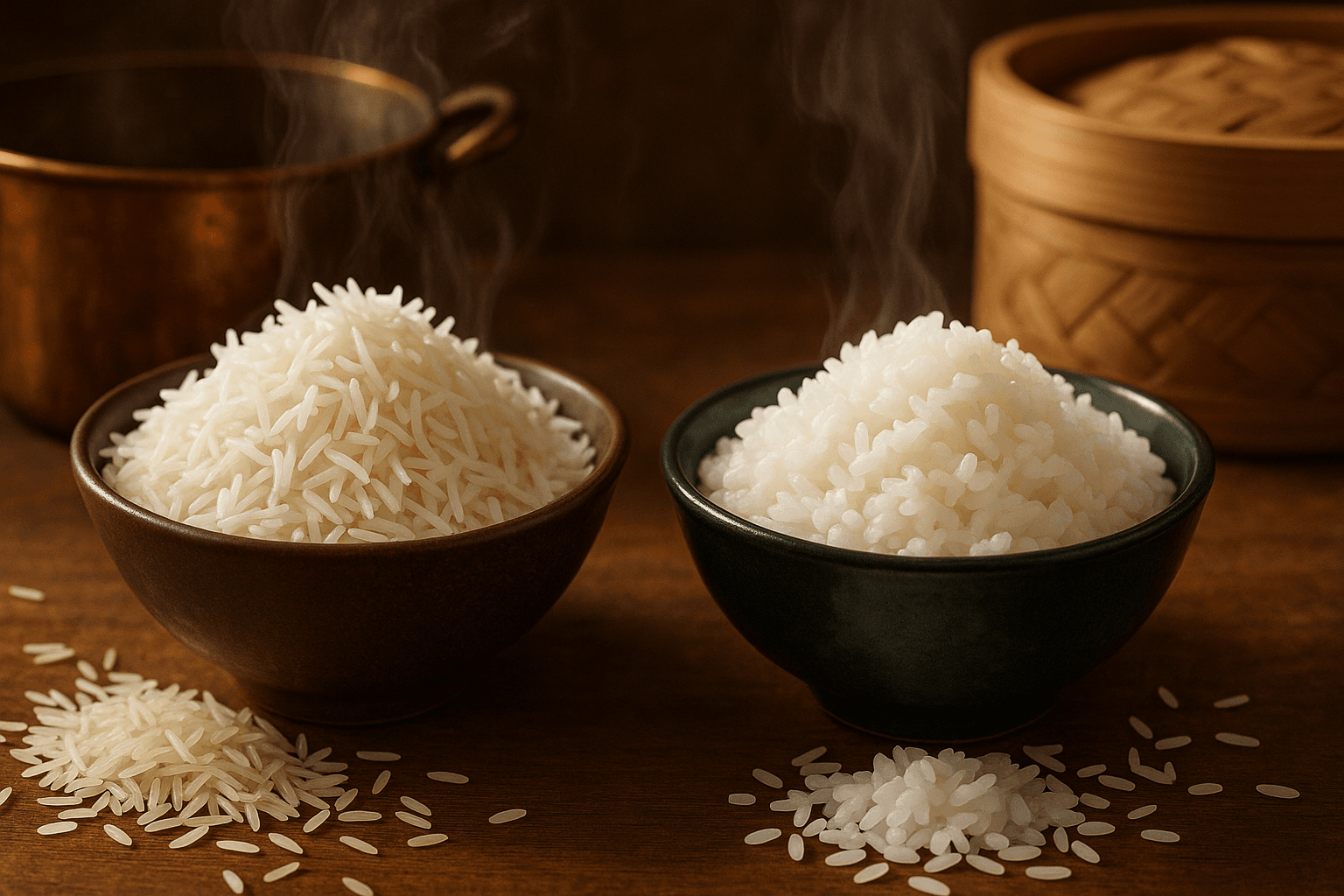
If you cook a pot of basmati and a pot of jasmine side by side, the differences announce themselves before you even lift the lid. One sends up a dry, nutty, almost toasty perfume and lengthens into distinct, slender grains. The other smells sweeter and more floral, settles into tender glossy clumps, and seems designed to go alongside saucy stir-fries or grilled meats. Both are aromatic rices. Both owe much of their signature scent to the same molecule. And yet they behave so differently in the pot that treating them as interchangeable is one of the easiest ways to end up with broken grains, lost fragrance, or rice that is either stubbornly hard or disappointingly mushy.
The reason is not magic, and it is not just “different varieties.” It is a combination of aroma chemistry, starch structure, grain anatomy, moisture content, and the way the rice has been handled before it ever reaches your kitchen. Basmati and jasmine are shaped by the molecule 2-acetyl-1-pyrroline, often abbreviated 2AP, but also by how much amylose they contain, how tightly their starch granules hold together, whether they are freshly harvested or aged, and how you wash, soak, steam, and rest them.
Once you understand those moving parts, a lot of kitchen advice that sounds superstitious starts making sense. Why do some cooks insist on soaking basmati but not jasmine? Why does aged basmati often need more water yet smell a little less loud in the bag? Why can overwashing aromatic rice rob it of perfume? Why is resting after cooking just as important as the simmer itself? And why is the best biryani rice cooked very differently from the best plain jasmine rice?
This is the science-first guide to what is actually happening.
The cultural context: one family of aromas, very different rice traditions
Basmati is deeply associated with the Indian subcontinent, especially North India and Pakistan, where it plays starring roles in pulao, biryani, and festive meat and rice dishes in which grain separation matters. In these dishes, each grain should remain distinct, elongated, and lightly perfumed. The rice is expected to carry stock, spices, saffron, fat, and meat juices without collapsing into a soft mass. Premium basmati is prized not simply because it smells good, but because it cooks into long, elegant grains that stay separate.
Jasmine rice, especially Thai hom mali, belongs to a different eating logic. In Thailand and across parts of Southeast Asia, rice is often served as a tender, fragrant companion to highly seasoned dishes. Jasmine rice is meant to be softly cohesive rather than sharply separate. It should be delicate, slightly clingy, and inviting to eat with grilled meats, curries, stir-fries, or chili-forward dishes. Its aroma is central, but so is its tenderness.
That distinction matters because many internet arguments about the “right” rice texture are really arguments between culinary traditions with different ideals. Fluffy and separate is not inherently better than soft and gently cohesive. It is simply better for biryani than for a plate of gai yang and dipping sauce.
The aroma: why both smell like popcorn, nuts, flowers, and warm bread
The signature aroma compound in both basmati and jasmine is 2-acetyl-1-pyrroline (2AP). This molecule is potent at extremely low concentrations, which means you do not need much of it to notice it. Humans perceive 2AP as a roasted, popcorn-like, pandan-like, nutty, warm-bread aroma. If you have ever opened a fresh bag of good basmati or jasmine and thought of buttered popcorn, toasted grain, pandan leaves, or baked crust, that is 2AP doing much of the work.
2AP is not unique to rice. It appears in other fragrant foods too, including pandan and bread crust. But aromatic rice varieties accumulate enough of it that it becomes part of their identity.
So if the same key aroma compound is present in both, why do they not smell identical?
Because aroma is never just one molecule. It is:
- the concentration of 2AP
- the presence of other volatile compounds
- the moisture level of the rice
- how the rice was stored and aged
- how much aroma is released during cooking
- what your nose interprets in the context of texture and temperature
Basmati often reads as drier, toastier, nuttier. Jasmine often reads as softer, sweeter, and more floral. Those sensory differences come partly from companion volatiles and partly from the way the cooked grain structure releases aroma. A fluffy, separate grain exposes surface area differently from a moist, tender, lightly clinging grain. Texture changes aroma perception.
There is also a practical kitchen reality: 2AP is volatile, which means it escapes easily. The more aggressively rice is stored, washed, boiled, or left hot and uncovered, the more aroma can be lost to the air.
The starch question: amylose is the biggest reason they cook differently
If aroma explains why these rices smell related, amylose content explains much of why they feel different in the mouth.
Rice starch is made mostly of two polymers:
- Amylose, which is relatively linear
- Amylopectin, which is highly branched
In cooking terms, a higher-amylose rice usually cooks up drier, firmer, and more separate. A lower-amylose rice tends to cook softer, moister, and more cohesive.
Basmati is typically a higher-amylose rice than jasmine. Jasmine generally has moderate to lower amylose relative to basmati. The exact numbers vary by cultivar and crop, but the practical effect is consistent:
- Basmati: more elongation, less lateral swelling, firmer bite, distinct grains
- Jasmine: more tenderness, a bit more cling, less dramatic elongation
That difference becomes especially obvious when both are cooked properly.
A well-cooked basmati grain often lengthens substantially while staying narrow. It feels almost feathery yet defined. A well-cooked jasmine grain feels plumper and silkier, with more willingness to adhere lightly to neighboring grains.
This is why a water ratio that works beautifully for jasmine can make basmati too soft, and a method that makes textbook basmati can leave jasmine under-hydrated or oddly dry.
Grain structure and elongation: why basmati gets long instead of fat
Basmati is famous for elongation. In premium lots, the grains can nearly double in length after soaking and cooking. This is not just marketing theater. It is related to the rice’s grain geometry, starch composition, and internal structure.
When rice cooks, water moves into the grain and heat gelatinizes the starch. In basmati, swelling tends to occur more along the length than across the width, especially when the grains are soaked first and then cooked gently. That gives you the prized long, slender appearance.
Jasmine does not elongate in the same dramatic way. It tends to soften and expand more modestly, with a texture that feels fuller and more tender rather than stretched and separate.
This is one reason biryani cooks are so protective of basmati technique. Excess agitation, too much water, or overcooking can crack or split those long grains before they fully elongate. The result is not just visual damage. Broken grains release more surface starch, which creates stickiness and muddles the clean structure a biryani needs.
Aging: why older rice can cook better and smell weaker
One of the most confusing truths about aromatic rice is that aging can improve cooking performance while diminishing some fragrance.
That sounds contradictory until you separate texture from aroma intensity.
What aging does to rice
After harvest, rice continues to change during storage. Moisture redistributes, the grains dry gradually, and the starch structure becomes less like fresh rice and more stable in a way many cooks find desirable. In practical terms, aged rice often:
- absorbs water more predictably
- cooks into firmer, more separate grains
- is less likely to turn gummy
- benefits dishes where grain separation matters
This is one reason aged basmati is so highly valued. For pulao and biryani, aging can improve the very quality cooks care about most: long, separate grains that hold their shape.
The tradeoff: volatile aroma compounds fade
The downside is that 2AP and other aromatic compounds do not sit forever at peak intensity. Over time, especially with exposure to oxygen, warmth, light, or poor packaging, aromatic intensity can decline. So older rice may cook better structurally but smell a bit less vivid.
That is why a bag of freshly milled aromatic rice can smell explosive, while a carefully aged bag may be technically superior in the pot but a little quieter in the nose.
Why aged basmati can need more water
As rice ages and loses moisture, the grains become drier. Drier grains generally need more water and sometimes a little more soaking time to hydrate fully. That does not mean flooding the pot. It means understanding that a six-month-aged rice and a two-year-aged rice may behave differently even if both say “basmati” on the label.
A good rule is to let the rice itself tell you what it needs. If aged basmati consistently comes out slightly hard in the center using your usual ratio, increase the water by about 1 to 2 tablespoons per cup (15 to 30 mL per 200 g rice) next time, or extend the soaking time by 10 to 15 minutes.
Storage myths: does freezing rice preserve fragrance? Does older always mean better?
There are a few persistent myths worth clearing up.
Myth 1: Older is always better
Not always. Aged and stale are not the same thing.
Well-aged rice stored under controlled conditions can cook beautifully. But rice held too long in warm, humid, oxygen-rich conditions can lose aroma, pick up off flavors, or dry unevenly. Good aging is intentional. Bad storage is neglect.
Myth 2: Aromatic rice should be stored open so it can “breathe”
No. Exposure to air speeds aroma loss. Store rice in an airtight container in a cool, dark, dry place. If the original bag is high-barrier and well sealed, keep it tightly closed or transfer to a sealed container.
Myth 3: Freezing is always harmful
For long-term storage in humid climates, freezing can help preserve quality if rice is packed airtight and protected from condensation. But for everyday home use, a pantry cupboard is usually enough if you go through rice within a few months. The real enemy is not low temperature. It is moisture cycling and oxygen exposure.
Myth 4: Washing harder makes rice better
Not with aromatic rice. Vigorous washing can fracture grains and strip away some surface aroma. The goal is not to scrub the life out of the rice. It is to remove excess starch, dust, and milling residue while preserving grain integrity.
Wash, soak, rest: the rules that matter most
The most useful way to think about rice prep is that each step has a specific job.
Washing
What it does:
- removes loose surface starch
- clears dust and bran residue from milling
- reduces gumminess from broken particles
What it does not do:
- meaningfully wash aroma into the drain if done gently and briefly
- improve every type of rice equally
For basmati and jasmine, use cool water and a gentle hand. Swirl, drain, repeat.
- For basmati, wash 2 to 4 times until the water goes from chalky to lightly cloudy or nearly clear.
- For jasmine, wash 1 to 3 times. Many cooks stop earlier than with basmati because they want to retain a little natural softness and cohesion.
If you rinse until the water is absolutely crystal clear, you may be overdoing it, especially with fragile aromatic rice.
Soaking
What it does:
- hydrates the grain more evenly before heat hits it
- encourages elongation in basmati
- shortens cooking time
- reduces breakage during cooking
What it can also do poorly:
- make jasmine too soft if soaked too long
- leach aroma if grains sit excessively long in water
For basmati, soaking is often worth it.
- Soak 20 to 30 minutes for everyday pilaf or steamed basmati.
- Soak 30 to 45 minutes for premium aged basmati intended for biryani, especially if the grains are very dry.
For jasmine, soaking is usually optional and often unnecessary.
- If the rice is very fresh and you want slightly more even hydration, soak for 10 to 15 minutes at most.
- For standard plain steamed jasmine, many cooks skip soaking entirely.
Resting after cooking
This is the step home cooks skip most often.
Resting allows moisture to redistribute from the outer layers of the grain toward the center. It also lets the starch set so the grains are less fragile when fluffed.
- Rest basmati 10 minutes off heat, covered.
- Rest jasmine 10 minutes off heat, covered, then fluff gently or leave undisturbed if you want a more cohesive serving texture.
Resting improves texture and reduces breakage more than an extra minute of cooking ever will.
The science of cooking: gelatinization, steam, and why lids matter
Rice cooks in two overlapping phases:
- Water absorption and starch gelatinization
- Steam finishing and moisture redistribution
Starch gelatinization begins as the grains heat in water, generally around 68 to 78°C / 154 to 172°F, though exact behavior varies by variety. As the starch granules absorb water and swell, the grain softens. If there is too little water, the center remains chalky. If there is too much water or too much agitation, the outer layers can rupture before the center sets properly, releasing starch and making the pot sticky.
The second phase is gentler but just as important. Once most free water is absorbed, the rice continues to finish in trapped steam. That is why a tight lid matters. Steam not only completes the cook; it also helps avoid aroma loss. Every time you lift the lid, you vent heat, moisture, and volatile fragrance compounds.
For aromatic rice, especially jasmine, this matters a lot. If you repeatedly peek, the kitchen smells great, but the rice itself ends up with less perfume.
Step-by-step: plain steamed basmati that stays fluffy and fragrant
This method is for 1 cup (200 g) basmati rice, serving about 3 to 4 people as a side.
Ingredients
- 1 cup (200 g) basmati rice
- 1 1/2 cups (360 mL) water for moderately aged rice, or up to 1 2/3 cups (400 mL) for very aged dry rice
- 1/2 teaspoon fine salt, optional
- 1 teaspoon ghee or neutral oil, optional
Method
- Wash gently 2 to 4 times in cool water.
- Soak in fresh cool water for 20 to 30 minutes.
- Drain thoroughly for 5 minutes. This helps keep your water ratio accurate.
- Combine rice, water, salt, and ghee in a heavy saucepan with a tight-fitting lid.
- Bring to a gentle boil over medium heat.
- Once the surface water drops just below the rice and small steam holes appear, reduce to low heat and cover tightly.
- Cook 10 to 12 minutes on low.
- Turn off the heat and rest 10 minutes, covered.
- Fluff with a fork or your fingers lightly dampened with water.
What to look for
- grains elongated and separate
- no chalky core
- no puddle at the bottom
- aroma still present when fluffed, not already lost to a constantly lifted lid
Common mistakes
- Too much water: grains split and soften too much
- Not soaking: less elongation, more uneven texture in older basmati
- Stirring while cooking: breaks grains and releases starch
- Skipping the rest: top seems dry, bottom too moist, more broken grains when fluffed
Step-by-step: plain steamed jasmine that is tender, glossy, and aromatic
This method is for 1 cup (200 g) jasmine rice.
Ingredients
- 1 cup (200 g) jasmine rice
- 1 1/4 cups (300 mL) water for most jasmine rice, up to 1 1/3 cups (315 mL) if very dry or older
- 1/4 to 1/2 teaspoon fine salt, optional
Method
- Wash gently 1 to 3 times.
- Do not soak, or soak only 10 to 15 minutes if desired, then drain well.
- Combine rice, water, and salt in a saucepan with a tight lid.
- Bring to a simmer over medium heat.
- Cover, reduce to low heat, and cook 12 to 15 minutes.
- Turn off the heat and rest 10 minutes, covered.
- Fluff very gently with a rice paddle or fork, or leave slightly undisturbed for a softer serving texture.
What to look for
- grains tender and slightly glossy
- light cohesion but not wet gumminess
- floral-popcorn aroma retained in the rice, not blown off by hard boiling
Common mistakes
- Too much washing: rice loses some surface starch and can eat oddly dry
- Long soaking: grains become too soft or fragile
- Rapid boil: leads to uneven hydration and more aroma loss
- Using basmati water ratios: can leave jasmine too firm
Practical rules for pilaf, pulao, and biryani
These dishes ask more from rice than plain steaming does.
For pilaf or pulao
The goals are separate grains, controlled absorption, and a rice surface that can carry fat and stock.
Best choice: basmati
Rule set
- Wash 2 to 4 times.
- Soak 20 to 30 minutes.
- Drain well.
- Toast briefly in 1 to 2 tablespoons ghee or oil per cup rice if the recipe calls for it.
- Use hot stock or water, usually around 1 1/2 cups liquid per cup rice, then adjust for age and recipe.
- Cook covered on low and rest 10 minutes.
Why it works
Fat coats the surface, helping grains stay separate. Soaking pre-hydrates the core, reducing breakage. Resting sets the starch after absorption.
For biryani
Biryani rice needs maximum elongation without complete finish in the first stage, because it often cooks in two phases: parboiling and then dum or final steam with meat or masala.
Best choice: aged basmati
Rule set
- Wash gently 3 times.
- Soak 30 to 45 minutes.
- Bring a large pot of water to a rolling boil with generous salt, often about 1 1/2 tablespoons kosher salt per 3 quarts / 3 liters water, plus whole spices if desired.
- Add drained rice and boil until 70 to 75% cooked, usually 4 to 6 minutes, depending on age and soak.
- Grain test: it should elongate and be soft outside but still resist in the center.
- Drain immediately.
- Layer with masala or meat.
- Finish on low heat, sealed, for 20 to 40 minutes depending on the recipe.
- Rest 10 to 15 minutes before opening.
Why biryani rice breaks
- over-soaked rice
- overboiling in stage one
- stirring the pot after adding rice
- using fresh, moist basmati without adjusting timing
- too much water trapped in the final layer
For plain steamed rice with Southeast Asian dishes
Best choice: jasmine
Rule set
- Wash lightly.
- Usually do not soak.
- Use 1 1/4 cups water per cup rice as your baseline.
- Simmer gently, never aggressively.
- Rest covered.
Why it works
You preserve jasmine’s softer structure and retain more of the sweet floral fragrance.
Why broken grains make rice sticky even when the variety is not “sticky rice”
Aromatic rice can become surprisingly gummy if there are many broken grains in the bag or if you fracture grains during washing and stirring.
Broken grains expose more starch surface area. During cooking, that starch disperses into the water and forms a gluey coating around intact grains. This is why premium rice is often graded by broken percentage and why gentle handling matters.
If you open a bag and see lots of fragments, reduce agitation, wash a bit more carefully, and consider using a touch less water than usual, because broken rice releases starch quickly and alters absorption behavior.
Aroma retention: how to keep the perfume in the rice instead of the room
Your kitchen should smell wonderful while rice cooks, but not at the expense of the rice itself.
To preserve aroma:
- keep the lid on as much as possible
- avoid hard boiling once the pot is covered
- do not soak for hours
- do not hold cooked rice hot for too long with the lid open
- store rice airtight away from heat and light
If you want to amplify perceived aroma at serving, a small amount of fat helps carry volatiles to your nose. A teaspoon of ghee in basmati or serving jasmine while still warm rather than lukewarm can make the aroma feel more vivid.
Fresh crop versus aged crop: how to adjust without guessing wildly
Not every bag tells you how old the rice is, but the rice gives clues.
Signs the rice is fresher
- stronger aroma in the raw grain
- slightly softer cooking behavior
- lower water need
- less soak needed
Signs the rice is older or drier
- grains feel harder and drier in the hand
- raw aroma may seem quieter
- needs a bit more water
- benefits from soaking, especially basmati
- cooks into more distinct grains
Adjustment rule
Change only one variable at a time:
- add or subtract 1 to 2 tablespoons water per cup
- or change soak time by 10 minutes
- or rest 5 minutes longer
That is how you dial in a rice you buy repeatedly.
A note on rice cookers
Rice cookers work very well for both varieties, but they are not magic. The same principles apply.
- Wash gently.
- Soak basmati first if you want better elongation.
- Use the correct water ratio for the specific rice, not the same line for every type.
- Rest in the cooker on warm for 10 minutes, lid closed, before fluffing.
Many rice cooker disappointments come from assuming all white rice behaves identically.
The simplest decision tree
If you only want the practical summary, here it is.
Choose basmati when you want:
- fluffy, separate grains
- strong elongation
- biryani, pulao, pilaf
- rice that carries spices and stock without clumping
Choose jasmine when you want:
- tender, soft, slightly cohesive grains
- a sweet floral-popcorn aroma
- plain steamed rice for Southeast Asian meals
- rice that sits comfortably beside grilled or saucy dishes
Wash
- basmati: yes, 2 to 4 times
- jasmine: yes, but gently and less aggressively
Soak
- basmati: usually yes, 20 to 30 minutes; longer for aged biryani rice
- jasmine: usually no, or very briefly
Rest
- both: always, 10 minutes covered
Water starting points per 1 cup / 200 g rice
- basmati: 1 1/2 cups (360 mL), adjust up slightly for very aged rice
- jasmine: 1 1/4 cups (300 mL), adjust slightly for age and brand
The takeaway: same aroma family, different engineering
Basmati and jasmine rice smell related because both are defined in part by 2-acetyl-1-pyrroline, the deeply evocative aromatic compound that gives them their popcorn-like character. But they cook differently because they are built differently. Basmati’s higher amylose content and grain structure favor elongation and separation. Jasmine’s starch balance and texture favor tenderness, gloss, and gentle cohesion.
Aging sharpens that divide. It often improves basmati’s cooking behavior by drying and stabilizing the grain, but it can also soften aromatic intensity over time. Washing removes excess starch, but too much rough handling breaks grains and encourages gumminess. Soaking helps basmati far more than jasmine. Resting is the underrated final step that turns merely cooked rice into excellent rice.
In other words, the old kitchen rules are not arbitrary. Wash for surface starch. Soak for even hydration and elongation when the variety benefits. Steam gently to protect structure and aroma. Rest so moisture can settle. And choose the rice not just for its fragrance, but for the texture your meal actually wants.
That is the real difference between rice that is technically done and rice that feels like it belongs on the plate.