Why Carrots Taste Waxy, Floral, or Deeply Sweet: Terpene Chemistry, Sugar Concentration, and the Heat Rules for Roasting, Glazing, and Puréeing
RecipeSimpli
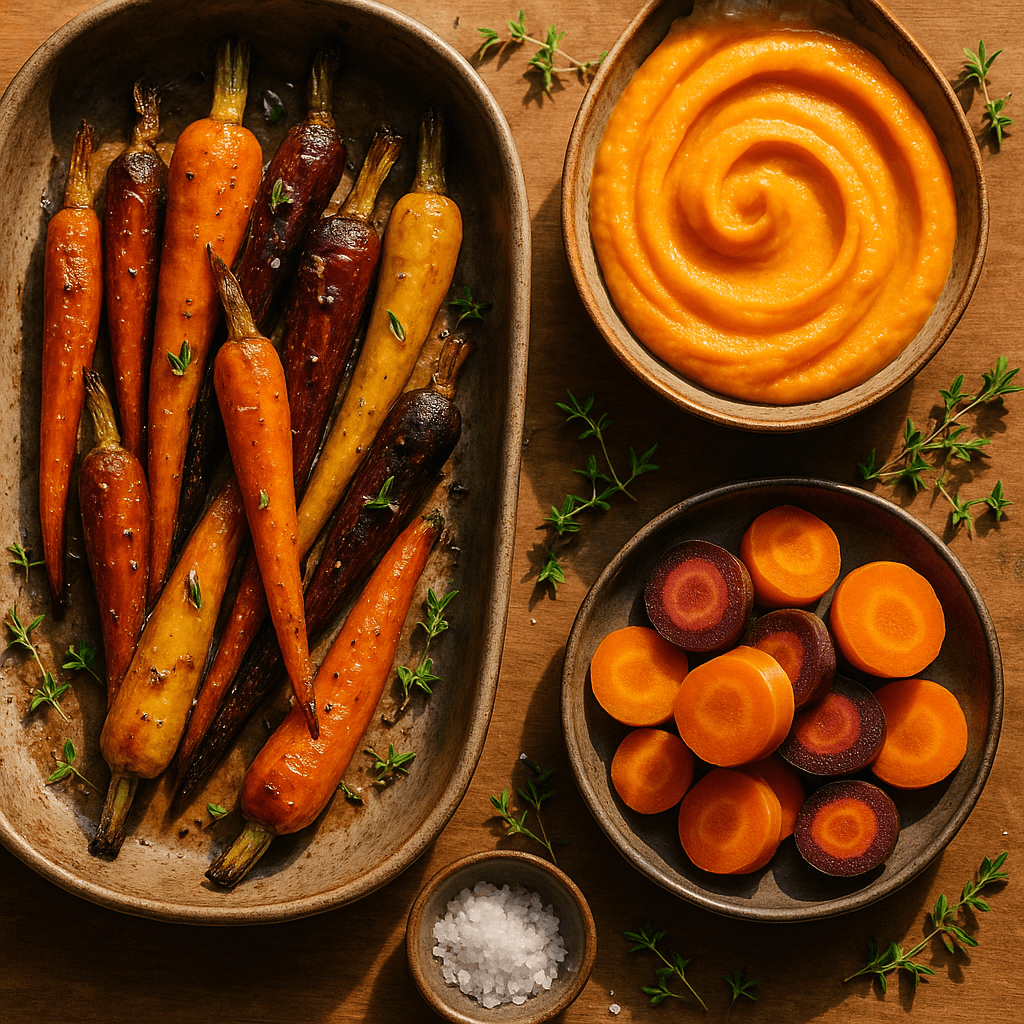
Carrots can taste like candy, pine needles, soap, violets, damp earth, or almost nothing at all. That range is not your imagination, and it is not just a matter of “good carrots” versus “bad carrots.” Carrots are chemically expressive vegetables. They carry sugars, bitter phenolics, aromatic terpenes, and plenty of structural fiber, and the balance among those elements shifts with variety, season, age, storage conditions, and how you cook them. The same bag of carrots can come out deeply sweet and caramelized one night, then somehow leathery, watery, or perfumey the next, depending on the cut, the pan, the moisture level, and the heat.
If you have ever bitten into a carrot and thought it tasted waxy, floral, medicinal, or oddly soapy, you were most likely noticing terpene chemistry. If you have ever roasted carrots that browned beautifully but tasted underseasoned and flat inside, or glazed carrots that ended up in a thin orange puddle, or made carrot purée that stayed stubbornly fibrous no matter how long you blended it, those are texture and water-management problems rooted in cell walls, pectin, sugar concentration, and the difference between dry and wet heat.
The good news is that carrots are predictable once you know the rules. Their flavor can be steered. Their sweetness can be amplified. Their aromatic compounds can be softened, balanced, or showcased. Their texture can be controlled from crisp-tender to spoon-soft. And for home cooks, the biggest improvements usually come from a handful of decisions: choosing the right carrots, trimming or peeling strategically, cutting for even heat transfer, salting at the right moment, and matching the cooking method to the result you want.
Why carrots taste so different from one another
At the broadest level, carrot flavor is a contest among three things:
- Sugars that read as sweet and rounded.
- Terpenes that read as floral, resinous, citrusy, herbal, piney, or soapy.
- Structural compounds such as cellulose, hemicellulose, and pectin that determine whether the carrot feels juicy and tender or woody and fibrous.
When the sugar level is high and the terpenes are balanced, carrots taste rich, sweet, and “carroty” in the best way. When sugar is low and terpene concentration is relatively high, carrots can taste perfumed, harsh, waxy, or bitter. When the internal structure is tough, even a flavorful carrot can seem dry or coarse.
Carrots are roots, and roots are storage organs. Plants use them to hold energy, mostly as carbohydrates. But not all carrots store or express those carbohydrates in the same way. Breeding has shaped modern carrots heavily toward sweetness, uniformity, and bright orange color, yet older, larger, or poorly stored carrots can still reveal more of the root’s wild side.
The aroma molecules: terpene chemistry in plain English
The signature aroma of carrots comes largely from terpenes, a huge family of volatile compounds also found in citrus peel, herbs, conifers, flowers, and spices. In carrots, terpenes can smell and taste:
- Floral
- Piney
- Citrusy
- Herbal
- Woody
- Resinous
- Sometimes soapy or medicinal
Some of the compounds commonly associated with carrot aroma include terpinolene, pinene, limonene, carene, and other related volatiles. You do not need to memorize names to cook better carrots. What matters is understanding how these compounds behave:
- They are aromatic and noticeable even at low concentrations.
- They are often concentrated more in the outer layers than the center.
- They can become more obvious when the carrot is less sweet.
- Heat can drive some of them off, mellowing sharpness.
- Fat can capture and spread aromatic compounds, changing how you perceive them.
That last point is especially useful. Carrots cooked with butter or olive oil often taste more rounded, not just because fat tastes good, but because fat changes aroma release and mouthfeel. A little fat softens harsh edges and makes sweetness linger.
Why some carrots taste waxy or soapy
“Waxy” is partly a flavor description and partly a texture impression. On the flavor side, high-terpene carrots can seem waxy, perfumed, or soap-adjacent, especially if they are eaten raw and cold. Chilling dulls sweetness more than it dulls some aromatic notes, so refrigerated carrots can taste less sugary and more piney. On the texture side, older carrots can lose water and feel denser, harder, and slightly wax-like when chewed.
If a carrot tastes distinctly soapy, a few things may be happening:
- It has a higher terpene load than average.
- It is older or less sweet, so the aroma compounds dominate.
- It may have a large, mature core that brings woody or bitter notes.
- It was stored too long, shifting the sugar-aroma balance.
Why some carrots taste floral
Floral notes are not always a defect. In young, good-quality carrots, floral aromas can be elegant and delicate, almost like fennel, violet, or citrus blossom. The problem comes when the floral notes are unsupported by sweetness or are paired with bitterness. Then they read less as “fresh” and more as “perfume.”
Sweetness: where it comes from and why it changes
Carrot sweetness comes mostly from sucrose, with smaller contributions from glucose and fructose. But perceived sweetness is not just the total sugar amount. It depends on:
- Actual sugar concentration
- Water content
- Temperature when served
- Presence of bitterness or strong aromas
- Salt and fat, which can heighten perceived sweetness indirectly
Variety matters
Different carrot varieties have different balances of sugar, aroma, and fiber. Some are bred for juicing, some for storage, some for bunching and eating young, and some for processing. Not all orange carrots are equivalent. Heirloom types can be especially varied: some are intensely sweet, some are earthy and spice-like, some more terpene-forward.
As a practical rule, small to medium carrots with a relatively narrow core often have the best balance for roasting and glazing. Very large “horse carrots” or overgrown carrots can have broad pale cores, lower sweetness, and more lignified texture.
Season matters
Cool growing conditions often improve root flavor. Carrots harvested in colder weather can taste sweeter because the plant accumulates sugars as a natural response to cold stress. This is why fall and winter carrots are often exceptional. Spring carrots, especially young bunch carrots, can be tender and juicy, but not always as concentrated.
Storage matters more than most cooks realize
Carrots are alive after harvest. During storage, they continue to respire, using some stored sugars for metabolic activity. Poor storage can also lead to moisture loss, texture decline, and flavor flattening.
Best storage conditions are cold and humid: ideally around 32 to 40°F / 0 to 4°C with high humidity. Home refrigerators are cold enough but often drying. That means carrots can dehydrate over time, becoming limp externally yet paradoxically tougher in the bite because the tissues lose juiciness.
Storage also changes perception in another way: as sugars are used up, the terpene-to-sugar ratio rises. Even if terpene content stays similar, the carrot can taste more pungent because it is less sweet.
Core size matters
Cut a carrot crosswise and look at the center. The inner core, or xylem, is often paler and denser than the outer phloem. In many mature carrots, the core is:
- Less sweet
- More fibrous
- More woody in texture
- Sometimes more bitter or less aromatic in a pleasant way
A small core usually signals a younger, better-textured carrot. A large thick core often predicts a drier, tougher carrot, especially in jumbo specimens. For raw preparations and elegant purées, core size is one of the best visual quality cues.
Why peeling changes flavor
Peeling is not just cosmetic. The outer layers of a carrot contain more of the compounds that can read bitter, earthy, or terpene-heavy. Peeling can therefore make a carrot taste sweeter and cleaner, even if you have not added anything.
That said, peeling also removes flavor and color compounds you may want, especially in excellent fresh carrots. Here is the practical split:
- Peel older supermarket carrots, large carrots, or carrots with visible roughness, bitterness, or a green shoulder.
- Scrub and keep the skin on for tender young carrots if they taste sweet and clean.
A green shoulder, where the top of the carrot has been exposed to light, can taste bitter. Trim it generously.
Cutting changes both flavor and texture perception
The shape you cut affects the cooking rate, evaporation, browning, and how much interior versus exterior each bite contains.
Coins or half-moons
- Cook quickly
- Good for glazing and braising
- High cut surface area
- Can turn watery if crowded
- Less dramatic texturally
Batons or sticks
- Good for roasting
- Even thickness promotes even doneness
- Nice balance of browned exterior and tender center
Diagonal slices
- More surface area than coins
- Attractive presentation
- Great for sauté-glazing
Whole or halved young carrots
- Best for showcasing sweetness and shape
- Lower moisture loss from fewer cut sides
- Slower to cook through
Smaller pieces cook faster, but they also lose water faster and can collapse or become leathery if over-roasted. Very large chunks keep moisture better but may brown outside before becoming sweet and tender inside.
The cell-wall story: why carrots soften
Raw carrots are crisp because their cells are pressurized with water and held in a sturdy framework of cellulose, hemicellulose, and pectin. As carrots cook, several things happen:
- Cell turgor declines as membranes weaken and water shifts.
- Pectin begins to solubilize and break down, loosening the glue between cells.
- Hemicelluloses soften and structural rigidity decreases.
- The carrot becomes tender enough to bite, mash, or purée.
This process is temperature dependent. Carrots begin to soften meaningfully well below boiling, but full tenderness usually requires sustained time in the range of roughly 183 to 212°F / 84 to 100°C, depending on the method, carrot age, and size.
Why old carrots stay fibrous
As carrots mature, they can develop more lignified tissues, especially in the core. Lignin does not soften the way pectin does. You can cook an old, woody carrot until fully hot and technically tender, but it may still feel fibrous because the blender or your teeth still have to contend with tough structural material.
That is why purée quality starts with selection. Technique helps, but it cannot completely erase a giant woody core.
Dry heat versus wet heat: the most important rule set
Carrots become sweet in cooking for two main reasons:
- Their cell walls soften, making sugars easier to perceive.
- Water evaporates, concentrating sugars and flavor.
Dry heat and wet heat do these jobs differently.
Dry heat: roasting
Roasting works because it combines softening with surface dehydration. As water leaves the surface, flavors concentrate. Once the exterior gets hot enough and dry enough, browning reactions begin. Carrots are not as protein-rich as meat, so they do not rely heavily on Maillard browning, but they still develop complex roasted notes through a mix of caramel-like sugar reactions, localized Maillard chemistry, and oxidative changes in aromatic compounds.
The key with roasting is this: evaporate enough water to concentrate sweetness, but not so much that the carrot shrivels before the center turns silky.
Wet heat: boiling, simmering, steaming, braising, glazing
Wet heat softens carrots efficiently, but it usually does less to concentrate flavor unless you reduce the cooking liquid afterward or allow some evaporation near the end. Water can also pull out some soluble flavor compounds. That is why boiled carrots can taste bland even when perfectly tender.
Glazing is the hybrid method that solves this. You cook carrots with a small amount of water, fat, and often sugar until the water evaporates and the remaining liquid emulsifies into a shiny coating. Done right, glazing gives you tenderness first, concentration second, gloss last.
The heat rules for roasting carrots without turning them leathery
If your roasted carrots are limp but not sweet, or browned outside but stringy inside, or dark and wrinkled before they tenderize, one of these rules was probably broken.
Rule 1: Roast hot enough
A good roasting range for carrots is 400 to 425°F / 205 to 220°C.
- At 375°F / 190°C, carrots will soften, but they may steam and dry slowly rather than roast decisively.
- At 400°F / 205°C, you get a strong balance of tenderness and browning.
- At 425°F / 220°C, you get better caramelization and evaporation, especially for larger cuts, but sugar-rich glazes can scorch if added too early.
Rule 2: Cut evenly
Aim for pieces about 1/2 to 3/4 inch / 1.25 to 2 cm thick at the thinnest dimension for standard roasting. If one piece is pencil-thin and another is thumb-thick, the thin one will wrinkle and harden before the thick one sweetens.
For whole young carrots, halve or quarter lengthwise if thicker than 3/4 inch / 2 cm at the shoulder.
Rule 3: Use enough oil, but not so much that they fry in a puddle
Use about 1 to 1 1/2 tablespoons oil per pound / 450 g carrots.
Too little oil gives you dry surfaces that can toughen before browning properly. Too much oil can pool, lowering effective surface drying and making the carrots greasy instead of concentrated.
Rule 4: Do not crowd the pan
Spread carrots in a single layer with space between pieces. Use a heavy sheet pan if possible. Crowding traps steam, and steam delays browning and sugar concentration. If you are roasting more than 2 pounds / 900 g, use two trays.
Rule 5: Salt early, but not heavily
A light pre-salting helps season the interior and improves flavor perception. Use about 3/4 teaspoon Diamond Crystal kosher salt per pound / 450 g, or roughly 1/2 teaspoon Morton kosher salt. If you salt very heavily at the start, you can draw surface moisture and slow browning.
Rule 6: Do not add sweeteners too early
Honey, maple syrup, brown sugar, and many glazes burn before the carrots are fully cooked. Roast the carrots plain with oil and salt for the first 20 to 30 minutes, then add sweet glaze elements in the final 5 to 10 minutes.
Rule 7: Roast to tenderness, not merely color
A carrot is properly roasted when a knife slides in with little resistance and the edges are browned, not when it merely looks bronzed. Typical timing:
- Coins, 1/2 inch thick: 20 to 30 minutes
- Batons, 1/2 to 3/4 inch thick: 30 to 40 minutes
- Whole small carrots: 35 to 50 minutes
Turn once around the halfway mark.
A reliable roasting formula
For 2 pounds / 900 g carrots:
- 2 pounds carrots, peeled if needed
- 2 to 3 tablespoons olive oil
- 1 1/2 teaspoons Diamond Crystal kosher salt
- 1/4 teaspoon black pepper
- Heat oven to 425°F / 220°C.
- Cut carrots into even batons or diagonal pieces.
- Toss with oil, salt, and pepper.
- Spread on a parchment-lined or bare heavy sheet pan in a single layer.
- Roast 30 to 40 minutes, turning once, until deeply tender and browned at the edges.
- Optional: toss with 1 tablespoon butter and 1 to 2 teaspoons honey for the final 5 minutes.
Why roasted carrots turn leathery
Leathery roasted carrots usually result from one of three scenarios:
- The pieces were too thin, so they lost moisture before the center softened.
- The oven was too cool, causing prolonged dehydration without strong browning.
- The carrots were old and low in moisture to begin with.
If you suspect old carrots, peel them, trim the dry ends generously, cut them larger, and roast with a slightly lower time target, checking earlier. You can also cover them loosely with foil for the first 15 minutes, then uncover to finish browning.
The heat rules for glazed carrots that end up glossy instead of watery
A proper glaze is not just carrots sitting in sweet liquid. It is a controlled reduction. The carrots cook in a shallow layer of liquid until tender; then the remaining liquid reduces with butter and sugar into a shiny coating.
What goes wrong
Watery glazed carrots usually happen because:
- There was too much liquid to begin with.
- The pan was too crowded, slowing evaporation.
- The heat was too low for reduction.
- The carrots released extra water because they were salted too heavily too early.
- The glaze ingredients were added before the carrots were nearly tender.
The basic geometry of glazing
Use a wide sauté pan or skillet, not a deep pot. Surface area matters because reduction depends on evaporation.
A reliable glazed carrot formula
For 1 pound / 450 g carrots, sliced on the diagonal about 1/3 inch / 8 mm thick or cut into small batons:
- 1 pound carrots
- 3/4 cup water or light stock
- 1 tablespoon unsalted butter
- 1 to 2 teaspoons sugar, honey, or maple syrup
- 1/2 teaspoon Diamond Crystal kosher salt
- Optional: pinch of white pepper, ginger, cumin, or orange zest
- Place carrots, water, butter, and salt in a wide skillet.
- Bring to a brisk simmer over medium-high heat.
- Cook uncovered 8 to 12 minutes, depending on size, until the carrots are nearly tender and the liquid is mostly gone.
- Add sugar or honey only when the liquid has reduced to a few tablespoons.
- Swirl and cook 1 to 3 minutes more until glossy.
- Taste and adjust with a pinch more salt or a few drops of lemon juice.
The final glaze should lightly coat the carrots, not pool underneath them.
Why butter helps glazed carrots taste sweeter
Butter contributes milk solids, aroma, and viscosity, but its most important effect here is perceptual. Fat rounds edges and carries aroma. A small amount of butter makes sweetness feel broader and bitterness less sharp. This is why glazed carrots can taste sweeter than their sugar content alone would suggest.
Add acid last, if at all
A tiny squeeze of lemon or splash of cider vinegar can brighten glazed carrots beautifully, but add it at the end. Acid can slow pectin softening if introduced early in cooking, which matters more for longer braises and preserves than for quick glazes, but it is still better practice to brighten after the carrots are tender.
The heat rules for silky carrot purée instead of fibrous mash
Carrot purée seems simple, but it is one of the easiest places to expose flaws in both raw material and method. Fibrous purée usually comes from some combination of:
- Large, mature carrots with thick cores
- Insufficient cooking
- Too little moisture during blending
- Inadequate blending power or time
- Failure to strain when aiming for restaurant-level silkiness
Choose the right carrots for purée
Use small to medium carrots with minimal core. Peel them. If the cores look especially thick and pale after cutting, split the carrot lengthwise and trim some of the core out for the finest result.
Cook until fully tender, not just mashable
For purée, you want carrots softer than you do for side-dish roasting. A paring knife should pass through with almost no resistance.
The best methods are:
- Steaming: preserves flavor better than boiling
- Covered roasting with a little fat and water: concentrates flavor while softening
- Gentle simmering in just enough liquid: acceptable, but can dilute flavor
Why boiling can make purée flatter
Boiling submerges the carrots in excess water, and some soluble sugars and flavor compounds move into the cooking liquid. If you do boil, use as little water as practical and consider reducing some of that liquid to blend back in.
A reliable carrot purée formula
For 2 pounds / 900 g carrots:
- 2 pounds carrots, peeled and sliced 1/2 inch thick
- 2 tablespoons unsalted butter
- 1/2 to 3/4 cup hot cream, milk, carrot cooking liquid, or vegetable stock
- 1 to 1 1/2 teaspoons Diamond Crystal kosher salt
- Optional: 1 tablespoon olive oil, 1/8 teaspoon ground cumin, pinch of nutmeg, or 1 teaspoon grated ginger
Method 1: Steam
- Steam carrots over simmering water until very tender, 20 to 30 minutes.
- Transfer to a high-speed blender or food processor with butter and half the hot liquid.
- Blend until smooth, adding more liquid only as needed.
- Season with salt.
- For extra silkiness, pass through a fine-mesh sieve.
Method 2: Roast-steam hybrid
- Heat oven to 375°F / 190°C.
- Place carrots in a baking dish with butter, salt, and 3 tablespoons water.
- Cover tightly with foil.
- Bake 35 to 50 minutes until completely tender.
- Blend with hot cream or stock until smooth.
- Strain if desired.
This second method often gives the best flavor because the carrots soften in a moist environment while still concentrating some of their natural sugars.
Blend while hot
Hot vegetables purée more smoothly because the fat disperses better and the softened pectin matrix flows more easily. Cold carrots give a thicker, coarser result.
Do not drown the blender
A common mistake is adding too much liquid too early. Excess liquid makes a soup, not a purée, and dilutes sweetness. Start with the minimum needed to get the blades moving. Add more in tablespoons.
When to strain
If you want truly elegant purée for plating under fish, chicken, or scallops, strain it. Even powerful blenders leave behind tiny fibrous particles, especially with carrots. A fine-mesh sieve changes the result from “very smooth” to “restaurant smooth.”
Salt, fat, and sweetness perception
Carrots are a textbook example of how seasoning changes flavor without changing chemistry very much.
Salt
Salt does not literally add sugar, but it reduces the perception of bitterness and amplifies overall flavor clarity. Unsalted carrots often taste less sweet than properly salted ones. That is why a small, precise amount of salt matters even in sweet-leaning carrot dishes.
Fat
Fat improves carrot flavor in three ways:
- It carries aroma compounds.
- It adds richness that lengthens sweetness perception.
- It improves mouthfeel, making the carrot seem less watery and more substantial.
Butter is especially effective because its dairy notes complement carrot’s natural floral sweetness. Olive oil gives a greener, fruitier profile. Cream turns carrot purée lush and gentle.
Sweeteners
Honey, maple syrup, and brown sugar do not create carrot flavor; they support it. Use them to underline the carrot’s own sweetness, not to cover weak carrots. A useful target is 1 to 2 teaspoons sweetener per pound / 450 g carrots unless you are making a deliberately sweet holiday-style glaze.
Common mistakes and how to fix them
1. Carrots browned but taste bland inside
Cause: exterior color developed before enough water evaporated internally or before seasoning reached balance.
Fix: cut more evenly, roast longer to true tenderness, season a little more assertively, and finish with butter or a small acid note.
2. Carrots taste bitter or piney
Cause: high terpene concentration, old carrots, green shoulders, or insufficient sweetness.
Fix: peel them, trim the shoulders, roast or glaze to concentrate sugars, add butter, and balance with salt. A touch of honey and lemon often helps.
3. Roasted carrots are wrinkled and tough
Cause: slices too thin, old carrots, crowded or cool pan causing prolonged drying.
Fix: cut larger, roast hotter, use adequate oil, and start with fresher carrots.
4. Glazed carrots are sitting in orange water
Cause: too much liquid, narrow pot, low heat, or overfilled pan.
Fix: transfer to a wider pan and reduce briskly. Next time start with less liquid and wait to add sweetener until late.
5. Carrot purée is fibrous
Cause: mature carrots, undercooking, or inadequate blending/straining.
Fix: cook until very tender, blend hot with enough fat, and strain.
6. Carrot purée tastes watery
Cause: boiled in too much water or blended with too much liquid.
Fix: return to a saucepan and reduce gently, stirring, or blend in a little butter and reduced carrot cooking liquid for concentration.
Flavor pairings that work because of the chemistry
Because carrots contain sweetness plus herbal-floral terpenes, they pair beautifully with ingredients that either echo or tame those notes.
To echo floral and citrus notes
- Orange zest
- Coriander seed
- Fennel
- Tarragon
- Dill
To tame piney or soapy edges
- Butter
- Cream
- Yogurt
- Lemon juice
- Ginger
- Cumin
- Black pepper
To amplify earthy sweetness
- Brown butter
- Maple
- Thyme
- Sage
- Miso
- Toasted nuts
Cumin and carrot are especially effective together because cumin’s warm, earthy volatiles meet carrot’s floral terpenes in the middle, creating a flavor that feels deeper and less perfumed.
A short note on purple, yellow, white, and red carrots
Different colored carrots can differ not only in pigment but also in flavor balance. Purple carrots may carry more pronounced earthy or spice-like notes. Yellow and white carrots can be milder and sometimes less sweet-seeming, though this varies enormously by cultivar. Red carrots often lean sweet and robust. The cooking rules remain the same, but if you are after classic concentrated sweetness, orange carrots are still the most reliable all-purpose choice.
Practical buying rules for better carrots
At the store or market, look for:
- Firm texture, not bendy or rubbery
- Smooth skin, unless intentionally rustic young carrots
- Bright color
- No splitting or shriveling
- Small to medium diameter for best texture
- Minimal green shoulders
- Fresh tops, if attached: they should look lively, not slimy
If you buy carrots with tops, remove the tops before storage. The greens continue to pull moisture from the root.
Three method templates to memorize
1. For caramelized roasted carrots
- Cut evenly, 1/2 to 3/4 inch thick
- Oil lightly: 1 to 1 1/2 tablespoons per pound
- Salt lightly but clearly
- Roast at 425°F / 220°C
- Do not crowd
- Add honey or maple only at the end
2. For glossy glazed carrots
- Use a wide pan
- Add just enough water to nearly cover the bottom third of the carrots
- Simmer uncovered until nearly tender
- Reduce until almost dry
- Add butter and sweetener late
- Finish with acid if desired
3. For silky carrot purée
- Use sweet, small-core carrots
- Peel them
- Steam or covered-roast until fully tender
- Blend hot with butter and minimal liquid
- Strain for true silkiness
The deeper lesson: carrot cookery is water management
The biggest leap in understanding carrot flavor is realizing that sweetness is often less about adding sugar and more about controlling water. When carrots retain too much water, they taste diluted. When they lose water too quickly, they become leathery before the interior softens. The ideal method depends on balancing softening and concentration.
- Roasting concentrates by evaporation while building browned flavors.
- Glazing softens with moisture, then concentrates at the end.
- Puréeing demands thorough softening first, then careful moisture control during blending.
Terpenes explain the floral, piney, and sometimes soapy side of carrot flavor. Sugar concentration explains the candy-like side. Cell-wall breakdown explains tenderness. Pectin solubilization explains why a well-cooked carrot can turn from crisp and squeaky to silky and spoonable. Once you understand those pieces, disappointing carrots stop feeling mysterious.
The next time you cook them, pay attention to core size, taste one raw before you start, decide whether peeling will help, and choose your heat based on your goal. If you want bronze-edged sweetness, roast hot and spaciously. If you want shine and tenderness, glaze in a wide pan and reduce boldly. If you want velvet, cook until completely soft, blend hot, and strain without apology.
A carrot can be waxy, floral, or deeply sweet. Your job in the kitchen is not to force it into one identity, but to understand what is already there and cook in a way that brings its best traits forward.