Why Cinnamon Tastes Sweet, Woody, or Numb: Volatile Oils, Coumarin, and the Blooming Rules for Baking, Curries, and Coffee
RecipeSimpli
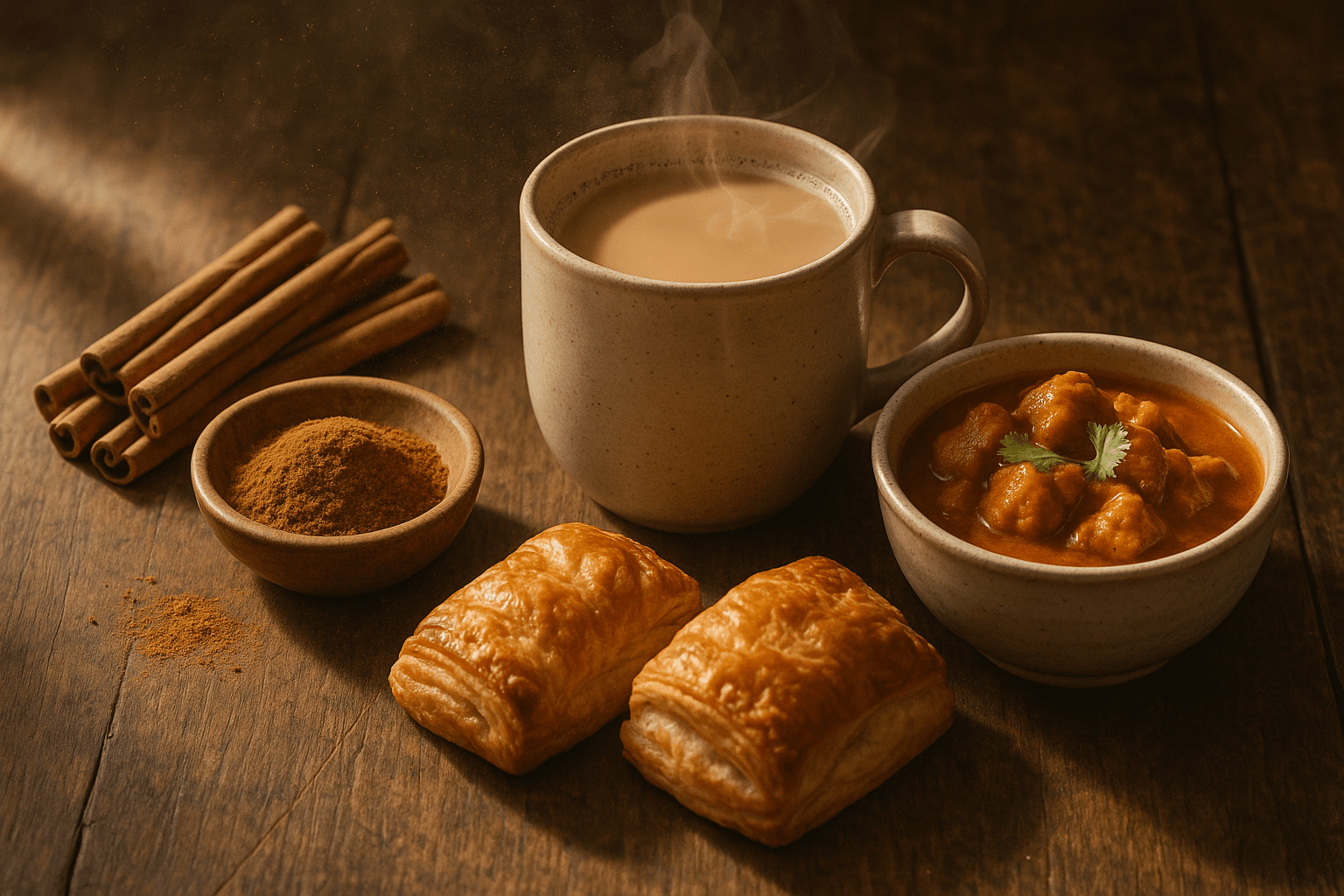
Cinnamon is one of those ingredients people think they already understand. It is sweet, warm, comforting, and vaguely holiday-adjacent. You shake some into cookie dough, stir it into coffee, maybe drop a stick into mulled wine, and move on. But cinnamon is much more complicated than its friendly reputation suggests. Depending on the species, age, particle size, and cooking method, cinnamon can read as honeyed and floral, hot and red-candy-like, dry and woody, or even faintly numbing and bitter. The same spice can make a rice pudding taste luxurious, a curry taste hauntingly deep, or a latte taste like someone dumped potpourri in it.
That gap between "cinnamon" as a label and cinnamon as a real, chemically active ingredient is what matters in cooking. If you know which aromatic compounds are present, what dissolves them, and when heat helps or hurts, cinnamon stops being a vague warm spice and becomes a tool. You can make it taste brighter in a bun, darker in a braise, cleaner in coffee, and softer in custard. You can also avoid the common trap of adding more and more cinnamon until a dish goes from fragrant to dusty, woody, and strangely anesthetizing on the tongue.
This guide is a science-first look at why cinnamon tastes sweet, woody, or numb; how Ceylon and cassia differ; why fresh-ground cinnamon is dramatically more aromatic than old powder; how fat, water, sugar, and alcohol pull out different flavor compounds; when to bloom it in oil versus steep it in milk or syrup; what coumarin contributes to flavor and safety; and the practical rules that make cinnamon work in pastries, curries, braises, chai, coffee, and spiced drinks.
Cinnamon is not one thing
When cooks say "cinnamon," they usually mean one of two broad categories:
- Ceylon cinnamon (Cinnamomum verum), sometimes called "true cinnamon"
- Cassia-type cinnamons, a group that commonly includes Chinese cassia (Cinnamomum cassia), Indonesian cassia or korintje (Cinnamomum burmannii), and Saigon or Vietnamese cinnamon (Cinnamomum loureiroi)
These are related barks from different trees, but they do not taste identical.
How Ceylon and cassia differ in the kitchen
Ceylon cinnamon is usually lighter in color, more fragile, and formed from many thin layers of bark rolled into a delicate quill. Flavor-wise, it tends to be gentler and more complex: floral, tea-like, mildly sweet, and less aggressively hot. If cinnamon can taste elegant, Ceylon is often what people mean.
Cassia is usually darker, harder, and thicker, often as a single sturdy curl rather than many paper-thin layers. Its flavor tends to be bolder, hotter, woodier, and more direct. This is the cinnamon profile most people in the United States recognize from cinnamon rolls, apple pie, breakfast cereal, and red-hot candy.
Within cassia, there are meaningful differences:
- Korintje/Indonesian cassia is common in commercial baking. It is warm and familiar, with moderate sweetness and depth.
- Saigon/Vietnamese cinnamon often tests high in volatile aromatic oils, especially cinnamaldehyde, so it can seem especially intense, sweet-smelling, and spicy-hot.
- Chinese cassia can come across as darker, stronger, and rougher.
If a recipe says simply "cinnamon," the writer may be imagining the supermarket cassia they grew up with. Swap in Ceylon and the result may taste softer and more citrus-floral. Swap in Saigon and it may taste hotter and louder. Neither is wrong, but they are not one-to-one equivalents if cinnamon is a headline flavor.
Why cinnamon tastes sweet even though it is not sugary
The illusion of sweetness in cinnamon comes largely from aroma. Our brains integrate smell and taste so tightly that compounds with warm, confectionary associations often register as "sweet" even when they contain no sugar.
The star molecule here is cinnamaldehyde, the compound most responsible for cinnamon’s signature smell. It reads as warm, sweet, spicy, and woody. In higher concentrations, it also brings some pungency, which is why a powerful cassia can have a little sting.
But cinnamon is not just cinnamaldehyde. Depending on species and freshness, it may also contain smaller amounts of compounds that read as:
- floral
- clove-like
- citrusy
- resinous
- peppery
- tannic
- woody
That blend determines whether a cinnamon tastes dessert-like or savory, soft or hot, elegant or blunt.
A useful way to think about cinnamon is this:
- Sweet impression comes mostly from volatile aroma compounds, especially cinnamaldehyde.
- Woody/dry impression comes from bark solids, fiber, tannic compounds, and over-extracted or stale powder.
- Numbing or harsh impression can come from high concentration, species choice, overuse, and certain compounds interacting with the mouth, especially in cassia-heavy applications.
The chemistry that creates sweetness, woodiness, and numbness
Cinnamon bark contains both volatile compounds and nonvolatile solids.
Volatile oils: the bright, fragrant part
These are the compounds that evaporate easily and reach your nose. They are what make a fresh cinnamon stick smell alive. They include cinnamaldehyde and, in some cinnamons, eugenol and other aromatic molecules.
Volatile oils are fragile. Grinding exposes more surface area, which means faster aroma loss. Heat can help release them into fat, liquid, or steam, but too much heat for too long drives them off. That is why cinnamon can smell amazing in the oven yet taste flat in the finished cookie if the dough sat around too long with old spice.
Bark solids: the dusty, muddy part
Ground cinnamon is literally pulverized bark. Along with the fragrant oils, you are adding cellulose, lignin, and fine particles that do not dissolve. In small amounts, those solids contribute body and rusticity. In large amounts, they can taste dry, chalky, or dusty.
This is especially noticeable in drinks. A latte with suspended ground cinnamon can taste gritty and oddly dry because you are swallowing bark particles, not just aroma. The same is true in frostings or glazes where cinnamon is not fully hydrated or dispersed.
Why too much cinnamon can feel slightly numbing
At high concentrations, especially with cassia-rich cinnamon, the spice can move from warmly aromatic to mouth-coating and slightly anesthetic. People describe this as numb, hot, dry, metallic, or red-candy-like.
Part of this is simply dose: cinnamaldehyde is potent, and strong aromatic compounds can irritate oral tissues in a mild, pleasant way at low levels and in a more aggressive way at high levels. Part of it is the bark’s physical dryness. Part may also be tied to associated compounds in cassia-type cinnamons that create a more assertive, rough-edged spice experience.
In practical cooking terms, if a dish tastes less like pastry-shop warmth and more like dry potpourri with a faint tongue buzz, you probably have one or more of these problems:
- too much ground cinnamon
- the wrong species for the application
- stale powder, so you kept adding more
- poor extraction, leaving raw spice particles instead of integrated flavor
Coumarin: flavor clue and safety consideration
One of the major differences between Ceylon and cassia is coumarin. Coumarin is a naturally occurring aromatic compound found in many plants. It smells sweet in a hay-like, vanilla-adjacent, almondy, dried-grass way.
In cinnamon, coumarin matters for two reasons: flavor and intake.
How coumarin affects flavor
Cassia cinnamons generally contain much more coumarin than Ceylon. Coumarin does not taste like cinnamon by itself, but it contributes to the broader impression of warm sweetness, dried hay, wood, and vanilla-like depth. In moderation, this can make cassia feel rich and familiar. In excess, particularly in spice-heavy baking or beverages with lots of powder, that effect can drift toward dry, perfumed, or dusty.
If you have ever wondered why one cinnamon tastes clean and bright while another tastes heavy and old-fashioned in a not-entirely-good way, coumarin is part of the answer.
How coumarin affects safety
Coumarin is also the reason many cooks seek out Ceylon cinnamon for daily use. High long-term intake of coumarin may be a concern for liver health in susceptible individuals. Cassia typically contains much more coumarin than Ceylon, which contains very little by comparison.
That does not mean cassia is poisonous or that occasional cinnamon rolls are a problem. It means this:
- If you use cinnamon occasionally in normal culinary amounts, cassia is generally treated as a common food spice.
- If you consume large amounts daily—such as in oatmeal, smoothies, coffee, toast, and supplements—Ceylon is the more prudent choice.
- If you are cooking for children or people who consume cinnamon habitually, using Ceylon for everyday applications is a simple risk-reduction move.
For flavor, think of coumarin as one reason cassia seems deeper and heavier. For safety, think of it as one reason Ceylon is often preferred for frequent, high-volume use.
Fresh-ground versus old powder: why age matters so much
A cinnamon stick can hold its character for a long time if stored well. Ground cinnamon cannot. Once cinnamon is ground, surface area skyrockets. Oxygen, light, and repeated opening of the jar accelerate aroma loss. The bright top notes fade first, leaving a spice that still smells vaguely cinnamony but tastes flatter, woodier, and less sweet.
This is the classic reason people overuse cinnamon in baking. The jar in the pantry is six to eighteen months old, so one teaspoon does very little. They add two, then three, and end up with a darker brown product that tastes dry rather than expressive.
Signs your cinnamon is old
- Aroma is weak unless you put your nose directly in the jar
- Flavor is mostly woody, not lively
- It takes a large amount to register in batter or dough
- The dish smells better while cooking than it tastes when eaten
Storage rules
- Keep ground cinnamon in an airtight container away from light and heat.
- Buy in quantities you will use within about 6 to 12 months for best flavor.
- Keep sticks in a sealed container; they often hold quality noticeably longer, roughly 1 to 2 years or more if well stored.
- If cinnamon is central to the recipe, consider grinding sticks fresh in a spice grinder, high-speed blender, or dedicated coffee grinder.
Fresh-ground cinnamon usually tastes brighter, more citrusy, and more dimensional because more of the volatile oil is still present. That is especially noticeable in custards, snickerdoodles, sticky buns, and chai.
Extraction: fat, water, sugar, and alcohol all pull different things
Cinnamon flavor is not extracted the same way in every medium. This matters because the medium determines which compounds move into the dish and how integrated the spice feels.
Fat extraction
Fat captures many aromatic molecules well and rounds their edges. Blooming cinnamon in butter, ghee, or oil can make it taste fuller and more integrated.
Best for:
- curries
- savory braises
- cinnamon buns and fillings with butter
- spiced nuts
- granola
- some cake batters when the spice is whisked into melted butter or oil
What happens: aromatic compounds dissolve into the fat and spread more evenly through the dish. This can reduce the raw, dusty sensation of dry powder.
Water extraction
Water alone extracts some flavor, but it is not the most efficient medium for all of cinnamon’s aromatic compounds. Still, it works well for longer infusions with sticks.
Best for:
- tea and chai bases
- poaching liquids
- mulled wine base before adding sugar or alcohol
- broths and braising liquids
What happens: extraction is slower and gentler. Sticks perform better than ground cinnamon because they infuse without releasing a lot of bark sediment.
Dairy extraction
Milk and cream contain both water and fat, making them excellent at pulling cinnamon flavor while softening harshness.
Best for:
- rice pudding
- pastry cream
- ice cream base
- hot chocolate
- horchata-style drinks
- custards and panna cotta
What happens: cinnamon tastes rounder, sweeter, and less sharp. A stick steeped in warm dairy is often more elegant than ground cinnamon stirred directly into the mix.
Sugar and syrup extraction
Sugar amplifies cinnamon’s sweet impression, even without changing the underlying chemistry of the spice. In syrup, especially warm syrup, cinnamon infuses cleanly.
Best for:
- simple syrup for coffee drinks
- cocktail syrups
- poached fruit
- baklava-style syrups
- pancake syrup infusions
What happens: the syrup carries aroma efficiently and coats the palate, extending the sweet-spice illusion.
Alcohol extraction
Alcohol is especially good at dissolving certain aromatic compounds and can quickly pull cinnamon flavor from sticks.
Best for:
- tinctures
- bitters
- mulled drinks
- cocktails
- boozy fruit compotes
What happens: fast, assertive extraction. Too much time can become woody, so taste and remove the cinnamon when the flavor is right.
Blooming rules: when to use oil, when to steep, when to fold in dry
The single most useful practical rule is that cinnamon should be treated differently depending on the dish.
Bloom in oil or fat when you want depth and integration
Use this for savory applications or rich baked components where cinnamon should feel embedded, not dusty.
Examples:
- Indian-style curries
- Moroccan-inspired braises
- chili with warm spices
- butter-based cinnamon roll filling
- spiced nut mixtures toasted in fat
How to do it: Heat 1 to 3 tablespoons oil, ghee, or butter over medium-low heat, around 250 to 300°F / 120 to 150°C pan temperature. Add a cinnamon stick, or add ground cinnamon only briefly. Whole sticks can bloom for 30 to 90 seconds with other whole spices until fragrant. Ground cinnamon should usually bloom just 10 to 20 seconds, often after the pan is taken down slightly in temperature, because it scorches quickly.
Mistake to avoid: Burning ground cinnamon. Once scorched, it turns bitter and harsh very fast.
Steep in dairy when you want softness and perfume
Use this for custards, puddings, ice creams, and milk-based drinks.
How to do it: Add 1 cinnamon stick per 2 to 3 cups / 475 to 710 ml dairy. Heat to steaming but not boiling, about 170 to 180°F / 77 to 82°C, then cover and steep 15 to 30 minutes. For stronger extraction, keep warm over very low heat for part of that time, but do not aggressively boil.
Mistake to avoid: Dumping in a lot of ground cinnamon, which can make the dairy grainy and muddy-looking.
Steep in syrup when you want a clean flavor for drinks
Use this for coffee sweeteners, cocktails, and brushed glazes.
How to do it: Combine 1 cup / 240 ml water, 1 cup / 200 g sugar, and 2 to 3 cinnamon sticks. Bring just to a simmer, then steep off heat 20 to 40 minutes. Strain. For a deeper syrup, lightly crack the sticks first.
Mistake to avoid: Boiling hard for a long time. You lose delicate top notes and drift into woody extraction.
Add dry to flour mixes when you want even distribution in baking
Ground cinnamon often works best when whisked with flour, sugar, baking powder, and salt. This disperses it evenly and avoids clumps.
Use this for:
- cakes
- muffins
- cookies
- quick breads
- pie fillings with sugar
How to do it: For a standard loaf cake or muffin batch using about 2 cups / 240 g flour, use roughly 1 to 2 teaspoons ground cinnamon as a starting point. For cinnamon-forward pastries like snickerdoodles or coffee cake, 2 to 4 teaspoons may be appropriate depending on the cinnamon type and freshness.
Mistake to avoid: Assuming stale cinnamon and fresh cinnamon need the same quantity. Potent fresh Saigon cinnamon may need less than old supermarket korintje.
Sticks versus ground: choose based on clarity or intensity
Use sticks when you want clarity
Cinnamon sticks are best when you want aromatic infusion without suspended bark particles.
Ideal for:
- chai
- mulled wine
- rice pudding
- stewed fruit
- biryani or pilaf
- braising liquid
- syrup
- hot chocolate
Rule of thumb: Use 1 stick (2 to 3 inches / 5 to 7.5 cm) per 2 to 4 cups / 475 ml to 1 L liquid depending on desired strength.
Use ground when you want direct impact and full dispersion
Ground cinnamon is best when the spice is meant to become part of the structure of the dish.
Ideal for:
- cookie dough
- cake batter
- crumble topping
- spice rubs
- dry sugar coatings
- cinnamon-sugar toast
Rule of thumb: For most home baking, start with 0.5% to 1% of flour weight in ground cinnamon. So for 300 g flour, use about 1.5 to 3 g cinnamon, roughly 3/4 teaspoon to 1 1/2 teaspoons, then adjust for style and species.
Hybrid method for best flavor
Some dishes benefit from both forms. For example, in apple pie filling, steep sliced apples briefly with a cinnamon stick in melted butter or syrup, then remove the stick and add a small amount of ground cinnamon before baking. The stick gives clean aroma; the powder gives immediate cinnamon presence.
Practical rules for baking
Cinnamon behaves differently in pastries depending on sugar, moisture, and oven time.
In cookies and cakes
Cinnamon’s volatile aromatics are partly lost during baking, so recipes need enough spice to survive the oven without tipping into dryness.
Good starting points:
- Sugar cookies/snickerdoodles: 1 to 2 teaspoons in dough, plus cinnamon-sugar coating
- Muffins/quick breads: 1 to 2 teaspoons per 2 cups flour
- Coffee cake: 2 to 4 teaspoons total, often split between batter and streusel
- Apple pie: 1 to 2 teaspoons for a 9-inch pie, depending on apple variety and cinnamon type
Science note: sugar amplifies the perception of cinnamon sweetness, while butter rounds out harshness. That is why cinnamon in a streusel often tastes better than the same amount in a low-fat muffin.
In laminated or enriched doughs
For cinnamon rolls and buns, cinnamon can become muddy if mixed only into wet filling without enough sugar or fat.
A strong filling formula for one 9-by-13-inch pan of rolls:
- 85 g unsalted butter, softened
- 150 g brown sugar
- 8 to 12 g ground cinnamon (about 1 to 1 1/2 tablespoons), adjusted for type
- pinch salt
Mix into a spreadable paste. The fat carries aroma, the sugar amplifies sweetness, and the paste prevents dry spice pockets.
Common mistake: sprinkling lots of dry cinnamon directly over dough. That can create dusty layers and uneven flavor.
In custard pies and milk desserts
Use sticks where possible. Ground cinnamon in a delicate custard can dominate visually and texturally.
For 2 cups / 475 ml milk or cream, steep 1 stick for 20 minutes before building the custard. If you want visible cinnamon, add just 1/4 to 1/2 teaspoon ground at the end.
Practical rules for curries, braises, and savory cooking
Cinnamon is a savory spice in many culinary traditions, not just a dessert one. In Indian, Sri Lankan, Middle Eastern, North African, Mexican, and some Chinese cuisines, it can add sweetness, warmth, and structure to meat, legumes, and rice.
Whole stick in oil at the start
For curries and pilafs, begin with fat and whole spices.
Example:
- 2 tablespoons ghee or neutral oil
- 1 small cinnamon stick (2 inches / 5 cm)
- cumin seeds, cardamom, cloves, bay leaf as desired
Heat the fat over medium, add the cinnamon stick and other whole spices, and fry 30 to 60 seconds until fragrant before adding onions or aromatics.
Why it works: the fat extracts aromatic compounds and distributes them through the dish. The stick also releases flavor gradually during simmering.
Ground cinnamon near the middle or end
Ground cinnamon can be useful in savory dishes, but it should usually be used sparingly.
Starting range for a pot serving 4 to 6 people:
- 1/8 to 1/2 teaspoon ground cinnamon
That is enough to create warmth without making the dish taste like dessert.
Common mistake: adding a full teaspoon of ground cinnamon to a savory tomato sauce or stew. Unless the recipe is specifically spice-forward, that often reads muddy and sweet.
Remove the stick when the balance is right
A cinnamon stick left in a braise for hours can become too woody, especially in a relatively small volume of liquid.
Taste after 30, 45, and 60 minutes. Remove when the aroma is evident but not dominating.
For a 3- to 4-pound / 1.4- to 1.8-kg braise with about 3 cups / 710 ml liquid, 1 medium stick is often plenty.
Practical rules for chai, coffee, and spiced drinks
Cinnamon in beverages fails when cooks confuse extraction with suspension.
If you stir ground cinnamon into black coffee, much of it floats or sinks. You smell some aroma, but you also get bark grit and a drying finish. Better methods extract flavor first.
For chai
Use sticks plus supporting spices.
Basic chai method for 4 cups / 950 ml:
- 2 cups / 475 ml water
- 2 cups / 475 ml milk
- 1 cinnamon stick
- 4 cardamom pods
- 4 cloves
- 1-inch / 2.5-cm piece ginger, sliced
- 2 to 3 tablespoons black tea
- 2 to 4 tablespoons sugar, to taste
Simmer the water with spices for 8 to 10 minutes, add milk and sugar, return to a gentle simmer, add tea, steep 3 to 5 minutes, then strain.
Why sticks work better: clearer flavor, less sludge, smoother finish.
For coffee
Best options, from cleanest to most rustic:
- Cinnamon syrup in the cup
- Steep a stick in hot milk or cream for lattes
- Brew coffee with a cracked cinnamon stick in the pot or filter basket
- Dust the top lightly with fine cinnamon at serving
If making a cinnamon syrup for coffee:
- 240 ml water
- 200 g sugar
- 2 sticks cinnamon
- simmer briefly, steep 30 minutes, strain
Use 1 to 2 tablespoons per drink.
For mulled wine or cider
Use sticks, not powder.
For 1 bottle wine (750 ml) or 1 quart / 950 ml cider:
- 2 cinnamon sticks
- strips of orange peel
- cloves, star anise, optional allspice
- 2 to 4 tablespoons sugar or honey, optional
Warm gently to 160 to 170°F / 71 to 77°C and steep 15 to 30 minutes. Do not boil.
Why cinnamon turns muddy in some dishes
When cinnamon makes a dish taste flat rather than fragrant, one or more mechanisms are usually responsible.
1. The spice is stale
Old powder has lost its top notes, so only woody base notes remain.
2. The extraction method is wrong
Ground cinnamon dumped into a watery sauce near the end can taste raw and dusty because the aromatic oils were never properly dispersed.
3. There is too much physical bark in the food
This is common in drinks, frostings, and smooth sauces.
4. The dish lacks enough fat, sugar, or steeping time to round the spice
Cinnamon in low-fat, low-sugar systems can read harsher.
5. The species is too aggressive for the application
Saigon cinnamon can bully a delicate custard. Ceylon may be better there.
Common mistakes and how to fix them
Mistake: using too much because you cannot smell the jar well
Fix: replace the cinnamon. Do not keep increasing the dose of dead spice.
Mistake: burning cinnamon in hot oil
Fix: lower the heat. Bloom whole sticks first; add ground cinnamon only briefly.
Mistake: putting ground cinnamon directly into drinks
Fix: infuse sticks in syrup, milk, tea, or the brewing liquid instead.
Mistake: making savory dishes taste like dessert
Fix: use whole stick, shorter steep, and much less ground cinnamon.
Mistake: assuming all cinnamons are interchangeable
Fix: use Ceylon for delicate dairy desserts and frequent use; use cassia for bold baking and robust savory dishes when that familiar punch is wanted.
How to choose the right cinnamon for the job
If you stock just two cinnamons, make them these:
1. Ceylon cinnamon
Use for:
- custards
- rice pudding
- poached fruit
- chai where elegance matters
- everyday oatmeal or toast if used often
- delicate cakes and cookies
Flavor profile: soft, floral, tea-like, refined
2. Good cassia or Saigon cinnamon
Use for:
- cinnamon rolls
- apple pie
- coffee cake
- gingerbread-like spice blends
- robust curries and braises in tiny amounts
- holiday baking
Flavor profile: bold, sweet-smelling, woody, hot, nostalgic
If you want one all-purpose cinnamon for classic American baking, a good Indonesian cassia is often the most balanced choice.
Step-by-step: applying cinnamon correctly in four common scenarios
A. Pastry or coffee cake
- Check that your ground cinnamon is fragrant.
- Whisk 1 1/2 to 2 teaspoons cinnamon into the dry ingredients for a batter with 2 cups / 240 g flour.
- If making a streusel, mix another 1 to 2 teaspoons with butter, sugar, flour, and salt.
- Bake promptly; do not let the batter sit for hours.
- For maximum aroma, add a tiny finishing dusting after baking.
B. Savory curry or braise
- Heat 2 tablespoons oil or ghee over medium heat.
- Add 1 small stick cinnamon and other whole spices.
- Fry 30 to 60 seconds until fragrant.
- Add onions, garlic, ginger, and proceed with the recipe.
- Simmer and taste after 30 minutes.
- Remove the stick once the warmth is integrated.
- If needed, add only 1/8 teaspoon ground cinnamon near the end to lift the aroma.
C. Chai or milk-based drink
- Combine liquid with 1 stick cinnamon per 4 cups / 950 ml total liquid.
- Add supporting spices.
- Heat gently and steep 10 to 20 minutes.
- Strain before serving.
- Sweeten after extraction so you can judge the spice level clearly.
D. Coffee sweetener or cocktail syrup
- Combine 1 cup water, 1 cup sugar, and 2 to 3 sticks cinnamon.
- Simmer briefly, 1 to 2 minutes.
- Cover and steep 20 to 40 minutes.
- Strain and chill.
- Use 1 to 2 tablespoons per beverage.
The big takeaways
Cinnamon is not a single flavor. Ceylon tastes gentler and more floral; cassia tastes bolder, woodier, and hotter. Freshness matters because the bright volatile oils vanish quickly after grinding. Extraction matters because fat, dairy, syrup, water, and alcohol all pull different aspects of the spice. Technique matters because blooming in oil creates depth, while steeping in milk or syrup creates a cleaner, rounder result.
If you remember only a few rules, make them these:
- Use sticks for infusion, ground for dispersion.
- Use fat or dairy when you want cinnamon to taste rounded and integrated.
- Use syrup or sticks for drinks instead of stirring in lots of powder.
- Replace old cinnamon before increasing the amount.
- Be cautious with cassia if you consume cinnamon heavily every day because of coumarin.
- In savory food, cinnamon should usually whisper before it shouts.
The payoff is immediate. Your pastries taste warmer without becoming dusty. Your curries gain depth without drifting into dessert territory. Your coffee and chai taste fragrant instead of gritty. And perhaps most satisfying of all, cinnamon starts tasting less like a generic autumn label and more like what it really is: a bark packed with volatile chemistry, shaped by species, and transformed by technique.