Why Cilantro Tastes Soapy, Citrusy, or Flat: Aldehyde Chemistry, Genetic Perception, and the Prep Rules for Salsas, Chutneys, and Broths
RecipeSimpli
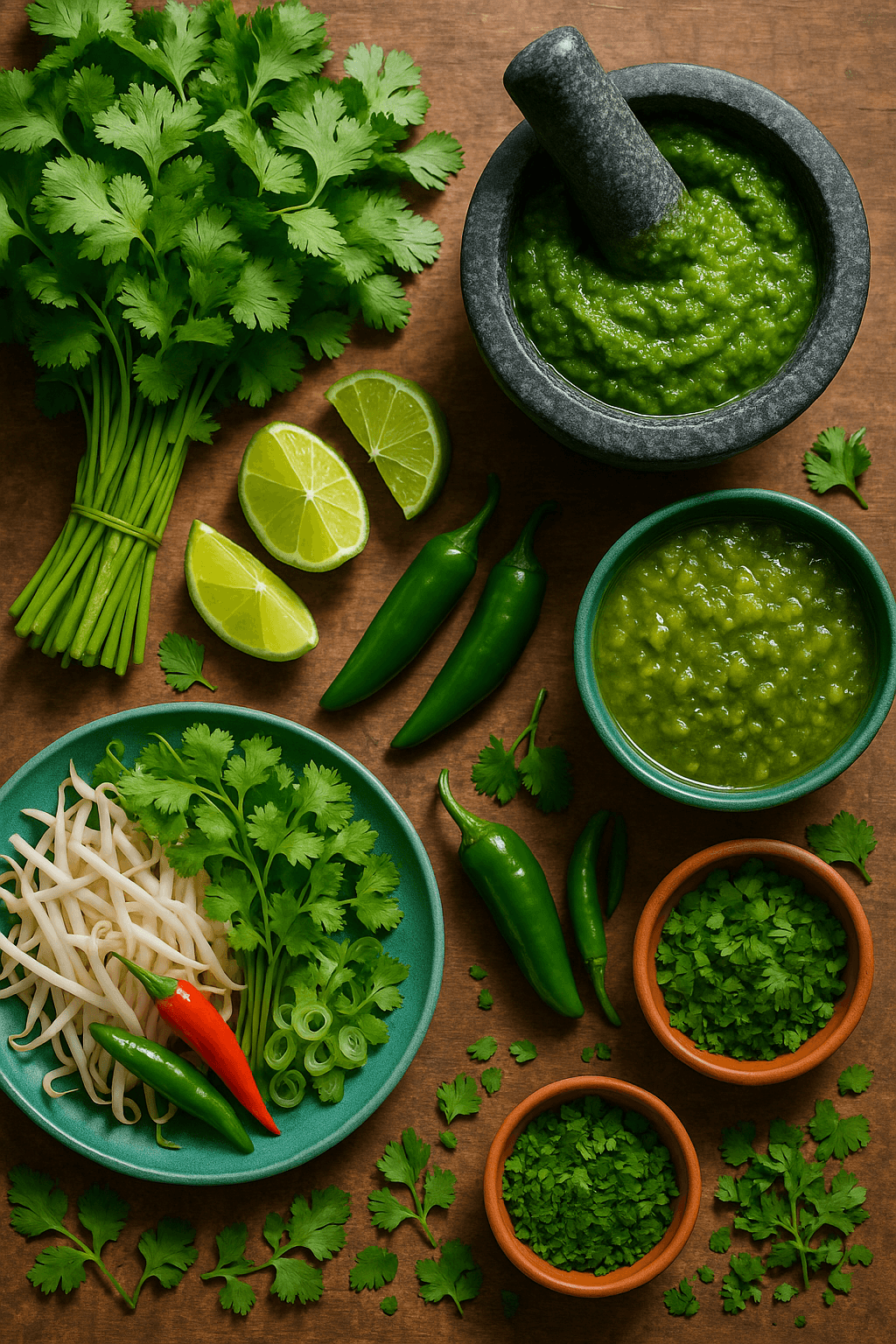
Cilantro is one of the few herbs that can start an argument before dinner even begins. To one person it tastes electric and alive—like lime zest, green pepper, and crushed leaves after rain. To another it tastes unmistakably like soap. To a third, and this is less discussed but just as important in the kitchen, it tastes like almost nothing at all: flat, watery, vaguely green, more texture than aroma.
That range of experience is real, and it matters far beyond internet debates about the “soap gene.” If you make salsa and wonder why it turns dull after ten minutes, blend a green chutney that blackens by lunch, simmer pho broth and debate whether cilantro should go in the pot or on the table, or finish a curry with coriander leaves only to lose all the fragrance you expected, the answer lives in chemistry, perception, and handling.
Cilantro is not a stable herb. Its defining aroma is built from volatile compounds—especially aldehydes—that can read as citrusy and refreshing in one context, harsh and soapy in another, and nearly absent when the herb is old, overwashed, bruised, overheated, or paired poorly. The leaves and stems are not interchangeable in flavor intensity or texture. The roots, where available, are another ingredient entirely. A rough chop, a fine mince, a mortar, a blender, hot broth, lime juice, salt, refrigeration, and time all push cilantro in different sensory directions.
Understanding that gives you more than trivia. It gives you control.
Cilantro, coriander, and why naming matters
First, terminology. In the United States, cilantro usually refers to the fresh leaves and tender stems of Coriandrum sativum, while coriander refers to the dried seeds. In the UK, India, and many other places, the fresh herb is also called coriander or coriander leaves. The roots are used in several Southeast Asian cuisines, especially Thai cooking, where they are prized for depth and perfume.
Botanically, it is one plant. Culinarily, it behaves like three different ingredients:
- Leaves: bright, volatile, quick to bruise, quick to fade
- Tender stems: more assertive, grassy-citrusy, often more flavorful than the leaves
- Roots: earthy, aromatic, savory, excellent pounded into curry pastes and marinades
That distinction shows up all over the world. Mexican cooks often chop leaves and tender stems into salsa, pico de gallo, guacamole, and finishing garnishes. Indian cooking uses coriander leaves in chutneys, chaats, curries, and as a last-minute finish. Thai cuisine often values the root and stem for pounded pastes. Vietnamese cooking treats cilantro as a fresh table herb and garnish for soups, salads, and noodle bowls. Middle Eastern cuisines fold it into sauces, salads, zhoug-like preparations, and herb-heavy finishes.
So when someone says “add cilantro,” a food scientist hears a dozen practical questions hidden inside that phrase: Which part? Cut how? Added when? Held how long? Heated how much? Acidified before or after? Served immediately or stored overnight?
The chemistry: why cilantro can smell like lime peel, crushed leaves, or dish soap
Cilantro’s signature aroma comes largely from volatile aldehydes, especially a group of long-chain and unsaturated aldehydes. You do not need to memorize the full roster, but it helps to know the broad sensory families:
- Some aldehydes read as citrusy, green, fresh, peely, and sparkling.
- Others read as fatty, waxy, pungent, or soapy.
- In a fresh bunch, you usually perceive a balance of these compounds, plus supporting terpenes and green-leaf volatiles.
The famous “soap” association is not invented. Certain aldehydes in cilantro are structurally related to compounds that humans also encounter in soaps, detergents, and fragranced products. But that is only half the story. Those same or related compounds can also read as pleasant in the right concentration and context. Sensory perception is not binary. It is a blend of chemistry, intensity, expectation, and genetics.
This is why cilantro can be:
- Citrusy when it is fresh, cool, lightly cut, and paired with acid, onion, chile, or rich food
- Soapy when a person is highly sensitive to particular aldehydes, or when the balance shifts toward harsh top notes
- Flat when aroma compounds have evaporated, oxidized, diluted, or been damaged by heat, moisture, or storage
Think of cilantro as a tiny volatile delivery system. The moment you cut or bruise it, you start a race against time.
The genetics: yes, genes matter, but they are not the whole answer
The simplified version of the internet story is this: some people have a gene that makes cilantro taste like soap. There is truth there, but the kitchen reality is more nuanced.
Researchers have linked cilantro dislike and soap perception to variation near olfactory receptor genes, especially OR6A2, which is associated with detecting aldehydes that many people describe as soapy. If you are especially sensitive to these compounds, cilantro may smell stronger and more unpleasant from the start.
But genetics are not destiny in a simplistic yes/no way.
A few important caveats:
- Not everyone with sensitivity hates cilantro. Some people detect the soapiness but still enjoy the herb in balanced dishes.
- Preparation changes perception. Finely blended chutney, lightly chopped salsa, cilantro steeped in hot broth, and cilantro cooked into a paste do not smell identical.
- Exposure and cultural familiarity matter. Repeated experience with cilantro in delicious contexts can shift a person’s acceptance, even if the underlying sensory note remains.
- Concentration matters. A few leaves in a broth garnish may feel fresh; a giant handful in a smoothie may feel perfumed or harsh.
- Age and quality matter. A tired bunch with diminished citrus notes may leave the less pleasant notes more exposed.
So the gene explanation is useful, but it is not a complete culinary explanation. For cooks, the more useful question is not “Do you have the soap gene?” It is “How can I present cilantro in a form and concentration that highlights its best traits?”
Why stems and leaves taste different
Many home cooks strip every leaf from the stem as if the stems were waste. In most cilantro applications, that is a mistake.
Tender cilantro stems are often more flavorful than the leaves. They can taste greener, more concentrated, and more structurally aromatic. In raw applications like salsa, chutney, zhoug, or herb sauces, chopped tender stems contribute both flavor and body. In pounded or blended pastes, they help create a fuller herb character.
The leaves, by contrast, bring delicacy and immediate top-note freshness. They also bruise and blacken more easily.
A practical way to think about the plant:
- Leaves: perfume
- Tender stems: backbone
- Thick lower stems: fibrous, usable in stocks or infusions but less pleasant raw
- Roots: deep aromatic base, especially for pounded pastes
Use rules for stems vs. leaves
- For salsa, chutney, and green sauce, use leaves plus tender upper stems.
- For garnishing soups or curries, emphasize leaves and very finely sliced tender stems.
- For blended sauces, stems are excellent because they intensify flavor and improve texture.
- For quick broth infusions, lower stems can be bundled and steeped briefly, then removed.
- For Thai curry pastes and marinades, use roots if you can get them; scrub thoroughly.
Why chopping, bruising, and blending change the flavor so fast
The moment a knife hits cilantro, cell walls rupture. That releases enzymes and aroma compounds, and it increases contact with oxygen. Some of that is good: you smell more because more volatiles are released. But the trade-off is speed. The brighter notes escape quickly, and damaged tissue can oxidize, darken, and develop muddier flavors.
Different prep methods produce different sensory results
Hand-torn cilantro
- Least cell damage
- Clean, soft release of aroma
- Best for table garnishes and delicate finishing
Rough chopped cilantro
- Good balance of aroma release and freshness
- Ideal for pico de gallo, tacos, salads, and last-minute garnish
Finely minced cilantro
- Stronger immediate aroma
- Faster flavor loss
- Greater risk of blackening or clumping
- Useful when you need even distribution in chutneys or relishes
Pounded in a mortar
- More bruising than chopping, but often better flavor integration than high-speed blending
- Excellent for chutneys, Thai-style herb pastes, and sauces where you want complexity rather than a raw grassy blast
Blended
- Maximum cell rupture
- Strong initial aroma and vivid color if served immediately
- Fastest oxidation and greatest risk of bitterness, warming, and flavor collapse if overblended
This is why a cilantro-lime sauce made in a blender can taste thrilling for five minutes and disappointing after an hour, especially if the blender heated it.
Heat, acid, salt, and storage: the four big forces that change cilantro
1. Heat
Heat is the fastest way to erase cilantro’s top notes.
Those citrusy-green volatiles are fragile. Long cooking drives them off. That does not mean cilantro should never see heat. It means you should decide whether you want fresh high notes or integrated herbal depth.
- Add cilantro at the end if you want brightness.
- Add it earlier and in larger quantity if you want it woven into the dish, knowing the fresh aroma will fade.
- In broths, it is often best as a garnish or a very brief steep.
- In curries and dals, a final shower over the hot dish preserves much more aroma than simmering it for 10 minutes.
2. Acid
Acid is complicated with cilantro. Lime juice, lemon juice, tamarind, vinegar, and yogurt can all shift perception.
In many fresh applications, acid makes cilantro seem brighter by amplifying citrus associations and balancing grassy notes. That is why cilantro sings in salsa, chutney, and herb sauces with lime or lemon.
But acid can also accelerate visual deterioration in chopped herbs over time, especially when combined with salt and oxygen. In some blended sauces, prolonged contact with acid can make the herb taste thinner or more cooked, even when it is raw.
Practical rule: For immediate service, acid is your friend. For make-ahead green sauces, add enough acid for preservation and brightness, but keep the mixture cold and minimize air exposure.
3. Salt
Salt suppresses bitterness and heightens flavor perception, but it also draws water from chopped herbs and vegetables. In salsa or chutney, that can be helpful in the first few minutes and detrimental over longer holding.
- In fresh salsa, salt just before serving or shortly before if you want slight juiciness.
- In green chutney, salt is essential, but chilling quickly matters.
- In herb garnishes, salt the dish rather than the chopped herb itself if you want maximum visual freshness.
4. Storage and oxygen
Cilantro loses quality fast because aroma compounds evaporate and plant tissue continues to respire after harvest.
Common signs of decline:
- Loss of fragrance
- Wet, collapsed leaves
- Yellowing
- Blackened edges
- A flavor that seems hollow or muddy rather than bright
Best storage for a bunch of cilantro
- Trim 6 to 12 mm / 1/4 to 1/2 inch from the stem ends.
- Stand the bunch in a jar with 2.5 to 4 cm / 1 to 1 1/2 inches of water.
- Loosely cover the top with a plastic bag.
- Refrigerate if your cilantro is tender and fragile; some sturdier bunches also do well cool but not freezing cold.
- Change the water every 1 to 2 days.
- Wash only what you need shortly before use if possible.
Alternative: wash thoroughly, dry extremely well in a spinner plus towels, then store wrapped in paper towels inside a loose bag or container.
The enemy is not just time. It is surface moisture plus pressure plus trapped warmth.
Why cilantro goes black or tastes muted
Blackening usually comes from a mix of bruising, oxidation, excess moisture, and sometimes acid/salt exposure over time.
Common causes of blackening
- Chopping too far ahead
- Using a dull knife
- Overbluising in a food processor or blender
- Storing while wet
- Packing tightly in a warm container
- Holding chopped cilantro in acidic dressing too long
Common causes of muted flavor
- Old cilantro with already depleted volatiles
- Washing and soaking too long
- Inadequate drying
- Overheating in a blender or in the pan
- Adding too early in cooking
- Refrigerating a finished sauce uncovered
- Pairing with ingredients that dominate it, such as too much raw garlic, fish sauce, cumin, or onion without sufficient herb quantity
Quick fixes for muted cilantro flavor
- Add a fresh second addition right before serving
- Include more tender stems, not just leaves
- Use lime zest along with juice to reinforce the citrus impression
- Add a small amount of green chile for lift
- Chill the herb or sauce before serving; colder temperatures can preserve freshness perception in some contexts
- Blend briefly, then stop; if needed, pulse with ice or a spoonful of cold water to limit heat buildup
Cultural context: why different cuisines handle cilantro differently
Cilantro is not used the same way everywhere because cooks long ago solved different flavor problems.
Mexican cooking
In Mexican salsas, guacamoles, tacos, caldos, and street-style garnishes, cilantro often appears raw or nearly raw. The point is lift: to cut richness, brighten chile heat, and connect acid, onion, and fresh vegetable flavors. Tender stems are welcome in many chopped preparations. In salsa verde or pico de gallo, cilantro is generally added near the end and served relatively soon.
Indian cooking
Coriander leaves in Indian food can work in two modes: blended into chutney or scattered as a final garnish over curries, dals, chaats, and kebabs. In chutney, they are often supported by green chile, lemon or lime, ginger, cumin, mint, coconut, peanut, or roasted gram, depending on region and style. The herb is rarely simmered for long if the goal is fresh aroma.
Thai cooking
Thai cuisine makes especially intelligent use of the whole plant. Roots are pounded with garlic and pepper into foundational pastes. Stems add punch to curry pastes, marinades, and dipping sauces. Leaves appear as garnish, but roots and stems often carry the deeper aromatic work.
Vietnamese cooking
In Vietnamese food, cilantro commonly appears among fresh herbs served with soups, salads, and noodle dishes. For pho, cilantro is usually a garnish or table herb rather than a long-simmered broth ingredient. The distinction is important: the broth needs clarity and depth, while the cilantro provides volatile freshness at the moment of eating.
Middle Eastern cooking
Across Middle Eastern cuisines, cilantro may be folded into herb sauces, relishes, rice dishes, soups, or meat preparations. It is frequently paired with parsley, mint, chile, garlic, lemon, and warm spices. Depending on the dish, it may be raw and assertive or softened briefly in oil, where it behaves very differently from a fresh garnish.
These traditions are not random. They reflect what cilantro does best under different conditions.
When to add cilantro: the practical timing rules
If you remember one section from this article, make it this one.
For fresh salsa and pico de gallo
Add cilantro after the main vegetables are cut, 5 to 15 minutes before serving.
Why:
- It keeps the top notes bright
- Limits blackening
- Prevents the herb from being overshadowed by onion juice and salt over time
Practical ratio:
- For 500 g / about 1 pound chopped tomatoes, use 15 to 25 g / 1/2 to 1 packed cup chopped cilantro with tender stems, depending on intensity desired.
For green chutney
Blend or pound just before serving, or make the same day and chill immediately.
A reliable home formula:
- 50 g / about 2 packed cups cilantro leaves and tender stems
- 15 to 20 g / 1/2 to 3/4 cup mint leaves, optional
- 1 to 2 green chiles
- 15 g / 1 tablespoon lemon or lime juice
- 5 g / 1 teaspoon kosher salt, plus more to taste
- 10 to 20 g / 2 to 4 teaspoons sugar, optional depending on style
- 15 g / 1 tablespoon water as needed
Blend in short bursts, no more than 10 to 15 seconds at a time, scraping down between bursts. Serve cold.
For curries, dals, and braises
Add the main cilantro garnish off heat or in the last 30 seconds.
Why:
- Preserves aroma
- Prevents the herb from collapsing into the sauce
- Gives a fresh contrast to rich, cooked flavors
Useful amount:
- For a 4-serving curry or dal, use 10 to 15 g / 1/3 to 1/2 cup chopped leaves and tender stems as a finishing garnish.
For pho and clear broths
Do not simmer the leaves in the broth for long.
Best approaches:
- Add fresh chopped cilantro directly to bowls
- Serve whole sprigs as garnish
- Briefly steep stems for 1 to 3 minutes in the hot broth if you want background aroma, then remove
A long simmer makes the broth lose cilantro freshness and can introduce muddier herbal notes.
For herb sauces and zhug-style preparations
Use stems generously, keep everything cold, and limit blending time.
If making ahead:
- Add enough lemon juice to sharpen flavor
- Cover with a thin film of oil if appropriate
- Press plastic or parchment close to the surface to reduce oxygen exposure
- Refrigerate promptly
For guacamole
Fold chopped cilantro in at the end.
This preserves aroma and prevents bruised dark flecks. For 3 ripe avocados, start with 10 to 12 g / about 1/3 to 1/2 cup chopped cilantro.
Step-by-step: how to prep cilantro for maximum flavor
1. Buy the right bunch
Look for:
- Bright green leaves
- Upright stems
- Strong fresh aroma when sniffed near the cut ends
- Minimal slime or yellowing
Avoid bunches that are soggy, blackened, or nearly scentless.
2. Wash thoroughly but briefly
Cilantro can hide grit. Swish in a large bowl of cold water, lift out, and repeat if needed. Do not let it soak endlessly.
3. Dry it very well
This is non-negotiable. Use a salad spinner, then blot with towels. Wet cilantro dilutes flavor, bruises more easily under the knife, and deteriorates faster.
4. Separate by use
- Save beautiful leaves for garnish
- Chop tender stems plus leaves for salsa and sauces
- Reserve thicker stems for broth infusions or stock
- Scrub and use roots for pastes if available
5. Cut with a sharp knife
Use a sharp chef’s knife or petty knife. A dull blade crushes more than it cuts.
6. Time the cut to the dish
- Garnish: cut at the last minute
- Salsa: 5 to 15 minutes before serving
- Chutney: immediately before blending or pounding
- Broth garnish: at service
- Curry finish: once the heat is off
7. Control temperature
If blending, use cold ingredients. If your blender tends to heat, add an ice cube or chill the jar beforehand.
8. Taste and adjust around cilantro, not against it
If the herb tastes flat, do not just add more salt. Try:
- More lime juice or a little zest
- More tender stems
- A small pinch of sugar in chutney
- A second fresh handful added at the end
Practical recipes and prep templates
Fresh cilantro for salsa roja or pico de gallo
For about 4 cups finished salsa:
- 400 g / 4 medium ripe tomatoes, diced
- 80 g / 1 small white onion, finely diced
- 1 to 2 jalapeños or serranos, minced
- 20 g / 3/4 packed cup cilantro leaves and tender stems, chopped
- 20 to 30 g / 1 1/2 to 2 tablespoons lime juice
- 5 to 6 g / 1 teaspoon kosher salt
Mix tomatoes, onion, chile, lime, and salt first. Fold in cilantro last. Rest 5 minutes and serve.
Bright green herb chutney that stays fresher longer
For about 1 cup:
- 50 g / 2 packed cups cilantro leaves and tender stems
- 20 g / 3/4 cup mint leaves
- 1 green chile
- 10 g / 2 teaspoons grated ginger
- 15 g / 1 tablespoon lime juice
- 30 g / 2 tablespoons cold water
- 5 g / 1 teaspoon kosher salt
- 5 to 10 g / 1 to 2 teaspoons sugar
Blend in short pulses until just smooth. Transfer immediately to a chilled container. Press plastic against the surface and refrigerate.
Cilantro finish for dal or curry
For 4 to 6 servings:
- 12 g / about 1/2 cup loosely packed chopped cilantro leaves and tender stems
- Optional: 1 teaspoon lime juice
Scatter over the hot dish after turning off the heat. Cover for 30 seconds, then serve. The residual heat blooms the aroma without destroying it.
Cilantro for pho service
For 4 bowls:
- 12 to 16 g / 1/2 to 3/4 cup cilantro leaves, loosely chopped
- A few tender stems, thinly sliced if you like
Add directly to bowls just before ladling in broth or immediately after. Serve with other herbs and lime.
Common mistakes home cooks make with cilantro
- Throwing away the tender stems. You lose flavor.
- Using it wet. Water dilutes flavor and speeds deterioration.
- Chopping too early. The aroma fades fast.
- Blending too long. Heat and oxygen wreck freshness.
- Cooking it too long. Fresh cilantro is a finishing herb in many applications.
- Assuming more is always better. Excess cilantro can taste perfumed, harsh, or muddy depending on the dish.
- Ignoring balance. Cilantro needs support—acid, salt, fat, chile, and temperature all shape perception.
- Using old bunches for raw preparations. Tired cilantro belongs in stock, not in delicate salsa.
What to do if you or your guests dislike cilantro
You cannot fully engineer away genetic perception, but you can make cilantro more approachable.
Try these strategies:
- Use less, and chop it finely into a broader herb mix
- Pair with mint, parsley, or basil so cilantro is not carrying the whole aromatic load
- Favor tender stems in cooked or pounded sauces over piles of raw leaf garnish
- Add acid and fat; both can make cilantro read fresher and less harsh
- Introduce it in small amounts in complex dishes rather than as a dominant garnish
Substitutions depend on the cuisine, but none taste exactly the same. Parsley plus a little mint can mimic freshness, while Thai basil may work in some Southeast Asian contexts. In Mexican salsa, parsley can provide color and herbiness, but it will not replicate cilantro’s aldehydic spark.
The big takeaway: cilantro is a timing ingredient
Cilantro is often discussed as if its flavor were fixed: you either love it or hate it. In the kitchen, that is far too static. Cilantro is a moving target. Its aroma depends on aldehyde balance, genetics, and very practical handling choices. Leaves and stems contribute differently. Chopping and blending can liberate or destroy flavor. Heat can integrate the herb but erase its brightness. Acid can sharpen it or shorten its visual peak. Storage can preserve it or flatten it.
The best cooks treat cilantro less like a generic leafy garnish and more like a volatile finishing system.
If you want cilantro at its best, remember these rules:
- Buy it fresh and aromatic
- Dry it thoroughly
- Use tender stems as well as leaves
- Cut it close to serving time
- Keep blended sauces cold and low-oxygen
- Add it late to hot dishes
- Use roots and stems for depth, leaves for sparkle
- If flavor is muted, refresh with a second addition and a touch of acid
That is how you get cilantro that tastes not soapy or flat, but alive—sharp, green, citrusy, and exactly where it belongs in the dish.