Why Chocolate Seizes, Shines, or Turns Grainy: Cocoa Butter Crystal Forms, Water Shock, and the Tempering Rules Behind Snaps, Ganache, and Gloss
RecipeSimpli
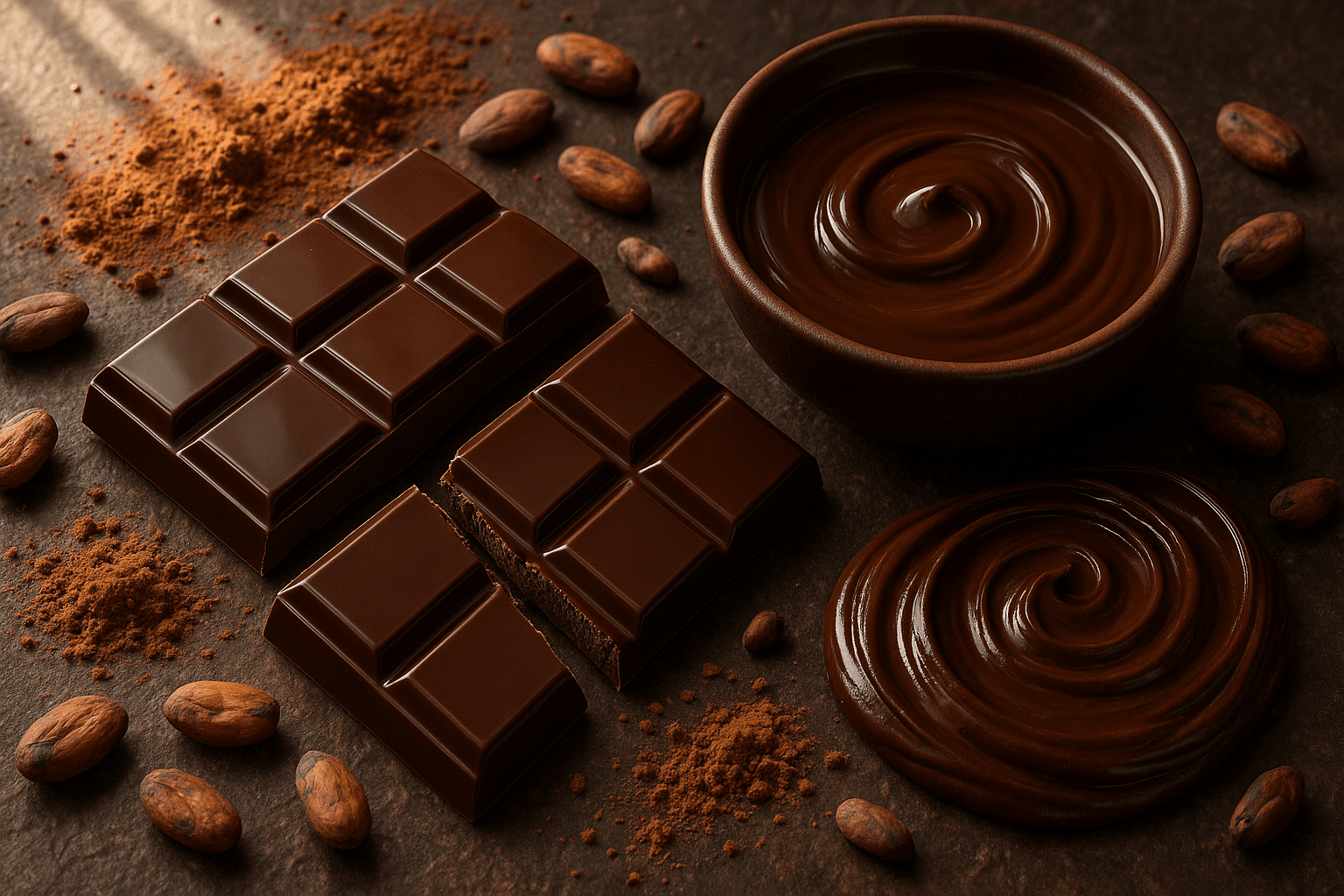
Chocolate can be silky, glossy, and snappy one minute, then dull, streaky, clumpy, or sandy the next. Few ingredients feel as magical when they behave—and as maddening when they do not. If you have ever melted chocolate only to watch it turn into a stiff paste after the tiniest splash of water, or unmolded homemade truffles that looked perfect at first but developed pale streaks by morning, you have met the two great forces that govern chocolate: fat crystal structure and moisture management.
Chocolate is not just “sweet brown stuff that melts.” It is a concentrated suspension of sugar and cocoa solids dispersed in cocoa butter, plus varying amounts of milk solids depending on the style. That means its texture depends on both how the fat crystallizes and how the dry particles interact with water. Understanding those two systems explains almost everything home cooks see in the bowl: why tempered chocolate snaps, why untempered chocolate smears, why ganache can be smooth or broken, why white chocolate scorches so easily, and why a few degrees can separate glorious shine from gray bloom.
Once you understand the rules, chocolate stops feeling temperamental and starts feeling logical. You do not need a marble slab and a pastry kitchen to make it work. You do need precision, dry tools, and a feel for what kind of chocolate project you are doing: dipping, molding, ganache, drizzling, baking, or simply melting into batter. Each use asks for a slightly different approach.
Chocolate in context: a luxurious ingredient built on fat structure
Chocolate’s modern behavior comes from a long chain of processing steps. Cacao beans are fermented, dried, roasted, cracked, and ground into cocoa mass, a mixture of cocoa solids and cocoa butter. From there, manufacturers can separate some of the cocoa butter, add sugar, milk solids, vanilla, lecithin, and sometimes extra cocoa butter to produce dark, milk, or white chocolate. The ratio of these ingredients matters enormously.
Dark chocolate typically contains cocoa solids, cocoa butter, sugar, and sometimes a little emulsifier such as soy lecithin. Milk chocolate includes milk solids and milk fat, which soften texture and lower working temperatures. White chocolate contains no cocoa solids at all; it is made from cocoa butter, sugar, milk solids, and flavoring. That is why white chocolate tastes and behaves differently: all of its chocolate identity comes from cocoa butter, not cocoa particles.
For centuries, chocolate was primarily consumed as a drink. The glossy bars, enrobed truffles, and shiny molded bonbons we now associate with fine chocolate only became possible through improved grinding, refining, conching, and an understanding—practical before scientific—of tempering. Long before food scientists named cocoa butter polymorphs, chocolatiers knew that careful heating and cooling created chocolate that set firm, looked polished, and released cleanly from molds.
That ancient craft knowledge lines up perfectly with modern materials science. Chocolate is a fat crystal engineering problem disguised as dessert.
The heart of the matter: cocoa butter crystal forms
Cocoa butter is polymorphic, which means it can crystallize in more than one structure. These crystal structures are commonly described as Forms I through VI. They differ in stability, melting point, appearance, and texture.
Here is the practical version home cooks need:
- Forms I–IV form easily when chocolate cools without control. They are unstable or semi-stable.
- Form V is the goal in most finished chocolate work. It gives good gloss, firm set, clean snap, and melts pleasantly near body temperature.
- Form VI is even more stable, but it develops slowly over time and is associated with aged chocolate and fat bloom changes.
Approximate melting ranges are often given as:
- Form I: about 63°F / 17°C
- Form II: about 70°F / 21°C
- Form III: about 79°F / 26°C
- Form IV: about 82°F / 28°C
- Form V: about 93–94°F / 34–35°C
- Form VI: about 97°F / 36°C
Different sources list slightly different temperatures, but the key idea is consistent: the crystal form you want for most chocolate work is stable enough to hold shape at room temperature, yet melts pleasantly in the mouth. That sweet spot is Form V.
When chocolate is properly tempered, you create a population of Form V seed crystals in the melted chocolate. Those crystals guide the rest of the cocoa butter to solidify in the same desirable arrangement. If that crystal network forms correctly, the chocolate sets smooth, contracts slightly from molds, and resists fingerprints better.
If the crystal population is mixed, sparse, or dominated by unstable forms, the chocolate may set slowly, look dull, feel soft, streak, crumble oddly, or develop bloom.
Why melted chocolate seizes when water hits it
Seizing feels dramatic because it is dramatic. A bowl of smoothly melted chocolate can turn thick and lumpy after a tiny splash of water. But the reason is not that water and fat simply “do not mix.” That is true in a broad sense, but it is not the full explanation.
Chocolate contains a large amount of very fine dry particles—mainly sugar and cocoa solids—coated and separated by fat. In melted chocolate, cocoa butter is the continuous phase surrounding those particles, which is why the mixture flows.
Add a small amount of water, and you do something disastrous to that structure. The sugar on the particle surfaces begins to dissolve, creating sticky syrup patches. Those syrupy spots glue dry particles together into clusters. Instead of many separate particles lubricated by cocoa butter, you now have agglomerates—little sticky masses—that dramatically increase viscosity. The chocolate turns from fluid to paste.
This is why a few drops of water are worse than a lot. If you added enough liquid overall, you could create a workable chocolate sauce or ganache. But a tiny amount creates partial hydration, localized syrup formation, and clumping.
A useful rule of thumb:
- Tiny accidental water = seizing
- Enough intentional liquid, added properly = emulsion or sauce
That is also why steam is dangerous. A damp spatula, condensation under a bowl, or steam from a double boiler can introduce enough water to trigger seizing.
Water shock versus intentional emulsions
This distinction matters in every chocolate recipe.
If you stir 1 teaspoon water into a bowl of melted chocolate, you are likely to get a stiff mess.
If you add 1/4 cup hot cream to chopped chocolate and stir gradually, you can get ganache.
What changed? Not just the ingredient, but the ratio and structure.
Ganache works because there is enough liquid and fat, introduced in a way that allows the system to become an emulsion. The water from the cream is dispersed into tiny droplets, stabilized by milk proteins, cocoa particles, and emulsifiers, while cocoa butter and milk fat remain part of the fat phase. If mixed correctly, the result is smooth and glossy.
So the home-cook lesson is simple: chocolate hates random moisture, but it can love deliberate liquid if you give it enough and emulsify it properly.
Why chocolate shines and snaps when tempered
Shine and snap are physical outcomes of crystal order.
A well-tempered chocolate bar reflects light evenly because its surface sets smoothly with a fine, organized crystal network. It snaps cleanly because the solid cocoa butter matrix is rigid and continuous. When you break it, the fracture is crisp rather than crumbly or bendy.
Untempered or poorly tempered chocolate may still become solid, but its crystal structure is less organized. That can lead to:
- dull or matte surfaces
- gray streaks or spots
- soft set at room temperature
- poor contraction from molds
- fingerprints and melting on touch
- crumbly or waxy texture instead of crisp snap
This is why chocolate chips and baking chocolate can be confusing. Many chips are formulated with stabilizers to hold shape in cookies, not to temper beautifully for dipping. Couverture chocolate, by contrast, contains more cocoa butter and is designed to melt fluidly and temper well. The ingredient itself changes the margin for success.
The tempering rules: melt, cool, rewarm
Tempering is controlled melting and recrystallization. The broad sequence is:
- Fully melt the chocolate to erase existing crystal memory.
- Cool it to encourage formation of stable seed crystals.
- Rewarm slightly to melt unstable crystals while preserving enough Form V crystals to guide setting.
The exact temperatures vary by chocolate type because milk fat and composition affect behavior.
Practical tempering temperature ranges
These are reliable home-kitchen working targets:
Dark chocolate
- Melt to 115–120°F / 46–49°C
- Cool to 82–84°F / 28–29°C
- Rewarm to working temp 88–90°F / 31–32°C
Milk chocolate
- Melt to 110–115°F / 43–46°C
- Cool to 80–82°F / 27–28°C
- Rewarm to working temp 86–88°F / 30–31°C
White chocolate
- Melt to 105–110°F / 40–43°C
- Cool to 79–81°F / 26–27°C
- Rewarm to working temp 84–86°F / 29–30°C
White chocolate and milk chocolate burn more easily than dark chocolate, so be gentler with them. White chocolate in particular can become thick, pasty, or scorched if overheated even slightly.
Three workable tempering methods for home cooks
1. Seeding method
This is the most practical method at home.
- Finely chop your chocolate.
- Reserve about 25–30% of it as seed.
- Melt the remaining 70–75% gently until it reaches the full melt temperature.
- Remove from heat.
- Add the seed chocolate gradually, stirring until melted and cooling the bowl into the target seed range.
- Rewarm in 5-second bursts in the microwave or very briefly over warm water until it reaches working temperature.
Example with dark chocolate:
- Start with 680 g / 1 1/2 lb chocolate.
- Melt 500 g to 118°F / 48°C.
- Stir in 180 g finely chopped seed until the temperature drops to around 83°F / 28°C.
- Briefly rewarm to 89°F / 32°C.
2. Tabling method
This classic pastry technique works well but is messier.
- Melt chocolate fully.
- Pour about two-thirds onto a cool marble or granite surface.
- Spread and scrape with bench scrapers until it thickens and cools into the seed range.
- Return it to the remaining warm chocolate.
- Stir to reach working temperature.
This method is fast and effective because the stone cools chocolate efficiently, but it is less realistic for many home cooks.
3. Mycryo or cocoa butter seed method
You can also seed melted chocolate with powdered tempered cocoa butter.
Typical usage is around 1% by weight once the melted chocolate cools slightly from the full melt stage. For 500 g chocolate, that is about 5 g powdered cocoa butter. Stir thoroughly and hold at working temperature.
This method is neat and consistent if you have the ingredient.
How to know chocolate is tempered without guessing
A thermometer matters, but so does a test.
Do a simple temper test:
- Dip the tip of a knife, offset spatula, or strip of parchment into the chocolate.
- Leave it at a cool room temperature, ideally 68–72°F / 20–22°C.
- It should begin setting within 2–5 minutes and be fully set within 5–7 minutes.
- Properly tempered chocolate will look glossy and firm, not tacky or streaked.
If it stays wet too long, sets dull, or shows streaking, it likely needs more seeding or a full restart.
The science of bloom: fat bloom and sugar bloom
Bloom is the pale gray or whitish coating that appears on chocolate. It is usually safe to eat, but it affects texture and appearance.
There are two main types.
Fat bloom
Fat bloom is the most common. It happens when cocoa butter crystals become unstable, melt and migrate, or recrystallize on the surface in larger, less organized structures.
Common causes:
- poor tempering
- storage in warm conditions
- temperature cycling, such as kitchen counter to fridge to counter
- contact with fillings that contain incompatible fats
- old chocolate undergoing crystal changes over time
Appearance:
- gray streaks
- marbling
- dull haze
- soft or crumbly texture changes
A classic example is chocolate that looked fine after dipping, then developed streaks the next day. Often that means it was not truly in temper, or it cooled too slowly in a warm room.
Sugar bloom
Sugar bloom happens when moisture condenses on chocolate, dissolves sugar at the surface, then evaporates and leaves coarse sugar crystals behind.
Common causes:
- moving cold chocolate into a humid room
- refrigerating without protection
- condensation from packaging
- damp storage conditions
Appearance:
- rough, dusty, or crusty white coating
- gritty texture on the surface
The distinction matters because the mechanisms differ:
- fat bloom = fat crystal problem
- sugar bloom = moisture problem
Why chocolate turns grainy
“Grainy” can mean several different failures, and solving it depends on which one you have.
1. Seizing-related graininess
A little water caused sugar clumping. The mass becomes thick, rough, and paste-like.
2. Overheating
Chocolate heated too high can scorch milk solids or cause texture breakdown. White and milk chocolates are especially vulnerable. The result may taste burnt or feel thick and chalky.
3. Broken ganache
A ganache can look grainy if the emulsion breaks. The fat separates, the water phase is not properly dispersed, and the mixture may appear curdled, oily, or sandy.
4. Sugar bloom or surface crystallization
Stored chocolate can become rough if moisture condenses and sugar recrystallizes.
5. Old or poorly stored chocolate
Chocolate absorbs odors, undergoes texture changes, and can lose its ideal crystal structure over time.
6. Inadequate melting
Partially melted chocolate can retain tiny unmelted particles that mimic graininess. This is common when people stop heating too early and rely on residual heat without enough stirring.
Rescue strategies: what can and cannot be saved
Chocolate problems are often fixable, but not always for the original purpose.
If chocolate seizes
If your goal was dipping or molding, fully seized chocolate is usually not worth trying to re-temper in that same state.
But you can repurpose it.
To loosen seized chocolate into a sauce or batter ingredient:
- Add boiling water, hot coffee, hot cream, or warm milk a little at a time.
- Start with 1 tablespoon per 4 ounces / 115 g chocolate and stir well.
- Keep adding just enough until smooth.
This will not restore temper, but it can produce a usable sauce for brownies, cake batter, hot chocolate, or frosting.
If tempered chocolate goes out of temper during work
It may simply need rewarming or reseeding.
- If it gets too cool and thick, warm gently in 5-second microwave bursts or over warm water, stirring often.
- If it gets too warm and loses temper, stir in a handful of finely chopped tempered chocolate and bring it back to working temperature.
If ganache breaks
You can often save it.
Methods:
- Warm it gently and stir from the center outward.
- Add a small amount of warm milk or cream, 1 teaspoon at a time, to help the emulsion come back together.
- Use an immersion blender, keeping the blade submerged to avoid air bubbles.
If bloom appears
For eating, bloom is mostly cosmetic.
For presentation, you can remelt and re-temper fat-bloomed chocolate. Sugar-bloomed chocolate is trickier because moisture has already altered the surface, but it can still be used in baking or melted applications.
Ganache rules: ratio, temperature, and emulsion
Ganache deserves special attention because it seems to break the “water seizes chocolate” rule. In reality, ganache obeys it by overwhelming that danger with correct liquid ratio and technique.
Basic ganache ratios
These vary with use, but common starting points are:
- Pourable glaze: 1 part chocolate to 1 part cream by weight
- Truffle ganache: 2 parts chocolate to 1 part cream by weight
- Firm filling: 2.5 to 3 parts chocolate to 1 part cream by weight
Examples:
- Glaze: 200 g chocolate + 200 g heavy cream
- Truffle center: 300 g chocolate + 150 g heavy cream
- Firmer filling: 360 g chocolate + 140 g heavy cream
Milk and white chocolate need less cream than dark because they contain more milk solids and often more sugar. A practical adjustment:
- For milk chocolate ganache, reduce cream by roughly 10–15% compared with dark.
- For white chocolate ganache, reduce cream by roughly 20–30% compared with dark.
How to make smooth ganache
- Finely chop chocolate and place in a bowl.
- Heat cream until steaming, about 180°F / 82°C, not aggressively boiling.
- Pour over chocolate and let sit 1–2 minutes.
- Stir slowly from the center outward until a glossy elastic core forms, then widen the circles.
- If needed, blend briefly with an immersion blender.
- Add butter or flavorings after the emulsion forms.
The center-out stirring method matters because it builds the emulsion gradually. Wild whisking from the start can splash in air and encourage separation.
Dipping and molding rules
If your goal is shiny dipped strawberries, truffles, bark, or molded bars, temper matters most.
Environmental targets
- Room temperature: 65–72°F / 18–22°C
- Humidity: as low as practical
- Surfaces and tools: fully dry
For dipping
- Keep chocolate in working range: dark 88–90°F / 31–32°C, milk 86–88°F / 30–31°C, white 84–86°F / 29–30°C.
- Stir often to maintain even crystal distribution.
- If coating fruit, make sure the fruit is dry and not fridge-cold enough to cause condensation.
For molds
- Polish molds so surfaces are clean and dry.
- Fill and tap to remove bubbles.
- Invert if making shells; scrape clean.
- Allow to set in a cool room, ideally around 65°F / 18°C.
A refrigerator can help in short bursts, but prolonged cold storage invites condensation later. If you must chill briefly, keep pieces protected and allow them to come back toward room temperature before unwrapping.
Baking with chocolate: when temper does and does not matter
One major home-cook relief: tempering is not always necessary.
Temper does not matter much for:
- brownies
- cakes
- mousse bases
- hot chocolate
- sauces
- cookies where chocolate is melted into dough
In these cases, chocolate is being melted for flavor and fat contribution. Crystal structure will be destroyed in mixing or baking anyway.
Temper matters for:
- dipped candies
- enrobed cookies
- molded bars
- chocolate decorations
- bark with glossy finish
- chocolate shells for bonbons
Chocolate chips are a separate category
Many chips are designed to resist melting cleanly, so they may stay lumpy when heated and can seem grainy or oddly thick. For smooth melting, use bar chocolate or couverture chopped into pieces.
Common mistakes that sabotage chocolate
1. Overheating
Microwave power varies wildly. Chocolate should be melted in short bursts:
- Start with 15–20 seconds
- Stir well
- Continue in 10-second bursts
Stop while some pieces remain; residual heat often finishes the job.
2. Letting steam touch the bowl
In a double boiler, the bowl should sit over barely simmering water, not touching it. The water should not boil vigorously.
3. Using damp utensils
One wet spatula can undo a whole bowl.
4. Skipping the thermometer
Chocolate is one of those ingredients where “looks about right” often fails. A fast digital thermometer is worth it.
5. Cooling in a hot kitchen
If the room is 78°F / 26°C or warmer, tempering and setting become much harder.
6. Refrigerating uncovered chocolate
This invites condensation and sugar bloom.
7. Mixing incompatible fats
Oil-based flavorings are generally safer than water-based ones for chocolate work. Nut pastes, praline, and fillings with other fats can also alter structure over time.
Dark, milk, and white chocolate: why they behave differently
Dark chocolate
- More cocoa solids
- Usually less sugar relative to white chocolate
- Strongest snap potential
- Highest working temperatures
- Most forgiving for temper practice
Milk chocolate
- Contains milk solids and milk fat
- Softer, sweeter, and lower melting
- More prone to overheating than dark
- Temper at slightly lower temperatures
White chocolate
- No cocoa solids
- Built entirely around cocoa butter, sugar, and milk solids
- Scorches easily
- Often thick when melted
- Very sensitive to overheating and moisture
If you are learning tempering, start with a good-quality dark couverture around 60–70% cacao. It is usually the easiest to read visually and texturally.
A practical step-by-step guide for home tempering dark chocolate
Here is a realistic process for dipping cookies or making bark.
You will need
- 500 g dark chocolate, finely chopped
- microwave-safe bowl or heatproof bowl over simmering water
- dry silicone spatula
- digital thermometer
- parchment-lined tray
Step 1: Reserve seed
Set aside 125 g of the chopped chocolate. Put the remaining 375 g in the bowl.
Step 2: Melt fully
Microwave in 20-second bursts, stirring between each, until the chocolate reaches 115–120°F / 46–49°C. If using a double boiler, keep the water barely simmering and stir often.
Step 3: Cool with seed
Remove from heat. Add the reserved 125 g chocolate a handful at a time, stirring until melted and the temperature drops to 82–84°F / 28–29°C.
Step 4: Rewarm to working temperature
Warm very gently to 88–90°F / 31–32°C. A few seconds too far can undo the temper, so sneak up on the temperature.
Step 5: Test
Smear a small amount on parchment or a knife tip. It should begin setting quickly and look shiny.
Step 6: Use promptly
Dip cookies, drizzle bark, or fill molds. Stir frequently and monitor temperature. If the chocolate thickens below working range, warm very slightly.
Step 7: Set correctly
Let pieces set at cool room temperature until firm, usually 10–20 minutes depending on thickness and room conditions.
Troubleshooting by symptom
Symptom: Chocolate became a stiff paste while melting
Likely cause: water contamination or steam. Fix: add enough hot liquid to convert it into sauce, or start over for tempering work.
Symptom: Chocolate sets dull with no shine
Likely cause: poor temper or wrong cooling conditions. Fix: remelt to full melt temperature and temper again.
Symptom: White streaks appear after setting
Likely cause: fat bloom from poor temper or temperature swings. Fix: remelt and re-temper; store at stable cool room temperature.
Symptom: Surface feels rough and dusty
Likely cause: sugar bloom from condensation. Fix: use for baking or remelting applications; avoid humid or refrigerated storage next time.
Symptom: Ganache looks oily and broken
Likely cause: emulsion failure, often from overheating or wrong ratio. Fix: warm gently and blend; add warm liquid a teaspoon at a time if needed.
Symptom: Chocolate is thick even though it is melted
Likely cause: normal viscosity of lower-cocoa-butter chocolate, slight cooling, or early seizing. Fix: verify no water contamination; warm to working range; for coating use a higher-fluidity couverture or add approved cocoa butter, not random oil.
Storage rules for finished chocolate work
For best texture and appearance:
- Store at 60–68°F / 16–20°C if possible
- Keep humidity below 50% if you can
- Avoid direct sunlight and warm appliances
- Use airtight containers for filled chocolates
- Keep away from strong odors; chocolate absorbs aromas easily
The refrigerator is usually not ideal unless the filling is highly perishable. If you must refrigerate truffles or ganache-filled items, seal them well and let them warm gradually before opening the container to reduce condensation.
A few smart variations and advanced tips
Add fat carefully
If you need thinner coating chocolate, the best addition is cocoa butter, not butter and not water. Even 1–2% by weight can improve fluidity. For 500 g chocolate, that means 5–10 g melted cocoa butter.
Use oil-based flavorings
Water-based extracts can seize chocolate. Choose oil-soluble flavors for candy work.
Mind fillings
A soft caramel, nut paste, or fruit filling can migrate moisture or fat into shells over time. Shelf life and bloom are not just about the shell; they are about the whole system.
Stir more than you think
Stirring does more than combine. It distributes seed crystals, evens temperature, and helps you avoid hot spots.
Respect room conditions
Professional chocolatiers often care as much about ambient temperature as chocolate temperature. If your kitchen is muggy in summer, choose ganache, sauce, brownies, or refrigerator desserts instead of intricate shell work.
The biggest takeaway: chocolate is precise, not mysterious
Chocolate’s most dramatic behavior comes down to two principles.
First, cocoa butter wants to crystallize in multiple forms, but only one main form—Form V—gives the snap, gloss, and clean melt most of us want in finished bars, dipped sweets, and decorations. Tempering is the process of steering chocolate toward that crystal structure through careful melting, cooling, and reheating.
Second, small amounts of water trigger clumping by dissolving sugar unevenly, while larger, intentional amounts of liquid can create smooth emulsions like ganache if added with the right ratios and technique. Chocolate is not allergic to water; it is intolerant of badly managed water.
Once you see chocolate through that lens, its quirks become predictable. Dull? Likely crystal trouble. Gray streaks? Temper or storage. Grainy paste after steam hit the bowl? Water shock. Broken ganache? Emulsion problem. Thick white chocolate? Lower working temperature and higher sensitivity.
That is good news for home cooks, because predictable means fixable. Keep tools dry. Use real temperatures. Choose the right chocolate for the job. Temper when appearance matters, skip the stress when baking makes temper irrelevant, and remember that even mistakes can usually become sauce, brownies, frosting, or truffle filling.
Chocolate is fussy only when we ask it to do something exact without giving it exact conditions. Give it those conditions, and it rewards you with one of the most satisfying transformations in the kitchen: liquid to solid, dull to glossy, soft to snappy, ordinary to a little bit theatrical.