Why Lentils Turn Mushy, Stay Peppery, or Cook Unevenly: Seed Size, Tannin Content, and the Salt‑Acid Rules for Better Soups, Salads, and Dal
RecipeSimpli
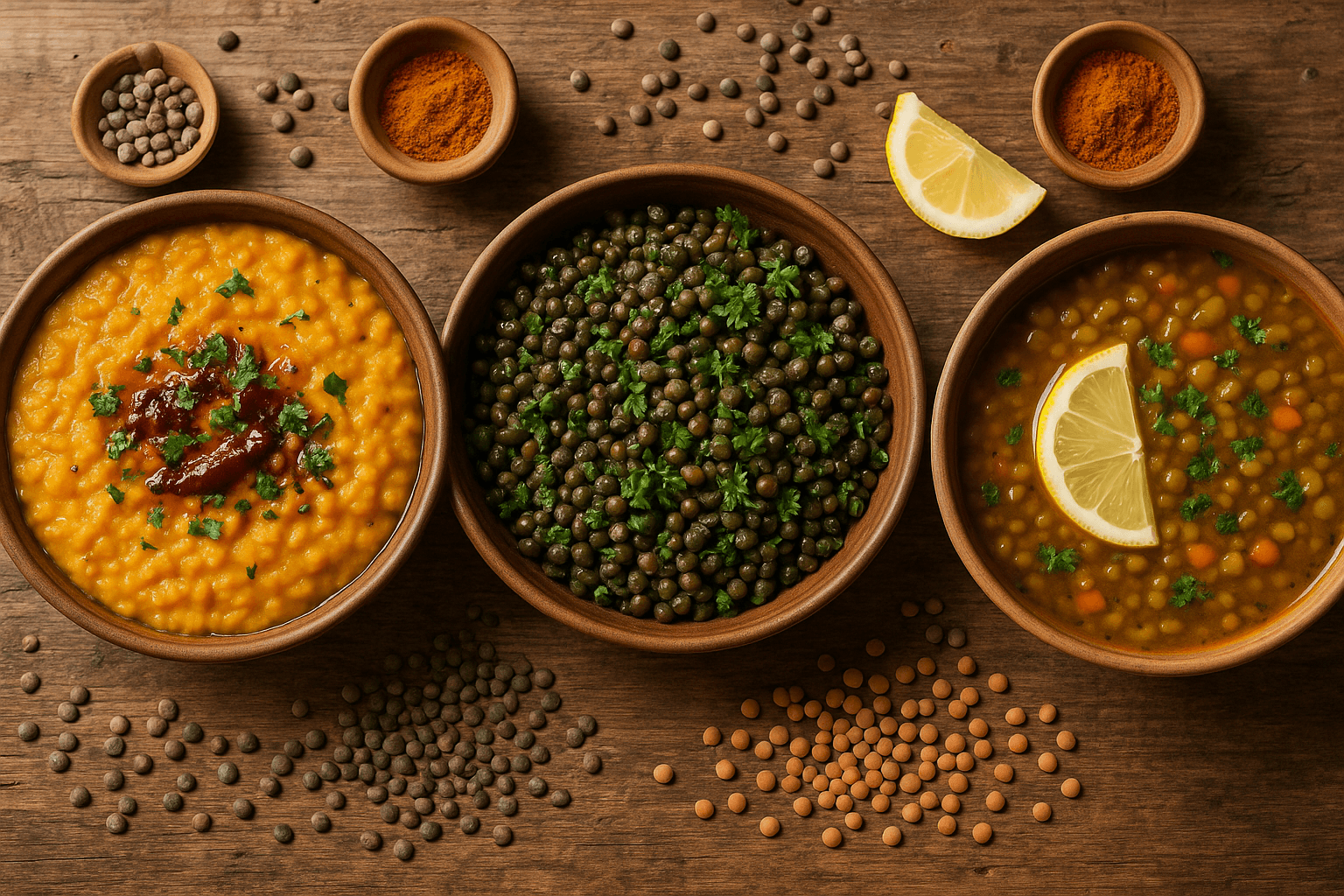
Lentils are one of those ingredients that look deceptively simple. Tip a bag into a pot, add water, simmer, and dinner should more or less take care of itself. Yet anyone who cooks lentils regularly knows they can behave like entirely different foods depending on the variety and the way you treat them. One pot gives you silky orange dal in 20 minutes. Another yields tidy green lenses that hold their shape for salad. A third stays stubbornly firm in the center, with skins peeling away while the insides seem chalky, or collapses into murk just when you wanted distinct little legumes in soup.
That is not random bad luck. Lentils cook the way they do because of structure: seed size, seed coat thickness, tannin content, starch type, moisture loss during storage, and the chemistry of the cooking liquid. The same rules that matter with beans matter here too, but lentils are smaller, faster, and more varied in their end goals. Some are meant to dissolve. Some are meant to stay elegant and separate. Some thrive with early seasoning; some are derailed by acid added at the wrong moment. Once you understand those few levers, lentils become one of the easiest pantry ingredients to control.
For home cooks, that control matters because lentils sit at the intersection of economy, nutrition, and culture. In France, a warm lentil salad depends on lentils that stay intact and glossy. In the Levant, lentils are often asked to soften enough for comforting soups while still carrying flavor from onion, cumin, and lemon. Across South Asia, whole, split, and skinned dals are chosen specifically for how they break down, thicken, and absorb tempering fat, spices, and aromatics. A lentil that is “overcooked” in one tradition may be perfectly cooked in another.
So let’s get practical and scientific at the same time: why lentils turn mushy, why they can seem oddly peppery or earthy, why they cook unevenly, and how to get exactly the texture you want for soups, salads, and dal.
Lentils are small seeds, not miniature beans
A lentil is a seed with three major structural parts that matter in cooking: the outer seed coat, the cotyledons inside, and the middle lamella—the pectin-rich “glue” that helps hold cells together. The seed coat affects how fast water gets in and how well the lentil holds its shape. The cotyledons contain starch and protein; these determine whether the interior goes creamy, fluffy, or pasty. The middle lamella determines whether the lentil stays intact or slips into puree as pectins dissolve.
Compared with many beans, lentils are tiny, so water penetrates relatively quickly. That is why most lentils do not require soaking and can cook in 15 to 45 minutes. But tiny size does not mean uniform behavior. A split red lentil with no skin is designed, structurally speaking, to fall apart fast. A green Puy-style lentil with an intact skin and relatively firm interior is built to resist collapse.
The key lesson: the texture you get is not just “done” versus “undone.” It is a conversation between the variety, the age of the lentil, and the chemistry of your pot.
A short history of why different cultures use different lentils
Lentils are among the oldest cultivated crops in the world, with roots in the Near East going back thousands of years. They spread widely because they are compact, nourishing, shelf-stable, and able to grow in climates where fussier crops struggle. Over time, cuisines evolved not around “lentils” as a single category but around the specific strengths of particular types.
In South Asia, where the word dal can refer both to pulses and to the dishes made from them, cooks distinguish carefully among whole, split, and skinned lentils. That distinction is not fussy taxonomy—it is functional. Red lentils and split moong are prized when a quick-cooking, soft, integrated texture is desired. Whole urad or chana dal behaves very differently and is chosen when chew, body, or a particular nuttiness matters.
In France, especially around Le Puy, green lentils became famous because they keep their shape, making them ideal for composed dishes with vinaigrette, sausage, duck, or roasted vegetables. In the Middle East, brown and green lentils often appear in soups, stews, and dishes like mujadara, where they should be tender but still recognizable alongside rice and caramelized onions.
These are not arbitrary traditions. They are culinary solutions built on plant structure.
The main lentil types and how they behave
If you want better lentil results, start by matching the variety to the dish.
Red and yellow lentils
These are often sold split and skinned. Red lentils are usually orange or salmon-colored once processed. Yellow lentils can refer to several split lentils depending on region and labeling, but from a cooking standpoint many behave similarly: they hydrate fast, soften fast, and release starch readily.
Best for: dal, pureed soups, thickening stews, quick weeknight lentil dishes.
Typical cooking time: 12 to 25 minutes depending on the exact type, age, and simmer intensity.
Texture tendency: creamy to fully collapsed.
Because the seed coat has been removed, there is little structural resistance. Water floods in, starch granules swell, and agitation quickly pushes the lentils toward a puree. This is exactly what you want for a smooth dal or a velvet-textured soup.
Brown lentils
Brown lentils are the all-purpose pantry standard in many supermarkets. They vary more than people realize. Some hold reasonably well; some break down enough to thicken the pot.
Best for: everyday soups, stews, simple side dishes, lentil loafs, fillings.
Typical cooking time: 20 to 35 minutes.
Texture tendency: tender with moderate shape retention, but can go mushy if overcooked.
Brown lentils are often the “middle path.” If a recipe simply says “lentils,” this is usually what is implied, but they are not ideal for every application.
Green lentils
Green lentils, including many French-style green lentils, are firmer and more shape-retaining than basic brown lentils. Some of that is variety; some is seed coat characteristics.
Best for: salads, warm vinaigrette dishes, grain bowls, side dishes, soups where visible lentils matter.
Typical cooking time: 25 to 45 minutes.
Texture tendency: distinct, meaty, structured.
These are the lentils you choose when you want each lentil to remain itself.
Puy lentils and similar French green lentils
Lentilles du Puy are particularly prized for shape retention and a peppery, mineral complexity. They are small, dark green, and relatively firm.
Best for: composed salads, charcuterie accompaniments, elegant side dishes.
Typical cooking time: 25 to 35 minutes.
Texture tendency: very good integrity, pleasantly firm.
That “peppery” note is partly flavor chemistry and partly tannin-related structure. More on that shortly.
Black lentils (beluga)
These shiny black lentils are small and visually striking, often compared to caviar. They generally hold shape very well.
Best for: salads, plated dishes, contrast in soups, pilaf-style applications.
Typical cooking time: 20 to 30 minutes.
Texture tendency: compact, intact, slightly firm.
Split lentils of many kinds
Beyond red lentils, many cuisines use split lentils from different species—moong dal, toor dal, chana dal, split urad, masoor dal, and more. Their behavior depends on the parent pulse and whether the skin remains.
Best for: specific regional dishes where texture is part of the identity of the meal.
Typical cooking time: from 20 minutes to over an hour, depending on the type.
Texture tendency: ranges from velvety to granular to substantial.
This is why “all lentils are interchangeable” is one of the most common recipe mistakes.
Why some lentils stay distinct and others collapse
Three factors matter most: seed coat integrity, starch release, and pectin breakdown.
1. Seed coat thickness and toughness
The outer layer slows water uptake and physically helps the lentil keep its shape. Lentils with intact skins—green, black, brown—usually hold together longer than skinned split lentils. The skin can also contain tannins and phenolic compounds that reinforce structure and affect flavor.
2. Starch availability
Inside the lentil, starch granules absorb water and swell as temperature rises. Once the seed coat is gone or weakened, those starches can leak into the cooking liquid. That released starch thickens soups and gives dal its creamy body. Red lentils do this quickly; green lentils much less so.
3. Pectin dissolution in the cell walls
Plant cells are held together with pectic substances. During cooking, heat and water gradually weaken these. Once enough pectin breaks down, the lentil softens and the cells separate more easily. If this happens while the skin still holds, you get a tender but intact lentil. If the skin is absent or fragile, you get a collapse into softness.
That is the deep logic behind texture. Lentils do not merely “boil.” They progressively lose structural cohesion.
Why lentils can taste peppery, earthy, or slightly bitter
Many cooks describe some green lentils, especially French-style ones, as peppery. That does not mean they contain pepper. It is a sensory shorthand for a mix of tannins, phenolic compounds, mineral notes, and firmer texture.
Tannins are naturally occurring polyphenols concentrated largely in seed coats. They can contribute slight bitterness, astringency, and a drying sensation on the tongue, the same general family of sensations you notice in tea or red wine. In lentils, higher tannin content often correlates with stronger structure and shape retention. That can be wonderful in a salad, where a vinaigrette and fat can balance those assertive notes.
Earthiness often comes from sulfur compounds, pyrazines, and the overall aroma profile of pulses. Old lentils can taste flatter, dustier, or more stale. Good lentils should smell mild, nutty, and clean when dry—not musty.
If lentils seem aggressively bitter or “peppery” in an unpleasant way, several things may be happening:
- You are using a tannic variety in a preparation that needed a softer, creamier lentil.
- The lentils are old.
- They are underseasoned, so the lentil’s natural phenolics dominate.
- You paired them with too much acid too early, which preserved firmness and highlighted harsh notes.
- Aromatics were weak or missing, so there was nothing to round out the flavor.
Why lentils cook unevenly
This is one of the biggest frustrations: some lentils split, some are mush, some remain chalky in the center. Usually the cause is one or more of the following.
Mixed age in the bag
Lentils lose moisture over time and become harder to rehydrate evenly. Older lentils can take much longer to soften and may never cook to a uniformly creamy texture. If a bag contains lentils from different lots or storage conditions, they may cook at different rates.
Old lentils and the “hard-to-cook” problem
As pulses age, complex chemical changes can make cell walls more resistant to softening. Pectins may become less soluble, and proteins can interact in ways that make hydration and tenderization slower. The result is a lentil that can swell yet stay firm or chalky.
As a rough pantry rule, try to use lentils within 12 to 18 months for best texture. They remain safe longer if stored well, but quality declines.
Too vigorous a boil
A hard boil knocks lentils against each other and against the pot. The skins tear, the outer layers slough off, and the result is uneven: broken exteriors and undercooked cores. Lentils prefer a gentle simmer, roughly 185 to 205°F / 85 to 96°C, not a rolling boil.
Inadequate water
Crowding lentils in too little liquid promotes uneven heating and patchy hydration. For most simmered lentils, use 3 cups water or stock per 1 cup lentils for absorbent cooking, or 4 cups water per 1 cup lentils if you plan to drain them and want a more forgiving setup.
Acid added too early
Tomatoes, wine, vinegar, tamarind, lemon juice, and other acids can slow softening by helping pectins and cell structures stay firmer longer. This is excellent if you need shape retention—up to a point—but frustrating if you are waiting for lentils to go tender. If your lentil soup contains a lot of tomato, add it after the lentils are mostly tender unless the recipe is specifically built around longer cooking.
Hard water
Water high in calcium and magnesium can reinforce pectin structure and slow softening. If lentils routinely stay stubborn in your kitchen, your tap water may be part of the problem. Try filtered or bottled water as a test.
The salt-acid rules that matter most
Lentil advice is often oversimplified into slogans like “never salt beans until the end” or “acid makes legumes tough.” Reality is more nuanced.
Salt usually helps more than it hurts
For lentils, moderate salting of the cooking water is generally beneficial. Salt improves flavor throughout the lentil instead of just on the surface after cooking. It can also help skins stay intact by improving hydration behavior and reducing the tendency for the exterior to burst before the interior catches up.
A good baseline is 1 to 1 1/2 teaspoons kosher salt per quart/liter of water. If using table salt, use less: about 1/2 to 3/4 teaspoon per quart/liter.
Salted lentils often taste better and cook more evenly than unsalted ones. The old prohibition against early salting is far more useful for myth-busting than for good cooking.
Acid can delay softening
Acid is not the enemy; timing is the issue. If your goal is creamy dal or a soft, integrated soup, add major acid sources after the lentils are mostly tender. If your goal is a salad lentil with tidy structure, a little acid during the latter part of cooking is less risky, but I still prefer to cook lentils until just tender and dress them after draining.
Practical rule:
- For soft lentils: add lemon, vinegar, tomatoes, tamarind, and wine at the end or after 75 to 90% of cooking is complete.
- For shape-holding lentils: you may add some aromatic acidity later in cooking, but not at the start unless you have tested the batch.
Baking soda is a specialty tool, not a default
A pinch of baking soda can raise pH and dramatically speed softening by weakening pectin structures. This is useful for old lentils or for very smooth purées. But too much makes lentils taste soapy, dulls color, and can turn them to sludge.
If you need it, use 1/8 teaspoon baking soda per cup of dry lentils, no more to start. This is best reserved for split lentils destined for a soft finish.
The role of aromatics, fat, and spices
Lentils absorb flavor, but not instantly. Aromatics matter most when they are chosen to suit the type of lentil and the intended texture.
For a French-style green lentil preparation, think onion, shallot, carrot, celery, bay leaf, thyme, garlic, olive oil, mustard vinaigrette. For Middle Eastern soups, onion, garlic, cumin, coriander, allspice, turmeric, and lemon may appear. For South Asian dal, the lentils themselves may cook simply with turmeric and water, then receive a final tempering—tadka or chaunk—of ghee or oil infused with mustard seeds, cumin, garlic, curry leaves, dried chiles, hing, or paprika.
This sequencing matters scientifically as well as culturally. Fat carries aromatic compounds and rounds bitterness. Spices bloomed in hot fat release fat-soluble flavor molecules more effectively than spices simply dumped into water. Acid added at the end brightens flavor once tenderness is already achieved.
Step-by-step: how to cook lentils for three ideal outcomes
Below are three base methods you can adapt.
1. For distinct lentils in salad or composed dishes
Use green, Puy-style, or black lentils.
Ingredients
- 1 cup dry green, Puy-style, or black lentils
- 4 cups water
- 1 teaspoon kosher salt
- 1 small onion, halved
- 1 small carrot, cut in large chunks
- 1 celery stalk, cut in large chunks
- 1 bay leaf
- 1 small garlic clove, lightly crushed
- 1 tablespoon olive oil (optional, for aroma and surface gloss)
Method
- Sort and rinse. Pick through 1 cup lentils for stones or damaged lentils. Rinse under cool water.
- Build a gentle cooking liquid. Add lentils, water, salt, onion, carrot, celery, bay, and garlic to a saucepan.
- Bring just to a boil, then reduce immediately. Once bubbles break the surface, lower heat to maintain a very gentle simmer.
- Cook 20 to 30 minutes for black lentils, 25 to 35 minutes for green/Puy-style. Start checking early. You want them tender through the center but not split.
- Test correctly. Bite one. It should not be chalky. The skin should be intact and the interior creamy-firm, not crunchy.
- Drain promptly. Remove aromatics and drain excess water immediately to stop carryover softening.
- Dress while warm. Toss with vinaigrette while still warm so the lentils absorb flavor.
A good warm vinaigrette
- 3 tablespoons extra-virgin olive oil
- 1 tablespoon red wine vinegar or sherry vinegar
- 1 teaspoon Dijon mustard
- 1/2 teaspoon honey
- 1 small shallot, minced
- 1/4 teaspoon black pepper
- Pinch of salt, to taste
Warm lentils absorb dressing beautifully. This is how you get a salad that tastes seasoned all the way through instead of merely coated.
2. For soup with tender but visible lentils
Use brown or green lentils.
Ingredients
- 1 cup dry brown or green lentils
- 2 tablespoons olive oil
- 1 medium onion, diced
- 1 carrot, diced
- 1 celery stalk, diced
- 2 garlic cloves, minced
- 1 teaspoon ground cumin
- 1/2 teaspoon ground coriander
- 6 cups water or light stock
- 1 1/4 teaspoons kosher salt, divided
- 1 bay leaf
- 1 (14-ounce / 400 g) can diced tomatoes, optional
- 1 to 2 teaspoons lemon juice, added at the end
Method
- Rinse the lentils. Sort and rinse.
- Sweat the aromatics. Heat olive oil over medium heat. Add onion, carrot, and celery with a pinch of salt. Cook 8 to 10 minutes until softened, not browned.
- Add garlic and spices. Cook 30 to 60 seconds until fragrant.
- Add lentils, water or stock, bay leaf, and most of the salt. Bring to a simmer.
- Cook gently 25 to 40 minutes. Brown lentils often finish faster than green ones.
- If using tomatoes, add after 15 to 20 minutes or when lentils are halfway tender. This prevents excessive delay in softening.
- Adjust texture. For a thicker soup, mash 1/2 cup cooked lentils against the side of the pot or blend 1 to 2 cups and return them.
- Finish with acid at the end. Add lemon juice only after lentils are fully tender.
This method gives you a soup with body but not complete collapse.
3. For soft, creamy dal
Use red lentils, split yellow lentils, or another dal suited to a soft finish.
Ingredients
- 1 cup red lentils or split yellow lentils
- 3 cups water, plus more as needed
- 1/2 teaspoon ground turmeric
- 1 teaspoon kosher salt, or to taste
- 1 small tomato, chopped, optional and best added later
For the tempering
- 2 tablespoons ghee or neutral oil
- 1 teaspoon cumin seeds
- 1/2 teaspoon black mustard seeds (optional)
- 2 to 3 garlic cloves, sliced
- 1 dried red chile or 1/4 teaspoon chile flakes
- 6 to 8 curry leaves, if available
- Pinch of hing/asafetida, optional
- 1 tablespoon lemon juice, added at the end
Method
- Rinse until the water is less cloudy. This removes excess surface starch and dust, though some starch is desirable.
- Combine lentils, water, turmeric, and salt. Bring to a simmer, skimming foam if needed.
- Cook 12 to 20 minutes, stirring occasionally. Add more water if the pot tightens too much. For looser dal, use up to 4 cups water total.
- Add tomato only after lentils have noticeably softened if you want the smoothest result.
- Whisk or stir vigorously near the end to encourage the lentils to break down.
- Make the tempering. Heat ghee or oil in a small pan. Add cumin seeds and mustard seeds; when they crackle, add garlic, chile, curry leaves, and hing. Cook until the garlic is lightly golden, 20 to 40 seconds.
- Pour the hot tempering over the cooked lentils. It should sizzle on contact.
- Finish with lemon juice after the lentils are fully soft. Adjust salt and consistency.
This is where the science becomes deliciously obvious: skinned split lentils plus moderate water, heat, and agitation produce built-in creaminess without dairy.
Common mistakes and how to fix them
Mistake: treating all lentils the same
Fix: Match the type to the dish. Use red for creamy, green/black for intact, brown for flexible everyday cooking.
Mistake: boiling too hard
Fix: Keep lentils at a gentle simmer. Violent bubbling shreds skins and causes uneven textures.
Mistake: adding lots of acid too early
Fix: Delay tomatoes, vinegar, lemon, tamarind, or wine until the lentils are mostly or fully tender.
Mistake: assuming salt makes lentils tough
Fix: Salt the water moderately from the beginning for better flavor and often better texture.
Mistake: cooking old lentils forever
Fix: Buy from stores with turnover, label purchase dates, and replace old stock. If necessary, try filtered water and a tiny pinch of baking soda.
Mistake: underseasoning
Fix: Lentils need enough salt, fat, and aromatic support. Without them, earthy and tannic notes can read as dull or harsh.
Mistake: not checking doneness early enough
Fix: Start tasting several minutes before the expected finish time. Lentils can move from pleasantly tender to blown-out quickly.
How age, storage, and water quality change outcomes
For lentils, the pantry matters almost as much as the stovetop.
Store lentils in an airtight container in a cool, dark place. Heat, humidity, and oxygen accelerate quality loss. While dried lentils are shelf-stable, their ideal cooking window is not indefinite. If you buy from bulk bins, turnover is crucial. Specialty stores that sell a lot of pulses often give more reliable results than a dusty bag from the back of a supermarket shelf.
If your lentils consistently refuse to soften, try this controlled test:
- Cook 1/2 cup lentils in 2 cups filtered water with 1/2 teaspoon kosher salt.
- Simmer gently and compare the result to a pot made with your tap water.
If the filtered-water batch softens faster, hard water is likely part of the issue.
Cultural logic: why one lentil makes a better salad while another makes better dal
The beauty of lentil cookery is that texture goals are culturally intentional.
A French-style lentil salad wants contrast: resilient lentils against sharp mustard vinaigrette, rich meat, or sweet roasted roots. The lentil must not vanish. That is why green and Puy-style lentils shine.
A Middle Eastern lentil soup often aims for comfort with definition. Brown or green lentils may soften enough to thicken the broth while still leaving visible pieces. Cumin, coriander, onion, garlic, and lemon create aromatic brightness around their earthy center.
A South Asian dal often seeks a more integrated texture. The pulse is not merely an ingredient sitting in broth; it becomes the body of the dish itself. Split and skinned lentils excel because they release starch and absorb tempering fat and spices, turning into something between soup, sauce, and stew.
This is the most useful frame for a home cook: ask not “What is the best lentil?” Ask “What texture and culinary role does this dish want?”
Quick reference cooking chart
These times assume unsoked lentils, a gentle simmer, and reasonably fresh stock.
| Lentil type | Water ratio | Time | Best use | Texture goal |
|---|---|---|---|---|
| Red split lentils | 3:1 to 4:1 | 12–20 min | Dal, purées, thick soups | Collapse/creamy |
| Yellow split lentils | 3:1 to 4:1 | 20–35 min | Dal, stews | Soft to creamy |
| Brown lentils | 3:1 to 4:1 | 20–35 min | Soups, stews, everyday dishes | Tender, somewhat intact |
| Green lentils | 4:1 | 25–45 min | Salads, sides, soups | Distinct and firm-tender |
| Puy-style lentils | 4:1 | 25–35 min | Salads, composed plates | Well-defined, intact |
| Black beluga lentils | 4:1 | 20–30 min | Salads, garnish, sides | Compact, glossy, intact |
Tips and variations for better results every time
- For cleaner flavor, cook in water and season after. Stock can mask the lentil’s character. For delicate salads, water plus aromatics is often better.
- For richer soups, add fat in layers. Start with olive oil or butter, then finish with more oil, yogurt, or ghee.
- For a smoother dal, whisk hard at the end. Mechanical agitation matters.
- For more distinct salad lentils, rest them uncovered after draining for 2 to 3 minutes so steam can escape before dressing.
- For old lentils, extend cooking gently rather than boiling aggressively. More violence does not equal more tenderness.
- To freeze cooked lentils, slightly undercook them by 2 to 3 minutes. They soften further when reheated.
- If using a pressure cooker, reduce water and watch texture closely. Red lentils can overcook in a flash. As a starting point, cook red lentils at high pressure for 3 to 5 minutes with natural release; green or brown lentils for 6 to 10 minutes, depending on desired firmness.
The takeaways that change everything
Good lentil cooking is not about memorizing a single rule. It is about choosing the right lentil and understanding the few variables that control structure.
- Seed size and processing matter. Split, skinned lentils cook fast and collapse; intact lentils hold shape longer.
- Tannins and seed coats matter. They contribute both firmness and some of the peppery, earthy, slightly astringent flavor of certain green lentils.
- Age matters. Old lentils cook unevenly and may stay stubbornly firm.
- Water chemistry matters. Hard water can slow softening.
- Salt is your friend. Moderate salting from the start improves flavor and often promotes more even cooking.
- Acid needs timing. Add it late if you want soft lentils; use it after cooking for the brightest finish.
- A gentle simmer beats a hard boil. That one change alone prevents many mushy or uneven pots.
- Culture already solved the problem. French, Middle Eastern, and South Asian traditions use different lentils because different dishes demand different textures.
Once you stop thinking of lentils as a single generic pantry staple and start seeing them as a family of structurally different seeds, the mystery disappears. Mushy red lentils are not a failure if you wanted dal. Firm green lentils are not undercooked if you wanted salad. The trick is to align the biology of the seed with the logic of the dish.
And when you do, lentils become one of the most precise, forgiving, and satisfying ingredients in your kitchen: capable of turning into a silky bowl of comfort, a sharp and elegant salad, or a deeply aromatic soup with almost no more effort than bringing a pot to a simmer.