Why Miso Turns Soup Flat, Marinades Funky, or Glazes Incredibly Deep: Koji Enzymes, Salt Density, and the Heat Rules for Better Broths, Dressings, and Roasts
RecipeSimpli
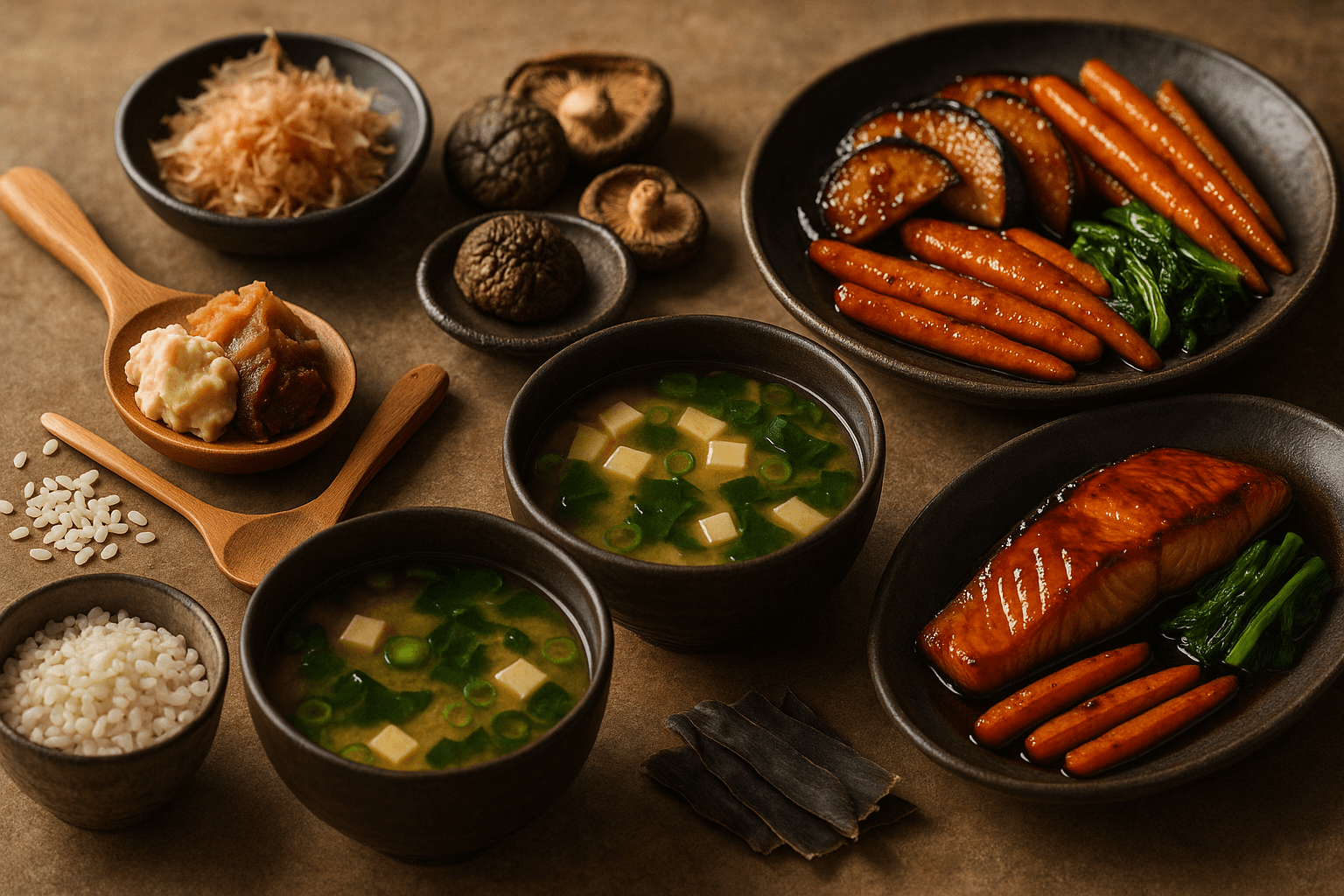
Miso has a way of making cooks overconfident. It tastes so concentrated, so savory, so mysteriously complete, that it seems almost impossible to misuse. Stir a spoonful into soup and dinner suddenly feels thoughtful. Smear it on fish and the surface bronzes into something restaurant-level. Whisk it into a dressing and raw vegetables become far more compelling than they have any right to be. But miso is also easy to flatten, scorch, over-salt, or push into a murky, funky imbalance. The difference between a broth that tastes vivid and one that tastes oddly dull often comes down to understanding three things: enzymes, salt density, and heat.
That familiar advice—"add miso at the end"—isn’t wrong. It’s just incomplete. Some misos are delicate and floral; some are dense, dark, and resilient. Some are sweet and creamy enough for dressings and butter sauces; others are assertive enough to survive roasting on root vegetables or a shoulder of pork. Miso can tenderize, cure, perfume, thicken, and amplify umami. It can also make a marinade smell a little too wild, turn a broth one-note salty, or disappear under hard boiling. Once you understand what’s living in miso, what happened during fermentation, and what heat does to its aroma and enzymes, it becomes much easier to use it intentionally.
Miso in context: not one ingredient, but a family
Miso is a fermented paste traditionally made from soybeans, salt, and a mold-inoculated grain or legume substrate called koji. In most home kitchens, that koji is rice inoculated with Aspergillus oryzae, the filamentous mold that powers a huge part of Japanese fermentation. Barley can also be used, as can soybeans themselves. Those choices matter.
At a broad level, miso varies by:
- Koji source: rice miso (kome miso), barley miso (mugi miso), soybean miso (mame miso)
- Color and age: white/light miso to red/dark miso
- Salt level: often around 5% to 13%, depending on style
- Fermentation length: from a few weeks or months to well over a year
- Sweetness and aroma: driven by carbohydrate breakdown, amino acid development, and fermentation byproducts
This is why “miso” is too broad a category for precise cooking advice. A pale, sweet white miso made with lots of rice koji behaves differently from a dark, long-aged soybean miso. One may disappear gracefully into a vinaigrette; the other may demand dilution, fat, sweetness, or long cooking to make sense.
Historically, miso developed as both seasoning and preservation technology. Salt made it stable. Fermentation made it more digestible and flavorful. Koji enzymes unlocked proteins and starches into amino acids and sugars, creating a pantry ingredient that can season with more complexity than plain salt ever could. That complexity is why miso is such a potent tool for modern cooks. But it’s also why treating every miso as interchangeable leads to disappointing food.
Fermentation microbiology: what’s actually happening in miso
The key actor in miso is koji mold, Aspergillus oryzae. It is cultivated on steamed rice, barley, or soybeans, where it grows and produces enzymes before being mixed with cooked soybeans and salt to ferment into miso. The mold itself is not doing all the long-term work alone; yeasts and lactic acid bacteria also contribute to aroma, acidity, and flavor development over time. But koji is what loads the system with the enzymes that make miso so dynamic.
The two enzyme families most relevant in the kitchen are:
- Proteases: break proteins into peptides and amino acids, including glutamates that contribute umami
- Amylases: break starches into smaller sugars, increasing sweetness and feeding further fermentation
There are also lipases and other enzymes involved, but proteases and amylases explain most of miso’s cooking behavior.
Why rice, barley, and soybean misos feel different
Rice miso tends to be the most common and versatile. Because rice koji contributes strong amylase activity, many rice misos—especially white miso—taste sweeter, rounder, and more immediately accessible. White miso often has a high ratio of koji to soybeans, a relatively short fermentation, and lower salt. The result: softer aroma, lighter color, gentle umami, and noticeable sweetness.
Barley miso often smells more aromatic, rustic, and grain-forward. It can have a distinct fragrant quality that some cooks interpret as nuttier or earthier than rice miso. Depending on the style, barley miso can be sweet, savory, or robust, but it often carries a more obvious fermented bouquet. In marinades, that perfume can be wonderful—or, if pushed too far with warm storage or too much time, veer toward what people describe as "funky."
Soybean miso is usually darker, stronger, less sweet, and more deeply savory. Because there is less starch available than in rice- or barley-based misos, sweetness tends to be lower and protein-derived savoriness higher. Long fermentation builds intense amino acid depth and dark color. These misos can be salty, bitter-edged, cocoa-like, meaty, and persistent. They are often better for braises, glazes, grilled meats, and robust vegetables than for delicate clear soups.
This isn’t a strict hierarchy. There are sweet barley misos and assertive rice misos. But as a practical framework for home cooks:
- White rice miso: delicate, sweet, creamy, lower salt, ideal for dressings, quick soups, butter sauces, corn, carrots, asparagus, cabbage, tofu
- Yellow or light brown miso: balanced and versatile, ideal for everyday soups, noodle broths, marinades, dips, pan sauces
- Red or dark miso: salty, deep, assertive, ideal for roasting, glazes, hearty mushrooms, eggplant, beef, pork, winter squash
- Barley miso: aromatic and rustic, excellent where grainy fragrance helps—roasted vegetables, hearty soups, grilled foods
- Soybean miso: powerful and concentrated, best used with dilution and structure
Why prolonged boiling makes miso taste flat
The old rule about not boiling miso is partly about microbiology and mostly about flavor chemistry.
Miso contains many volatile aroma compounds—small molecules that evaporate easily and contribute to the complexity you perceive through smell. Heat drives those compounds off. A simmer can be fine; a hard rolling boil for several minutes is different. If you whisk miso into soup and then boil it aggressively for 10 minutes, the broth may still be salty and umami-rich, but its aroma becomes blunter, duller, and less dimensional.
That’s why some miso soups taste vivid and others taste merely salty-brown. You didn’t lose all the flavor. You lost lift.
There’s also the issue of enzyme denaturation. Proteases and amylases are proteins, and heat unfolds them. Once miso is heated well above roughly 60 to 70°C / 140 to 158°F, enzyme activity begins falling off dramatically, and by the time you approach a boil, most useful enzyme activity is effectively gone. In soup, that usually doesn’t matter much because you’re not depending on miso enzymes to transform the broth in the bowl. But in marinades, low-temperature sauces, and resting mixtures, enzyme activity can be part of the point.
So when cooks say “add miso at the end,” there are really two reasons:
- To preserve aroma
- To avoid needless enzyme destruction if you want any raw-fermented character left
For soup, the best practical rule is this: turn off the heat, or drop the broth below a bare simmer, before adding miso. If you want a target, whisk miso in when the liquid is around 75 to 85°C / 167 to 185°F. Hot enough to dissolve smoothly, not so hot that you strip out all the perfume.
The nutrition myth: are probiotics the reason to protect miso from heat?
This gets repeated constantly: “Don’t boil miso because it kills the probiotics.” That statement is both oversimplified and often misleading.
First, not all miso is a meaningful probiotic food in the way yogurt with live cultures is marketed to be. Miso is fermented, yes, but whether a given tub contains large numbers of live beneficial microbes by the time you eat it depends on production, storage, pasteurization, and age.
Second, even if live microbes are present, hot soup will reduce their viability. So if your goal is specifically probiotic intake, a hot bowl of miso soup is not the most reliable delivery system.
Third, miso still offers value even when cooked. Fermentation changes proteins, sugars, flavor precursors, and digestibility. The nutritional and culinary benefits are not erased because the soup is warm.
So the best reason not to boil miso is flavor first. The microbiology matters, but the sensory payoff is what you’ll notice tonight at dinner.
Koji enzymes in marinades: why miso can tenderize, sweeten, and go a little wild
When miso sits on food before cooking, it doesn’t behave like an inert seasoning paste. It is biochemically active—at least until salt, time, and temperature constrain that activity.
Proteases and texture
Proteases in miso can begin breaking surface proteins on meat, fish, and even some plant tissues. That can be helpful. A miso marinade on salmon, black cod, chicken thighs, or pork can create a supple texture and better browning. But too much time, especially with lower-salt, high-koji misos, can push texture in the wrong direction.
A useful guide:
- Fish fillets: 30 minutes to 8 hours depending on thickness and miso strength
- Shrimp or scallops: 15 to 30 minutes
- Chicken thighs: 2 to 12 hours
- Pork chops or tenderloin: 2 to 12 hours
- Beef steaks: 1 to 6 hours unless using a diluted marinade
- Firm tofu: 1 to 24 hours
- Hearty vegetables like eggplant, cabbage wedges, carrots: 30 minutes to several hours
For delicate fish, an overnight miso marinade can become too cured, too salty, or slightly mushy near the surface. For sturdy meats, longer can work, but only if the salt level and thickness are balanced.
Amylases and sweetness
If the miso contains active amylases and available starches, it can contribute a subtle increase in sweetness in sauces and marinades, especially when paired with mirin, sake, sugar, or grated aromatics. White miso is particularly effective here because it already carries more sugar from starch breakdown. This is one reason white miso glazes brown beautifully but can also burn if blasted under high heat without dilution.
Why marinades get “funky”
That funky note usually comes from one or more of these issues:
- Too much time, especially with aromatic barley or dark miso
- Warm marination, which accelerates fermentation aromas and breakdown
- Too thick a layer, which tastes pasty rather than integrated
- Too little balancing sweetness, acid, or fat
- Using an aggressive miso on a delicate ingredient
A marinade should smell appetizingly fermented, not swampy or aggressively alcoholic. Keep miso marinades refrigerated, generally below 4°C / 40°F, and don’t assume more hours automatically means more flavor.
Salt density: why miso can turn dishes into one-note salt bombs
Miso isn’t just flavorful; it is dense with dissolved solids, including salt. That density changes how it seasons.
A teaspoon of miso does not behave like a teaspoon of table salt, obviously, but it can still contribute enough sodium to tip a small sauce or bowl of soup over the edge. The problem isn’t just saltiness. It’s compression. Too much miso narrows the flavor profile, making dishes taste dark, heavy, and monotonous.
This is especially common when cooks do three things at once:
- Use a salty broth or soy sauce base
- Add miso without dilution
- Reduce the liquid afterward
The result is a one-note wall of sodium and umami, with very little top-note aroma or contrast.
Practical anti-salt rules
- Taste your base first. If the stock is seasoned, start with less miso than you think.
- Dilute miso before adding. Stir it with warm water, dashi, stock, sake, or mirin until smooth.
- Do not reduce aggressively after adding miso unless you planned for that concentration.
- Balance with fat or sweetness, not only water. Water can thin salt, but fat and a touch of sugar can rebalance perception.
- Use different misos differently. Dark miso often needs more restraint than white miso.
For a starting point in soup, use roughly:
- 1 tablespoon white miso per 1 cup / 240 ml liquid for a gentle soup
- 2 tablespoons white miso per 1 cup for a richer soup
- 2 to 3 teaspoons dark miso per 1 cup as a starting point
These are not universal formulas, because dashi, mushrooms, soy sauce, and garnishes all add savoriness. But they’re useful guardrails.
Miso and umami synergy: why dashi and mushrooms matter so much
Miso tastes especially powerful in the presence of dashi because of umami synergy. This is one of the most important pieces of flavor science in Japanese cooking.
Glutamates from miso and kombu interact synergistically with nucleotides such as inosinate from bonito flakes and guanylate from dried mushrooms. When these compounds appear together, savory perception is amplified beyond what each ingredient would deliver alone.
In practical terms, that means:
- Miso in plain salted water tastes limited
- Miso in kombu dashi tastes fuller
- Miso in kombu-bonito dashi tastes more complete
- Miso with mushroom stock or soaked dried shiitakes gains a deeper, broader savoriness
This is why vegetarian miso soup can be excellent when built on kombu and dried shiitake. You’re replacing one umami partner with another. It is also why mushroom-miso butter on roasted vegetables tastes so deeply satisfying: fat carries aroma, while glutamate and guanylate stack savory impact.
Texture: strainers, dilution, and fat change how miso lands on the palate
Miso isn’t always smooth. Some styles are rustic, with bits of soybean hull or grain. How you disperse it changes both texture and flavor release.
Why strainers help
If you press miso through a fine mesh strainer or dissolve it in a ladle with broth before adding it to the pot, you get:
- Fewer lumps
- More even seasoning
- Better suspension in the liquid
- A cleaner mouthfeel, especially in delicate soups
This matters most with clear or lightly cloudy soups where grainy bits feel distracting. In hearty stews or rustic glazes, straining matters less.
Why dilution matters
Miso is too concentrated to distribute well if dropped in as a dense clump. Diluting first helps in three ways:
- It disperses salt and umami more evenly
- It reduces the chance of local over-seasoning
- It protects delicate soups from muddy streaks and undissolved paste
A good rule is to mix miso with 2 to 4 tablespoons warm liquid per tablespoon of miso before incorporating.
Why fat changes flavor release
Fat rounds bitterness, carries aroma compounds, and slows their release on the palate. That’s why miso behaves so differently in broth versus butter.
- In broth, miso tastes brighter and more direct
- In dressings, oil softens sharp edges and extends aroma
- In compound butter, miso tastes sweeter, deeper, and more integrated
- In glazes, fat plus sugar enhances lacquered browning and persistence
This is one reason white miso shines in mayonnaise-based dressings, tahini sauces, or compound butters for corn and fish. Fat turns its sweetness and floral notes into richness. Dark miso, meanwhile, often needs fat to keep its intensity from reading harsh.
The heat rules: when to add miso, and when cooking it is exactly right
The phrase “never cook miso” is as unhelpful as “always add it at the end.” The truth is situational.
Use low heat or off-heat addition for:
- Miso soup
- Clear broths
- Delicate vegetable soups
- Cold or room-temperature dressings
- Dips
- Finishing sauces
- Soft tofu, greens, spring vegetables, sweet corn
Here, the goal is to preserve aroma and freshness. White and light yellow misos are especially good candidates.
Use moderate cooking for:
- Pan sauces
- Braised beans
- Mushroom ragouts
- Creamed greens
- Noodle broth enrichments
In these dishes, a brief simmer of 1 to 3 minutes after adding diluted miso can be fine if the rest of the dish needs integration. Just don’t boil hard.
Use high heat deliberately for:
- Roasting glazes
- Broiled fish
- Grilled eggplant
- Roasted carrots, cabbage, squash
- Compound butter melting over hot foods
- Miso caramel, miso toffee, baked applications
High heat can be excellent with miso if you choose the right style and build the glaze correctly. Darker misos, because of their stronger flavor and more developed fermentation character, stand up better to roasting and charring. White miso can still work, but it often needs more sugar, fat, or a shorter cooking window to avoid scorching and disappearing.
Why dark miso stands up to roasting while white miso shines in dressings and delicate soups
Dark miso has already gone further down the road of flavor concentration. It contains more developed roasted, bitter-sweet, deeply savory notes that can survive oven heat and surface browning. When spread on a roast or whisked into a glaze with mirin and oil, it retains identity.
White miso, by contrast, is prized for gentleness: dairy-like sweetness, faint fruitiness, and mild fermented fragrance. Those subtleties are beautiful in a raw dressing or a soup added at the end. But under prolonged roasting, they can either burn or collapse into generic salty sweetness.
Think of it this way:
- White miso is a finishing and emulsifying miso
- Dark miso is a structural and heat-resilient miso
That doesn’t mean strict rules. White miso brushed on roasted carrots can be glorious. Dark miso in a winter soup can be superb. The real lesson is to match intensity to cooking method.
Step-by-step: better miso broth, every time
Here is a practical method for a classic home miso broth that preserves aroma and avoids flatness.
Ingredients for 4 servings
- 4 cups / 960 ml dashi, light chicken stock, or mushroom-kombu broth
- 3 to 6 tablespoons miso, depending on type and strength
- Start with 3 tablespoons white miso, 4 tablespoons yellow miso, or 2 1/2 to 3 tablespoons dark miso
- 7 ounces / 200 g soft tofu, cubed, optional
- 1/2 cup sliced scallions
- 1 sheet nori, cut into strips, optional
- 1/2 cup rehydrated wakame, optional
Method
- Heat the base gently. Bring the dashi or broth to about 80 to 85°C / 176 to 185°F—hot, steaming, but not boiling hard.
- Add solids first. Warm tofu or wakame in the broth for 1 to 2 minutes.
- Dilute the miso. Place miso in a bowl or ladle and whisk with 1/2 cup hot broth until smooth.
- Turn off the heat. Add the diluted miso back to the pot.
- Taste before serving. If it needs more depth, add another teaspoon or two. If it tastes salty-heavy, add a splash more hot broth or water.
- Finish with scallions and nori. Serve immediately.
Common mistakes
- Boiling the soup after adding miso
- Using salted stock and a full dose of miso
- Dropping miso straight into the pot without dissolving
- Overloading the bowl with assertive garnishes that obscure aroma
Step-by-step: a balanced miso dressing that stays lively
White miso is ideal here because sweetness and aroma matter more than brute force.
Ingredients
- 2 tablespoons white miso
- 1 tablespoon rice vinegar
- 1 tablespoon lemon juice
- 1 teaspoon honey or maple syrup
- 1 teaspoon grated ginger
- 1 teaspoon toasted sesame oil
- 3 tablespoons neutral oil or olive oil
- 1 to 2 tablespoons water as needed
Method
- Whisk miso with vinegar and lemon juice until smooth.
- Add honey, ginger, and sesame oil.
- Stream in the oil while whisking.
- Thin with water 1 tablespoon at a time until pourable.
- Rest 5 minutes, then taste.
Why it works
Acid brightens salt perception, oil rounds intensity, and dilution prevents the dressing from reading pasty. White miso’s sweetness makes raw vegetables taste sweeter too, particularly cucumber, lettuce, blanched green beans, and shaved fennel.
Step-by-step: miso marinade for fish that doesn’t go funky
Ingredients for 4 fillets
- 3 tablespoons white or yellow miso
- 1 tablespoon mirin
- 1 tablespoon sake
- 1 teaspoon sugar
- 1 teaspoon neutral oil
Method
- Mix all ingredients into a loose paste.
- Pat fish dry.
- Spread a thin layer over the fish—about 1 tablespoon per 6-ounce / 170 g fillet.
- Refrigerate 30 minutes for delicate fish, up to 8 hours for firm fish like salmon or cod.
- Wipe off excess marinade before cooking to prevent burning.
- Roast at 220°C / 425°F for 8 to 12 minutes depending on thickness, or broil carefully.
Troubleshooting
- Too salty: use less miso or marinate for less time
- Burning before fish cooks: add more mirin or oil, lower the rack, or wipe off more paste
- Smells too funky: shorten marination, use white miso, and keep the layer thinner
Step-by-step: dark miso glaze for roasting vegetables or pork
Ingredients
- 2 tablespoons dark miso
- 1 tablespoon soy sauce
- 1 tablespoon mirin
- 1 tablespoon brown sugar or honey
- 1 tablespoon neutral oil or melted butter
- 1 to 2 tablespoons water
Method
- Whisk everything together until glossy.
- Roast vegetables or pork until about 75% done.
- Brush on the glaze in a thin layer.
- Return to the oven at 200 to 220°C / 400 to 425°F for 5 to 15 minutes, reapplying once if needed.
- Watch closely in the final minutes.
Why this timing matters
If you glaze from the beginning, sugars and amino-rich miso can darken too fast. Applying later lets the food cook through before the glaze turns lacquered and deep.
When compound butter is smarter than broth or marinade
Miso compound butter is one of the best examples of fat changing flavor release.
Mix:
- 4 tablespoons / 55 g softened unsalted butter
- 1 tablespoon white or yellow miso
- 1 teaspoon lemon zest
- Optional: 1 teaspoon chopped chives
Use it on corn, green beans, mushrooms, roast chicken, seared shrimp, baked sweet potatoes, or grilled bread. Because the miso is diluted into fat, it tastes round, fragrant, and less aggressively salty than it would in a water-based sauce. This is a particularly smart use for miso when you want aroma and complexity without pushing a dish toward soup or glaze territory.
Practical rules by use case
For broths and soups
- Use white or yellow miso for delicacy
- Add below a boil, ideally off heat
- Dissolve first in hot liquid
- Build umami with dashi or mushrooms, not just more miso
For dressings and dips
- Favor white miso
- Balance with acid and oil
- Thin to avoid paste-like heaviness
- Taste after a few minutes; salt perception rises as it hydrates
For marinades
- Match strength to ingredient delicacy
- Keep cold
- Don’t over-marinate fish
- Wipe excess before high heat cooking
For glazes and roasts
- Favor dark, red, or robust barley miso
- Add sugar, mirin, and fat for browning control
- Glaze late in cooking
- Use thin coats, not thick plastered layers
For sautéed or braised dishes
- Add miso after aromatics and liquid are in place
- Simmer gently if needed, but avoid prolonged hard boiling
- Taste before adding soy sauce or finishing salt
Common mistakes that make miso taste disappointing
- Treating all misos the same. White miso is not dark miso in a paler outfit.
- Using miso as a salt replacement without adjustment. It seasons differently and brings solids, sweetness, and bitterness too.
- Boiling it hard in soup. You keep some savoriness but lose aromatic life.
- Applying thick sugary glazes too early. Burnt miso tastes bitter and muddy.
- Skipping dilution. Lumps and uneven salting are the result.
- Relying on miso alone for umami. Pair it with kombu, mushrooms, bonito, alliums, or browned butter.
- Believing the probiotic myth is the main issue. Flavor is the first reason to handle miso gently.
The big takeaway: use miso like a fermented seasoning system, not a spoonful of magic paste
Miso rewards precision. Not fussy precision—just informed precision. Think about what kind of miso you have, how salty and sweet it is, whether you want fresh aroma or cooked depth, and whether enzymes have time to do useful work before heat shuts them down.
If you want brightness, gentleness, and perfume, reach for white miso and keep the heat low. If you want lacquered depth on roasted vegetables, broiled fish, or pork, dark miso is your ally. If a marinade starts smelling too wild, it probably needs less time, colder storage, or a milder miso. If soup tastes flat, the problem may not be too little miso—it may be too much boiling. And if a dressing tastes like a salt bomb, the fix may be acid, water, and oil rather than more ingredients piled on top.
The most useful mental model is this: miso is a fermented concentrate of salt, amino acids, sugars, aroma compounds, and enzymes. Every cooking choice—temperature, dilution, fat, time—changes which of those qualities dominates. Learn to control that balance, and miso stops being a mystery ingredient you add out of habit. It becomes one of the sharpest tools in your kitchen for building broth, complexity, and roast-worthy depth.