Why Pomegranate Molasses Tastes Bright, Sticky, or Burnt: Sugar‑Acid Balance, Reduction Curves, and the Glaze Rules for Better Roasts, Dressings, and Braises
RecipeSimpli
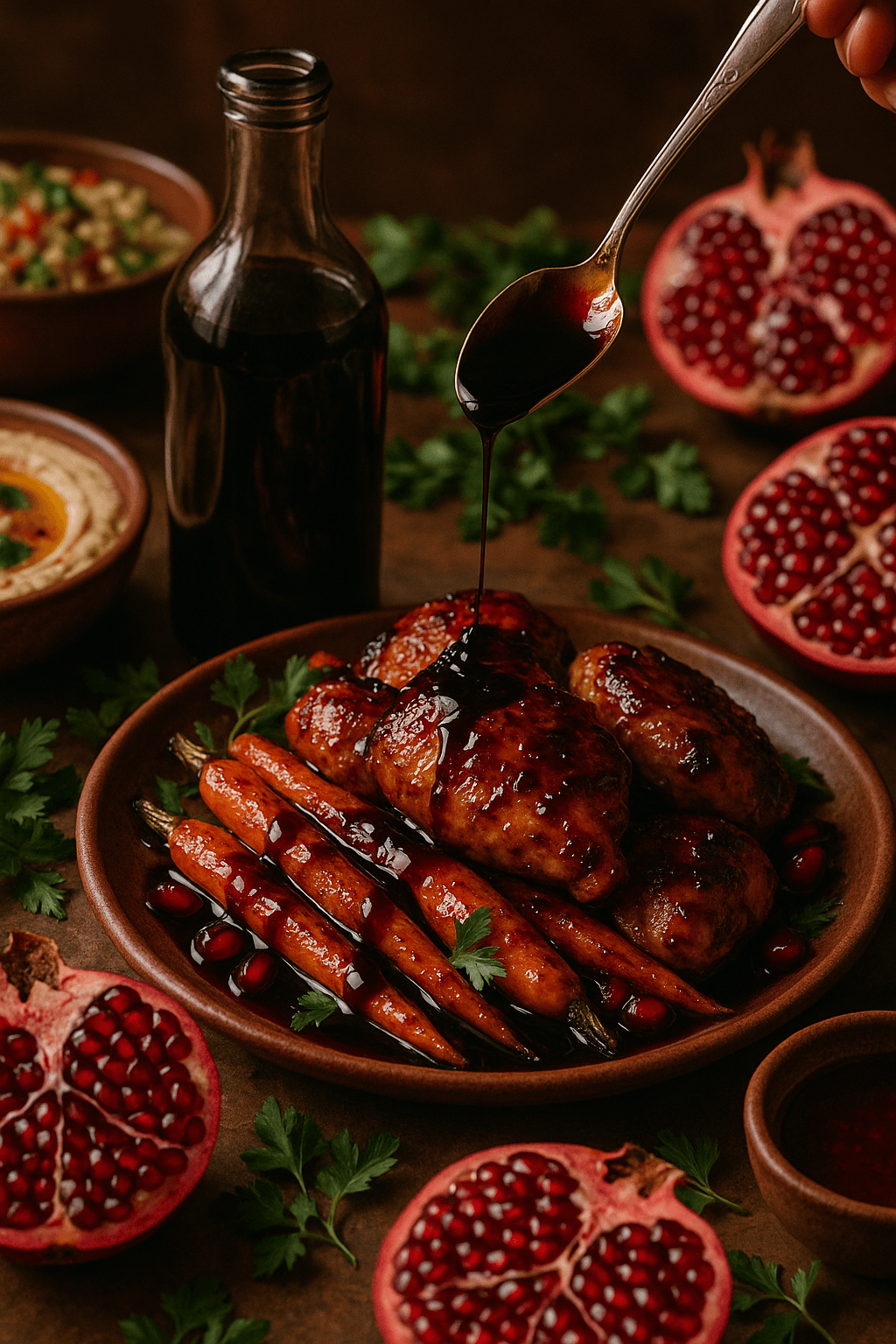
Few pantry ingredients create more confusion with so little volume than pomegranate molasses. One bottle tastes vivid, tangy, and almost floral. Another tastes like raisin jam. A third seems promising in a salad dressing but turns a tray of roasted vegetables from lacquered to scorched in what feels like a minute. Home cooks are often told only that pomegranate molasses is a “sweet-tart syrup,” but that description misses what makes it powerful and tricky: it is a concentrated system of sugars, acids, tannins, aromatic compounds, and water, and the way those elements change under heat determines whether your food tastes bright, sticky, bitter, or burnt.
Used well, pomegranate molasses can sharpen a vinaigrette without making it thin, add a garnet gloss to chicken wings, deepen a braise, or make roasted squash taste somehow both richer and fresher. Used carelessly, it can overwhelm a dish with harsh acidity, read as cloying instead of fruity, or carbonize before the roast beneath it is cooked through. The difference comes down to balance and timing. Once you understand how sugar-acid concentration works, how viscosity affects adhesion, and why late glazing is often the difference between shiny and scorched, pomegranate molasses becomes far easier to control.
What pomegranate molasses actually is
At its most traditional and straightforward, pomegranate molasses is pomegranate juice reduced until thick, concentrated, and intensely flavored. In some commercial versions, sugar is added. In others, there may be citric acid, glucose syrup, stabilizers, or even flavorings. This is one reason bottles can vary so dramatically.
The ingredient has deep roots in Levantine and Eastern Mediterranean kitchens, where it appears in dips, dressings, marinades, braises, and meat dishes. In Syrian, Lebanese, and Palestinian cooking, it brings tart depth to dishes like muhammara, fattoush-style dressings, braised lentils, and meat preparations. Across the broader region, including parts of Turkey and the eastern Mediterranean, sour fruit reductions have long been used as balancing agents in the same way a cook might use lemon juice, tamarind, verjuice, or vinegar—but with body and sweetness attached.
Persian cooking has its own rich sour-sweet tradition, though the better-known pomegranate products there may appear as juice reductions, pomegranate paste, or pomegranate-based sauces and stews rather than always in the exact bottle labeled “pomegranate molasses” familiar in Arab groceries. Think of fesenjan, where pomegranate contributes sourness, fruit, darkness, and structure alongside walnuts. Across these traditions, the point is not simply sweetness. It is layered acidity, fruit tannin, and concentrated flavor used to make savory food more dimensional.
That cultural context matters because many Western recipes treat pomegranate molasses almost like pancake syrup with a citrus edge. In traditional usage, it is often closer to a seasoning concentrate: strong, deliberate, and balanced against fat, starch, herbs, nuts, alliums, or meat.
Why one brand tastes bright and another tastes jammy or harsh
The simplest answer is that pomegranate molasses is not standardized. But the more useful answer is to look at the variables that shape flavor.
1. Starting juice matters
Pomegranate varieties differ in sugar level, acidity, tannin, color, and aroma. Some fruits are naturally sweeter and softer, with a round berry-raisin profile. Others are more angular, acidic, and tannic. If the starting juice tastes flat, cooked, or low in acid, the finished syrup may read as muddy or jammy. If the juice is highly acidic and tannic, reduction can push it toward thrilling brightness—or harshness.
2. Sugar composition matters
Pomegranate juice contains mostly simple sugars, especially fructose and glucose. Fructose tastes sweeter than glucose, and both become more concentrated as water evaporates. That means the sweetness curve rises rapidly during reduction, but so does the likelihood of stickiness and scorching.
Fructose also browns at lower temperatures than sucrose in many cooking contexts, which helps explain why fruit reductions can darken and develop bitter notes unexpectedly fast, especially in the final stages when water activity drops and pan temperatures climb. A syrup can move from pleasantly concentrated to overly cooked in a narrow time window.
3. Organic acids concentrate too
Pomegranate’s tartness comes from organic acids, primarily citric and malic acids. As reduction proceeds, those acids become more concentrated alongside the sugars. This is why a syrup can taste both sweeter and sharper at the same time. The balance is not linear. Early reduction may seem simply fruity; later reduction can feel louder, more aggressive, and less refreshing if acidity outruns aromatic delicacy.
Commercial producers sometimes add sugar to soften this edge, or add citric acid to restore sharpness if the base juice tastes dull. Both practices change the flavor trajectory. A product with added sugar may seem smoother and more jam-like. A product with added acid can seem brighter at first taste, but if poorly balanced it may also come across as metallic or harsh.
4. Tannins intensify and shift
Pomegranate contains tannins and phenolic compounds that contribute dryness, structure, and a faint grip on the palate. In moderate amounts, they make pomegranate molasses taste sophisticated rather than childish. In excess, especially after aggressive cooking, they can edge toward bitterness and astringency.
A useful distinction: bitterness is a flavor; astringency is a tactile drying sensation. Many people describe an over-reduced molasses as “bitter” when what they are also perceiving is astringency from concentrated tannins. Heat can amplify the perception of both.
5. Reduction level changes everything
This is the heart of the issue. Pomegranate molasses is not just “reduced pomegranate juice.” It is pomegranate juice reduced to a chosen endpoint. That endpoint controls viscosity, acidity perception, aromatic freshness, sweetness density, and bitter risk.
A lightly reduced syrup may be pourable, ruby, bright, and clean. A heavily reduced syrup may be nearly black, sticky, more muted in aroma, sweeter at the front, more tannic at the finish, and quicker to burn under oven heat. If you have ever wondered why a homemade batch tasted fresher than a store-bought bottle but also seemed thinner, this is often why.
Reduction curves: why the final 20 percent is where trouble starts
When cooks reduce a liquid, they often imagine a steady, linear process. In reality, reduction behaves more like a curve.
At the beginning, the liquid is mostly water, and evaporation removes moisture while the mixture remains relatively temperature-buffered. As long as there is abundant water, the syrup is less likely to overheat dramatically. Flavor concentrates, but slowly.
As volume drops, three things happen:
- Soluble solids become more crowded.
- Viscosity increases.
- Localized overheating becomes easier, especially at the bottom and edges of the pan.
This is why the last stage of reduction is disproportionately risky. A pot that seemed calm for 25 minutes can suddenly foam, darken, and catch in 3 minutes.
Practical homemade reduction targets
If you start with 1 liter pomegranate juice, a common target for a bright, versatile molasses is reducing to about 250 to 330 milliliters. That is roughly one-quarter to one-third of the original volume. At this stage, it should coat a spoon but still loosen when warm.
For a thicker, more glaze-like syrup, you might reduce 1 liter down to 180 to 240 milliliters. But this is the zone where flavor freshness drops and burnt notes become easier to develop.
For most home cooks, stopping earlier than you think is wise. The syrup thickens further as it cools. If you reduce until it seems perfect while boiling, it may become too dense, sticky, and sharp when cold.
Temperature and pan choice
Use a wide, nonreactive saucepan over medium to medium-low heat, not a narrow pot. A wider surface encourages faster evaporation at lower thermal stress. Stainless steel or enameled cookware is preferable. Avoid reactive aluminum, which can interact with acids and affect flavor.
A gentle simmer is ideal, around 90 to 96°C / 194 to 205°F. You do not need a hard boil. Vigorous boiling drives off delicate aromas faster and increases the risk of edge scorching.
Signs you are going too far
Watch for:
- Color shifting from deep ruby-burgundy to opaque brown-black
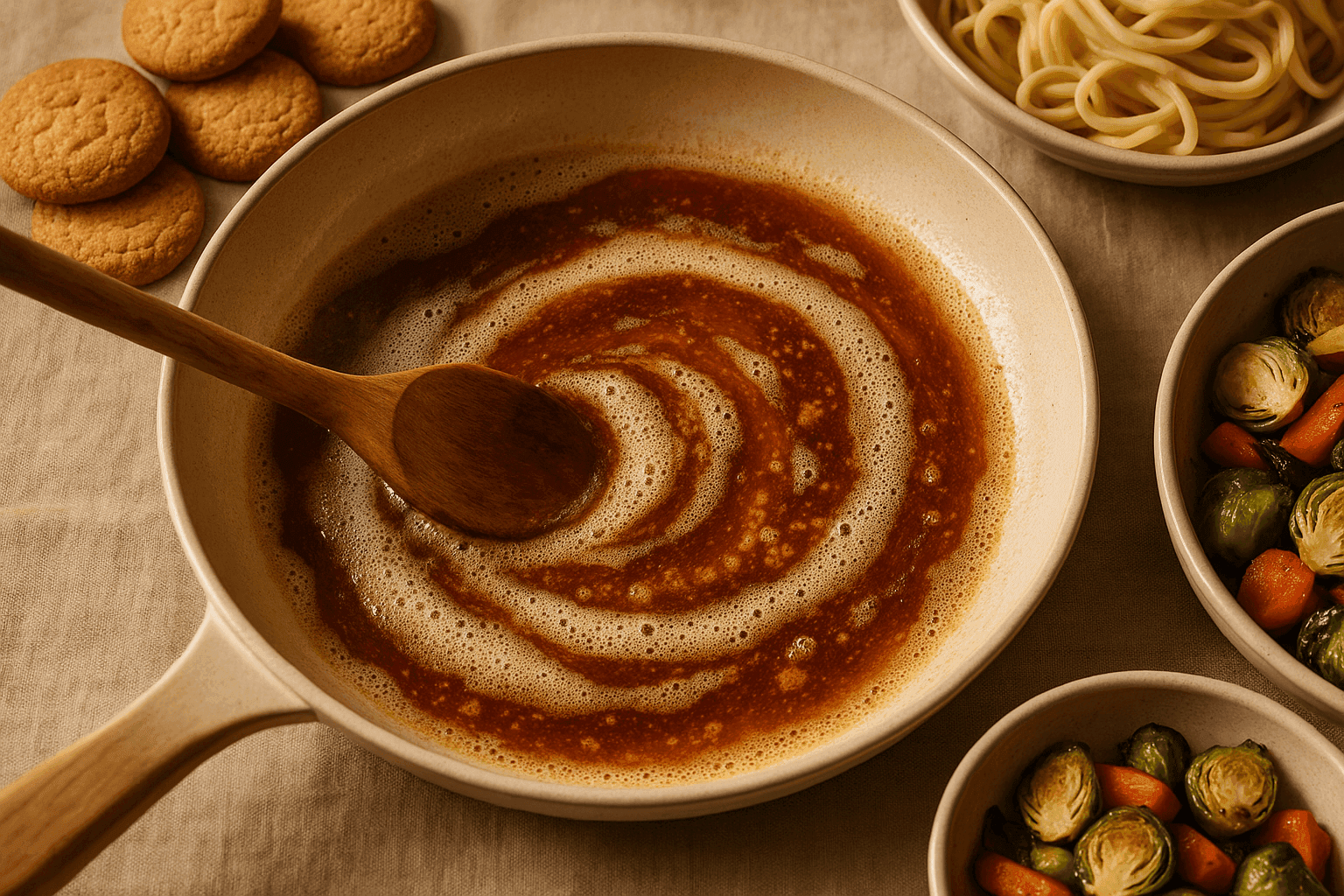
- Bubbles becoming thick, slow, and glossy
- A smell that shifts from fruity-tart to caramelized, then sharp or slightly bitter
- Syrup that leaves a heavy, sticky film rather than a light coating on the spoon
Once a reduction smells even faintly burnt, it will not recover. Diluting it only spreads the defect.
The science of brightness, stickiness, and burn
To cook with pomegranate molasses well, it helps to understand these three sensations separately.
Brightness
Brightness is not just acidity. It is acidity plus aromatic lift plus enough dilution that flavors remain distinct. If a syrup is too reduced, acid may still be high, but the aroma can taste cooked and dim. The result is sharpness without freshness.
That is why adding straight pomegranate molasses to a dish does not always create “brightness” on its own. Sometimes it creates density. For actual brightness, the molasses often needs one or more of the following:
- dilution with water
- pairing with fresh lemon juice
- balance with olive oil
- contact with raw aromatics or herbs
- addition late in cooking rather than early
Stickiness
Stickiness comes largely from concentrated sugars and reduced water content. It is not inherently bad. In fact, stickiness is what allows pomegranate molasses to cling to chicken skin, roasted carrots, eggplant, or lamb.
But there are levels of useful stickiness.
A moderately viscous syrup forms a thin film. That helps flavor spread evenly and creates a glossy finish.
An overly dense syrup forms thick patches. Those patches heat unevenly, trap sugars against hot surfaces, and are more likely to scorch before the underlying food cooks.
Burnt flavor
Burnt flavor is usually a combination of several phenomena:
- sugar browning pushed too far
- localized charring where syrup contacts hot metal or exposed food edges
- concentration of tannic bitterness and astringency
- loss of volatile fruity aromatics, leaving only dark notes behind
Because fruit sugars are reactive, pomegranate molasses burns more easily than many cooks expect, especially in a hot oven above 220°C / 425°F, under a broiler, or on a grill over direct heat.
Why viscosity changes adhesion on meat and vegetables
One of pomegranate molasses’s best qualities is its cling. That cling is culinary gold when managed correctly.
On meat
A syrup that is too thin runs off meat and pools on the pan, where it burns. A syrup that is too thick creates sticky, uneven blotches that can blacken before the meat browns properly.
For most roasting and grilling, the ideal consistency is slightly looser than bottled barbecue sauce and slightly thicker than maple syrup. If your pomegranate molasses pours like black honey, dilute it before using it as a glaze.
A good working dilution for a glaze is:
- 2 tablespoons pomegranate molasses
- 1 tablespoon water
- 1 tablespoon olive oil or neutral oil
Optional additions:
- 1 teaspoon honey for extra shine and softer acidity
- 1 small grated garlic clove
- 1/4 teaspoon Aleppo pepper or black pepper
- pinch of salt
The oil improves spreadability and reduces the odds of patchy scorching. Water lowers viscosity just enough to create a thinner film. Salt and aromatics round the profile.
On vegetables
Vegetables behave differently because their surfaces and moisture levels vary widely.
- Dense vegetables like carrots, parsnips, and winter squash roast well with a late-stage glaze.
- High-moisture vegetables like eggplant can absorb flavor beautifully, but excess glaze may turn muddy if applied too early.
- Brassicas like cauliflower benefit from a two-stage approach: oil and salt first, pomegranate glaze near the end.
For vegetables, a slightly thinner glaze usually works best:
- 1 tablespoon pomegranate molasses
- 1 tablespoon water
- 1 to 2 tablespoons olive oil
- pinch salt
Toss roasted vegetables with this mixture for the final 8 to 12 minutes at 200°C / 400°F, or drizzle after roasting and return briefly just to set.
The glaze rules: when to add it so it turns glossy, not scorched
This is the most practical part of the whole subject. Timing matters more than almost any seasoning tweak.
Rule 1: Do not start a roast with a full-strength pomegranate molasses glaze
If you coat raw chicken, lamb, or vegetables in undiluted pomegranate molasses and put them into a hot oven for 30 to 50 minutes, you are almost guaranteeing some level of burnt sugar, bitter edges, or blackened pan drippings.
Use oil, salt, spices, and perhaps a little yogurt, onion, or lemon in the initial marinade if desired, but reserve most or all of the pomegranate molasses for later.
Rule 2: Glaze in the final 10 to 20 minutes
For oven roasting at 190 to 215°C / 375 to 420°F, apply the glaze when the food is mostly cooked and only needs color and finish.
General timing:
- Chicken pieces: glaze for the last 12 to 18 minutes
- Bone-in lamb chops: glaze for the last 4 to 8 minutes, depending on heat
- Roasted carrots or squash: glaze for the last 8 to 12 minutes
- Cauliflower florets: glaze for the last 6 to 10 minutes
This allows enough heat to set and lacquer the syrup, but not enough to burn off the fruit character.
Rule 3: Use repeated light coats instead of one thick coat
Professional kitchens often build a glaze in layers. Brush on a thin coat, roast 5 minutes, brush again, roast a bit more. Thin layers dry and shine more evenly than one heavy, sticky application.
Rule 4: Keep it away from empty hot metal when possible
Glaze that drips onto a screaming-hot sheet pan will burn before the roast is done. Line pans with parchment when appropriate, or leave a little headspace so syrup sits on food rather than flooding the tray.
Rule 5: For braises, use pomegranate molasses as a finishing adjuster unless the recipe is built around it
Long simmering can work beautifully with pomegranate in certain dishes, but if you add a large amount too early to an ordinary braise, the result can become dull, muddy, or overly tart. In many cases, add partway through or near the end, then adjust.
A good starting point for a 1.5 to 2 liter braise:
- 1 to 2 tablespoons during cooking
- 1 to 2 additional teaspoons at the end, to taste
This preserves some brightness.
How to use it in dressings without making them syrupy
Pomegranate molasses shines in vinaigrettes because it contributes both acid and body. But too much makes a dressing heavy and sweet-sticky rather than lively.
A reliable base vinaigrette ratio
For 4 to 6 servings of salad:
- 1 tablespoon pomegranate molasses
- 1 tablespoon lemon juice or red wine vinegar
- 3 tablespoons extra-virgin olive oil
- 1 teaspoon Dijon mustard, optional
- 1 small grated garlic clove or 1 tablespoon minced shallot
- 1/4 teaspoon kosher salt, plus more to taste
- black pepper
- 1 to 2 teaspoons water, if needed
Whisk until emulsified. The extra acid keeps the molasses from reading too syrupy, and the small amount of water helps loosen the texture if your bottle is very thick.
Dilution rules for dressings
Think in ranges:
- Light, bright dressing: 1 part pomegranate molasses to 1 part lemon/vinegar to 3 to 4 parts oil
- Bolder dressing for grains or lentils: 1 part pomegranate molasses to 1/2 to 1 part lemon/vinegar to 2.5 to 3 parts oil
- For drizzling over rich foods like roasted eggplant or labneh: pomegranate molasses can be used nearly straight, but only in small amounts, often 1 to 2 teaspoons per serving
The main mistake is replacing all acidity with pomegranate molasses. It is tempting because it tastes tart, but it does not behave exactly like vinegar or lemon juice. It is denser and sweeter, and usually needs a second acid source for lift.
Marinades: what it can and cannot do
There is a common belief that a “natural fruit acid” marinade significantly tenderizes meat. In practice, pomegranate molasses is better understood as a surface flavoring and browning aid than a deep tenderizer.
The science
Acidic marinades can denature proteins at the surface, but they penetrate slowly. Sugar-rich marinades penetrate even less effectively. Over time, a highly acidic, sugary marinade may make the exterior of meat mushy or sticky while doing little for the center.
So for pomegranate molasses marinades, use restraint.
Good marinade ratios
For 1 kilogram / 2.2 pounds chicken thighs, lamb cubes, or pork shoulder pieces:
- 2 tablespoons pomegranate molasses
- 2 tablespoons olive oil
- 2 tablespoons grated onion or 1 tablespoon onion juice
- 2 cloves garlic, grated
- 1 teaspoon kosher salt
- 1 teaspoon ground coriander or cumin
- 1/2 teaspoon black pepper or Aleppo pepper
- 1 to 2 tablespoons water
Marinate 2 to 6 hours for chicken, 2 to 8 hours for lamb. For longer marination, reduce the molasses slightly.
The water and onion help distribute the seasoning. The oil reduces tackiness. If grilling, wipe off excess marinade before cooking and glaze later.
What not to do
- Do not marinate delicate fish overnight in a strong pomegranate molasses mixture.
- Do not expect it to “break down” tough cuts like a braising process does.
- Do not load a marinade with both lots of molasses and lots of honey unless you are cooking low and slow or glazing very late.
Homemade vs. store-bought: how to choose and how to adjust
Both can be excellent, but they behave differently.
Homemade advantages
- Fresher fruit aroma
- Control over reduction level
- Usually cleaner ingredient profile
- Easier to keep bright rather than jammy
Homemade drawbacks
- More variable from batch to batch
- Shorter shelf life depending on sugar concentration and handling
- Can be thinner than expected if you stop early
- Requires attention near the end of reduction
A basic homemade method
Start with:
- 1 liter 100% pomegranate juice
- optional 1 to 2 tablespoons lemon juice if the juice tastes flat
- optional 1 to 2 tablespoons sugar only if the juice is notably sour and low-sugar
Simmer in a wide pan over medium-low heat for 35 to 60 minutes, skimming foam if needed, until reduced to 250 to 330 milliliters for a bright all-purpose syrup. Cool completely before judging thickness.
Store refrigerated in a sterilized jar or bottle. A higher-sugar, more reduced syrup keeps longer, but a brighter, less reduced version may be preferable in flavor. Use clean utensils and common-sense refrigeration.
Store-bought advantages
- Convenience
- Consistency within a brand
- Often thicker and more shelf-stable
- Useful for glazing if not overly sweet
Store-bought drawbacks
- May contain added sugar, glucose syrup, or citric acid
- Can taste one-dimensional or candy-like
- May be reduced so far that bitterness and heaviness dominate
Label-reading tips
Look for the shortest ingredient list possible. Ideally: pomegranate juice, perhaps with a small amount of added sugar or citric acid, but not a long list of syrups and stabilizers.
If sugar appears before pomegranate juice, expect a sweeter, less nuanced product. If the bottle tastes harsh, try using smaller amounts plus olive oil and water rather than assuming the ingredient itself is unusable.
Practical use cases and exact starting ratios
For roasted chicken
Mix:
- 2 tablespoons pomegranate molasses
- 1 tablespoon olive oil
- 1 tablespoon water
- 1 teaspoon honey
- 1/2 teaspoon kosher salt
- 1 grated garlic clove
Roast chicken pieces at 205°C / 400°F until nearly done, then brush with glaze during the last 15 minutes, reapplying once.
For roasted carrots or squash
Roast vegetables first with oil and salt at 220°C / 425°F until almost tender. Then toss with:
- 1 1/2 tablespoons pomegranate molasses
- 1 1/2 tablespoons olive oil
- 1 tablespoon water
- pinch salt
- optional cumin or chili flakes
Return to oven for 8 to 10 minutes.
For a lentil or grain salad dressing
Whisk:
- 1 tablespoon pomegranate molasses
- 1 tablespoon lemon juice
- 3 tablespoons olive oil
- 1 teaspoon minced shallot
- 1/2 teaspoon salt
- black pepper
This is enough for about 4 cups cooked lentils or grains with herbs and vegetables.
For a braised lamb shoulder finish
Near the end of braising, stir in:
- 1 tablespoon pomegranate molasses
- 2 to 4 tablespoons braising liquid
Simmer 5 minutes, taste, and add up to 2 more teaspoons if needed. This avoids flattening the entire braise from prolonged cooking.
Common mistakes that make pomegranate molasses taste bad
Mistake 1: Confusing concentration with quality
Darker and thicker do not automatically mean better. Past a certain point, concentration erases freshness.
Mistake 2: Using it as the only sour element in a dressing
Without lemon or vinegar, many dressings taste heavy.
Mistake 3: Applying it too early in high-heat cooking
This is the classic route to blackened sugars and bitterness.
Mistake 4: Forgetting salt
Salt is essential. Without it, pomegranate molasses can taste like a dessert ingredient that wandered into dinner.
Mistake 5: Using full strength where dilution is needed
A tablespoon of water can make the difference between glossy and gummy.
Mistake 6: Judging homemade syrup while hot
Hot syrup looks thinner. Cool it before deciding whether to reduce more.
Nutrition myth-busting: “natural” does not mean consequence-free
Pomegranate molasses often gets a health halo because it comes from fruit. It is true that pomegranate contains polyphenols and that a pure reduction may retain some of them. But nutritionally, pomegranate molasses is still a concentrated source of fruit sugars and acids.
That does not make it “bad.” It means it should be understood accurately.
Myth 1: It is basically the same as eating a whole pomegranate
Not really. Whole fruit contains fiber, water, and bulk that slow intake and change satiety. Molasses is concentrated. A tablespoon can represent a significant amount of juice reduced down, with far less volume and no intact fruit structure.
Myth 2: Because the sugars are natural, quantity does not matter
Sugar chemistry does not stop mattering because the source is fruit. A tablespoon or two in a recipe is usually reasonable, especially spread across servings, but “natural” is not a free pass.
Myth 3: It is always healthier than other sweeteners
Sometimes it brings more acidity and complexity, which can let you use less total sweetener overall. That is a real culinary advantage. But if a commercial bottle contains added sugar or glucose syrup, the nutritional difference may be smaller than assumed.
Myth 4: More is better because it contains antioxidants
This is ingredient romanticism. The best reason to use pomegranate molasses is flavor. If it also contributes some beneficial compounds, great. But drowning a dish in it for health reasons usually worsens the cooking.
A note on pairing: what balances pomegranate molasses best
Pomegranate molasses thrives in company. It especially likes:
- rich fats: olive oil, tahini, yogurt, walnuts
- savory bases: onions, garlic, cumin, coriander, allspice
- herbs: mint, parsley, dill
- nuts and seeds: walnuts, pistachios, sesame
- charred or roasted foods: eggplant, carrots, lamb, chicken
- fresh acids: lemon juice, sumac, sometimes vinegar
What it generally dislikes is being left unsupported in large quantity. Then it can taste sticky, medicinal, or shrill.
The big takeaway for home cooks
Think of pomegranate molasses as a concentrated balancing tool, not just a sweet syrup. Its best version sits at the intersection of sugar, acid, tannin, and aroma. Reduce it too little and it may seem watery and underpowered. Reduce it too far and it turns jammy, harsh, or bitter. Brush it onto food too early and it burns. Add it too heavily to dressings and they become sticky rather than lively.
The most reliable path is simple:
- Choose a bottle with a clean ingredient list, or make your own from good juice.
- Favor moderate reduction over extreme thickness.
- Dilute for glazes and dressings when needed.
- Roast first, glaze later.
- Pair it with fat, salt, and often a second acid.
- Use it to sharpen and deepen savory food, not just to sweeten it.
Once you start thinking in terms of reduction curves and glaze timing, pomegranate molasses becomes much less mysterious. You stop treating it like a novelty syrup and start using it like cooks across the Levant, Persia, and the eastern Mediterranean have long used related sour-fruit concentrates: as a precise, powerful way to bring life, contrast, and gloss to a dish.
And that is when it becomes indispensable. A spoonful in the right place can make roasted vegetables taste more roasted, lamb taste more lamb-like, and a salad dressing feel somehow both fuller and brighter. Not because pomegranate molasses is magic, but because its chemistry, when understood, is deliciously on your side.