Why Tomatoes Turn Sauces Flat, Harsh, or Luxuriously Savory: Pectin Breakdown, Acid Balance, and the Right Heat for Fresh, Canned, and Paste
RecipeSimpli
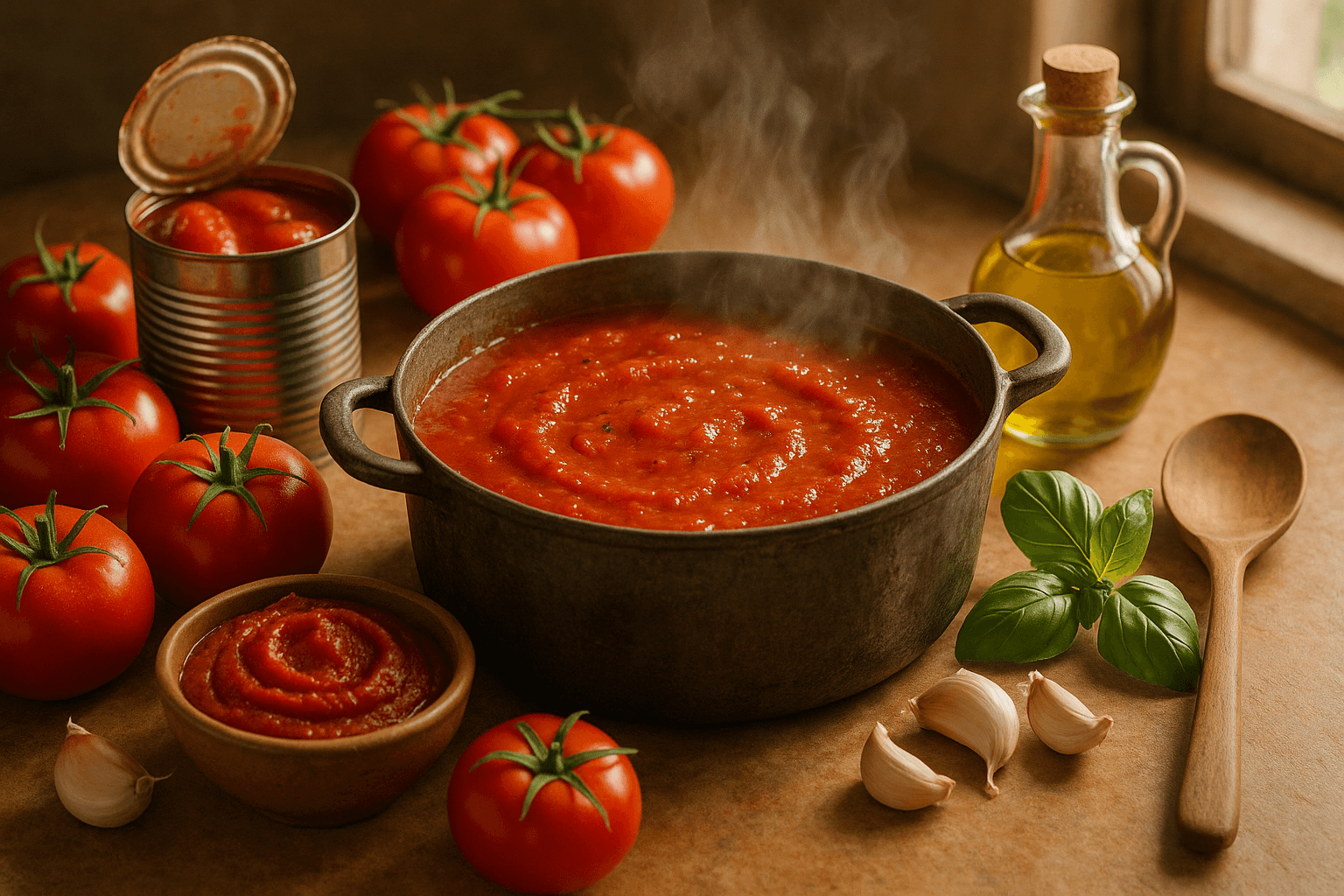
Why Tomatoes Turn Sauces Flat, Harsh, or Luxuriously Savory
Tomato sauce has a way of exposing every small kitchen decision.
Use the wrong tomatoes, rush the heat, or reduce too aggressively, and what should taste deep and rounded can wind up thin, sharp, oddly sweet, or just plain dull. On the other hand, a sauce made from the same basic ingredient—tomatoes—can become velvety, savory, bright, and full-bodied with only a few changes in technique.
That’s why tomato cookery frustrates so many good cooks. We’re often told to solve problems with simplistic advice: add sugar if it’s too acidic, cook it longer, use baking soda, buy San Marzano tomatoes and you’re done. There are tiny grains of truth in some of those ideas, but none of them explains what is actually happening in the pot.
Tomatoes are chemically busy ingredients. They contain acids, sugars, glutamates, aromatic compounds, water, fiber, pectin, seeds, seed gel, and pigments that respond differently to time, heat, and processing. A fresh summer tomato behaves differently from a canned whole plum tomato. Tomato paste behaves differently from passata. A quick fresh sauce needs one kind of heat; a braise built on tomato paste needs another.
Once you understand those differences, tomato cooking gets much easier. You stop treating all tomato products as interchangeable, and you start choosing the right form, the right heat, and the right cooking time for the result you want.
This article is a science-first guide for home cooks who want tomato sauces, soups, and braises that taste balanced rather than blunt. We’ll look at why some tomatoes taste harsher than others, how pectin and water shape body, why long cooking transforms certain sauces but ruins others, and how to use fresh tomatoes, canned whole, crushed tomatoes, passata, and tomato paste with intention.
Tomatoes: a little history, and why “tomato flavor” is not one thing
Tomatoes originated in western South America and were domesticated and developed in Mesoamerica before spreading globally after European contact. Today they anchor cuisines across Italy, Spain, Mexico, Turkey, India, the Middle East, the American South, and far beyond. But “tomato” in cooking is not a single flavor profile.
A tomato’s taste is a moving target shaped by:
- Variety: plum, beefsteak, cherry, heirloom, processing tomatoes
- Ripeness: underripe tomatoes skew greener, sharper, and less sweet
- Growing conditions: sunlight, irrigation, soil, temperature
- Season: peak summer tomatoes are usually lower in perceived harshness because sugar and aroma are higher
- Processing: canned, strained, concentrated, crushed, pasteurized, evaporated
- The part used: flesh, juice, seed gel, skin, seeds
Two tomatoes can have similar measured acidity but taste very different. That’s because perceived balance isn’t just about acid level. It’s also about sugar, glutamates, volatile aroma compounds, bitterness, texture, and concentration.
A ripe tomato tastes balanced because sweetness, tartness, savoriness, and fragrance arrive together. Remove or diminish one of those elements—say, by using watery out-of-season fresh tomatoes, or by cooking a delicate tomato too long—and the acid can suddenly feel more aggressive even if the pH hasn’t changed much.
That’s the first useful principle:
Tomato sauces taste harsh not only when they are acidic, but when acidity is insufficiently balanced by sweetness, umami, aroma, and body.
The anatomy of tomato flavor: acid, sugar, umami, seed gel, and aroma
To cook tomatoes well, it helps to know what’s inside them.
Acids: the source of brightness and “sharpness”
Tomatoes are naturally acidic, generally with a pH around 4.0 to 4.6, depending on type and ripeness. Their main acids are citric acid and malic acid. That acidity gives tomatoes lift and freshness, but in excess—or without balancing elements—it can read as tinny, harsh, or metallic.
A key point: a sauce can taste “too acidic” even if it is not unusually acidic on paper. Thin texture, low sweetness, or lack of fat can make acid feel louder.
Sugars: why ripeness matters more than spoonfuls of sugar
Ripe tomatoes contain natural sugars, primarily glucose and fructose. As tomatoes ripen, starches convert and aromatic compounds develop, increasing the impression of sweetness and complexity.
That’s why a ripe August tomato often tastes gentle and full while a winter supermarket tomato tastes sour, watery, and forgettable. It’s not only that the ripe tomato has more sugar; it also has better aroma, which amplifies the sense of flavor completeness.
Adding a teaspoon of sugar to a sauce can soften edges, but it does not recreate ripe tomato flavor. It can round out a sauce that is only slightly aggressive. It cannot fix poor tomato quality, over-reduction, or flatness caused by overcooking.
Glutamates: the source of savoriness
Tomatoes are naturally rich in glutamic acid, especially when ripe and concentrated. That’s one reason tomato sauce can taste deeply savory even without meat. Processing can actually help here: canned tomatoes and tomato paste often deliver strong umami because they use ripe processing varieties and concentrate flavor.
This is why a pantry tomato sauce made with good canned tomatoes can easily outperform a sauce made from mediocre fresh ones.
Seed gel: tart, aromatic, and often misunderstood
The seed cavities contain a gel rich in flavor compounds, acids, and pectin-related substances. Many cooks remove seeds because they’re told seeds make sauce bitter or acidic. In reality, the seed gel is often one of the most flavorful parts of the tomato. The hard seeds themselves can contribute slight bitterness if pulverized, especially in a blender, but the surrounding gel brings brightness and complexity.
If you want a silky, refined sauce, you may strain out seeds and skins. But discarding the seed gel automatically is often a flavor loss.
Volatile aromas: the missing link in dull sauces
Tomato flavor is not just sweet-sour-savory. It also depends on dozens of aromatic compounds that smell green, fruity, floral, leaf-like, and earthy. These aromas are fragile. Prolonged cooking drives many of them off.
That explains a common contradiction:
- Long cooking can make some tomato sauces taste richer.
- Long cooking can also make some tomato sauces taste duller.
Both are true, depending on the kind of tomato and the style of sauce.
Pectin, water, and body: why some sauces feel thin and others turn velvety
Texture is where tomato cookery becomes especially interesting.
What pectin does
Pectin is a structural carbohydrate found in plant cell walls. In tomatoes, it helps hold tissues together. When tomatoes are fresh and properly ripe, pectin contributes to body and a pleasant, cohesive texture.
As tomatoes cook, several things happen:
- Cell walls soften.
- Pectin begins to break down.
- Water is released.
- Solids concentrate if moisture evaporates.
Those processes can move a sauce in opposite directions. A sauce can initially get looser as cells collapse and release liquid. Later, as water evaporates, it can become thicker again. But the quality of that thickness matters.
A beautifully reduced sauce feels cohesive and naturally full. An overcooked sauce can feel pasty, muddy, or separated: thick, but not lively.
High-water tomatoes vs processing tomatoes
Fresh slicing tomatoes often contain a lot of water and relatively lower solids. They can produce a pale, thin sauce unless peeled, seeded selectively, and reduced with care.
Processing tomatoes—especially plum types used for canning—tend to have:
- more flesh
- fewer seed cavities
- lower water content
- higher soluble solids
That makes them naturally better for sauce.
Why canned tomatoes often make better sauce than fresh
This surprises people until they taste side by side.
Good canned tomatoes are usually packed at peak ripeness and made from varieties bred for sauce. They may have better sugar-acid balance and more solids than supermarket fresh tomatoes. Their cell structure is already altered by heat processing, so they break down more predictably in cooking.
That is why for much of the year, canned whole tomatoes are the most reliable path to a rich red sauce.
Fresh, canned, crushed, passata, and paste: what each one does in the pot
These products are not interchangeable. They each carry different texture, flavor, and heat tolerance.
1. Fresh tomatoes
Best for
- quick sauces
- raw or barely cooked sauces
- peak-season tomato soup
- lightly cooked seafood sauces
- rustic summer braises
Strengths
- bright, fresh aroma
- lively acidity
- nuanced variety-specific flavor
Weaknesses
- often watery
- inconsistent quality
- flavor can turn flat if the tomatoes weren’t great to begin with
- skins and seeds may create rough texture if not handled properly
Best approach
Use fresh tomatoes when they are truly ripe and fragrant. For sauce, choose plum tomatoes or very meaty slicers. If the tomatoes are watery, peel them, core them, and let chopped flesh drain in a colander for 15 to 30 minutes before cooking. Save the juices separately; reduce them if they’re flavorful.
For a quick fresh sauce, cook 10 to 20 minutes, not an hour. Fresh tomato aroma fades with prolonged simmering.
2. Canned whole tomatoes
Best for
- classic tomato sauce
- ragù and braises
- soups
- pizza sauce when crushed by hand and drained selectively
Strengths
- excellent balance of solids and juice
- adaptable texture
- usually fuller flavor than crushed products
- less processed taste than paste-heavy products
Weaknesses
- quality varies by brand
- some brands pack tomatoes in purée that can taste cooked or standardized
Best approach
Whole canned tomatoes are the most versatile choice. Crush them by hand, with a potato masher, or briefly with an immersion blender if you want a smoother sauce. Hand-crushing preserves texture and avoids pulverizing seeds into bitterness.
Simmering time depends on style:
- 15 to 25 minutes for a bright weeknight sauce
- 45 to 90 minutes for a deeper, integrated sauce
- 1½ to 3 hours in braises where tomato is supporting meat and aromatics rather than starring alone
3. Crushed tomatoes
Best for
- quick sauces
- soups
- braises where convenience matters
Strengths
- fast to use
- already broken down
- good for smoother sauces
Weaknesses
- often more processed in flavor
- texture can skew loose or pulpy
- brands vary dramatically in salt, calcium chloride, and concentration
Best approach
Crushed tomatoes are convenient, but they can cook up either pleasantly smooth or oddly uniform. Read labels. Some include calcium chloride, which helps tomatoes hold shape in canning but can subtly affect texture. That’s more relevant in diced tomatoes, but worth noting across products.
Crushed tomatoes work best in 20- to 45-minute sauces where you want speed.
4. Passata
Passata is uncooked or lightly processed strained tomato purée, usually free of skins and seeds.
Best for
- smooth sauces
- delicate soups
- fast braises
- dishes where silkiness matters
Strengths
- velvety texture
- clean tomato flavor
- no need to strain
Weaknesses
- can taste one-dimensional if overcooked
- lacks the textural complexity of whole tomatoes
Best approach
Use passata when you want elegance and smoothness. It shines in sauces simmered 15 to 40 minutes. Beyond that, it can lose brightness and become monotonous unless supported by onion, garlic, olive oil, butter, stock, wine, herbs, or meat juices.
5. Tomato paste
Best for
- building depth in braises, stews, soups, chili, curry bases
- intensifying weak tomatoes
- adding body and umami
Strengths
- concentrated glutamates and sugars
- strong color
- excellent browning potential when fried
- reinforces body
Weaknesses
- easy to scorch
- can taste metallic, raw, or overly caramelized if mishandled
- can dominate rather than support
Best approach
Tomato paste should usually be cooked in fat before liquid is added. This “toasting” or frying step removes rawness and develops deeper savory notes.
Use about 1 to 2 tablespoons (15 to 30 g) tomato paste per 28-ounce / 800 g can of tomatoes for a fuller sauce, or 2 to 4 tablespoons (30 to 60 g) in a braise or stew base serving 4 to 6.
Cook paste over medium heat in oil or butter for 1 to 3 minutes, stirring constantly, until it darkens from bright red to brick red. Don’t push it to mahogany brown unless you specifically want a very roasted profile.
Why long cooking helps some sauces but dulls others
This is one of the most important practical questions in tomato cookery.
Long cooking helps when:
- the tomatoes have plenty of solids
- there is excess water to evaporate
- the sauce contains onion, garlic, olive oil, butter, meat, wine, stock, or collagen-rich ingredients that need time to integrate
- tomato paste is used as a backbone
- you want sweetness and density more than fresh aroma
Examples:
- Sunday gravy-style sauces
- ragù
- braised short ribs with tomato
- meatballs simmered in sauce
- tomato-based bean stews
Long cooking hurts when:
- the tomatoes are delicate and already balanced
- the goal is brightness and freshness
- the sauce is built mostly from passata or fresh ripe tomatoes
- the sauce is reduced so far that volatile aromas disappear and acid feels exposed
Examples:
- fresh pomodoro
- seafood tomato sauces
- quick summer tomato soup
- light pasta sauces for basil and mozzarella
The science behind this
As a sauce simmers, water evaporates and flavor compounds concentrate. That can create depth. But aroma compounds also escape with steam, and pectin continues to change. Over time, the sauce may become thicker and darker while tasting less vivid.
So “cook it longer” is only correct when concentration and integration are what the dish needs. If the sauce’s appeal depends on freshness, prolonged simmering strips away what made those tomatoes special.
The acid question: why “just add sugar” is incomplete
Sugar works by balancing perception, not by neutralizing acid. A teaspoon or two may make a sauce taste rounder because sweetness counterweights tartness.
For a medium pot of sauce made from one 28-ounce / 800 g can tomatoes, try:
- 0 to 1 teaspoon (0 to 4 g) sugar for good ripe tomatoes
- 1 to 2 teaspoons (4 to 8 g) only if the sauce is noticeably sharp and under-sweet
But before adding sugar, ask:
- Is the sauce simply under-salted?
- Is it too thin, making the acid stand out?
- Does it need fat, such as 1 to 2 tablespoons (15 to 30 ml) olive oil or 1 to 2 tablespoons (14 to 28 g) butter?
- Would gentler cooking preserve flavor better?
- Is it lacking aromatic sweetness from onion, carrot, garlic, or slow-cooked tomato paste?
A small amount of finely softened onion or carrot often improves balance more naturally than sugar alone because it adds sweetness, aroma, and body.
When baking soda “works,” and why it often ruins sauce
Baking soda is alkaline. It neutralizes acid, so yes, it can reduce sharpness quickly. Add even a pinch and the sauce will foam as acid reacts.
But this comes at a cost.
Problems with baking soda in tomato sauce
- It changes flavor, not just acidity. Flattened acid often means flattened tomato character.
- It can produce a dull, muddy taste. Brightness disappears.
- It affects texture. Alkalinity accelerates pectin breakdown, which can make sauces seem mushier or less fresh.
- It can darken color in an unappetizing way.
Tomato sauces need acidity. That brightness is part of their identity. Neutralizing it chemically often creates a sauce that tastes less harsh but also less like tomato.
If you must use it—for example, to rescue an aggressively acidic sauce made from poor tomatoes—use an almost absurdly small amount: 1/16 teaspoon at a time for a pot made from 28 to 56 ounces / 800 to 1600 g tomatoes. Stir, let it settle, taste, and stop immediately once harshness softens.
In most cases, you’ll get better results from:
- longer but gentler reduction if the sauce is watery
- adding fat
- improving salt balance
- adding onion, carrot, butter, or stock
- finishing with cheese if appropriate
- using better tomato products next time
Heat management: the right heat for the right tomato product
Heat level changes both flavor and texture.
For fresh tomatoes
Use medium-high heat initially to drive off surface water, then medium or medium-low to finish. A hard boil can make fresh sauces taste coarse and cooked-out.
For canned whole tomatoes
Bring to a simmer over medium heat, then keep at a gentle simmer around 185 to 205°F / 85 to 96°C. Violent boiling can break emulsions, encourage scorching at the bottom, and reduce too fast.
For passata
Keep heat gentle. Passata is already smooth and exposed; aggressive boiling can make it taste flat quickly. Aim for a lazy simmer.
For tomato paste
Use medium heat in fat and stir constantly. Paste scorches easily because its sugars and solids are concentrated.
A useful rule:
Tomatoes generally want enough heat to evaporate water, but not so much that they scorch, splatter aggressively, or cook off their aroma before the rest of the dish catches up.
Building balanced tomato flavor in different dishes
Tomato behaves differently in sauces, soups, and braises because the supporting ingredients change what “balance” means.
For pasta sauce
You usually want one of two profiles:
Bright and fresh
Use fresh ripe tomatoes or canned whole tomatoes.
Base formula for 4 servings:
- 2 tablespoons (30 ml) olive oil
- 2 to 3 cloves garlic, sliced
- 28 ounces / 800 g canned whole tomatoes, crushed by hand, or 2 pounds / 900 g ripe fresh plum tomatoes, peeled and chopped
- 3/4 to 1 teaspoon (4 to 6 g) kosher salt, plus more to taste
- pinch chili flakes, optional
- 6 to 8 basil leaves
Method:
- Warm oil over medium heat.
- Cook garlic 30 to 60 seconds until fragrant, not browned.
- Add tomatoes and salt.
- Simmer 15 to 20 minutes.
- Finish with basil and a drizzle of olive oil.
This style keeps acidity lively and aroma intact.
Deep and integrated
Use canned whole tomatoes plus a little paste.
Base formula for 4 to 6 servings:
- 3 tablespoons (45 ml) olive oil
- 1 medium onion (150 g), finely diced
- 2 cloves garlic, minced
- 1 tablespoon (15 g) tomato paste
- 28 ounces / 800 g canned whole tomatoes
- 1 teaspoon (6 g) kosher salt to start
- 1/2 cup (120 ml) water or light stock
- optional: 2 tablespoons (28 g) butter at the end
Method:
- Cook onion in oil over medium-low heat 8 to 12 minutes until very soft.
- Add garlic, cook 30 seconds.
- Add paste, cook 1 to 2 minutes until brick red.
- Add tomatoes, crushing them in the pot.
- Add salt and water.
- Simmer partially covered 45 to 60 minutes, stirring occasionally.
- Finish with butter if desired.
The onion, paste, and extended simmer create sweetness and body without resorting to much sugar.
For tomato soup
Soup needs less reduction than pasta sauce because spoonability matters.
A common mistake is reducing tomato soup until it tastes like diluted pasta sauce. Instead, use body from aromatics and starch or dairy if desired.
Good tomato soup formula for 4 servings:
- 2 tablespoons (28 g) butter or 30 ml olive oil
- 1 medium onion, sliced
- 1 small carrot (60 g), sliced
- 1 tablespoon (15 g) tomato paste
- 28 ounces / 800 g canned whole tomatoes or passata
- 2 cups (475 ml) light chicken stock or vegetable stock
- 1 teaspoon (6 g) kosher salt, plus more to taste
- 1/4 teaspoon black pepper
- optional: 1/4 cup (60 ml) cream
Cook onion and carrot until soft, add paste and cook briefly, add tomatoes and stock, simmer 25 to 35 minutes, then blend smooth. The carrot contributes sweetness and body more gracefully than added sugar.
For braises and stews
Tomatoes here are supporting actors. You usually want concentration, but not dominance.
For a braise serving 4 to 6, use:
- 1 to 3 tablespoons (15 to 45 g) tomato paste for background depth
- plus 1/2 to 1 cup (120 to 240 ml) passata or crushed tomatoes if you want a more pronounced tomato note
Brown meat first, soften aromatics, toast paste, deglaze, then add stock or wine. Long cooking works because tomato flavor integrates with gelatin, browned meat compounds, alliums, and herbs.
Common mistakes that make tomato sauces flat, harsh, or muddy
1. Using bad fresh tomatoes for cooked sauce
If your fresh tomatoes are pale, hard, watery, and low-aroma, cooking will not improve them enough. Use canned instead.
2. Boiling too hard
A hard boil reduces water quickly, but can also scorch solids, break texture, and strip aroma. Simmer more gently.
3. Undersalting
Salt doesn’t just make sauce salty; it reveals sweetness and suppresses bitterness. Add in stages.
A useful starting point is 3/4 to 1 teaspoon kosher salt per 28-ounce / 800 g can of unsalted tomatoes, then adjust.
4. Overusing tomato paste
Paste is powerful. Too much can make a sauce taste dark, sticky, and less fresh. Think of it as seasoning with concentration.
5. Relying on sugar to fix structure problems
If a sauce is watery and sharp, sugar may make it sweet-and-sharp instead of balanced. Fix water, body, and savoriness first.
6. Blending seeds and skins aggressively
A high-speed blender can pulverize seeds and skins into a rougher-tasting sauce. For smoothness, pass through a food mill or fine sieve.
7. Cooking delicate tomato products too long
Fresh tomatoes and passata can lose their charm if simmered endlessly.
8. Using baking soda casually
It solves one problem by creating two others: dull flavor and altered texture.
How to choose the right tomato product for the job
Here is the practical cheat sheet.
Use fresh tomatoes when:
- they are peak-season, ripe, fragrant, and meaty
- you want freshness more than deep reduction
- cooking time is under 30 minutes
Use canned whole tomatoes when:
- you want the best all-purpose sauce tomato
- you need reliability year-round
- you want control over texture and simmer time
Use crushed tomatoes when:
- convenience matters
- you want a quick, smooth sauce
- you trust the brand
Use passata when:
- you want smooth elegance
- you don’t want seeds or skins
- the sauce or soup cooks relatively briefly
Use tomato paste when:
- you need depth, color, umami, and body
- you’re building soups, stews, braises, and richer sauces
- you toast it first in fat
A step-by-step method for a balanced tomato sauce every time
If you want one dependable blueprint, this is it.
Balanced everyday tomato sauce
Serves 4 to 6
Ingredients
- 3 tablespoons (45 ml) extra-virgin olive oil
- 1 medium onion (150 g), finely diced
- 3 cloves garlic, thinly sliced
- 1 tablespoon (15 g) tomato paste
- 1 can (28 ounces / 800 g) whole peeled tomatoes
- 1/2 teaspoon (1 g) dried oregano, optional
- 1 teaspoon (6 g) Diamond Crystal kosher salt or about 1/2 teaspoon fine salt, plus more to taste
- 1/4 teaspoon chili flakes, optional
- 1/2 cup (120 ml) water
- 1 tablespoon (14 g) butter, optional
- 6 basil leaves, torn
Method
-
Soften the onion. Heat olive oil in a heavy saucepan over medium-low heat. Add onion and cook 8 to 10 minutes, stirring occasionally, until translucent and sweet. Don’t rush this step.
-
Add garlic briefly. Stir in garlic and cook 30 seconds.
-
Toast the tomato paste. Add tomato paste and cook 1 to 2 minutes, stirring constantly, until it darkens to brick red and smells sweet-savory.
-
Add tomatoes. Crush the whole tomatoes with your hands as they go in, or break them up with a spoon in the pot. Add all the juices.
-
Season and loosen. Add oregano if using, salt, chili flakes, and water.
-
Simmer gently. Bring to a gentle simmer over medium heat, then lower to maintain a quiet bubble. Cook 35 to 50 minutes, stirring every 10 minutes.
-
Check texture. If it’s too thin after 40 minutes, simmer uncovered another 5 to 15 minutes. If too thick, add 2 to 4 tablespoons (30 to 60 ml) water.
-
Finish. Stir in butter if using, then basil. Taste for salt. If the sauce still tastes slightly sharp, first try another pinch of salt or a little butter. If needed, add 1/2 teaspoon sugar, taste, and repeat once only if necessary.
This sauce works because it balances aromatic sweetness, concentrated umami, controlled reduction, and a gentle finish.
Variations for different tomato moods
For extra brightness
Add 1 to 2 tablespoons (15 to 30 ml) reserved tomato juice near the end, or finish with fresh grated tomato stirred in off heat.
For more body without heaviness
Cook onion longer, add 1 extra teaspoon tomato paste, or blend a small portion of the sauce and stir it back in.
For sweeter balance without sugar
Add 1 small grated carrot (50 g) with the onion.
For richer savoriness
Finish with 1 ounce / 30 g grated Parmigiano-Reggiano, or simmer with a parmesan rind for 20 to 30 minutes.
For silkier texture
Pass the finished sauce through a food mill or blend briefly and strain.
For lighter tomato soups
Use passata and stock, simmer only 20 to 25 minutes, then blend with olive oil for emulsion.
For braises
Use less total tomato than you think. Too much can dominate and make long-cooked dishes taste acidic rather than deep.
The big takeaway: tomato balance is built, not corrected at the end
When tomato sauces fail, the problem usually started much earlier than the final tasting spoonful.
It started with choosing watery fresh tomatoes for a long-cooked sauce. Or with boiling passata hard for an hour. Or with using too much paste, too little salt, or no aromatic foundation. Or with trying to erase acidity instead of balancing it.
The best tomato cookery comes from understanding three forces:
- Balance of acid, sweetness, and umami
- Management of pectin, water, and solids for body
- Matching heat and cooking time to the tomato product
If you remember nothing else, remember this:
- Fresh tomatoes want restraint and short cooking.
- Canned whole tomatoes are the most versatile all-purpose choice.
- Passata gives smoothness but can turn dull if overcooked.
- Tomato paste builds depth when toasted, but overwhelms when overused.
- Sugar can round edges, but it doesn’t fix weak tomato flavor.
- Baking soda neutralizes acid, but often destroys brightness and character.
- Gentle simmering preserves flavor better than a violent boil.
A luxurious tomato sauce isn’t simply less acidic. It’s one where acidity is held in balance by sweetness, savoriness, aroma, and body. That’s why the same tomato can become flat, harsh, or glorious depending on what you do next.
And once you learn to read those signals in the pot—thin versus full, sharp versus bright, dull versus integrated—you stop chasing hacks and start making sauces that taste intentional.
That’s the difference between cooking with tomatoes and truly understanding them.